AI Overviews are a generative AI search feature that synthesizes information from multiple web sources into a concise, intent-driven summary displayed at the top of Google search results. Google AI Overviews use the Gemini large language model (LLM), the Organic Search Index, and a query fan-out system to decompose complex queries, retrieve semantically structured passages, and generate grounded summaries with citations. AI Overviews prioritize entity clarity, contextual alignment, and factual consistency, which shifts search from ranked blue links to AI-generated answers where citation determines visibility.
AI Overviews matter because they change how visibility, authority, and click behavior function in search. AI Overviews appear in approximately 30% of searches and dominate problem-solving queries, which reduces traditional organic click-through rates while increasing exposure for cited sources. The answer-first model expands zero-click behavior, surfaces diverse websites beyond the top 10 results, and rewards structured, E-E-A-T-aligned content that matches user intent across informational and commercial contexts.
Optimizing content for Google AI Overviews requires structured, extract-friendly architecture aligned with AI retrieval patterns. Strategies for optimizing content for Google AI Overviews include providing direct answers before expansion, defining entities explicitly, using research-backed statements, maintaining semantic consistency, implementing structured data markup, and ensuring crawlability, rendering, and indexing accessibility. Best practices for optimizing content for Google AI Overviews prioritize logical hierarchy, short sentences, long-tail intent coverage, mobile performance, and technical health, because AI Overviews select, synthesize, and cite only content that remains clear, authoritative, and machine-readable.
What Are AI Overviews?
AI Overviews are a generative artificial intelligence search feature that synthesizes information from multiple indexed web sources into a concise, intent-aligned summary displayed at the top of Google search engine results pages (SERPs). AI Overviews use the Gemini large language model (LLM) to interpret search intent, decompose complex queries through query fan-out, retrieve semantically relevant passages, and generate original summaries grounded in cited sources. AI Overviews replace static blue links with AI-generated answers, which shifts visibility from ranking position to citation inclusion.
What makes AI Overviews different from traditional featured snippets? AI Overviews generate multi-source synthesized answers, while featured snippets extract a single passage from one webpage. AI Overviews combine retrieval and generation, which means the system analyzes multiple documents, validates entity relationships, and produces an original response instead of copying text. This generative synthesis increases contextual depth and supports multi-step problem-solving queries.
Where do AI Overviews appear and when do they trigger? AI Overviews appear at the top of the SERP, commonly referred to as Position Zero, and trigger primarily for informational and problem-solving queries. AI Overviews currently appear in approximately 30% of searches and show high prevalence in complex “how,” “why,” and comparison-based queries. The system prioritizes intent satisfaction, which means AI Overviews surface when Google detects multi-layered information needs rather than simple navigational intent.
How do AI Overviews ensure factual grounding? AI Overviews ground generated summaries in indexed web content through citation attachment and Knowledge Graph validation. The system retrieves content primarily from high-ranking organic results, extracts semantically structured information, and attaches visible links after synthesis. This dual-source model reduces unsupported generation and reinforces entity accuracy through structured data and authoritative domains.
Do Google AI Overviews Differ From Other AI Summaries?
Yes, Google AI Overviews differ from other AI summaries because Google AI Overviews operate as a permanent, fully integrated feature inside the Google Search ecosystem powered by the Gemini large language model (LLM).
Google AI Overviews appear in 99.2% of informational queries such as “how to” or “why is” searches, while appearing in only 4.5% to 12.5% of total queries overall. Google AI Overviews use a query fan-out architecture that expands a single query into multiple related sub-queries, retrieves data from multiple web sources simultaneously, and generates concise answer sections grounded in citations rather than producing standalone chatbot-style responses.
Google AI Overviews differ operationally and commercially from other AI summaries. Google restricts Google AI Overviews to users who are at least 18 years old and logged into a Google account, and Google AI Overviews appear in under 6% of commercial searches to protect advertising revenue. The presence of Google AI Overviews reduces search ad click-through rates from 21.27% to 9.87%, and Google AI Overviews push organic listings down by an average of 980 pixels on mobile devices. Although 99.5% of cited sources rank within the top 10 organic results, Google AI Overviews shift visibility from ranking position to citation inclusion, which fundamentally changes how search exposure is earned.
How Do Google AI Overviews Actually Work?
Google AI Overviews work by using the Gemini large language model (LLM) and the Google Organic Search Index to generate grounded, multi-source summaries directly on the search engine results page. Google AI Overviews reduce the need for multiple clicks by synthesizing structured content into a cohesive Position Zero response. Google AI Overviews currently trigger for 59% of informational queries and 19% of commercial queries.
What systems power Google AI Overviews? Google AI Overviews operate through a dual-source system that combines the Gemini LLM with the Google Organic Search Index. The Gemini LLM generates original summaries, while the Organic Search Index supplies indexed web documents for retrieval and citation. Evergreen Googlebot renders JavaScript to build a Rendered DOM, and structured data (Schema.org markup) converts page content into machine-readable entities eligible for synthesis.
How does Google AI Overviews process a user query step by step? Google AI Overviews process queries through a 5-stage pipeline that transforms intent into a cited summary.
- Query Fan-Out decomposes the main query into multiple sub-questions.
- Retrieval pulls content primarily from the top 35 organic results.
- Semantic Extraction prioritizes structured headings, lists, and short paragraphs, especially from the top 12 results.
- Generative Synthesis uses Gemini to create an original multi-paragraph answer.
- Retroactive Linking attaches citations in a visible carousel for transparency.
How does Google AI Overviews maintain accuracy and control risk? Google AI Overviews enforce grounding, authority filtering, and publisher controls to reduce hallucination and misinformation risk. The system validates content against indexed sources, applies E-E-A-T and Your Money, Your Life (YMYL) safeguards for high-risk topics, and respects directives such as data-nosnippet, noindex, and robots.txt. Commercial intent suppression limits AI Overview appearance in transactional searches, while zero-click behavior increases because answers appear directly on the SERP.
Is It Important to Optimize Content for AI Overviews?
Yes, it is important to optimize content for AI Overviews because AI-generated answers now determine which sources gain visibility, citations, and authority inside search results. AI-driven referrals increased by 357% year over year as of June 2025, and AI systems generated 1.13 billion visits during the same period. This growth confirms that discovery increasingly occurs inside synthesized answers rather than traditional ranked listings.
AI Overviews prioritize structured, machine-readable, and semantically clear content when selecting sources for citation. Visibility now depends on answer eligibility instead of ranking position, which shifts optimization from page-level competition to citation inclusion. Brands that fail to align with AI retrieval patterns lose presence inside summaries, even if they rank organically.
Optimizing for AI Overviews therefore protects answer-level exposure, strengthens authority signals, and increases the likelihood of being cited as a trusted source in zero-click environments where users consume information directly on the search results page.
What Are the Main Benefits of Optimizing Content for AI Overviews?
The main benefits of optimizing content for AI Overviews include expanded visibility, diversified discovery, higher-intent traffic, stronger engagement, operational efficiency, and strategic resilience. AI Overviews shift exposure from page-level ranking to citation inclusion, which changes how competitive advantage is earned.
- Greater Diversity of Website Visibility (Visibility Benefit). AI Overviews cite sources beyond the traditional top 10 results, which allows optimized niche sites to gain Position Zero exposure based on relevance instead of domain authority.
- Wider and More Diverse Helpful Links (Discovery Benefit). AI Overviews display citation clusters and link carousels that expand brand visibility across multiple entry points within a single summary interface.
- New Discovery Paths (User Experience Benefit). AI Overviews support conversational follow-up queries, which extend brand exposure across multi-step informational journeys without restarting the search process.
- Superior Click Quality (Traffic Quality Benefit). AI Overviews reduce overall click volume but increase the intent strength of users who click cited sources after consuming synthesized summaries.
- Increased Engagement and On-Site Time (Engagement Benefit). Users arriving from AI Overviews typically demonstrate stronger contextual understanding, which increases time on site and interaction depth.
- Unified Performance Leverage (Operational Benefit). Optimizing for AI Overviews strengthens both traditional organic eligibility and answer-level citation potential, which creates dual-channel visibility from one structured content strategy.
- Dual-Purpose Optimization (Strategic Benefit). Content structured for AI Overviews supports Answer Engine Optimization (AEO) and Generative Engine Optimization (GEO), which increases reuse across AI-driven discovery systems.
Optimizing content for AI Overviews therefore produces measurable visibility expansion, improved traffic efficiency, and long-term competitive stability inside answer-first search ecosystems.
What Are the Best Ways to Optimize Content for Google AI Overviews?
The best ways to optimize content for Google AI Overviews include writing research-backed, entity-clear answers in extract-friendly formats, then supporting those answers with consistent structure, structured data, and strong technical accessibility. Google AI Overviews select sources based on intent alignment, semantic structure, and citation eligibility, so optimization must improve how Gemini extracts, understands, and attributes facts from indexed pages.
The 20 best practices for optimizing content for Google AI overviews are listed below.
1. Use Factual Research-Backed Statements to Support Every Claim in Content
Factual research-backed statements are claims supported by verifiable data, studies, or measurable evidence that Google AI Overviews validate and cite. Research-backed content strengthens trust signals, increases extraction confidence, improves citation selection, and stabilizes answer-level visibility by eliminating unsupported assertions.
2. Include Relevant Entities, Attributes, Datasets, and Unique N-Grams Consistently
Relevant entities, attributes, datasets, and unique n-grams define a topic through explicit properties and contextual relationships. Entity consistency strengthens semantic alignment, improves retrieval precision, increases synthesis accuracy, and reinforces citation frequency across related AI Overview queries.
3. Provide Direct Answers First, Then Expand With Supporting Evidence
Direct answer structuring presents a concise response immediately after a query before expanding with supporting explanation and data. This format satisfies intent upfront, improves passage extraction efficiency, strengthens summary eligibility, and increases inclusion inside AI-generated overviews.
4. Add Multiple Examples, Data Points, Percentages, and Contextual Variations
Examples, numeric data, percentages, and contextual variations create specific, reusable informational units within content. Specificity strengthens retrieval signals, improves factual grounding, increases fan-out coverage, and raises citation probability inside AI Overviews.
5. Maintain Context Consistently Across Words, Sentences, Paragraphs, and Sections
Context consistency ensures that terminology, meaning, and intent remain aligned throughout an entire page. Consistent context prevents semantic drift, strengthens passage cohesion, improves synthesis clarity, and supports stable citation selection across related queries.
6. Ensure Logical Consistency and Avoid Contradictions Throughout the Content
Logical consistency requires that all statements align without internal contradiction or factual conflict. Consistent reasoning strengthens trust evaluation, reduces synthesis friction, improves extraction reliability, and reinforces citation eligibility within AI-generated summaries.
7. Define Key Terms Clearly With Entity Signifiers and Qualifiers
Entity signifiers and qualifiers define what a concept is, its attributes, and why it matters within a structured framework. Clear definitions improve machine interpretation, strengthen semantic indexing, increase reuse accuracy, and enhance citation likelihood in AI Overviews.
8. Organize Content Logically With Hierarchy, Flow, and Structure
Logical hierarchy uses structured headings, ordered progression, and coherent flow to organize information predictably. Clear structure improves semantic mapping, strengthens passage extraction, increases synthesis efficiency, and enhances AI Overview visibility.
9. Convert Common Search Queries Into Actionable Questions for Answers
Actionable question formatting mirrors real user queries and structures content as modular answer units. Question-led formatting aligns with query fan-out behavior, improves extraction targeting, strengthens answer eligibility, and increases citation inclusion.
10. Remove Fluff, Redundant Words, and Contextless Sentences for Clarity
Content clarity requires removing filler language, repetition, and sentences lacking contextual contribution. Concise wording strengthens semantic precision, improves passage relevance, increases extraction accuracy, and reinforces AI Overview citation performance.
11. Use Short Sentences to Improve Readability and AI Comprehension
Short sentences isolate single ideas within clearly defined boundaries. Sentence brevity improves readability, strengthens chunk-level retrieval, increases extraction accuracy, and enhances citation reliability in AI-generated overviews.
12. Fully Cover Topics Using Subheadings for Supporting Minor Points
Subheadings divide complex topics into structured supporting segments aligned with sub-questions. Complete topical coverage strengthens intent satisfaction, improves semantic depth, increases fan-out alignment, and enhances inclusion across multiple AI Overview triggers.
13. Use Ordered and Unordered Lists to Present Information Clearly
Ordered and unordered lists structure information into clearly defined, extractable units. List formatting improves scanning efficiency, strengthens retrieval clarity, increases synthesis precision, and supports step-based citation inside AI Overviews.
14. Maintain Consistent Style, Formatting, and Authoritative Tone Throughout
Consistent style and formatting create predictable linguistic and structural patterns across content. Stylistic stability strengthens trust evaluation, improves extraction coherence, increases citation confidence, and reinforces authoritative positioning within AI-generated summaries.
15. Keep Individual Answers Concise, Around Forty Words Per Response Where Possible
Concise answer blocks limit responses to approximately 40 words while preserving informational completeness. Brevity improves summary compatibility, strengthens extraction precision, increases citation readiness, and aligns with AI Overview paragraph constraints.
16. Gain Authority by Featuring Content in Media Outlets and Press Releases
Media features and press releases generate external authority signals linked to brand entities. Authority signals strengthen trust evaluation, improve entity validation, increase citation credibility, and reinforce inclusion within AI Overview summaries.
17. Publish Content Across Social Platforms, Communities, and Industry Forums
Cross-platform publication distributes entity references across multiple trusted domains. Broader digital presence strengthens entity recognition, improves retrieval validation, increases cross-source agreement, and supports AI Overview citation consistency.
18. Implement Structured Data Markup to Enhance AI Understanding and Visibility
Structured data markup uses Schema.org vocabulary to convert page information into machine-readable entities and attributes. Schema strengthens semantic clarity, improves indexing precision, increases extraction accuracy, and elevates citation eligibility within AI Overviews.
19. Fix Technical Errors, Improve Mobile Responsiveness, and Site Speed
Technical optimization ensures crawlability, renderability, mobile accessibility, and fast page load performance. Technical health strengthens indexing stability, improves retrieval accessibility, increases extraction success, and reinforces eligibility for AI Overview inclusion.
20. Simplify Navigation and Enhance UX/UI to Improve Engagement and Comprehension
Clear navigation and user interface design organize content for intuitive exploration and readability. Improved usability strengthens engagement signals, reduces friction, increases dwell depth, and reinforces authority perception within AI-mediated discovery environments.
Do AI Overviews Work the Same as Older Featured Snippets?
No, AI Overviews do not work the same as older Featured Snippets because AI Overviews generate multi-source synthesized summaries, while Featured Snippets extract a single passage from one webpage. Featured Snippets rely on direct text extraction and display a quoted block from a ranking page, whereas AI Overviews use the Gemini large language model to decompose queries, retrieve information from multiple indexed sources, and produce an original, citation-backed summary.
AI Overviews differ in processing depth and presentation. AI Overviews apply query fan-out to handle complex, multi-step questions and attach multiple citations through a carousel interface, while Featured Snippets typically answer a narrow query with one highlighted excerpt. AI Overviews therefore function as generative answer systems grounded in live index data, whereas Featured Snippets operate as extractive ranking features based on single-page prominence.
When Were Google AI Overviews Introduced?
Google AI Overviews were officially introduced on May 14, 2024, when Google transitioned the Search Generative Experience (SGE) from an experimental Labs feature into a permanent component of Google Search. The May 2024 rollout expanded generative summaries to all United States users and integrated the Gemini large language model as the synthesis engine powering multi-source summaries.
When did Google AI Overviews expand into European markets?
Google AI Overviews expanded into European markets on March 26, 2025, beginning with official launches in Germany, Austria, and Switzerland. Google confirmed additional availability in Italy, Spain, Poland, Portugal, Ireland, and Belgium during the same month, following structured SGE testing conducted throughout the second half of 2023.
What are the eligibility and language requirements for Google AI Overviews?
Google AI Overviews require users to be at least 18 years old and signed into a Google account to access generative summaries. Language support varies by region. During the initial DACH rollout, Germany and Austria supported German and English, while Switzerland supported German, English, French, and Italian, reflecting localized deployment parameters.
Does Optimizing Content for Google AI Overviews Also Increase Visibility in Other AI Models?
No, optimizing content specifically for Google AI Overviews does not automatically increase visibility across other AI models because AI Overviews operate within the Google proprietary indexing and retrieval ecosystem. Current research evaluates Google-specific indexing parameters, citation mechanics, and Gemini-based synthesis behavior, not cross-platform ranking transferability to independent AI systems or private communities.
However, optimizing for Google AI Overviews strengthens overall brand authority and entity clarity, which improves general brand recall across digital environments. Technical tracking using Google Tag Manager and custom HTML variables enables measurement of #:~:text= fragment visibility inside GA4 Page View events, which distinguishes AI-driven exposure from traditional search traffic. Although AI Overviews reduce total clicks by satisfying intent on the search results page, remaining referral traffic demonstrates higher intent and stronger conversion performance.
How Does AI Overview Optimization Differ From General SEO Optimization?
AI Overview optimization differs from general SEO optimization because AI Overview optimization prioritizes citation inclusion inside AI-generated summaries, while traditional SEO prioritizes ranking position inside blue-link search results. Traditional SEO operates on a pull model where users select ranked pages, and success depends on rankings, traffic volume, and click-through rates. AI Overview optimization operates on a synthesis model where Gemini generates multi-source summaries, and success depends on mentions, citations, and structured inclusion.
How does AI Overview optimization differ from traditional SEO in content structure?
AI Overview optimization requires front-loaded answers, entity-defined sentences, and structured data-rich formatting to support machine extraction. AI systems extract key information from the first 20% to 30% of a passage, which requires placing core definitions immediately under H2 or H3 headings. Traditional SEO allows narrative flexibility, while AI Overview optimization requires self-contained sentences, explicit entities, and removal of vague pronouns to improve parsing precision.
What technical infrastructure separates AI Overview optimization from traditional SEO?
AI Overview optimization relies on real-time machine learning retrieval, structured data markup, and entity validation, while traditional SEO focuses on crawlability, backlinks, and keyword alignment. AI Overview systems prioritize schema types such as FAQ, HowTo, and Speakable to clarify context. Traditional SEO reacts to algorithm updates over time, whereas AI Overview optimization aligns content with synthesis pipelines powered by large language models.
How does AI Overview optimization evaluate trust and authority differently?
AI Overview optimization evaluates trust through factual accuracy, topical completeness, and entity consistency rather than backlink volume alone. AI systems penalize misinformation and reward structured, research-backed coverage that demonstrates Experience, Expertise, Authoritativeness, and Trustworthiness (E-E-A-T). This model shifts emphasis from high-volume keyword targeting to intent satisfaction and semantic precision.
What are the strategic risks of focusing only on AI Overview optimization?
Over-automation and machine-first writing reduce human clarity and narrative quality, which weakens long-term authority. Content must remain valuable for human readers while remaining structured for machine interpretation. Excessive templating, repetitive linguistic cues, and purely robotic formatting degrade credibility and reduce sustained performance across search ecosystems.
Is It Possible to Track the Performance of Google AI Overview Optimization?
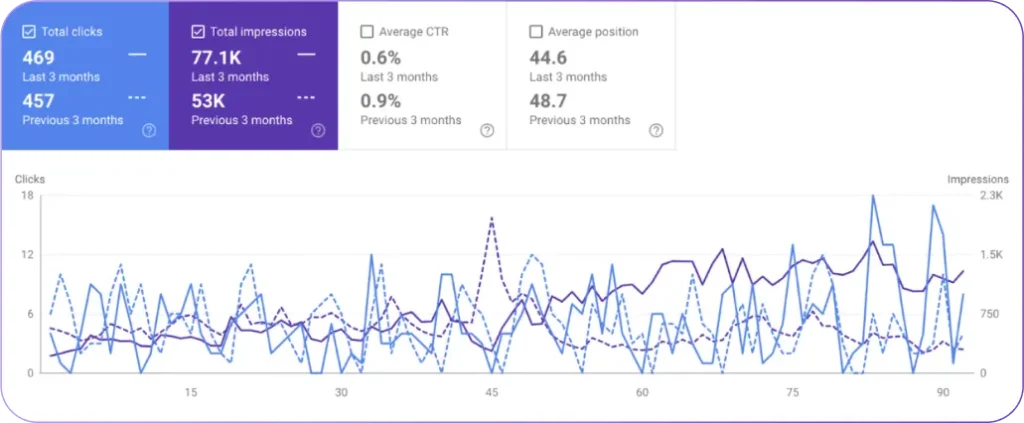
No, it is not currently possible to isolate Google AI Overview performance directly inside Google Search Console because Google aggregates AI Overview data with standard organic search metrics. Google Search Console combines AI Overview impressions with traditional results, and the Search Console API provides the same merged dataset without AI-specific filters. This aggregation inflates impressions by up to 40% while clicks increase by only 5%, and Average Position metrics often report placements at 20+ despite prominent top-of-page visibility.
However, external tracking frameworks provide more granular visibility into AI Overview presence and citation behavior. Tools such as SerpApi detect AI Overview blocks using Boolean identifiers and precise positioning data across monitored keywords. When AI Overviews appear, traditional organic click-through rates decline from 35% to 15%, yet informational queries that already contain zero-click features often show minimal additional traffic loss. Analysts measure citation frequency, including documented rates of 23%, to evaluate inclusion and brand exposure beyond standard ranking metrics.
Which Tools Are Best for Tracking Google AI Overview Performance?
Tracking Google AI Overview (AIO) performance requires specialized AI visibility tools and advanced SEO platforms that monitor keyword triggers, citation presence, and brand prominence inside generative summaries. Tools for AI Traffic Tracking analyze AI-triggered queries, detect citation formats, and measure inclusion across regions such as the United States, India, and the United Kingdom.
- Search Atlas. Search Atlas tracks AI Overview triggers, citation frequency, and Generative Share of Voice (GSVO) across monitored keywords. Search Atlas identifies cited domains, maps link prominence inside summaries, and benchmarks brand visibility against competitors to quantify citation performance.
- AI Overview Checker. AI Overview Checker verifies whether specific keywords trigger AI summaries and identifies which domains receive citations. AI Overview Checker functions as a diagnostic tool that confirms AI inclusion and detects structural gaps preventing citation.
- Otterly.AI. Otterly.AI monitors brand and competitor mentions inside AI-generated responses and tracks citation changes over time. Otterly.AI supports competitive intelligence by identifying which domains replace or displace existing citations across tracked queries.
- SEMrush Sensor. SEMrush Sensor measures the prevalence of AI Overviews across search results and tracks volatility patterns. SEMrush identifies AI presence frequency but does not consistently confirm precise citation-level attribution within summaries.
- Ahrefs. Ahrefs tracks whether domains appear inside AI Overviews for targeted keywords. Ahrefs provides visibility indicators for AI inclusion, though detailed citation-level segmentation remains limited compared to specialized AI tracking platforms.
Tools for AI Traffic Tracking valuate key performance metrics such as Generative Share of Voice (GSVO), citation rate percentage, and link prominence within AI summaries. Research shows that AI Overviews trigger for 30% to 40% of informational and commercial queries in the United States, and citation selection depends on factual density and entity clarity rather than organic rank alone, making dedicated AI visibility tracking essential for performance measurement.