Content pruning is the process of evaluating, removing, updating, and consolidating underperforming pages to improve SEO performance. Content pruning explains how websites shift from quantity-driven publishing to quality-driven indexing. Content pruning reflects how search engines prioritize strong, relevant pages instead of large volumes of weak content.
Content pruning matters because modern search systems rank fewer, stronger pages based on relevance, structure, and freshness. Search engines evaluate entire content libraries, not just individual pages, which means weak pages reduce overall site performance. Large websites often accumulate thousands of low-value URLs through outdated content, duplicate topics, and CMS-generated pages. These low-value pages create index bloat, which spreads authority thin and reduces ranking strength across the domain.
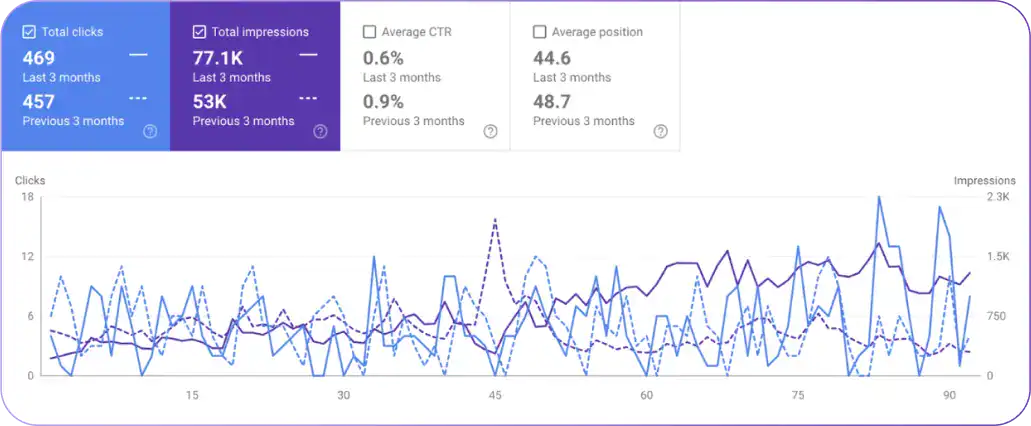
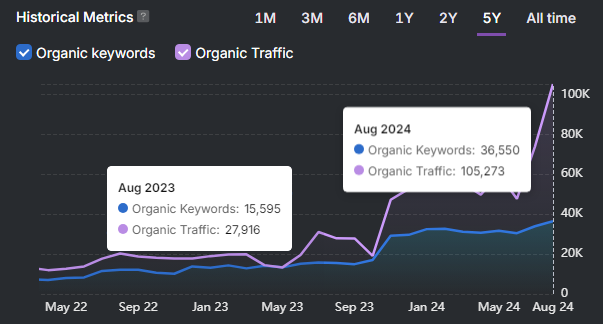
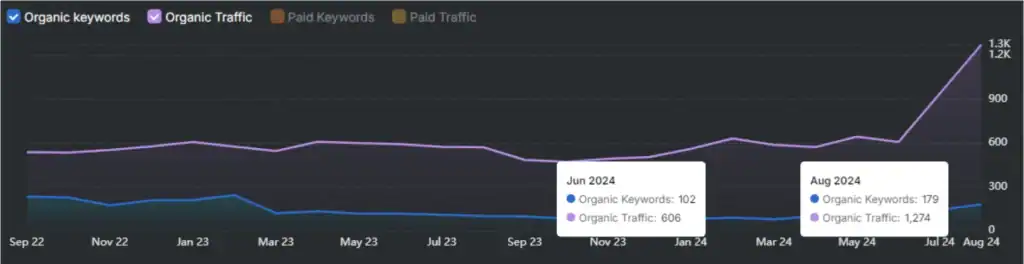
Content pruning improves rankings by concentrating authority into fewer, higher-quality pages. Case studies confirm measurable impact across industries. A vehicle valuation platform increased organic traffic by 160% and conversions by 105% after removing nearly 5 million pages. Belkins increased monthly traffic from 3,000 to 10,000 visits after pruning 400 low-quality pages. HubSpot improved crawl efficiency after deleting 3,000 pages, which reduced indexing overhead and improved content discovery speed.
Content pruning applies across blogs, enterprise websites, and ecommerce platforms where content volume grows continuously. Content pruning ensures that only relevant, high-quality pages remain indexed, which strengthens authority, improves crawl efficiency, and increases ranking consistency. Content pruning works through a structured content audit pruning process supported by tools (Search Atlas Site Audit). The audit identifies declining pages, thin content, and crawl inefficiencies.
What Is Content Pruning in SEO?
Content pruning is an SEO strategy that evaluates, removes, updates, and consolidates low-quality or underperforming pages to improve rankings. Content pruning defines how websites eliminate weak content and replace it with stronger, more relevant pages. Content pruning reflects the shift toward quality-first indexing, where search engines reward relevance, structure, and clarity over volume.
Content pruning in SEO focuses on removing what no longer contributes to performance. Content pruning differs from routine updates because it prioritizes elimination and consolidation instead of simple refreshes. Content pruning improves SEO performance by concentrating authority into fewer, stronger pages. John Mueller reinforces this approach by emphasizing fewer, stronger pages instead of many weak ones.
How do search engines evaluate content pruning at the site level? Search engines evaluate entire websites, which means low-quality pages reduce overall authority. Search engines analyze all indexed URLs and distribute authority across them. Low-value pages create index bloat, which spreads ranking signals across too many URLs. This dilution weakens the performance of high-value pages that compete for visibility.
What results does content pruning produce in real SEO cases? Content pruning produces measurable increases in traffic, conversions, and crawl efficiency. A vehicle platform increased organic traffic by 160% and conversions by 105% after removing nearly 5 million pages. Belkins increased monthly traffic from 3,000 to 10,000 visits after pruning 400 pages. HubSpot improved crawl efficiency after deleting 3,000 pages, which reduced indexing time and improved content discovery.
How does content pruning improve site structure and authority? Content pruning improves site structure by removing unnecessary pages and consolidating authority into fewer URLs. Internal linking becomes more efficient because links point to stronger pages. This structure increases topical clarity and strengthens how search engines interpret the site.
What Is the Difference Between a Content Audit and Content Pruning?
The difference between a content audit and content pruning lies in their roles within the SEO workflow. A content audit diagnoses performance across all pages, while content pruning executes changes based on that diagnosis. This distinction defines how websites move from analysis to measurable SEO improvement.
The core differences between a content audit and content pruning are below.
| Aspect | Content Audit | Content Pruning |
|---|---|---|
| Purpose | Diagnoses performance across all URLs to identify issues and opportunities. | Execute actions that remove, update, or consolidate content to improve performance. |
| Primary goal | Identifies declining traffic, duplicate content, and weak engagement signals. | Resolves cannibalization, removes low-value pages, and strengthens overall site quality. |
| Workflow process | Collects data from multiple sources and evaluates each URL systematically. | Applies a decision framework that defines keep, update, consolidate, deindex, or delete actions. |
| Key data inputs | Uses clicks, impressions, rankings, backlinks, engagement metrics, and internal links. | Uses audit scores, search demand, duplication signals, and content usefulness evaluation. |
| Outcome | Produces a complete URL inventory with clear performance classifications. | Produces a leaner index with stronger pages and improved ranking consistency. |
| Timing and frequency | Runs before major SEO changes, after traffic drops, and during routine evaluations. | Runs after audits and follows recurring cycles based on site size and publishing frequency. |
| Relationship | Acts as the diagnostic phase that defines what actions are required. | Acts as the execution phase that applies those actions across the site. |
What does a content audit do in SEO? A content audit evaluates every indexed page to identify performance issues and opportunities. The audit creates a full inventory of URLs and assigns performance scores based on traffic, rankings, and engagement. This evaluation reveals which pages drive value and which pages reduce site performance.
What does content pruning do after a content audit? Content pruning applies actions that remove, update, or consolidate pages based on audit findings. The pruning process follows a structured decision system that determines whether a page remains, improves, merges, or leaves the index. This execution phase creates a direct impact on rankings and crawl efficiency.
Why must a content audit happen before content pruning? Content pruning requires audit data because decisions depend on measurable performance signals. Pruning without audit data removes pages blindly, which risks deleting valuable content. The audit defines which pages require action and ensures that pruning improves performance instead of damaging it.
How do content audit and content pruning work together in practice? Content audit and content pruning operate as sequential phases inside one unified workflow. The audit collects and analyzes data, while pruning applies changes based on that analysis. Search Atlas Site Audit enables the diagnostic phase by identifying declining pages, duplication, and crawl inefficiencies before pruning decisions begin.
Why Is Content Pruning Important for SEO?
Content pruning is important for SEO because search engines evaluate overall site quality, not just individual pages. Low-value pages weaken authority signals, dilute relevance, and reduce ranking strength across the domain. Content pruning removes these inefficiencies and concentrates value into fewer, stronger pages that perform better in search results.
The 8 main reasons content pruning improves SEO performance are listed below.
1. Improves crawl efficiency and indexation clarity. Content pruning improves crawl efficiency by removing low-value pages that consume crawl resources without contributing to rankings. Search engines allocate a limited crawl budget across all URLs, which results in unnecessary pages reducing crawl frequency for important content. Removing weak pages allows search engines to focus on high-value URLs, which increases crawl depth, improves indexation speed, and ensures that priority pages receive consistent visibility in search results.
2. Strengthens topical authority and content relevance. Content pruning strengthens topical authority by consolidating scattered or overlapping content into focused, high-quality topic clusters. Search engines interpret expertise through depth and consistency across related pages, which makes fewer, stronger pages signal higher topical authority. Consolidated content eliminates confusion, aligns intent more clearly, and improves how search engines rank pages for competitive queries.
3. Concentrates link equity across fewer, stronger pages. Content pruning concentrates link equity by merging or redirecting weaker pages into authoritative URLs that deserve to rank. Internal links and backlinks distribute authority across fewer pages, which increases ranking potential per page. This concentration improves domain strength, enhances keyword performance, and ensures that link signals reinforce priority content instead of spreading across low-value pages.
4. Aligns with search engine quality evaluation systems. Content pruning aligns with search engine quality signals by reducing large volumes of thin, duplicate, or outdated content. Search engines evaluate domain-wide quality, which makes excessively low-value pages reduce trust and visibility. Removing weak pages improves perceived site quality, strengthens relevance signals, and increases the likelihood of higher rankings across important queries.
5. Enhances user experience and engagement signals. Content pruning enhances user experience by simplifying navigation, removing outdated information, and presenting clearer, more relevant content paths. Visitors interact with fewer distractions and reach valuable information faster, which improves engagement metrics. Higher engagement signals reinforce content quality and contribute to stronger SEO performance over time.
6. Enhances user experience and engagement metrics. Content pruning enhances user experience by removing clutter, simplifying navigation, and presenting clearer content pathways. Visitors find relevant information faster and interact with fewer distractions. This improvement increases engagement, reduces bounce rates, and strengthens behavioral signals that influence rankings. For example, IBM reduced navigation steps from 5 clicks to 2 after pruning over 1,000 pages, which increased navigation satisfaction by 30%.
7. Accelerates indexing and performance of new content. Content pruning accelerates indexing by freeing crawl resources for new and updated pages. Search engines discover and process new content faster when fewer low-value pages exist. Faster indexing leads to quicker ranking opportunities and improves how new content competes in search results.
8. Increases organic traffic and conversion performance. Content pruning increases traffic and conversions by improving authority concentration and content quality. Case studies confirm this impact, where a vehicle platform increased organic traffic by 160% and conversions by 105% after removing nearly 5 million pages. Belkins increased monthly traffic from 3,000 to 10,000 visits after pruning 400 pages, which demonstrates how focusing on quality over quantity drives measurable business growth.
What Is Index Bloat and How Does Content Pruning Fix It?
Index bloat is a condition where search engines index too many low-value or duplicate pages, and content pruning fixes it by removing, consolidating, and deindexing those pages. Index bloat shifts SEO from quality-focused indexing to quantity-heavy indexing, which reduces overall site performance. Search engines prioritize useful, relevant pages, which means excess low-quality URLs weaken visibility instead of increasing it.
Index bloat matters because search engines evaluate the entire index footprint of a website, not just top-performing pages. A site with 10,000 weak pages distributes authority inefficiently, while a site with 500 strong pages concentrates authority effectively. This imbalance reduces ranking strength, creates confusion in query matching, and limits how search engines interpret relevance.
What are the impacts of index bloat on SEO performance? Index bloat reduces SEO performance by diluting crawl resources, spreading authority across weak pages, and creating ranking instability. Search engines waste crawl budgets on non-priority URLs, which limits the discovery and indexing of high-value pages. Weak pages compete with strong pages, which creates inconsistent rankings and reduces visibility for important content. Index bloat lowers site-wide quality signals, reduces trust, and weakens how search systems select pages for results.
What mechanisms cause index bloat on websites? Index bloat emerges from uncontrolled URL generation, duplicate content patterns, and weak content governance across the site. Common sources include faceted navigation, parameterized URLs, and CMS-generated pages that create multiple variations of the same content. Programmatic SEO without strict controls generates large volumes of near-duplicate pages, which increases index size without increasing value.
How does content pruning fix index bloat? Content pruning fixes index bloat by removing, consolidating, and deindexing low-value pages that consume index space without delivering value. Pruning reduces the number of indexed URLs and increases the average quality of remaining pages. Consolidation merges duplicate pages into a single authoritative version, while redirects transfer link equity to stronger URLs. Deindexing removes unnecessary pages from search results, which creates a leaner and more focused index.
What benefits does content pruning create after fixing index bloat? Content pruning improves crawl efficiency, increases ranking consistency, and strengthens authority distribution across fewer pages. Search engines focus on high-value content, which improves indexing speed and visibility. Removing weak pages eliminates internal competition, concentrates link equity, and improves how search engines interpret site structure.
How Does Content Pruning Reduce Keyword Cannibalization?
Content pruning reduces keyword cannibalization by consolidating overlapping pages into a single authoritative page, which removes internal competition and strengthens rankings. Keyword cannibalization occurs when multiple pages target the same query with similar intent, which splits authority and confuses search engines. Content pruning resolves this conflict by merging, redirecting, or removing competing pages so one page captures full ranking potential.
Keyword cannibalization weakens SEO performance because search engines need to choose between similar pages from the same domain. This choice creates ranking instability and reduces visibility for the strongest page. Content pruning simplifies this decision by presenting one clear, relevant result per topic, which improves ranking consistency and click-through rates.
How does Google interpret keyword overlap across multiple pages? Google interprets keyword overlap as competing signals that reduce clarity about which page best answers a query. Search systems group similar pages through host clustering, which limits how many results appear from the same domain. This division weakens ranking signals and reduces total traffic because clicks distribute across several lower-ranking results instead of one high-ranking page, which reinforces the negative effects of keyword cannibalization.
What are the impacts of keyword cannibalization on rankings and traffic? Keyword cannibalization reduces rankings, splits backlinks, and lowers click-through rates across competing pages. Multiple pages targeting the same keyword divide authority instead of concentrating it. This division weakens ranking signals and reduces total traffic because clicks distribute across several lower-ranking results instead of one high-ranking page.
What preventive measures stop keyword cannibalization from returning? Keyword cannibalization prevention requires structured content planning and continuous monitoring of keyword targeting. Content audits identify overlapping topics before they impact performance. Clear keyword mapping assigns one primary keyword per page, which prevents duplication.
What Types of Content Should Be Pruned?
Content needs to be pruned when pages reduce overall site quality, create duplication, or fail to contribute to rankings and relevance. Content pruning focuses on removing or improving pages that weaken authority, waste crawl resources, or confuse search engines.
The 6 main types of content that need to be pruned are listed below.
1. Outdated and obsolete content. Outdated content contains old statistics, expired information, or references that no longer reflect the current reality. This content loses relevance over time and weakens trust signals. Removing or updating outdated pages improves accuracy and strengthens ranking potential.
2. Low-performing content with no traffic or engagement. Low-performing content generates little or no clicks, impressions, or user interaction. These pages consume crawl resources without contributing to SEO performance. Removing or consolidating them increases overall site efficiency and improves visibility for stronger pages.
3. Duplicate and overlapping content. Duplicate content targets the same keywords or topics across multiple pages, which creates internal competition. Overlapping pages confuse search engines and split ranking signals. Consolidating these pages into one authoritative resource improves clarity and eliminates keyword cannibalization.
4. Thin or low-quality content. Thin content lacks depth, usefulness, or originality, which reduces its ability to rank. Pages with minimal information or poor structure weaken overall site quality signals. Removing or expanding these pages improves content standards and strengthens domain authority.
5. Irrelevant or misaligned content. Irrelevant content does not match current business goals, target audience, or topical focus. These pages confuse search engines about the site’s purpose and reduce topical authority. Removing misaligned content sharpens relevance and improves ranking consistency.
6. Technically problematic or low-value indexable pages. Technically problematic content includes pages with broken links, crawl issues, or improper indexing signals. Low-value indexable pages include tag archives, filtered URLs, and internal search results. Deindexing or fixing these pages reduces index bloat and improves crawl efficiency.
What Content Should You Not Prune?
Content does not need to be pruned when pages provide value, hold authority, or support rankings and internal linking structure. Content pruning removes weak pages, but removing strong or strategic pages reduces performance and weakens SEO signals.
Content pruning avoidance depends on identifying pages that contribute to traffic, authority, and relevance. High-value pages strengthen rankings, distribute link equity, and support topic coverage. Removing these pages reduces visibility and disrupts site structure.
What are the main types of content that should not be pruned? High-performing pages with strong traffic and rankings maintain visibility and stability. Pages with strong backlinks preserve link equity and trust signals. Core pages define relevance and reinforce primary topics. Pages targeting unique keywords expand coverage and capture additional traffic. Pages that support internal linking distribute authority and strengthen overall ranking performance.
Why should high-value content remain untouched during pruning? High-value content needs to remain because it contributes directly to rankings, authority, and traffic. Removing strong pages reduces visibility and weakens overall site performance. Content pruning improves SEO only when low-value pages leave the index while high-value pages remain intact.
What risks occur when important content is pruned incorrectly? Incorrect pruning removes valuable signals (backlinks, rankings, and internal links), which leads to traffic loss and ranking decline. Search engines lose clear relevance signals, which creates instability in rankings. This instability reduces trust and weakens long-term SEO performance.
How to Conduct a Content Pruning Audit?

Content pruning audits work by inventorying every indexable page, evaluating page performance, identifying content issues, and assigning the right action for each URL. A content pruning audit shifts content management from guesswork to evidence-based decisions. The audit reveals which pages to keep, improve, merge, deindex, or remove so the site gains stronger rankings, cleaner architecture, and better crawl efficiency.
What warning signs indicate a need for content pruning? A content pruning audit is needed when traffic plateaus, impressions decline, multiple pages target the same keyword, or many URLs receive zero clicks. Broken links, outdated statistics, weak engagement, and duplicate content patterns signal that the content library has started to decay. Algorithm updates, site migrations, and visibility loss after search changes create additional signals that a full audit is overdue.
What are the steps in the content pruning process? A content pruning audit depends on performance data, technical data, and content quality signals. These signals show where content loses value, overlaps with other pages, or fails to match search intent.
The 5 main steps in a content pruning audit are listed below.
1. Create a Content Inventory
Creating a content inventory establishes the full scope of the pruning process and gives every page a place inside one working document. A complete inventory lists all indexable URLs, page titles, content types, page purposes, publish dates, update dates, and ownership details. This inventory matters because pruning decisions fail without a complete view of the site. Hidden pages, duplicate pages, archive pages, and outdated resources often remain untouched until the inventory reveals them. A strong inventory separates core pages from secondary pages and separates strategic assets from dead weight. This structure creates the base for every later decision and turns content pruning into a controlled process instead of a random cleanup.
2. Gather Performance Data
Gathering performance data shows which pages create value and which pages reduce value across the site. This step adds clicks, impressions, rankings, organic traffic, conversions, backlinks, internal links, engagement signals, freshness signals, and technical health indicators to each URL in the inventory. Performance data matters because low traffic alone does not prove that a page deserves removal. Some pages assist conversions, attract backlinks, or support internal linking, even with weak traffic. Strong evaluation compares several signals at once and reveals the true role of each page. This step exposes traffic decay, keyword overlap, outdated content, intent mismatch, and weak engagement patterns. The result is a complete picture of page value based on evidence instead of assumptions.
3. Use a Decision Framework to Categorize Every URL
Using a decision framework converts raw data into clear pruning decisions for every page. A practical framework uses 5 actions (keep, update, consolidate, deindex, and remove). Keep applies to pages with strong traffic, rankings, backlinks, or strategic relevance. Update applies to pages with good topics and weak execution. Consolidation applies to overlapping pages that target the same intent and split authority. Deindex applies to pages that need to stay live for users but do not belong in search results. Remove applies to pages with no traffic, no backlinks, no rankings, and no strategic purpose. This framework creates consistency across the audit and prevents emotional or inconsistent decisions during large-scale pruning projects.
4. Take Action (Batching)
Taking action in batches makes the pruning process safer, easier to manage, and easier to measure. Batching groups similar pages into focused sets (outdated blog posts, duplicate service pages, thin category pages, or expired campaign pages). This structure improves execution because teams work through one type of issue at a time and apply consistent fixes across similar URLs. Update batches refresh content, improve intent matching, and strengthen page quality. Consolidation batches merge overlapping pages and apply redirects. Deindex batches remove low-value pages from search visibility without deleting them. Removal batches eliminate pages with no recovery path. Batch execution reduces confusion, limits mistakes, and creates a cleaner workflow for large sites with many weak pages.
5. Monitor Results
Monitoring results confirms whether the pruning audit improved site performance and whether the selected actions produced the right outcome. This step tracks keyword rankings, clicks, impressions, crawl activity, indexation changes, engagement signals, conversions, and redirect behavior after each batch goes live. Monitoring matters because content pruning changes site structure, ranking signals, and internal competition across many URLs at once. Clear records show which pages were updated, merged, deindexed, or removed, and connect those actions to performance changes over time. Strong monitoring identifies positive trends (stronger rankings and better impression concentration) and identifies negative trends that require revision. This final step turns content pruning into an ongoing optimization system instead of a one-time project.
What are the Key Metrics to Analyze for Content Pruning?
Key metrics for content pruning measure how each page performs across traffic, engagement, authority, and rankings. These metrics identify which pages create value and which pages reduce value. This analysis ensures that pruning decisions improve SEO performance instead of removing useful content.
The 5 main metrics to analyze for content pruning are listed below.
1. Pageviews
2. Organic Traffic
3. Bounce Rate & Time on Page
4. Backlinks
5. Keyword Rankings
1. Pageviews
Pageviews are a key metric to analyze for content pruning because they reflect how often users access and interact with a page. Pageviews reveal content visibility and user interest through repeated access patterns, which makes them a strong indicator of whether a page justifies its presence on a site.
How do pageviews quantify user interest and interaction? Pageviews measure how many times users load a page, which reflects demand and discoverability. Higher pageviews indicate stronger interest and stronger positioning within navigation or search, while lower pageviews indicate weak visibility or weak relevance.
Why do pageviews identify content with low engagement? Low pageviews signal that a page fails to attract users over time. Pages that receive minimal views across several months often lack internal links, fail to match search intent, or exist outside core topic clusters.
What role do pageviews play in data-driven decisions? Pageviews guide pruning decisions by showing which pages contribute to traffic and which pages do not. Pages with no meaningful views rarely contribute to awareness, engagement, or conversion pathways.
How do pageviews connect to business outcomes? Pageviews connect directly to awareness and top-of-funnel performance. Pages that fail to generate views rarely assist brand discovery or assist conversions indirectly through user journeys.
2. Organic Traffic
Organic traffic is a key metric to analyze for content pruning because it reflects how pages perform in search results and how well content aligns with real search demand. Organic traffic reveals whether a page attracts users consistently from search engines, which makes it one of the strongest indicators of SEO value.
How does organic traffic indicate content value? Organic traffic shows whether a page satisfies search intent and captures demand for specific queries. Pages with stable organic traffic demonstrate relevance and authority, while pages with no traffic signal weak alignment with user intent.
Why does organic traffic impact SEO visibility? Search engines prioritize pages that attract consistent organic visits. Pages with declining traffic lose visibility signals over time, which reduces rankings and weakens the overall performance of the site.
What is the relationship between organic traffic and user behavior? Organic visitors arrive with intent and expectations tied to specific queries. Pages that fail to attract these users often fail to match intent, structure information clearly, or compete effectively against other results.
How does organic traffic influence pruning decisions? Organic traffic determines whether a page needs to be kept, improved, merged, or removed. Pages with zero traffic across 6 to 12 months require review because they add little value and contribute to index bloat.
3. Bounce Rate and Time on Page
Bounce rate and time on page are key metrics to analyze for content pruning because they measure how users interact with content after arrival. These metrics reveal whether content satisfies expectations and whether users find value within the page.
How do these metrics indicate user dissatisfaction? High bounce rates combined with short time on page show that users leave quickly without engaging. This behavior signals that the content fails to meet expectations or fails to answer the intended query clearly.
Why do these metrics affect SEO performance? Engagement signals reflect perceived content quality and relevance. Poor engagement patterns reduce content effectiveness and weaken performance across search results over time.
What makes these metrics signal content issues? High bounce rates and low time on page often indicate intent mismatch, weak structure, outdated information, or poor readability. These issues reduce user satisfaction and reduce the likelihood of ranking improvements.
How do these metrics guide content strategy? Engagement metrics identify pages that require updates, restructuring, consolidation, or removal. These metrics provide clear signals for improving content quality and strengthening user experience across the site.
4. Backlinks
Backlinks are a key metric to analyze for content pruning because they represent authority, trust, and external validation from other websites. Backlinks show how content contributes to domain strength and ranking potential beyond direct traffic.
How do backlinks signal authority and trust? Backlinks act as external endorsements that confirm content value. Pages with strong backlinks gain higher credibility and stronger ranking signals across search engines.
Why do backlinks impact SEO performance? Backlinks influence rankings by transferring authority from one domain to another. Pages with high-quality backlinks strengthen the entire domain, which improves visibility across multiple pages.
What makes backlinks critical in pruning decisions? Backlinks determine whether a page needs to be preserved, merged, or redirected. Pages with backlinks retain value even if traffic remains low, which prevents direct deletion in most cases.
How should backlinks be handled during pruning? Pages with backlinks require consolidation or redirection to preserve link equity. Proper handling ensures that authority transfers to relevant pages and maintains overall SEO strength.
5. Keyword Rankings
Keyword rankings are a key metric to analyze for content pruning because they reflect how visible a page is in search results and how effectively content targets specific queries. Rankings show how content performs against competitors within the same topic.
How do keyword rankings reflect visibility? Rankings indicate where a page appears in search results for target queries. Higher rankings increase exposure and traffic potential, while lower rankings reduce discoverability.
Why do rankings indicate content performance issues? Pages with no rankings or declining positions signal weak optimization, outdated information, or strong competition. These signals indicate that content requires improvement or consolidation.
What role do rankings play in identifying overlap? Rankings reveal when multiple pages compete for the same keywords. This competition splits authority and reduces the chance of achieving top positions.
How do rankings measure pruning success? Tracking rankings before and after pruning shows whether updates, merges, or removals improved visibility. Ranking improvements confirm that pruning strengthened content focus and authority.
How Often Should You Prune Your Website Content?
Content pruning needs to occur on a recurring schedule based on site size, publishing frequency, and performance changes rather than a fixed calendar. Content pruning frequency ensures that outdated, overlapping, or low-value pages do not accumulate and weaken search visibility. A consistent content pruning schedule keeps the content library aligned with search demand, improves crawl efficiency, and maintains strong ranking performance across important pages.
How often should enterprise and high-publishing websites prune content? Enterprise websites and high-publishing sites require quarterly pruning cycles because content volume grows quickly and decay happens faster. These sites often publish more than 20 pieces per month, which creates rapid content expansion and a higher risk of duplication, outdated pages, and keyword overlap. Quarterly audits ensure that weak pages do not accumulate and dilute authority across the site. Rolling pruning between audits keeps performance stable because decisions rely on fresh data instead of delayed evaluations. This schedule answers how often to prune content for large-scale operations where content velocity directly impacts SEO performance.
How often should mid-size blogs and growing websites prune content? Mid-size blogs and growing websites require semi-annual pruning cycles because content growth remains steady but manageable. These sites often publish 4 to 8 pieces per month, which creates moderate expansion without overwhelming the content structure. A content pruning frequency of every 6 months ensures that underperforming pages are identified before they impact rankings or internal linking strength. This schedule balances effort and impact by allowing enough data accumulation for accurate evaluation while preventing long-term content decay. This approach answers when to do a content audit for sites that scale steadily but require structured maintenance.
How often should small websites prune content? Small websites require annual pruning cycles because content volume remains limited and changes happen more slowly. These sites often publish infrequently, which reduces the risk of rapid content decay or duplication. A yearly content pruning schedule ensures that outdated pages, irrelevant topics, and weak-performing content do not accumulate over time. Annual audits maintain site clarity and preserve topical focus without requiring constant intervention. This schedule answers content pruning frequency for smaller sites where stability matters more than speed.
When should content pruning happen outside a fixed schedule? Content pruning needs to happen immediately after major performance shifts, especially after significant search algorithm updates. Google core updates, Helpful Content updates, and spam policy changes alter rankings and traffic patterns across entire content libraries. A measurable traffic drop or visibility shift triggers an unscheduled audit within 30 days. This reactive approach ensures that pruning decisions reflect the new search landscape instead of outdated assumptions. This condition defines when to do a content audit based on external changes rather than internal schedules.
Why does content pruning frequency affect SEO performance? Content pruning frequency affects SEO performance because search engines evaluate freshness, relevance, and structural clarity across the entire site. A consistent pruning schedule prevents index bloat, reduces keyword overlap, and concentrates authority on high-value pages. Recurring monitoring through tools (Search Atlas Site Audit) keeps performance data continuously updated between formal pruning cycles. This continuous data flow ensures that every pruning decision is based on current performance signals instead of outdated metrics, which improves accuracy and long-term SEO results.
What Are the Most Common Content Pruning Mistakes to Avoid?
Content pruning mistakes happen when pages are removed, merged, or updated without clear data, structure, or intent alignment. These mistakes reduce rankings, waste authority, and damage site performance instead of improving it. Content pruning requires precision because every action changes how search engines interpret and rank the site.
There are 10 main content pruning mistakes to avoid.
1. Removing high-performing pages. Removing high-performing pages destroys existing traffic, rankings, and authority signals that took time to build. High-performing pages generate consistent clicks, impressions, and conversions, which makes them critical assets. Deleting or heavily altering these pages reduces visibility and creates unnecessary ranking loss. High-performing pages require protection, not removal, because they anchor performance across the site.
2. Ignoring backlink value before pruning. Ignoring backlinks leads to loss of link equity, which weakens domain authority and ranking strength. Pages with strong backlinks carry external trust signals that influence multiple pages across the site. Removing these pages without redirection wastes accumulated authority. Backlink evaluation needs to happen before pruning so that consolidation or redirection preserves value.
3. Pruning based only on low traffic. Pruning based only on low traffic creates inaccurate decisions because traffic does not represent total value. Some pages assist conversions, strengthen internal linking, or target long-tail queries without high volume. Removing these pages reduces support for stronger pages. Traffic needs to be analyzed with rankings, backlinks, and conversions to determine true value.
4. Failing to identify keyword cannibalization. Failing to identify keyword cannibalization allows multiple pages to compete for the same intent, which splits authority and reduces ranking potential. Search engines struggle to determine which page to prioritize, which leads to unstable rankings. Consolidation resolves this issue by combining signals into one stronger page that captures full visibility.
5. Deleting pages instead of consolidating them. Deleting pages without consolidation removes useful content and strengthens another page. Overlapping or similar pages often contain valuable information that belongs in a single resource. Consolidation merges content and transfers authority through redirection, which creates stronger ranking potential than deletion alone.
6. Breaking internal linking structure. Breaking internal links during pruning disrupts authority flow and weakens connected pages. Internal links distribute relevance and guide search engines across the site. Removing pages without updating links creates orphan pages and reduces crawl efficiency. Internal linking needs to be reviewed and repaired after every pruning action.
7. Pruning without understanding search intent. Pruning without intent analysis removes pages that still match specific queries or user needs. Search intent determines whether a page remains useful even with low traffic. Removing intent-aligned pages reduces keyword coverage and limits visibility across different query types. Intent analysis ensures that pruning decisions preserve meaningful coverage.
8. Making large-scale changes at once. Making large-scale pruning changes at once creates instability and makes performance analysis difficult. Sudden removal of many pages disrupts rankings, crawl patterns, and internal structure simultaneously. Gradual batching allows clear measurement of impact and reduces risk. Controlled execution improves accuracy and prevents major performance drops.
9. Ignoring technical signals and indexation status. Ignoring technical issues leads to incorrect pruning decisions because some pages underperform due to technical problems, not content quality. Indexation errors, slow load speed, or crawl issues reduce visibility without reflecting true content value. Technical evaluation needs to happen before pruning to avoid removing pages that require fixes instead.
10. Failing to monitor results after pruning. Failing to monitor results prevents teams from understanding whether pruning improved or harmed performance. Rankings, traffic, impressions, and engagement need to be tracked after each change. Without monitoring, mistakes remain undetected, and opportunities for improvement remain unused. Continuous measurement turns pruning into a repeatable optimization process instead of a one-time action.
What Are the Best Content Pruning Tools in 2026?
The best content pruning tools in 2026 identify underperforming pages, measure content value, and guide decisions across removal, consolidation, and improvement. These tools analyze traffic, engagement, rankings, and technical signals to expose weak pages and protect high-value assets.
The 7 best content pruning tools in 2026 are Search Atlas Site Audit, Semrush, Google Search Console, Google Analytics 4, Surfer SEO, Hotjar, and All in One SEO.
1. Search Atlas Site Audit. Search Atlas Site Audit identifies low-quality pages, thin content, low impressions, low clicks, and technical issues across the entire site. The tool highlights worst-performing pages immediately, which makes it easier to isolate pruning candidates without manual filtering. Search Atlas Site Audit organizes pages by severity and performance, which creates a clear path for removal, consolidation, or improvement decisions. This visibility matters because pruning depends on fast identification of weak URLs. Search Atlas reduces complexity by showing which pages drag performance down and which pages require action first, which accelerates pruning workflows.
2. Semrush. Semrush evaluates content performance through traffic, keyword rankings, and content audit reports. The platform identifies pages with declining visibility, keyword cannibalization, and weak engagement signals. Semrush connects keyword data with page-level performance, which reveals gaps and overlaps across the content library. This connection matters because pruning decisions depend on understanding how pages compete or underperform in search results. The tool supports large-scale audits and provides structured reports that guide pruning priorities.
3. Google Search Console. Google Search Console measures clicks, impressions, and ranking positions directly from search performance data. The platform identifies pages with zero clicks, declining impressions, or weak keyword visibility. These signals expose pages that fail to attract search traffic or lost relevance over time. Google Search Console matters because it provides the most accurate view of how pages perform in search results. This data forms the foundation for identifying pruning candidates based on real search behavior.
4. Google Analytics 4. Google Analytics 4 tracks user behavior, engagement, and conversion performance across all pages. The platform reveals pages with low engagement, high drop-off rates, or minimal contribution to business goals. This behavioral data matters because pruning decisions require more than traffic analysis. Pages that fail to retain users or contribute to conversions often require removal or restructuring. Google Analytics 4 connects user interaction with content performance, which strengthens pruning accuracy.
5. Surfer SEO. Surfer SEO evaluates content quality through on-page optimization, structure, and relevance scoring. The tool identifies thin content, missing topics, and weak semantic coverage. These signals highlight pages that require improvement instead of removal. Surfer SEO matters because pruning does not always mean deletion. Some pages need optimization to compete effectively. The tool guides content updates that strengthen performance before considering removal.
6. Hotjar. Hotjar analyzes user behavior through heatmaps, session recordings, and interaction tracking. The platform reveals how users navigate pages, where they drop off, and which sections fail to engage attention. This behavioral insight matters because pruning decisions benefit from understanding real user experience. Pages that confuse users or fail to guide interaction often require restructuring or removal. Hotjar exposes usability issues that traditional SEO metrics do not capture.
7. AIOSEO. AIOSEO provides content decay tracking and identifies pages that lose performance over time. The tool flags outdated content, declining rankings, and weak optimization signals. This detection matters because content decay happens gradually and often goes unnoticed without monitoring. AIOSEO highlights pages that require updates, consolidation, or removal before performance drops further. This proactive identification strengthens long-term content quality and prevents the accumulation of weak pages.
How Does Content Pruning Improve Crawl Budget Efficiency?
Content pruning improves crawl budget efficiency by removing low-value pages and focusing search engine activity on pages that drive rankings and traffic. Crawl budget efficiency increases because search engines stop wasting resources on thin, duplicate, or outdated pages and instead prioritize high-value content that deserves indexing.
Content pruning improves crawl budget efficiency by reducing the number of unnecessary URLs that search engines need to crawl. Pages with zero traffic, zero impressions, or no strategic role create crawl waste and delay updates for important pages. Removing these pages concentrates crawl activity on valuable URLs, which increases indexing speed and keeps high-performing pages fresh in search results.
Content pruning improves crawl budget efficiency by consolidating duplicate and overlapping content into stronger pages. Multiple pages targeting the same intent split crawl attention and weaken relevance signals. Consolidation reduces redundancy and ensures that search engines focus on one authoritative page instead of several competing ones.
Content pruning improves crawl budget efficiency by increasing overall content quality. Thin and outdated pages consume crawl resources without delivering value, which lowers site quality signals. Removing or updating these pages improves the average quality of indexed content, which leads search engines to prioritize crawling and indexing the remaining pages.
Content pruning improves crawl budget efficiency by cleaning internal linking and crawl paths. Removing weak pages and updating links creates a clearer structure that search engines navigate more efficiently. This clarity ensures that crawl resources reach the most important pages faster, which strengthens visibility and ranking performance.
When Should You Merge Pages Instead of Deleting Them?
Content merging needs to happen when multiple pages target the same intent, share overlapping value, or hold partial authority that becomes stronger when combined. Content merging improves rankings, consolidates signals, and prevents internal competition, while deletion removes value entirely. The decision depends on whether the content still has relevance, authority, or expansion potential.
Content merging becomes the correct action when pages compete for the same query or intent, which creates keyword cannibalization and splits ranking signals. Search engines struggle to determine which page to prioritize when multiple URLs target similar topics with overlapping structure, titles, and subtopics. Merging resolves this conflict by consolidating authority into a single, stronger page that captures full visibility instead of fragmenting performance across several weaker pages.
Content merging becomes the correct action when pages contain useful information but lack depth or structure on their own. Many underperforming pages fail because they cover only part of a topic, repeat similar explanations, or miss key sections required to rank competitively. Combining these pages creates a comprehensive resource that satisfies user intent more effectively. This consolidation improves content quality, strengthens topical coverage, and increases the likelihood of ranking higher.
Content merging becomes the correct action when pages hold backlinks and rankings. Deleting pages with authority removes link equity and weakens overall domain strength. Merging preserves this value by redirecting secondary pages into a primary page, which transfers authority and strengthens the final resource. This approach ensures that past performance contributes to future rankings instead of disappearing.
Content merging becomes the correct action when no single page fully represents the topic better than others. Several mid-performing pages often exist without a clear winner, which creates inefficiency across the content structure. Merging these pages into one definitive resource creates clarity for search engines and users. This clarity improves indexing, simplifies navigation, and strengthens ranking signals.
Content merging does not replace deletion when a page has no value, no traffic, no backlinks, and no relevance to the business. Pages that cannot be improved or repurposed do not justify consolidation and need to be removed instead. The correct decision depends on whether the content holds recoverable value or whether it functions as dead weight within the site.
Can Content Pruning Hurt Rankings?
Yes, content pruning hurts rankings if it removes valuable pages, breaks authority signals, or ignores search intent. Content pruning affects rankings because every page contributes to traffic, backlinks, and topical relevance. Incorrect pruning removes these signals and creates visibility loss instead of improvement.
Content pruning refers to evaluating and removing, merging, or updating pages based on performance and relevance. Rankings refer to how pages appear in search results based on relevance, authority, and quality signals. These definitions explain why pruning decisions directly impact visibility and SEO performance.
How does content pruning hurt rankings when done incorrectly? Content pruning hurts rankings when high-performing pages, pages with backlinks, or pages with strong intent coverage are removed. These pages carry traffic, authority, and relevance signals that support overall rankings. Removing them reduces keyword coverage, breaks internal linking, and eliminates link equity. This loss weakens domain strength and reduces visibility across related queries.
Where does content pruning require the most caution? Content pruning requires caution with pages that hold backlinks, rankings, conversions, or entity relevance. Pages that define expertise, brand identity, or core topics contribute to authority even with low traffic. These pages require consolidation or improvement instead of deletion. Careful evaluation ensures that pruning removes only true dead weight while preserving valuable signals.
How Does Content Pruning Affect AI Overview and LLM Visibility?
Content pruning improves AI Overview and LLM visibility by consolidating authority, increasing citation probability, and removing low-quality pages that weaken trust signals. AI systems select a limited number of sources per topic, which means fragmented or low-quality content reduces the chance of being cited. Content pruning shifts a site from scattered signals to a unified, high-confidence source that AI models prefer to extract and reuse.
Content pruning refers to removing, merging, or improving pages based on performance and relevance. AI Overview and LLM visibility refer to how often a site appears inside AI-generated answers and summaries. These definitions explain why pruning impacts whether content gets selected, summarized, and cited.
How does content pruning improve AI citation likelihood? Content pruning improves AI citation likelihood by consolidating multiple weak pages into one authoritative page. AI systems favor a single clear answer per topic, not multiple competing pages from the same site. Cannibalized content splits authority and reduces confidence, while consolidated content concentrates signals. This concentration increases the probability that AI models select the page as a reliable source for answers.
How does content pruning affect domain-level authority signals for AI systems? Content pruning affects domain-level authority because AI systems evaluate overall site quality, not just individual pages. Large volumes of thin, duplicate, or outdated content dilute trust signals and reduce selection probability across all pages. Removing low-quality pages increases the average quality of the domain, which strengthens how AI models interpret expertise, consistency, and reliability.
What risks does content pruning create for AI visibility? Content pruning creates risks when it removes pages that contribute to entity definition, topical coverage, or existing citations. Some pages receive low traffic but still reinforce entity relationships or support broader topic clusters. Removing these pages weakens contextual signals that AI systems use to understand a brand. Careful evaluation prevents loss of hidden value that supports AI visibility.
How does content freshness influence AI Overview and LLM selection? Content freshness influences AI visibility because AI systems prefer recent, accurate, and updated information when generating answers. Pages that include updated data, current examples, and relevant context align better with real-time queries. Content pruning supports freshness by removing outdated pages and focusing updates on high-value content, which increases the likelihood of selection.
Where does content pruning fit within an AI visibility strategy? Content pruning serves as a foundational step in an AI visibility strategy because it defines which pages represent the site. AI systems interpret a domain as a collection of signals, not isolated pages. A clean, focused content library creates a coherent narrative, which improves how AI models retrieve, summarize, and cite information across topics.