Copy.ai alternatives are AI writing, SEO, and content automation platforms that replace Copy.ai across tasks related to marketing copy creation, long-form drafting, SEO optimization, ecommerce content, and editorial planning. These tools extend beyond template-based generation by offering deeper context control, research intelligence, and scalable workflows.
Many Copy.ai reviews point to limitations with long-form depth, SEO insight, and workflow flexibility. Template-led inputs restrict contextual guidance, tone consistency varies at scale, and advanced optimization features require additional tools. These constraints make free, paid, and cheaper Copy.ai competitors attractive for teams that need stronger structure and performance.
Professionals who rely on SEO data, SERP analysis, content scoring, bulk production, or brand-governed workflows often look for alternatives that provide more than fast copy generation. As content strategies mature, the lack of integrated research, automation, and optimization becomes a bottleneck.
Marketers, agencies, ecommerce teams, and businesses choose a Copy.ai alternative when they need scalable content systems, search-driven insights, and consistent quality across formats. The best Copy.ai alternatives in 2026 are Search Atlas, Jasper, and Rytr.
What are the Best Copy.ai Alternatives?
The top 33 best Copy.ai alternatives for 2026 cover marketing copy, SEO optimization, ecommerce catalog writing, content briefs, and editing. Some platforms run end-to-end content workflows, while others specialize in scoring, rewriting, or research.
The top 33 best Copy.ai alternatives for 2026 are listed below.
| # | Copy.ai Alternative | Best For | Price |
|---|---|---|---|
| 1 | Search Atlas | Best Copy.ai alternative | $99 to $399/month |
| 2 | Jasper | High-volume marketing copy creation | $49 to custom enterprise plans/month |
| 3 | Writesonic | Long-form blog and landing page content | $39 to $399/month |
| 4 | Rytr | Budget-friendly AI writing | $9 to $29/month |
| 5 | Anyword | Conversion-focused ad and landing page copy | $49 to $499/month |
| 6 | Scalenut | AI writing with integrated SEO workflows | $49 to $149/month |
| 7 | Copysmith | Ecommerce and product description copy | $19/month for custom enterprise plans/month |
| 8 | Frase | Research, briefs, and SERP-driven outlines | $45 to $115/month |
| 9 | Wordtune | Rewriting and style refinement | $6.99 to $9.99/month |
| 10 | QuillBot | Paraphrasing and grammar refinement | Free to $8.33/month |
| 11 | SurferSEO | SEO content scoring and optimization | $79 to $179/month |
| 12 | ContentBot.ai | Startup and SaaS-focused content | $9 to $49/month |
| 13 | GetGenie | WordPress and WooCommerce content creation | $9 to $89.10/month |
| 14 | Describely | Product descriptions at scale | From $0.75/product (custom plans available) |
| 15 | AirOps | Automated AI content workflows | Free to custom enterprise plans/month |
| 16 | Simplified | AI writing and social content | Free to $20/month |
| 17 | ClosersCopy | Direct-response copywriting | $49.99 to $99.99/month (lifetime $327 to $741) |
| 18 | Koala Writer | SEO articles from live SERP data | $9 to $99/month |
| 19 | You.com | Search-based AI writing | Free to usage-based APIs (from $6.25 CPM) |
| 20 | ChatGPT | Drafting, brainstorming, and editing | Free to $200/month |
| 21 | Content Harmony | Deep content briefs | $50 to $799/month |
| 22 | ProWritingAid | Style and readability editing | Free to $36/month |
| 23 | Clearscope | Enterprise SEO optimization | $189 to $399/month |
| 24 | Dashword | Content scoring and briefs | $99 to $349/month |
| 25 | TextWizard | Short-form marketing copy | $0 to $99/user/month |
| 26 | Grammarly | Grammar, tone, and clarity | Free to $30/month |
| 27 | Hypotenuse AI | Ecommerce and bulk content | $19 to $150/month |
| 28 | Sintra.ai | Brand-tone-controlled copywriting | $15.60/month |
| 29 | Notion AI | AI writing inside docs and notes | Free to $20/member/month |
| 30 | Textero.ai | Academic and essay writing | Free to $8.33/month |
| 31 | Caktus.ai | Student-oriented writing tools | $14.99 to $19.99/month (annual from $8.33/month) |
| 32 | Semrush Writing Assistant | SEO writing guidance | $249 to $499/month (+$20/month add-on) |
| 33 | Ahrefs Content Helper | Topic research and outlines | $129 to $449/month |
1. Search Atlas: Best Copy.ai Alternative
Search Atlas is an agentic SEO and content platform built for teams that need measurable growth. Search Atlas combines keyword intelligence, competitive research, semantic optimization, and automated execution in one workflow.
Search Atlas surpasses Copy.ai by combining writing with ranking intelligence and performance controls. Search Atlas aligns content with SERP intent, expands topical depth, and upgrades structure using live competitive signals, which turns content production into an optimization system instead of a template output.
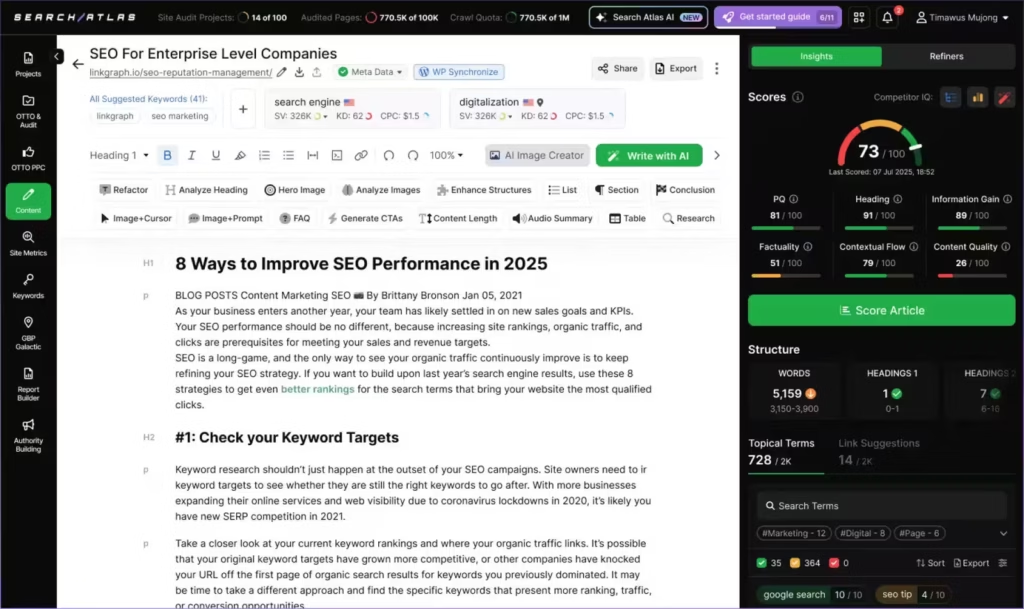
Search Atlas Content Genius is the semantic editor that generates and refines content through SERP analysis, keyword mapping, and passage-level recommendations. Content Genius identifies missing sections, corrects topical gaps, and strengthens relevance based on what top-ranking pages prove.
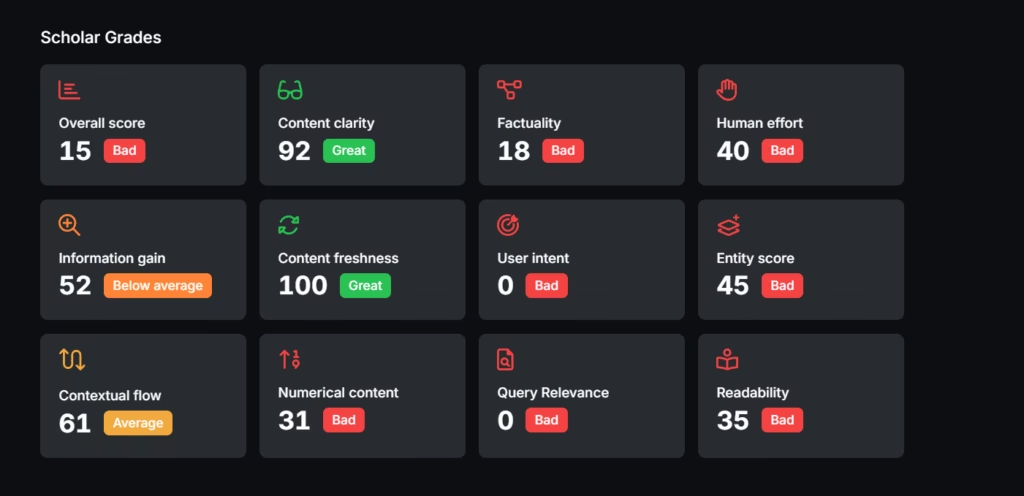
Search Atlas extends content quality scoring through SCHOLAR, the evaluation engine that grades content from 0 to 100. SCHOLAR measures clarity, accuracy, intent satisfaction, and information gain, which adds a quality layer missing in Copy.ai.
Search Atlas scales planning through Content Planner, which turns one seed topic into 300+ clusters organized by semantic relationship, intent, and opportunity. This planning system eliminates the fragmented workflow of writing first and searching for a strategy later.
Search Atlas expands production with structured AI templates and workflow tools that cover blogs, ads, landing pages, and ecommerce content. These templates guide structure and messaging, while the platform SEO intelligence keeps every draft aligned with ranking signals.
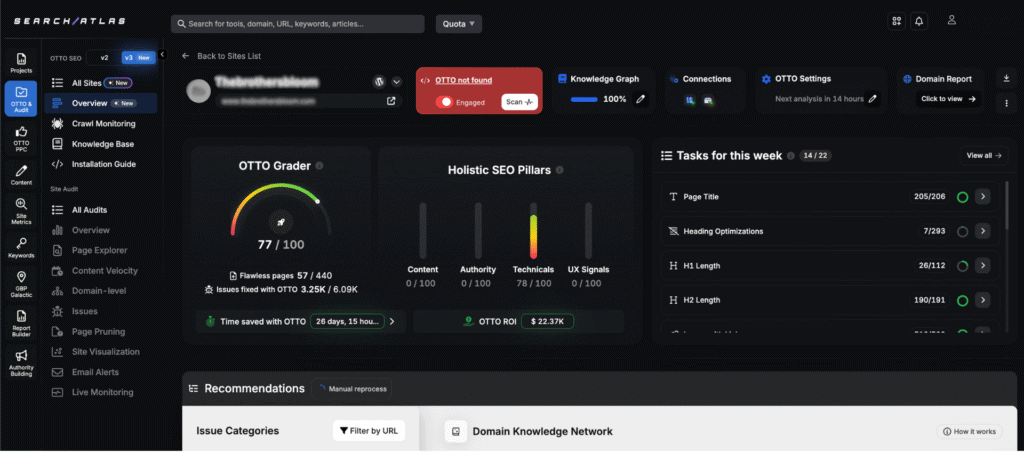
At the core of the platform is OTTO SEO, the autonomous system that applies optimizations directly on the site. OTTO updates title tags, internal links, schema, and on-page elements in real time, which closes the execution gap that exists in Copy.ai’s draft-first workflow.
Search Atlas is a paid tool with pricing ranging from $99 to $399 per month. This pricing replaces the cost of pairing Copy.ai with separate SEO research, content scoring, and optimization platforms.
Pros of Search Atlas review include automated execution through OTTO SEO, SERP-driven optimization through Content Genius, content grading through SCHOLAR, and scalable planning through Content Planner. The main con is a learning curve for teams new to data-driven workflows.
2. Jasper: Best Copy.ai Alternative for High-Volume Marketing Copy Creation
Jasper is a content automation platform designed for marketing teams that produce branded material across blogs, ads, and email. Jasper streamlines AI writing, brand-voice governance, and SEO-aligned templates inside one organized workspace.
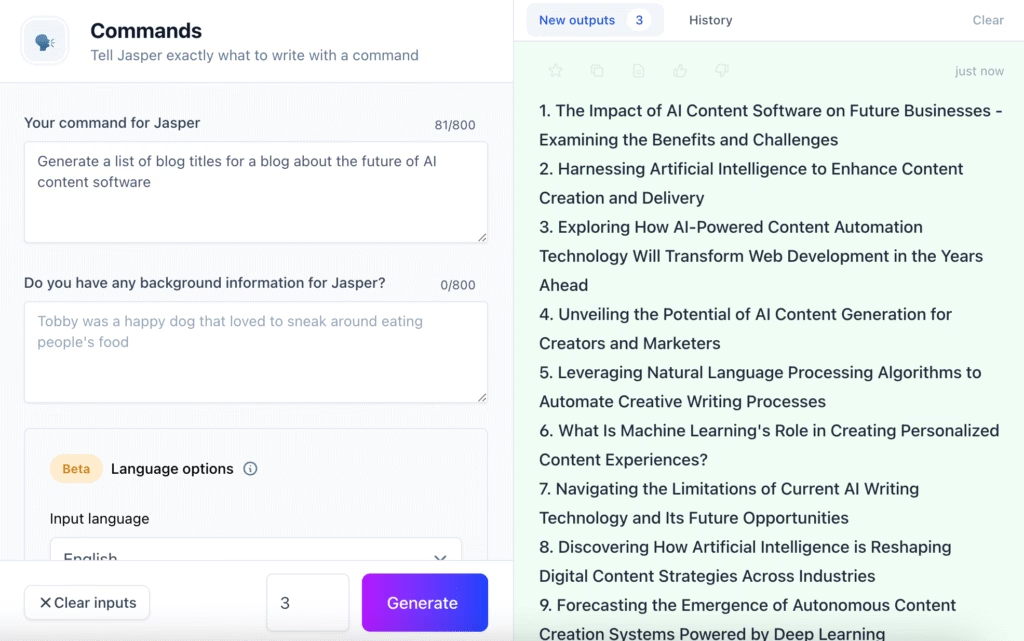
Jasper delivers stronger performance than Copy.ai for high-volume marketing copy creation, brand-voice precision, and long-form content workflows. Jasper creates consistent output across large content pipelines with structured templates and guided writing paths.
Core features include customizable workflows for blog articles, email sequences, social ads, and extended rewriting. These workflows establish clear steps that direct generation and revision, which increases production speed for marketing teams that produce recurring assets.
Jasper is a paid tool with pricing that ranges from $49 to custom enterprise plans per month. The Creator tier at $49 provides core writing tools. The Pro tier at $69 introduces collaboration, additional brand voices, and image creation. Business plans offer API access, enterprise controls, and advanced workflow customization.
Pros of Jasper include strong long-form quality and reliable brand consistency. Cons include an onboarding curve, no free tier, and weaker SEO intelligence compared to specialized optimization platforms.
3. Writesonic: Best Copy.ai Alternative for Long-Form Blog and Landing Page Content
Writesonic is an AI content platform designed to draft, refine, and optimize blogs, landing pages, ads, and product descriptions. Writesonic blends rapid generation with SEO-focused refinement for marketers who need detailed, publication-ready content.
Writesonic delivers stronger long-form output than Copy.ai because it offers deeper SEO features, dedicated long-form generators, and tailored landing page creation tools. Writesonic produces higher-quality first drafts for extensive articles and landing pages, while Copy.ai centers its workflow on fast, short-form templates.
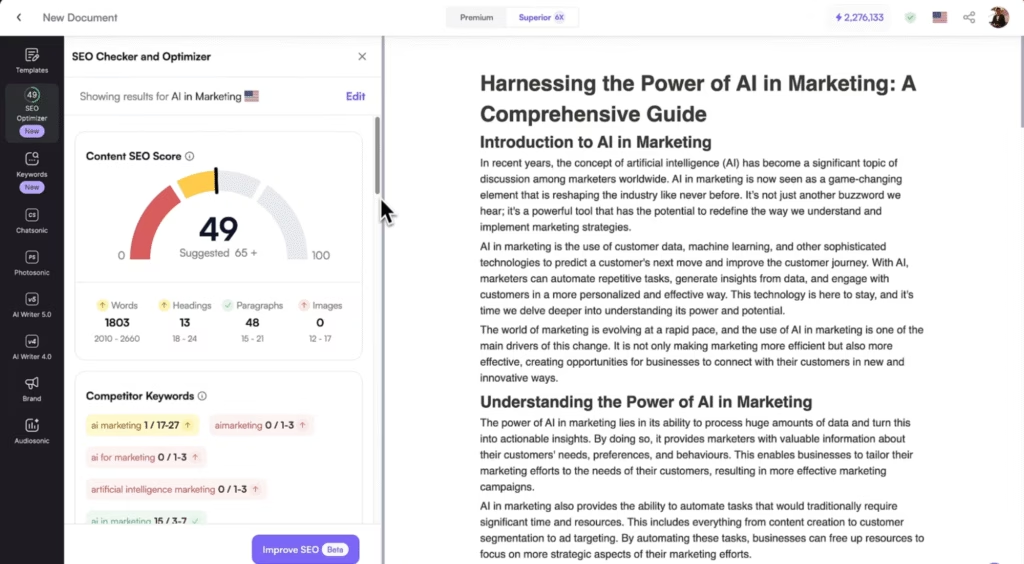
Core features in Writesonic include an SEO Optimizer for scoring and keyword evaluation. Writesonic Chatsonic connects with Ahrefs and WordPress, which streamlines research and publishing workflows. Outline builders, idea generators, and rewriting tools maintain structural clarity while improving tone.
Writesonic is a paid tool with pricing ranging from $39 to $399 per month. Entry tiers offer individual creators, while higher tiers introduce advanced integrations, expanded limits, reporting features, and multi-user capacity.
Pros of Writesonic review include integrated SEO scoring and flexible content formats. Cons include inconsistent quality in very long articles, strict limits on lower plans, and an interface that feels crowded for new writers.
4. Rytr: Best Copy.ai Alternative for Budget-Friendly AI Writing
Rytr is an AI writing tool developed for freelancers, marketers, and small businesses that need fast and affordable short-form content. Rytr produces emails, ads, product descriptions, and blog snippets across more than 30 languages.
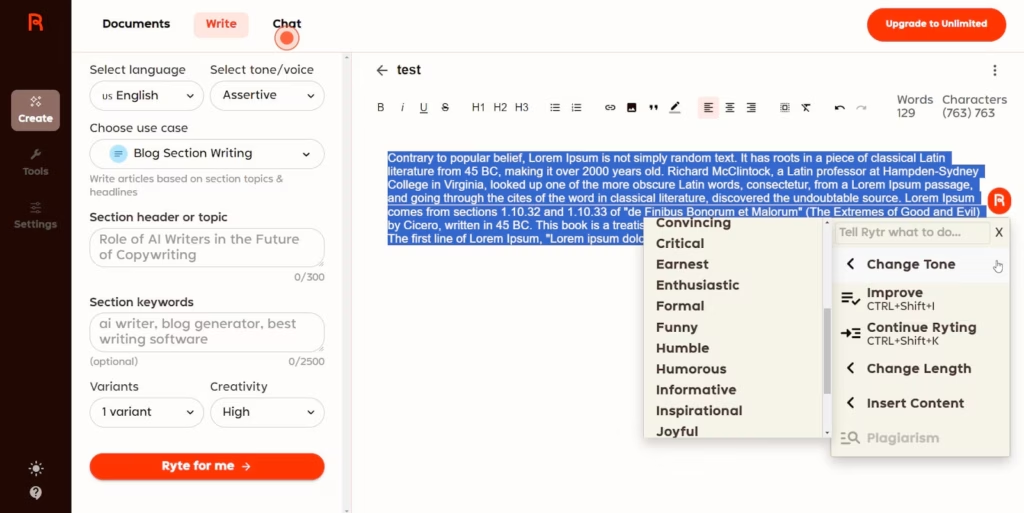
Rytr offers a more affordable experience than Copy.ai for short-form writing. Rytr suits individuals and small teams that need quick content at an accessible price, while Copy.ai positions itself toward broader marketing workflows.
Core features in Rytr include paragraph generation, tone selection, rewriting assistance, and customizable writing styles. Saved tones maintain consistency across projects, and the Chrome extension delivers immediate writing access inside web editors.
Rytr is a paid tool with pricing ranging from $9 to $29 per month. The entry tier offers unlimited characters and one custom tone. Higher plans expand tone libraries, language coverage, and capacity for larger projects.
Pros of Rytr include low-cost access and built-in AI image creation. Cons of Rytr include limited capability for long-form writing, minimal SEO capabilities, and repetitive phrasing in texts.
5. Anyword: Best Copy.ai Alternative for Conversion-Focused Ad and Landing Page Copy
Anyword is an AI copywriting platform designed for marketers who need predictive insight into message performance across channels. Anyword analyzes and generates ad copy by using audience data, historical performance patterns, and brand signals.
Anyword delivers stronger results than Copy.ai for conversion-focused ad and landing page copy because it relies on data-driven evaluation. Copy.ai functions as a broader creative tool, while Anyword centers its workflow on measurable performance gains and audience targeting.
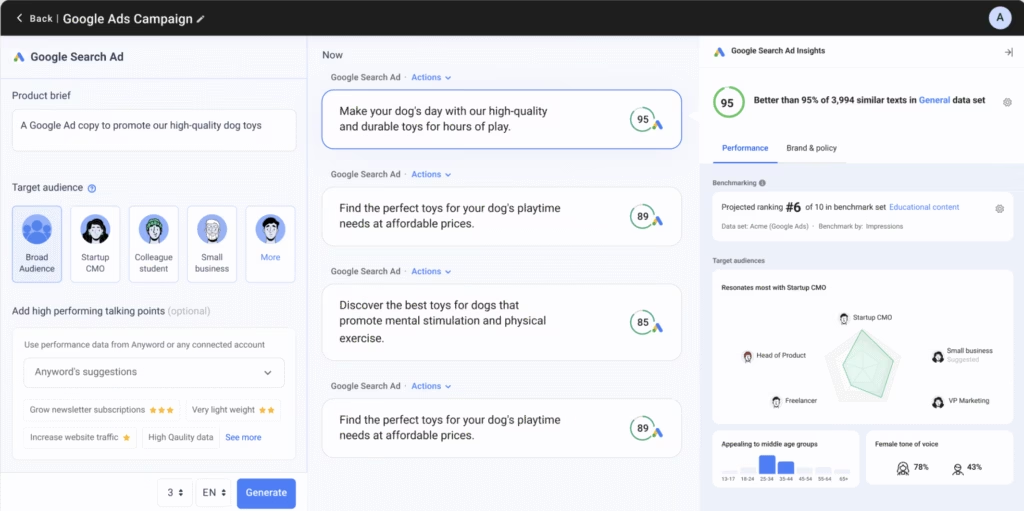
Core features in Anyword include predictive performance scoring, guidance for improving underperforming drafts, and a brand voice editor that maintains stylistic consistency. Additional capabilities include plagiarism detection and writing in over 30 languages.
Anyword is a paid tool with pricing ranging from $49 to $499 per month. Individual plans cover basic prediction volumes, while business tiers increase analytics depth, expand model access, and unlock higher output limits.
Pros of Anyword include reliable performance forecasting and strong tone governance. Cons include minimal SEO insight and occasional interface lag during active editing sessions.
6. Scalenut: Best Copy.ai Alternative for AI Writing with Integrated SEO Workflows
Scalenut is an AI SEO platform designed to connect keyword research, SERP evaluation, and content drafting in one workflow. Scalenut analyzes search intent, builds structured outlines, and grades content in real time to allow SEO-driven writing.
Scalenut produces stronger SEO-aligned content than Copy. Scalenut merges AI writing with keyword planning, optimization scoring, and SERP insights inside a single guided process. Copy.ai emphasizes speed and creative flexibility.
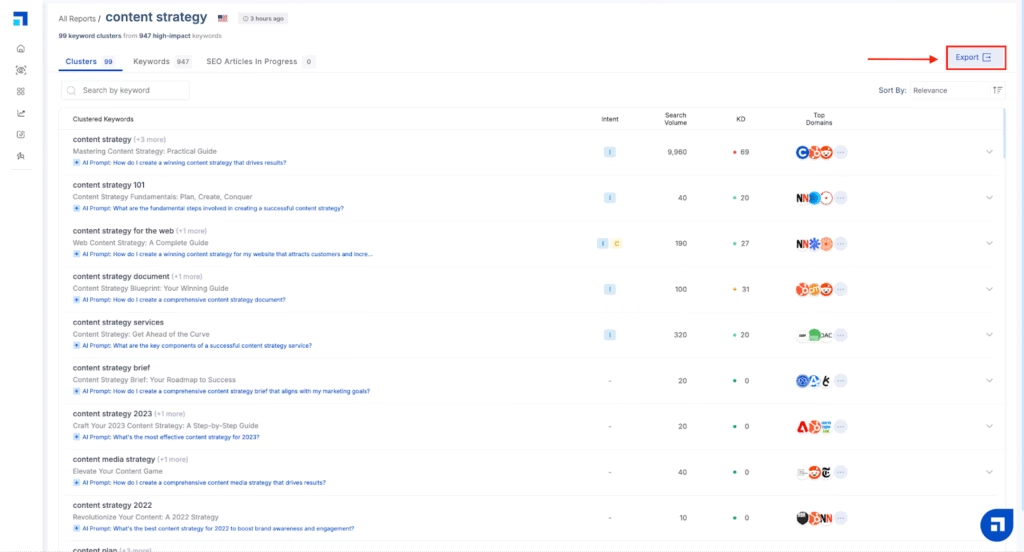
Core features in Scalenut include a real-time SEO editor and a SERP analyzer for competitive comparisons. The AI Copywriter handles short-form tasks, and the SEO Assistant strengthens long-form content with NLP-driven improvement suggestions.
Scalenut is a paid tool with pricing ranging from $49 to $149 per month. The Essential tier provides limited credits, the Growth tier expands article output, and the Pro tier offers deeper analysis and priority access to premium tools.
Pros of Scalenut include rapid topic clustering, strong optimization guidance, and detailed SERP benchmarking. Cons include uneven tone in AI drafts and limited control over rewriting complexity in lower-tier plans.
7. Copysmith: Best Copy.ai Alternative for Ecommerce and Product Description Copy
Copysmith is an AI copywriting platform created for ecommerce teams that handle large product inventories and frequent updates. Copysmith focuses on generating consistent, sales-oriented copy across product listings, ads, and retail marketing channels.
Copysmith fits ecommerce and product description workflows better than Copy.ai because its system centers on catalog-scale production and retail use cases. Copy.ai leans toward general marketing copy, while Copysmith concentrates on structured templates and automation designed for online stores and marketplaces.
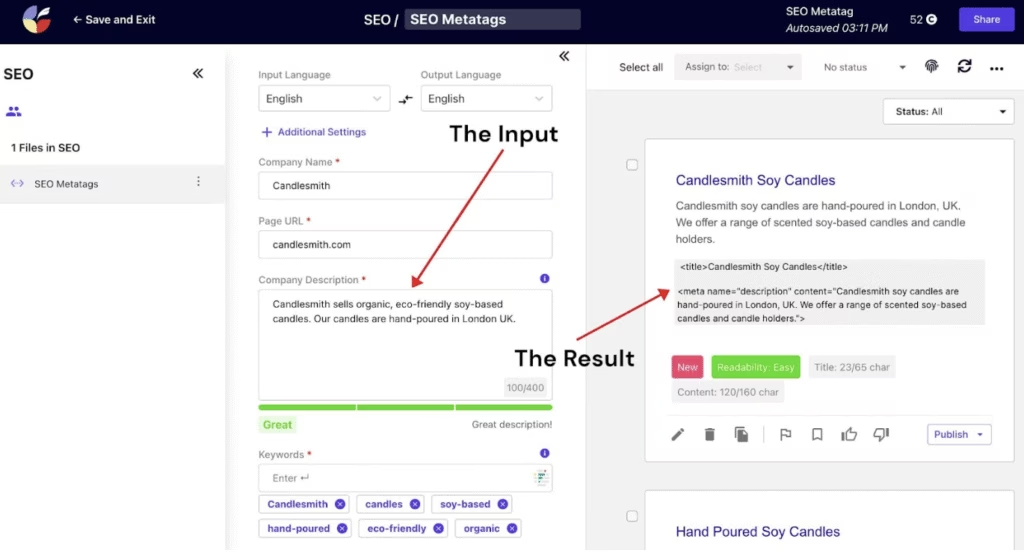
Core features in Copysmith include bulk product description generation, ad variant creation, translation tools, and team collaboration controls. These capabilities maintain uniform tone and structure across thousands of SKUs without manual rewriting.
Copysmith is a paid tool with pricing ranging from $19 per month to custom enterprise plans. Higher tiers increase generation limits and adapt workflows for high-volume ecommerce operations.
Pros of Copysmith include efficient bulk content creation and dependable ad variation output. Cons include occasional repetitive phrasing, limited SEO depth compared to specialized optimization platforms, and an interface that feels less intuitive for some users.
8. Frase: Best Copy.ai Alternative for Research, Briefs, and SERP-Driven Content Outlines
Frase is an AI-powered content platform designed to organize research, outline building, and long-form drafting into a single workflow. Frase analyzes search results and competing pages to identify topics, questions, and keyword patterns that shape structured content plans.
Frase delivers stronger results than Copy.ai for content research and brief creation because. Frase builds drafts directly from SERP-driven insights and search-aligned planning before writing begins.
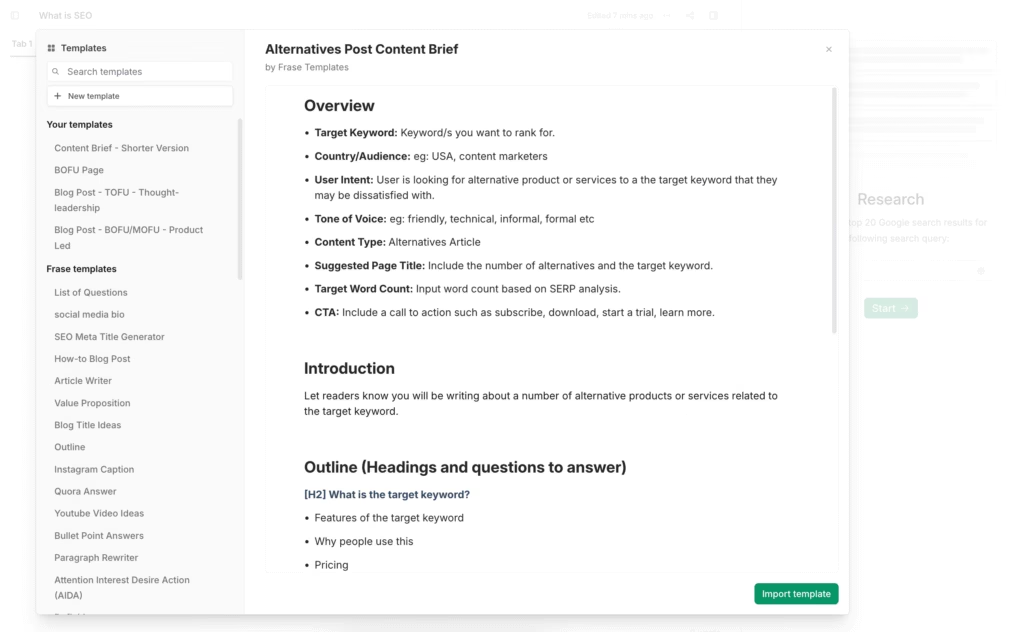
Core features in Frase include AI-generated content briefs, SERP analysis, a collaborative writing editor, and integrations with Google Docs and WordPress. These tools align multiple contributors around the same research base and editorial structure.
Frase is a paid tool with pricing that ranges from $45 to $115 per month. Entry plans target individual creators, while higher tiers expand user access, content limits, and workflow flexibility.
Pros of Frase review include research synthesis, clear outline generation, and real-time optimization guidance. Cons include project limits on lower tiers, separate costs for advanced AI documents, and fewer technical SEO capabilities.
9. Wordtune: Best Copy.ai Alternative for Rewriting and Style Refinement
Wordtune is an AI writing platform focused on improving existing text through rewriting, tone adjustment, and clarity refinement. Wordtune works at the sentence and paragraph level to polish emails, articles, academic writing, and social posts in real time.
Wordtune delivers stronger rewriting and style refinement than Copy.ai because it concentrates on enhancing what already exists rather than generating copy from templates. Wordtune specializes in reshaping language for precision, flow, and readability.
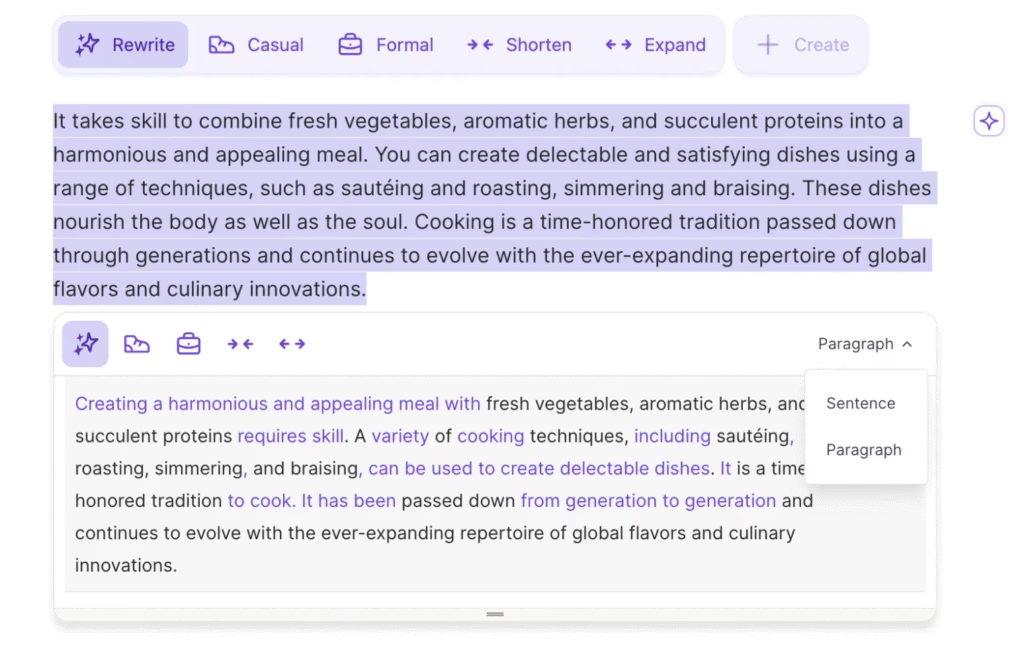
Core features in Wordtune include sentence rewrites, paragraph restructuring, tone shifts between formal and casual styles, and length control for concise or expanded text. A built-in readability engine simplifies complex phrasing while preserving original meaning.
Wordtune is a paid tool with pricing ranging from $6.99 to $9.99 per month. A limited free tier allows basic rewrites, while paid plans unlock tone controls and higher rewrite volumes.
Pros of Wordtune include fast rewriting, dependable tone refinement, and seamless browser-based editing. Cons include restricted free usage, no SEO functionality, and occasional loss of nuance in dense passages.
10. QuillBot: Best Copy.ai Alternative for Paraphrasing and Grammar Refinement
QuillBot is an AI writing platform built to improve clarity, originality, and grammatical accuracy across academic, professional, and creative content. QuillBot restructures sentences while maintaining intent, which allows precise paraphrasing and language cleanup.
QuillBot provides stronger paraphrasing and grammar refinement than Copy.ai. QuillBot offers granular control over wording and structure. Copy.ai centers on template-driven content generation, while QuillBot focuses on revising text without altering meaning or context.
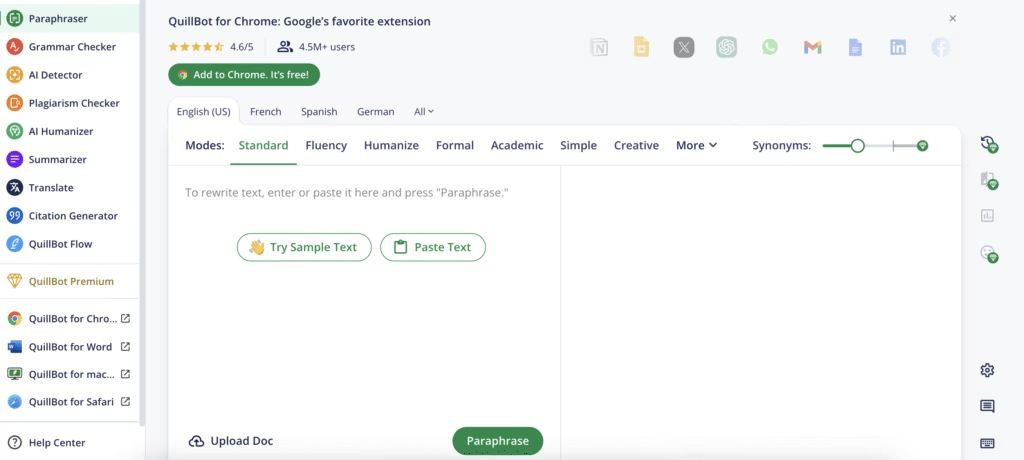
Core features include an AI paraphraser, grammar correction, plagiarism detection, and citation generation. Writing modes, synonym controls, and word-freeze options allow precise adjustments to tone and structure.
QuillBot is a paid tool with pricing ranging from free access to $8.33 per month. The free plan covers basic rewriting and grammar checks, while paid plans unlock advanced controls.
Pros of QuillBot include accurate paraphrasing, built-in plagiarism checks, and multilingual support. Cons include weaker handling of nuanced topics, occasional stylistic mismatches, and the need for manual review in complex subject matter.
11. SurferSEO: Best Copy.ai Alternative for SEO Content Scoring and Optimization
SurferSEO is a content optimization platform built to improve search visibility through data-backed analysis and real-time content scoring. SurferSEO evaluates top-ranking pages for a target keyword and translates ranking patterns into clear structural and semantic recommendations.

SurferSEO provides far stronger SEO scoring and optimization than Copy.ai because it bases every recommendation on SERP data rather than creative templates. SurferSEO refines content with ranking-focused guidance that improves competitiveness after the first draft exists.
Core features in SurferSEO include a Content Editor with keyword usage ranges, topic coverage analysis, and competitor benchmarks. NLP-driven models surface measurable ranking signals and present writers with concrete targets for depth and on-page alignment.
SurferSEO is a paid tool with pricing ranging from $79 to $179 per month. Entry plans include content audits, keyword research, and optimization tools. Higher tiers expand collaboration, unlock AI modules, and provide API access for advanced workflows.
Pros of Surfer SEO review include precise content scoring, strong support for international SEO, and a focused optimization interface. Cons include a noticeable learning curve and limited flexibility when adapting tone for niche or highly creative topics.
12. ContentBot.ai: Best Copy.ai Alternative for Startup and SaaS-Focused Content
ContentBot.ai is an AI content automation platform designed for startups and SaaS teams that manage recurring content pipelines. ContentBot.ai emphasizes structured generation, bulk processing, and workflow automation across blogs, landing pages, and product-driven content.
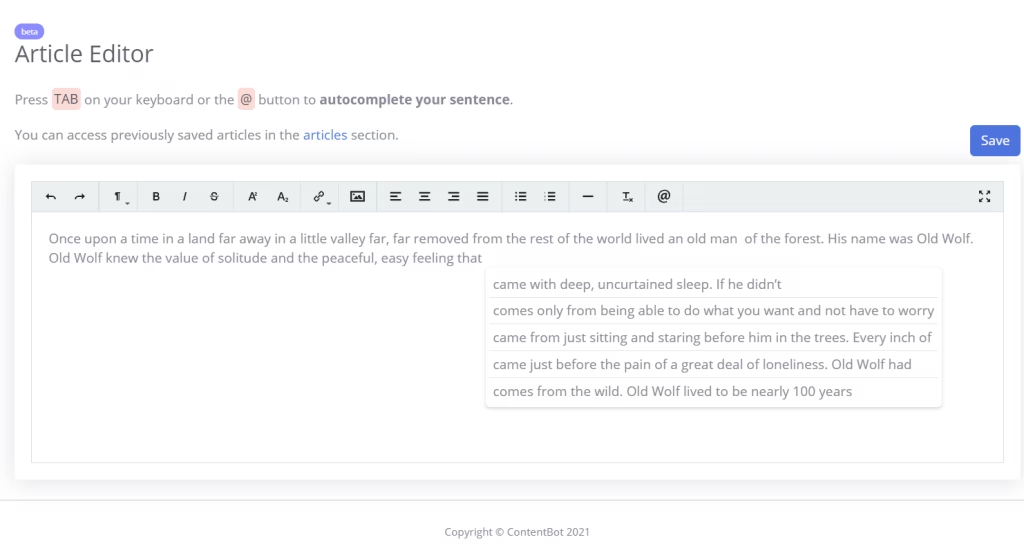
ContentBot.ai aligns better than Copy.ai with startup and SaaS publishing needs because it prioritizes automation and long-form scalability over quick promotional copy. ContentBot.ai allows scheduled production and content systems tied to growth goals.
Core features in ContentBot.ai include long-form article generation, bulk content processing, plagiarism checks, and SEO integrations. AI Flows allow teams to build multi-step automation sequences that generate, repurpose, and prepare content without manual intervention.
ContentBot.ai is a paid tool with pricing ranging from $9 to $49 per month, with prepaid options starting at $0.50 per 1,000 words. Subscription tiers scale word limits and workflow complexity, while prepaid plans offer high-volume production at flexible costs.
Pros of ContentBot.ai include automation-first workflows, strong long-form output, and native WordPress and Chrome integrations. Cons include variable draft quality, higher costs for advanced automation, and the need for editorial refinement on complex topics.
13. GetGenie: Best Copy.ai Alternative for WordPress and WooCommerce Content Creation
GetGenie is an AI SEO and content platform built specifically for WordPress environments. GetGenie operates as both a native WordPress plugin and a standalone web interface, which keeps content creation and optimization inside the publishing workflow.

GetGenie fits WordPress and WooCommerce content creation better than Copy.ai. GetGenie combines AI writing with built-in SEO, ecommerce tooling, keyword research, SERP analysis, and product description creation directly inside the WordPress dashboard.
Core features in GetGenie include long-form content generation, product description writing for WooCommerce, keyword research with volume and competition metrics, and SERP-based competitor analysis. GenieChat adds an AI assistant with multiple conversational modes that allow ideation, research, and drafting inside WordPress.
GetGenie is a paid tool with pricing ranging from $9 to $89.10 per month. Entry plans cover basic AI word limits and SERP analysis, while higher tiers expand keyword tracking, page limits, topical mapping, and large-scale content generation.
Pros of GetGenie include deep WordPress integration, unified SEO and content workflows, and strong ecommerce support. Cons include reliance on post-editing for originality, limitations on lower tiers, and restricted flexibility outside the WordPress ecosystem.
14. Describely: Best Copy.ai Alternative for Product Descriptions at Scale
Describely is an AI-driven ecommerce platform built to generate and manage product content across large catalogs. Describely automates the creation of product descriptions, titles, metadata, and structured attributes with a focus on scale and consistency.
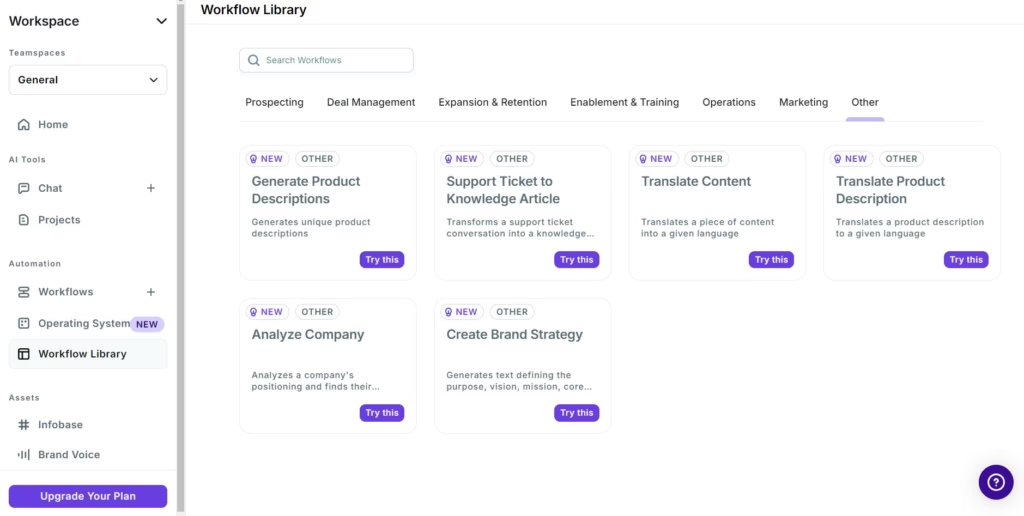
Describely describes large-scale product description workflows better than Copy.ai. While Copy.ai allows individual writing tasks, Describely structures content production around SKUs, bulk workflows, and ecommerce-specific requirements.
Core features in Describely include bulk product description generation, SEO-focused metadata creation, brand voice rulesets, and SKU-aware content structures. Custom guidelines enforce tone, formatting, and attribute consistency across thousands of products.
Describely is a paid tool with pricing starting at $0.75 per product, with data enrichment credits from $0.55 and image processing from $0.05 per credit. Custom enterprise plans scale pricing based on catalog size and automation depth.
Pros of Describely include fast bulk generation, strong ecommerce specialization, and reliable catalog-level consistency. Cons include limited long-form capabilities, dependence on clean input data, and the need for tuning to avoid generic output.
15. AirOps: Best Copy.ai Alternative for Automated AI Content Workflows
AirOps is a no-code AI workflow platform designed to automate and scale enterprise-level content operations. AirOps connects data, workflows, and deployment layers to manage content lifecycles and search visibility at scale.
AirOps suits automated, large-scale, SEO-focused content workflows better than Copy.ai because it prioritizes orchestration over individual writing tasks. AirOps enables teams to design repeatable systems that integrate AI into existing content and search strategies.
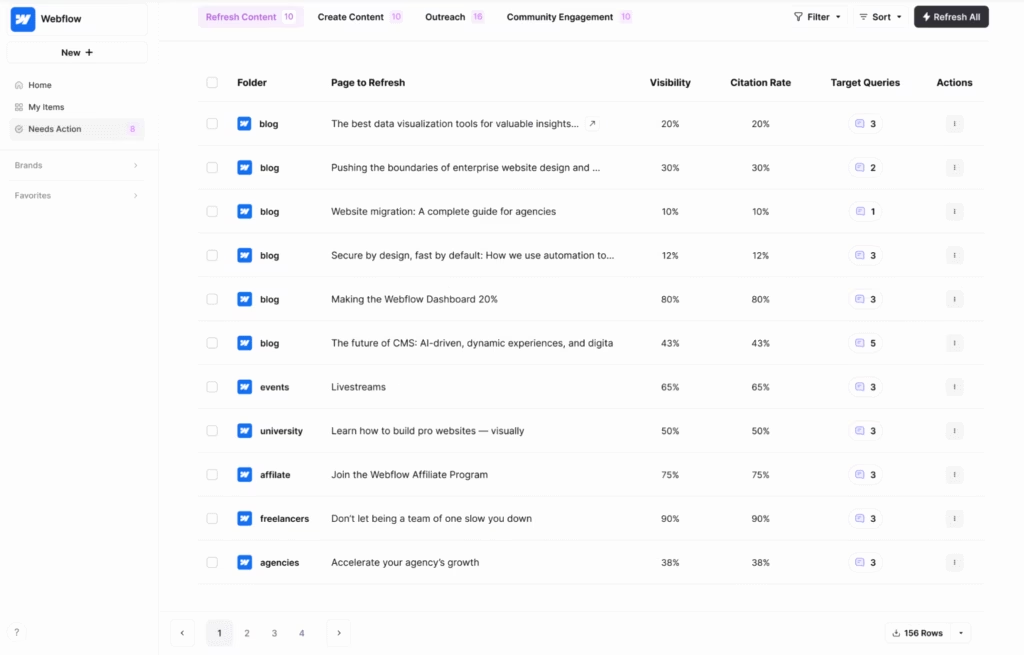
Core features in AirOps include an AI content dashboard, visual workflow automation, search visibility intelligence, and multi-brand management. These capabilities allow teams to identify content gaps and publish at scale across Google and AI-driven discovery platforms.
AirOps is a paid tool with pricing ranging from free access to custom enterprise plans per month. Solo plans offer a single user with basic templates. Scale plans expand automation and user access, while enterprise tiers add onboarding, advanced reporting, and private training.
Pros of AirOps include scalable automation, and expert-level allows for AI system design. Cons include limited self-service documentation for advanced workflows, the absence of deep topic modeling, and pricing structures that do not suit freelancers or small teams.
16. Simplified: Best Copy.ai Alternative for AI Writing and Social Content
Simplified is an all-in-one creative platform that combines AI writing, visual design, video editing, and social media publishing. Simplified centralized content creation and distribution for teams that manage multiple marketing channels.
Simplified fits AI writing and social content workflows better than Copy.ai for creators who need integrated production and publishing tools. Copy.ai focuses on text generation, while Simplified offers writing, design, video, and scheduling inside one environment.
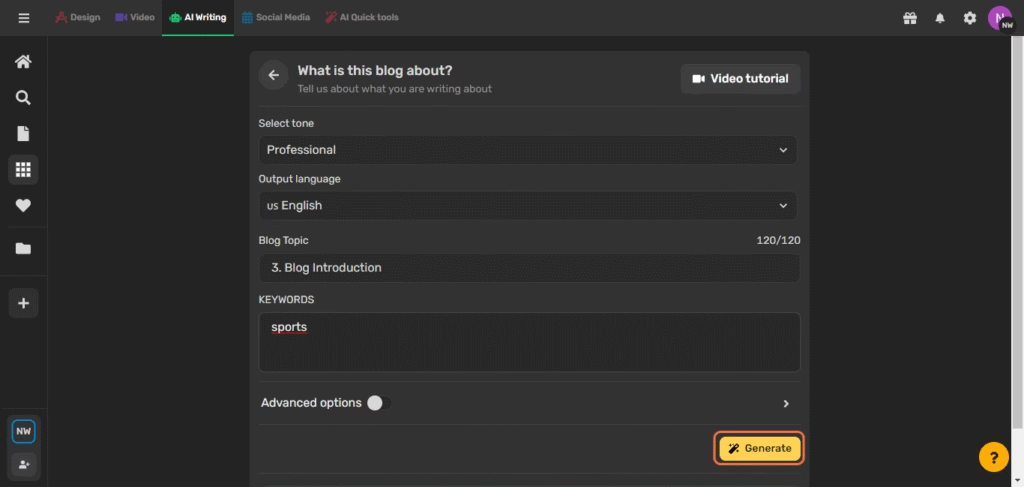
Core features in Simplified include AI writing for blogs, ads, and captions, design templates with brand kits, AI-powered video editing, and a social media planner with scheduling and analytics. Collaboration tools keep projects aligned across teams and channels.
Simplified is a paid tool with pricing ranging from free access to $20 per month. The Free plan covers basic features, Pro plans start at $12 per month, and higher tiers expand collaboration, publishing limits, and creative tools.
Pros of Simplified include a unified workspace for writing, design, and video, accessible pricing, built-in social scheduling, and strong collaboration support. Cons include limited SEO optimization, weaker keyword analysis, and less focus on long-form content depth.
17. ClosersCopy: Best Copy.ai Alternative for Direct-Response Copywriting
ClosersCopy is an AI copywriting platform built around persuasion frameworks and sales-driven writing. ClosersCopy targets marketers, entrepreneurs, and copywriters who focus on ads, landing pages, and email sequences designed to convert.
ClosersCopy fits direct-response copywriting better than Copy.ai because it emphasizes proven sales frameworks rather than general-purpose generation. ClosersCopy centers its workflows on conversion psychology, funnel scripts, and response-oriented prompts.

Core features include a large library of copywriting templates, AI-powered text generation, basic content scoring, and collaboration options. ClosersCopy offers content runs and limited SEO audits, though it lacks integrations with analytics tools and plagiarism detection systems.
ClosersCopy is a paid tool with pricing ranging from $49.99 to $99.99 per month. A one-time lifetime license is available, priced between $327 and $741, depending on usage limits and feature access.
Pros of ClosersCopy include extensive template coverage and accessibility for beginners writing ads or short-form sales copy. Cons include outdated optimization features, limited integrations, no plagiarism checker, and concerns about long-term product development.
18. Koala Writer: Best Copy.ai Alternative for SEO Articles from Live SERP Data
Koala Writer is an AI-powered content platform designed to generate SEO-focused long-form articles using live search data. Koala Writer builds articles by analyzing real-time SERP structures, keyword intent, and competitive patterns before drafting content.
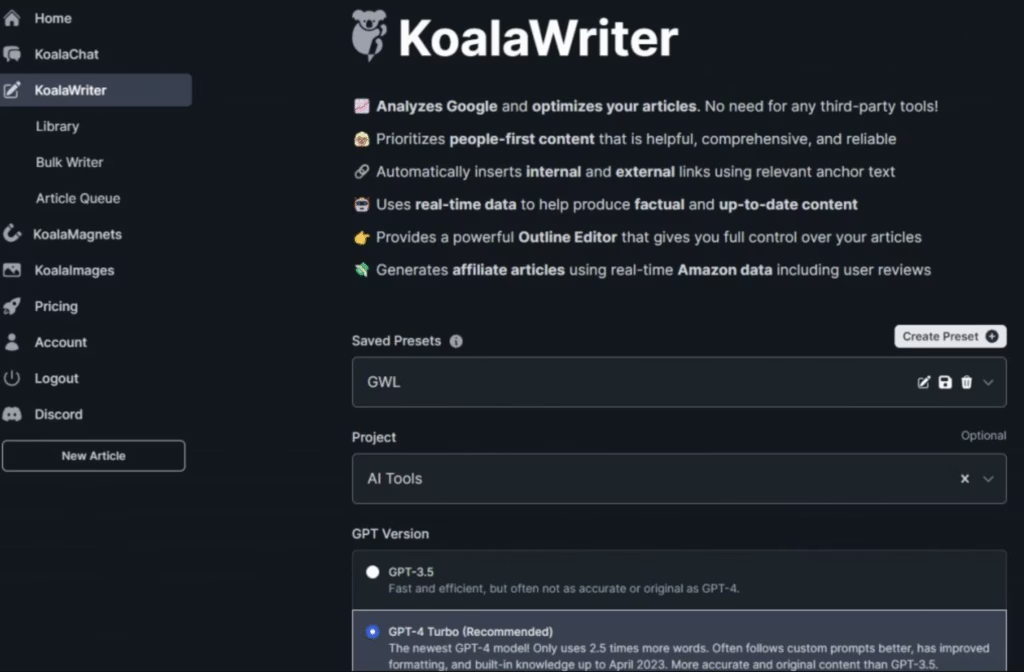
Koala Writer produces stronger SEO articles than Copy.ai because it generates content directly from live SERP signals rather than static prompts. Copy.ai focuses on general copy creation, while Koala Writer aligns outlines, headings, and content depth with current search results.
Core features in Koala Writer include one-click article generation, SERP-based outline analysis, automatic internal and external linking, AI image creation, and WordPress integrations. Specialized modes allow affiliate content, product comparisons, and structured blog formats.
Koala Writer is a paid tool with pricing ranging from $9 to $99 per month. Entry plans offer smaller word volumes, while higher tiers expand output limits, model access, and advanced SEO workflows.
Pros of Koala Writer include fast article creation, strong SERP alignment, and an intuitive workflow for SEO publishing. Cons include higher per-article costs when using advanced models, limited depth for expert-level topics, and restricted post-generation editing control.
19. You.com: Best Copy.ai Alternative for Search-Based AI Writing
You.com is an AI-powered search and productivity platform that blends large language models with live web data. You.com connects conversational AI with real-time sources, which enables research-driven writing grounded in current information.

You.com fits search-based AI writing better than Copy.ai because it generates responses informed by live web context and verifiable sources. You.com builds content through active retrieval, citations, and searchable context.
Core features in You.com include a conversational AI assistant that blends LLM responses with live search results, along with specialized AI agents for research and computation. Research agents compile multi-source reports with citations, while agents execute multi-step tasks such as data analysis and code execution.
You.com is a paid tool with pricing ranging from free access to usage-based API plans, starting at $6.25 CPM for Web and News Search APIs and $10 CPM for the Content API. New accounts receive a free credit to test API usage before committing.
Pros of You.com include real-time data grounding, strong privacy controls, and flexible AI agent workflows. Cons include a learning curve, occasional performance slowdowns, and API pricing that exceeds the needs of casual writers.
20. ChatGPT: Best Copy.ai Alternative for Drafting, Brainstorming, and Editing
ChatGPT is a conversational AI writing platform designed for idea generation, drafting, rewriting, and content refinement across many formats. ChatGPT adapts to context and intent, which allows nuanced writing beyond fixed templates.
ChatGPT offers drafting and brainstorming workflows more effectively than Copy.ai. ChatGPT responds dynamically to direction, feedback, evolving creative goals, and enables iterative refinement and open-ended exploration.
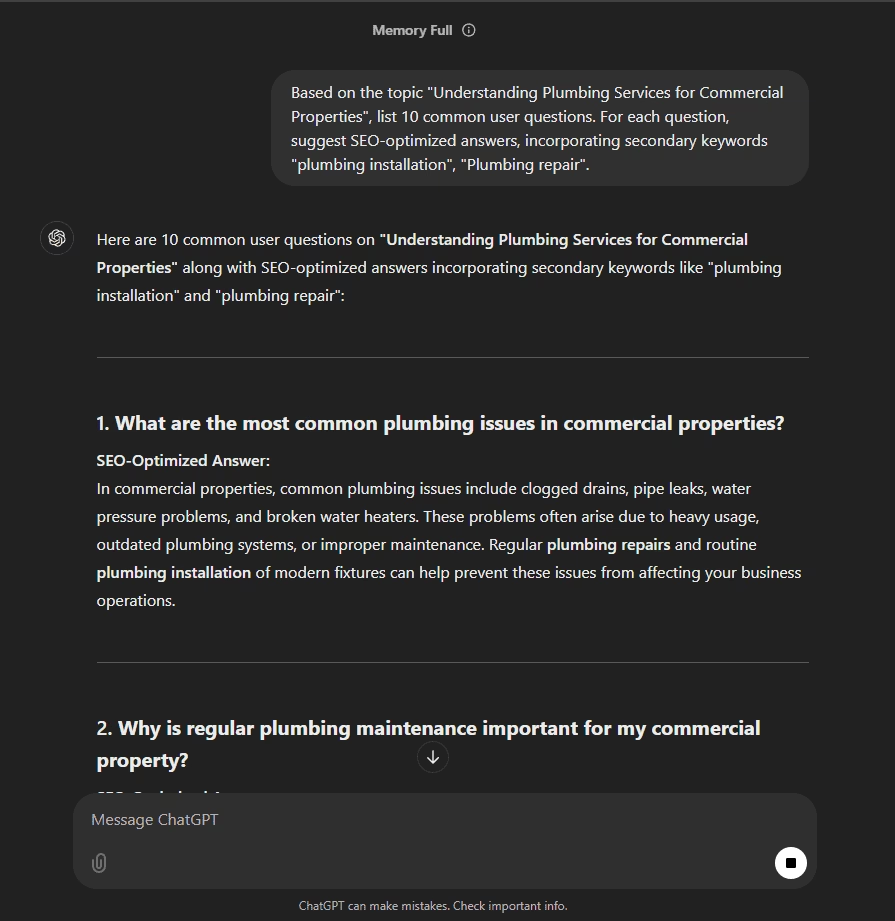
Core features in ChatGPT include adaptive tone control, structured rewriting, multi-step drafting, and conversational editing. The interface allows long-form projects, campaign planning, and iterative revisions through continuous dialogue.
ChatGPT is a paid tool with pricing ranging from $20 to $200 per month. A free version provides limited access for users evaluating the platform before upgrading.
Pros of ChatGPT include flexibility across writing tasks, fast iteration, and strong performance in creative and analytical formats. Cons include the absence of built-in SEO optimization and occasional repetition in extended outputs.
21. Content Harmony: Best Copy.ai Alternative for Deep Content Briefs
Content Harmony is a content strategy and optimization platform built around research-first planning and standardized editorial workflows. Content Harmony automates SERP research, generates structured briefs, and evaluates draft coverage against competitive benchmarks.
Content Harmony delivers deeper SEO-focused content briefs than Copy.ai because it centers every workflow on research, intent analysis, and human-guided planning. Content Harmony defines requirements, scope, and structure before writing begins.
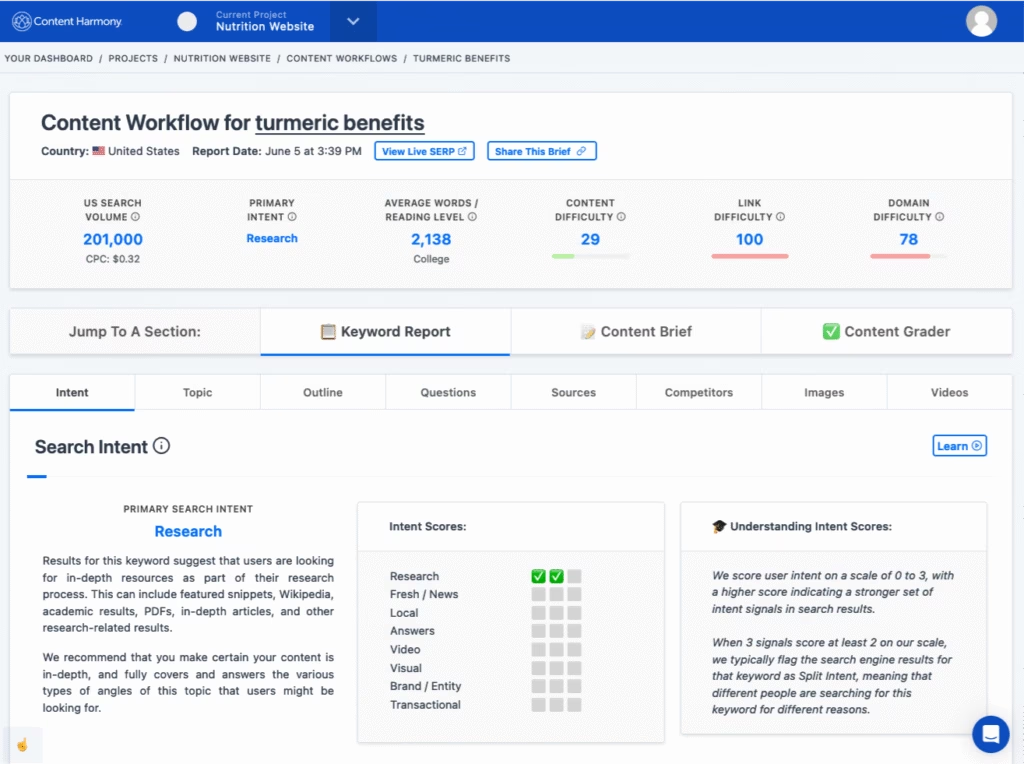
Core features in Content Harmony include workflow-based brief creation, AI-driven topic modeling, search intent classification, competitor outline extraction, structured content grading, and performance benchmarking. Each workflow produces a keyword report, a detailed brief, and a scoring framework that measures coverage against competing pages.
Content Harmony is a paid tool with pricing that ranges from $50 to $799 per month, based on workflow volume. Entry plans include five workflows, higher tiers expand workflow capacity, and credits roll over for 90 days. A paid trial offers limited workflows for evaluation.
Pros of Content Harmony include consistent brief standards, strong SERP research, unlimited users, and scalable editorial workflows. Cons include no backlink or rank tracking, minimal AI writing capability, and credit-based pricing that increases costs at high volumes.
22. ProWritingAid: Best Copy.ai Alternative for Style and Readability Editing
ProWritingAid is a writing analysis platform designed to improve clarity, style, and structural quality across long-form and short-form content. ProWritingAid reviews grammar, sentence flow, pacing, repetition, and readability with detailed, actionable feedback.
ProWritingAid suits style and readability editing better than Copy.ai because it focuses on editorial analysis rather than content generation. Copy.ai emphasizes drafting speed, while ProWritingAid refines language quality through deep linguistic evaluation.
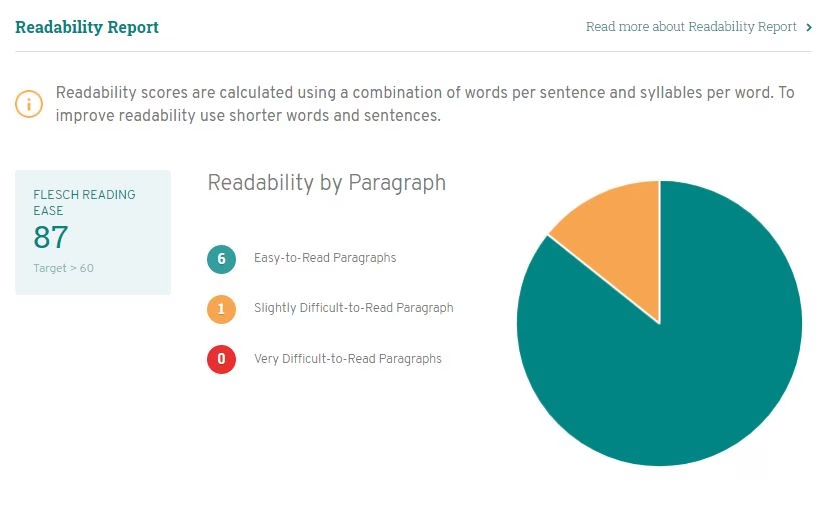
Core features in ProWritingAid include more than 25 writing reports covering grammar, readability, structure, dialogue, pacing, and consistency. Additional tools include paraphrasing, plagiarism detection, a contextual thesaurus, and integrations with Word, Google Docs, and Scrivener.
ProWritingAid is a paid tool with pricing ranging from free access to $36 per month. The Free plan enforces word-count limits and restricted AI usage. Premium tiers remove most limits, expand style guidance, and increase AI editing capacity.
Pros of ProWritingAid include comprehensive editorial feedback and strong integrations for large writing projects. Cons include strict limits on the free tier, added cost for advanced features, no mobile app, and reports that overwhelm first-time users.
23. Clearscope: Best Copy.ai Alternative for Enterprise SEO Optimization
Clearscope is an enterprise-grade SEO content optimization platform built to align articles with real-world SERP expectations. Clearscope evaluates competing pages and converts ranking patterns into clear recommendations for topic depth, structure, and terminology.
Clearscope fits enterprise SEO workflows better than Copy.ai. Clearscope prioritizes precision, consistency, and collaborative optimization over rapid text generation. It refines content quality through competitive analysis and ranking-focused guidance designed for large teams.
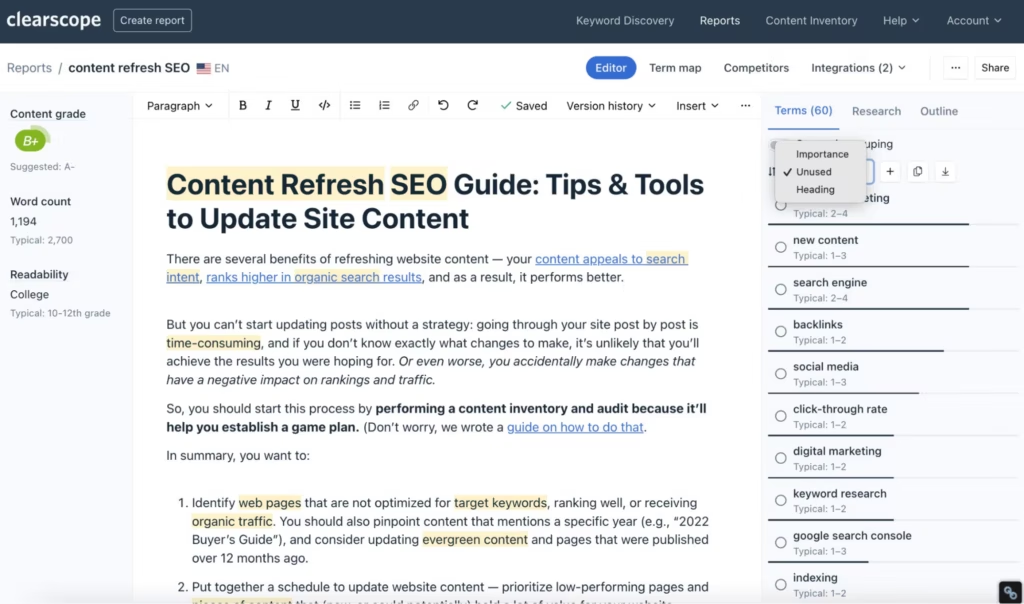
Core features include a Content Editor that balances readability with keyword usage, a Term Map that groups related concepts across competing pages, and detailed Content Reports covering headings, questions, and priority terms. These tools reveal how top-ranking pages structure comprehensive topic coverage.
Clearscope is a paid tool with pricing ranging from $189 to $399 per month. Entry plans include the Content Editor and report access. Business tiers expand usage limits and support, while enterprise options add single sign-on, advanced credits, and crawler whitelisting.
Pros of Clearscope review include reliable SERP analysis, an intuitive interface, and strong customer support. Cons include limited technical SEO tooling and the risk of over-optimization when targeting maximum content grades.
24. Dashword: Best Copy.ai Alternative for Content Scoring and Briefs
Dashword is an AI-driven SEO content optimization platform built to guide writers toward search-aligned articles. Dashword analyzes top-ranking results and translates SERP patterns into structured briefs and measurable content scores.
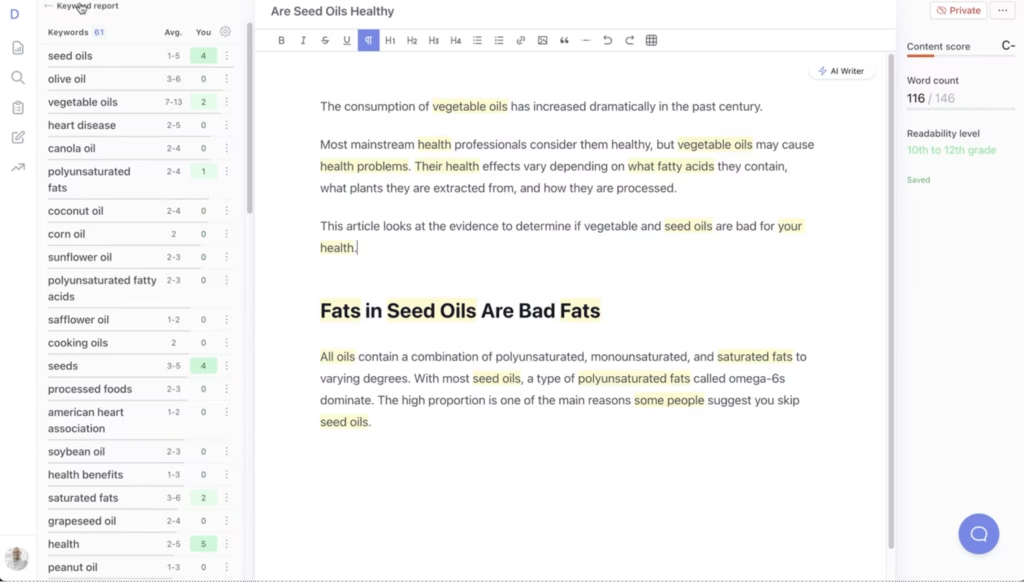
Dashword delivers stronger content scoring and briefing than Copy.ai because it centers every workflow on search competitiveness and topic coverage. Dashword directs writers with SERP-informed outlines, scoring benchmarks, and optimization targets.
Core features in Dashword include a content brief builder that aggregates outlines, questions, and key terms from ranking pages, along with an optimization editor that updates content scores in real time. A Google Docs integration extends scoring and feedback into external writing environments, and an optional AI assistant accelerates drafting.
Dashword is a paid tool with pricing ranging from $99 to $349 per month. Startup plans include 30 content reports and five seats, while Business tiers expand report volume, optimization capacity, and team access.
Pros of Dashword include a clean interface, clear SEO guidance, and strong collaboration features. Cons include higher pricing at scale and fewer advanced SEO capabilities compared to broader enterprise platforms.
25. TextWizard: Best Copy.ai Alternative for Short-Form Marketing Copy
TextWizard is an AI writing platform built for fast, concise marketing copy across ads, taglines, emails, and social posts. TextWizard focuses on short-form execution, using structured templates that guide generation toward campaign-ready messaging.

TextWizard fits short-form marketing copy better than Copy.ai because it prioritizes speed, focus, and brevity over broad content generation. TextWizard concentrates on rapid ideation and tightly scoped outputs designed for promotions and paid media.
Core features in TextWizard include short-form copy generators, customizable templates for ads and headlines, tone and length controls, and quick rewrite tools. These features keep messaging direct and consistent across high-frequency campaigns.
TextWizard is a paid tool with pricing ranging from $0 to $99 per user per month. The Free plan provides basic tools with limited monthly credits. The Pro plan starts at $49 per user per month, while the Team plan at $99 per user per month adds collaboration and higher generation limits.
Pros of TextWizard include fast idea generation, focused short-form templates, and simple controls for tone and length. Cons include limited long-form capability, minimal SEO tooling, and fewer advanced workflows compared to broader platforms.
26. Grammarly: Best Copy.ai Alternative for Grammar, Tone, and Clarity
Grammarly is an AI writing platform designed to improve grammar, spelling, tone, and sentence clarity across written content. Grammarly evaluates text in real time and applies linguistic analysis to strengthen readability and correctness.
Grammarly delivers stronger grammar, tone, and clarity refinement than Copy.ai because it operates as an editorial system rather than a copy generator. Copy.ai focuses on drafting content, while Grammarly specializes in polishing language quality across finished text.
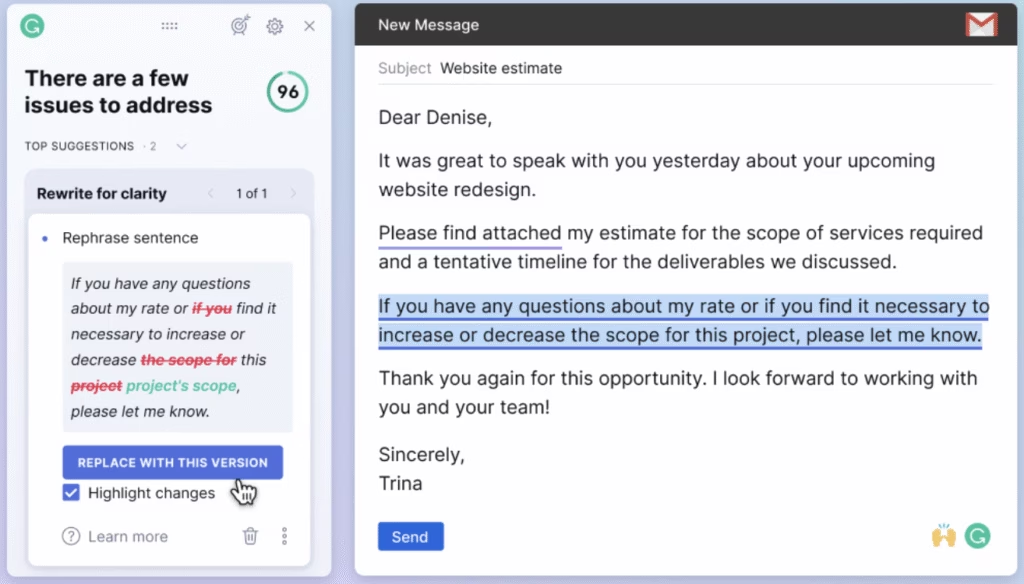
Core features in Grammarly include real-time grammar correction, clarity rewrites, tone detection, plagiarism checking, and AI-assisted suggestions. Grammarly runs through browser extensions, desktop apps, and document integrations, which maintain consistent writing standards across environments.
Grammarly is a paid tool with pricing ranging from free access to $30 per month. The Free plan covers basic corrections, Pro plans unlock advanced suggestions and AI features, and Enterprise tiers add administrative controls and customization.
Pros of Grammarly include precise language correction and wide platform availability. Cons include limited content generation depth, occasional false positives in suggestions, and minimal SEO-focused functionality.
27. Hypotenuse AI: Best Copy.ai Alternative for Ecommerce and Bulk Content
Hypotenuse AI is an AI writing platform built for ecommerce brands that manage large catalogs and recurring product updates. Hypotenuse AI focuses on scalable product descriptions, category pages, and marketplace-ready copy with consistent brand alignment.
Hypotenuse AI suits ecommerce and bulk content workflows better than Copy.ai. Hypotenuse AI specializes in SKU-based workflows, structured inputs, and large-volume output for online retail.
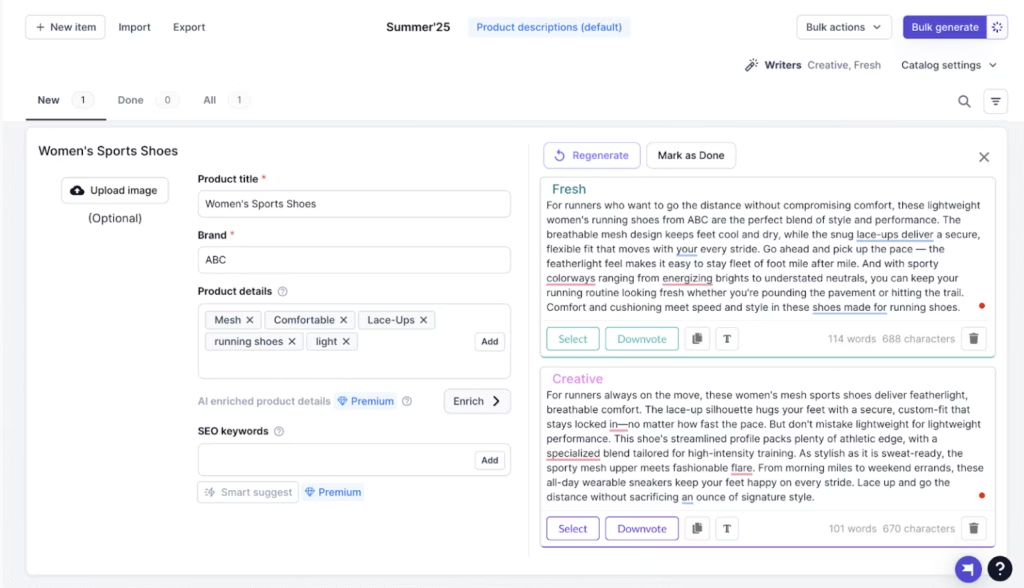
Core features include bulk product description generation, category page creation, and SEO-aligned workflows. Long-tail keyword coverage, semantic enrichment, and tone controls keep content searchable while preserving brand voice across thousands of listings.
Hypotenuse AI is a paid tool with pricing that ranges from $19 to $150 per month. Marketing and SEO plans allow blog and website copy, while ecommerce plans enable bulk product generation and custom workflows. A seven-day free trial is available for new users.
Pros of Hypotenuse AI include scalable catalog production, consistent output quality, and reduced manual effort. Cons include fewer industry-specific templates and pricing that does not suit very small or early-stage stores.
28. Sintra.ai: Best Copy.ai Alternative for Brand-Tone-Controlled Copywriting
Sintra.ai is an AI-powered business assistant platform designed for entrepreneurs and small teams. Sintra.ai operates through a centralized Brain AI that coordinates multiple specialized AI helpers across marketing, sales, and operations.

Sintra.ai fits brand-tone-controlled copywriting better than Copy.ai. Sintra.ai enforces voice rules and style consistency across all generated content. It applies predefined tone constraints and audience-specific language to maintain brand identity.
Core features include a suite of specialized AI helpers, centralized brand knowledge through Brain AI, and chat-based workflows that automate writing and operational tasks. These helpers apply consistent tone and messaging across marketing outputs without manual prompting.
Sintra.ai is a paid tool with pricing ranging from $15.60 per month. The Sintra X plan includes access to all available AI helpers without tiered feature limits.
Pros of Sintra.ai include fast setup, strong tone consistency, and time savings through automation. Cons include limited context sharing between helpers, overwhelming suggestions for some users, and restricted customization for complex workflows.
29. Notion AI: Best Copy.ai Alternative for AI Writing Inside Docs and Notes
Notion AI is an embedded writing assistant that operates directly inside the Notion workspace. Notion AI generates drafts, summaries, edits, and transcriptions by using page, database, and workspace context.
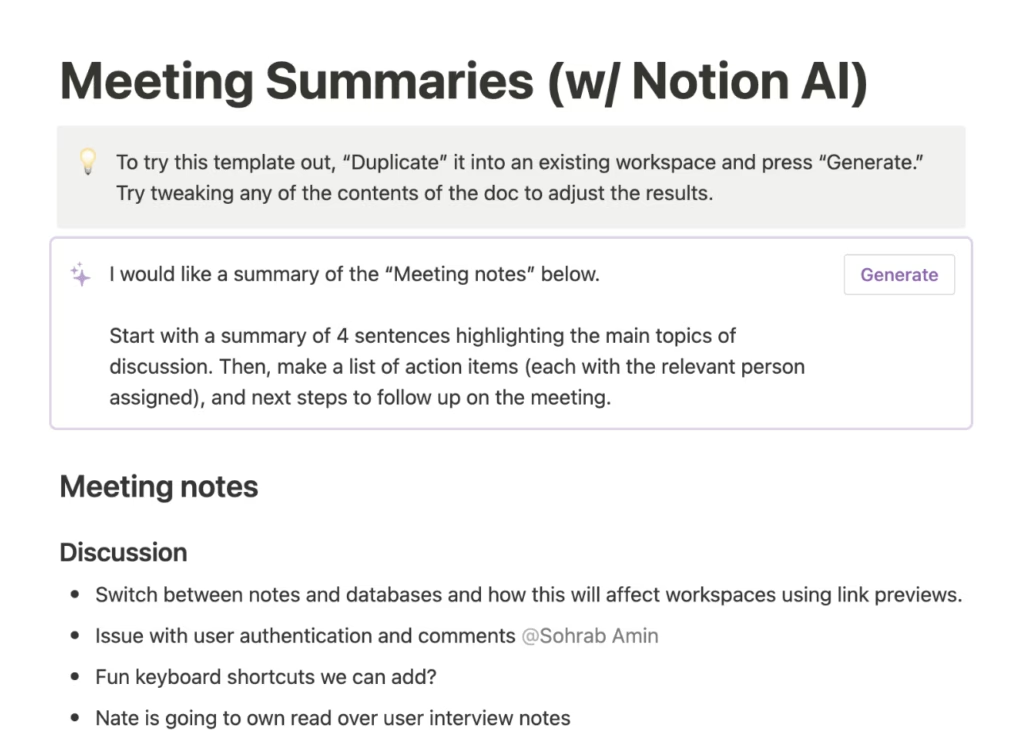
Notion AI fits in-document writing and note-based workflows better than Copy.ai because it operates inside live documents rather than separate prompt interfaces. Notion AI refines, restructures, and expands content within an organized knowledge system.
Core features in Notion AI include meeting transcription, AI-generated summaries with action items, and contextual content generation inside pages, databases, and templates. These features convert discussions and notes into searchable, structured documentation.
Notion AI is a paid tool with pricing ranging from free access to $20 per member per month. Entry access allows basic AI usage, the Plus tier at $10 expands collaboration features, and the Business tier at $20 adds advanced controls for teams.
Pros of Notion AI include seamless workspace integration, fast summarization, and strong brainstorming support. Cons include add-on costs, limited depth for complex writing tasks, and dependency on the Notion ecosystem.
30. Textero.ai: Best Copy.ai Alternative for Academic and Essay Writing
Textero.ai is an AI academic writing assistant built for students and researchers. Textero.ai offers essay drafting, outlining, source discovery, and citation-backed writing across academic formats.
Textero.ai suits academic and essay writing better than Copy.ai because it provides research-driven tools designed around structured papers. Copy.ai focuses on marketing copy, while Textero.ai organizes arguments, sources, and citations for scholarly work.
Core features in Textero.ai include essay and outline generators, research assistance with source discovery, PDF summarization, plagiarism checks, and AI content detection. These tools guide structure, originality, and citation accuracy across academic assignments.
Textero.ai is a paid tool with pricing ranging from free access to $8.33 per month. Free plans offer limited daily words and basic features, while paid tiers unlock unlimited usage, longer papers, deep research, and expanded detection tools.
Pros of Textero.ai include integrated research support, time savings for structured writing, and multilingual coverage. Cons include generic draft tone, limited citation style options, and the need for significant human refinement.
31. Caktus.ai: Best Copy.ai Alternative for Student-Oriented Writing Tools
Caktus.ai is an AI-powered learning platform built specifically for students and academic workflows. Caktus.ai combines writing assistance with study tools that offer essays, coursework, coding, and concept explanations inside one environment.

Caktus.ai fits student-oriented writing and academic support better than Copy.ai because it centers on learning tasks rather than marketing output. Caktus.ai provides structured assistance for essays, homework questions, and subject-level understanding.
Core features in Caktus.ai include an AI essay writer, step-by-step math and science solvers, code generation for Python, JavaScript, and SQL, and text summarization tools. Additional capabilities cover resume writing, cover letters, language tutoring, and study guidance aligned with academic use cases.
Caktus.ai is a paid tool with pricing ranging from $14.99 to $19.99 per month, with discounted annual billing that lowers the effective monthly rate. Entry plans cover core academic tools, while higher tiers expand usage limits and advanced assistance.
Pros of Caktus.ai include a broad set of student-focused tools, accessible pricing, and multiple academic subjects. Cons include inconsistent long-form output quality, reports of repetitive or inaccurate content, and customer support and billing concerns that require caution.
32. Semrush Writing Assistant: Best Copy.ai Alternative for SEO Writing Guidance
Semrush Writing Assistant is an AI-powered editing feature within the Semrush ecosystem. Semrush Writing Assistant delivers real-time SEO, readability, and keyword guidance directly inside writing environments.
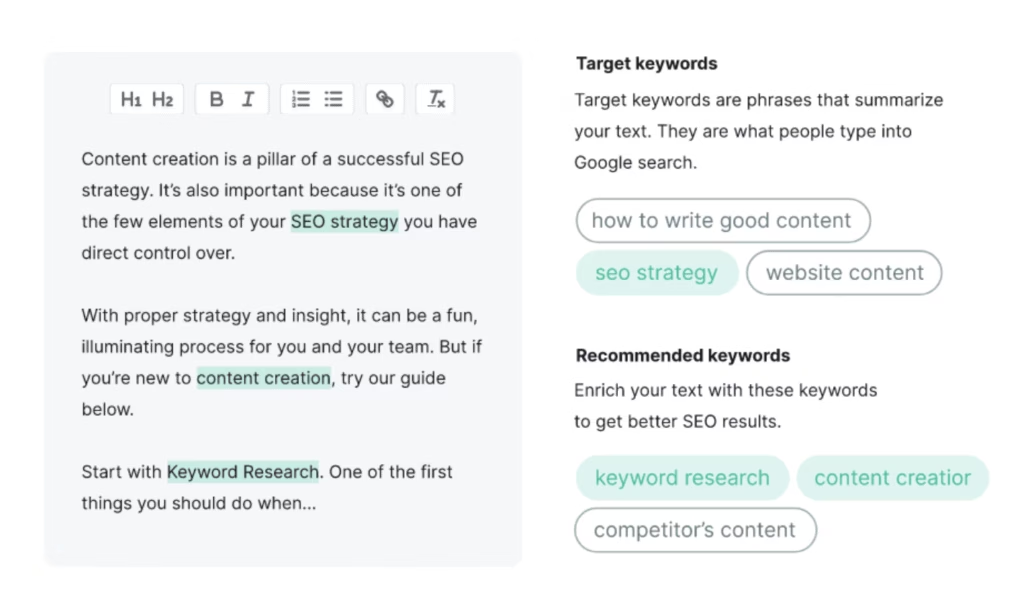
Semrush Writing Assistant provides stronger SEO writing guidance than Copy.ai. Semrush Writing Assistant guides structure, keyword usage, and readability to align content with search best practices.
Core features in Semrush Writing Assistant include readability scoring, keyword density monitoring, tone evaluation, and plagiarism checks. The tool flags keyword stuffing, suggests target content length, highlights structural issues, and identifies opportunities for internal linking.
Semrush Writing Assistant is a paid tool with pricing ranging from $249 to $499 per month, with an optional Smart Writer add-on priced at $20 per month for a defined AI word allowance. Access requires an active Semrush subscription.
Pros of Semrush review include accurate SEO scoring, seamless editor integrations, and clear optimization guidance during drafting. Cons include added costs for AI features, uneven tone analysis in formal writing, and limitations tied to lower-tier Semrush plans.
33. Ahrefs Content Helper: Best Copy.ai Alternative for Topic Research and Outlines
Ahrefs Content Helper is an AI-powered writing assistant built inside the Ahrefs ecosystem. Ahrefs Content Helper analyzes top-ranking pages for a target keyword and translates search data into topic coverage, structural guidance, and outline recommendations.
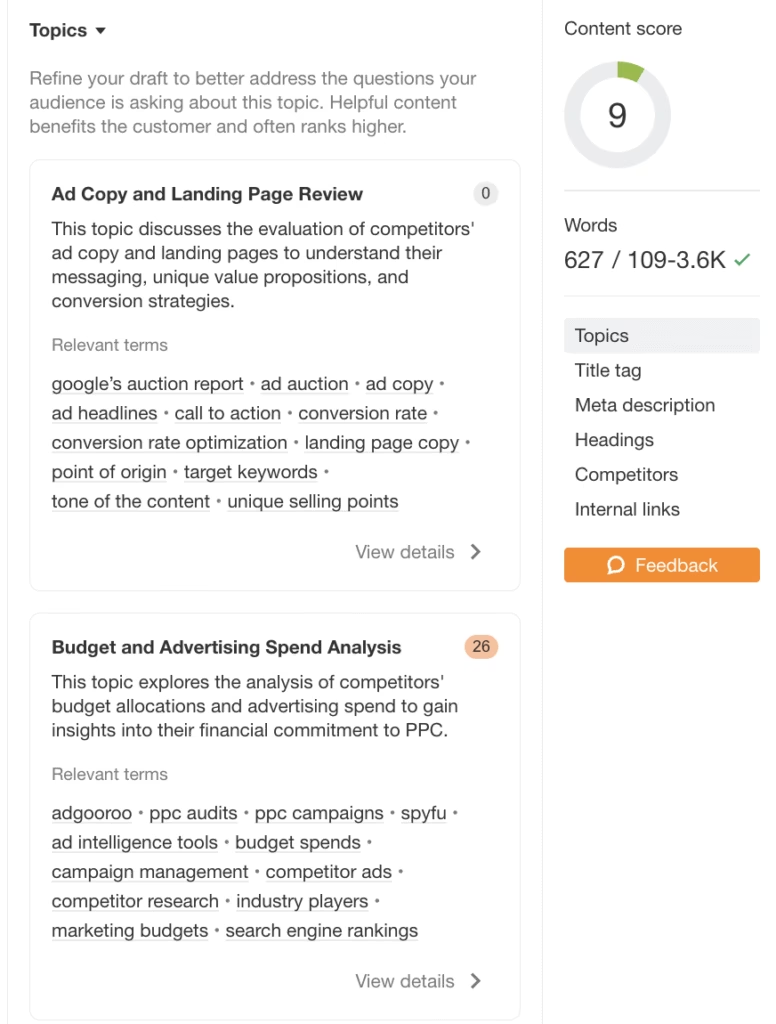
Ahrefs Content Helper fits topic research and SEO-driven outlining better than Copy.ai because it bases every suggestion on live search intelligence. Ahrefs Content Helper directs writers with keyword groupings, competitive topic gaps, and data-backed structure aligned with ranking behavior.
Core features in Ahrefs Content Helper include real-time topic coverage scoring, keyword grouping, and AI-assisted drafting inside the editor. A live content score measures how well a draft covers required topics compared to top-performing pages.
Ahrefs Content Helper is a paid tool with pricing ranging from $129 to $449 per month. The Lite plan starts at $129, the Standard plan expands access at $249, and the Advanced plan increases limits and capabilities at $449.
Pros of Ahrefs review include seamless integration with Ahrefs data, strong topic gap analysis, and efficient content refreshes. Cons include average AI draft quality compared to dedicated writers, the risk of formulaic output if overused, occasional performance issues, and higher pricing relative to standalone tools.
Why do People Seek Alternatives to Copy.ai Tool?
People seek Copy.ai alternatives because its output often prioritizes speed over depth, which limits control for more complex writing needs. Copy.ai platform works well for quick drafts, but longer or more nuanced content frequently requires heavy manual revision to reach publish-ready quality.
Copy.ai presents friction for users who need structured, research-driven writing. Input constraints and template-led workflows restrict how much context, data, which makes it harder to produce detailed, authoritative content that reflects real expertise.
Another common concern involves consistency and control. Copy.ai generates varied results across prompts, which complicates brand voice enforcement at scale. Teams managing multiple campaigns often struggle to maintain tone precision without repetitive re-prompting and edits.
Copy.ai shows limitations beyond basic copy generation. Copy.ai lacks native SEO scoring, SERP-based research, deep content briefs, and advanced optimization workflows. As content programs mature, these gaps force teams to layer additional tools on top of Copy.ai.
That combination of shallow context handling, limited structural control, inconsistent tone management, and missing optimization features pushes many marketers, agencies, and content teams to seek Copy.ai alternatives that deliver stronger depth and scalable workflows.
What to Look for in a Copy.ai Alternative?
The best Copy.ai alternatives go beyond fast copy generation and deliver structure, depth, and optimization. A strong replacement expands context handling, improves consistency, and adds research and SEO intelligence missing from template-driven writing tools.
The 5 features to look for in a Copy.ai alternative are listed below.
- SERP-Aware Research and Optimization. Choose a platform that analyzes top-ranking pages, extracts search intent, and aligns content with proven SERP patterns instead of generating copy in isolation.
- Long-Form Structure and Context Control. Look for tools that manage full articles, landing pages, and content clusters while preserving structure, flow, and topic depth across multiple sections.
- SEO Planning and Content Intelligence. Pick alternatives that include keyword research, topical mapping, content scoring, and competitive analysis rather than standalone copy generation.
- Automation and Scalable Workflows. Prioritize platforms that automate research, outlining, optimization, and publishing to reduce manual steps and boost growth at scale.
- Clear Value and Pricing Efficiency. Select tools that deliver measurable SEO and content outcomes without forcing upgrades for basic functionality or fragmenting workflows across multiple subscriptions.
What is the Difference Between Copy.ai vs. Writesonic?
The difference between Copy.ai and Writesonic is that Copy.ai emphasizes fast, template-driven marketing copy, while Writesonic is built for SEO-optimized long-form content.
Copy.ai specializes in short-form assets like ads, emails, and campaign copy, using predefined workflows and brand voice controls to speed execution. Writesonic focuses on articles, landing pages, and search-driven content, pairing AI drafting with SERP-aligned structures.
Both Copy.ai vs Writesonic offer AI writing, but they serve different priorities. Search Atlas moves beyond this split by unifying SEO research, content creation, and automation in one platform built for scalable performance.
What is the Difference Between Copy.ai vs. Rytr?
The difference between Copy.ai and Rytr is that Copy.ai targets structured marketing workflows, while Rytr prioritizes affordability and simplicity.
Copy.ai offers a wide range of marketing templates and guided drafting tools for campaigns and brand messaging. Rytr focuses on lightweight, short-form generation with a minimal interface and lower-cost plans designed for individuals and small teams.
Both Copy.ai vs Rytr generate marketing copy, but at different levels of complexity. Search Atlas bridges this gap by combining ease of use with enterprise-grade SEO data and automated workflows.
What is the Difference Between Copy.ai vs. ChatGPT?
The difference between Copy.ai and ChatGPT is that Copy.ai relies on fixed templates for marketing content, while ChatGPT operates as a flexible, conversational AI across many use cases.
Copy.ai streamlines common marketing tasks through predefined formats that reduce setup time. ChatGPT adapts to open-ended prompts with brainstorming, drafting, editing, and reasoning without template constraints.
Both Copy.ai vs ChatGPT enable AI-assisted writing, but with different interaction models. Search Atlas extends beyond both by integrating AI writing with live SEO intelligence, optimization, and execution at scale.
Why is Search Atlas the Best Copy.ai Alternative?
Search Atlas is the best Copy.ai alternative because it combines AI writing with SEO intelligence, automation, and execution in one platform. Search Atlas transforms content creation from template-based drafting into a system that improves structure, relevance, and ranking performance.
Copy.ai focuses on generating marketing copy quickly through predefined templates, which limits depth, search alignment, and post-draft optimization. Search Atlas advances beyond drafting by analyzing live SERP data, expanding topical coverage, and aligning every section with proven ranking signals.
Search Atlas removes the execution gap that exists in Copy.ai workflows. With OTTO SEO, the platform applies technical and on-page optimizations directly to the website, which connects content creation to measurable outcomes instead of leaving implementation manuals.
For teams replacing Copy.ai, Search Atlas offers deeper content intelligence, automated optimization, and scalable workflows inside one unified platform. See how content creation connects directly to search visibility and growth. Try Search Atlas free for 7 days!