Grammarly alternatives are content optimization platforms that replace Grammarly in tasks like grammar correction, rewriting, readability improvement, marketing copy refinement, and content evaluation. These tools extend beyond sentence-level fixes by offering deeper style control, contextual rewriting, performance scoring, and workflow-specific features.
Many Grammarly reviews point to limits once writing needs become more advanced. Grammarly performs well for basic grammar and clarity, but premium pricing, restricted flexibility, and limited long-form structure, or content evaluation push users to look elsewhere.
Professionals who require semantic analysis, content scoring, research-aware drafting, plagiarism validation, or structured planning often look for alternatives to Grammarly.
Writers, students, marketers, agencies, and enterprises choose a Grammarly alternative when they need deeper rewriting, structured evaluation, SEO-ready output, or specialized editing tools. The best Grammarly alternatives in 2026 are Search Atlas, ProWritingAid, and Wordtune.
What are the Best Grammarly Alternatives?
The top 32 best Grammarly alternatives for 2026 cover grammar correction, rewriting, readability scoring, SEO optimization, marketing copy, and enterprise-grade language governance.
Some tools focus on sentence-level accuracy, while others specialize in AI rewriting, multilingual support, performance scoring, or large-scale content workflows.
The top 32 best Grammarly alternatives for 2026 are listed below.
| # | Grammarly Alternative | Best For | Price |
|---|---|---|---|
| 1 | Search Atlas | Best Grammarly alternative | $99 to $399/month |
| 2 | ProWritingAid | Deep style analysis and detailed writing reports | Free to $36/month |
| 3 | Hemingway Editor | Readability improvements and concise writing | $8.33 to $12.50/month |
| 4 | Ginger Software | Grammar correction with translation tools | $3.99 to $9.90/month |
| 5 | WhiteSmoke | Grammar, spelling, and document-level checks | $5.00 to $11.50/month |
| 6 | Writesonic | AI-powered content writing with built-in editing | $39 to $399/month |
| 7 | LanguageTool | Multilingual grammar and style checking | $69.90 to $132.80/year |
| 8 | Readable | Readability scoring and audience clarity | $4 to $69/month |
| 9 | Paperpal | Academic writing and journal preparation | $25/month to $139/year |
| 10 | Simplified | AI writing and editing inside a creative suite | Free to $20/month |
| 11 | QuillBot | Paraphrasing, rewriting, and citation tools | Free to $8.33/month |
| 12 | Wordtune | Sentence rewriting and tone adjustments | $6.99 to $9.99/month |
| 13 | Sapling | Customer support writing and real-time correction | Free to $25/month |
| 14 | PerfectIt | Proofreading and professional consistency | $10 to $583/month |
| 15 | PaperRater | Student grammar checks and plagiarism insights | Free to $795/year |
| 16 | Virtual Writing Tutor | ESL grammar and vocabulary correction | Free to $36/year |
| 17 | Slick Write | Fast, lightweight grammar and style checks | Free |
| 18 | editGPT | Editing AI-generated content in ChatGPT | Free to $100/month |
| 19 | Scribens | Free grammar checking with explanations | Free to €9.90/month |
| 20 | Feather | Clean editing and distraction-free polishing | $25 to $70/credit packs |
| 21 | Copysmith | Ecommerce AI writing with bulk editing | $19 to custom plans |
| 22 | Frase | SEO writing optimization and content editing | $45 to $115/month |
| 23 | Anyword | Marketing copy editing with performance scores | $49 to $499/month |
| 24 | Antidote | Professional linguistic tools and dictionaries | $59.95 to $99.95/year |
| 25 | WordAI | AI rewriting and high-quality text spinning | $27 to $57/month |
| 26 | Rytr | Budget AI content writing and quick editing | $9 to $29/month |
| 27 | Linguix | Business writing and team consistency | $10 to $30/month |
| 28 | Writer.com | Enterprise compliance and tone governance | Free to custom pricing |
| 29 | Reverso | Translation and multilingual grammar correction | €6.49 to €19.99/month |
| 30 | ChatGPT | Context-aware editing and rewriting | Free to $200/month |
| 31 | Google Gemini | AI editing with web-integrated context | Free to $249.99/month |
| 32 | Microsoft Editor | Document editing across Office and browsers | Free to $12.99/month |
1. Search Atlas: Best Grammarly Alternative
Search Atlas is a complete AI content and SEO platform built for teams that need more than sentence-level correction. Search Atlas unifies content creation, rewriting, semantic optimization, and performance measurement inside one system designed for long-form publishing and search visibility.
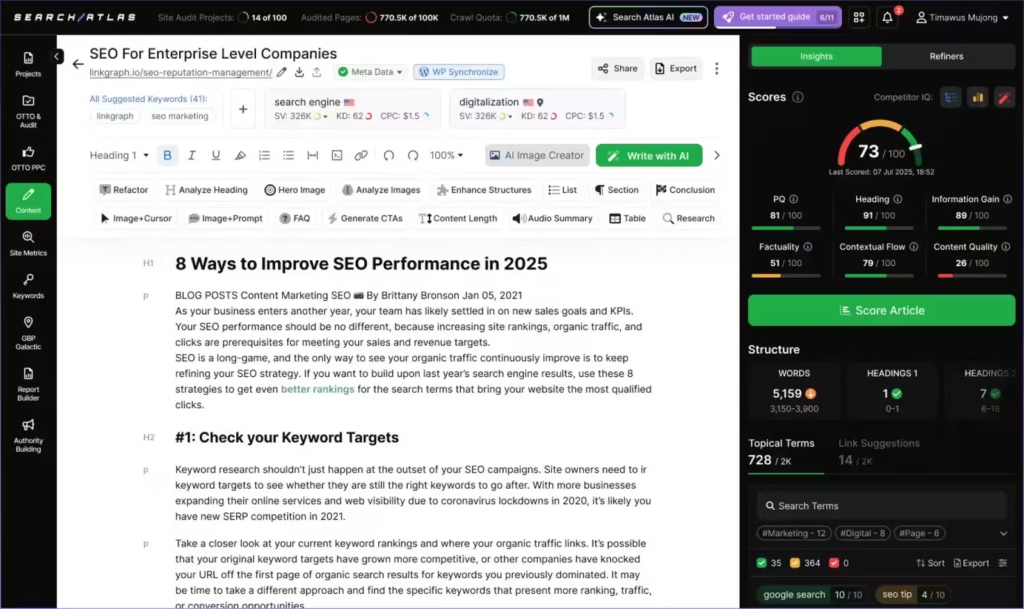
Search Atlas outperforms Grammarly in content depth, structural optimization, and performance evaluation. Grammarly corrects grammar, spelling, and clarity after text exists. Search Atlas improves how content is planned, written, evaluated, and optimized before publication.
At the center of Search Atlas content workflows is Content Genius. Content Genius generates drafts structured by topical depth, search behavior, and Google ranking logic. It works at the heading and passage level, using real-time SERP data and a modular agent architecture to produce information-dense content that aligns with algorithmic expectations.
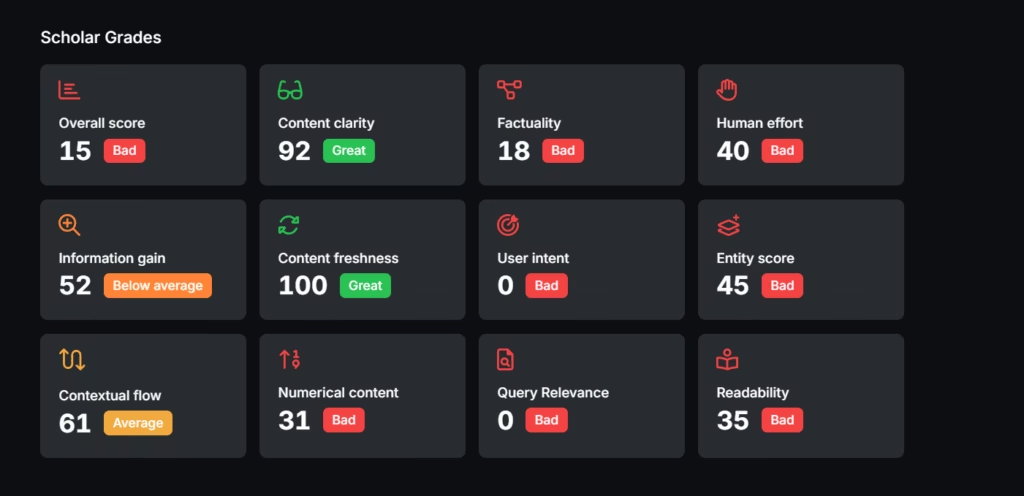
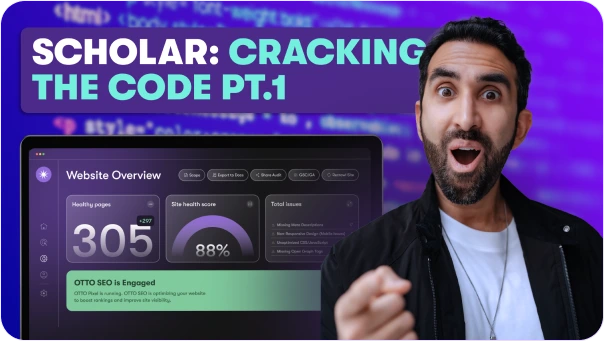
Search Atlas extends this capability with Scholar, the semantic evaluation engine. Scholar analyzes drafts using ranking signals from Google content systems. The tool measures accuracy, intent satisfaction, topical depth, and structural quality against real SERP behavior.
Search Atlas allows fast editing through the Content Rewriter Quick Tool, which refreshes up to 350 words at a time with tone, perspective, and language controls. Unlike Grammarly rewrites, these edits account for SEO context, passage relevance, and semantic consistency.
Search Atlas pricing ranges from $99 to $399 per month. This pricing replaces Grammarly plus multiple standalone tools for SEO research, content planning, optimization, and scoring.
Pros of Search Atlas review include semantic-first drafting with Content Genius, objective content scoring through Scholar, deep structural optimization, keyword clustering at scale, adaptive rewriting, and automation through OTTO SEO. The primary con is a learning curve for teams new to data-driven content workflows, though guided onboarding reduces friction.
2. ProWritingAid: Best Grammarly Alternative for Deep Style Analysis and Detailed Writing Reports
ProWritingAid is a writing analysis platform focused on improving structure, clarity, and stylistic consistency across short and long documents. ProWritingAid examines grammar, sentence rhythm, repetition, pacing, and readability through layered editorial feedback.
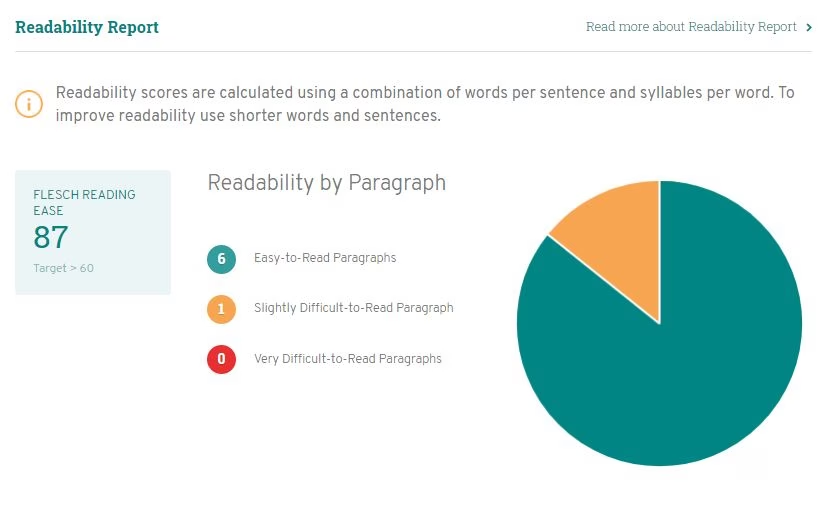
As a Grammarly replacement, ProWritingAid differentiates itself through depth rather than speed. Grammarly prioritizes fast corrections for everyday writing, while ProWritingAid operates as an editorial system built for authors, and long-form writers who require granular diagnostics.
Core features include 25+ writing reports that evaluate grammar, readability, structure, dialogue, pacing, and consistency in one workflow. The platform adds paraphrasing, plagiarism detection, a contextual thesaurus, and integrations with Word, Google Docs, and Scrivener.
ProWritingAid is a paid tool with pricing ranging from free access to $36 per month. The free tier restricts word counts and AI usage, while paid plans remove limits, expand stylistic insights, and increase AI-powered editing volume.
Pros of ProWritingAid include comprehensive editorial feedback and strong integrations for large writing projects. Cons include strict limits on the free tier, added cost for advanced features, no mobile app, and reports that overwhelm first-time users.
3. Hemingway Editor: Best Grammarly Alternative for Readability Improvements and Concise Writing
Hemingway Editor is a readability-focused writing tool built to simplify sentence structure and tighten prose. Hemingway Editor flags dense sentences, passive constructions, excess adverbs, and complex phrasing through a color-coded interface that promotes direct communication.
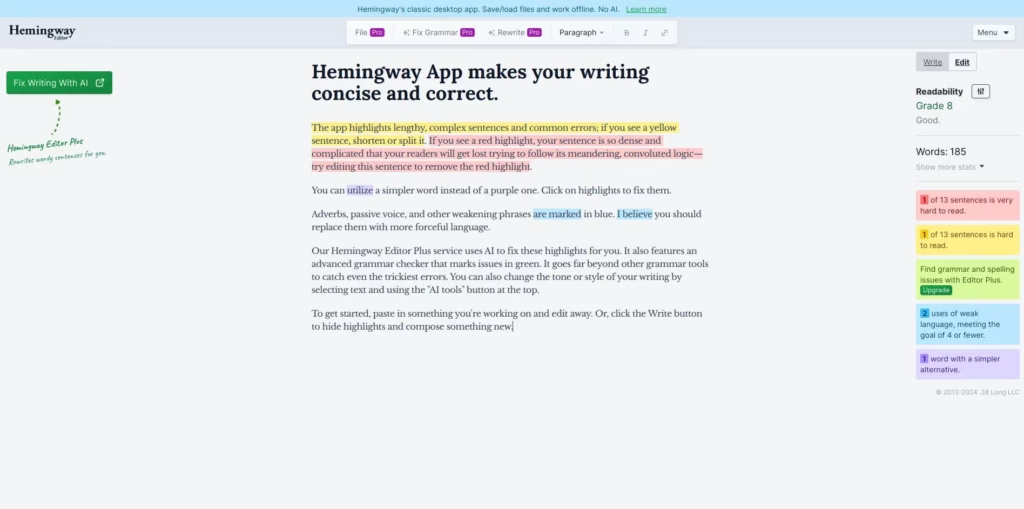
As a Grammarly substitute, Hemingway Editor differentiates itself through strict readability enforcement. Grammarly concentrates on broad grammar coverage, while Hemingway Editor pushes writers toward clarity by exposing structural friction and forcing simplification at the sentence level.
Core features include sentence complexity detection, passive voice identification, adverb density alerts, and live readability scoring that grades text for clarity. An AI-powered editor extends these features with paraphrasing and light grammar refinement that preserves the original meaning while improving flow.
Hemingway Editor is a paid tool with pricing ranging from $8.33 to $12.50 per user per month. The lower tier limits AI usage, while higher plans expand rewriting credits and introduce team-level controls.
Pros of Hemingway Editor reviews highlight strong readability guidance and a distraction-free interface that reinforces concise writing habits. Cons include shallow grammar coverage, occasional oversimplification, and a stylistic rigidity that restricts expressive or technical writing.
4. Ginger Software: Best Grammarly Alternative for Grammar Correction with Translation Tools
Ginger Software is an AI writing assistant designed to correct grammar, spelling, and sentence structure across devices and applications. Ginger Software emphasizes fluency and accuracy, with a strong focus on writers working across multiple languages.
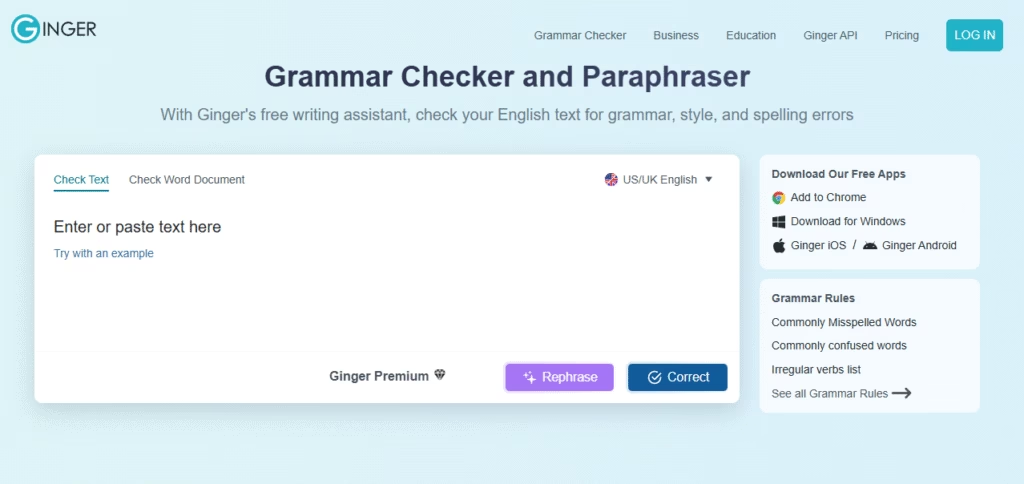
As a Grammarly alternative, Ginger Software stands out through its combination of grammar correction and built-in translation. Grammarly centers on English-first editing, while Ginger Software integrates contextual corrections with real-time translation and sentence rewriting.
Core features include advanced grammar and spell checking, a Sentence Rephraser for clarity improvement, contextual synonym suggestions, translation across multiple languages, and text-to-speech playback. Browser extensions, mobile keyboards, and desktop integrations maintain consistent editing across workflows.
Ginger Software is a paid tool with pricing ranging from $3.99 to $9.90 per month. Lower pricing applies to long-term plans, while monthly billing sits at the higher end of the range.
Pros of Ginger Software reviews emphasize strong grammar accuracy, multilingual functionality, and wide device compatibility. Cons include occasional aggressive corrections, limited plagiarism detection, and higher costs for short-term subscriptions.
5. WhiteSmoke: Best Grammarly Alternative for Grammar, Spelling, and Document-Level Checks
WhiteSmoke is a writing software platform built around full-document analysis rather than sentence-by-sentence editing. WhiteSmoke applies Natural Language Processing to review grammar, spelling, punctuation, and stylistic consistency across entire documents.
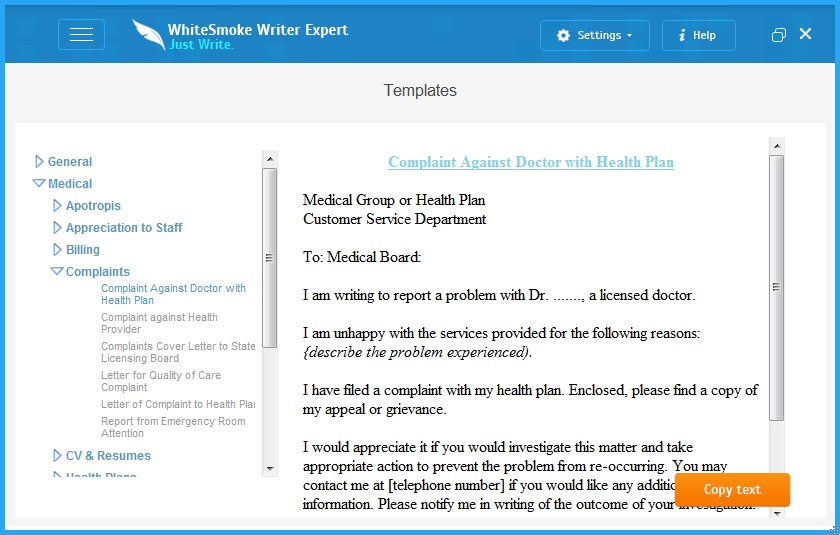
WhiteSmoke takes a different approach than Grammarly by prioritizing full-document analysis over inline sentence corrections. WhiteSmoke scans complete files to identify recurring errors, and proofreading issues that affect overall document quality.
Core features include dedicated grammar, spelling, and punctuation checkers that evaluate text holistically rather than in isolation. The platform adds a style checker for tone consistency, a built-in translator for multilingual writing, and structured writing templates designed for emails, reports, and professional documents.
WhiteSmoke is a paid tool with pricing ranging from $5.00 to $11.50 per month when billed annually. Lower tiers focus on browser-based proofreading, while higher plans expand into desktop integrations, Office compatibility, and business-grade workflows.
Pros of WhiteSmoke reviews highlight broad grammar coverage, and affordability for non-native English writers. Cons include the absence of a free version, a dated interface, inconsistent plagiarism detection, slower support response times, and a constant internet requirement.
6. Writesonic: Best Grammarly Alternative for AI-Powered Content Writing with Built-In Editing
Writesonic is an AI content platform designed for drafting, refining, and optimizing marketing and editorial content at scale. Writesonic combines automated generation with editing and optimization tools that extend far beyond traditional grammar correction.
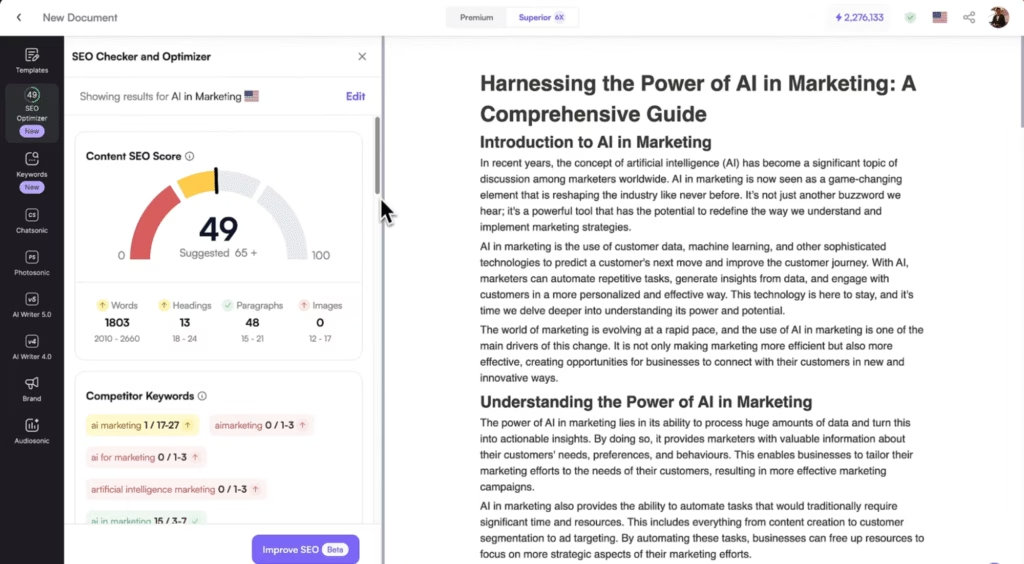
As a Grammarly replacement, Writesonic shifts the focus from sentence fixes to full content creation. Grammarly centers on polishing existing text, while Writesonic supports ideation, outlining, drafting, and revision within a single workflow.
Core features include an SEO Optimizer that scores content structure and keyword alignment during editing. Chatsonic connects research and publishing workflows through integrations with Ahrefs and WordPress, while outline builders, idea generators, and rewriting tools maintain clarity and tonal consistency across long-form content.
Writesonic is a paid tool with pricing ranging from $39 to $399 per month. Entry plans target individual creators, while higher tiers unlock advanced integrations, higher generation limits, reporting features, and multi-user access.
Pros of Writesonic review emphasize flexible content formats and integrated optimization tools. Cons include inconsistent output quality for very long articles, restrictive limits on lower plans, and an interface that overwhelms first-time users.
7. LanguageTool: Best Grammarly Alternative for Multilingual Grammar and Style Checking
LanguageTool is a multilingual grammar and style checker built for writers working across languages and regions. LanguageTool reviews grammar, spelling, punctuation, and word choice in real time across more than 30 languages, with regional dialects.
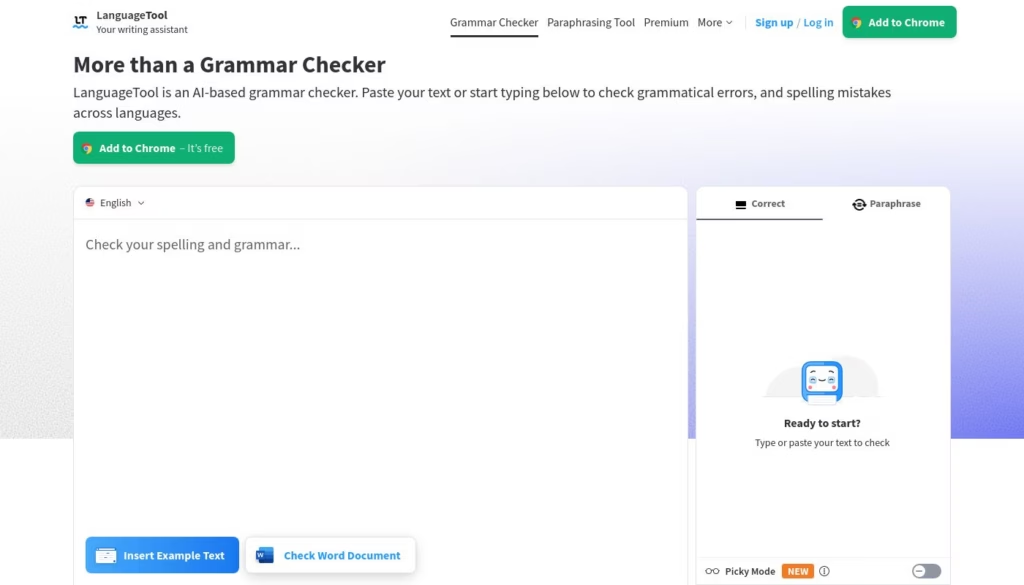
LanguageTool separates itself from Grammarly through language coverage rather than English-only depth. Grammarly concentrates on advanced English correction, while LanguageTool prioritizes accuracy, consistency, and stylistic control for international writing workflows at a lower cost threshold.
Core features include AI-driven grammar and spelling correction, style refinement through Picky Mode, paraphrasing tools, and personal dictionaries for terminology control. Integrations with Google Docs, Microsoft Word, Gmail, and major browsers offers continuous editing, while the open-source foundation reinforces privacy controls and team-level customization.
LanguageTool is a paid tool with pricing ranging from $69.90 to $132.80 per year. The Premium plan unlocks advanced grammar checks and AI rewriting, while the Teams plan adds shared style guides, user management, and collaborative dictionaries.
Pros of LanguageTool reviews emphasize unmatched multilingual support, strong privacy safeguards, and flexible integrations. Cons include limited plagiarism detection, weaker handling of long technical documents, and reduced capability in the free tier.
8. Readable: Best Grammarly Alternative for Readability Scoring and Audience Clarity
Readable is a readability analysis platform focused on measuring how clearly content communicates to specific audiences. Readable evaluates text using established scoring formulas to surface complexity, jargon, and structural friction.
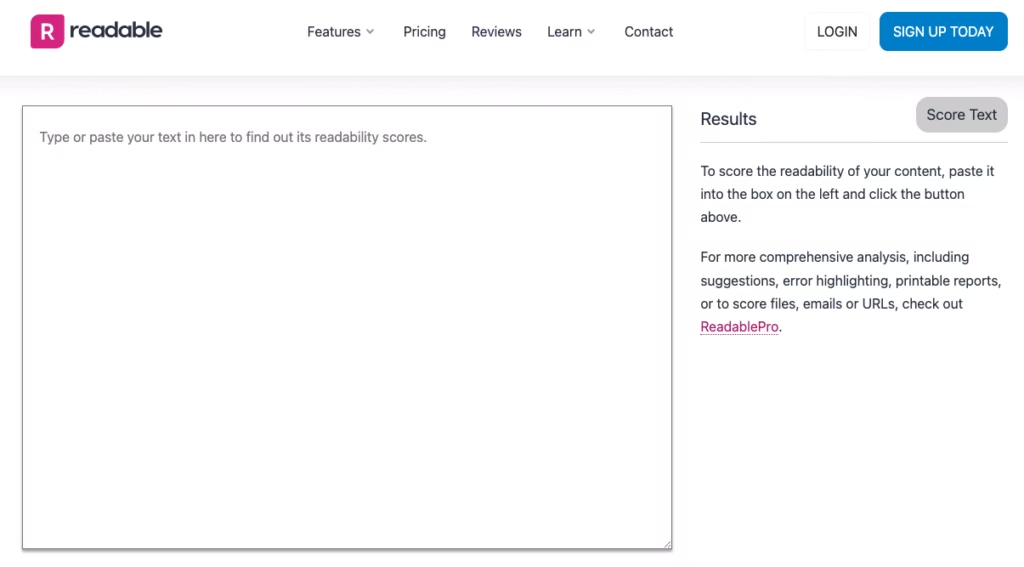
Readable differentiates itself by treating clarity as a measurable outcome rather than a stylistic suggestion. Grammarly focuses on correctness and tone, while Readable quantifies comprehension through grade-level targeting and audience-specific readability metrics.
Core features include grade-level scoring through Flesch-Kincaid, Gunning Fog, and related formulas, sentence complexity feedback, passive voice detection, sentiment analysis, and keyword density evaluation. File uploads and live URL scans extend readability analysis beyond static text editors.
Readable is a paid tool with pricing ranging from $4 to $69 per month. Lower tiers target individual writers and educators, while higher plans expand coverage for content sites, agencies, and multi-domain workflows.
Pros of Readable reviews highlight clear readability benchmarks and support for multiple content formats. Cons include occasional oversimplification, reduced nuance when enforcing strict grade targets, and limited contextual understanding for technical material.
9. Paperpal: Best Grammarly Alternative for Academic Writing, Manuscript Editing, and Journal Preparation
Paperpal is an AI academic writing platform built for researchers, students, and scholars working within formal publishing standards. Paperpal refines manuscripts through grammar correction, clarity enhancement, and discipline-appropriate language analysis.
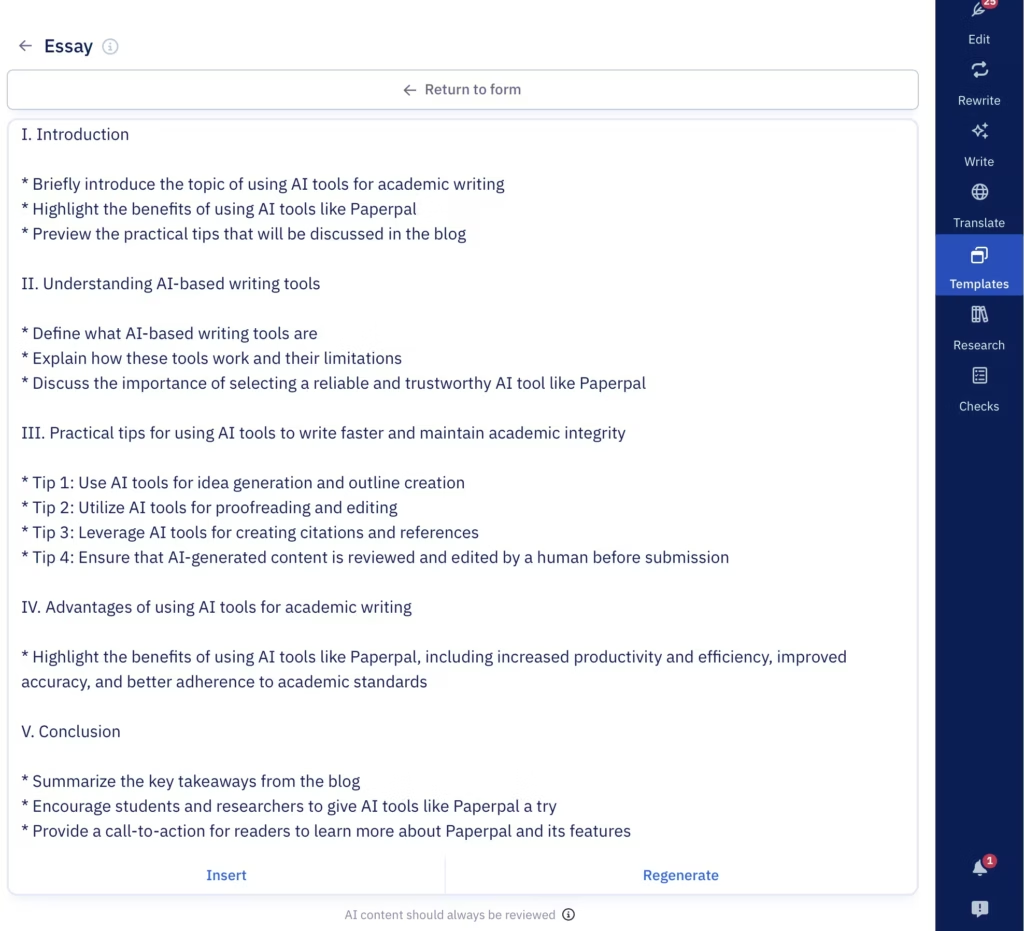
Paperpal focuses on scholarly rigor rather than general writing assistance. Grammarly targets broad writing scenarios, while Paperpal concentrates on academic tone control, research conventions, and submission readiness aligned with journal expectations.
Core features include academic grammar and style refinement, AI-based paraphrasing calibrated for scholarly use, submission-readiness checks, plagiarism screening, and reference-aware writing assistance. Deep integrations with Microsoft Word and Google Docs maintain consistency throughout manuscript drafting and revision.
Paperpal is a paid tool with pricing ranging from $25 per month to $139 per year. Monthly plans suit short research cycles, while annual pricing offers extended academic workflows and long-term projects.
Pros of Paperpal reviews highlight high-precision academic editing, strong citation handling, and seamless document-editor integration. Cons include limited free access, no creative writing, occasional AI misinterpretations, and low relevance for non-academic writing.
10. Simplified: Best Grammarly Alternative for AI Writing and Editing within a Creative Suite
Simplified is a multi-format creative platform that combines AI writing with design, video, and social publishing tools. Simplified centralizes content production for teams managing visual, written, and social assets from one workspace.
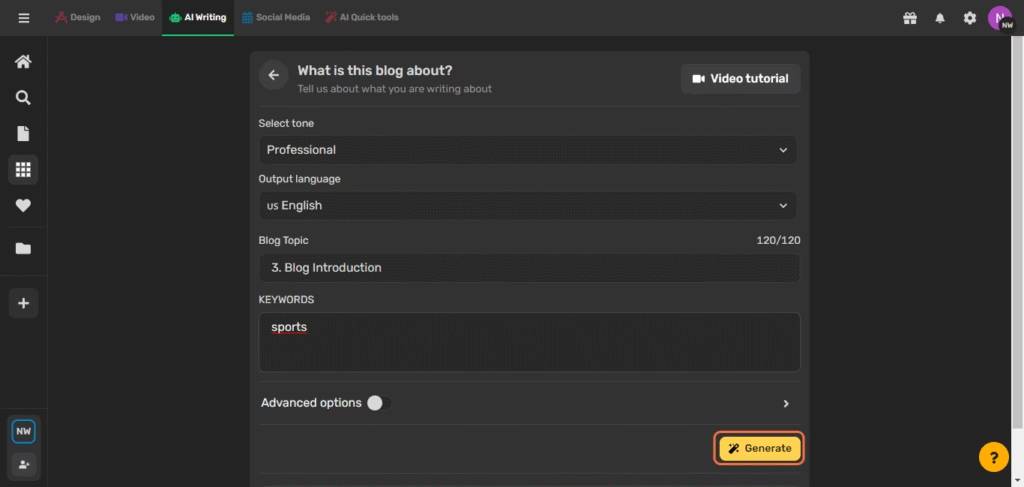
Simplified approaches writing as part of a broader creative pipeline. Grammarly concentrates on text correctness, while Simplified connects copy generation with design layouts, video assets, and publishing workflows.
Core features include AI writing for blogs, advertisements, and social captions, design templates, AI-assisted video editing, and a social media planner with scheduling and performance tracking. Collaboration tools coordinate work across creators, marketers, and channels.
Simplified is a paid tool with pricing ranging from free access to $20 per month. Entry plans cover basic writing and design needs, while higher tiers expand collaboration limits, publishing capacity, and creative tool access.
Pros of Simplified reviews emphasize an integrated creative environment, accessible pricing, built-in scheduling, and strong team collaboration. Cons include limited SEO depth, weaker keyword analysis, and reduced suitability for long-form editorial content.
11. QuillBot: Best Grammarly Alternative for Paraphrasing, Rewriting, and Citation Tools
QuillBot is an AI writing platform built around sentence transformation and source-aware rewriting. QuillBot restructures text while preserving intent, which allows originality, clarity, and controlled language variation across academic, professional, and creative writing.
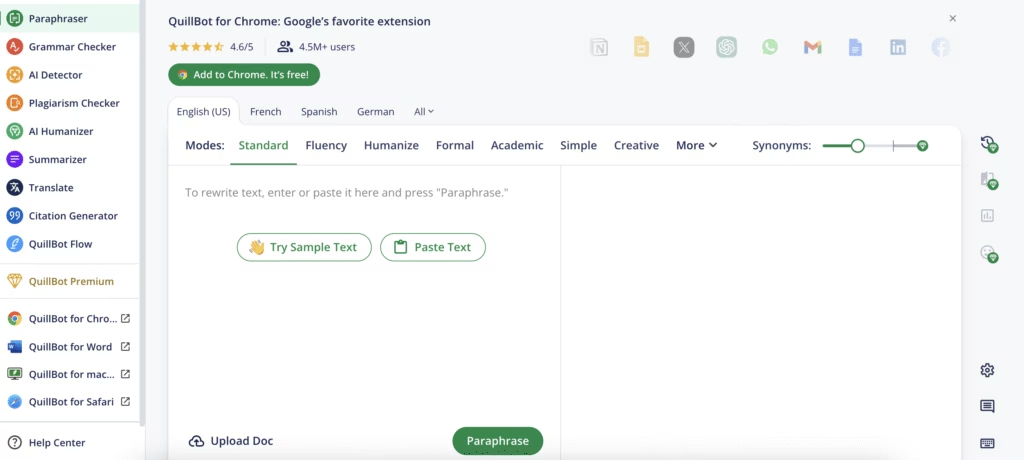
QuillBot operates as a specialist rather than a general editor. Grammarly prioritizes polishing and correctness, while QuillBot concentrates on deep rephrasing through dedicated modes and academic citation support, which suits content repurposing and research workflows.
Core features include an AI paraphraser with multiple writing modes, grammar correction, plagiarism detection, and citation generation. Synonym controls, word-freeze options, and tone adjustments allow precise control over sentence structure and meaning.
QuillBot is a paid tool with pricing ranging from free access to $8.33 per month. The free tier offers basic rewriting and grammar checks, while paid plans unlock advanced paraphrasing controls and higher usage limits.
Pros of QuillBot reviews emphasize accurate paraphrasing, built-in citation tools, and multilingual support. Cons include weaker performance on highly nuanced topics, occasional stylistic drift, and the need for manual review on complex subject matter.
12. Wordtune: Best Grammarly Alternative for Sentence Rewriting and Tone Adjustments
Wordtune is an AI writing platform focused on refining existing text through sentence-level rewriting and tone modulation. Wordtune enhances clarity and emotional resonance across emails, articles, academic writing, and social content.
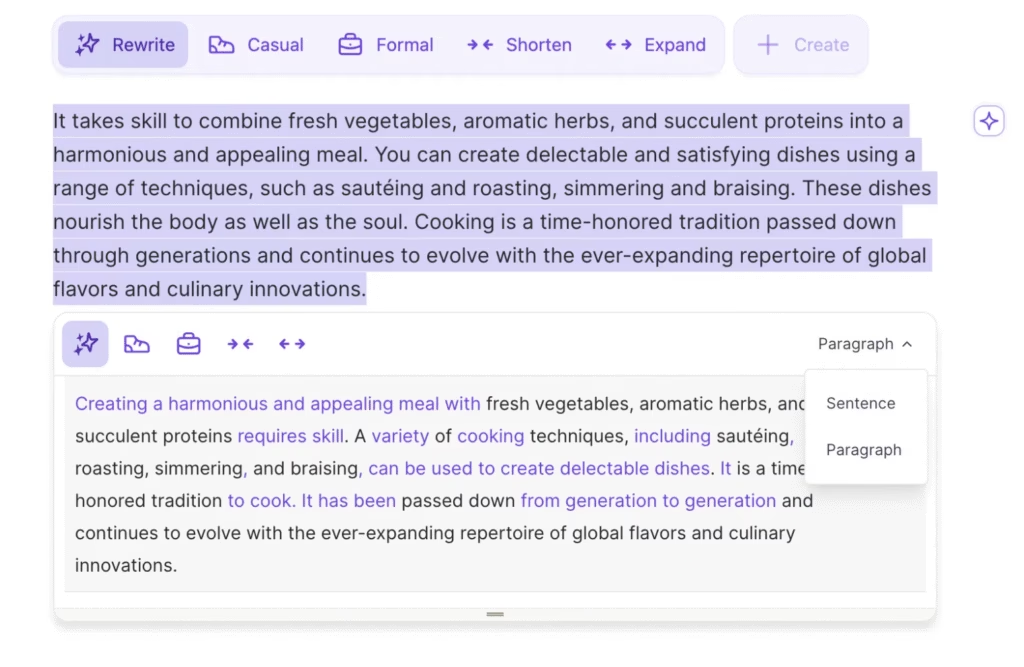
Wordtune emphasizes expression over correction. Grammarly centers on grammatical structure and formal accuracy, while Wordtune reshapes sentences to sound more natural, confident, or concise based on intent.
Core features include sentence rewrites, paragraph restructuring, tone shifts between formal and casual styles, and length controls for shortening or expanding text. A built-in readability engine simplifies complex phrasing while preserving original meaning.
Wordtune is a paid tool with pricing ranging from $6.99 to $9.99 per month. A limited free tier allows basic rewrites, while paid plans unlock tone controls and higher rewrite volumes.
Pros of Wordtune reviews highlight fast rewriting, reliable tone adjustment, and smooth browser-based editing. Cons include restricted free usage, no SEO capabilities, and occasional loss of nuance in dense passages.
13. Sapling: Best Grammarly Alternative for Customer Support Teams and Real-Time Error Correction
Sapling is an AI writing assistant designed for fast, accurate communication in customer-facing environments. Sapling delivers real-time grammar, spelling, and style suggestions across chat tools, CRMs, and email platforms where response speed and consistency matter.

Sapling targets operational writing rather than general editing. Grammarly focuses on broad writing quality, while Sapling optimizes short-form messages through live rephrasing, snippet management, and multilingual workflows for agents and sales teams.
Core features include real-time grammar and spell checking, sentence rephrasing, autocomplete for faster replies, tone and sentiment analysis, snippet libraries, and AI content detection. Deep integrations with Chrome, Gmail, Slack, Salesforce, and Outlook keep corrections embedded directly inside daily communication tools.
Sapling is a paid tool with pricing ranging from free access to $25 per month, with enterprise pricing starting at $15 per seat per month. The Free plan allows individuals, the Pro plan targets professionals, and Enterprise plans add security controls, team management, custom models, and API access under metered usage.
Pros of Sapling reviews highlight real-time assistance, strong app integrations, and consistency across team communications. Cons include occasional suggestion inaccuracies, higher costs at scale, and weaker performance in advanced plagiarism or tone analysis.
14. PerfectIt: Best Grammarly Alternative for Proofreading and Professional Editing Consistency
PerfectIt is a professional proofreading tool built for enforcing consistency and style standards across large documents. PerfectIt operates as a Microsoft Word and PowerPoint add-in that automates checks editors traditionally perform by hand.

PerfectIt outperforms Grammarly in proofreading and professional editing consistency. PerfectIt enforces strict style rules, abbreviation usage, capitalization, hyphenation, and formatting consistency required in legal, technical, and editorial publishing.
Core features include consistency checking for capitalization, hyphenation, numbers, and abbreviations, customizable style guides, and built-in standards aligned with frameworks such as The Chicago Manual of Style. Automated document-wide scans surface issues that sentence-level editors overlook.
PerfectIt is a paid tool with pricing ranging from $10 to $583 per month. Entry plans offer individual professionals, while higher tiers expand into team licensing, training, and enterprise deployments.
Pros of PerfectIt reviews emphasize unmatched consistency enforcement and major time savings for professional editors. Cons include limited grammar correction, no AI-driven rewriting, and reduced value for casual or creative writing scenarios.
15. PaperRater: Best Grammarly Alternative for Student Grammar Checks and Plagiarism Insights
PaperRater is a student-focused writing evaluation tool built around essays, assignments, and academic submissions. PaperRater analyzes grammar, spelling, readability, and originality through an automated scoring framework designed for classroom use.

PaperRater approaches writing feedback through an academic lens rather than general polish. Grammarly targets broad writing improvement, while PaperRater emphasizes assignment readiness with essay scoring, plagiarism insights, and improvement tips aligned with student workflows.
Core features include grammar, spelling, and style checks paired with a plagiarism detector that scans large online content sources. Readability analysis flags sentence length and passive voice, vocabulary tools suggest stronger word choices, and an Auto Grader scores submissions to guide revisions before final submission.
PaperRater is a paid tool with pricing ranging from free access to $795 per year. The Free plan limits page counts and plagiarism checks, while the Premium plan expands submission limits, plagiarism coverage, and automated scoring access.
Pros of PaperRater reviews highlight accessibility for students, built-in plagiarism insights, and quick feedback through a simple interface. Cons include inconsistent accuracy in plagiarism detection, English-only support, no mobile applications, and limited customer assistance.
16. Virtual Writing Tutor: Best Grammarly Alternative for ESL Grammar and Vocabulary Correction
Virtual Writing Tutor is a web-based writing improvement platform designed primarily for English language learners. Virtual Writing Tutor provides grammar correction, vocabulary guidance, and practice-oriented feedback tailored to language acquisition.

Virtual Writing Tutor prioritizes learning reinforcement over polished output. Grammarly focuses on correctness and tone, while Virtual Writing Tutor delivers instructional feedback, targeted error detection, and structured exercises that support ESL progression.
Core features include grammar, spelling, and punctuation checks, vocabulary enhancement suggestions, plagiarism detection, and essay scoring aligned with standards such as IELTS and TOEFL. Additional tools include an essay outliner, target structure checker, text-to-speech, voice recording, and interactive correction exercises that reinforce learning through practice.
Virtual Writing Tutor is a paid tool with pricing ranging from free access to $36 per year. The free version offers basic checks, while paid options unlock unlimited usage and advanced learning features without automatic renewal.
Pros of Virtual Writing Tutor reviews emphasize cost efficiency, and continuous availability. Cons include limited stylistic nuance, potential over-reliance on automation, reduced engagement for younger learners, and the absence of real-time human instruction.
17. Slick Write: Best Grammarly Alternative for Fast, Lightweight Grammar and Style Checks
Slick Write is a proofreading tool designed for rapid grammar and style evaluation. Slick Write scans text for sentence-level errors, repetition, and readability friction through a lightweight interface optimized for speed.

Unlike Grammarly, Slick Write emphasizes speed and simplicity over comprehensive editing depth. Slick Write excels at rapid grammar detection, instant style signals, and immediate readability feedback without requiring accounts, setup, or layered workflows.
Core features include grammar and punctuation checking, sentence-structure analysis, vocabulary variety metrics, and readability statistics. Visual indicators surface repetition, flow disruptions, and stylistic inconsistencies to quick revisions.
Slick Write is a free tool with no monthly pricing. This pricing model fits students and casual writers who want immediate checks without subscriptions.
Pros of Slick Write reviews highlight zero cost, fast scans, engaging statistics, and simple navigation. Cons include reduced accuracy on complex writing, a fragmented editing experience, and limited advanced capabilities.
18. editGPT: Best Grammarly Alternative for Editing AI-Generated Content inside ChatGPT
editGPT is an AI editing platform built specifically for revising AI-generated and ChatGPT-created text. editGPT improves clarity, tone, and structure while preserving author intent through controlled, context-aware edits.

editGPT addresses a different editing scenario than Grammarly. Grammarly focuses on general correctness, while editGPT specializes in refining AI-written content through document-level context and transparent revision control.
Core features include context-aware editing that evaluates intent and flow, along with a track-changes-style interface that presents every suggestion for review. Users accept or reject edits individually, which maintains voice consistency and editorial control across revisions.
editGPT is a paid tool with pricing ranging from free access to $100 per month. The Free plan includes limited word usage, while higher tiers expand monthly word limits, unlock team features, and provide unlimited editing at scale.
Pros of editGPT reviews emphasize strong contextual understanding, precise voice preservation, and transparent editing workflows. Cons include limited offline capability and restrictive free-plan limits for heavy usage.
19. Scribens: Best Grammarly Alternative for Free Grammar Checking with Advanced Explanations
Scribens is a free grammar and spelling checker designed to correct errors while explaining the underlying rules. Scribens detects conjugation mistakes, homonyms, punctuation errors, and syntax issues across English and French, with support for additional languages.

Grammarly prioritizes premium AI corrections, while Scribens delivers rule-based clarity at no cost. Scribens excels at free grammar checking by pairing highlighted errors with detailed explanations that teach grammar concepts during revision.
Core features include comprehensive grammar and spelling correction, syntax analysis, tone-based rephrasing, and structured explanations for every correction. Browser extensions and integrations with Microsoft Office, Google Docs, and social platforms keep checks consistent across environments.
Scribens is a paid tool with pricing ranging from free access to €9.90 per month. The free tier enforces character limits, while paid plans expand analysis depth, unlock integrations, and remove usage restrictions.
Pros of Scribens reviews emphasize strong free coverage, educational explanations, and broad error detection. Cons include strict character limits on the free plan, no native plagiarism checking, and reduced suitability for long documents.
20. Feather: Best Grammarly Alternative for Clean Editing and Distraction-Free Writing Polishing
Feather is an AI email editing tool built for fast, focused message refinement. Feather polishes tone, clarity, and structure through a minimal interface that keeps attention on the text.

Grammarly offers multi-purpose editing, while Feather concentrates on interruption-free polishing. Feather performs better for clean edits by refining messages without dashboards, alerts, or layered recommendations.
Core features include tone customization, adjustable message length, multilingual output, and context-aware rewriting optimized for email replies. The system runs on the Google Gemini API, which strengthens relevance and response accuracy.
Feather is a paid tool with pricing ranging from $25 to $70 per pack. Lower tiers provide limited credits, while higher packs expand usage with bonus credits.
Pros of Feather reviews highlight focused email refinement, accurate tone matching, and fast response generation. Cons include a credit-based model, limited long-form capability, and standard AI privacy considerations.
21. Copysmith: Best Grammarly Alternative for AI Writing with Built-In Editing for Ecommerce
Copysmith is an AI copywriting platform built for ecommerce teams managing large product catalogs. Copysmith generates product descriptions, ad variants, social captions, and marketing copy through workflows optimized for online retail scale.
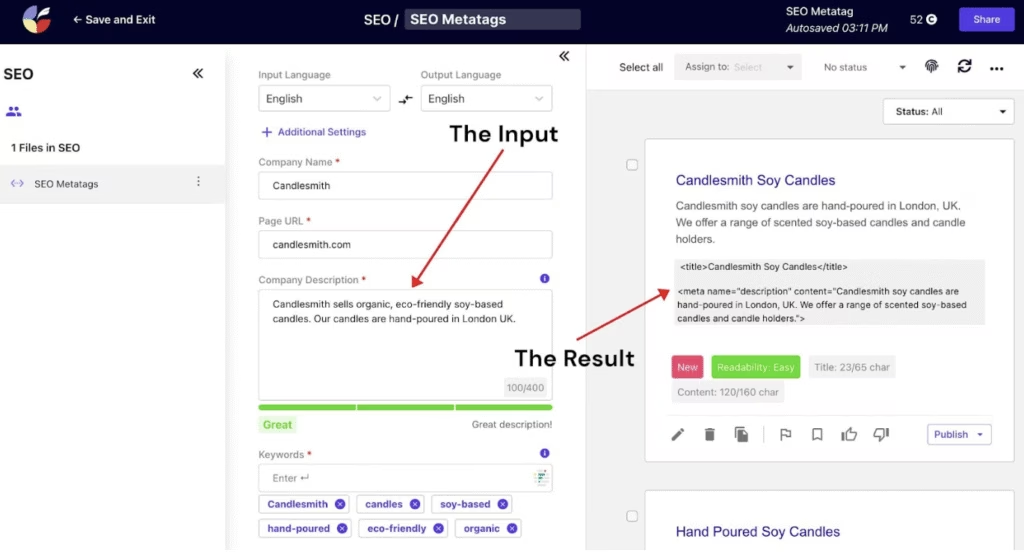
Grammarly focuses on polishing existing text, whereas Copysmith centers on creating and editing ecommerce copy in bulk. Copysmith performs better for catalog-driven environments by pairing AI generation with conversion-focused edits designed for product pages and ads.
Core features include bulk product description generation, ad copy variation testing, translation capabilities, and collaboration tools for distributed teams. These features maintain consistent tone and structure across thousands of SKUs without manual rewriting.
Copysmith is a paid tool with pricing ranging from $19 per month to custom enterprise plans. Higher tiers expand generation limits and tailor workflows for high-volume ecommerce brands.
Pros of Copysmith reviews highlight efficient bulk production and dependable ad variant creation. Cons include occasional repetitive phrasing, limited SEO depth compared to dedicated optimization platforms, and an interface that feels less intuitive for some users.
22. Frase: Best Grammarly Alternative for SEO Writing Optimization and Content Editing
Frase is an AI content platform designed to combine research, outlining, and writing into SEO-aligned articles. Frase analyzes competitor pages and search data to surface topics, questions, and keywords that shape content direction.
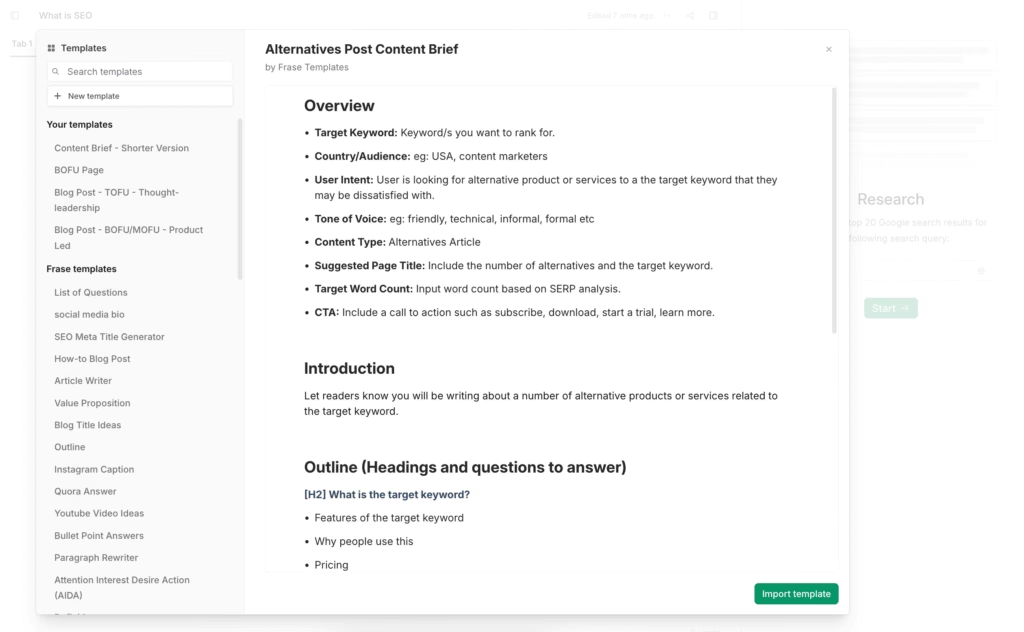
Grammarly improves grammar and tone, while Frase optimizes content around search performance. Frase stands out by aligning writing with SERP patterns and topical relevance instead of focusing solely on linguistic correction.
Core features include AI-driven content brief generation, SERP analysis, a collaborative editor, and integrations with Google Docs and WordPress. Teams coordinate research, maintain brand alignment, and streamline production across multiple contributors.
Frase is a paid tool with pricing ranging from $45 to $115 per month. Lower tiers suit individual creators, while higher plans expand collaboration and project capacity.
Pros of Frase review emphasize fast research workflows, structured brief creation, and real-time optimization insights. Cons include project limits on entry plans, separate pricing for advanced AI documents, and fewer technical SEO capabilities.
23. Anyword: Best Grammarly Alternative for Marketing Copy Editing with Performance Scores
Anyword is an AI copywriting platform built for marketers who need measurable impact from every message. Anyword generates and evaluates copy using audience signals, historical performance data, and brand inputs to predict outcomes before publishing.
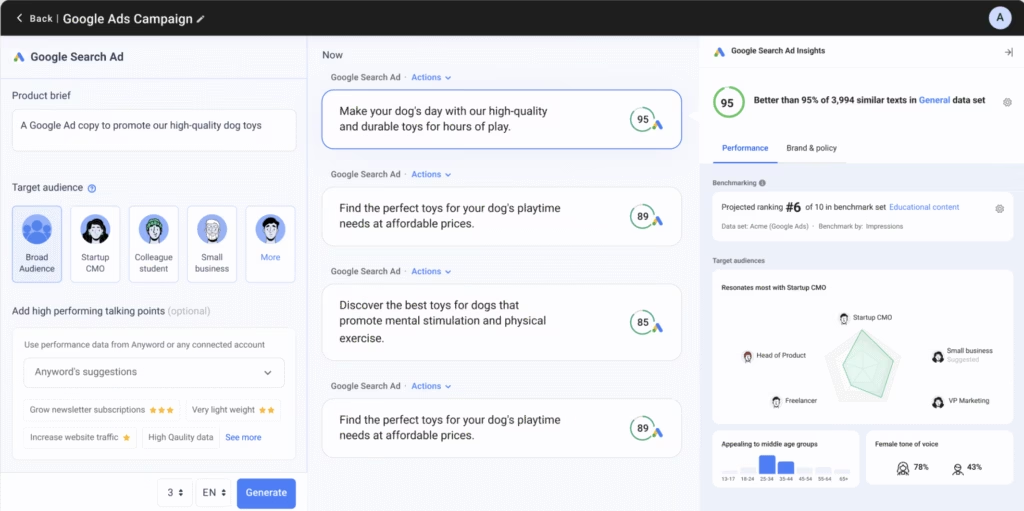
Grammarly refines language quality, while Anyword optimizes copy for results. Anyword stands out by scoring variants for clicks and conversions, which shifts editing decisions from correctness to performance.
Core features include predictive performance scoring, copy intelligence recommendations, and a brand voice editor that enforces tonal consistency across channels. Plagiarism detection, and 30+ languages extends use across global campaigns.
Anyword is a paid tool with pricing ranging from $49 to $499 per month. Lower tiers target individual marketers, while business plans expand prediction volume, analytics depth, and access to advanced AI models.
Pros of Anyword reviews highlight reliable performance scoring and strong brand voice control. Cons include limited SEO depth and occasional friction during live edits.
24. Antidote: Best Grammarly Alternative for Professional Linguistic Tools and Advanced Dictionaries
Antidote is a professional writing suite for English and French focused on linguistic accuracy and education. Antidote combines grammar correction, style analysis, authoritative dictionaries, and language guides into a single system.

Grammarly emphasizes speed and convenience, whereas Antidote prioritizes linguistic depth. Antidote performs better for editors, translators, and advanced writers who require precise definitions, rule explanations, and contextual correction.
Core features center on the Corrector for grammar and style issues, extensive Dictionaries for definitions and usage, and Guides that explain language rules in detail. An AI-powered reformulation mode suggests alternative phrasing, with integrations across Microsoft 365, Google Docs, and desktop applications.
Antidote is a paid tool with pricing ranging from $59.95 to $99.95 per year. Individual plans cover one language, while higher tiers add family access, additional languages, and expanded platform availability.
Pros of Antidote reviews emphasize comprehensive linguistic resources and high-accuracy corrections. Cons include higher cost compared to lightweight editors and a steeper learning curve for new users.
25. WordAI: Best Grammarly Alternative for AI Rewriting and High-Quality Text Spinning
WordAI is an AI rewriting platform built for large-scale content variation and repurposing. WordAI interprets meaning at the semantic level, restructures sentences completely, and produces multiple unique versions suitable for SEO workflows and bulk rewriting.

Grammarly improves correctness and tone, while WordAI specializes in transformation at scale. WordAI performs better for high-volume rewriting by generating structurally distinct outputs designed for uniqueness rather than surface-level edits.
Core features include semantic sentence rewriting, bulk processing for large content sets, Copyscape-safe output, and API access for automated workflows. Context-aware vocabulary expansion maintains readability while increasing variation across rewritten versions.
WordAI is a paid tool with pricing ranging from $27 to $57 per month. Annual billing lowers the effective monthly cost, while enterprise plans expand volume limits, account access, custom rewrite controls, and support.
Pros of WordAI reviews highlight fast processing, scalable rewriting, and high uniqueness across outputs. Cons include higher pricing, occasional mechanical phrasing, limited creative nuance, and the need for editorial review.
26. Rytr: Best Grammarly Alternative for Budget AI Content Writing and Quick Editing
Rytr is an AI writing assistant designed for fast, low-cost content generation. Rytr offers marketers, freelancers, and small teams who need quick drafts across multiple formats without complex setup.
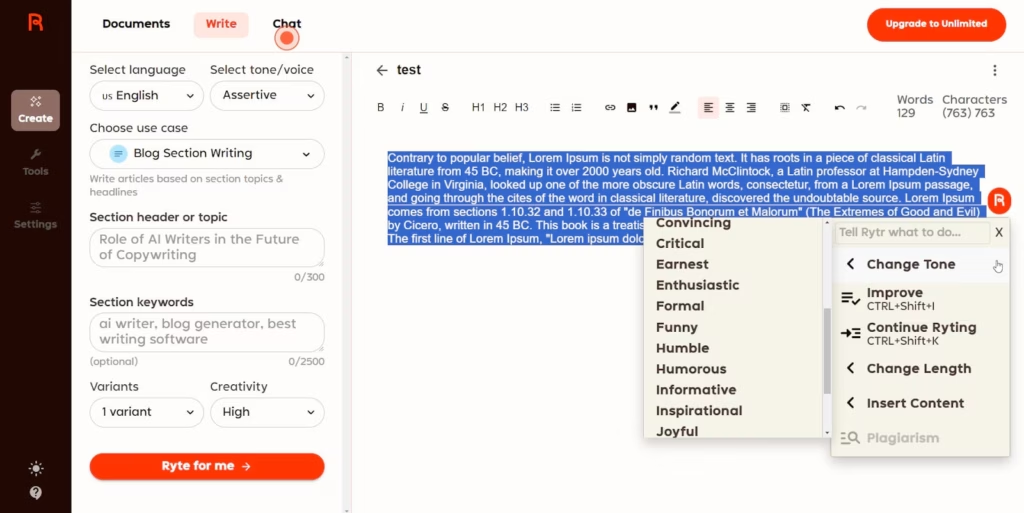
Grammarly emphasizes refinement, while Rytr prioritizes speed and affordability. Rytr fits rapid ideation and short-form drafting where low cost and turnaround time matter more than advanced editing depth.
Core features include paragraph generation, sentence rewriting, tone selection, and reusable style presets. A browser extension enables drafting inside web-based tools, with more than 40 content templates covering emails, ads, product descriptions, and outlines.
Rytr is a paid tool with pricing ranging from $9 to $29 per month. Entry plans cover basic generation, while higher tiers expand tone options, language support, and usage limits.
Pros of Rytr reviews emphasize budget-friendly pricing and fast output. Cons include limited long-form performance, shallow SEO capabilities, and repetitive phrasing in extended drafts.
27. Linguix: Best Grammarly Alternative for Business Writing and Advanced Grammar Checks
Linguix is an AI writing assistant built for professional and team-based communication. Linguix reviews grammar, spelling, and punctuation while adding rewriting, paraphrasing, and productivity tools that improve clarity and consistency across business content.

Grammarly centers on individual proofreading, whereas Linguix standardizes writing at the team level. Linguix performs better in business environments by enforcing style guides, vocabulary rules, and analytics that keep internal and external communication aligned.
Core features include grammar and spelling checks, sentence rewrites, contextual style guidance, and productivity tools (text shortcuts and reusable templates). Writing analytics and controlled vocabulary reinforce consistency, while feedback appears instantly during writing rather than after drafts finish.
Linguix is a paid tool with pricing ranging from $10 to $30 per month. Monthly plans include full grammar, rewriting, and productivity features, with lower effective costs available through longer billing cycles.
Pros of Linguix reviews highlight affordable pricing, immediate feedback, and efficiency gains through shortcuts. Cons include missed edge-case errors, limited language coverage, and no dedicated desktop application.
28. Writer.com: Best Grammarly Alternative for Enterprise-Grade Compliance and Tone Consistency
Writer.com is an enterprise AI platform designed for organizations that require governed, compliant, and brand-safe content at scale. Writer.com manages AI creation and deployment through centralized rules, approvals, and automation.

Grammarly improves writing quality, while Writer.com controls how language operates across entire organizations. Writer.com excels in regulated and brand-sensitive environments by enforcing terminology, tone, and compliance rules before content reaches publication.
Core features include AI Agents created through no-code tools or Python frameworks, proprietary Palmyra language models trained for specific industries, and a Knowledge Graph that stores brand rules, terminology, and reference data. These systems automate workflows and ensure consistent language across teams and channels.
Writer.com is a paid tool with pricing ranging from free trials to custom enterprise contracts. Starter plans offer limited access for evaluation, while enterprise agreements expand to unlimited users, full Knowledge Graph functionality, and advanced data integrations.
Pros of Writer.com reviews emphasize strong brand governance, scalable AI workflows, and performance analytics. Cons include a steeper onboarding curve, limited usefulness for solo writers, and setup time before full value appears.
29. Reverso: Best Grammarly Alternative for Translation and Grammar Correction across Multiple Languages
Reverso is a multilingual writing and translation platform built around contextual understanding and language learning. Reverso improves phrasing, comprehension, and correctness by combining translation, grammar correction, and real-world usage examples drawn from large bilingual corpora.

Grammarly concentrates on English-language accuracy, while Reverso expands correction into multilingual contexts. Reverso performs better for translation and cross-language grammar checking by pairing corrections with examples, and learning-oriented tools.
Core features include contextual translation, grammar and spelling correction, verb conjugation, dictionary access, and text-to-speech pronunciation. These tools allow both everyday writing tasks and structured language acquisition across multiple platforms.
Reverso is a paid tool with pricing ranging from €6.49 to €19.99 per month. Lower tiers cover limited translation volume, while higher plans increase annual word allowances and support professional usage. Corporate plans apply custom limits.
Pros of Reverso reviews highlight strong contextual translation, and reliable pronunciation guidance. Cons include inconsistent handling of idioms, character limits on the free version, and uneven performance with specialized terminology or rare language pairs.
30. ChatGPT: Best Grammarly Alternative for Context-Aware Editing and Rewriting
ChatGPT is a conversational AI platform built for drafting, rewriting, and refining content across formats. ChatGPT adapts suggestions based on context, intent, and prior inputs, which offers flexible editing beyond sentence-level correction.
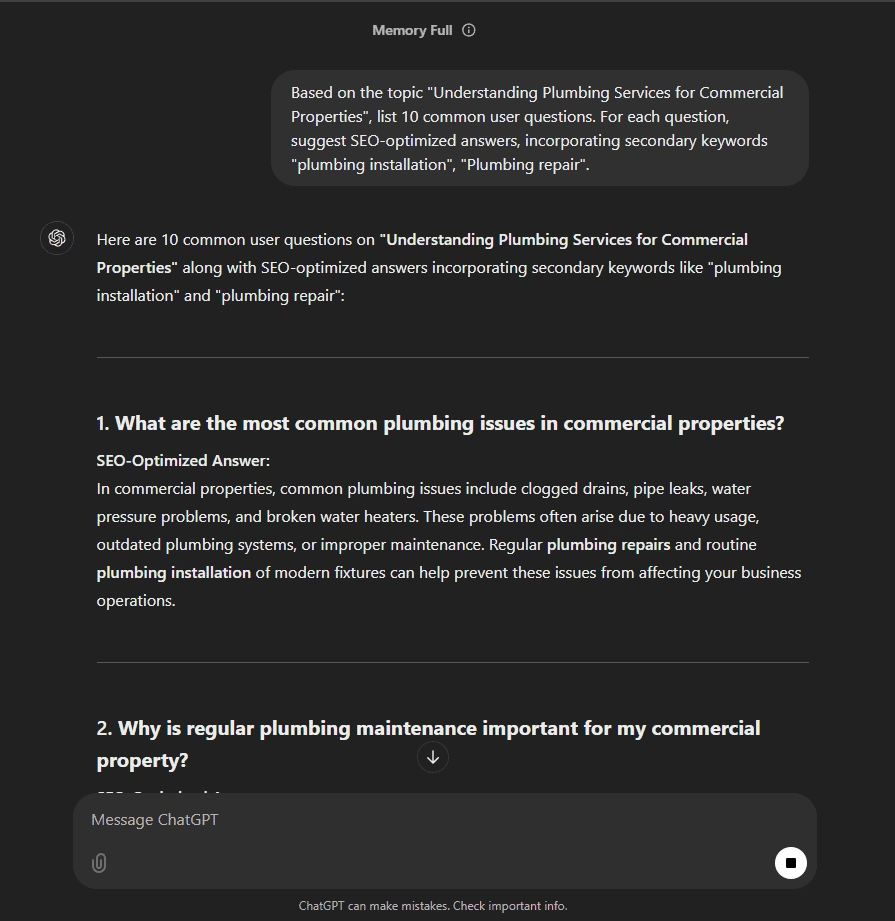
Grammarly concentrates on rule-driven accuracy, while ChatGPT reshapes text based on meaning and direction. ChatGPT performs better for context-aware editing by producing holistic rewrites that account for tone, structure, and narrative flow instead of isolated fixes.
Core features include adaptive rewriting, tone control, style variation, and prompt-driven editing that responds dynamically to instructions. The platform offers exploratory drafting, structured revisions, and long-form content development through iterative interaction.
ChatGPT is a paid tool with pricing ranging from $20 to $200 per month. A free tier provides limited access for evaluation, while higher plans expand model capability, and usage limits.
Pros of ChatGPT reviews highlight flexibility, speed, and broad writing coverage. Cons include limited native SEO tooling and occasional repetition in extended drafts.
31. Google Gemini: Best Grammarly Alternative for AI Editing with Web-Integrated Context
Google Gemini is a multimodal AI system designed to generate and refine content using web-connected context. Google Gemini offers writing, research, coding, and creative tasks while integrating directly with the Google ecosystem.
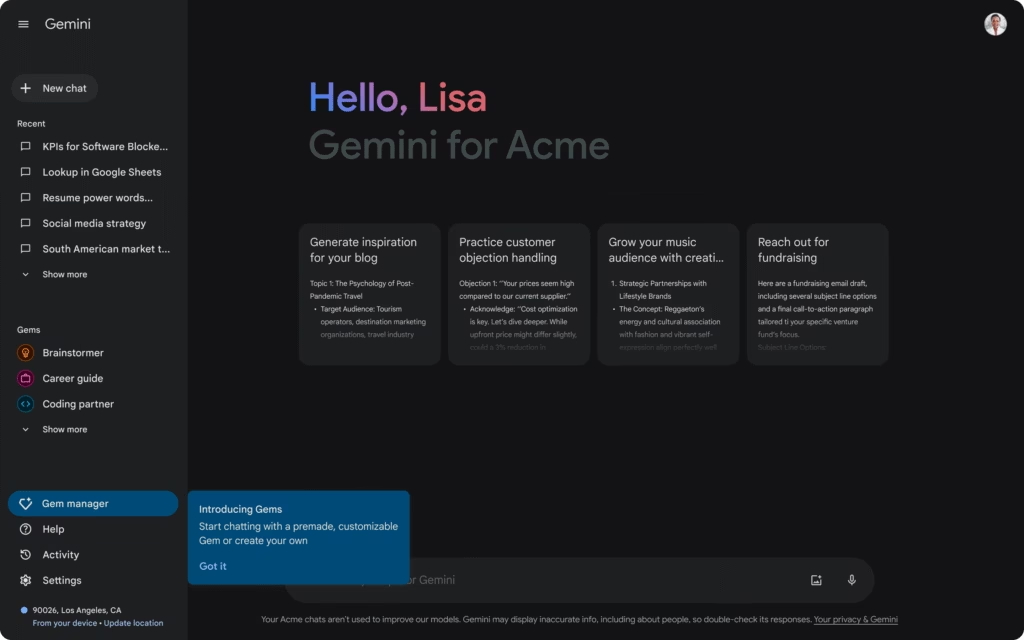
Grammarly edits text in isolation, whereas Google Gemini incorporates external context. Google Gemini excels at research-aware rewriting by drawing on web knowledge, multi-step reasoning, and conversational refinement across documents.
Core features include multimodal input handling, advanced reasoning, creative drafting, and deep integration with Google Workspace tools. Capabilities extend into code generation, data interpretation, and iterative problem solving through connected workflows.
Google Gemini is a paid tool with pricing ranging from $0 to $249.99 per month. Entry tiers allow basic access, while higher plans unlock advanced models, expanded credits, and enterprise-grade functionality.
Pros of Google Gemini reviews emphasize ecosystem integration, reasoning strength, and multimodal support. Cons include higher costs at advanced tiers, privacy considerations, and occasional factual inaccuracies.
32. Microsoft Editor: Best Grammarly Alternative for Document Editing across Office and Browser Environments
Microsoft Editor is an AI writing assistant embedded across Microsoft Word, Outlook, and browser extensions. Microsoft Editor checks spelling, grammar, and style while maintaining consistency across documents created inside Microsoft 365 and the web.

Grammarly targets standalone editing, whereas Microsoft Editor operates inside Office workflows. Microsoft Editor performs better for document editing by delivering native Word and Outlook integration, synchronized suggestions, and environment-wide consistency without switching tools.
Core features include spelling and grammar checks, clarity and conciseness suggestions, vocabulary refinement, and rewrite options within Word, Outlook, and supported browsers. Premium capabilities extend into formality adjustments, inclusiveness checks, and advanced style guidance aligned with Microsoft documents.
Microsoft Editor is a paid tool with pricing ranging from $0 to $12.99 per month. The Free tier covers basic checks in web apps and browsers, while Microsoft 365 Personal and Family plans unlock advanced Editor features alongside full desktop applications and cloud storage.
Pros of Microsoft Editor reviews emphasize deep Office integration, consistent cross-app feedback, and strong value within Microsoft ecosystems. Cons include limited capability in the free tier, weaker advanced tone detection compared to Grammarly, and reliance on Microsoft 365 for full functionality.
Why do People Seek Alternatives to Grammarly Tool?
People seek Grammarly alternatives because its value drops as writing needs become more specialized. Grammarly performs well for grammar, spelling, and basic clarity, but the cost rises quickly once advanced features become necessary.
Depth is a common limitation. Grammarly prioritizes correctness and surface-level readability, which leaves little room for creative flexibility, nuanced tone shifts, or context-aware rewrites. Writers who need adaptive voice control or industry-specific guidance often hit a ceiling.
Grammarly shows gaps earlier in the writing process. The tool refines existing text but offers minimal support for brainstorming, outlining, or shaping ideas before drafting. That creates friction for workflows that depend on planning, structure, and iteration.
SEO and performance-driven writing present another constraint. Grammarly does not provide keyword intelligence, content scoring, or optimization signals tied to search visibility, which limits its usefulness for marketers and publishers.
Automation limits push teams to look elsewhere. Grammarly lacks integrated research, competitor analysis, bulk rewriting, and workflow automation found in newer AI platforms. That combination of rising cost, shallow flexibility, and missing optimization features drives many users toward Grammarly alternatives built for modern, end-to-end writing needs.
What to Look for in a Grammarly Alternative?
The best Grammarly alternatives extend beyond basic grammar correction and offer deeper writing intelligence. A strong Grammarly replacement improves style flexibility, contextual rewriting, and workflow efficiency while covering use cases Grammarly does not address.
The 5 features to look for in an alternative to the Grammarly tool are listed below.
- Deeper Style and Tone Analysis. Select platforms that adjust tone, voice, and intent across paragraphs rather than applying generic correctness rules.
- Context-Aware AI Rewriting. Choose tools that rewrite with awareness of meaning, structure, and flow instead of sentence-by-sentence edits.
- Plagiarism and Originality Controls. Prioritize solutions that include plagiarism detection to validate originality for academic and professional use.
- Workflow Fit and Integrations. Look for tools that integrate with browsers, editors, or team systems without creating friction or forcing manual exports.
- Pricing That Matches Usage. Evaluate cost against volume limits, feature access, and team needs to avoid paying for unused capabilities or restricted plans.
Why is Search Atlas the Best Grammarly Alternative?
Search Atlas is the best Grammarly alternative because it improves content quality at the structural and semantic level, not just sentence correctness. Search Atlas upgrades editing by shaping how content is drafted, evaluated, and optimized for how search engines and LLMs interpret pages.
Search Atlas analyzes SERP behavior, structuring content by topical depth, and aligning every heading and passage with search intent. Writers draft with Content Genius, which generates content based on semantic coverage, passage-level relevance, and real-time SERP data instead of generic rules.
Search Atlas outperforms Grammarly in content evaluation through Scholar. Grammarly suggests edits without measuring overall quality. Scholar scores drafts from 0 to 100 using ranking signals derived from Google’s content systems, assessing accuracy, intent satisfaction, semantic depth, and structural completeness.
For teams replacing Grammarly, Search Atlas delivers content that is planned, written, and validated for performance from the start. Try Search Atlas free for 7 days!