Google passage ranking is an algorithm system that ranks specific sections of a page based on query relevance. This definition explains what passage ranking is and how passage-based ranking changes how Google evaluates content at the section level. Passage indexing is a common misunderstanding, because Google still indexes full pages while ranking individual passages independently.
Google passage ranking matters because search systems now identify precise answers inside long-form content instead of relying only on page-level relevance. Passage ranking improves result precision by extracting the exact paragraph that answers a query, even when the broader page targets a different topic. Passage ranking SEO shifts optimization toward structured, self-contained sections that match specific queries.
Google passage ranking creates new visibility opportunities for pages that contain deep, comprehensive content. Passage-based ranking allows smaller sections to compete for rankings without requiring the entire page to align with a query. Passage ranking increases exposure for long-tail queries, strengthens coverage across subtopics, and expands how a single page appears across multiple search intents.
Google passage ranking requires clear structure, semantic alignment, and section-level completeness. Passage ranking SEO depends on organizing content into question-driven sections, writing direct answers, and maintaining strong topical coverage. Passage indexing does not require separate optimization, but passage ranking improves when each section functions as a standalone answer that search systems extract, rank, and display.
What Is Passage Ranking in SEO?
Passage ranking is an AI-driven ranking enhancement that allows Google to rank specific sections of a webpage independently. Passage ranking identifies relevant passages inside content even when the full page does not target the query directly. Passage ranking shifts the ranking logic from page-level relevance toward section-level relevance, which increases precision for complex and long-tail queries.
When did passage ranking become part of Google search systems? Passage ranking became part of Google search systems after its announcement in October 2020 and rollout in February 2021. Passage ranking initially affected about 7% of global queries and expanded across languages between 2021 and 2025. Passage ranking now operates as a core ranking behavior rather than a separate feature or indexing change.
How does passage ranking evaluate web pages differently from traditional ranking? Passage ranking evaluates webpages by focusing on sections instead of relying only on full-page relevance signals. Passage ranking still indexes complete webpages, yet passage ranking extracts and ranks individual sections based on query relevance. Passage ranking identifies the exact paragraph that answers a query, which improves precision without requiring full-page optimization.
What does the passage ranking change in SEO performance? Passage ranking changes how relevance and visibility operate inside search results. Passage ranking increases the ability of long-form pages to rank for multiple queries because each section gains an independent evaluation. Passage ranking improves precision because Google selects exact answers from within content instead of relying only on page-wide signals.
Passage ranking expands ranking coverage across long-tail queries. One comprehensive page ranks for multiple niche queries through different sections, which reduces the need for many separate pages. Passage ranking strengthens topical authority because consolidated content builds stronger signals than fragmented pages.
Passage ranking rewards structured, in-depth content with clear headings and logical flow. Clear structure improves passage extraction, which increases ranking probability for specific queries.
How Does Google Passage Ranking Work?
Google Passage Ranking works by identifying and ranking specific sections of a webpage that directly answer a search query. Passage ranking focuses on section-level relevance instead of relying only on full-page optimization signals. Passage ranking increases precision because Google surfaces exact answers from within long-form content rather than evaluating only overall page relevance.
What is the core mechanism behind Google Passage Ranking? The core mechanism behind Google Passage Ranking combines crawling, interpretation, and segmentation into a unified ranking process. Passage ranking starts with full-page crawling and indexing, which stores complete documents for retrieval. Passage ranking then applies natural language processing (NLP) to understand meaning, context, and relationships between entities across the page.
Passage ranking continues with segmentation, where Google divides content into logical sections based on headings and topic shifts. Passage ranking evaluates each section independently and selects the most relevant passage for a query. Passage ranking ranks the entire page based on the strength of that selected passage, even if other sections hold less relevance.
What role does natural language processing play in passage ranking? NLP defines how Google interprets the meaning inside content and queries. Passage ranking relies on BERT to analyze sentence relationships and contextual signals. NLP enables Google to understand intent, not only keywords, which improves passage-to-query matching accuracy.
NLP identifies entities, concepts, and relationships across paragraphs. This identification improves how Google selects passages that match specific questions with high precision. Passage ranking uses this interpretation layer to move beyond keyword matching toward semantic understanding.
What happens during passage segmentation in Google? Passage segmentation divides content into smaller, logically connected sections for independent evaluation. Passage ranking groups sentences into coherent blocks based on topic continuity and structural signals. Passage ranking isolates these blocks so each section functions as a standalone answer candidate.
Passage segmentation increases granularity in ranking decisions. Google evaluates each section separately, which allows one page to rank for multiple queries through different passages. Passage segmentation strengthens coverage because each section targets a distinct search intent within the same page.
How does Google match queries to passages? Google matches queries to passages by comparing query intent with semantically interpreted sections of content. Passage ranking analyzes the meaning behind a query and aligns it with the most relevant passage inside indexed pages. Passage ranking selects the passage that delivers the clearest and most direct answer.
Query matching improves result precision because Google does not rely only on page-level keywords. Passage ranking prioritizes sections that answer the query directly, which increases the likelihood of ranking for long-tail and specific searches.
How does passage ranking determine final rankings? Passage ranking determines final rankings by evaluating the relevance and quality of the selected passage within the page. Passage ranking uses the strongest matching section to influence the ranking position of the entire page. Passage ranking does not rank passages independently in isolation, yet passage ranking uses passage strength as a primary ranking signal.
Ranking decisions still consider overall page signals alongside passage relevance. Passage ranking combines section-level precision with page-level authority, which creates balanced ranking outcomes.
What Is the Difference Between Passage Ranking and Featured Snippets?
The difference between passage ranking and featured snippets lies in their roles within Google search systems. Passage ranking improves how Google ranks sections within pages, while featured snippets display answers directly on the results page. This distinction defines how content gains visibility through ranking versus direct answer placement.
The core differences between passage ranking and featured snippets are below.
| Aspect | Passage Ranking | Featured Snippets |
|---|---|---|
| Purpose | Improves section-level relevance inside organic rankings. | Displays direct answers at the top of search results. |
| Function type | Internal ranking change within Google systems. | Visible SERP feature that highlights a selected answer. |
| Visibility layer | Influences standard organic results. | Occupies “Position 0” above organic results. |
| Content selection | Identifies relevant passages within any indexed page. | Selects answers from already top-ranking pages. |
| User experience | Keeps users inside traditional search results. | Shows a boxed answer before users click the results. |
| Optimization approach | Rewards structured, clear, and semantically organized content. | Rewards concise answers placed under clear headings. |
| Voice search role | Does not define voice answer delivery. | Powers voice assistants and spoken answers. |
| CTR impact | Improves visibility across multiple queries within one page. | Increases click-through rates through top placement. |
How is passage ranking different from other Google systems? Passage ranking differs from other ranking systems because it evaluates sections instead of only full pages. Passage ranking differs from Featured Snippets because snippets extract answers from already relevant pages, while passage ranking identifies relevance at the passage level first. Passage ranking differs from RankBrain because RankBrain interprets queries, while passage ranking selects the most relevant section of content.
What does passage ranking do in SEO? Passage ranking improves how Google evaluates content at the section level instead of only the page level. Passage ranking identifies specific paragraphs that match a query and uses that section to influence ranking position. This evaluation increases visibility for long-form content because multiple sections match multiple queries within one page.
What do featured snippets do in SEO? Featured snippets display direct answers inside a highlighted box at the top of search results. Featured snippets extract concise responses from high-ranking pages and present them before standard results. This placement increases exposure because users see the answer immediately without scanning multiple links.
Why does the difference between passage ranking and featured snippets matter? The difference matters because each system controls a different layer of visibility in search. Passage ranking determines which pages rank based on internal section relevance. Featured snippets determine which answers appear directly on the results page. This separation defines whether a page gains visibility through ranking positions or through direct answer placement.
How do passage ranking and featured snippets work together in search results? Passage ranking and featured snippets operate as complementary systems inside the same search environment. Passage ranking improves how Google identifies relevant sections within pages. Featured snippets select and display the best answer from those high-quality pages. This relationship connects ranking precision with answer visibility, which defines modern search performance.
Why Does Passage Ranking Matter for SEO?
Passage ranking matters for SEO because Google evaluates and ranks sections inside pages instead of only entire pages. Passage ranking SEO importance comes from its ability to match specific queries with precise sections of content. Passage ranking impact appears in how visibility expands across queries, how relevance improves, and how long-form content performs.
The 6 main ways that passage ranking matters for SEO are listed below.
- Increases relevance for a measurable share of queries. Passage ranking affects about 7% of global searches since its rollout inside Google systems. Passage ranking improves relevance because Google selects exact sections that answer queries, which reduces irrelevant results.
- Expands keyword coverage across a single page. Passage ranking enables one page to rank for multiple queries through different sections. Passage ranking impact increases visibility because each section targets a distinct query without requiring separate pages.
- Strengthens the performance of long-form content. Passage ranking long-form content gains an advantage because multiple sections address multiple intents within one resource. Long-form content above 3,000 words receives about 3 times more traffic, which aligns with passage-level ranking behavior.
- Enables granular relevance at the section level. Passage ranking identifies specific paragraphs that match a query instead of evaluating only full-page relevance. This granular relevance improves precision because Google connects intent directly with the most relevant section.
- Reduces dependence on external ranking signals. Passage ranking increases the importance of content clarity and structure over signals (backlinks). Passage ranking benefits content that explains topics clearly because Google relies more on internal semantic understanding.
- Reinforces core SEO structure and organization. Passage ranking rewards clear headings, logical sections, and focused paragraphs. Structured content improves passage extraction, which increases ranking probability for specific queries and strengthens overall site quality.
How to Optimize Content for Passage Ranking?

Businesses optimize content for passage ranking by structuring information so Google extracts, interprets, and ranks specific sections accurately. Passage ranking optimization aligns content structure, semantic clarity, and section-level answers with how Google evaluates passages. Effective optimization increases visibility across queries because each section acts as an independent ranking signal.
The 7 methods to optimize content for passage ranking are listed below.
- Structure for answer-focused sections.
- Create long-form content.
- Use natural language and Q&A.
- Prioritize semantic relevance.
- Implement schema markup.
- Improve technical performance.
- Build topical authority.
1. Structure for Answer-Focused Sections
Structuring content for answer-focused sections ensures that passage ranking identifies relevant paragraphs quickly during query matching. Passage ranking evaluates each section independently, which increases the importance of direct answers in the opening sentences. Clear headings define intent, while concise paragraphs focus on one idea per section. This structure improves extraction because Google selects passages that resolve queries immediately, which increases ranking probability across long-tail and intent-driven searches.
2. Create Long-Form Content
Creating long-form content improves passage ranking coverage across multiple queries within one page. Passage ranking long-form content benefits because each section targets a different search intent inside a unified resource. Long-form pages contain multiple passages, which increases ranking opportunities across queries. Content above 3,000 words receives about 3 times more traffic, which aligns with passage-level ranking behavior and strengthens visibility through broader coverage.
3. Use Natural Language and Q&A
Using natural language and Q&A formats improves alignment with how queries appear in search. Passage ranking interprets meaning through semantic relationships, which requires clear phrasing that mirrors user intent. Question-driven sections map directly to queries, while direct answers in the opening sentences improve matching accuracy. This format increases precision because passage ranking connects query intent with a section that delivers a complete and immediate answer.
4. Prioritize Semantic Relevance
Prioritizing semantic relevance improves how passage ranking understands meaning, entities, and relationships inside content. Passage ranking relies on systems (BERT) to interpret context across paragraphs. Consistent entity usage and clear topic focus strengthen contextual signals, which improve passage selection accuracy. Strong semantic alignment increases the likelihood that Google selects the most relevant section for specific queries.
5. Implement Schema Markup
Implementing schema markup improves how passage ranking interprets structured information and entity relationships. Schema markup defines content attributes clearly, which strengthens passage identification across sections. Structured data formats (Article, FAQPage, and HowTo) clarify meaning and hierarchy, which improves how Google connects passages with queries. This clarity increases extraction accuracy and strengthens ranking consistency across multiple search intents.
6. Improve Technical Performance
Improving technical performance ensures passage ranking accesses, renders, and evaluates content without limitations. Passage ranking depends on full crawlability, fast loading speed, and stable page structure. Efficient performance improves crawling and indexing consistency, which strengthens passage extraction. Mobile optimization and clean architecture ensure that all sections remain accessible, which increases ranking stability and visibility across devices and queries.
7. Build Topical Authority
Building topical authority strengthens how passage ranking evaluates content depth and expertise across related queries. Passage ranking benefits authoritative pages because consistent topic coverage reinforces relevance signals across sections. Interconnected content builds strong semantic relationships, which improves passage selection accuracy. Strong topical authority increases visibility because multiple sections rank across a broader set of queries within a defined subject area.
What Are the Most Common Passage Ranking Misconceptions?
Passage ranking misconceptions happen when SEO practitioners misunderstand how Google evaluates and ranks content sections. These passage ranking myths create incorrect strategies, which lead to wasted effort and poor optimization decisions.
Passage indexing misunderstanding often causes misconceptions because passage ranking works as a ranking enhancement, not a separate indexing system. Passage ranking does not work as an isolated feature, which makes accurate understanding essential for effective SEO execution.
The 7 main passage ranking misconceptions to avoid are listed below.
1. Passage ranking is an indexing change. Passage ranking misconceptions often start with the belief that Google indexes passages separately. Passage ranking does not change indexing because Google still indexes full webpages. Passage ranking evaluates sections during ranking, which means indexing remains page-level while ranking becomes section-aware.
2. Passage ranking stores websites in discrete chunks. Passage ranking myths assume Google stores content as independent passage units. Passage ranking does not split pages into stored fragments because the full page remains the indexed entity. Passage ranking extracts relevant sections only during query matching, which prevents any permanent fragmentation of content.
3. Passage ranking is an SEO tactic that is optimized directly. Passage ranking misconceptions suggest specific tactics to control passage-level rankings. Passage ranking does not work through direct optimization because Google adjusts how it interprets content internally. Passage ranking benefits clear structure and semantic clarity, yet no isolated tactic guarantees passage-level ranking outcomes.
4. Specific actions are required from website owners. Passage ranking common mistakes include overengineering content changes to “trigger” passage ranking. Passage ranking does not require new actions because it reflects the improved understanding of content in Google. Standard SEO practices (structure and strong relevance) already align with passage ranking behavior.
5. Passage ranking immediately changes rankings after rollout. Passage ranking myths assume instant ranking shifts across all queries. Passage ranking impact appeared gradually because it affected about 7% of queries during rollout. Passage ranking integrates into broader ranking systems, which means changes occur progressively rather than instantly.
6. Passage ranking changes how search results appear visually. Passage indexing misunderstanding often includes expectations of visible interface changes. Passage ranking does not modify search result layouts because it operates within ranking logic. Users see standard results, while Google internally selects the most relevant section to justify ranking positions.
7. Passage ranking enables manipulation of rankings through isolated sections. Passage ranking common mistakes include attempts to game rankings through isolated paragraph optimization. Passage ranking does not work in isolation because overall page quality and authority still influence results. Passage ranking evaluates sections within full-page context, which prevents manipulation through disconnected or low-quality content.
How Does Passage Ranking Connect to AI Overviews in 2026?
Passage ranking connects to AI Overviews because both systems extract and prioritize specific sections of content instead of evaluating full pages. Passage ranking identifies relevant sections for ranking, while AI Overviews reuse similar sections to generate summarized answers. This connection shifts visibility from page-level ranking toward passage-level extraction, which changes how content performs in search.
How do AI Overviews use passage-level extraction from content? Passage ranking connects to AI Overviews by enabling section-level extraction that feeds AI-generated summaries. Google AI systems break content into passages and select the most relevant sections during source selection. These selected passages enter the synthesis process, where AI combines multiple sources into a single response. AI Overviews reduce click-through rates by about 61%, which shows that visibility moves from clicks to inclusion inside generated answers.
What type of passages do AI Overviews prefer to extract? Passage ranking connects to AI Overviews through preference for self-contained, clearly structured sections. AI systems select passages that answer a question directly without requiring additional context. Optimal passage length ranges between 100 and 300 words, with most selected sections falling between 134 and 167 words. This preference aligns with passage ranking behavior, where clearly defined sections increase selection probability for both ranking and AI citation.
What ranking signals influence passage selection in AI Overviews? Passage ranking connects to AI Overviews by reinforcing semantic relevance and entity clarity as core selection signals. AI systems evaluate passages based on semantic completeness, entity relationships, and contextual alignment. Content with strong semantic structure and clear entity signals gains a higher probability of selection because Google systems interpret meaning at the passage level instead of relying only on keyword presence.
How does passage ranking change the importance of traditional rankings? Passage ranking connects to AI Overviews by shifting ranking influence toward individual page quality instead of domain-level authority. Around 47% of AI Overview citations come from pages outside the top five traditional results. This shift shows that passage quality outweighs overall ranking position, which reduces dependence on domain authority and increases the importance of precise sections.
How should content be structured for AI Overviews and passage ranking? Passage ranking connects to AI Overviews by changing how content optimization works in modern SEO. Content requires structuring into independent sections that function as standalone answers. Question-based headings, concise section openers, and logically complete passages increase extraction probability. Schema formats (FAQPage, Article, and HowTo) improve interpretation, which strengthens alignment with AI extraction systems.
How does passage ranking redefine visibility in AI-driven search? Passage ranking connects to AI Overviews by redefining visibility as inclusion inside generated answers instead of clicks on ranked links. AI Overviews appear in more than 60% of searches, which reduces reliance on traditional ranking positions. Visibility now depends on whether a passage becomes part of the generated response, which makes passage-level optimization essential for performance.
What Is the Difference Between Passage Ranking and Passage Indexing?
The difference between passage ranking and passage indexing lies in how Google processes and evaluates content inside search systems. Passage ranking defines how sections of a page are evaluated during ranking, while passage indexing refers to a misunderstanding about how content is stored. This distinction defines how Google improves relevance without changing indexing behavior.
The core differences between passage ranking and passage indexing are below.
| Aspect | Passage Ranking | Passage Indexing |
|---|---|---|
| Core mechanism | Ranking change that evaluates sections within a page. | Misinterpretation that Google indexes passages separately. |
| Google action | Indexes full pages and evaluates sections during ranking. | Assumes Google stores content as independent chunks. |
| Impact on indexing | Does not change indexing behavior. | Implies indexing changes that do not exist. |
| Purpose | Improves relevance by matching queries with specific sections. | Originated as a confusing label for passage ranking. |
| Terminology | Official term used after clarification by Google. | Deprecated term replaced to avoid confusion. |
| Technology | Uses NLP systems (BERT) for interpretation. | Not a real system, only a misunderstanding. |
| Scope | Affects about 7% of global queries during rollout. | Has no measurable impact on search results. |
| SEO implications | Rewards structured, clear, and semantically organized content. | Creates confusion and leads to incorrect strategies. |
What does passage ranking do in SEO? Passage ranking evaluates specific sections of a webpage and uses those sections to influence ranking position. Passage ranking improves relevance because Google matches queries with precise passages instead of relying only on full-page signals. This evaluation increases visibility for long-form content because multiple sections rank for multiple queries within a single page.
What does passage indexing mean in SEO? Passage indexing refers to an early term that created confusion about how Google stores content. Passage indexing suggests that Google indexes individual sections separately, which is incorrect. Google indexes full webpages, while passage ranking evaluates sections only during ranking, not during indexing.
Why did Google change the term from passage indexing to passage ranking? Google changed the term to clarify that the system affects ranking, not indexing. Passage indexing created a misunderstanding because it implied structural changes in how content is stored. Passage ranking describes the actual behavior, where Google improves how it evaluates content sections during ranking without altering indexing systems.
How do passage ranking and passage indexing relate in practice? Passage ranking and passage indexing relate to clarification between a real system and a misconception. Passage ranking operates as a ranking enhancement that improves section-level relevance. Passage indexing exists only as an outdated label that led to incorrect assumptions about indexing behavior, which Google corrected by redefining the system.
What Does It Mean for a Passage to Be Self-Contained?
A self-contained passage is a section of content that delivers a complete answer without requiring external context. A self-contained passage includes the definition, explanation, and supporting details within the same section. This structure ensures that systems (Google) extract and reuse the passage independently during ranking and AI-generated responses.
Self-contained passages matter because modern search systems evaluate and extract content at the section level instead of the page level. A passage that requires external references reduces extraction accuracy, while a complete passage increases selection probability. This difference defines how content appears in search results and AI-generated answers, where clarity and independence determine visibility.
What are the core attributes of a self-contained passage? A self-contained passage includes completeness, independence, and internal integration as core attributes. Completeness ensures that the passage contains all necessary information to answer a query directly. Independence ensures that the passage stands alone without relying on surrounding text for meaning. Internal integration ensures that all elements connect logically, which creates a cohesive explanation that remains clear when extracted.
How does completeness define a self-contained passage? Completeness defines a self-contained passage because the section includes all the required information to resolve a query fully. A complete passage provides a direct answer, supporting context, and a brief explanation within the same section. This structure removes the need for external references, which increases extraction probability and improves how search systems interpret relevance.
Why is independence important for passage extraction? Independence is important because search systems extract passages without the surrounding context. A self-contained passage maintains meaning even when isolated from the rest of the page. This independence ensures that the extracted section remains accurate, clear, and usable inside search results or AI-generated summaries.
What does internal integration mean in a self-contained passage? Internal integration means that all elements within the passage connect logically to form a unified explanation. Definitions, examples, and supporting details align within the same section to reinforce meaning. This integration improves clarity because each sentence builds on the previous one, which increases the likelihood of selection during passage-level evaluation.
How are self-contained passages used in SEO and content creation? Self-contained passages improve SEO performance by increasing extraction accuracy and ranking precision. Passage ranking systems select sections that resolve queries independently, which makes structured and complete passages more visible. Content built with self-contained sections increases reuse across search results and AI-generated answers, which strengthens visibility without requiring additional navigation.
How Do You Know If You Have a Passage Ranking?
You know you have passage ranking when specific sections of a page begin ranking for niche queries that are not the main topic. Passage ranking appears through section-level visibility rather than page-level targeting. This behavior shows that Google selects a precise passage that answers a query, even when the full page targets a broader subject.
Passage ranking does not provide a direct report or label inside analytics tools. Passage ranking operates as an internal system, which means detection depends on observable patterns in rankings and traffic. This limitation defines how analysts identify passage ranking through indirect evidence instead of direct confirmation.
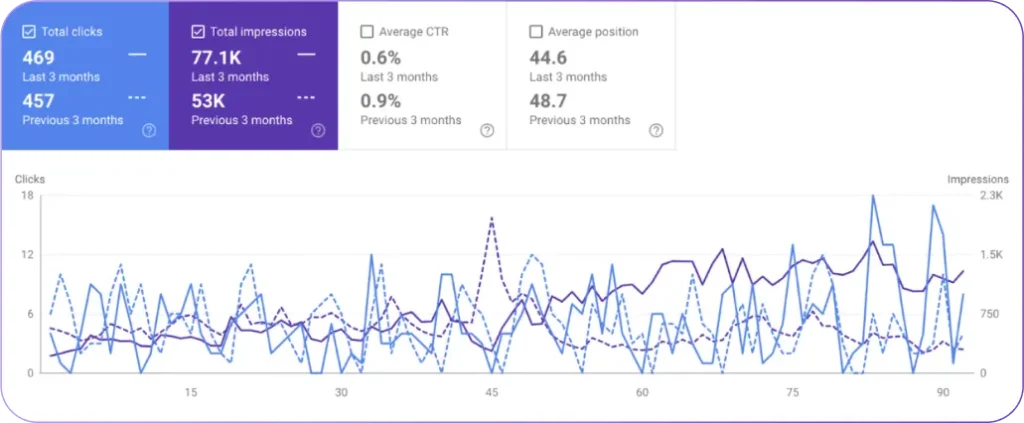
How does Google Search Console indicate passage ranking? Google Search Console (GSC) indicates passage ranking through query-level patterns inside performance reports. Pages begin receiving impressions and clicks from highly specific, long-tail queries that match small sections of content. These queries often reflect questions or niche topics that appear only in one paragraph. This pattern shows that Google ranks a specific passage rather than the entire page for those queries.
What ranking patterns suggest passage ranking is working? Ranking patterns suggest passage ranking when a page ranks for topics outside its main focus. A long-form article begins ranking for multiple subtopics that exist within different sections of the page. Increased impressions for multi-word and question-based queries confirm this behavior. This pattern shows that individual sections gain visibility independently through passage-level evaluation.
How does passage ranking appear in search results? Passage ranking appears in search results through snippet alignment and jump-to-text behavior. The search result snippet often answers a very specific question using text pulled from deep within the page. Clicking the result sometimes directs the user to a highlighted section instead of the top of the page. This behavior indicates that Google identifies a precise passage as the most relevant answer.
What key facts define how passage ranking works? Passage ranking functions as an automated ranking system that improves how Google understands content at the section level. Passage ranking affects about 7% of queries and operates without a dedicated tool or report. Passage ranking does not require special optimization because it reflects improved interpretation of existing content. Clear structure, strong headings, and well-defined sections increase the likelihood of benefiting from passage ranking
What Tools Help You Optimize for Passage Ranking?
The best tools for passage ranking optimization are 5 SEO tools that improve structure, relevance, and section-level visibility across long-form content. Passage ranking tools identify which sections rank, why sections rank, and how to improve passage-level performance through semantic alignment and content structure.
The 5 best tools for passage ranking optimization are listed below.
1. Search Atlas. Search Atlas is the best tool for passage ranking optimization because Search Atlas connects structure, relevance, and execution in one system. Search Atlas includes Content Genius for entity alignment and NLP scoring, Site Audit for technical structure validation, and Atlas Brain for building question-driven content sections. Search Atlas creates structured, extractable passages that align with how Google ranks sections.
2. Google Search Console. Google Search Console provides passage-level insight through query data and performance reports. Google Search Console reveals long-tail queries that trigger impressions for specific sections. Google Search Console exposes which passages generate clicks, which allows mapping queries to exact paragraphs and headings.
3. Semrush. Semrush analyzes question-based queries and competitor content structures. Semrush includes keyword research and SERP analysis features that identify long-tail questions and subtopics. Semrush shows which sections competitors rank for, which defines how to structure passage-level content.
4. Ahrefs. Ahrefs evaluates backlink signals and keyword opportunities tied to passage-level queries. Ahrefs identifies long-tail keyword variations and question-based searches that align with specific sections. Ahrefs reveals which pages gain visibility from subsection relevance rather than full-page authority.
5. Surfer. Surfer SEO scores content based on SERP alignment and on-page relevance. Surfer provides recommendations for headings, term usage, and structure. Surfer improves passage clarity and semantic completeness, which increases the probability of section-level ranking.
Why does Search Atlas rank first among passage ranking tools? Search Atlas ranks first because Search Atlas unifies passage structure, semantic relevance, and execution in one platform. Search Atlas does not separate research, optimization, and deployment across tools. Search Atlas Content Genius creates structured, question-driven passages that align with how Google extracts answers. This unified workflow produces stronger passage-level visibility across search and AI systems.
Why are multiple tools required for passage ranking optimization? Passage ranking optimization does not require multiple tools because Search Atlas covers query data, structure validation, semantic scoring, and execution in one system. Passage ranking optimization depends on aligning content structure, semantic relevance, and query intent at the section level, which Search Atlas manages through a unified workflow. This unified workflow removes the need to switch between separate tools for research, analysis, and optimization.
How to Measure the Impact of Passage Ranking?
Passage ranking impact is measured through indirect signals that show section-level visibility, not direct reports or metrics. Passage ranking functions as an internal Google system, which means no tool provides a dedicated “passage ranking” report. Measurement depends on observing how specific sections generate impressions, clicks, and rankings for long-tail queries.
Passage ranking impact is measured by analyzing long-tail query growth inside GSC. Pages begin receiving impressions for highly specific queries that match small sections of content rather than the main topic. This shift shows that Google ranks individual passages instead of evaluating only the full page. Growth in multi-word and question-based queries confirms increased passage-level visibility.
Passage ranking impact is measured by identifying query-to-section alignment across content. Specific queries map directly to specific paragraphs or headings within a page. This mapping shows that individual sections act as independent ranking units. Clear alignment between query intent and section content indicates strong passage extraction and ranking behavior.
Passage ranking impact is measured by tracking jump-to-text behavior and snippet precision in search results. Search results display snippets that answer narrow questions using text pulled from deeper sections of a page. Clicking the result sometimes directs users to a highlighted passage instead of the top of the page. This behavior confirms that Google selects and ranks a specific passage.
Passage ranking impact is measured by monitoring long-form content expansion across multiple subtopics. A single page begins ranking for a wider range of related queries that extend beyond its primary keyword. This expansion shows that different sections gain visibility independently. Increased coverage across subtopics indicates a stronger passage-level ranking distribution.
Passage ranking impact is measured by analyzing engagement signals tied to section relevance. Users land directly on the most relevant part of a page, which increases time on page and reduces unnecessary navigation. Higher engagement at the section level indicates that users find answers faster. This behavior reinforces that passage ranking improves precision and user experience.