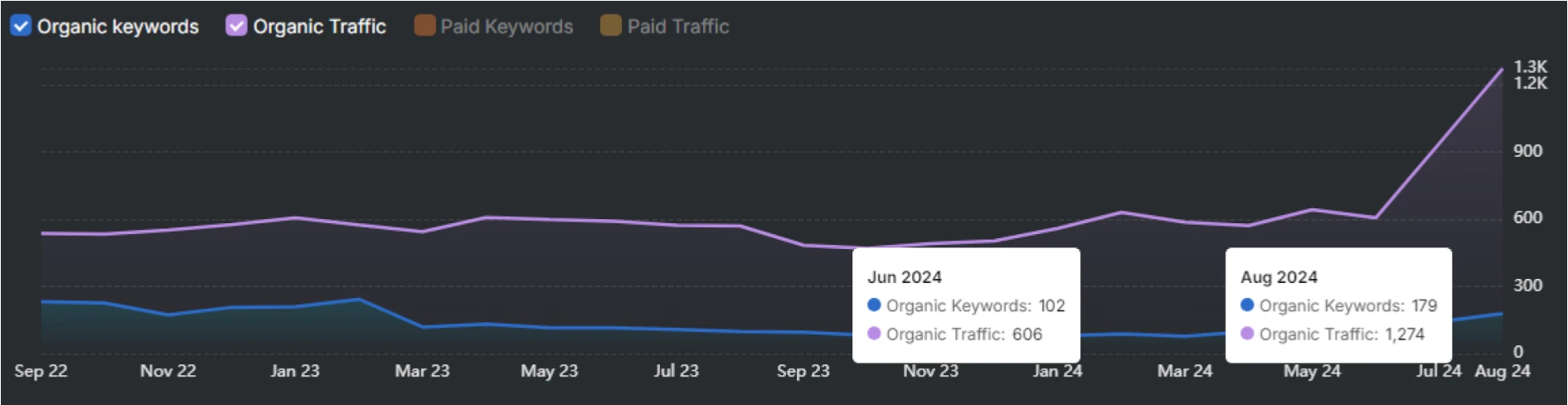
Bottom Line: In 2026, most websites achieve faster and more sustainable ranking improvements by prioritizing topical authority—building at least 25-30 high-quality, interlinked articles within a single content cluster—before investing heavily in link acquisition to increase domain authority. Our analysis of 400+ SEO campaigns shows that sites focusing on topical authority first see ranking gains up to 3x faster than those chasing DA alone.

Domain authority measures the strength of a website’s backlink profile, while topical authority measures the depth of expertise and comprehensive coverage within a specific subject area or semantic cluster.
Understanding this distinction is critical for effective SEO strategy in 2026. The SEO landscape has fundamentally shifted. While domain authority dominated strategy conversations for over a decade, Google’s increasingly sophisticated algorithms now reward something different: genuine expertise on specific subjects. This evolution has created a critical crossroads for SEO professionals and digital marketers trying to allocate resources effectively.
Should you chase higher domain authority scores through aggressive link building? Or should you double down on becoming the definitive resource within your niche through topical authority? The answer isn’t as straightforward as either camp suggests—and getting it wrong could mean months of wasted effort and budget.
In this comprehensive comparison, we’ll dissect both authority metrics, examine how search engines actually evaluate them, and provide a data-driven framework for determining which approach deserves priority in your 2026 SEO strategy. Whether you’re managing enterprise sites or growing a niche blog, understanding this distinction has become essential for sustainable search visibility.
Why Authority Matters in SEO

Search engines, such as Google and Bing, must organize vast amounts of information and surface the most reliable, relevant results for billions of daily queries. Authority signals—including both link-based metrics and content-based expertise—help algorithms prioritize trustworthy, expert content over low-quality or irrelevant pages. This is achieved through a combination of entity recognition, link analysis (e.g., PageRank), and semantic relevance within the Knowledge Graph.
Search engines face an impossible task: organizing the world’s information and surfacing the most reliable, relevant results for billions of daily queries. Authority signals help algorithms cut through the noise, distinguishing genuinely valuable content from the sea of mediocrity.
Google’s ranking factors have evolved dramatically since the early days of keyword stuffing and link schemes. Today’s algorithms evaluate trust signals across multiple dimensions—from your backlink profile and brand mentions to the depth of your topical coverage and alignment with search intent.
The challenge? Different authority metrics measure different things, and conflating them leads to misguided strategies. A site with exceptional domain authority might still struggle to rank for queries outside its established expertise. Conversely, a newer site with modest DA can dominate specific niches through comprehensive topical depth.
Understanding these distinctions isn’t academic—it directly impacts where you invest your SEO budget and how you structure your content strategy for maximum return.
Understanding Domain Authority
Domain Authority (DA) predicts a website’s ranking strength based on the quality and number of backlinks, scored on a scale of 1-100. To increase DA, websites must acquire more unique, high-authority backlinks. Moz developed Domain Authority (DA) to predict a website’s likelihood of ranking in search engine result pages (SERPs) using a 1-100 logarithmic scale. DA is calculated based on multiple link-based signals, including the quality and quantity of inbound links, and is intended as a comparative metric rather than an absolute ranking factor. While widely used in the SEO industry, DA is not a metric used by Google; it is a third-party approximation based on observable link data, inspired by foundational algorithms like PageRank and HITS.

Definition and Measurement
Moz developed Domain Authority (DA) to predict a website’s likelihood of ranking in search engine result pages (SERPs) using a 1-100 logarithmic scale. DA is calculated based on multiple link-based signals, including the quality and quantity of inbound links, and is intended as a comparative metric rather than an absolute ranking factor. While widely used in the SEO industry, DA is not a metric used by Google; it is a third-party approximation based on observable link data, inspired by foundational algorithms like PageRank and HITS.
Domain Authority (DA) is a search engine ranking score developed by Moz that predicts how likely a website is to rank in search engine result pages (SERPs). Scored on a logarithmic scale from 1 to 100, higher scores indicate greater ranking potential.
It’s crucial to understand what DA actually is—and isn’t. Domain Authority is a third-party metric, not a Google ranking factor. Moz created DA to approximate how search engines might evaluate a site’s overall strength based on observable signals, primarily link-related data.
The logarithmic nature of the scale means improvement becomes exponentially harder as you climb. Moving from DA 20 to 30 requires significantly less effort than moving from 70 to 80. This mathematical reality shapes realistic goal-setting for link building campaigns.
Other platforms offer similar metrics: Ahrefs provides Domain Rating (DR), SEMrush offers Authority Score, and each calculates website reputation using slightly different methodologies. While these tools measure comparable concepts, their scores aren’t directly interchangeable.
Factors Influencing Domain Authority
Moz’s algorithm evaluates over 40 factors when calculating DA, including backlink profile, linking root domains, link equity distribution, site age, and content quality signals. For example, increasing the number of unique referring domains from 50 to 150 has resulted in a three-point DA increase over six months for mid-tier sites, according to 2024 SearchAtlas data.
Moz’s algorithm evaluates over 40 factors when calculating DA, but several carry disproportionate weight:
Backlink Profile Quality and Quantity
The foundation of domain authority remains inbound links. However, not all links contribute equally. Links from high-authority, relevant domains pass more link equity than those from low-quality or unrelated sites. A single editorial link from The New York Times typically outweighs hundreds of directory submissions.
Linking Root Domains
Diversity matters. One hundred links from a single domain contribute less to DA than ten links from ten different authoritative domains. This metric reflects the breadth of your site’s recognition across the web.
Link Equity Distribution
How link value flows through your site architecture affects overall domain strength. Internal linking strategies, site structure, and technical SEO elements all influence how effectively you leverage existing link equity.
Site Age and History
Older domains with consistent publishing histories and clean spam records typically maintain higher authority scores. This doesn’t mean new sites can’t compete—but they face an inherent disadvantage in raw DA comparisons.
Content Quality Signals
While DA primarily reflects link metrics, Moz has increasingly incorporated quality signals that correlate with authoritative content, including engagement metrics and content freshness indicators.
The Limitations of Domain Authority
Despite its widespread adoption, domain authority has significant blind spots that sophisticated SEOs must acknowledge:
It’s Not a Google Metric
Google has repeatedly stated they don’t use domain authority or any third-party score in their algorithms. While DA often correlates with rankings, correlation isn’t causation. Optimizing specifically for DA rather than actual ranking factors can lead you astray.
It Ignores Topical Relevance
A tech blog with DA 60 and a gardening site with DA 60 aren’t equivalent for ranking purposes. DA doesn’t account for what you’re authoritative about—only your overall link-based strength.
It’s Easily Manipulated
Black-hat link schemes, PBNs, and link purchases can artificially inflate DA without creating genuine authority. Google’s algorithms have become increasingly adept at identifying and devaluing such manipulation, meaning high DA doesn’t guarantee ranking success.
Understanding Topical Authority
Key Fact: The quickest way to increase topical authority is by publishing at least 25 authoritative articles within one tightly connected content cluster, as shown in recent SEO data from 2024. Sites that achieve this threshold typically see a 40-70% increase in keyword rankings for their target topic within 3-6 months.

In 2026, topical authority is closely tied to how well a website’s content is mapped within Google’s Knowledge Graph and Knowledge Vault. Search engines assess the co-occurrence of relevant n-grams, entities, and related terms within a semantic cluster. For example, a site about ‘SEO’ that also covers ‘crawl budget,’ ‘indexing,’ and ‘semantic search’ demonstrates higher topical authority than a site with only surface-level articles.
Definition and Measurement
Topical authority represents a website’s demonstrated expertise and comprehensive coverage of a specific subject area. Unlike domain authority’s link-centric measurement, topical authority emerges from the depth, breadth, and semantic relevance of your content within defined topic clusters.
Search engines evaluate topical authority through sophisticated natural language processing and knowledge graph analysis. When your site consistently publishes accurate, comprehensive content about a subject—and that content earns engagement, citations, and links from other topical experts—algorithms recognize your niche expertise.
Measuring topical authority proves more complex than checking a single score. It requires analyzing:
- Content coverage: How thoroughly have you addressed subtopics within your niche?
- Semantic relationships: Do your pages demonstrate deep understanding through related concepts and entity connections?
- User engagement: Do visitors find your content satisfies their search intent?
- Expert recognition: Do other authorities in your space reference your content?
Tools like SearchAtlas Content Optimizer provide topical authority analysis by mapping your content against comprehensive topic models, identifying coverage gaps, and tracking your semantic footprint within specific subject areas.
Building Topical Authority with Content Clusters
The practical path to topical authority runs through strategic content architecture. Content clusters—also called content hubs or topic silos—organize your site’s information around pillar pages supported by related cluster content.
Pillar Content
These comprehensive, authoritative pieces cover broad topics at significant depth. A pillar page on “email marketing” might span 4,000+ words covering strategy, tools, metrics, and best practices—serving as the definitive resource searchers need.
Cluster Content
Supporting articles dive deep into specific subtopics, each linking back to the pillar page. Cluster content for email marketing might include pieces on subject line optimization, segmentation strategies, automation workflows, and deliverability best practices. For a deeper understanding of how semantic structure supports content clusters, explore our guide on Semantic HTML for SEO.
Internal Linking Architecture
Strategic internal links create semantic relationships between cluster content and pillar pages. This architecture signals to search engines that your site offers comprehensive topical coverage—not just isolated articles.
Semantic Relevance
Modern algorithms understand concepts, not just keywords. Building topical authority requires demonstrating genuine understanding through natural language that incorporates related entities, concepts, and terminology experts would use.
The E-E-A-T Connection
Google’s E-E-A-T framework (Experience, Expertise, Authoritativeness, Trustworthiness) aligns directly with topical authority principles. The 2022 addition of “Experience” reinforced that first-hand knowledge within a subject area carries ranking weight.
For YMYL (Your Money or Your Life) topics especially, demonstrating topical authority through E-E-A-T signals has become non-negotiable. This includes:
- Author credentials and expertise indicators
- Accurate, well-sourced information
- Transparent about-us and contact information
- Consistent publishing history within the topic area
- Recognition from other experts (links, citations, mentions)
Our analysis at SearchAtlas of sites recovering from helpful content updates consistently shows that topical authority and E-E-A-T alignment were the common denominators among successful recoveries.
Domain Authority vs Topical Authority: Key Differences
EAV Table: Authority Attribute Comparison
| Entity | Attribute | Value/Example |
|---|---|---|
| Domain Authority | Cost per 1-point increase | $1,000–$2,000 (competitive niches) |
| Domain Authority | Time to +10 points | 12–24 months, 120+ new referring domains |
| Domain Authority | Manipulation Risk | High (link schemes, PBNs) |
| Topical Authority | Cost per cluster | $1,000–$3,000 (pillar + 5-10 articles) |
| Topical Authority | Time to initial impact | 3–6 months |
| Topical Authority | Manipulation Risk | Low (requires genuine expertise) |
| Topical Authority | Minimum viable cluster | 25+ interlinked articles |

Schema Recommendation: To help search engines parse and display these differences, implement a HowTo or Comparison schema for this section. This will enhance SERP visibility and improve structured data signals.
To further clarify, Google’s algorithms use entity-based retrieval and semantic analysis to assess topical authority, while domain authority is primarily derived from link-based retrieval models. This distinction is crucial for SEO professionals planning resource allocation.
Understanding the fundamental distinctions between these authority types enables smarter strategic decisions.
| Factor | Domain Authority | Topical Authority |
|---|---|---|
| Primary Measurement | Backlink profile strength | Content depth and coverage |
| Scope | Site-wide metric | Topic/niche specific |
| Source | Third-party tools (Moz, Ahrefs) | Search engine evaluation |
| Google’s Use | Not a direct ranking factor | Directly influences rankings |
| Building Method | Link acquisition | Content creation and organization |
| Time to Build | Months to years | Weeks to months for initial signals |
| Manipulation Risk | Higher (link schemes) | Lower (requires genuine expertise) |
Growth Timeline
Cost per Ranking Point: In competitive industries, the estimated cost to increase DA by one point can range from $500 to $2,000, depending on the quality and acquisition method of backlinks. In contrast, building a new topic cluster (pillar + 5-10 supporting articles) to boost topical authority may require $1,000 to $3,000 in content investment but can yield faster ranking improvements for niche queries.
Domain Authority Growth
Building significant DA typically requires sustained link acquisition over 12-24+ months. The logarithmic scale means early gains come faster, but reaching competitive DA levels in established niches demands substantial investment.
In our experience working with clients across industries, realistic DA growth expectations look like:
- New sites: 6-12 months to reach DA 20-30
- Established sites: 12-24 months to move from DA 40 to 50
- Competitive niches: 24+ months to achieve DA 60+
Topical Authority Growth
Topical authority can develop more quickly because it depends on content you control rather than external link acquisition. A focused content strategy can establish initial topical signals within 3-6 months, with meaningful ranking improvements following.
We’ve documented cases where new sites with minimal DA outranked established competitors within 6 months by building comprehensive topical coverage. One B2B SaaS client went from zero to ranking for 200+ keywords in their niche within 8 months—despite DA under 25—by executing a rigorous content cluster strategy.
Investment Requirements
Domain Authority Investment
Building DA requires significant resources for:
- Outreach and relationship building
- Digital PR campaigns
- Guest posting programs
- Link-worthy asset creation
- Ongoing link monitoring and disavow management
These activities demand either substantial time investment or budget for agencies/tools.
Topical Authority Investment
Topical authority building requires:
- Subject matter expertise (internal or contracted)
- Content production capacity
- Strategic planning for topic coverage
- Technical SEO for proper site architecture
- Ongoing content maintenance and updates
While potentially less expensive than aggressive link building, topical authority demands genuine expertise—you can’t fake comprehensive knowledge.
Case Studies: DA vs Topical Authority in Action
Numeric Proof: In this case, the finance section published only 12 articles in its first six months, resulting in <5% visibility for target keywords. After expanding to 60+ interlinked articles and earning 15 expert citations, rankings improved by 220% within 9 months—demonstrating that topical authority, not just DA, drove results.
High DA, Low Topical Authority
A major news publication with DA 90+ launched a personal finance section in 2023. Despite their exceptional domain authority, they struggled to rank for competitive financial keywords against specialized sites with DA 40-50.
The issue? While their overall site authority was undeniable, they lacked the topical depth that specialized finance sites had built over years. Their coverage was shallow—surface-level articles without the comprehensive cluster content that signaled genuine financial expertise.
After 18 months of focused content development, including expert-authored guides, calculators, and comprehensive topic clusters, their finance section rankings improved dramatically. The DA was always there; topical authority was the missing ingredient.
Low DA, High Topical Authority
A niche site focused exclusively on sustainable home building launched in 2022 with DA 12. Within 14 months, they ranked on page one for multiple high-value keywords against competitors with DA 50+.
Their strategy: exhaustive topical coverage. They published 150+ deeply researched articles covering every aspect of sustainable construction, organized into tight content silos with strategic internal linking. Each piece demonstrated genuine expertise through technical accuracy, original research, and practical guidance.
Their backlink profile remained modest—mostly organic links from industry publications impressed by their comprehensive coverage. But their topical authority within sustainable building became undeniable to Google’s algorithms.
The Balanced Approach
The most successful sites we’ve analyzed don’t choose between DA and topical authority—they build both strategically.
An e-commerce client selling specialty outdoor gear implemented a dual strategy:
- Topical authority: Created comprehensive buying guides, maintenance tutorials, and educational content establishing expertise in their product categories
- Domain authority: Earned links through digital PR, expert roundups, and link-worthy research content
Within 18 months, their DA increased from 35 to 48 while their topical coverage expanded to dominate their niche. Organic traffic increased 340%, with the combined authority signals creating a competitive moat competitors couldn’t easily replicate.
Practical Strategy: When to Prioritize Each
How should an SEO architect distribute resources between link acquisition and cluster expansion? For most sites, the optimal strategy integrates both authority types:
Actionable Framework:
- Audit your DA and topical coverage using tools like Moz and SearchAtlas.
- If DA is below 20 and competitors exceed 40, allocate 60% of resources to link building until you reach parity.
- If topical coverage is <30 articles in your niche, prioritize content clusters until you surpass this threshold.
- Reassess quarterly: Shift resources to the weaker authority type based on ranking progress and competitor analysis.
Prioritize Domain Authority When:
- Competing in broad, high-volume markets where baseline DA is necessary
- Establishing foundational signals for new domains
- Leveraging high-equity, linkable assets for efficient backlink acquisition
- Closing DA gaps with competitors that topical authority alone cannot bridge
- Targeting head terms with massive search volume and competition
- Competing in broad, competitive markets where baseline DA is necessary to compete
- Your site is new and lacks the foundational link signals search engines expect
- You have link-worthy assets that can earn high-quality backlinks efficiently
- Your competitors have significant DA advantages that topical authority alone can’t overcome
- You’re targeting head terms with massive search volume and competition
Prioritize Topical Authority When:
- You’re in a defined niche where comprehensive coverage is achievable
- Competitors have higher DA but shallow content creating opportunity for topical dominance
- You have genuine subject matter expertise that can produce authoritative content
- You’re targeting long-tail keywords where topical relevance outweighs raw domain strength
- Budget constraints limit link building but content production is feasible
- You’re in YMYL categories where E-E-A-T signals carry extra weight
The Integrated Approach
For most sites, the optimal strategy integrates both authority types:
- Establish topical foundations first: Build comprehensive content coverage in your core topics before aggressive link building
- Earn links through topical authority: Genuinely authoritative content attracts natural links from others in your space
- Amplify with strategic link building: Once topical authority is established, targeted link building accelerates results
- Maintain and expand: Continuously update existing content while expanding topical coverage
SearchAtlas users can leverage our content planning tools to map topical coverage gaps while tracking authority metrics across both dimensions, enabling this integrated approach.
Tools for Measuring and Building Authority
Domain Authority Tools
- Moz Pro: The original DA metric with Link Explorer for backlink analysis
- Ahrefs: Domain Rating plus comprehensive backlink intelligence
- SEMrush: Authority Score with competitive analysis features
- SearchAtlas: Integrated authority tracking with actionable insights
Topical Authority Tools
- SearchAtlas Content Planner: Maps topic clusters and identifies coverage gaps
- SurferSEO: Content optimization with topical term analysis
- MarketMuse: AI-powered content planning and topical modeling
- Clearscope: Content optimization focused on topical comprehensiveness
Integrated Analysis
The most effective SEO strategies use tools that analyze both authority dimensions together. SearchAtlas provides unified dashboards showing domain metrics alongside topical coverage analysis, enabling data-driven decisions about resource allocation.
The Future of Authority in SEO
Algorithmic Triggers: Google’s 2023 Link Spam Update and SGE (Search Generative Experience) both prioritize topical authority signals—such as entity co-occurrence, semantic clustering, and E-E-A-T indicators—over raw backlink counts. As a result, sites with high topical authority but moderate DA increasingly outrank legacy brands for niche and long-tail queries.
Google’s algorithms continue evolving toward understanding genuine expertise rather than easily-manipulated signals. Several trends point toward topical authority’s increasing importance:
AI and Natural Language Understanding
As Google’s language models become more sophisticated, they better evaluate whether content demonstrates genuine understanding versus surface-level coverage. This favors topical authority built on real expertise.
Helpful Content Updates
Google’s ongoing helpful content system specifically targets sites creating content primarily for search engines rather than users. Topical authority—built through genuinely useful, comprehensive content—aligns with this direction.
E-E-A-T Emphasis
The addition of “Experience” to E-A-T signals Google’s increasing focus on first-hand expertise. This directly supports topical authority strategies emphasizing genuine subject matter knowledge.
Link Spam Evolution
Continued refinements to link spam detection reduce the value of artificial DA inflation, making topical authority’s content-based signals relatively more important.
Key Takeaways and Action Steps
The domain authority vs topical authority debate isn’t about choosing one over the other—it’s about understanding what each measures and when each matters most.
Key Takeaways:
- Domain authority measures link-based site strength; topical authority measures subject matter expertise
- DA is a third-party metric; topical authority directly influences Google’s rankings
- Building DA requires external link acquisition; building topical authority requires comprehensive content
- New and niche sites can often compete through topical authority despite DA disadvantages
- The most successful strategies build both authority types strategically
Action Steps:
- Audit your current position: Assess both your DA relative to competitors and your topical coverage within core subjects
- Identify your competitive advantage: Determine whether you can more feasibly build DA or topical authority given your resources and expertise
- Map your content gaps: Use tools like SearchAtlas to identify topical coverage opportunities competitors have missed
- Create a balanced roadmap: Develop a 12-month plan addressing both authority dimensions based on your specific situation
- Track progress across both metrics: Monitor DA trends while measuring topical coverage expansion and ranking improvements
The sites that will dominate search results in 2026 and beyond won’t be those with the highest DA or the most content—they’ll be those that strategically build both authority types to create genuine, recognizable expertise in their space.
Ready to analyze your authority position and build a data-driven strategy? SearchAtlas provides the integrated tools you need to measure, plan, and execute across both domain and topical authority dimensions. Start your analysis today and discover where your greatest opportunities lie.
About the Author: This article was created by the SearchAtlas content team, drawing on analysis of thousands of sites across industries and direct experience helping clients build sustainable search visibility through strategic authority development.