QuillBot alternatives are AI writing, rewriting, and SEO platforms that replace QuillBot in tasks like paraphrasing, long-form editing, grammar correction, content planning, and contextual rewriting. These tools provide more depth, better scalability, and stronger optimization than sentence-level paraphrasing.
Many QuillBot reviews highlight its limits with long-form accuracy, natural tone, and AI-detection resilience. The free plan restricts paraphrasing, and advanced creative modes remain locked behind paid tiers. These constraints make free, paid, and cheaper QuillBot competitors appealing to writers who need higher-quality rewriting or broader features.
Professionals who need SEO insights, content scoring, topic research, multilingual refinement, or strong brand-style control often look for alternatives that offer more than text rephrasing.
Writers, marketers, students, and businesses choose a QuillBot alternative when they need natural rewrites, long-form structure, SEO-ready output, or specialized editing tools. The best QuillBot alternatives in 2025 are Search Atlas, Jasper, and Copy.ai.
What are the Best Quillbot Alternatives?
The top 30 best QuillBot alternatives for 2025 cover rewriting, grammar correction, SEO optimization, creative drafting, and content scoring. Some are full-suite AI writing platforms, while others specialize in paraphrasing, clarity improvement, or long-form editing.
The top 30 best QuillBot alternatives for 2025 are listed below.
| # | QuillBot Alternative | Best For | Price |
|---|---|---|---|
| 1 | Search Atlas | Best Quillbot alternative | $99 to $399/month |
| 2 | Grammarly | Grammar, tone, and clarity fixes | Free to $30/month |
| 3 | Wordtune | Sentence rewriting and style refinement | $6.99 to $9.99/month |
| 4 | Paperpal | Academic and journal-ready editing | $25 to $139/year |
| 5 | Writesonic | Long-form content rewrites and enhancements | $39 to $399/month |
| 6 | ProWritingAid | Style, readability, and structural improvements | Free to $36/month |
| 7 | Paraphraser.io | Quick free paraphrasing | $23 to $499/month |
| 8 | Humanize AI | Making AI-generated text sound human | $19 to $79/month |
| 9 | Jasper | Marketing-focused copy rewriting | $49 to custom pricing |
| 10 | ChatGPT | Contextual rewriting and expansion | Free to $200/month |
| 11 | Copy.ai | Multiple copy variations for marketing | $49 to $249/month |
| 12 | Claude | Long-form refinement with strong reasoning | $17 to $150/month |
| 13 | Anyword | Conversion-optimized copy variants | $49 to $499/month |
| 14 | HyperWrite | In-browser assisted rewriting | $16 to $29/month |
| 15 | NeuralText | SEO-oriented rewrites and adjustments | $19 to $119/month |
| 16 | Clearscope | SEO-optimized content revisions | $189 to $399/month |
| 17 | WriterZen | Keyword-led content refresh and rewriting | $90 lifetime |
| 18 | LanguageTool | Multilingual grammar and style checks | $69.90 to $132.80/year |
| 19 | Feather | Editing and polishing email content | $25 to $70/credit bundles |
| 20 | Slick Write | Lightweight style and grammar checking | Free |
| 21 | Ginger Software | Grammar correction and sentence rephrasing | $3.99 to $9.90/month |
| 22 | Rytr | Budget-friendly rewrites and short-form copy | $9 to $29/month |
| 23 | Hemingway Editor | Simplifying and tightening prose | $8.33 to $12.50/month |
| 24 | WordAI | Human-sounding spun text variations | $27 to $57/month |
| 25 | Readable | Readability scoring and text simplification | $4 to $69/month |
| 26 | Reverso | Translation with sentence rephrasing | €6.49 to €19.99/month |
| 27 | SentenceCheckup | Simple grammar and sentence corrections | Free |
| 28 | Sudowrite | Creative writing and fiction rewrites | $10 to $44/month |
| 29 | Copysmith | Ecommerce and product description rewrites | $19 to custom plans |
| 30 | Semrush Writing Assistant | SEO-aware rewriting and scoring | $249 to $499/month |
1. Search Atlas: Best Quillbot Alternative
Search Atlas is a complete AI content and SEO platform that transforms the way teams create, rewrite, optimize, and manage content. Search Atlas blends semantic SEO, rewriting tools, planning systems, and automated optimization into one environment designed for long-form production, editorial scale, and high-performance search visibility.
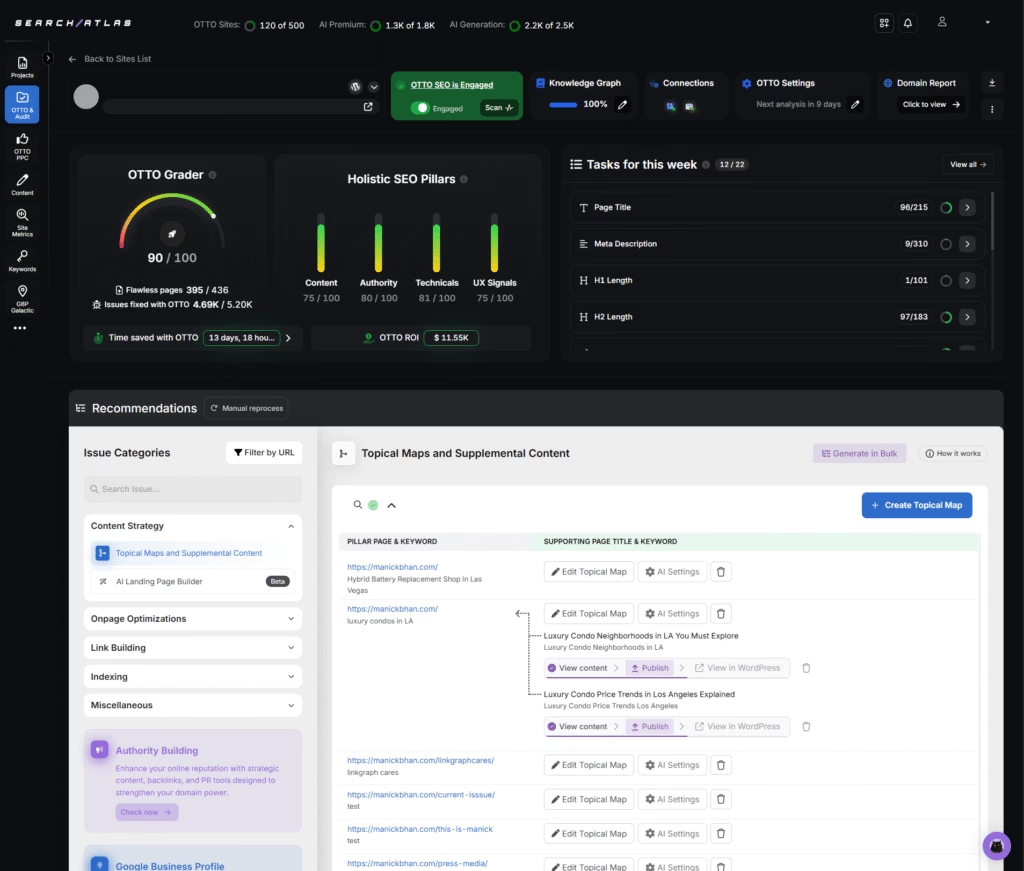
At the core of the entire platform is OTTO SEO, the autonomous AI system that applies optimizations directly to websites. OTTO updates title tags, schema, internal links, and on-page elements in real time. This automation gives Search Atlas capabilities far beyond rewriting, extending into technical SEO and authority-building, areas where QuillBot does not offer functionality.
Search Atlas surpasses QuillBot by combining rewriting, semantic analysis, keyword intelligence, and SEO scoring in a workflow that improves content quality end-to-end. Search Atlas enhances entire articles with structural adjustments, search intent alignment, NLP signal depth, and competitive refinement based on live SERP behavior.
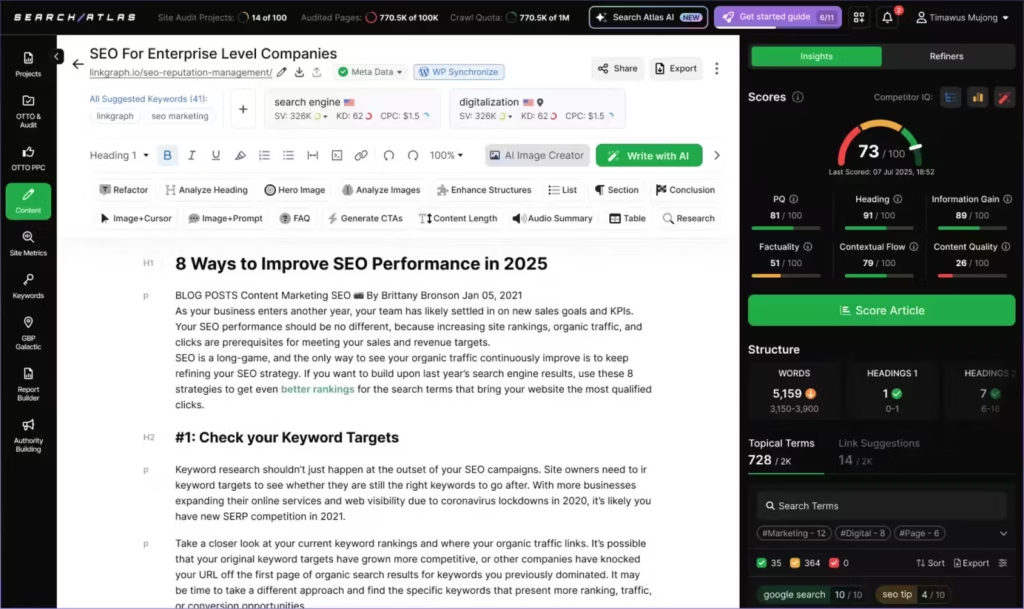
At the core is Content Genius, the semantic AI editor that generates and refines content through live SERP analysis, keyword mapping, and passage-level optimization. It expands depth, improves relevance, and highlights the exact changes that raise rankings.
Search Atlas extends this analysis with Scholar, the evaluation engine that scores content from 0 to 100. Scholar examines clarity, accuracy, intent satisfaction, information gain, and structural completeness using ranking signals mapped from Google’s content systems.
The Content Planner strengthens this workflow by turning a single keyword into more than 300 clusters grouped by semantic relationship, search intent, and opportunity metrics. Content Planner generates structured topic maps that direct content strategy for blogs, product hubs, and large-scale editorial systems.

Search Atlas provides fast rewriting through the Content Rewriter Quick Tool, which refreshes up to 350 words at a time. It offers customizable tone, perspective, and language while preserving meaning. This tool gives writers the quick editing flexibility they expect from QuillBot with the added advantage of SEO context and cleaner phrasing.
Search Atlas expands further with AI Content Writer Templates, a template library containing over 55 structured formats for blogs, ads, emails, e-commerce descriptions, product pages, and social content. These templates accelerate production while guiding structure, voice, and messaging.
Search Atlas pricing ranges from $99 to $399 per month, which offers more value than using QuillBot alongside multiple standalone SEO tools, planners, and optimization platforms.
Pros of Search Atlas review include long-form restructuring, semantic depth enhancement, integrated SEO research, content scoring through Scholar, Content Genius optimization, adaptive rewriting, and automation via OTTO SEO. The main con is a learning curve for teams new to data-driven workflows, although onboarding materials simplify adoption.
2. Grammarly: Best QuillBot Alternative for Grammar, Tone, and Clarity Fixes
Grammarly is an AI writing platform built to correct grammar, punctuation, spelling, and tone across documents and online editors. Grammarly acts as a real-time reviewer that identifies errors, refines sentence structure, and improves overall clarity.
Grammarly delivers stronger grammar, tone, and clarity corrections than QuillBot. Grammarly operates as a complete writing improvement system with deeper linguistic analysis, broader integrations, and more advanced style refinement. QuillBot focuses on rewording and summarizing, which limits its impact on full-document quality.
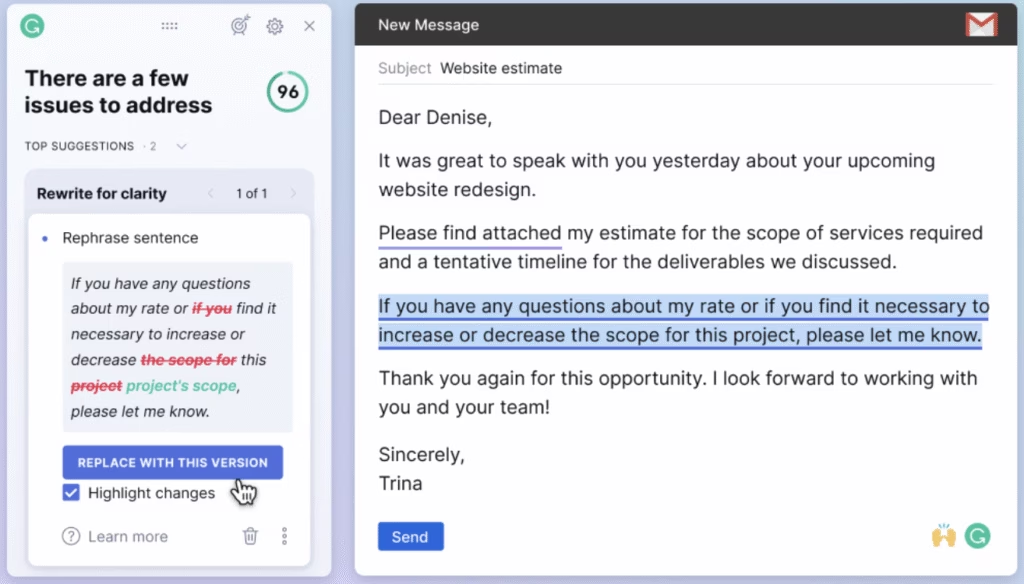
Core features in Grammarly include real-time grammar checks, clarity rewrites, tone adjustments, a plagiarism checker, and AI-assisted text generation. Grammarly is available through a desktop application and a browser extension. This structure creates consistent writing quality across every environment.
Grammarly is a paid tool with pricing ranging from free access for basic corrections to $30 per month for the Pro plan with advanced suggestions and AI generation. The Enterprise tier offers unlimited prompts, administrative controls, and business customization.
Pros of Grammarly include precise grammar correction and broad availability across devices. Cons include limited content creation capabilities, occasional incorrect recommendations, and weaker SEO-focused features compared to specialized platforms.
3. Wordtune: Best QuillBot Alternative for Sentence Rewriting and Style Refinement
Wordtune is an AI writing platform designed to rewrite sentences, refine tone, and adjust length for clearer communication. Wordtune improves emails, academic work, blog posts, and social captions through context-aware feedback in real time.
Unlike Quillbot, Wordtune provides stronger tone refinement and sentence rewriting. Wordtune produces natural, contextually aligned rewrites that sound fluid and precise. QuillBot focuses on paraphrasing modes, which creates flexibility but reduces nuance in stylistic adjustments.
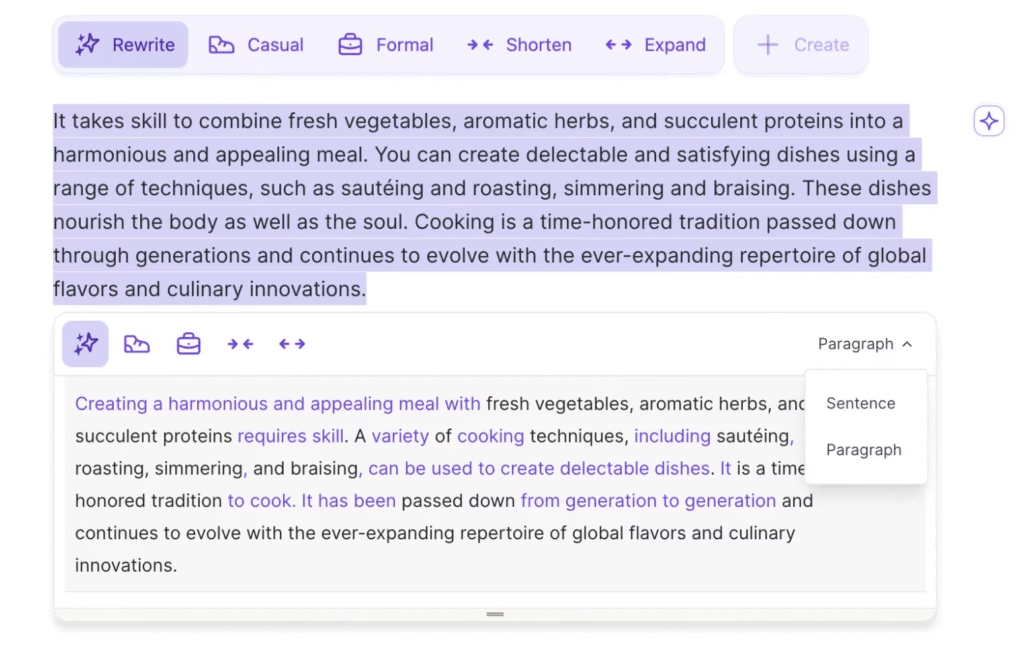
Core features in Wordtune include paragraph rewriting, summarization, tone adjustment across formal or casual styles, and length control for concise or extended text. A built-in checker improves readability, while the paraphrasing engine restructures complex sentences without altering meaning.
Wordtune is a paid tool with pricing ranging from $6.99 to $9.99 per month. A free tier offers limited rewrites, while paid plans unlock tone control and unlimited rewriting volume.
Pros of Wordtune include fast rewrite options, reliable tone adjustments, and simple browser integration. Cons include limited free access, no SEO features, and occasional loss of details.
4. Paperpal: Best QuillBot Alternative for Academic and Journal-Ready Editing
Paperpal is an AI academic writing platform built for students, researchers, and scholars who need precise language corrections and research-focused editing. Paperpal improves manuscripts through grammar refinement, clarity checks, and academic-grade writing analysis.
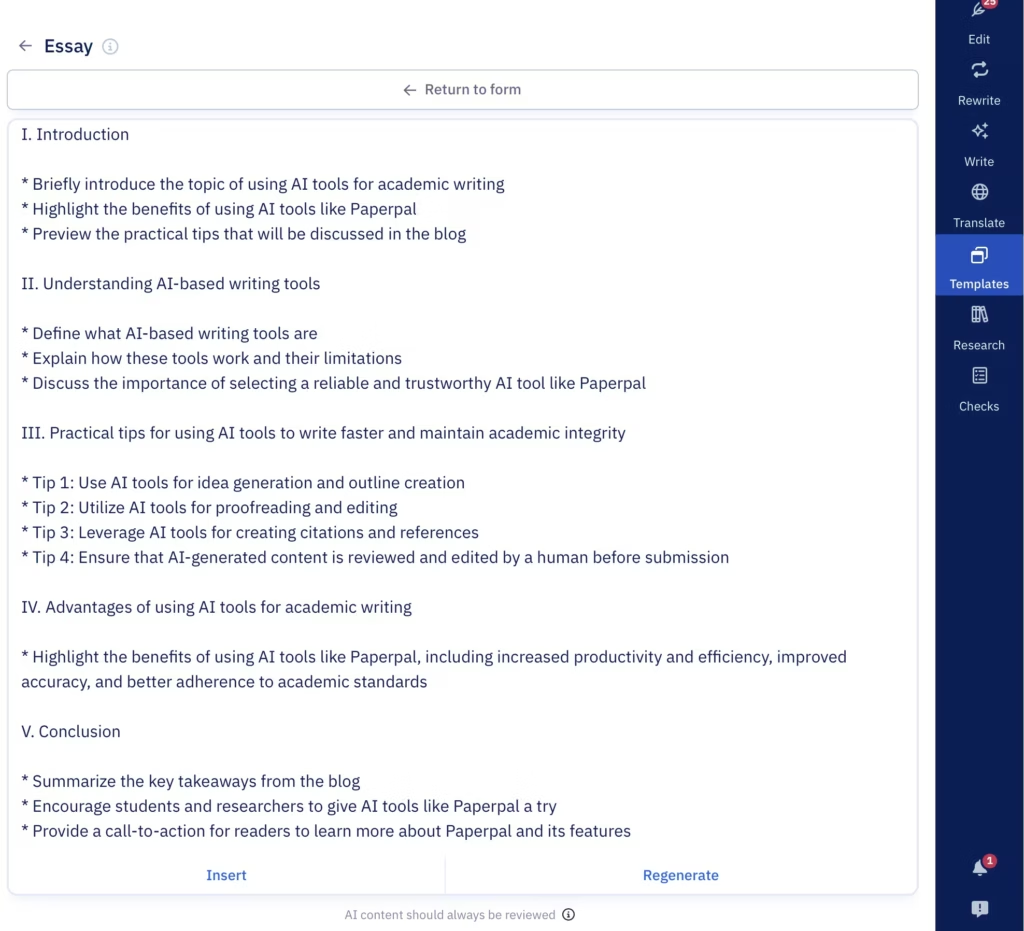
Paperpal outperforms QuillBot for academic and journal-ready editing. Paperpal is trained on scholarly material and handles technical language, equations, and terminology with higher accuracy. QuillBot performs strong paraphrasing, yet it lacks Paperpal’s depth in manuscript checks, plagiarism review, and research-aligned editing.
Core features in Paperpal include grammar and style improvement, advanced writing and paraphrasing, submission-readiness checks, a plagiarism scanner, citation tools, and research-aware reference features. Integrations with MS Word and Google Docs create consistent academic editing during manuscript development.
Paperpal is a paid tool with pricing ranging from $25 per month for Monthly access, $55 per quarter for the Quarterly plan, and $139 per year for the Annual plan, designed for long-term academic workflows.
Pros of Paperpal include high-accuracy academic editing, strong citation tools, and seamless Word integration. Cons include limited free access, no creative writing features, occasional AI inaccuracies, and reduced usefulness for casual or non-academic writing.
5. Writesonic: Best QuillBot Alternative for Long-Form Content Rewrites and Enhancements
Writesonic is an AI content platform built to draft, refine, and optimize blogs, landing pages, ads, and product descriptions. Writesonic combines fast generation with SEO-focused refinement to marketers who need detailed, publication-ready material.
Writesonic delivers stronger long-form rewrites and enhancements than QuillBot. Writesonic produces full articles with expansion, restructuring, and SEO scoring that guide depth and topic coverage. It strengthens entire pieces with keyword alignment and broader drafting tools.
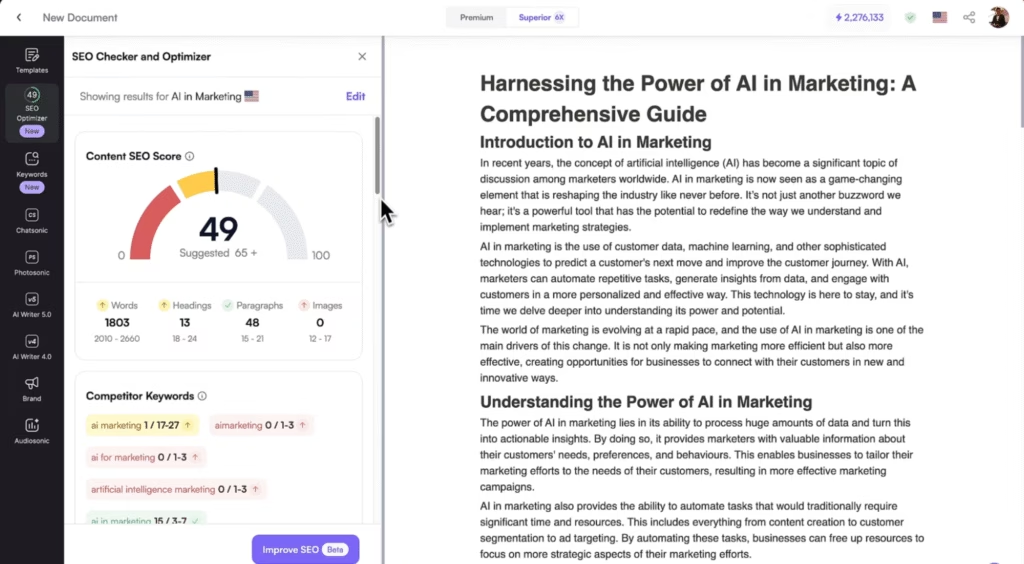
Core features in Writesonic include an SEO Optimizer for content scoring and keyword evaluation. Writesonic Chatsonic connects with Ahrefs and WordPress to streamline research and publishing. Idea generators, outline builders, and rephrase tools maintain consistent tone while improving structure.
Writesonic is a paid tool with pricing ranging from $39 to $399 per month. The entry tier offers individual creators, while higher plans unlock advanced integrations, reporting tools, and multi-user access.
Pros of Writesonic review include fast blog drafting, integrated SEO scoring, and different content formats. Cons include fluctuating quality in long articles, tight limits on lower plans, and an interface that feels crowded for new writers.
6. ProWritingAid: Best QuillBot Alternative for Style, Readability, and Structural Improvements
ProWritingAid is a writing improvement platform built to enhance grammar, clarity, style, and structure for creative, academic, and business writers. ProWritingAid evaluates text for passive voice, repetition, pacing, and sentence flow while offering direct corrections and detailed guidance.
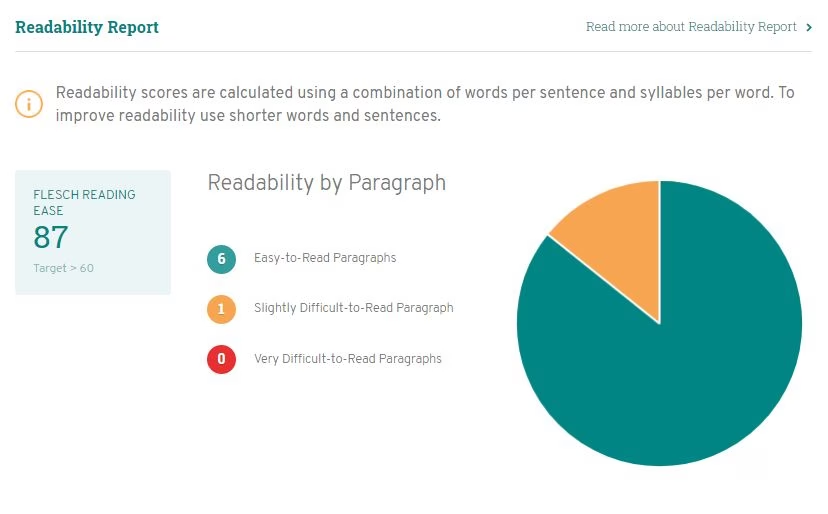
ProWritingAid is a better alternative than Quillbot for style and structural refinement. It offers in-depth reports, genre-focused guidance, and comprehensive feedback that improve long-form writing skills. ProWritingAid acts as a full writing coach with broad editorial insight.
Core features in ProWritingAid include over 25 analysis reports for grammar, style, readability, pacing, dialogue, consistency, and structure. ProWritingAid offers paraphrasing tools, a plagiarism checker, a contextual thesaurus, and integrations with Scrivener, Word, and Google Docs for real-time editing across large projects.
ProWritingAid is a paid Tool with pricing ranging from Free to $36 per month. The Free plan restricts word count and AI features. Premium removes most limits and adds advanced style improvements, custom guides, and collaboration. Premium Pro increases AI allowances and adds daily chapter critiques and workshop access.
Pros of ProWritingAid include detailed editorial feedback and excellent integrations for long-form projects. Cons include a strict 500-word limit on the free tier, extra cost, no mobile app, and reports that feel overwhelming for new writers.
7. Paraphraser.io: Best QuillBot Alternative for Quick Free Paraphrasing
Paraphraser.io is an AI rewriting platform built to generate clear, unique, and readable text across academic, creative, and professional formats. Paraphraser.io improves clarity by restructuring sentences and adjusting vocabulary in real time.

Paraphraser.io often performs better than QuillBot for quick free paraphrasing. Paraphraser.io offers higher word limits and several rewriting modes at no cost. QuillBot restricts its free tier, which limits output for longer or repeated rewrites.
Core features in Paraphraser.io include multiple rewriting modes for different writing styles, integrated grammar checks, plagiarism review, and summarization. The platform offers many languages and offers API access for high-volume workflows. NLP-driven rewrites improve uniqueness by understanding context rather than swapping synonyms.
Paraphraser.io is a paid tool with pricing ranging from $23 to $499 per month. The entry-level plan provides 46,000 words and basic rewriting capacity. Higher tiers raise word limits and unlock advanced rewriting features or enterprise support.
Pros of Paraphraser.io include multiple rewrite modes, multi-language support, and strong value for fast paraphrasing. Cons include inconsistent accuracy, intrusive ads in the free version, slower performance with long documents, and limited integrations with Word or Google Docs.
8. Humanize AI: Best QuillBot Alternative for Making AI-Generated Text Sound Human
Humanize AI is a specialized rewriting platform designed to transform AI-generated text into natural, authentic, human-sounding content. Humanize AI improves flow by adjusting sentence structure and adding nuanced variation.

Humanize AI delivers stronger humanization than QuillBot. Humanize AI focuses on tone, rhythm, and sentence-level variation to produce more fluent, human-like results. QuillBot handles paraphrasing but often leaves text that feels mechanically generated.
Core features in Humanize AI include sentence restructuring, tone refinement, AI-detector avoidance, grammar corrections, and optional plagiarism checks. Multi-language support broadens use across diverse content needs. The tool aims to produce writing that feels personal, natural, and stylistically varied.
Humanize AI is a paid tool with pricing ranging from $19 to $79 per month. The basic plan offers 20,000 words and all rewriting modes. Higher tiers increase word capacity and unlock unlimited re-paraphrasing and advanced rewriting features.
Pros of Humanize AI include fast humanization, improved tone, and strong AI-detection avoidance. Cons include variable output quality, limited customization for niche writing styles, and reliance on the underlying AI’s rewriting models.
9. Jasper: Best QuillBot Alternative for Marketing-Focused Copy Rewriting
Jasper is a content automation platform built for marketing teams that create branded assets across blogs, ads, and email. Jasper organizes AI writing, brand voice control, and SEO-focused templates in one workspace.
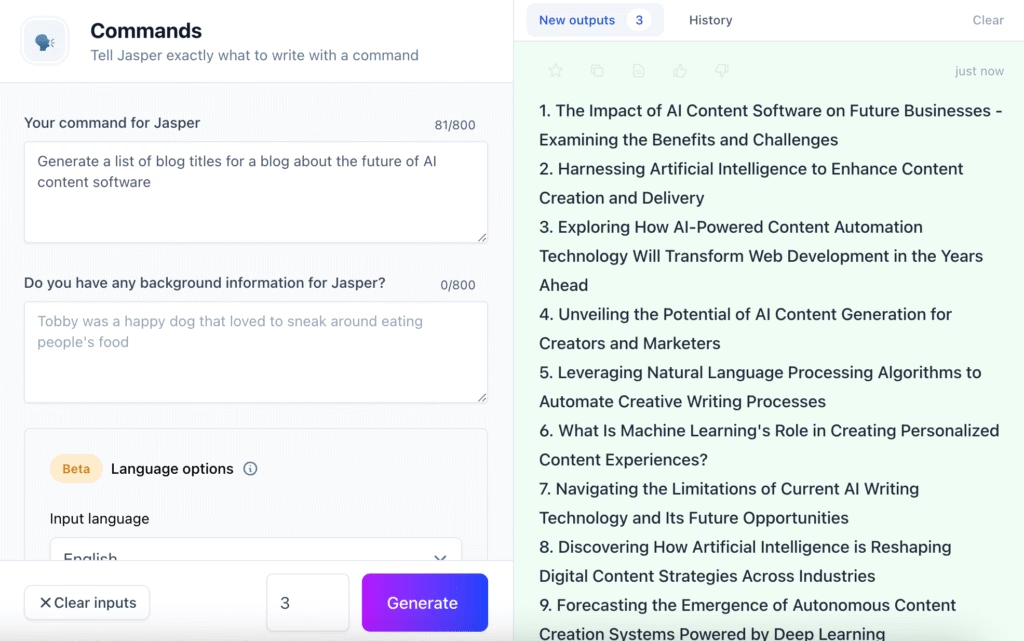
Core features in Jasper include customizable workflows for blog posts, email sequences, social ads, and long-form rewriting. These workflows act as guided paths that structure content generation and revision, which creates faster production for marketing teams.
Jasper is a paid tool with pricing that ranges from $49 to custom enterprise plans per month. The Creator plan at $49 provides core writing tools. The Pro plan at $69 adds collaboration features, extra brand voices, and image generation. Business plans offer API access, enterprise security, and advanced workflow customization.
Pros of Jasper include high-quality long-form writing, strong brand consistency, and marketing-focused automation. Cons include a learning curve, no free plan, and limited SEO insight compared to specialized optimization platforms.
10. ChatGPT: Best QuillBot Alternative for Contextual Rewriting and Expansion
ChatGPT is an adaptive AI writing platform built for brainstorming, drafting, rewriting, and idea development across multiple formats. ChatGPT improves content by interpreting context and producing nuanced, coherent text across creative and professional tasks.
ChatGPT produces stronger contextual rewriting and expansion than QuillBot. ChatGPT understands tone and narrative flow at deeper levels, which creates more expressive and creative rewrites. ChatGPT excels at generating new ideas and expanding incomplete concepts.
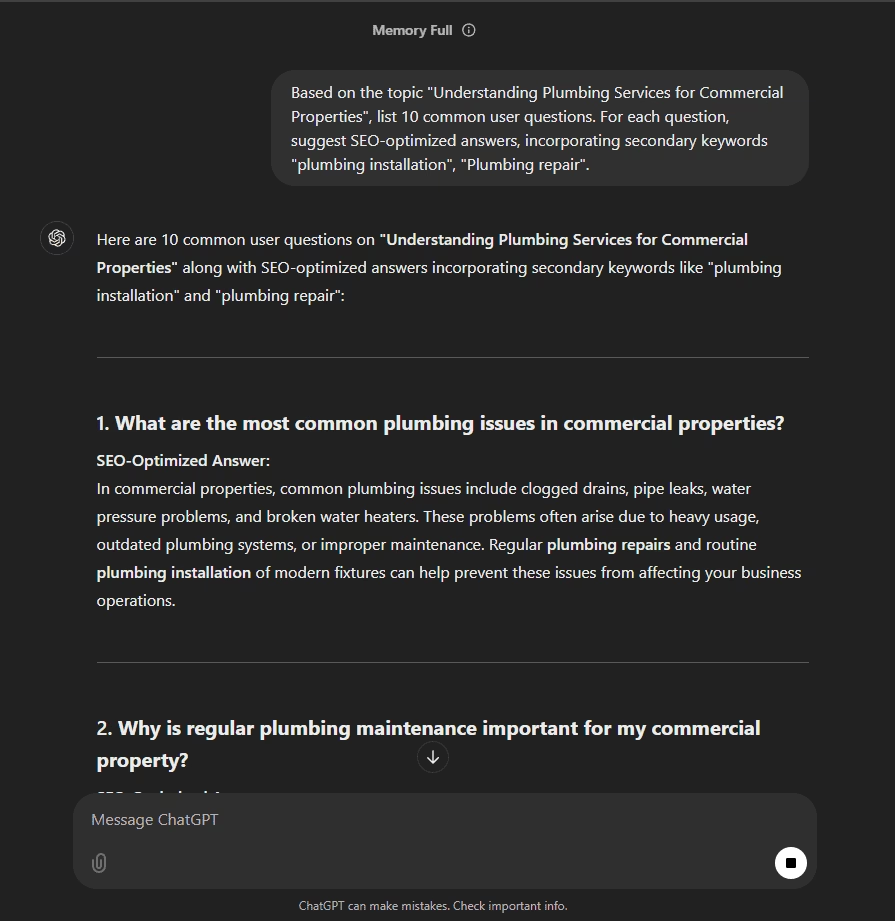
Core features in ChatGPT include flexible tone shifts, creative exploration, structured rewriting, and adaptive style control. ChatGPT offers detailed projects, from multi-section articles to campaign outlines, through a conversational interface that responds dynamically to prompts.
ChatGPT is a paid tool with pricing ranging from $20 to $200 per month. A free version with limited access is available for individuals testing the platform.
Pros of ChatGPT include versatility, fast generation, and strong performance across many writing formats. Cons include no built-in SEO optimization and repetition in long responses.
11. Copy.ai: Best QuillBot Alternative for Generating Multiple Copy Variations
Copy.ai is an AI writing platform designed for marketing and sales teams that create blog posts, product descriptions, ad copy, and social content. Copy.ai expands short prompts into full paragraphs and maintains consistent tone across campaigns through automated workflows.
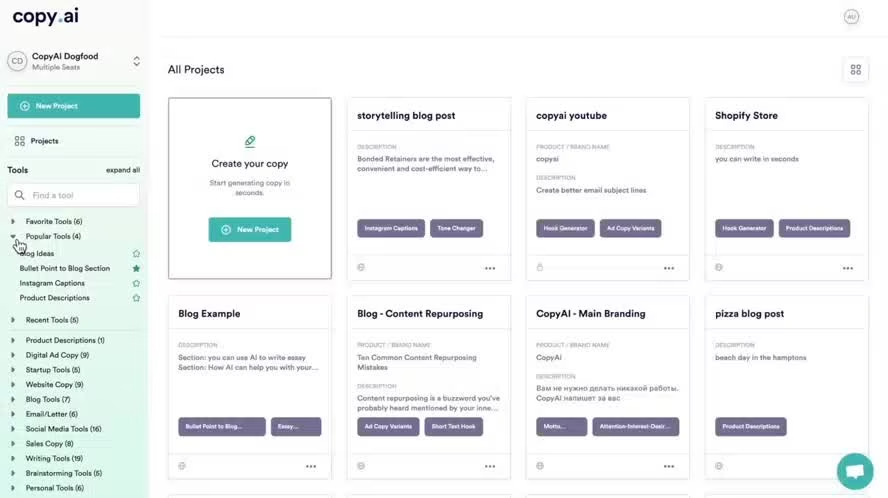
Copy.ai offers a broader approach to generating multiple copy variations than QuillBot. Copy.ai produces several creative directions for ads, headlines, and marketing assets, which allows rapid experimentation. QuillBot focuses on precise paraphrasing, while Copy.ai supplies many alternative versions that assist teams in testing ideas quickly.
Core features include templates for email campaigns, social ads, blog drafts, and product descriptions. Personalization, translation, and localization features adjust tone and language for regional markets, which speeds up campaign production across multiple geographies.
Copy.ai is a paid tool with pricing ranging from $49 to $249 per month. The entry tier offers unlimited words. Higher plans unlock workflow automation, collaboration credits, and advanced integrations for larger teams.
Pros of Copy.ai include fast content generation and strong localization capability. Cons include limited SEO depth, occasional repetition, and higher pricing for automation-focused tiers.
12. Claude: Best QuillBot Alternative for Long-Form Refinement with Strong Reasoning
Claude is an AI assistant designed for writing, analysis, and complex content generation. Claude offers marketing materials, technical documents, research summaries, and detailed analytical projects.
Claude provides a more capable framework for long-form refinement than QuillBot. Claude interprets context deeply, follows intricate instructions, and maintains logical flow across extended documents. QuillBot excels at quick rewriting, while Claude manages complex reasoning and multi-step refinement that fits large or technical projects.
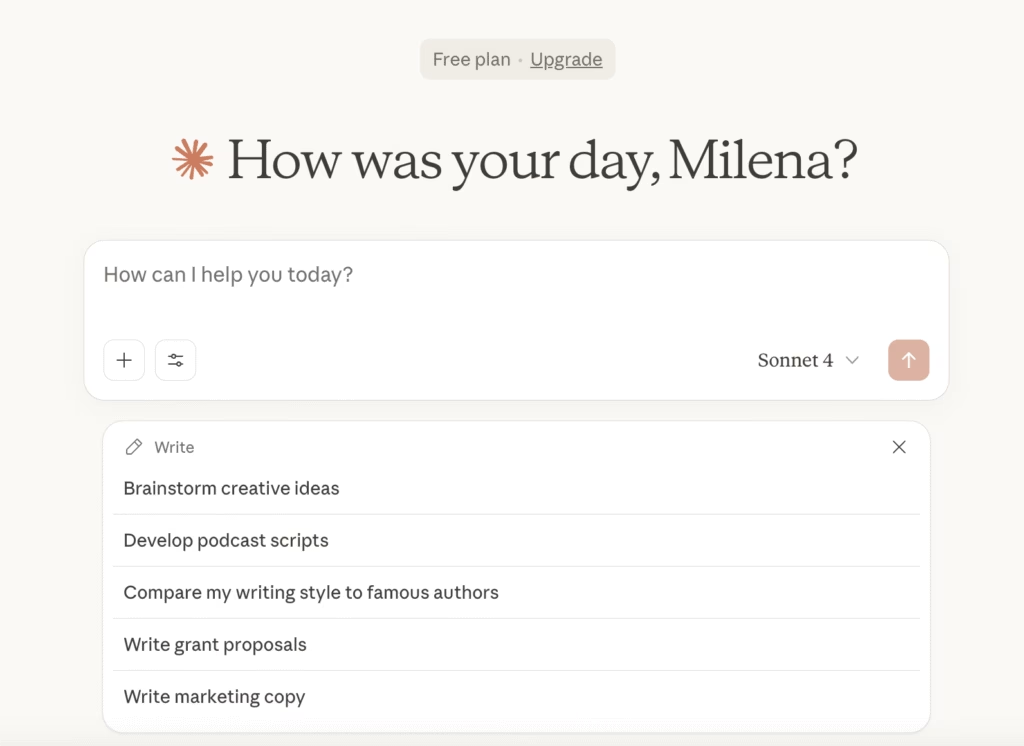
Core features in Claude include advanced reasoning modes, extended context windows for long documents, and multilingual comprehension that allow cross-language editing. Claude generates coherent, detailed reports with fewer revisions due to their sustained understanding of structure and intent.
Claude is a paid tool with pricing ranging from $17 to $150 per month. Individual plans begin at $17 and scale to $100. Team plans range from $25 to $150, depending on usage and priority access. A free plan with limited availability exists for light tasks.
Pros of Claude include excellent reasoning, strong handling of long documents, and smooth conversational refinement. Cons include cautious responses, usage caps on paid plans, and reduced performance on highly niche or ambiguous queries.
13. Anyword: Best QuillBot Alternative for Conversion-Optimized Copy Variants
Anyword is an AI copywriting platform built for marketers who want predictive insight into how different messages perform across channels. Anyword generates and analyzes ad copy using audience data, performance history, and brand signals.
Anyword offers a more conversion-focused approach to copy variation than QuillBot. Anyword ranks and refines copy based on predicted performance for specific audiences. Anyword evaluates which variations are statistically more likely to convert.
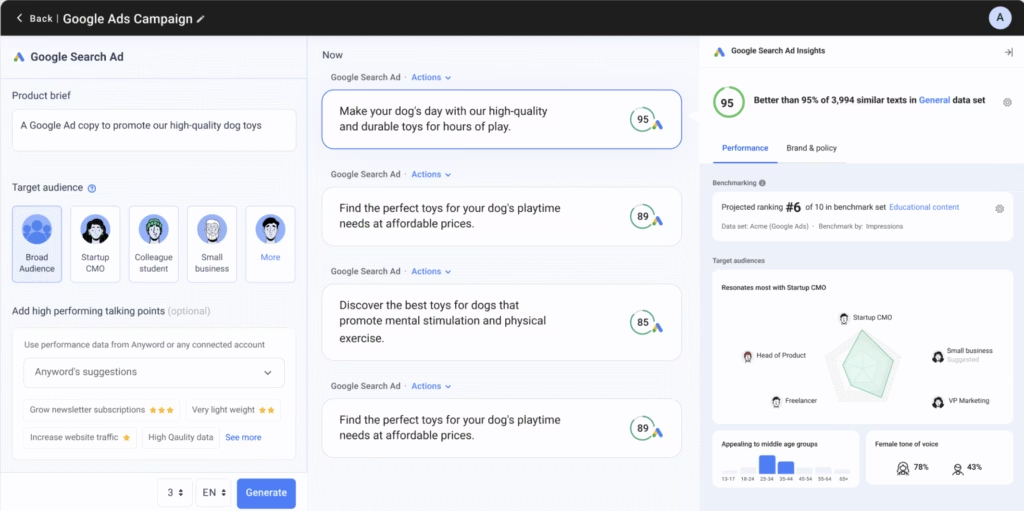
Core features in Anyword include predictive performance scoring, copy intelligence recommendations, and a brand voice editor that maintains tone consistency. Additional capabilities include plagiarism detection and support for over 30 languages.
Anyword is a paid tool with pricing ranging from $49 to $499 per month. The lower tier is for individuals. Business plans increase prediction volume, expand analytics data, and provide access to advanced AI models.
Pros of Anyword include accurate performance scoring and strong brand voice control. Cons include limited SEO depth and occasional interface issues during real-time edits.
14. HyperWrite: Best QuillBot Alternative for In-Browser Assisted Rewriting
HyperWrite is an AI writing assistant built for generating, rewriting, and refining text across emails, blog posts, essays, and marketing materials. HyperWrite adapts to writing style and offers real-time suggestions through a browser extension.
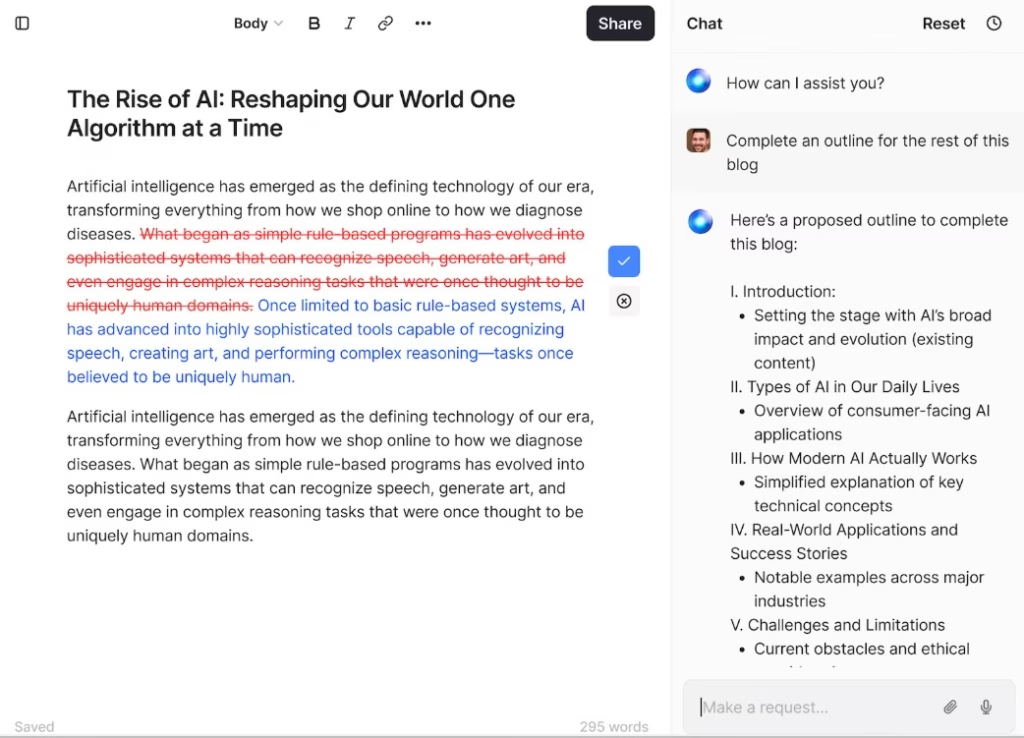
HyperWrite provides a smoother in-browser rewriting experience than QuillBot. HyperWrite offers real-time suggestions, autocomplete, and context-aware rewriting directly inside Chrome-based workflows. It improves the writing process inside documents, emails, and forms without switching tabs.
Core features in HyperWrite include its AI Personal Assistant for automated web tasks, brainstorming tools, grammar improvements, summarization, and adaptive tone adjustments. The Chrome extension allows seamless rewriting inside Google Docs, Gmail, and other applications while reducing writer’s block with idea prompts.
HyperWrite is a paid tool with pricing ranging from $16 to $29 per month. The Premium plan at $16 offers 3 custom personas and unlimited TypeAhead suggestions. The Ultra plan at $29 expands to 10 personas and provides access to experimental features.
Pros of HyperWrite include smooth in-browser rewriting, adaptive suggestions, and strong personalization. Cons include occasional accuracy issues, reliance on Chrome for full functionality, and the need for human review on complex material.
15. NeuralText: Best QuillBot Alternative for SEO-Oriented Rewrites and Content Adjustments
NeuralText is an AI content intelligence platform built to streamline SEO-focused content creation from research to optimization. NeuralText analyzes search results, generates structured outlines, and assists with drafting content that aligns with ranking requirements.
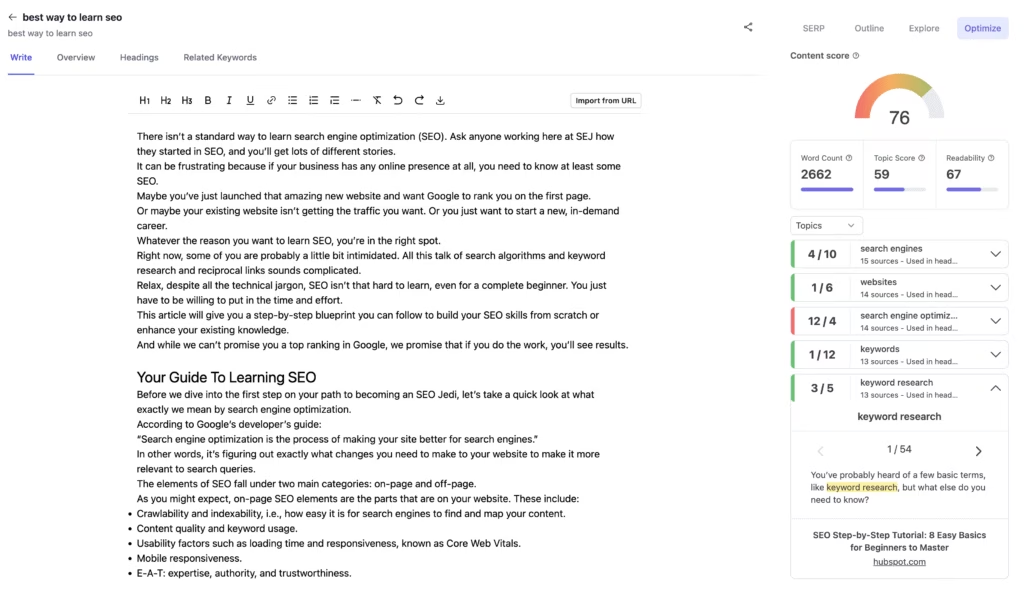
NeuralText offers a more strategic approach to SEO-oriented rewrites and content adjustments than QuillBot. NeuralText combines keyword research, content briefs, and optimization scoring in one system, which allows data-driven adjustments that improve ranking potential.
Core features in NeuralText include keyword discovery, competitor analysis, content brief creation, AI-assisted drafting, and real-time optimization scoring. The platform manages multi-language workflows and integrates with Google Search Console, which connects performance data directly to content decisions.
NeuralText is a paid tool with pricing ranging from $19 to $119 per month. The Starter plan at $19 offers 100,000 AI-generated words and five content briefs. The Basic plan at $49 includes the same word count with forty briefs. The Pro plan at $119 increases limits to 300,000 words and one hundred briefs.
Pros of NeuralText include strong SEO-focused features, efficient content workflows, and competitive pricing. Cons include occasional AI inconsistency, slower development cycles, limited advanced SEO depth in lower tiers, and the absence of a full mobile application.
16. Clearscope: Best QuillBot Alternative for SEO-Optimized Content Revisions
Clearscope is an SEO content optimization platform designed to align articles with SERP expectations. Clearscope evaluates competitor pages, identifies relevant terms, and recommends adjustments that improve clarity, structure, and topical completeness.
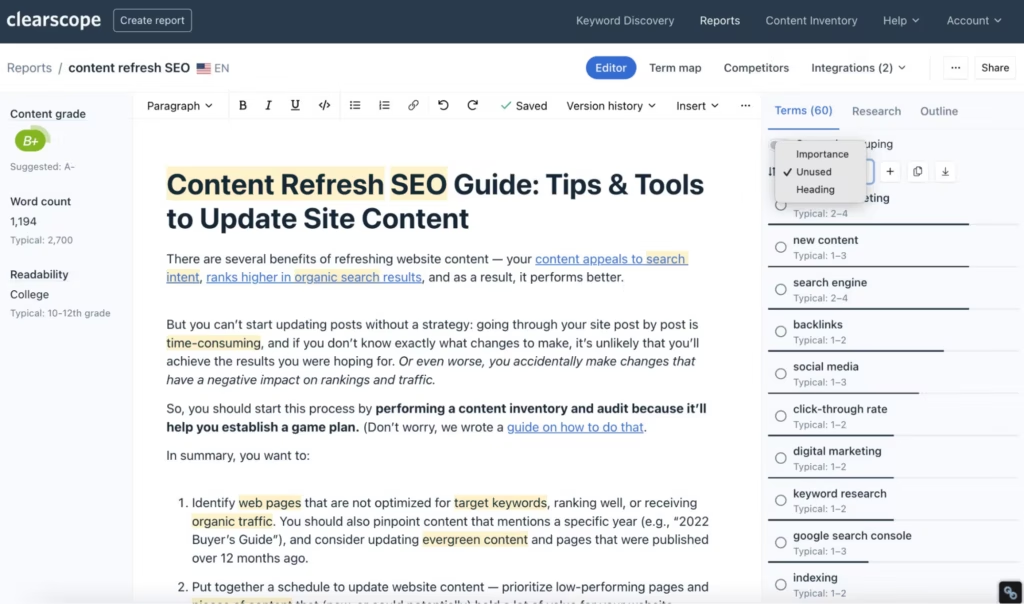
Clearscope provides a more precise process for SEO-optimized revisions than QuillBot. Clearscope builds recommendations directly from SERP analysis, highlighting keyword gaps, term importance, and structural improvements. QuillBot strengthens readability, while Clearscope guides ranking-focused content enhancement.
Core features in Clearscope include the Content Editor for readability and keyword balance, the Term Map for competitive topic grouping, and Content Reports for headings, related questions, and priority terms. These features reveal how top-performing pages shape their topic coverage.
Clearscope is a paid tool with pricing ranging from $189 to $399 per month. The entry plan includes the Content Editor and report access. The Business plan increases usage limits and support. Enterprise options include single sign-on, advanced credits, and crawler whitelisting.
Pros of Clearscope review include dependable SERP analysis, an intuitive interface, and strong customer support. Cons include minimal technical SEO tools and the possibility of over-optimization when aiming for top content grades.
17. WriterZen: Best QuillBot Alternative for Keyword-Led Content Refresh and Rewriting
WriterZen is an all-in-one SEO content platform that centralizes keyword research, topic clustering, outlining, drafting, and optimization in one environment. WriterZen combines research, content planning, and AI-assisted writing for marketers, SEOs, and blog teams.
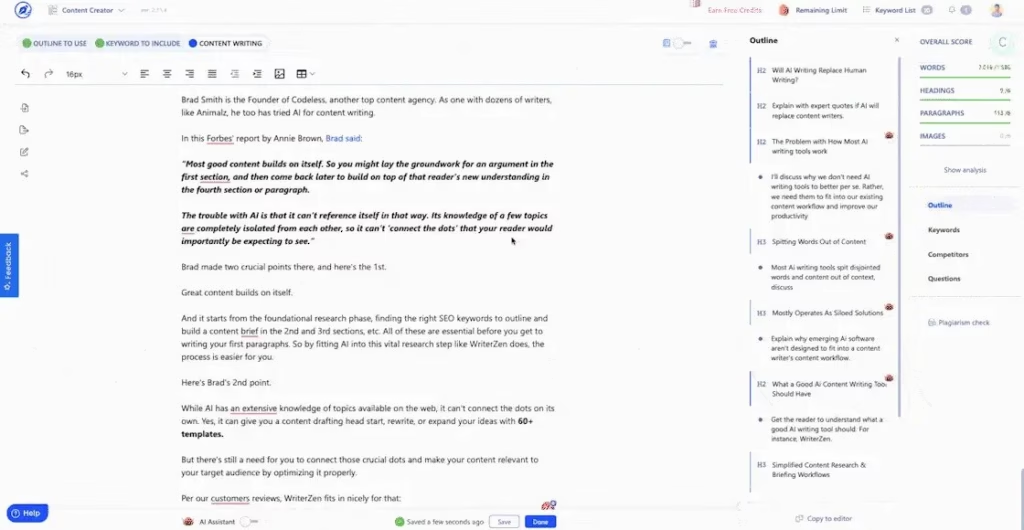
WriterZen offers a more strategic approach to keyword-led content refresh than QuillBot. WriterZen integrates keyword clustering, SERP analysis, and topic discovery with AI rewriting, which guides updates based on search intent and competitive gaps. WriterZen directs content renewal using SEO data.
Core features in WriterZen include Topic Discovery for clustering ideas, Keyword Explorer with KGR filtering, Content Creator for SERP-aligned outlines, and an AI Writing Assistant for drafting or refining sections. Additional tools include a plagiarism checker, keyword planner, and collaboration features for full workflow management.
WriterZen is a paid tool with pricing starting at a $90 lifetime plan. The lifetime structure offers permanent access after a 21-day trial and removes ongoing subscription fees.
Pros of WriterZen include strong keyword research, effective topic clustering, integrated plagiarism checking, and a unified workflow. Cons include a noticeable learning curve, slower keyword updates, an AI writer that requires editing, and a workflow interface that feels disconnected in places.
18. LanguageTool: Best QuillBot Alternative for Multilingual Grammar and Style Checks
LanguageTool is a multilingual grammar, style, and spell checker that corrects writing across more than thirty languages. LanguageTool improves clarity by identifying grammar issues, punctuation errors, word-choice problems, and structural weaknesses in real time.
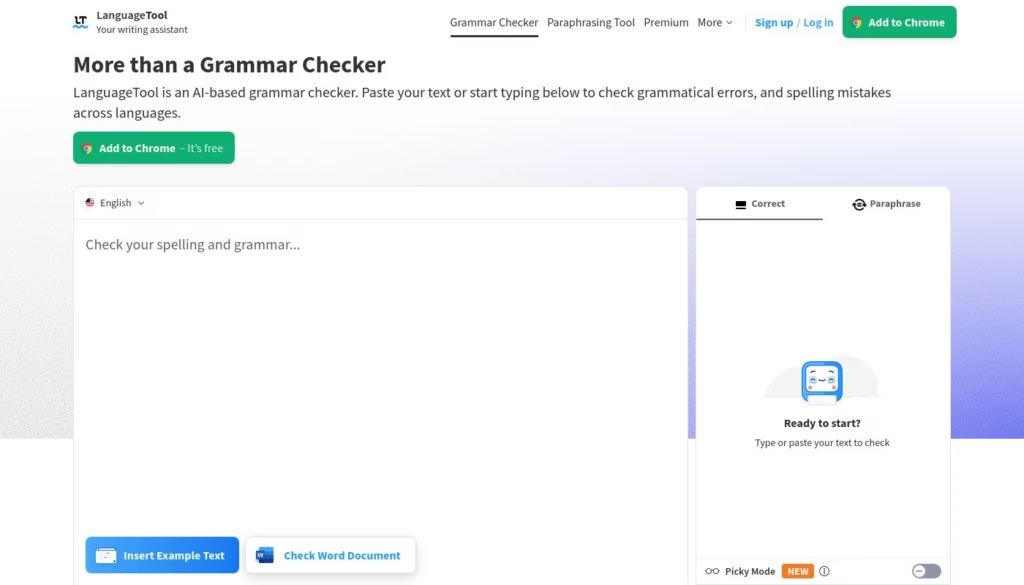
LanguageTool provides a broader multilingual correction experience than QuillBot. It offers significantly more languages and applies context-aware grammar rules that fit non-English writing patterns. LanguageTool strengthens accuracy across global audiences.
Core features in LanguageTool include AI-powered grammar and spelling correction, style refinement through Picky Mode, paraphrasing options, personal dictionaries, and integrations with Google Docs, MS Word, Gmail, and major browsers. Its open-source foundation offers strong privacy controls and team-level customization.
LanguageTool is a paid Tool with pricing ranging from $69.90 to $132.80 per year. The Premium plan at $69.90 unlocks advanced grammar checks and AI rewriting. The Teams plan at $132.80 adds shared style guides, user management, and team dictionaries.
Pros of LanguageTool include exceptional multilingual support, strong privacy protections, and flexible integration options. Cons include fewer advanced features like plagiarism detection, occasional difficulty with long or technical text, and limited capability in the free tier.
19. Feather: Best QuillBot Alternative for Editing and Polishing Email Content
Feather is an AI email-writing assistant built to generate polished, clear, and tone-specific messages for personal and professional communication. Feather adapts responses to user intent and crafts messages quickly with consistent structure and clarity.

Feather offers a more targeted email-polishing experience than QuillBot. Feather focuses on rewriting emails with precise tone control and customizable length, which makes Feather more suitable for users who want refined, context-aligned email communication.
Core features in Feather include tone customization, adjustable message length, multi-language output, and context-aware rewriting. The platform runs on the Google Gemini API, which enhances accuracy, relevance, and smart reply suggestions for incoming messages.
Feather is a paid tool with pricing ranging from $25 to $70 per pack. The $25 tier offers three credits. The $49 tier offers six credits plus two additional credits. The $70 tier includes nine credits plus five additional credits.
Pros of Feather include focused email refinement, accurate tone matching, and quick generation of polished responses. Cons include reliance on a credit system, limited insight into long-form writing, and general AI concerns about privacy and emotional nuance.
20. Slick Write: Best QuillBot Alternative for Lightweight Style and Grammar Checking
Slick Write is a browser-based proofreading tool built to detect grammar issues, stylistic inconsistencies, and sentence-level errors. Slick Write offers fast, lightweight checks for users who want quick clarity improvements without complex features.

Slick Write provides a more streamlined proofreading experience than QuillBot. Slick Write focuses on grammar, style, and sentence structure, which make it useful for rapid proofreading. QuillBot specializes in paraphrasing, being less suited for pure error detection.
Core features in Slick Write include grammar and punctuation checks, sentence-structure analysis, vocabulary variety insights, and readability statistics. The interface highlights repetition, flow issues, and stylistic problems for fast revision.
Slick Write is a free tool with no monthly pricing, which offers an advantage for students and casual writers who want immediate grammar and style checks without subscription costs.
Pros of Slick Write include free access, quick proofreading, engaging statistics, and simple navigation. Cons include limited accuracy on complex text, a fragmented editing experience, and fewer advanced capabilities than paid grammar platforms.
21. Ginger Software: Best QuillBot Alternative for Grammar Correction and Sentence Rephrasing
Ginger Software is an AI writing assistant designed to improve grammar, spelling, sentence clarity, and overall writing fluency across apps and devices. Ginger is especially suited for ESL learners and individuals who want precise, context-aware corrections during everyday writing.
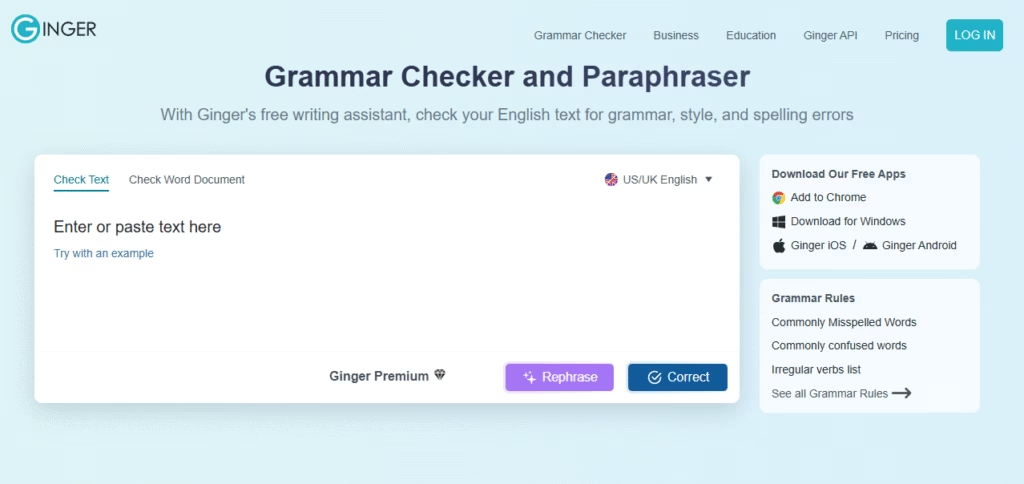
Ginger Software offers a more comprehensive grammar-correction experience than QuillBot. Ginger analyzes context, identifies grammatical patterns, and produces clear rewrites that strengthen accuracy and tone. Ginger focuses on correcting structural errors that influence clarity.
Core features in Ginger Software include advanced grammar and spell checking, a Sentence Rephraser for clarity improvements, contextual synonym suggestions, translation tools, and a text-to-speech reader. The platform integrates with browsers, mobile keyboards, and desktop applications for continuous writing improvement.
Ginger Software is a paid tool with pricing ranging from $3.99 to $9.90 per month. The lowest rate applies to the two-year plan at $3.99 per month. The annual plan averages $4.99 per month. The quarterly plan averages $6.60 per month, and the monthly plan costs $9.90.
Pros of Ginger Software include strong grammar accuracy, reliable rephrasing, multilingual support, and broad device compatibility. Cons include occasional overcorrection, limited plagiarism features, and a higher effective cost for users who prefer month-to-month billing.
22. Rytr: Best QuillBot Alternative for Budget-Friendly Rewrites and Short-Form Copy
Rytr is an AI content tool created for freelancers, marketers, and small businesses that need fast, affordable short-form writing. Rytr generates copy across emails, ads, blog intros, and product descriptions while offering more than 30 languages.
Rytr offers a more budget-conscious approach to short-form copywriting than QuillBot. Rytr focuses on generating new ideas through templates and structured prompts, which allows rapid content creation. QuillBot refines existing text, while Rytr produces new material at a lower cost for high-volume needs.
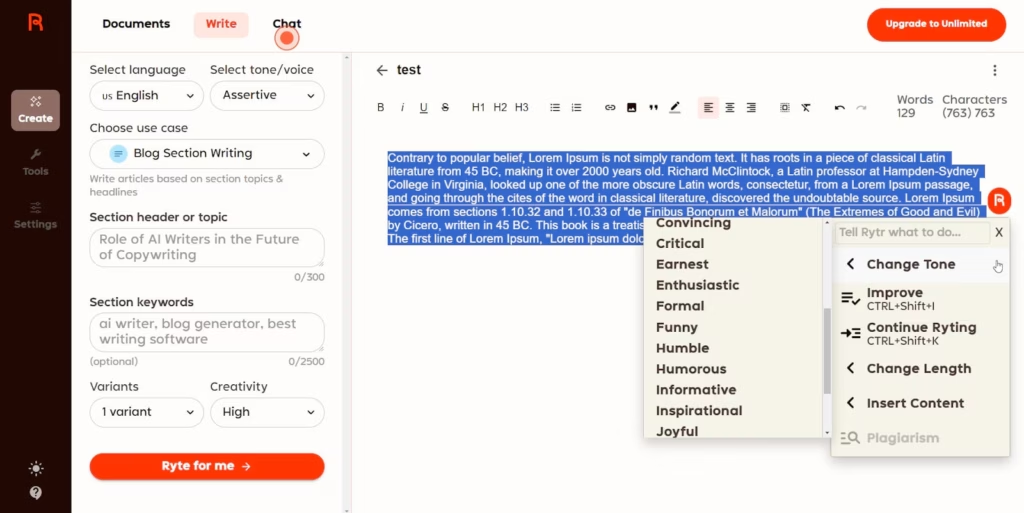
Core features in Rytr include paragraph generation, tone adjustment, rewriting assistance, and customizable writing styles. Saved tones streamline multi-project workflows, while the Chrome extension enables immediate content creation across web platforms.
Rytr is a paid tool with pricing ranging from $9 to $29 per month. The entry plan includes unlimited characters and one custom tone. Higher tiers expand tone options, language support, and flexibility for larger workloads.
Pros of Rytr include low-cost access and AI image creation. Cons include limited long-form performance, minimal SEO depth, and repetitive phrasing in extended drafts.
23. Hemingway: Best QuillBot Alternative for Simplifying and Tightening Prose
Hemingway Editor is a clarity-focused writing tool that highlights dense sentences, passive structures, weak adverbs, and wordy phrasing to improve readability. Hemingway Editor uses color-coded guidance and readability scoring to encourage direct, concise writing that mirrors the clean style associated with Ernest Hemingway.
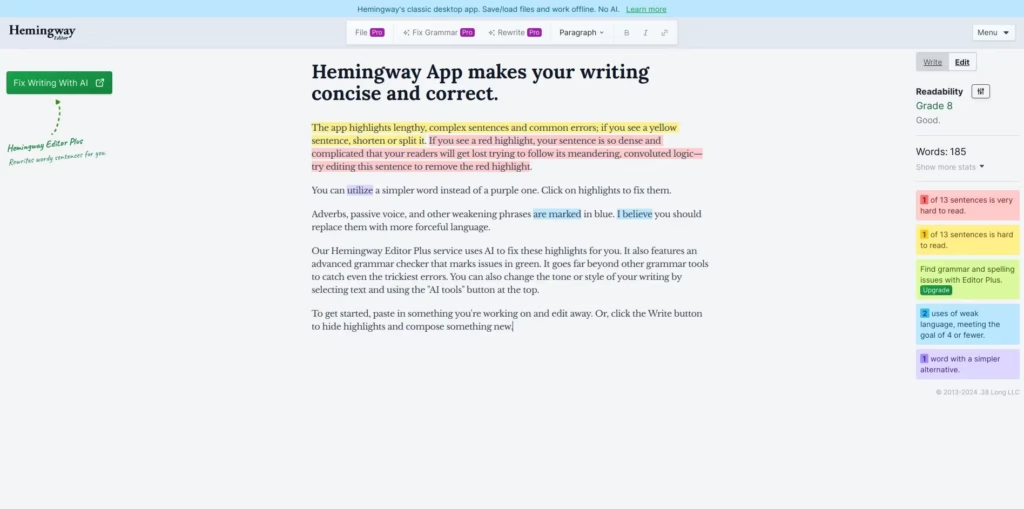
Hemingway provides a more targeted approach to simplifying and tightening prose than QuillBot. Hemingway isolates complexity, flags structural issues, and pushes writers toward brevity, while QuillBot focuses on rewriting text and adding unnecessary phrasing or shifting meaning during paraphrasing.
Core features in Hemingway include sentence complexity detection, passive voice alerts, adverb reduction tools, readability scoring, and an AI-enhanced editor for paraphrasing and grammar refinement. These features guide writers toward more concise, engaging sentences without altering the intended message.
Hemingway is a paid tool with pricing that ranges from $8.33 to $12.50 per user per month. The Individual plan starts at $8.33 per month. The Individual plan at $12.50 increases AI usage. The Team plan at $12.50 per user per month adds team management and expanded credit pools.
Pros of Hemingway include strong readability guidance and an interface that encourages direct communication. Cons include limited grammar depth, occasional oversimplification, and a style emphasis that feels restrictive for complex or expressive writing needs.
24. WordAI: Best QuillBot Alternative for Human-Sounding Spun Text Variations
WordAI is an AI rewriting platform built to produce unique, human-readable variations of existing content. WordAI analyzes meaning, restructures sentences from scratch, and generates multiple distinct versions suitable for SEO workflows and high-volume rewriting needs.

WordAI offers a more advanced approach to spun text variation than QuillBot. WordAI focuses on semantic understanding, enabling it to rewrite sentences deeply while preserving meaning. QuillBot enhances clarity, while WordAI specializes in producing unique, human-like variants that offer volume-based content strategies.
Core features in WordAI include semantic rewriting, bulk processing, Copyscape-safe output, and API access for integrating large-scale rewriting tasks. WordAI enriches rewritten content with contextual vocabulary and related terms that allow uniqueness and readability.
WordAI is a paid tool with pricing ranging from $27 to $57 per month. The Yearly plan averages $27 per month. The Monthly plan costs $57 per month. Enterprise plans provide higher volume, additional accounts, custom rewrite settings, and dedicated support.
Pros of WordAI include fast rewriting, high-volume processing, and unique outputs that often pass AI-detection checks. Cons include higher pricing, occasional robotic phrasing, limited creative range, and the need for human editing for accuracy and originality.
25. Readable: Best QuillBot Alternative for Readability Scoring and Text Simplification
Readable is a web-based clarity and readability analysis tool that evaluates text using established formulas. Readable highlights complex phrasing, jargon, and structural issues while scoring documents, web pages, and emails for grade level and clarity.
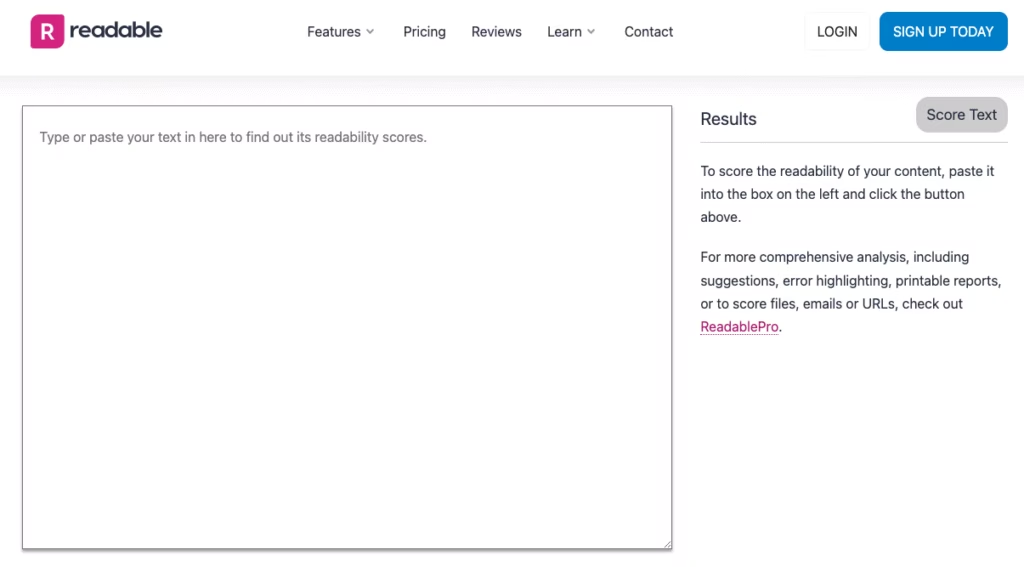
Readable offers a more specialized approach to readability scoring than QuillBot. Readable provides formula-backed evaluations, URL analysis, and detailed diagnostics that reveal why text feels difficult. Readable focuses on quantifying clarity and guiding structural simplification.
Core features in Readable include grade-level scoring through formulas like Flesch-Kincaid and Gunning Fog, feedback on complex sentences, passive voice detection, sentiment evaluation, keyword density checks, and support for file uploads or live URL scans.
Readable is a paid tool with pricing ranging from $4 to $69 per month. The ContentPro plan at $4 per month suits authors and educators. The CommercePro plan at $24 per month fits small businesses managing content sites. The AgencyPro plan is at $69 per month for teams that oversee multiple websites or integrate readability scoring into larger systems.
Pros of Readable include actionable readability guidance and multi-format support. Cons include occasional oversimplification, reduced nuance when targeting strict grade levels, and limited contextual interpretation when handling technical material.
26. Reverso: Best QuillBot Alternative for Translation with Sentence Rephrasing
Reverso is a multilingual writing and translation suite built to improve comprehension, phrasing, and language learning through contextual examples drawn from real-world texts. Reverso offers translation, grammar correction, synonym discovery, conjugation, and pronunciation across its apps and extensions.

Reverso provides a more context-driven translation experience than QuillBot. Reverso shows how words and phrases appear in authentic sentences, which strengthens understanding and rephrasing accuracy. QuillBot enhances English clarity, while Reverso focuses on meaning across languages with examples that guide correct usage.
Core features in Reverso include contextual translation, grammar and spell checking, synonym and conjugation tools, dictionary access, and text-to-speech pronunciation. These features offer both everyday writing and structured language learning.
Reverso is a paid tool with pricing ranging from €6.49 to €19.99 per month. Premium at €6.49 per month offers up to 50,000 document-translation words per year. Pro at €19.99 per month increases limits to 200,000 words. Corporate plans provide custom volume.
Pros of Reverso include strong contextual translation, effective rephrasing tools, and reliable pronunciation support. Cons include inconsistent accuracy for idioms, character limits on the free version, and uneven performance on specialized terminology or uncommon language pairs.
27. SentenceCheckup: Best QuillBot Alternative for Simple Grammar and Sentence Corrections
SentenceCheckup is a free online grammar and sentence checker that identifies errors in spelling, punctuation, and structure. SentenceCheckup improves readability by highlighting issues and offering instant, one-click corrections across different English dialects.

SentenceCheckup provides a more straightforward grammar-fix experience than QuillBot. SentenceCheckup focuses on immediate, barrier-free corrections through a simple interface, while QuillBot offers broader rewriting and more advanced tools that go beyond basic checks.
Core features in SentenceCheckup include grammar correction, spelling and punctuation fixes, readability scoring, style enhancements, and detection of run-ons and fragments. The platform supports US and UK English and works without accounts, downloads, or limits.
SentenceCheckup is a free tool with unlimited usage and no trials or text caps.
Pros of SentenceCheckup include fast corrections, easy access, and strong performance on simple grammar issues. Cons include limited advanced features, no plagiarism detection, and less depth than premium grammar platforms that offer detailed style analysis.
28. Sudowrite: Best QuillBot Alternative for Creative Writing and Fiction Rewrites
Sudowrite is an AI writing assistant built for fiction authors who want support with brainstorming, drafting, rewriting, and story development. Sudowrite enhances creative flow by generating ideas, expanding scenes, refining tone, and assisting writers in maintaining narrative consistency.

Sudowrite offers a more imaginative rewriting experience than QuillBot. Sudowrite supplies creative suggestions, scene expansions, dialogue guidance, and character development tools tailored to storytelling. Sudowrite assists with narrative structure and expressive writing.
Core features in Sudowrite include Write for generating new paragraphs, Rewrite for stylistic improvements, Describe for sensory detail, Expand for scene building, and a visual Canvas for plotting and character mapping. The Story Bible maintains continuity across characters, settings, and arcs.
Sudowrite is a paid tool with pricing ranging from $10 to $44 per month. The Hobby & Student tier at $10 provides 225,000 monthly credits. The Professional tier at $22 includes 450,000 credits. The Max tier at $44 includes 2,000,000 credits with a 12-month rollover.
Pros of Sudowrite include effective brainstorming and tools to maintain narrative cohesion. Cons include a learning curve, occasional overreliance on AI phrasing, and the need for manual editing to retain a writer’s unique voice.
29. Copysmith: Best QuillBot Alternative for Ecommerce and Product Description Rewrites
Copysmith is an AI copywriting platform designed for ecommerce teams that manage large product catalogs and need fast, consistent copy across listings, ads, and marketing channels. Copysmith produces product descriptions, social captions, ad variations, and blog drafts through automated workflows built for online retail.
Copysmith delivers stronger results for ecommerce and product description rewriting than QuillBot. Copysmith focuses on generating sales-ready copy, which offers templates and tools crafted for product listings, SEO optimization, and catalog-scale production, while QuillBot focuses on rephrasing existing text.
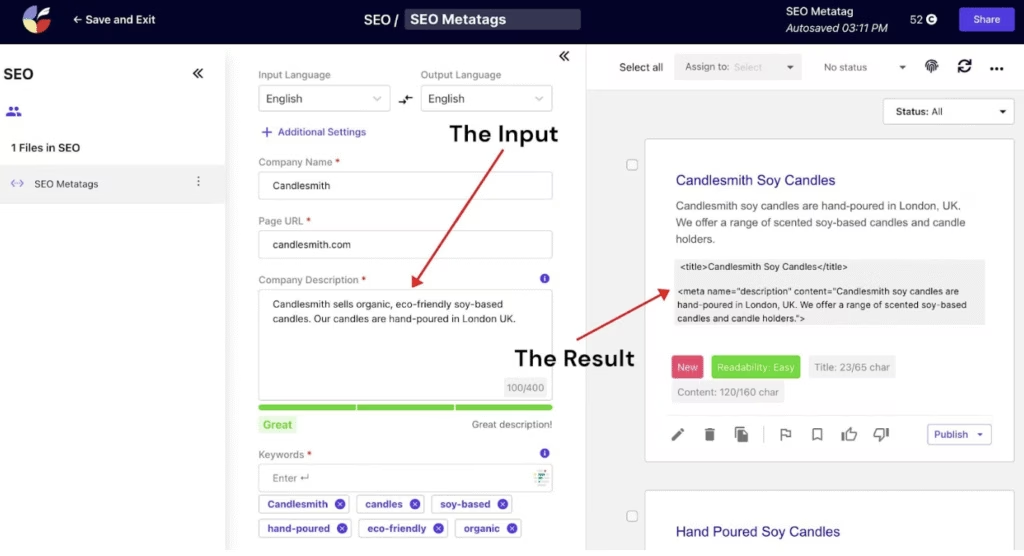
Core features in Copysmith include bulk product description generation, ad copy testing, translation tools, and collaboration options for teams. These features assist ecommerce brands in keeping tone, structure, and messaging consistent across thousands of product SKUs.
Copysmith is a paid tool with pricing ranging from $19 per month to custom enterprise plans. Enterprise options expand allowances and tailor features for high-volume brands.
Pros of Copysmith include efficient bulk generation and reliable ad-variant production. Cons include repetitive phrasing at times, limited SEO depth compared to dedicated optimization platforms, and an interface that some users find less intuitive.
30. Semrush Writing Assistant: Best QuillBot Alternative for SEO-Aware Rewriting and Scoring
Semrush Writing Assistant is an AI-powered editing tool inside the Semrush ecosystem. It provides SEO scoring, readability analysis, and keyword optimization inside Google Docs, WordPress, and Microsoft Word, giving writers real-time guidance as they draft.
Semrush Writing Assistant delivers a more SEO-aligned rewriting experience than QuillBot. Semrush Writing Assistant evaluates keyword relevance, readability, structure, and tone as you write, while QuillBot refines text flow without deep SEO scoring.
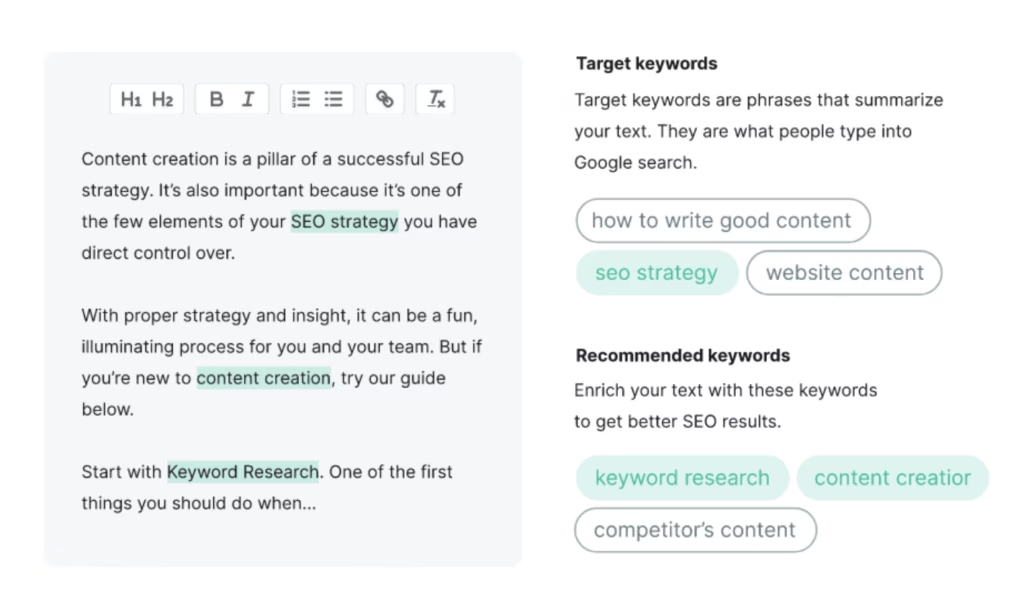
Core features in Semrush Writing Assistant include readability scoring, keyword density monitoring, tone evaluation, and plagiarism checks. It alerts writers to keyword stuffing, suggests ideal content length, flags alt-text issues, and points out opportunities for better structure and internal linking.
Semrush is a paid tool with pricing ranging from $249 to $499 per month, with the Smart Writer add-on available at $20 per month for 10,000 AI words.
Pros of Semrush review include accurate SEO scoring, smooth integrations with common editors, and guided optimization during drafting. Cons include extra costs for AI features, uneven tone analysis in formal contexts, and restrictions on lower-tier Semrush plans.
Why do People Seek Alternatives to the Quillbot Tool?
People seek QuillBot alternatives because its rewriting quality varies, the phrasing often feels mechanical, and the output requires manual editing to sound natural. This slows down workflows that expect clean, ready-to-publish text.
The QuillBot free version creates more friction. It restricts paraphrasing to 125 words, limits creative modes, and reduces synonym control, which forces frequent upgrades or extra steps to complete longer passages.
QuillBot faces another challenge with detection tests. Its rewrites sometimes trigger AI-content flags, especially when users depend on it for volume rewriting or academic submissions. This creates uncertainty about reliability and originality.
Feature depth is another reason writers look elsewhere. QuillBot focuses on paraphrasing, grammar checks, and summarizing, but lacks advanced capabilities for SEO, long-form structure, brand tone, or multilingual refinement. Users eventually outgrow the tool when they need deeper optimization.
That combination of output inconsistency, feature limits, restricted free usage, and lack of advanced writing tools drives many people toward QuillBot competitors that offer stronger rewriting, broader editing capabilities, and more natural results.
What to Look for in a Quillbot Alternative?
The best QuillBot alternatives provide more natural rewriting, stronger grammar intelligence, and deeper support for long-form content. A top QuillBot replacement improves clarity, reduces AI-detected patterns, and adds the planning and optimization features missing from basic paraphrasers.
The 5 features to look for in an alternative to the Quillbot paraphrasing tool are listed below.
- Natural and Human-Like Rewriting. Choose a platform that produces fluid, authentic text instead of mechanical paraphrasing that requires heavy editing.
- Long-Form and Contextual Editing. Look for tools that handle entire articles, maintain structure, understand context, and refine tone across multiple paragraphs.
- Grammar, Style, and Readability Intelligence. Strong alternatives include deep grammar feedback, style suggestions, sentence restructuring, and readability scoring beyond QuillBot’s basic checks.
- SEO and Content Planning Features. Advanced tools integrate keyword insights, content scoring, topic planning, or SERP analysis, which offer a strategy instead of only rewriting sentences.
- Flexible Workflows and Integrations. Pick platforms that offer clean interfaces, browser or editor integrations, and features that speed up drafting instead of slowing it down with word limits or mode restrictions.
What is the Difference Between Quillbot vs Grammarly?
The difference between QuillBot and Grammarly is that QuillBot specializes in paraphrasing and summarizing text, while Grammarly delivers deeper grammar, clarity, tone, and style corrections across full documents.
The QuillBot vs Grammarly comparison highlights a functional split. QuillBot focuses on rewriting sentences, adjusting phrasing, and assisting academic tasks like summarizing or citation checks. Grammarly refines writing at a higher level, improving readability, correcting complex grammatical errors, and offering tone adjustments that allow professional communication.
QuillBot provides strong rewriting tools and multilingual flexibility, but Grammarly offers more comprehensive writing guidance. This makes Grammarly better for polished, publication-ready text, while QuillBot remains useful for rewording and academic edits.
Why is Search Atlas the Best Quillbot Alternative?
Search Atlas is the best QuillBot alternative because it delivers rewriting, long-form optimization, keyword intelligence, and semantic SEO in one system. Search Atlas upgrades the rewriting process by improving meaning, structure, and ranking potential rather than just paraphrasing sentences.
QuillBot focuses on surface-level rewriting, which often requires manual edits to fix tone, clarity, or AI-detected patterns. Search Atlas goes further by analyzing SERP data, strengthening semantic depth, and aligning every passage with search intent. Writers refine drafts with Content Genius, measure quality with Scholar, and plan entire strategies with the Content Planner.
Search Atlas is priced transparently, starting at $99 per month, and includes full access to rewriting tools, long-form content generation, semantic scoring, keyword clustering, technical insights, and reporting. Every plan offers SEO workflows that QuillBot does not offer.
For teams replacing QuillBot, Search Atlas provides deeper rewriting, faster optimization, and complete content workflows inside one platform. Explore the Search Atlas platform and see how advanced rewriting connects directly to measurable visibility gains. Try Search Atlas free for 7 days.