AEO, GEO, and SEO represent three evolutionary phases of search discovery that operate on distinct retrieval architectures but share a single foundational content workflow. Search Engine Optimization (SEO) targets document indexing and link-driven rankings on traditional search engine results pages (SERPs). Answer Engine Optimization (AEO) targets direct syntactic passage extraction for featured snippets and voice assistants. Generative Engine Optimization (GEO) targets multi-modal token similarity and source citations within Large Language Models (LLMs) such as ChatGPT, Perplexity, and Google Gemini.
Marketing teams often debate which acronym to prioritize, creating fragmented optimization processes that waste engineering resources. In practice, modern search engines and conversational models evaluate the same underlying signals: technical accessibility, structured entity definitions, direct syntactic answer passages, and independent third-party verification. Establishing a unified production workflow allows organizations to rank in traditional SERPs while securing primary citations inside generative answer engines.
This guide defines the architectural mechanics of each discipline, provides an empirical decision framework based on your business model, and outlines the four-step production workflow that satisfies traditional algorithms and generative neural models simultaneously.
Key Takeaways
- SEO focuses on ranking entire documents on traditional search results pages using PageRank link equity and keyword intent alignment.
- AEO focuses on extracting concise, sentence-level answer passages for position-zero featured snippets and conversational voice assistants under patent US10824630B2.
- GEO focuses on embedding brand entities into multi-source generative syntheses within ChatGPT, Perplexity, and Gemini using vector retrieval and late interaction scoring.
- Search Atlas research across 18,377 query pairs reveals that top-10 Google search results share less than 15% domain overlap with OpenAI ChatGPT citations, confirming that SEO rankings do not guarantee AI visibility.
- Commercial websites account for 86% of all external citations in LLM responses, confirming that third-party directory listings and media coverage govern generative inclusion.
- A single four-step workflow—Technical Accessibility, Entity Grounding, Syntactic Answer Architecture, and Commercial Distribution—covers all three disciplines without duplicate content creation.
Frequently Asked Questions
What is the difference between AEO and GEO?
AEO targets single direct answer passage extraction for featured snippets and voice assistants, whereas GEO targets multi-source synthesis and brand citations within conversational LLM summaries.
Is traditional SEO obsolete in 2026?
No, traditional SEO remains essential for high-volume navigational and transactional queries, but it no longer captures zero-click research queries that conversational AI assistants answer directly.
What is LLMO?
LLMO (Large Language Model Optimization) is an alternative industry term for Generative Engine Optimization (GEO) that describes the process of formatting content to earn citations within LLM responses.
Does schema markup help both SEO and GEO?
Schema markup helps traditional SEO earn rich snippets in Google search results, but Search Atlas Study 14 confirmed schema markup density has no measurable impact on LLM citation frequency.
Which discipline should my marketing team prioritize?
Your team should prioritize GEO for B2B software and complex research where buyers shortlist products in LLMs, and prioritize SEO for local services, brand navigation, and transactional ecommerce.
Definitions of SEO, AEO, and GEO
Understanding the differences between SEO, AEO, and GEO requires examining the algorithmic retrieval mechanism that powers each discipline. Each framework was engineered to satisfy a specific interface and user interaction model.
1. Search Engine Optimization (SEO)
[Keyword Query] ──> [Inverted Index] ──> [PageRank / Link Graph] ──> [Ten Blue Links]

2. Answer Engine Optimization (AEO)
[Factual Query] ──> [Passage Extraction] ──> [Bounding Box Scoring] ──> [Single Direct Answer]

3. Generative Engine Optimization (GEO)
[Conversational Prompt] ──> [RAG Retrieval] ──> [Vector Reranking] ──> [Synthesized Narrative + Citations]
1. Search Engine Optimization (SEO)
Search Engine Optimization is the practice of structuring digital content to maximize organic document visibility and click-through rates within traditional search engine results pages. Google, Bing, and DuckDuckGo crawl web pages, store tokens in an inverted text index, and calculate document relevance using hyperlinked citation graphs (PageRank), keyword intent alignment, and user engagement signals. Success is measured by keyword positions (Positions 1–10) and organic traffic volume.
2. Answer Engine Optimization (AEO)
Answer Engine Optimization is the technical process of structuring content passages to be extracted as the single, authoritative answer by algorithmic scoring systems. AEO powers Google featured snippets (Position Zero), Google Knowledge Graph panels, and voice assistants such as Apple Siri and Amazon Alexa. Governed by passage-ranking algorithms and centerpiece extraction patents (such as Google patent US10824630B2), AEO prioritizes direct, declarative statements placed immediately beneath section headings.
3. Generative Engine Optimization (GEO)
Generative Engine Optimization is the methodology of formatting content, entity relationships, and third-party references so that neural language models cite, summarize, and recommend a brand during response synthesis. Powered by retrieval-augmented generation (RAG) and dense vector representations (such as ColBERT late interaction models), GEO evaluates whether a document provides novel, verified information that answers a user's multi-part prompt. Success is measured by brand mention frequency, citation placement, and conversational share of voice.
Comparison Across Retrieval Architectures and Success Metrics
The core differences between SEO, AEO, and GEO stem from how each retrieval architecture processes text tokens and defines positive outcomes.
| Dimension | Search Engine Optimization (SEO) | Answer Engine Optimization (AEO) | Generative Engine Optimization (GEO) |
|---|---|---|---|
| Primary Platforms | Google Search, Bing Organic, DuckDuckGo | Google Featured Snippets, Siri, Alexa | ChatGPT, Perplexity Sonar, Gemini, Claude |
| Core Algorithm | PageRank, Inverted Index, NavBoost | Centerpiece Annotation (US10824630B2) | ColBERT Late Interaction, Vector RAG |
| Optimization Unit | Entire URL document, Metadata, H1 tags | Sentence-one syntactic triads, HTML tables | Entity co-occurrence, multi-source consensus |
| Primary User Action | Clicks through to website (SERP click) | Reads answer on SERP or listens to audio | Reads synthesized answer, shortlists brands |
| Primary Success Metric | Organic Rankings & CTR (Positions 1–10) | Position Zero Impressions & Voice Attribution | Model Brand Citations & Prompt Share of Voice |
| Authority Mechanism | Domain PageRank & Anchor Text Equity | Topical Relevance & Concise Definition | Third-Party Commercial Verification (Study 5) |
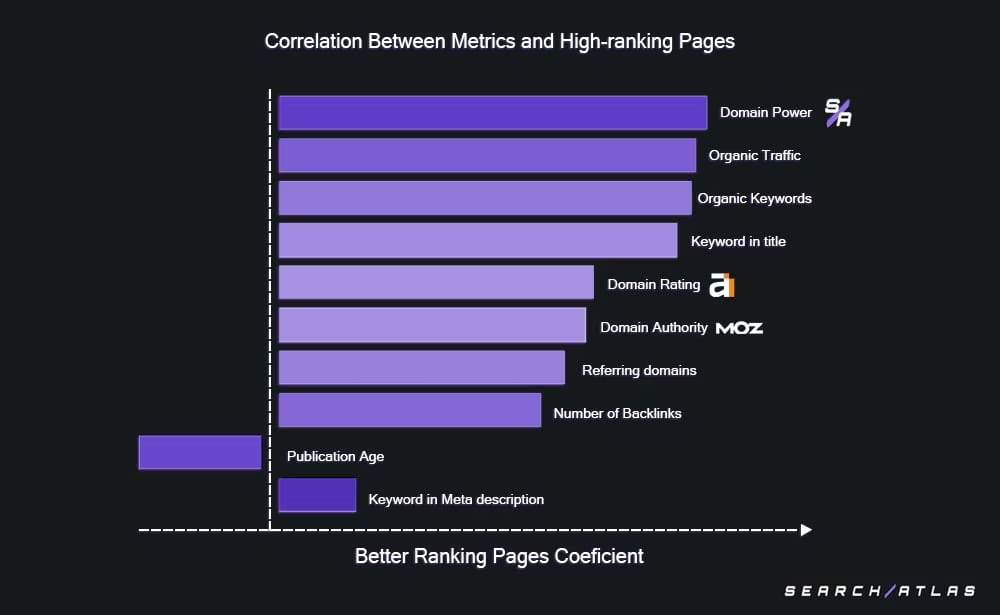
Traditional SEO metrics fail to predict generative performance. Search Atlas Study 8 analyzed 18,377 semantically matched query pairs and established that OpenAI ChatGPT and Google Gemini share less than 15% domain overlap and less than 10% URL overlap with top-ranking Google organic results. A brand that holds the number-one organic ranking in Google frequently receives zero citations inside ChatGPT because the underlying retrieval engines evaluate fundamentally different text properties.
Use the interactive matrix below to compare tactical requirements and calculate channel allocation for your organization.
SEO vs AEO vs GEO: Multi-Discipline Convergence Matrix
Evaluate architectural differences and calculate team channel allocation.
Generative Engine Optimization (GEO)
Multimodal token similarity and source synthesis for LLMsChannel Allocation by Business Model
Select your business model to view the recommended budget and resource split.
The Unified Four-Step Workflow Across All Three Disciplines
The unified four-step workflow establishes a production standard that satisfies traditional search crawlers, answer-extraction algorithms, and generative language models without requiring separate content variations.
Unified Production Pipeline:
Step 1: Technical Accessibility ──> Clean SSR HTML DOM for crawlers and RAG bots
Step 2: Entity Grounding ─────────> Wikidata, Organization schema, and brand clarity
Step 3: Syntactic Answers ────────> Sentence-one subject-verb-predicate triads
Step 4: Commercial Distribution ──> 86% commercial domain citations via third-party PR
Step 1: Technical Accessibility and Server-Side Crawlability
All three retrieval engines require clean, unhindered access to raw HTML text. If client-side JavaScript execution delays content rendering, traditional crawlers consume excess render budget, while AI indexing bots (such as GPTBot and PerplexityBot) drop the document due to execution timeouts.
- Serve complete content through Server-Side Rendering (SSR) or Static Site Generation (SSG).
- Remove client-side modal walls, gated overlays, and non-semantic DOM nesting.
- Verify HTTP 200 status codes and monitor crawl logs for AI user-agent accessibility.
Step 2: Entity Grounding and Knowledge Graph Alignment
Search engines and language models parse content by mapping text tokens to recognized entity nodes. Unambiguous entity alignment prevents models from confusing your brand with unrelated concepts or omitting your product during category queries.
- Maintain verified organizational entity profiles on Wikidata, Crunchbase, Google Business Profile, and LinkedIn.
- Implement structured
OrganizationandSoftwareApplicationschema definitions referencing canonicalsameAsentity URIs. - Use explicit, consistent naming for all proprietary features and software modules across your digital ecosystem.
Step 3: Direct Syntactic Passage Architecture
Answer engines and generative models evaluate text at the passage level. To capture featured snippets in AEO and secure citation inclusion in GEO, construct the first sentence beneath every heading as a direct syntactic triad: Subject + Verb + Predicate.
<!-- Correct Syntactic Architecture (Satisfies AEO and GEO) -->
<h2>What is Content Pruning?</h2>
<p>Content pruning is the systematic removal or consolidation of low-performing website pages to improve overall domain crawl efficiency and ranking performance.</p>

<!-- Incorrect Narrative Architecture (Fails AEO and GEO) -->
<h2>What is Content Pruning?</h2>
<p>As websites grow over time, managing digital content becomes increasingly complex, and webmasters must decide how to handle old material.</p>
The direct structure allows Google's Centerpiece Annotation model to extract the definition for featured snippets, while LLM vector embeddings match the precise query tokens during dense retrieval.
Step 4: Third-Party Commercial Verification and Citation Velocity
Generative language models verify factual statements through cross-source corroboration. Search Atlas Study 5 analyzed 5,173,673 domain citations and established that commercial websites (.com, .co, .io) account for 86% of all external citations across OpenAI, Gemini, and Perplexity.
Generative Citation Sources by Domain Class:
██████████████████████████████████ Commercial Domains & Directories (86%)
████ News & Media Aggregators (10%)
█ Academic & Government (4%)
If your brand is mentioned exclusively on your own domain, an AI assistant treats that capability as unverified marketing copy. When independent software comparison portals, industry directories, and customer review platforms corroborate the same capabilities, language models accept the relationship as verified fact. Distributing brand references across authoritative commercial domains increases citation inclusion across all conversational engines.
How to Measure Combined Performance Across Search Channels
Measuring combined performance across search channels requires pairing client-side web analytics with platform-wide citation tracking. Default web analytics isolate website visits, but they remain completely blind to zero-click answers that influence purchasing shortlists.
Unified Measurement Dashboard
├── Traditional SEO: Google Search Console (Organic Clicks, Impressions, CTR)
├── Attributable AI Traffic: Custom GA4 Channel Group (chatgpt.com, perplexity.ai referrers)
└── Off-Site Generative Exposure: Search Atlas LLM Visibility (Prompt Citations, SOV, Sentiment)
- Monitor On-Site Traffic in GA4: Create custom channel groups that isolate AI referral domains and native mobile app referrers (
chatgpt.com,perplexity.ai,android-app://com.openai.chatgpt). - Monitor Off-Site Brand Citations: Track conversational prompts across ChatGPT, Perplexity, Claude, and Gemini using LLM Visibility to measure prompt share of voice and competitor co-mentions.
- Automate Technical Deployment: Deploy automated site-wide fixes for heading hierarchies, canonical structures, and missing entity schema using autonomous platforms like OTTO SEO.
For an in-depth breakdown of multi-engine discovery mechanics, explore our comprehensive framework on AI search visibility strategy. To establish baseline website metrics, evaluate your domain with the free DA Checker.
Summary Checklist for Multi-Channel Search Execution
To align your digital content with traditional search algorithms, answer engines, and generative AI models, execute the following technical controls:
- Serve all core body content through server-side rendered HTML without client-side rendering delays.
- Place a direct subject-verb-predicate answer in the first sentence beneath every section heading.
- Maintain consistent brand and product entity definitions across Wikidata, LinkedIn, and corporate profiles.
- Secure brand feature citations across five or more verified third-party commercial software directories.
- Isolate AI referral traffic in Google Analytics 4 using custom regular expression channel groups.
- Track brand share of voice and multi-model citation frequency using LLM Visibility.
- Automate structural technical maintenance and entity schema deployment using OTTO SEO.