AI search visibility monitoring is the ongoing process of tracking how your brand appears in AI-generated answers from large language models such as ChatGPT, Gemini, Perplexity, and Claude. It measures mention frequency, sentiment, citation sources, and share of voice across AI platforms. Brands use this data to protect their reputation, identify content gaps, and optimize their presence in the fastest-growing discovery channel.
AI search visibility monitoring is not a subset of traditional SEO monitoring. Organic rank tracking measures where your pages appear in a search results list. AI visibility monitoring measures whether a language model mentions your brand at all — and whether that mention helps or hurts you. A brand can rank first on Google and still be absent from AI answers, or be described inaccurately. Monitoring closes that blind spot.
How does AI search visibility monitoring work technically? Monitoring tools query AI platforms with buyer-relevant prompts, parse the generated responses for brand mentions, and classify each mention by sentiment, position, and citation source. Results aggregate into dashboards that track trends over time, benchmark against competitors, and flag risks such as misinformation or declining share of voice.
Who needs AI search visibility monitoring? Any brand whose buyers research products through AI assistants needs monitoring. B2B SaaS companies, e-commerce brands, financial services firms, law firms, and healthcare providers all face AI-mediated discovery. If buyers ask ChatGPT or Perplexity before they visit your website, monitoring is how you know what those buyers hear.
What Is AI Search Visibility?
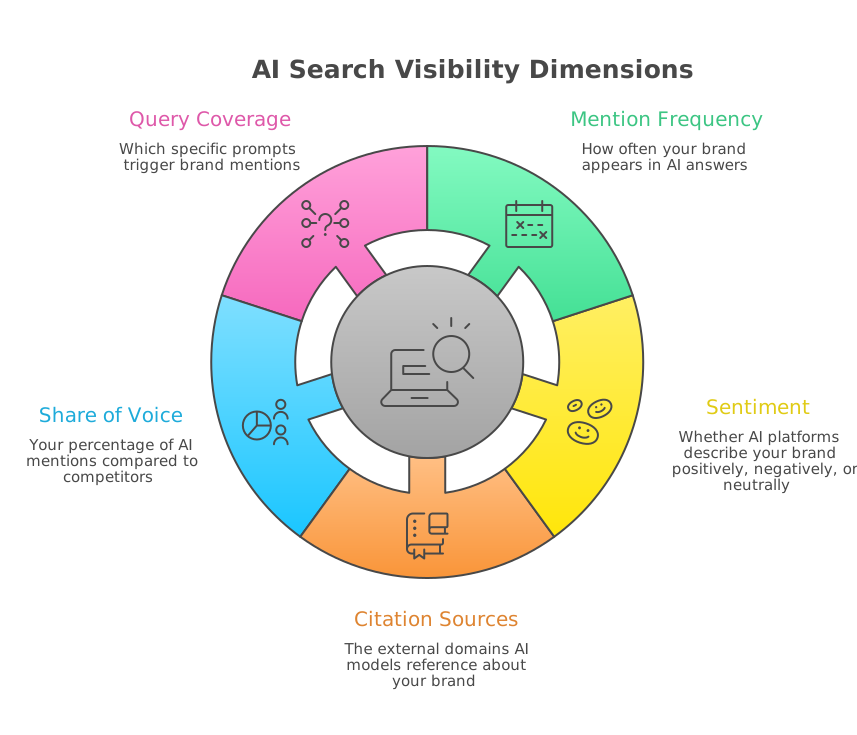
AI search visibility is the degree to which a brand is present in responses generated by AI assistants. It is measured across five dimensions.
Mention Frequency
Mention frequency counts how often your brand name appears in AI-generated answers to relevant queries. High frequency signals that AI models consider your brand relevant to the topic. Low frequency means buyers researching your category through AI assistants never encounter your brand.
Sentiment
Sentiment measures whether AI platforms describe your brand positively, negatively, or neutrally. Sentiment is assessed at the descriptor level — an AI model might describe your features positively while framing your pricing negatively. Brands need both dimensions to understand how AI perception shapes buyer decisions.
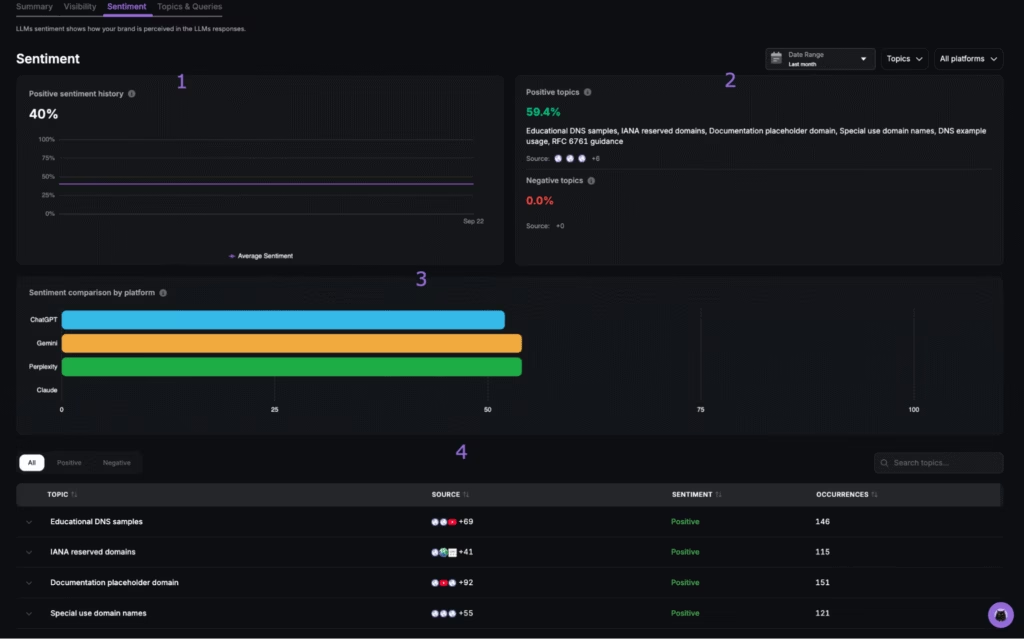
The Sentiment dashboard groups mentions by topic and platform, showing exactly which attributes AI models frame favorably and which they frame negatively.
Citation Sources
Citation sources are the external domains that AI models reference when generating answers about your brand or category. These sources determine which third-party content shapes AI perception. If industry publications cite competitors while omitting your brand, those omissions propagate into AI answers.
Share of Voice
Share of voice calculates the percentage of AI mentions attributed to your brand compared to competitors. A brand with 15% share of voice in its category knows that competitors collectively own 85% of AI-driven discovery. Tracking this metric over time reveals whether optimization efforts are closing or widening the gap.
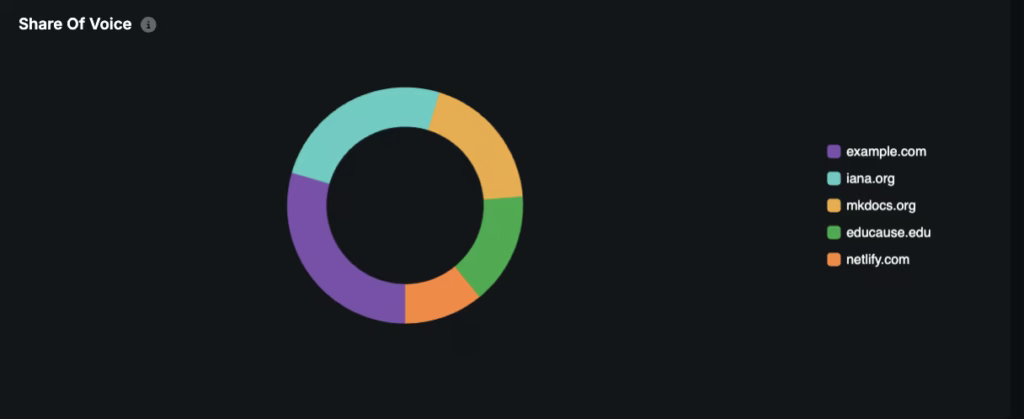
The Share of Voice chart breaks down mention distribution by brand, making competitive gaps visible at a glance.
Query Coverage
Query coverage identifies which specific prompts trigger brand mentions. A brand might appear for generic category queries but be absent from high-intent commercial prompts like "best enterprise CRM" or "top-rated marketing automation platform." Query-level data turns visibility from a vanity metric into an actionable content roadmap.
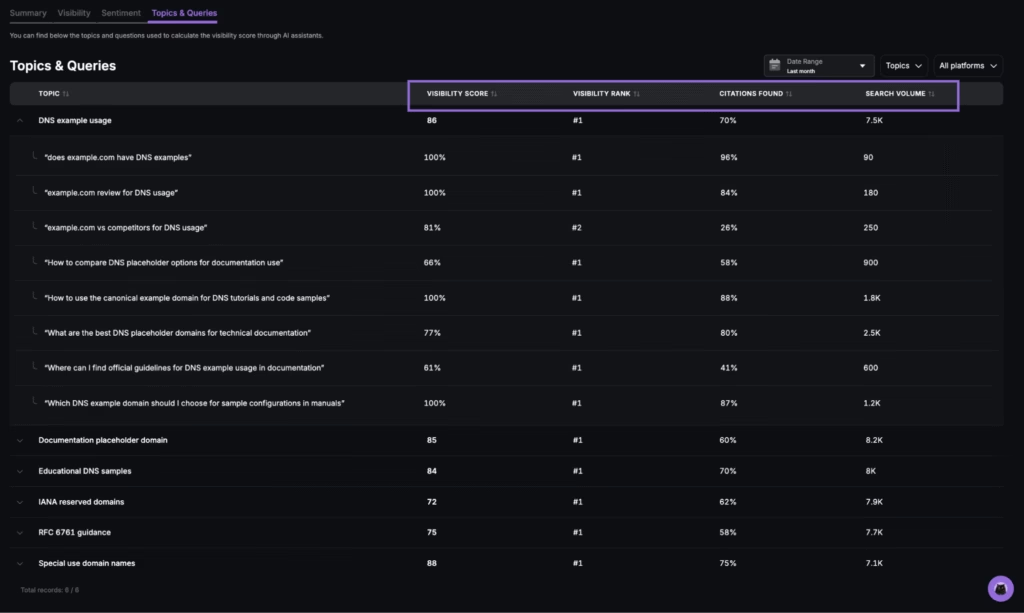
The Topics & Queries dashboard lists every monitored query with its visibility score, citation share, and search volume, so coverage gaps are immediately visible.
Why Do Brands Need AI Search Visibility Monitoring?
Brands need AI search visibility monitoring because buyer behavior has shifted. The five reasons below explain why monitoring is no longer optional.
AI Assistants Are a Discovery Channel
Buyers increasingly use ChatGPT, Perplexity, Gemini, and Claude to research products, compare vendors, and shortlist solutions before visiting a website. Brands invisible to these platforms miss the first stage of the buyer journey. Monitoring reveals whether AI assistants surface your brand during these research moments.
Zero-Click Answers Reduce Direct Traffic
AI assistants synthesize answers without requiring clicks. A user who asks "what is the best project management software" receives a complete answer inside the AI interface. Brands that are not mentioned in that synthesis lose both the impression and the potential visit. Monitoring quantifies this lost exposure.
AI Answers Shape Brand Perception Before Direct Engagement
When an AI model describes your brand, that description becomes the buyer's first impression. If the description is outdated, inaccurate, or unfavorable, buyers form negative opinions before ever visiting your website. Monitoring detects perception problems early enough to correct them.
Competitors Are Already Optimizing for AI Visibility
Brands in competitive categories are actively optimizing their content, citations, and digital presence for AI extraction. If competitors publish comparison pages, earn citations in industry publications, and structure their content for AI parsing while your brand does not, the visibility gap widens with each AI model update. Monitoring reveals competitive movements before they become entrenched.
Traditional Analytics Cannot Detect AI Invisibility
Google Analytics tracks clicks and sessions. It cannot detect when an AI assistant answered a buyer's question without mentioning your brand. AI search visibility monitoring fills this analytics gap by measuring presence rather than traffic, exposure rather than clicks.
What Should Brands Monitor?
Brands should monitor six specific areas to maintain comprehensive AI visibility coverage.
Brand Mentions Across Platforms
Track how often each AI platform mentions your brand in response to category-relevant queries. Platform-specific tracking reveals which models favor your brand and which ignore it. ChatGPT, Gemini, Perplexity, and Claude each use different training data and ranking signals, so visibility across platforms is never uniform.
Sentiment by Topic and Platform
Monitor sentiment at two levels: overall brand sentiment and topic-specific sentiment. A brand might have positive overall sentiment but negative sentiment around specific topics like pricing, customer support, or integration capabilities. Topic-level sentiment data guides targeted content updates.
Citation Gaps
Identify which external sources AI models cite for your category but not for your brand. These gaps reveal where competitors earn third-party validation that shapes AI perception. Common gap sources include industry publications, review platforms, comparison sites, and analyst reports.
Competitive Benchmarking
Benchmark your visibility score, share of voice, and sentiment against direct competitors. Side-by-side comparison reveals whether your optimization efforts are gaining ground or losing it. Historical benchmarking shows whether the gap is stable, closing, or widening.
Misinformation and Accuracy
AI models sometimes generate incorrect claims about pricing, features, integrations, or company status. Monitoring detects these inaccuracies before they influence purchasing decisions. Citation tracking identifies which external sources feed the misinformation, enabling targeted correction.
Commercial Query Coverage
Monitor whether your brand appears in high-intent commercial queries — queries that include terms like "best," "top," "compare," "vs," "pricing," and "review." Commercial query coverage directly influences purchase decisions. Brands absent from these queries lose buyers at the final evaluation stage.
How to Set Up an AI Search Visibility Monitoring Program
Setting up an AI search visibility monitoring program follows a five-step process.
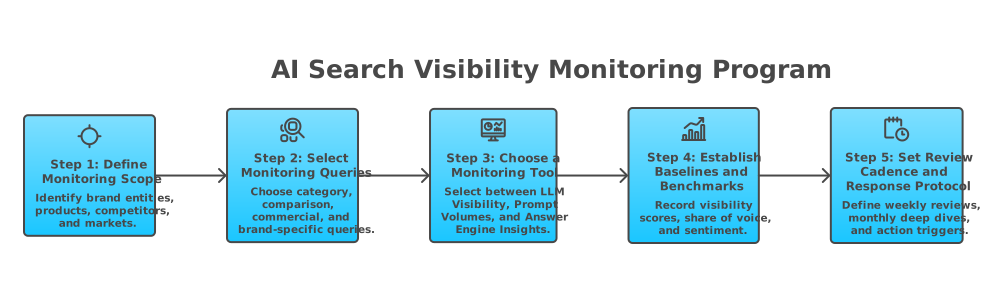
Step 1: Define Your Monitoring Scope
Identify the brand entities, product names, and key competitors to track. Include your company name, product names, and common abbreviations or misspellings. Select five to ten direct competitors that buyers would consider alongside your brand. Define the geographic markets and languages relevant to your business.
Step 2: Select Monitoring Queries
Build a query list organized by buyer intent and journey stage. The query list should cover four categories. The guide on building an LLM visibility tracking plan explains how to lock and segment the list so results stay comparable.
- Category queries. Generic prompts like "what is the best [category] tool" or "top [category] platforms for [use case]."
- Comparison queries. Competitive prompts like "[your brand] vs [competitor]" or "alternatives to [competitor]."
- Commercial queries. Purchase-intent prompts like "[your brand] pricing" or "[your brand] reviews."
- Brand-specific queries. Direct prompts like "what is [your brand]" or "how does [your product] work."
Step 3: Choose a Monitoring Tool
AI search visibility monitoring requires specialized tools that query LLMs directly and track responses over time. Search Atlas LLM Visibility tracks brand mentions, sentiment, and share of voice across ChatGPT, Gemini, Perplexity, and Claude in a unified dashboard. Prompt Volumes measures how often your brand appears in AI-generated responses for specific prompts. Answer Engine Insights measures visibility across answer engines. For brands that need a broader understanding of the tracking landscape, LLM traffic tracking covers complementary methods like analytics segmentation and UTM attribution.
Step 4: Establish Baselines and Benchmarks
Record your initial visibility scores, share of voice percentages, and sentiment ratings across all monitored platforms and queries. These baselines serve as the reference point for measuring improvement. Record competitor baselines simultaneously to establish the competitive gap you need to close.
Step 5: Set a Review Cadence and Response Protocol
Schedule weekly dashboard reviews to detect short-term shifts and monthly deep dives to analyze trends. Define a response protocol for each finding type. A negative sentiment spike triggers a content review and correction. A visibility drop on a key query triggers content optimization. A new competitor appearance triggers a competitive analysis. Without a response protocol, monitoring data accumulates without driving action.
What Metrics Matter Most for AI Visibility?
Five metrics provide the most actionable signal for brands monitoring AI search visibility.
Visibility Score
The visibility score is a composite metric that quantifies how prominently your brand appears in AI-generated answers. Higher scores indicate more frequent and more prominent mentions. Track visibility score trends over time to measure whether optimization efforts are working. A rising score signals improving AI presence; a declining score signals that competitors are gaining ground or that your content is losing relevance.
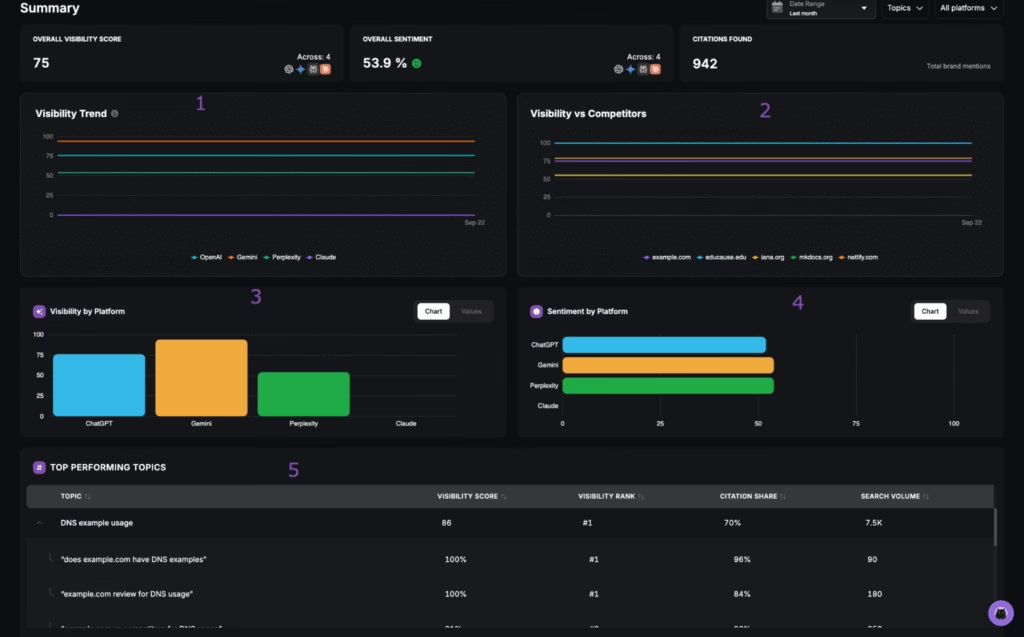
The Summary dashboard consolidates visibility trend, competitor comparison, platform distribution, sentiment, and top-performing topics into one view.
Share of Voice
Share of voice measures your brand's percentage of total AI mentions in your category. It is the most direct competitive metric. If your share of voice drops from 20% to 15% while a competitor rises from 25% to 30%, the gap is widening. Share of voice data should drive content investment decisions.
Citation Share
Citation share tracks which external domains AI models reference when discussing your brand. A declining citation share for your owned properties (website, blog, documentation) means AI models are relying more on third-party sources that you do not control. Increasing owned citation share strengthens the accuracy and favorability of AI descriptions.
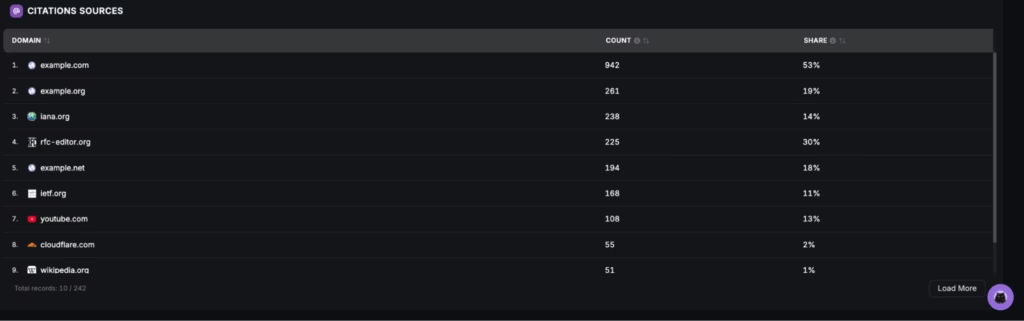
The Citation Sources table catalogs every domain AI models reference, with total counts and share, so third-party dependencies are easy to spot.
Sentiment Score
Sentiment score quantifies how positively or negatively AI platforms describe your brand. Track overall sentiment and topic-level sentiment separately. A brand with strong overall sentiment but negative pricing sentiment needs to address pricing content specifically, not invest in general brand awareness.
Query Coverage Rate
Query coverage rate measures the percentage of monitored queries where your brand appears. A brand covering 60% of category queries has gaps in 40% of the queries buyers actually ask. Prioritize closing gaps in high-intent commercial queries first, as these have the most direct revenue impact.
How Does AI Visibility Monitoring Differ From SEO Monitoring?
AI visibility monitoring and traditional SEO monitoring measure different signals and require different responses. The comparison below clarifies the distinction.
| Dimension | SEO Monitoring | AI Visibility Monitoring |
|---|---|---|
| What is measured | Page rankings, click-through rates, impressions | Brand mentions, sentiment, citations, share of voice |
| Where data comes from | Search Console, rank trackers | AI platform queries, LLM response analysis |
| What drives results | Keywords, backlinks, technical SEO | Content clarity, citations, entity recognition, factual accuracy |
| Response type | Ranked list of links | Synthesized text with embedded brand references |
| User behavior | Clicks through to website | Reads answer, may or may not click |
| Optimization target | Search algorithm ranking factors | AI model extraction and citation patterns |
SEO monitoring remains essential for organic search performance. AI visibility monitoring adds a complementary layer that addresses the growing share of buyer research conducted through AI assistants. Brands that monitor only one channel operate with incomplete intelligence.
How to Turn AI Visibility Data Into Action
AI visibility data becomes valuable when it drives specific optimization actions. The four response categories below map data patterns to execution.
Content Updates for Low Visibility Queries
When monitoring reveals queries where your brand has low or zero visibility, update existing content or create new content targeting those specific prompts. Structure the content with clear headings, factual statements, and schema markup that AI models can extract. Focus on the exact phrasing buyers use in their queries.
Citation Building for Third-Party Gaps
When citation source analysis reveals that competitors earn mentions from publications, review platforms, or analyst reports where your brand is absent, build a targeted outreach program. Contribute articles to industry publications, encourage customer reviews on relevant platforms, and pursue analyst briefings. Each new citation source improves the likelihood that AI models reference your brand accurately.
Sentiment Correction for Negative Descriptors
When sentiment monitoring reveals negative descriptions of specific topics — pricing, features, support — update the corresponding content with clearer, more favorable framing. Add structured data, FAQ sections, and comparison tables that present your positioning accurately. Monitor the Sentiment dashboard after updates to confirm improvement.
Competitive Response for Share of Voice Shifts
When a competitor's share of voice rises significantly, analyze which queries and platforms drive the increase. If the competitor published new comparison content, respond with superior content. If they earned citations from a new publication, pursue coverage in the same or comparable outlets. Share of voice shifts reveal competitive strategy in real time.
What Are Common Mistakes in AI Visibility Monitoring?
Brands implementing AI visibility monitoring make five recurring mistakes.
Monitoring Too Few Platforms
Each AI platform uses different training data, retrieval methods, and citation patterns. A brand monitoring only ChatGPT misses how Gemini, Perplexity, and Claude describe the same topics. Monitor all major platforms to build a complete visibility picture.
Ignoring Sentiment Data
High mention frequency with negative sentiment damages brand perception more than low frequency with neutral sentiment. Brands that track only mention counts miss the qualitative dimension of AI visibility. Sentiment data should always accompany frequency data.
Setting Baselines Without Competitive Context
A visibility score of 45 means little in isolation. If competitors average 65, the brand is underperforming. If competitors average 25, the brand leads. Always establish competitive baselines alongside your own metrics.
Collecting Data Without a Response Plan
Monitoring without action wastes resources. Before implementing a monitoring program, define the specific actions each data pattern triggers. A visibility drop should lead to a content review. A sentiment spike should lead to a messaging audit. Without predefined responses, dashboards become information graveyards.
Treating AI Visibility as Separate From SEO
AI visibility and organic SEO share underlying signals — content quality, authority, topical relevance. Brands that treat them as separate disciplines duplicate effort and miss synergies. Integrate AI visibility data into existing SEO workflows to maximize efficiency.
Where Can I Learn More About AI Search and Brand Visibility?
To learn more about how AI is changing digital marketing and how new tools are helping brands adapt, sign up for the Search Atlas newsletter. Our company creates leading AI tools that automate, track, and optimize your SEO and PPC campaigns. Our work is based on hundreds of case studies, as we believe in testing, not guessing.
Get started with Search Atlas and explore your LLM Visibility dashboard now. Review insights, spot trends, and take the next step toward a stronger brand presence in AI answers.