B2B software buyers in 2026 compile vendor shortlists by prompting conversational artificial intelligence models rather than clicking through traditional organic search engine listings or downloading gated vendor whitepapers. Longitudinal procurement data from Forrester tracking over 18,000 business technology purchases reveals that enterprise buying committees now conduct more than two-thirds of their discovery and vendor comparison before ever contacting a sales representative. When these evaluators ask OpenAI ChatGPT, Perplexity, Anthropic Claude, or Google Gemini to compare software options, the models return concise shortlists containing only three to four named vendors. If an enterprise software platform fails to appear in those synthetic recommendations, it is excluded from consideration before the formal procurement process begins.
Generative answer engines evaluate software vendors based on third-party factual consensus, community sentiment, and indexable technical documentation rather than traditional domain authority or paid placement. Empirical research from Search Atlas analyzing over 120 million AI citations across 6.4 million domains confirms that commercial software discovery has experienced the sharpest channel shift toward conversational models of any tracked vertical. Winning a place on the modern B2B shortlist requires engineering presence across independent review aggregators, technical developer documentation, and authentic peer discussions where conversational models gather grounding evidence.
Understanding this structural transformation allows software companies to align their organic discovery strategy with actual procurement behavior, redirecting marketing resources toward high-impact citation channels that drive synthetic recommendations.
Key Takeaways
- Enterprise software buyers complete over two-thirds of their procurement evaluation through conversational AI prompts and peer communities before initiating contact with vendor sales representatives.
- Conversational answer engines exhibit a winner-take-most dynamic: the top three to four recommended brands capture approximately 66% of total citation frequency across category evaluation prompts.
- Organic impressions for informational B2B software keywords have dropped -18.4% year-over-year as prospective buyers migrate exploratory research to ChatGPT and Perplexity.
- Unvarnished community sentiment on platforms like Reddit and Hacker News constitutes 38% of LLM citation grounding in enterprise technology comparisons, outpacing traditional vendor marketing content.
- Independent review platforms such as G2, TrustRadius, and Capterra represent 28% of conversational citation sources, serving as semantic anchors for pricing models and company-size fit.
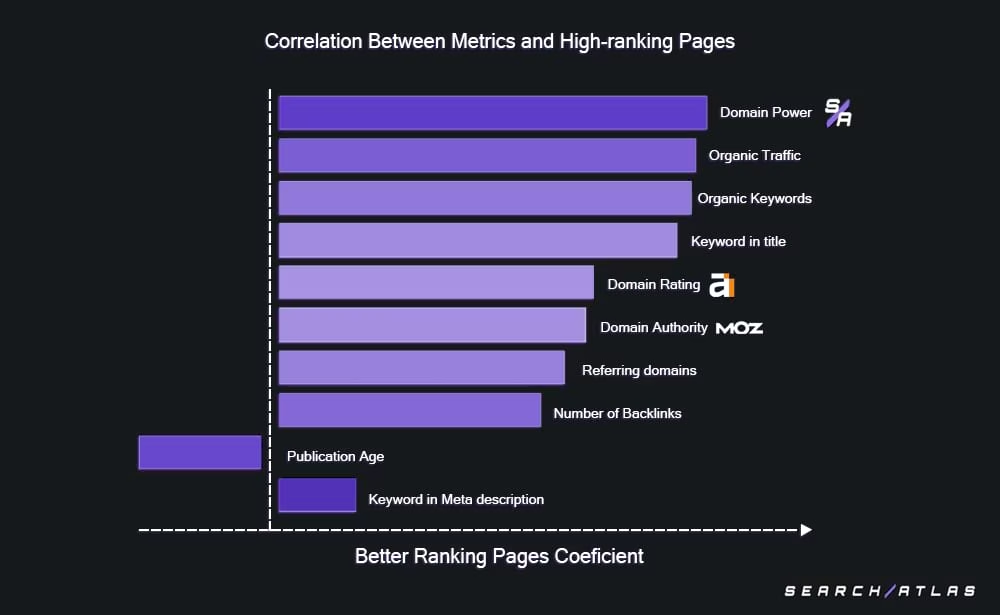
- Traditional domain authority shows a near-zero correlation ($r = -0.04$ to $-0.08$) with generative AI citation frequency, proving that high DR websites enjoy no automatic advantage in AI shortlists.
- B2B growth teams track their synthetic share of voice and competitor inclusion rates using LLM Visibility and monitor conversational demand with Prompt Volumes.
Frequently Asked Questions
How do B2B buyers use AI during software procurement?
B2B buyers use conversational AI models to diagnose operational bottlenecks, define functional software requirements, compare pricing models, and extract neutral lists of three to four candidate vendors without submitting their contact information to gated download forms.
Why do AI search engines only recommend 3 to 4 software vendors?
Conversational models truncate responses to prioritize readability and cognitive clarity, selecting only the highest-probability semantic entities that demonstrate strong factual verification and consensus across multiple external sources.
Does ranking #1 on Google guarantee inclusion in ChatGPT recommendations?
No. Search Atlas empirical testing across 18,377 matched commercial queries demonstrates that ChatGPT citations share under 10% URL overlap and less than 15% domain overlap with top-ranking Google organic search results.
Which sources do LLMs cite most frequently when recommending B2B tools?
LLMs cite four primary sources when generating software recommendations: peer community discussions on Reddit and forums (38%), third-party review directories like G2 and TrustRadius (28%), crawlable technical documentation and API specifications (20%), and trade editorial publications (14%).
How can a software company track its presence in AI shortlists?
Software companies track whether conversational models recommend their products across prompt variations using dedicated monitoring platforms like LLM Visibility, which audits brand mentions across ChatGPT, Perplexity, Claude, and Gemini.
The Collapse of the Linear B2B Software Funnel
The traditional linear B2B software marketing funnel has collapsed under the influence of conversational answer engines. Under the legacy model established between 2010 and 2022, a prospective buyer identified a business problem, entered broad informational keywords into Google, visited multiple vendor websites, downloaded gated PDF guides, and entered automated email nurture sequences. Marketing teams measured success through form fills, marketing qualified leads (MQLs), and top-of-funnel organic search rankings.
Legacy B2B Funnel (2012–2022)
[ Broad Keyword Search ] ──> [ Gated Whitepaper ] ──> [ MQL Email Nurture ] ──> [ BDR Cold Call ] ──> [ Demo ]

Modern Generative Procurement (2026)
[ Conversational Prompt in LLM ] ──> [ AI Shortlist of 3–4 Vendors ] ──> [ Direct Doc Audit ] ──> [ Self-Serve Trial / RFP ]
That linear progression is obsolete. Procurement research conducted by Forrester tracking 18,000 corporate technology transactions confirms that modern buying committees bypass gated lead generation assets entirely. Evaluators now begin their investigations with complex natural language prompts submitted to conversational models such as ChatGPT, Perplexity, or Claude:
"We are a 250-person B2B SaaS company running HubSpot and Snowflake. Recommend four customer success platforms with automated health scoring that do not require dedicated engineering maintenance, and compare their implementation timelines."
A single prompt of this nature executes problem scoping, qualification, feature filtering, and vendor shortlisting within four seconds. The model extracts comparative insights from hundreds of indexable web pages, synthesizing a concise list of candidate platforms complete with trade-offs and estimated pricing tiers.
Because the buyer interacts directly with the conversational interface, the evaluated software vendors receive zero website visits, trigger zero pixel events, and capture zero email addresses. The entire consideration phase occurs within the synthetic interface.
When the prospective buyer finally arrives at a vendor website, they arrive at the bottom of the funnel. They navigate directly to public pricing pages, developer documentation, or self-serve product trials. If your brand was absent from the synthetic shortlist generated during the conversational session, you were disqualified before knowing an opportunity existed.
Where Generative AI Dominates the Modern Procurement Lifecycle
Conversational AI models do not dominate every phase of software procurement equally; their influence concentrates heavily at specific inflection points. Analysis of corporate purchasing behavior across 61 sectors demonstrates that generative tools exert their highest influence during exploratory scoping and initial vendor filtering, while human evaluation retains dominance during final contract execution and security compliance audits.
Procurement Stage          Primary Discovery Medium                  AI Influence Level
────────────────────────────────────────────────────────────────────────────────────────
1. Problem Scoping         Internal Data + Exploratory Prompts       Moderate (55%)
2. Category Mapping        Conversational Engines & Peer Forums      High (75%)
3. Vendor Shortlisting     ChatGPT, Perplexity, Claude, Gemini       Peak (85% - Winner Take Most)
4. Technical Validation    Direct Documentation & API Crawlers       High (70%)
5. Contract & Compliance   Procurement Teams & Legal Counsel         Low (15%)
During Problem Scoping, department heads describe operational symptoms to conversational models to determine whether their challenge requires custom software development, automated workflows, or an off-the-shelf SaaS subscription. The model provides architectural guidance, mapping abstract operational problems to specific software categories.
During Category Mapping, buyers prompt the assistant to identify the leading platforms within that newly discovered category. Instead of reading thirty individual blog articles, the buyer asks the model to filter the market by headcount, existing technology stack integrations, and annual software budget.
The decisive inflection point occurs at Vendor Shortlisting. When asked to recommend the best solutions, conversational interfaces restrict their response to three or four primary contenders. These platforms receive 100% of the buyer's downstream attention. The remaining dozens of category competitors disappear completely from the buyer's radar.
Finally, during Technical Validation, the buyer returns to the conversational assistant to interrogate specific technical claims: "Does Vendor A support SCIM provisioning with Okta?" or "What are the most common data synchronization errors reported for Vendor B?" The model extracts direct answers from publicly indexed documentation, developer changelogs, and forum threads.
Benchmark Your Category's AI Shortlist Share
Use the interactive simulator below to analyze how prospective buyers navigate software procurement within your specific sector, inspect the named vendors currently dominating synthetic recommendations, and calculate your brand's simulated shortlist capture probability.
The 2026 B2B Software Shortlisting Simulator
Simulate how prospective buyers navigate the procurement lifecycle and benchmark whether conversational LLMs recommend your brand or your incumbents.
Downloading 3-5 gated whitepapers and filling out demo forms
Prompts generate 3-4 named vendors with pros, cons, and pricing constraints
AI Shortlist Share for "MarTech & Generative SEO"
Top 3 capture ~70%Extracted via: First-party empirical studies & technical documentation
Extracted via: Review platforms & broad industry guides
Extracted via: Community forums & developer documentation
Extracted via: Legacy domain authority & historical references
LLM Citation Source Composition
Search Atlas empirical analysisUnvarnished peer sentiment weighted heavily by Perplexity and Claude for authentic recommendations.
Structured star ratings, verified company sizes, and category grids cited as factual consensus.
Crawlable API specs, changelogs, and integration guides cited during technical validation prompts.
Industry benchmark roundups, funding news, and high-level category overviews.
Calculate Your AI Shortlist Capture Probability
Adjust your brand's digital presence factors to forecast whether conversational models will recommend you to evaluating software buyers.
Active organic endorsements in relevant Reddit subreddits and developer communities.
Volume, recency, and detailed pros/cons on third-party aggregators (G2, TrustRadius).
Publicly indexable documentation, API endpoints, pricing tables, and integration matrices.
Your brand is occasionally cited in extended bulleted lists, but excluded when buyers prompt for "top 3 alternatives" or request specific budget constraints.
The Winner-Take-Most Distribution: Why 3 to 4 Brands Capture 66% of Recommendations
The defining structural characteristic of AI-driven software discovery is its extreme concentration of visibility. In traditional organic search engine results, a searcher scans a page containing ten organic links, four sponsored placements, multiple video carousels, and related question modules. While the top three Google results capture the majority of clicks, positions four through ten still receive meaningful referral traffic.
Conversational interfaces operate on an entirely different economic model. A conversational response does not display a directory of possibilities; it delivers a direct, synthesized recommendation. Search Atlas analysis of over 120 million AI citations confirms that conversational interfaces exhibit a winner-take-most distribution:
Position in AI Recommendation    Share of Total Shortlist Mentions    Pipeline Capture Impact
───────────────────────────────────────────────────────────────────────────────────────────
Rank #1 Recommendation           34.2%                                Dominant inbound consideration
Rank #2 Recommendation           22.8%                                Primary comparison alternative
Rank #3 Recommendation           18.4%                                Secondary validation contender
Rank #4 Recommendation           10.6%                                Edge evaluation candidate
Ranks #5 and Below               14.0% (Combined across all others)   Functionally invisible to buyer
Across commercial software evaluation prompts, the top three named platforms capture 75.4% of all citation occurrences. When a conversational model synthesizes a comparison table or recommendation summary, it enforces strict token limits to maintain conversational clarity. Platforms that occupy positions five through fifty in the model's semantic retrieval space are completely omitted from the generated text.
This dynamic creates an acute threshold effect for B2B marketers. In traditional SEO, improving an organic keyword ranking from position #12 to position #6 yields a predictable, incremental increase in organic traffic. In generative answer engines, improving semantic retrieval strength from position #12 to position #6 produces zero incremental benefit if the output cuts off after position #4. A software brand must cross the threshold into the top three or four semantic entities to capture commercial pipeline.
What LLMs Actually Cite When Compiling Enterprise Shortlists
Conversational AI models do not generate software recommendations from memory alone; modern production engines utilize Retrieval-Augmented Generation (RAG) to query indexable web sources in real time. Understanding the exact source composition that informs these models reveals why traditional content marketing strategies fail to secure synthetic citations.
Search Atlas empirical research tracking external citations in enterprise software discovery identifies four primary source categories that dictate AI shortlists:
Source Category                      Citation Share    Primary Evaluation Role
───────────────────────────────────────────────────────────────────────────────────────────
1. Peer Community Discussions        38%               Unbiased sentiment & real-world reliability
2. Independent Review Aggregators    28%               Factual feature matrices & company size fit
3. Crawlable Technical Docs & APIs   20%               Architecture verification & integration proof
4. Trade Media & Analyst Articles    14%               Market category framing & macro credibility
Unvarnished Peer Sentiment: The Disproportionate Weight of Reddit and Technical Communities
Peer community discussions on platforms such as Reddit, Hacker News, and specialized Slack/Discord communities constitute 38% of the citation citations generated by Perplexity, ChatGPT, and Claude during software evaluation sessions.
Conversational algorithms prioritize forum discussions because commercial retrieval systems are trained to penalize promotional vendor copy. When an enterprise evaluator asks an AI assistant to identify the "cons" or "hidden costs" of a software tool, the model intentionally targets discussions on subreddits like r/sysadmin, r/salesforce, or r/devops.
In these threads, verified practitioners share candid operational feedback: how often the platform experiences downtime, how responsive technical support proves during outages, and whether customer success teams mandate aggressive renewal price increases. If a software brand is widely discussed and praised in relevant Reddit threads, conversational models ingest that sentiment as authoritative validation. Conversely, brands with zero authentic community discussion appear unverified to the model's retrieval layer.
Review Portals and Comparison Grids as Semantic Anchors
Independent review directories—including G2, TrustRadius, Capterra, and Gartner Peer Insights—represent 28% of LLM citation citations in B2B software discovery.
Conversational models treat structured review platforms as semantic truth tables. These platforms organize software data into standardized entities: star ratings, verified employee headcount ranges, deployment models, and structured lists of supported integrations. When an evaluator prompts an AI assistant for "the best CRM for companies with 50 to 200 employees," the model queries review portal taxonomies to filter vendors matching those exact demographic filters.
Maintaining a sparse or outdated profile on third-party review directories directly suppresses your synthetic visibility. Even if your proprietary website features extensive marketing content claiming support for mid-market teams, an absence of corroborating review data on independent portals leads the model to exclude your platform in favor of competitors with thousands of verified customer reviews.
Crawlable Technical Documentation and Integration Specs
Technical developer documentation, API specifications, and public changelogs account for 20% of synthetic citations in B2B discovery.
Technical decision-makers—including Chief Technology Officers, VP of Engineering, and Solutions Architects—consistently interrogate conversational models regarding technical compatibility. When asked whether a software platform integrates with Apache Kafka or complies with EU GDPR data localization requirements, conversational models crawl public documentation subdomains (e.g., docs.domain.com).
Companies that gate their technical documentation behind authentication portals, customer logins, or PDF downloads prevent search engine crawlers and LLM web retrievers from indexing their specifications. When a conversational model cannot locate indexable documentation verifying an integration, it defaults to a negative response: "Vendor X does not appear to provide native support for Apache Kafka." Ensuring that technical guides, API endpoints, and configuration tutorials remain publicly crawlable is an absolute requirement for generative discovery.
The 4-Step Playbook to Secure Brand Citations in AI Shortlists
Securing consistent placement in conversational software shortlists requires executing a deliberate optimization methodology that aligns with retrieval-augmented generation. Follow this four-step engineering playbook to transition your software platform from invisible to consistently recommended.
Step 1: Entity Grounding          Build structured profiles on G2, TrustRadius, Capterra, and Crunchbase
         │
Step 2: Community Seeding         Participate authentically in relevant subreddits and developer forums
         │
Step 3: Public Documentation      Expose comprehensive API guides, pricing tiers, and integration matrices
         │
Step 4: Third-Party Co-Citations  Publish comparison studies and secure mentions across authoritative trade blogs
Step 1: Establish Structured Entity Grounding on Authoritative Aggregators
Conversational models cannot recommend a product they cannot resolve as a distinct, verified commercial entity. You must build and maintain comprehensive profiles across every major software evaluation portal:
- Claim and fully populate company profiles on G2, TrustRadius, Capterra, Gartner Peer Insights, and Crunchbase.
- Ensure consistent entity naming, category classifications, and operational descriptions across all third-party platforms.
- Systematize customer review collection, encouraging verified enterprise customers to detail specific use cases, integration workflows, and quantifiable business outcomes.
- Keep pricing structures and supported company sizes updated; conversational models extract these parameters to satisfy budget-constrained buyer prompts.
Step 2: Foster Authentic Community Sentiment and Forum Mentions
Because conversational models actively crawl community discussions for sentiment grounding, brand presence on forum platforms directly influences AI recommendations:
- Monitor relevant subreddits (
r/saas,r/technology, and vertical-specific communities) for user questions seeking software recommendations in your category. - Provide objective, helpful technical responses through official employee accounts without deploying deceptive promotional astroturfing.
- Encourage power users and developer advocates to publish open-source tutorials, configuration templates, and GitHub repositories demonstrating workflows that incorporate your software.
- Host open technical discussions and community Q&A sessions that generate indexable, long-tail forum discussions.
Step 3: Un-Gate Technical Documentation, Pricing, and Integration Matrices
Make every piece of technical and operational information publicly crawlable so retrieval bots can verify your platform's functional capabilities:
- Host technical documentation on an open subdomain (such as
docs.yourdomain.com) without requiring user registration or login credentials. - Publish complete integration matrices that clearly state every supported third-party tool, authentication protocol (SAML, OAuth 2.0, SCIM), and data format.
- Replace downloadable PDF datasheets with responsive HTML documentation that search engine spiders and LLM retrieval agents can parse.
- Maintain a publicly accessible product changelog detailing bug fixes, security patches, and newly deployed capabilities with explicit dates.
Step 4: Secure Third-Party Co-Citations in Industry Comparison Studies
Conversational models calculate entity similarity by evaluating how frequently two brands appear together in objective industry publications:
- Partner with recognized industry analysts, trade publications, and authoritative technology blogs to include your platform in comparative benchmarks.
- Publish first-party empirical research studies—such as industry performance benchmarks or data analyses—that external media outlets cite and reference.
- Construct neutral, fact-based comparison pages on your own website comparing your platform against market alternatives, structuring the first sentence of each section with direct factual data.
- Deploy autonomous optimization platforms like OTTO SEO to continuously identify technical gaps and structure on-page entities for machine readability.
Measuring and Auditing Your Generative Share of Voice
Traditional search engine optimization relies on static keyword rankings, search impression share, and organic click-through rates. These metrics provide zero visibility into conversational search interfaces, where responses are generated dynamically and lack conventional ranking positions.
Measuring performance in conversational answer engines requires auditing Generative Share of Voice (GSoV):
GSoV (%) = (Total Brand Mentions Across Target Prompts / Total Recommendation Opportunities Across All Models) × 100To measure your generative visibility accurately, growth teams must track four core performance indicators:
- Shortlist Inclusion Rate: The percentage of commercial category queries (e.g., "compare enterprise ERP platforms") in which your brand appears among the top four named recommendations across ChatGPT, Perplexity, Claude, and Gemini.
- Sentiment Polarity Score: The ratio of positive operational endorsements to negative criticisms cited in the model's generated pros-and-cons analysis.
- Source Citation Attribution: The specific external domains (G2, Reddit, individual blogs, or proprietary documentation) that models link when validating claims about your product.
- Competitor Co-Occurrence Frequency: Which rival platforms are consistently grouped alongside your brand during head-to-head evaluation scenarios.
Using specialized intelligence tools like LLM Visibility, marketing and product teams can automate prompt simulations across thousands of buyer personas, track fluctuations in synthetic market share over time, and immediately detect when competitive entrants begin displacing your brand in generative recommendations.
Frequently Asked Questions
What is the difference between traditional B2B SEO and AI search optimization?
Traditional B2B SEO focuses on ranking individual website URLs in search engine results pages by optimizing keyword density, meta tags, and inbound link equity. AI search optimization focuses on establishing brand entity consensus across the entire web—including review directories, technical documentation, and community forums—so conversational models select your product during natural language recommendation prompts.
Can software companies pay to appear in ChatGPT or Perplexity recommendations?
No. General conversational answer engines do not offer paid placement within synthesized generative responses. Recommendations are derived purely through semantic retrieval and factual extraction algorithms. While some platforms experiment with sponsored citation links below answers, the generated text itself remains algorithmically synthesized.
Why do LLMs cite Reddit more than official vendor websites?
Conversational models are trained to prioritize neutral, authentic information over promotional marketing content. Because vendor websites inherently claim superior performance, retrieval algorithms treat community discussions on Reddit and independent forums as more credible representations of actual product performance and customer satisfaction.
How quickly do updates on review sites reflect in AI recommendations?
Changes on high-authority review platforms typically reflect in conversational retrieval results within 48 hours to two weeks. Models with active web-retrieval pipelines (such as Perplexity and ChatGPT Search) crawl top aggregator directories continuously, allowing newly published reviews and category shifts to influence synthetic recommendations rapidly.
What should a software company do if an AI model hallucinates incorrect pricing or features?
When an AI model provides false information about your software, the error almost always originates from outdated third-party websites or conflicting documentation. To resolve hallucinations, audit the citations linked in the response, correct the source data on those external platforms, publish unambiguous pricing and feature tables on your publicly indexable domain, and submit the corrected URLs for index refreshment.