KeywordTool.io is a keyword research platform that generates long-tail keyword suggestions from Google Autocomplete data across multiple search engines and platforms (Google, YouTube, Amazon, Bing, eBay). The KeywordTool.io platform extracts hundreds of keyword variations from a single seed term, providing search volume estimates, trend data, and cost-per-click (CPC) information through paid subscriptions. KeywordTool.io pricing operates through a freemium model where the basic interface provides keyword suggestions while locking search volume and competition metrics behind paywalls starting at $89/month.
Users seek alternatives to KeywordTool.io because of restricted free features, premium pricing for essential data, and limited competitor analysis capabilities. KeywordTool.io reviews on Capterra and G2 reveal consistent complaints about expensive annual pricing requirements, inability to cancel subscriptions easily, and basic functionality compared to comprehensive SEO platforms.
The 3 best alternatives to KeywordTool.io are Search Atlas, Ubersuggest, and Serpstat.
What are the Best KeywordTool.io Alternatives?
The 31 best KeywordTool.io alternatives are listed below.
| # | KeywordTool.io Alternative | Best For | Price |
|---|---|---|---|
| 1 | Search Atlas | Best KeywordTool.io Alternative | From $99/month |
| 2 | Ubersuggest | Beginner Keyword Research & Content Ideas | From $12/month |
| 3 | Serpstat | All-in-One SEO & Rank Tracking | From $69/month |
| 4 | Mangools KWFinder | Long-Tail Keyword Discovery | From $31.85/month |
| 5 | Moz Pro | Keyword Difficulty & SERP Analysis | From $49/month |
| 6 | AnswerThePublic | Search Intent Visualization | From $40/month |
| 7 | Google Trends | Real-Time Search Popularity Tracking | Free |
| 8 | Keywords Everywhere | On-Page Keyword Metrics | From $7/month (annual) |
| 9 | KeywordShitter | Bulk Keyword Expansion | Pay-per-lookup |
| 10 | SpyFu | Competitor Keyword Analysis | From $39/month |
| 11 | Wordtracker | Commercial-Intent Keyword Research | From $24/month |
| 12 | AccuRanker | Precise Rank Tracking | From €249/month |
| 13 | SE Ranking | Rank Tracking & Traffic Forecasting | From $65/month |
| 14 | Semrush | Full SEO & Domain Analysis | From $139.95/month |
| 15 | Soovle | Multi-Engine Autocomplete Suggestions | Free |
| 16 | Ahrefs | Keyword Difficulty & Click Data | From $129/month |
| 17 | Google Keyword Planner | Paid Search Keyword Data | Free |
| 18 | TopicRanker | SERP-Gap Opportunity Scoring | From $99/month |
| 19 | SEO PowerSuite | Desktop SEO With No Monthly Limits | ~$25/month (annual) |
| 20 | RankDots | AI Keyword Clustering & Content Gaps | From $49/month |
| 21 | Answer Socrates | Question-Based Keyword Ideas | Free |
| 22 | Keyword Surfer | Browser-Based SERP Insights | Free |
| 23 | KeywordsPeopleUse | Long-Tail Search Questions | From $15/month |
| 24 | Majestic | Link-Based Keyword Context Analysis | From $49.99/month |
| 25 | Keywordly | Real-Time Keyword Alerts | Custom Pricing |
| 26 | Bing Webmaster Tools | Microsoft Search Keyword Data | Free |
| 27 | AlsoAsked | People Also Ask Mapping | From $15/month |
| 28 | KeywordDB (QuestionDB) | Blog Topic Ideas | From $9.99/month |
| 29 | Twinword Ideas | Semantic Keyword Grouping | From $18/month |
| 30 | Long Tail Pro | Profit-Focused Long-Tail Keywords (Discontinued) | Not Operational |
| 31 | Jaaxy | Affiliate Keyword Research & Niche Validation | Mid-range (varies) |
1. Search Atlas: Best KeywordTool.io Alternative
Search Atlas ranks as the number 1 KeywordTool alternative. Search Atlas is an AI-powered SEO platform that centralizes keyword research, LLM visibility, content optimization, technical audits, and backlink tracking into a unified system designed for agencies and enterprises managing scalable SEO campaigns.
Search Atlas uses OTTO SEO, a proprietary AI engine that automates tasks across technical, on-page, and off-page SEO workflows. The Search Atlas SEO platform integrates directly with Google Search Console (GSC), Google Analytics 4 (GA4), and Google Business Profile (GBP) to ensure real-time accuracy without reporting delays.
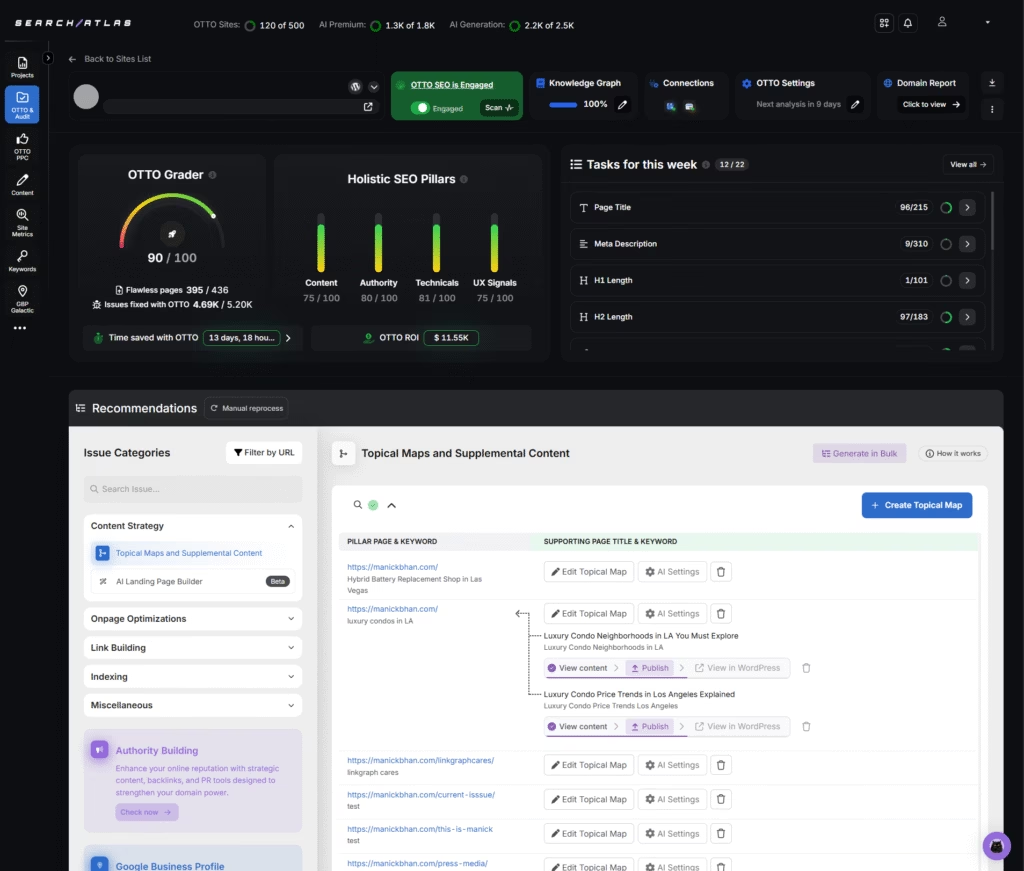
Key features of Search Atlas include keyword research with over 5.2 billion keywords, an LLM visibility tool, AI-powered content creation through Content Genius, technical SEO audits, backlink analysis, and PR outreach. Local SEO capabilities include heatmap visualization, citation management, and regional keyword clustering for multi-location brands.
Compared to KeywordTool.io, Search Atlas provides comprehensive SEO automation that majorly exceeds basic keyword suggestions. KeywordTool.io focuses on extracting autocomplete data from search engines without technical auditing, content optimization, or rank tracking. Search Atlas delivers end-to-end SEO execution through AI automation, eliminating manual workflows required when using KeywordTool.io alongside separate tools for auditing, content, and backlinks.
Search Atlas is the strongest KeywordTool alternative for agencies that require complete keyword intelligence integrated with automated SEO task execution rather than isolated keyword lists.
Search Atlas pricing begins at $99 monthly for the Starter plan with 2,000 tracked keywords and 2 user seats. Growth costs $199 monthly for 3,500 keywords and 3 seats. Pro reaches $399 monthly with 6,000 keywords and 5 seats. Enterprise requires custom quotes for API access and expanded quotas.
Compared to KeywordTool.io Pro Basic at $89 monthly (providing only keyword data without SEO tools), Search Atlas provides complete SEO automation, technical audits, content optimization, and backlink tracking at slightly higher entry costs. The 7-day free trial includes full feature access without credit card requirements.
Pros mentioned in the Search Atlas review include unified automation that reduces tool fragmentation, real-time Google data integrations eliminating reporting delays, OTTO SEO winning Best AI Search Software at Global Search Awards 2025, accurate keyword difficulty scoring through proprietary algorithms, and comprehensive local SEO capabilities across unlimited locations.
Cons of Search Atlas include a learning curve for teams unfamiliar with AI automation workflows and limited social media management compared to platforms specializing in content publishing.
2. Ubersuggest: Best KeywordTool.io Alternative for Beginner Keyword Research & Content Ideas
Ubersuggest is a freemium keyword research platform that provides search volume data, competition analysis, and content suggestions designed for beginners, freelancers, and small businesses entering SEO workflows.
Ubersuggest was acquired by Neil Patel in 2017 and evolved from a simple keyword suggestion tool into an SEO suite that provides keyword ideas, content inspiration, competitor insights, and basic backlink data inside an easy-to-use interface. The tool focuses on simplicity, affordability, and helping users understand where to start with SEO, making it a popular entry-level solution for creators and small teams.
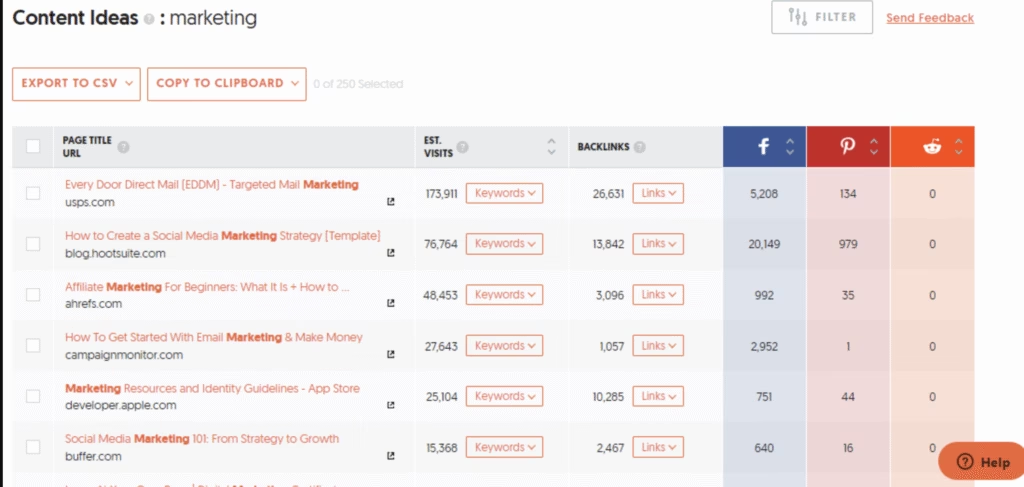
Ubersuggest includes keyword research with AI-generated suggestions, a content gap tool, rank tracking, website audits, competitor analysis, backlink suggestions, and visibility tracking for Google and ChatGPT searches. Users get an AI Writer for content ideas, predictive keyword analytics, and domain-level metrics that assist with content planning.
Ubersuggest works as an alternative to KeywordTool.io because it covers more of the SEO workflow. KeywordTool.io focuses strictly on producing keyword lists, while Ubersuggest extends into rank tracking, content optimization, competitor research, backlink discovery, and site audits.
Ubersuggest is a better KeywordTool.io alternative for beginners who need direction, step-by-step insights, and broader visibility across their website performance instead of just keyword suggestions.
Ubersuggest is a paid tool, although it offers a 7-day free trial. Pricing starts at $12/month for Individual, $20/month for Business, and $40/month for Enterprise, and lifetime plans appear during promotions such as Black Friday.
Compared to KeywordTool.io, which starts at $69/month, Ubersuggest is $49 to $149 cheaper per month, depending on the plan, which makes it one of the most budget-friendly alternatives on the market.
The advantages noted in the Ubersuggest review include affordability, a beginner-focused interface, broad SEO features for the price, and strong customer support.
However, drawbacks of Ubersuggest include less accurate keyword data compared to enterprise tools, slower updates for certain metrics, and more limited depth in backlink and technical SEO insights.
3. Serpstat: Best KeywordTool.io Alternative for All-in-One SEO & Rank Tracking
Serpstat is an all-in-one SEO platform that integrates keyword research, rank trackers, site audits, backlink analysis, and competitor research into a unified dashboard. Serpstat is known for offering enterprise-style functionality at a lower price point than many large competitors, which makes it attractive to growing businesses and agencies.
Serpstat operates across 230+ countries and supports analysis in multiple languages, which enables international SEO campaigns through region-specific keyword data. The platform emphasizes workflow efficiency through batch analysis tools and automated report features.
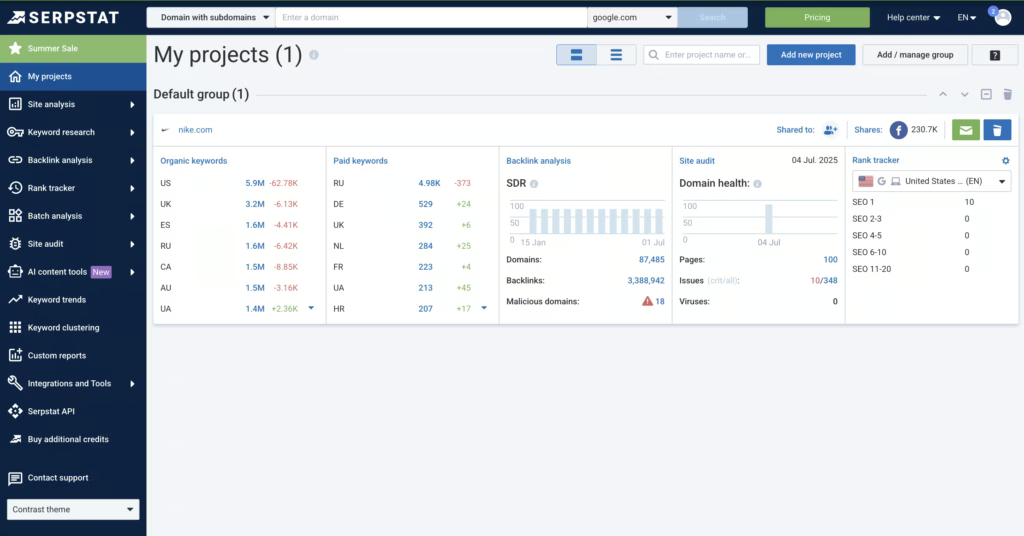
Serpstat includes keyword research, site analysis, rank tracking, backlink analysis, site audits, batch analysis, and AI tools, even on lower plans. Team and Agency tiers add API access, shared access, white-label reporting, scheduled reports, and high-volume crawl and export allowances.
Serpstat supports millions of rows of data, hundreds of thousands of page audits, and thousands of daily search queries, which positions it as a scalable solution for heavy SEO workloads.
Compared to KeywordTool.io, Serpstat combines keyword discovery with competitive analysis and technical optimization, which eliminates the need for multiple subscriptions that KeywordTool.io requires. Serpstat is the stronger Keyword Tool alternative for agencies that manage client campaigns across keyword research, content optimization, and performance trackers.
The regular monthly pricing in Serpstat starts at $69/month for the Individual plan, $149/month for the Team plan, and $349/month for the Agency plan. The KeywordTool.io Pro Basic plan starts at $89/month, which makes Serpstat $20 cheaper at the entry level and significantly more cost-effective when comparing features per dollar.
KeywordTool.io charges more while offering fewer capabilities than Serpstat, since it does not provide rank tracking, backlink tools, site audits, or API-level SEO data.
The upsides noted in the Serpstat review include affordable prices competitive with specialized tools, a comprehensive feature set that reduces tool sprawl, batch analysis capabilities that increase efficiency for large projects, an international database that supports global campaigns, and regular feature updates based on user feedback.
Downsides of Serpstat include a steeper learning curve, a busier interface, and occasional delays in regional keyword database updates.
4. Mangools KWFinder: Best KeywordTool.io Alternative for Long-Tail Keyword Discovery
Mangools KWFinder is a keyword research tool specialized in low-competition long-tail keyword discovery through intuitive difficulty scores and SERP analysis visualizations. KWFinder emphasizes user-friendly design through minimalist interface aesthetics and straightforward metric presentations.
Mangools KWFinder operates as part of the Mangools suite that includes SERPChecker, SERPWatcher, LinkMiner, and SiteProfiler tools accessible through unified subscriptions.
KWFinder provides long-tail keyword discovery, exact search volumes, SEO difficulty scoring, local keyword targeting across 65,000+ locations, SERP snapshots, competitor keyword data, and historical search trends.
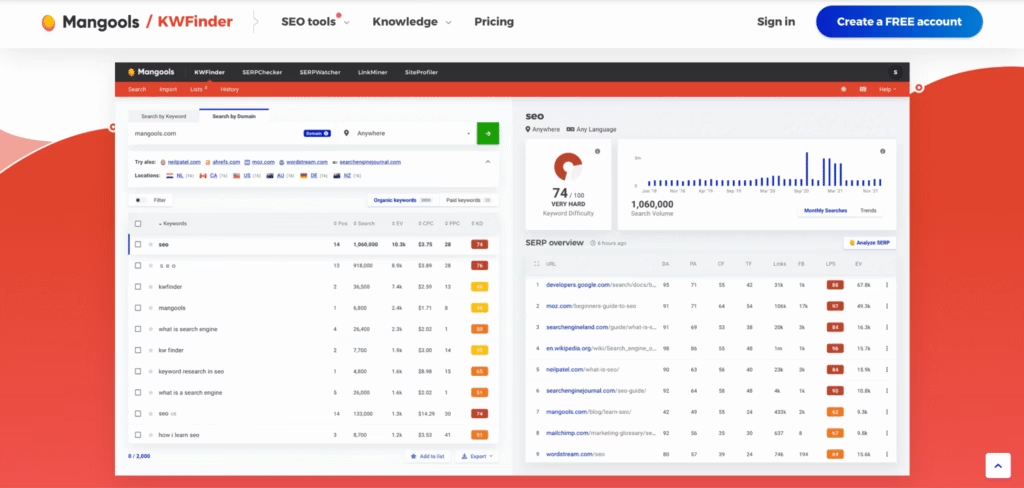
Autocomplete suggestions pull from Google, YouTube, and Bing platforms. The Related Keywords feature expands initial queries into thematic clusters. Historical trend data reveals seasonal patterns and search interest growth.
KWFinder works as an alternative to KeywordTool.io because it provides deeper, more actionable keyword insights rather than simple keyword list expansion. KeywordTool.io focuses mainly on generating lists of autocomplete keywords, while KWFinder adds SEO difficulty, SERP competitiveness, local search targeting, historical trends, and built-in rank tracking and backlink tools.
Mangools KWFinder is the better choice for long-tail keyword research, local keyword analysis, SERP evaluation, and competitor keyword discovery, giving users more strategic context around each keyword.
The regular monthly pricing in Mangools is $31.85 for Basic, $44.85 for Premium, and $83.85 for Agency, which makes it notably cheaper than the $89/month KeywordTool.io Pro Basic plan.
Depending on the tier, KWFinder is $45 to $57 cheaper per month, while offering more value for keyword difficulty scoring, SERP data, and integrated rank tracking that KeywordTool.io does not provide.
The benefits highlighted in the Mangools review are its easy interface, accurate keyword difficulty algorithm, strong long-tail keyword database, and excellent value for everyday SEO tasks. KWFinder is especially appealing for beginners because it removes unnecessary complexity and focuses on the metrics that matter for ranking content.
However, limitations of KWFinder include lower daily lookup limits on entry plans, smaller backlink and keyword databases than enterprise SEO suites, and limited technical SEO features. Overall, KWFinder remains one of the best low-cost alternatives to KeywordTool.io for users focused on long-tail search opportunities and content-driven SEO strategies.
5. Moz: Best KeywordTool.io Alternative for Keyword Difficulty & SERP Analysis
Moz is an SEO software platform that provides keyword research, link analysis, site audits, and rank trackers through tools that emphasize Domain Authority scores and competitive intelligence.
Moz pioneered several industry-standard SEO metrics that include Domain Authority (DA) and Page Authority (PA), which are now outdated but remain widely referenced benchmarks for site strength evaluation. The platform targets agencies, consultants, and enterprise teams that require reliable SEO data for client reports and strategic plans.
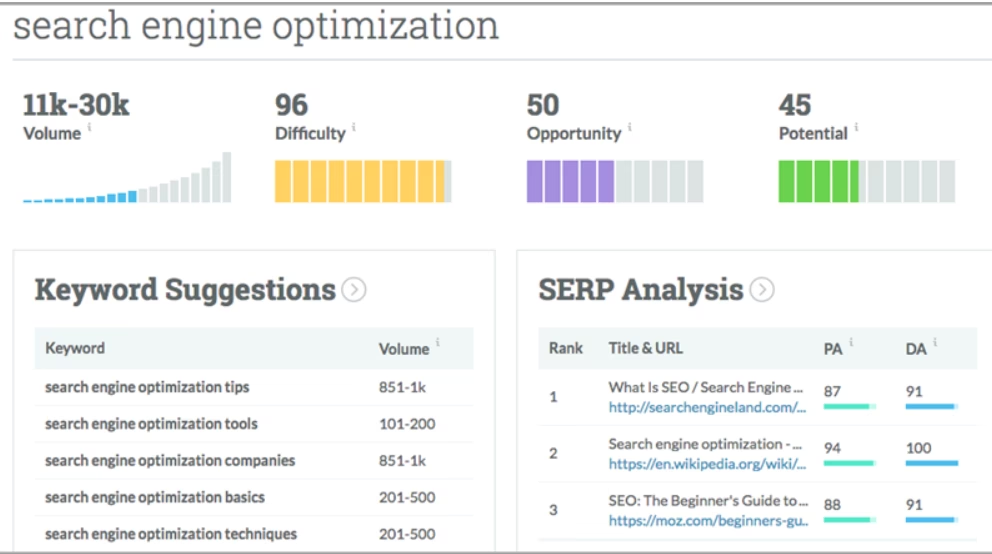
Moz features include Keyword Explorer with 1.25 billion keywords, link analysis through Link Explorer that tracks trillions of links, site crawl audits that identify technical issues, rank trackers that monitor keyword positions, and on-page optimization recommendations through Page Optimization scores.
The Keyword Difficulty metric predicts rank feasibility on a 0-100 scale. SERP Analysis reveals top-rank pages with authority scores and rank factors. Competitive Research tools identify content gaps and backlink opportunities compared to rival domains.
Compared to KeywordTool.io, Moz delivers enterprise-grade SEO intelligence beyond autocomplete keyword extraction. KeywordTool.io focuses narrowly on keyword generation without link analysis, authority metrics, or technical audit capabilities.
Moz combines keyword research with comprehensive site health monitors and competitive benchmarks, which eliminates fragmented workflows inherent to KeywordTool.io use alongside separate tools. Moz is the stronger alternative for agencies that require authoritative domain metrics and client-facing reports alongside keyword discovery.
The regular Moz Pro monthly pricing starts at $49/month for Starter, $99/month for Standard, $179/month for Medium, and $299/month for Large. Compared to KeywordTool.io at $89/month for Pro Basic, Moz is $40 cheaper at the entry level while offering more advanced SERP analysis, keyword difficulty scoring, ranking data, and full site audits.
Higher Moz plans cost more than KeywordTool.io but provide broader SEO capabilities across rank tracking, crawling limits, backlink data, and AI-driven keyword intelligence.
Pros mentioned in the Moz review include industry-standard authority metrics that SEO communities trust, keyword difficulty predictions, comprehensive link intelligence, excellent educational resources that include Whiteboard Friday videos and SEO guides, and reliable customer support.
Cons of Moz include a smaller keyword database (1.25 billion) compared to Search Atlas (5+ billion), higher prices relative to competitors that offer similar feature sets, slower interface load times for large dataset analyses, and limited international coverage compared to global platforms.
6. AnswerThePublic: Best KeywordTool.io Alternative for Search Intent Visualization
AnswerThePublic is a search listening platform that visualizes keyword questions, prepositions, and comparisons extracted from autocomplete data across multiple search engines (Google, Bing, YouTube).
AnswerThePublic transforms raw keyword suggestions into visual maps organized by question types (what, why, when, where, how), prepositions (for, to, with, versus), and alphabetical lists. AnswerThePublic targets content creators, marketers, and strategists who require user intent insights for blog plans, FAQ creation, and customer research workflows.
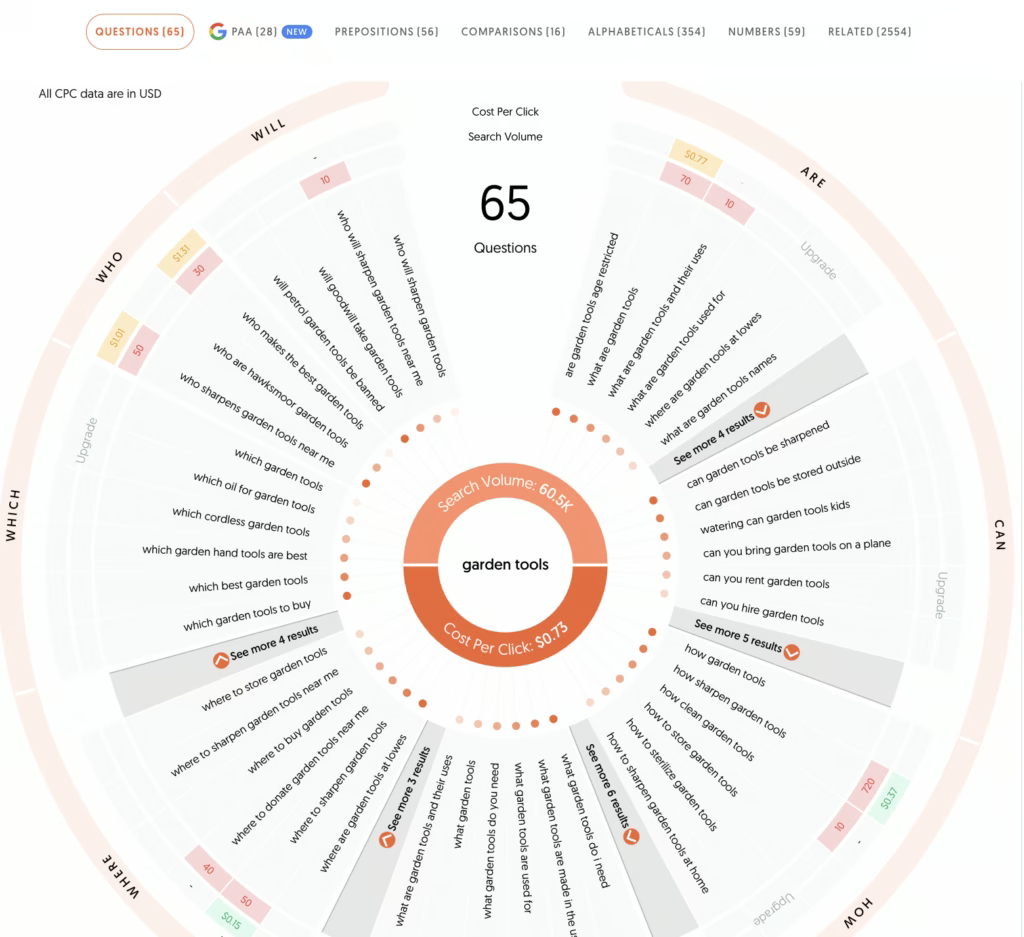
AnswerThePublic provides unlimited keyword searches on paid plans, comparison data that tracks search behavior changes over time, search listen alerts that monitor emerging topics and brand mentions, CSV export capabilities for analysis and reports, and image generation that creates shareable visualization wheels.
The AnswerThePublic platform categorizes results into questions that reveal user information needs, propositions that show contextual relationships, comparisons that identify competitive evaluation queries, and alphabetical lists that provide comprehensive keyword coverage. Users organize research into collections grouped by projects or clients.
Compared to KeywordTool.io, AnswerThePublic emphasizes visual search intent maps rather than raw keyword list generation. KeywordTool.io outputs extensive autocomplete variations without organization by user intent or question types.
AnswerThePublic structures keyword insights around content plan workflows through visual clusters and search behavior analysis. AnswerThePublic is the better KeywordTool.io alternative for content strategists who require question-based keyword discovery and visual intent maps rather than comprehensive search volume datasets.
AnswerThePublic is a paid tool. Regular monthly pricing is $40 for Individual, $98 for Pro, and $198 for Expert. KeywordTool.io Pro Basic costs $89/month, Pro Plus $99/month, and Pro Business $199/month. That means the AnswerThePublic entry plan is US$49 cheaper than KeywordTool.io Pro Basic, while the Pro and Expert tiers sit in the same price band as KeywordTool.io, only $1 lower at each level.
According to the AnswerThePublic review, the main advantages are its intuitive visual interface, strong question and intent discovery, useful alert system for tracking shifts in search behavior, and presentation-ready exports that support client communication and internal buy-in.
Limitations of AnswerThePublic include no rank tracking, no backlink index, no technical site audit, and a narrower role in the SEO stack compared to full suites. It functions best as a complementary research and ideation layer next to tools like KeywordTool.io, not as a replacement for full SEO platforms.
7. Google Trends: Best KeywordTool.io Alternative for Real-Time Search Popularity Tracking
Google Trends is a free web analytics service provided by Google that displays search query popularity trends across time periods, geographic regions, and related topic categories.
The Google Trends platform reveals relative search interest through normalized data on a 0-100 scale, which enables comparison between multiple keywords, tracks seasonal patterns, and identifies emerging topics. Google Trends operates without subscription costs or usage limits, which provides unrestricted access to historical search data that spans decades.
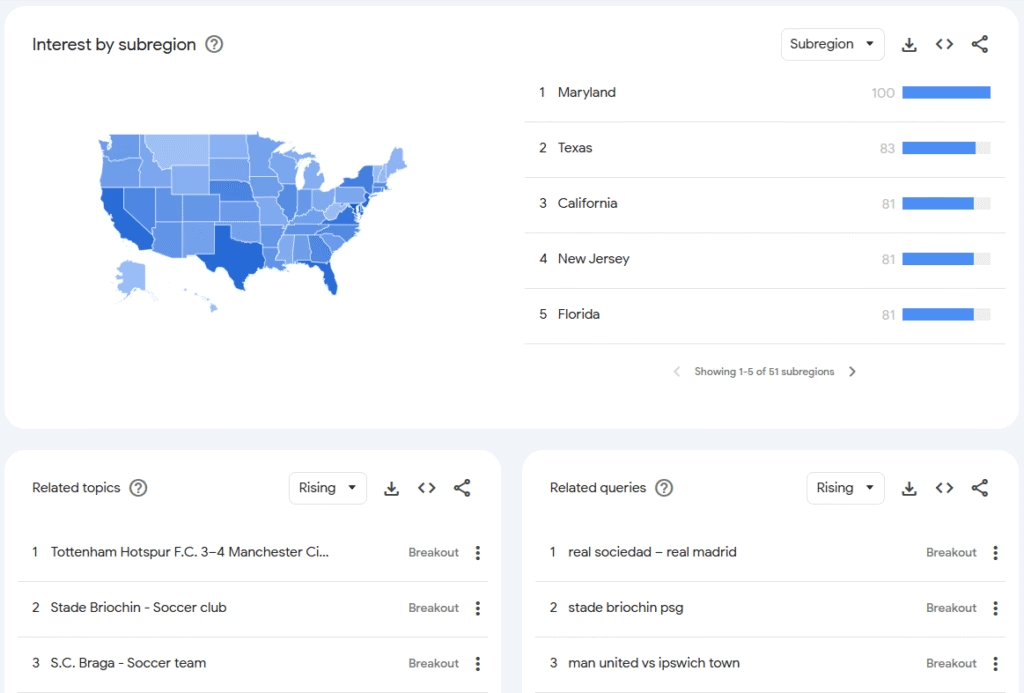
Google Trends features include trend comparison across multiple terms simultaneously, geographic interest maps that show regional popularity variations, related topics and queries that reveal associated search behavior, real-time trend searches that highlight current popular queries, and historical data visualization that tracks interest changes across custom timeframes.
Google Trends segments data by search categories (news, shop, images, YouTube), which enables channel-specific analysis. Breakout metrics identify searches that gain massive popularity percentages.
Compared to KeywordTool.io, Google Trends provides temporal and geographic search interest analysis without keyword variation generation. KeywordTool.io extracts autocomplete suggestions but lacks historical trend visualization or regional comparison capabilities.
Google Trends reveals whether keywords gain or lose popularity, identifies seasonal fluctuation patterns, and compares relative interest between rival terms. Google Trends is a better KeywordTool.io alternative for content strategists who require trend validation and time decisions rather than keyword list expansion.
Google Trends pricing is free without restrictions, subscriptions, or premium tiers. The service requires no account creation for basic usage, though a Google account login enables saved searches and customized alerts. Compared to KeywordTool.io, which requires $89 monthly minimum for actionable data, Google Trends provides unrestricted trend analysis at zero cost.
Pros noted in Google Trends reviews include completely free unlimited access, official Google search data that ensures accuracy, a simple interface that requires no technical expertise, valuable historical trend visualization that spans years or decades, and a geographic breakdown that reveals regional interest variations.
Cons of Google Trends include the absence of absolute search volume numbers that provides only relative interest scores, limited keyword suggestion capabilities compared to dedicated research tools, no competition or difficulty metrics for SEO plans, data normalization that obscures small search volumes, and a lack of export functionality for large dataset analysis.
8. Keywords Everywhere: Best KeywordTool.io Alternative for On-Page Keyword Metrics
Keywords Everywhere is a browser extension that displays search volume, CPC, and competition data directly on search engine results pages and keyword research platforms (Google, Bing, Amazon, YouTube, eBay).
Keywords Everywhere targets marketers and SEOs who require quick keyword insights during regular browsing and research activities without platform switches.
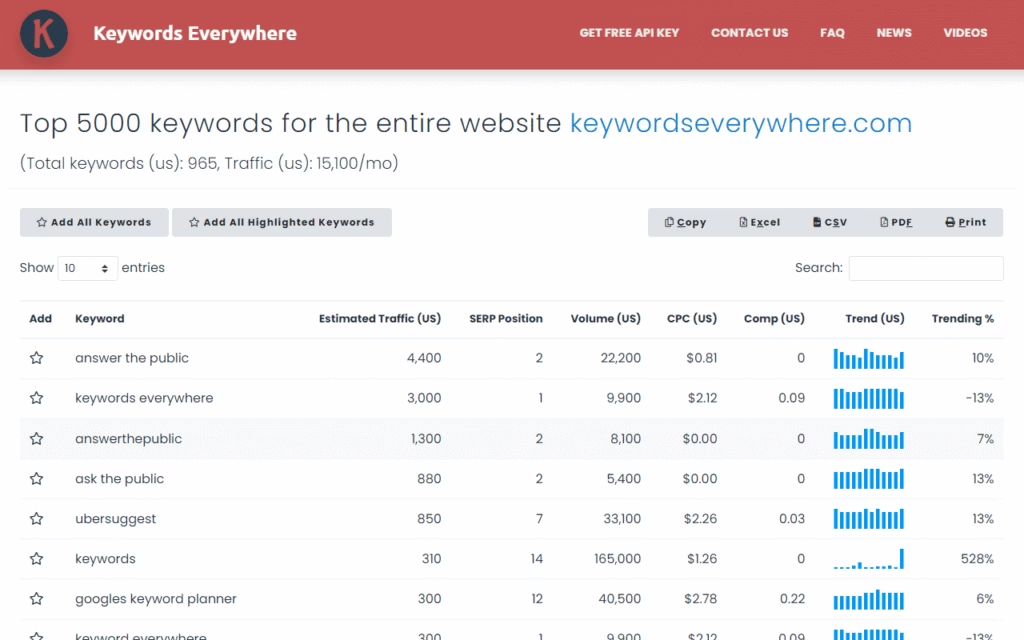
Keywords Everywhere provides a search volume display that overlays organic search results, cost-per-click (CPC) data that reveals paid advertisement values, competition metrics that indicate keyword difficulty, a related keywords panel that shows additional opportunities, and trend keywords sections that identify popular searches.
The extension integrates with multiple websites that include Google Search Console, Moz, Majestic, and competitor platforms, which enriches existing interfaces with additional keyword intelligence.
Compared to KeywordTool.io, Keywords Everywhere delivers contextual keyword metrics during natural research workflows rather than through dedicated platform interfaces. KeywordTool.io requires navigation to separate websites and conducting specific searches, while Keywords Everywhere embeds data directly into existing browse experiences.
Keywords Everywhere is the better KeywordTool.io alternative for researchers who require lightweight keyword intelligence without committing to comprehensive SEO platforms or monthly subscriptions.
Keywords Everywhere uses annual billing. The Bronze plan costs $84 per year, which results in a monthly equivalent of $7 and provides 100000 credits per year. The Silver plan costs $168 per year, which results in a monthly equivalent of $14 and provides 400000 credits per year. The Gold plan costs $480 per year, which results in a monthly equivalent of $40 and provides 2000000 credits per year. The Platinum plan costs $1440 per year, which results in a monthly equivalent of $120 and provides 8000000 credits per year. Keywords Everywhere stays far below KeywordTool.io Pro pricing.
Strengths mentioned in the Keywords Everywhere review include extremely low cost per keyword lookup compared to subscription platforms, convenient browser integration that eliminates platform switches, compatibility across multiple search engines and websites, no recurring subscriptions or automatic renewals, and simple installation that requires minimal technical knowledge.
Limitations of Keywords Everywhere include the absence of a dedicated dashboard, no deep keyword clustering, no technical SEO tools, and no large-scale keyword export features that KeywordTool.io offers. It is best used as a companion tool for real-time insights rather than a full SEO research suite.
9. KeywordShitter: Best KeywordTool.io Alternative for Bulk Keyword Expansion
KeywordShitter is a bulk keyword expansion tool that produces large volumes of autocomplete-based keyword variations through rapid extraction processes. KeywordShitter targets users who require high-volume keyword lists for clustering, content ideation, and search landscape mapping across broad topical categories.
KeywordShitter focuses on automated keyword extraction at scale, which positions it as a technical resource for practitioners who prioritize raw data output rather than interface complexity.

KeywordShitter features include continuous keyword extraction, difficulty scoring outputs, search volume datasets, cost-per-click values, all-in-title counts, and top 100 SERP reports. KeywordShitter provides keyword difficulty on a 1–10 scale, which supports fast feasibility checks for content targeting.
KeywordShitter relies on a token system through Shit Coins for all premium data actions. Users acquire search volume data, SERP outputs, backlink counts, and title match analysis through a per-keyword cost structure. KeywordShitter maintains a minimalist workflow that prioritizes extraction speed and data density over interface features.
KeywordShitter operates as an alternative to KeywordTool.io because it generates significantly larger keyword sets through automated expansion loops. KeywordTool.io focuses on guided keyword research across multiple platforms, while KeywordShitter extends into unlimited extraction volumes that support high-scale content operations.
KeywordShitter functions as the stronger alternative for bulk keyword expansion, quick SERP sampling, and mass keyword list creation. KeywordShitter produces raw keyword data for clustering workflows (topic modeling, silo structuring, competitive mapping).
KeywordTool.io produces organized keyword sets with structured metrics across separate modules. KeywordShitter is the better KeywordTool io alternative for users who require maximum keyword volume at minimal cost.
KeywordShitter operates through a micro-cost model. Keyword difficulty costs $0.06 per keyword or 5 Shit Coins per keyword. Search volume and CPC data cost $0.0012 per keyword or 0.1 Shit Coin per keyword. Top 100 SERP results cost $0.012 per keyword or 1 Shit Coin per keyword. Full backlink SERP reports cost $0.06 per keyword or 5 Shit Coins per keyword. All-in-title counts cost $0.024 per keyword or 2 Shit Coins per keyword.
KeywordShitter is cheaper than KeywordTool.io Pro Basic at $89 per month. Users acquire high-volume datasets for a fraction of the cost, which places KeywordShitter in the ultra-low-cost category for raw keyword extraction.
According to the KeywordShitter review, the advantages include low per-keyword pricing, unrestricted extraction volumes, simple workflows that reduce setup time, compatibility with high-volume clustering processes, and the ability to generate massive keyword lists for SEO research.
KeywordShitter disadvantages include no rank tracking, no backlink index, no site audit, no competitor analysis suite, and no historical trend datasets. KeywordShitter functions as a specialized expansion tool rather than a comprehensive SEO platform, which positions it as a companion resource next to KeywordTool.io rather than a full replacement for end-to-end SEO operations.
10. SpyFu: Best KeywordTool.io Alternative for Competitor Keyword Analysis
SpyFu is a competitive intelligence platform that reveals competitors’ organic and paid keyword strategies through historical rank data, advertisement campaigns, and backlink profiles. SpyFu maintains extensive databases that track keyword ranks across millions of domains that span over 15 years, which enables longitudinal analysis of competitor SEO and PPC evolution.
SpyFu targets agencies, marketers, and businesses that require competitive insights for strategy development, keyword gap identification, and advertisement campaign optimization.
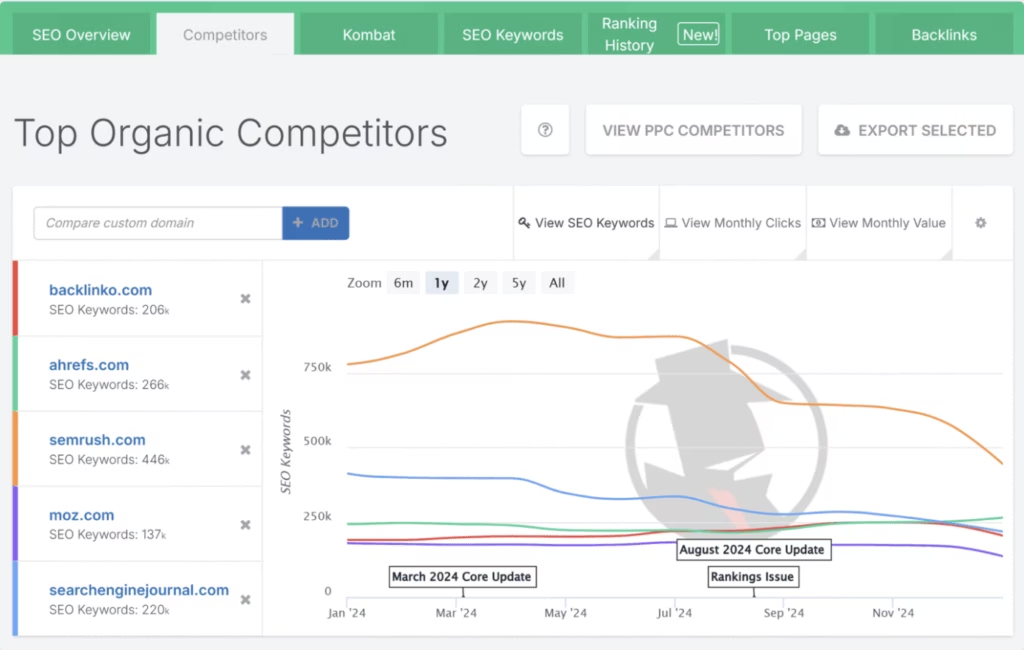
SpyFu features include competitor keyword research that reveals every keyword competitors rank for organically, PPC research that displays historical ad copy and bid strategies, backlink analysis that identifies referring domains and anchor text patterns, keyword overlap reports that show shared and unique keywords between domains, and rank history visualization that tracks position changes across years.
The SpyFu AdWords Advisor recommends profitable keywords based on competitor success patterns. Domain comparison tools benchmark multiple competitors simultaneously across organic and paid channels.
Compared to KeywordTool.io, SpyFu emphasizes competitive intelligence and historical data analysis over raw keyword generation. KeywordTool.io extracts autocomplete suggestions without competitor strategy reveals, advertisement history, or backlink profiles. SpyFu enables reverse-engineering of competitor success through a comprehensive historical track and strategic analysis.
SpyFu is the better KeywordTool alternative for marketers who require competitive intelligence and historical performance data rather than isolated keyword lists.
SpyFu pricing starts at $39 monthly for Basic plans that include unlimited keyword searches and 5,000 monthly results per report, $119 monthly for Pro + AI, and $249 monthly for the Team/Agency plan. Compared to KeywordTool.io at $89 monthly for basic keyword data, SpyFu provides competitive intelligence and PPC research at comparable or lower costs that depend on plan selection.
Pros noted in the SpyFu review include extensive historical data that reveals long-term competitor strategies, affordable prices compared to enterprise platforms, comprehensive PPC advertisement intelligence that includes ad copy archives, useful competitor comparison features that benchmark multiple domains, and a straightforward interface that requires minimal learn curves.
Cons of SpyFu include a smaller keyword database, occasional data accuracy issues (particularly for smaller websites), limited technical SEO audit capabilities, slower process speeds for large competitive analyses, and fewer international database options compared to global platforms.
11. Wordtracker: Best KeywordTool.io Alternative for Commercial Intent Keywords
Wordtracker is a keyword research platform that provides commercial-intent data, long-tail discovery, and competitor keyword extraction for SEO workflows. Wordtracker uses proprietary search datasets to generate granular keyword lists that show actual query variations without grouped or banded terms.
Wordtracker features keyword discovery, domain-level keyword extraction, ranking lists, SERP previews, and competition metrics. Wordtracker uses Search Console integrations, lateral keyword expansion, and detailed SERP difficulty scoring. Wordtracker provides up to 10,000 results per search in higher tiers and expands keyword sets across multiple regions (United States, United Kingdom, Australia).
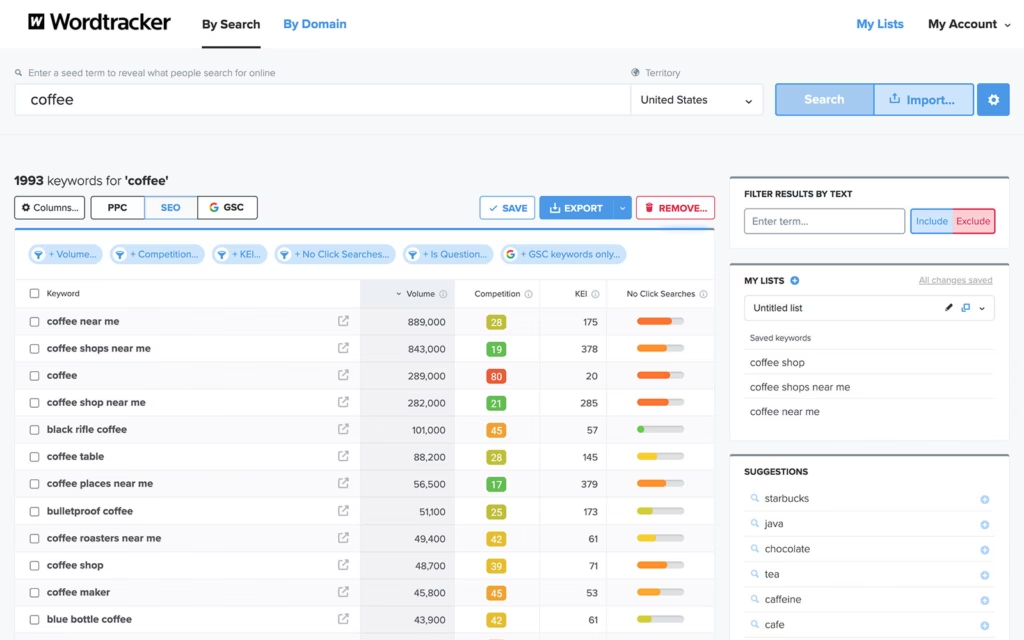
Wordtracker functions as a KeywordTool.io alternative because the platform produces deeper commercial-intent data and actual, ungrouped keyword variations for long-tail research. Wordtracker outperforms KeywordTool.io in domain keyword extraction, rank tracking, and competition metrics.
KeywordTool.io focuses on autocomplete datasets, while Wordtracker expands datasets into PPC indicators, intent filters, and competitor lists (SEO, PPC, competitor extraction). Wordtracker fits users who prioritize commercial keyword discovery across multiple territories, while KeywordTool.io fits users who need fast autocomplete expansions.
Wordtracker pricing starts at $24 per month for Bronze, $69 per month for Silver, and $99 per month for Gold. Wordtracker is more expensive than KeywordTool.io in entry tiers by $5 to $29 per month, depending on the plan comparison. Wordtracker produces higher data volume per search and advanced competitive metrics in exchange for higher pricing in upper tiers.
According to the Wordtracker review, the advantages appear in commercial-intent discovery, domain-based keyword extraction, and granular SERP difficulty scoring (ranking lists, competition metrics, domain analysis).
The Wordtracker disadvantages appear in limited keyword quotas per search and higher pricing for users who want large daily keyword pulls. Wordtracker suits SEO teams that prioritise competitor visibility, transactional keyword opportunities, and territory-specific datasets.
12. AccuRanker: Best KeywordTool.io Alternative for Precise Rank Tracking & Keyword Monitoring
AccuRanker is a specialized rank tracker platform that delivers real-time keyword position monitors with on-demand updates, granular location targets, and advanced segmentation capabilities. AccuRanker focuses on rank track precision and speed, and provides daily automated checks plus manual refresh options that enable instant SERP verification.
AccuRanker targets agencies, enterprise SEO teams, and professionals that require accurate keyword monitors across large portfolios without technical audits or content optimization features.
AccuRanker features include on-demand rank refreshes that enable instant SERP updates, desktop and mobile trackers across multiple devices, hyper-local rank monitors down to ZIP code levels, Share of Voice calculations that measure visibility percentage across keyword sets, SERP feature trackers that identify featured snippets and local pack appearances, and competitor benchmarks that compare ranks against rival domains.
The platform integrates with Google Search Console, Adobe Analytics, and Looker Studio for unified reports. API access enables custom integrations and automated workflows.
Compared to KeywordTool.io, AccuRanker provides comprehensive rank trackers and monitors without keyword generation capabilities. KeywordTool.io focuses on keyword discovery without tracking rank positions, performance changes, or competitive visibility.
AccuRanker excels at SEO result measurement and keyword performance tracking over time. AccuRanker is the better KeywordTool alternative for teams that require precise rank measurement and performance trackers rather than keyword research and discovery workflows.
AccuRanker pricing starts at €249 per month for Professional with 2,000 keywords and increases to €849 per month for Expert with 10,000 keywords. AccuRanker costs more than KeywordTool.io by €150 to €700 per month, depending on the plan comparison. AccuRanker Enterprise offers custom pricing for more than 25,000 keywords and includes raw SERP HTML, unlimited users, and enhanced data speed.
AccuRanker operates as a premium rank tracking suite with higher monthly pricing that reflects its tracking frequency and data precision.
Pros identified in the AccuRanker review include fastest rank updates with on-demand refresh capabilities, exceptional accuracy validated against manual checks, granular location targets that include ZIP code specificity, Share of Voice metrics that quantify competitive visibility, a clean interface that enables rapid data analysis, and reliable integration options for report workflows.
Cons of AccuRanker include high prices relative to platforms that bundle rank track with broader SEO tools (Search Atlas, SE Ranking, Semrush), absence of keyword research features that require separate tool subscriptions, no technical audits or content optimization capabilities, limited backlink analysis functionality, and steep per-keyword costs at higher volume tiers.
13. SE Ranking: Best KeywordTool.io Alternative for Rank Tracking & Traffic Forecasting
SE Ranking is an all-in-one SEO platform that provides keyword tracking, website audits, competitor research, AI visibility analysis, and traffic forecasting for SEO teams. SE Ranking operates across 188 country databases and processes 5.4 billion keywords through machine-learning algorithms that enhance accuracy across ranking datasets and competitive insights.
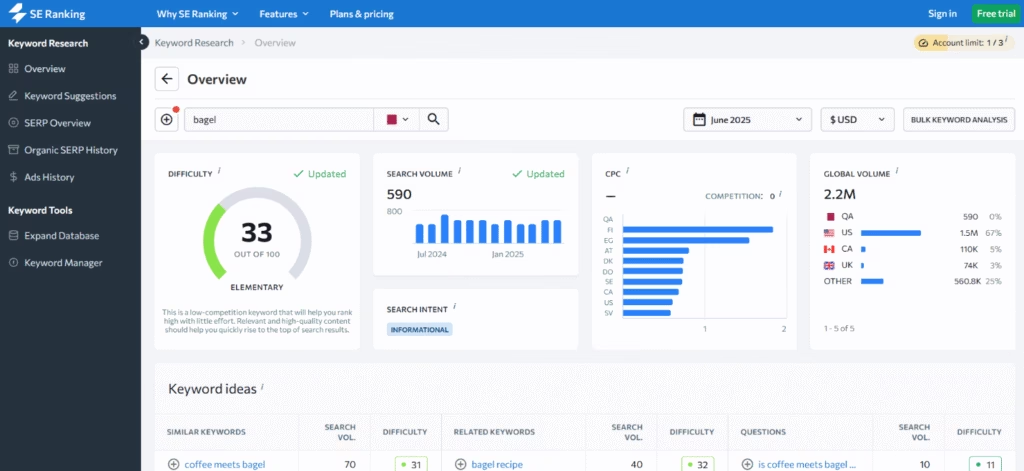
SE Ranking features daily rank tracking across Google Top 100, website audits, backlink monitoring, keyword research, content optimization, SERP analysis, AI Results Tracker, AI Overviews Tracker, ChatGPT Tracker, Looker Studio integration, and multi-project management for teams. SE Ranking Business expands reach through unlimited projects, large-scale audits, historical keyword datasets, API access, and advanced reporting functions.
SE Ranking functions as a KeywordTool.io alternative because SE Ranking delivers rank tracking, full-suite SEO monitoring, and AI visibility data that KeywordTool.io does not provide.
SE Ranking tracks daily rankings, estimates Share of Voice, and forecasts traffic outcomes, while KeywordTool.io focuses on autocomplete keyword extraction without monitoring, forecasting, or technical evaluation. SE Ranking suits teams that require rank precision, project-level reporting, and AI search visibility tracking across multiple markets.
SE Ranking pricing starts at $65 per month for Essential with 500 daily-tracked keywords. SE Ranking Pro costs $119 per month with 2,000 keywords and Looker Studio integration. SE Ranking Business costs $259 per month with 5,000 keywords, unlimited projects, historical datasets, and API access.
SE Ranking costs more than KeywordTool.io at entry and mid tiers, but SE Ranking provides ranking data, technical audits, AI visibility trackers, and broader analytics functions that KeywordTool.io does not offer.
Advantages noted in the SE Ranking review relate to daily keyword tracking accuracy, large keyword databases, AI visibility tools, expanded country coverage, and strong UX (user experience) for multi-project environments.
Disadvantages of SE Ranking appear in higher monthly pricing on upper tiers and reduced keyword quotas for Essential users. SE Ranking fits agencies and enterprise teams that manage large keyword portfolios and require integrated tracking systems.
14. Semrush: Best KeywordTool.io Alternative for Comprehensive Keyword & Domain Analysis
Semrush is an enterprise market platform that centralizes SEO, PPC, content marketing, social media management, and competitive research into a unified subscription designed for agencies and large organizations that manage complex digital strategies. Semrush was acquired by Adobe in November 2025.
Semrush maintains databases that exceed 26.4 billion keywords and 43 trillion backlinks, and provides comprehensive coverage across 142 countries and multiple languages. Semrush targets digital market teams that require integrated workflows that span organic search, paid advertisements, and content production.
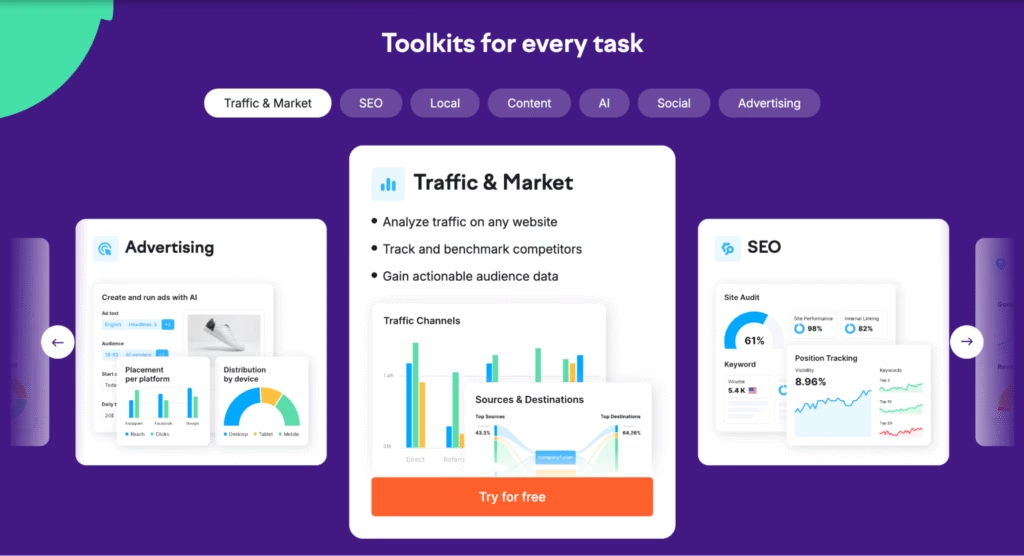
Semrush features include the Keyword Magic Tool that generates millions of related terms from seed keywords, Position Trackers that monitor ranks across locations and devices, Site Audit that identifies technical SEO issues and optimization priorities, Backlink Analysis that reveals link profiles and opportunities, Content Marketing Platform that manages editorial calendars and SEO briefs, and Advertisement Research that uncovers competitor PPC strategies.
The Semursh AI SEO Toolkit tracks visibility across ChatGPT, Google AI Overviews, and Perplexity. Topic Research tool identifies trend content angles. Keyword Gap analysis reveals competitor rank advantages.
Compared to KeywordTool.io, Semrush provides enterprise-scale digital market intelligence beyond keyword extraction. KeywordTool.io focuses narrowly on autocomplete suggestions without competitive analysis, PPC research, content plans, or technical audits.
Semrush eliminates tool fragmentation through comprehensive feature integration across SEO, content, and advertisement workflows. Semrush is a possible KeywordTool alternative for organizations that require complete market intelligence and multi-channel campaign management, rather than standalone keyword lists, but at a higher cost.
Semrush pricing starts at $139.95 monthly for Pro plans that include 500 tracked keywords and 5 projects, $249.95 monthly for Guru with 1,500 keywords and 15 projects, and $499.95 monthly for Business that supports 5,000 keywords and 40 projects.
Compared to KeywordTool.io at $89 monthly, Semrush costs 57% more for entry-level plans but provides broader functionality across SEO, PPC, content, and social media management.
Pros mentioned in the Semrush review include a big keyword database that provides comprehensive coverage, competitive intelligence that reveals rival strategies, integrated PPC and content tools that reduce platform switches, and strong educational resources that include certifications and webinars.
Cons of Semrush include higher prices that restrict access for small businesses, a complex interface that overwhelms new users, credit-based limitations on some features, and slower performance for large dataset analyses compared to specialized tools.
15. Soovle: Best KeywordTool.io Alternative for Multi-Engine Keyword Suggestions
Soovle is a free keyword research tool that aggregates autocomplete suggestions from multiple search engines (Google, Bing, Yahoo, YouTube, Amazon, Wikipedia, Answers.com) simultaneously within a single interface.
Soovle displays results in real-time as users type, which provides comparative insights across different platforms and user intents. Soovle targets content creators and marketers who require quick keyword validation across diverse channels without subscription costs or registration requirements.

Soovle provides multi-engine autocomplete aggregation that displays suggestions from 7+ sources, real-time results that update continuously during typing, drag-and-drop keyword saves that organize ideas into collections, CSV export that downloads compiled keyword lists, and completely free operation without usage limits or premium tiers.
The visual interface in Soovle arranges suggestions by source platform, which enables quick comparison between search engine queries, shop searches, and question-based content needs (Wikipedia, Answers.com).
KeywordTool.io provides search volume, competition metrics, and trend analysis unavailable in Soovle. Soovle is the better KeywordTool alternative for users who require quick cross-platform keyword validation and brainstorming without analytical depth or budget allocation.
Soovle pricing is free without subscriptions, premium tiers, or usage restrictions. The platform requires no account creation or credit card information. Users access complete functionality immediately without trial limitations or feature locks.
Compared to KeywordTool.io at $89 monthly minimum, Soovle eliminates all keyword research costs while providing unique multi-platform comparison capabilities unavailable in single-source tools.
Pros highlighted in the Soovle review include completely free unlimited access, a unique multi-platform comparison that shows diverse user intents, a simple interface that enables immediate usage without training, useful for identification of platform-specific keyword opportunities (Amazon products, YouTube videos), and no registration requirements that protect privacy.
Cons of Soovle include the absence of search volume data that requires external verification, no competition or difficulty metrics for rank assessment, limited keyword depth compared to dedicated research platforms, basic export functionality that lacks advanced filters, and occasional performance issues during high-traffic periods.
16. Ahrefs: Best KeywordTool.io Alternative for Keyword Difficulty & Click Data Insights
Ahrefs is an SEO intelligence platform that provides keyword research, backlink analysis, competitor research, and rank trackers through databases that contain 35 trillion backlinks and 19.4 billion keywords across 243 countries.
Ahrefs emphasizes backlink intelligence as its core strength while it expands into comprehensive SEO tools that include content research, site audits, and rank monitors. Ahrefs targets SEO professionals, agencies, and enterprises that require deep competitive analysis and historical data that spans years.
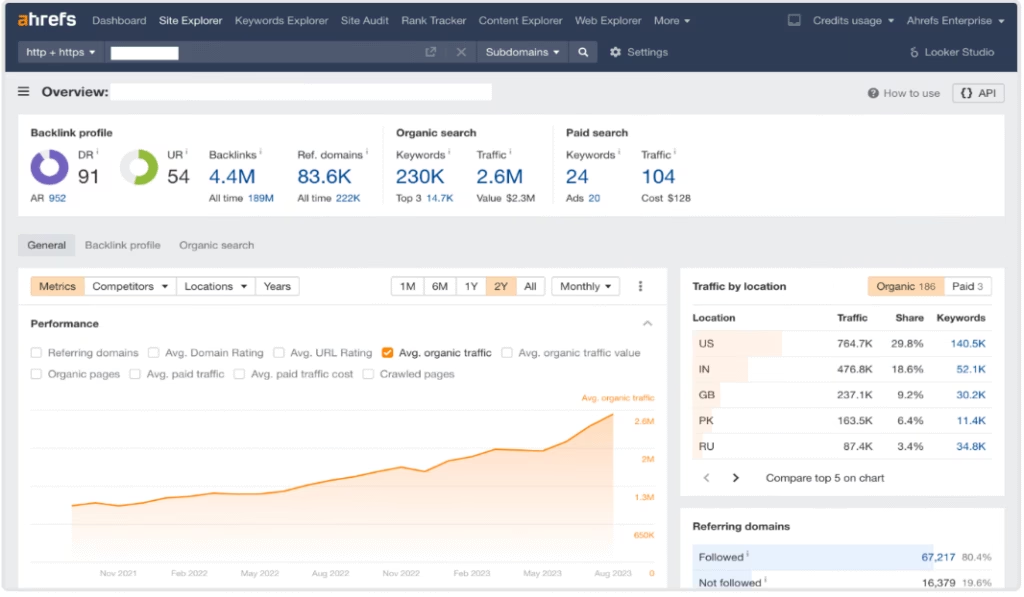
Ahrefs features keyword explorer with difficulty score, click-stream data that shows how many users click results after search, backlink gap analysis, competitor domain research, site audit tools, SERP overview metrics, traffic potential estimates, and historical keyword ranking data.
Ahrefs includes metric outputs such as Keyword Difficulty (0-100 scale), Estimated Clicks, Traffic Value (USD equivalent), and Referring Domains counts. The platform supports large export volumes, API access, and project management across multiple websites.
Ahrefs functions as a KeywordTool.io alternative because the platform provides deeper keyword intelligence and click-data metrics that KeywordTool.io does not offer.
KeywordTool.io focuses on long-tail keyword suggestion generation, while Ahrefs emphasises keyword difficulty measurement, click-data capture, and massive backlink analysis. Ahrefs is the stronger alternative for users who require ranking feasibility analysis, traffic value estimation, backlink benchmarking, and click-stream insight.
Ahrefs pricing starts at $129 monthly for the Lite plan, $249 monthly for the Standard, $449 monthly for the Advanced, and $1,499 monthly for the Enterprise. Free Ahrefs Webmaster Tools provides limited Site Explorer and Site Audit access for verified site owners.
Compared to KeywordTool.io at $89 monthly, Ahrefs costs 45% more for entry-level plans but provides deeper SEO intelligence across backlinks, content, and competitive analysis.
The advantages noted in the Ahrefs review include one of the largest backlink indexes, highly accurate keyword difficulty scores, click-data estimates that aid in traffic forecasting, broad SERP overview functionality, and robust competitor domain analytics.
Disadvantages of Ahrefs include higher monthly costs, steep learning curve for new users, usage credit limits on lower plans, and the absence of a fully free trial period. Ahrefs fits advanced SEO teams and agencies that require in-depth keyword scoring and click-stream data rather than simple suggestion lists.
17. Google Keyword Planner: Best KeywordTool.io Alternative for Paid Search Keyword Data
Google Keyword Planner is a free keyword research tool integrated within Google Ads that provides search volume estimates, competition levels, and bid range suggestions designed for PPC campaign plans and optimization.
Google Keyword Planner delivers data directly from the Google search engine, which ensures accuracy for paid advertisement strategies while providing useful insights for organic SEO plans. Google Keyword Planner targets advertisers, marketers, and businesses that require official Google search data without subscription costs.
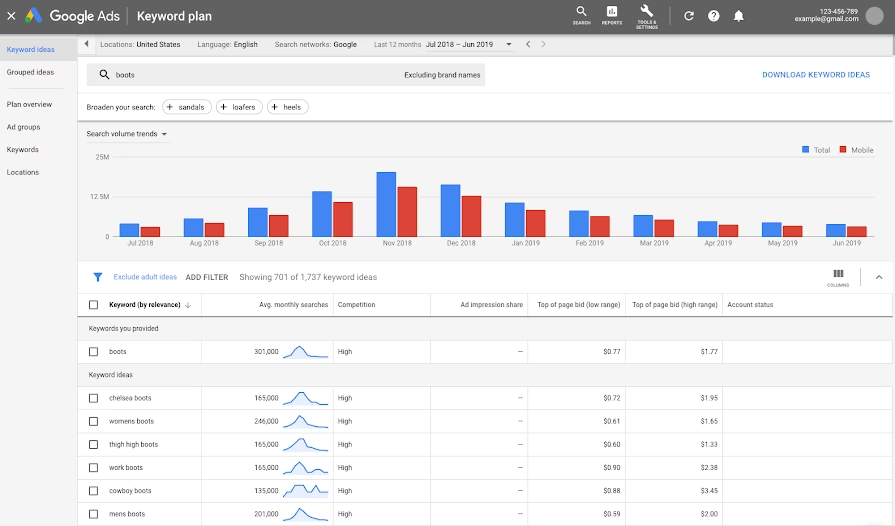
Google Keyword Planner features include keyword idea generation that reveals related terms and search volumes, search volume forecasts that predict traffic across date ranges, competition analysis that indicates advertiser saturation levels, bid estimates that show average cost-per-click ranges for budget plans, and location-based targets that filter keywords by geographic regions. Historical metrics display seasonal trends and search interest changes.
The tool integrates directly with Google Ads campaigns, which enables seamless keyword implementation into advertisement strategies.
Compared to KeywordTool.io, Google Keyword Planner provides official Google search data completely free, while KeywordTool.io requires $89 monthly for comparable information. KeywordTool.io generates more extensive long-tail variations and supports multiple platforms (YouTube, Amazon, Bing) beyond Google.
Google Keyword Planner works as an alternative to Keyword Tool for advertisers that require accurate Google search data and budget forecasts without subscription costs, particularly when the focus is on paid search campaigns.
Google Keyword Planner pricing is free for all users with Google Ads accounts, which requires no minimum spend or campaign activation. Non-advertise users access limited data that shows volume ranges rather than exact numbers until paid campaign activation.
Compared to KeywordTool.io at $89 monthly minimum, Google Keyword Planner eliminates keyword research costs entirely while providing authoritative data directly from Google’s search engine.
Pros mentioned in the Google Keyword Planner review include completely free access without subscriptions, official Google data that ensures accuracy for search volumes, direct integration with Google Ads that simplifies campaign setup, useful bid estimates for budget plans, and a simple interface that requires minimal technical knowledge.
Cons of Google Keyword Planner include limited keyword suggestions compared to third-party tools, volume ranges rather than exact numbers for non-advertisers, lack of competitor analysis features, no difficulty scores for organic SEO plans, and restriction to Google search without YouTube or Amazon coverage.
18. TopicRanker: Best KeywordTool.io Alternative for Keyword Validation & SERP Opportunity Scoring
TopicRanker is a SERP-gap analysis platform that identifies low-competition keywords through systematic evaluation of weaknesses on ranking pages. TopicRanker analyzes title mismatches, thin content, outdated results, and irrelevant page structures, which enables precise keyword validation before content creation.
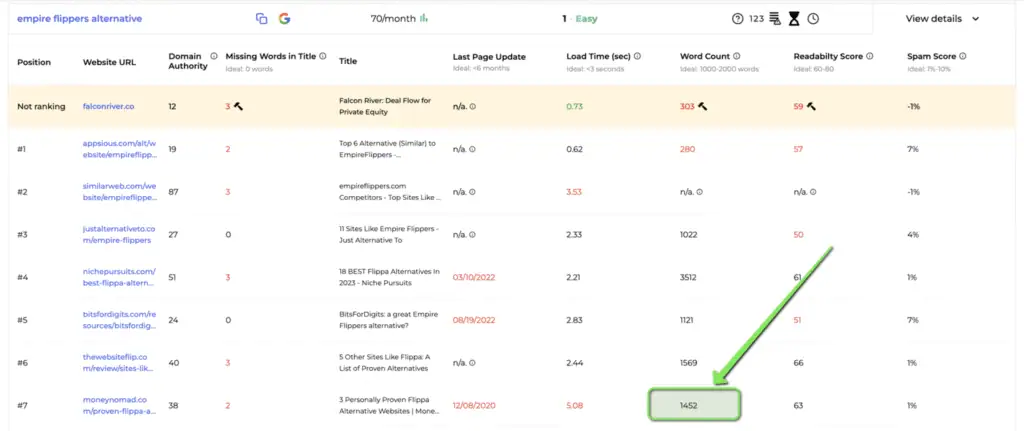
TopicRanker focuses on structural SERP issues rather than superficial keyword difficulty scores, which positions the platform as a diagnostic keyword tool.
TopicRanker provides Low-Hanging-Fruit analysis, SERP weakness detection, AI-generated title suggestions, AI-assisted content outlines, AI-powered blog drafts, and AI-enhanced meta descriptions. TopicRanker produces keyword reports that highlight weak competitors, content gaps, and technical vulnerabilities.
TopicRanker exports reports to XLS and PDF formats for workflow handoff (writers, editors, SEOs). TopicRanker offers 1:1 keyword selection support for users who require manual review.
TopicRanker operates as a KeywordTool.io alternative because TopicRanker evaluates SERP issues, while KeywordTool.io outputs suggestion lists without SERP diagnostics. KeywordTool.io provides long-tail keyword expansions, while TopicRanker identifies ranking feasibility through direct SERP weakness scoring.
TopicRanker is the better option for users who require keyword validation, competitor weakness detection, and opportunity analysis (thin content, outdated results, title mismatch). KeywordTool.io fits users who require simple keyword lists without strategic SERP inspection.
TopicRanker pricing starts at $99 per month for the Basic plan with one domain and three reports per month. TopicRanker Premium costs $149 per month and expands domains to three while removing keyword limits inside each report. TopicRanker does not provide larger tiers. TopicRanker is $10 more expensive per month than the KeywordTool.io Pro Basic plan at $89, but TopicRanker provides SERP-gap validation that KeywordTool.io does not provide.
According to the TopicRanker review, the advantages include identification of weak SERPs, discovery of low-competition terms, structured AI briefs that increase writing speed, and domain-based analysis that isolates feasible keywords.
TopicRanker disadvantages include limited transparency in certain metrics, higher cost compared to simpler keyword expanders (Keywords Everywhere, Keyword Shitter, KeywordTool.io), and performance that depends on accurate implementation of SERP-gap insights.
19. SEO PowerSuite: Best KeywordTool.io Alternative for Desktop SEO & Rank Analysis
SEO PowerSuite is a desktop SEO software bundle that provides keyword research, rank trackers, site audits, and backlink analysis through four integrated applications (Rank Tracker, Website Auditor, SEO SpyGlass, LinkAssistant) installed locally rather than cloud-based.
The SEO PowerSuite platform operates without monthly subscriptions through perpetual licenses with optional annual updates, which target SEO professionals who require unlimited usage without credit restrictions or data caps. SEO PowerSuite emphasizes data ownership and offline functionality through local installations.
SEO PowerSuite features include Rank Tracker, which monitors unlimited keywords across search engines without position caps, Website Auditor, which analyzes on-page SEO and technical issues, SEO SpyGlass, which reveals backlink profiles and competitor link strategies, and LinkAssistant, which manages outreach campaigns and partnership opportunities.
The Rank Tracker component pulls keyword suggestions from 20+ sources (Google, Bing, Amazon, YouTube) and tracks positions without daily limits. Keyword groups and clusters organize research into campaigns and content plans.
Compared to KeywordTool.io, SEO PowerSuite provides comprehensive desktop SEO functionality without recurring subscriptions or usage caps. KeywordTool.io operates through cloud-based access with monthly fees and feature restrictions. SEO PowerSuite enables unlimited keyword research, rank trackers, and audits through one-time licenses.
SEO PowerSuite is a better-suited alternative to KeywordTool for professionals who require unrestricted usage and data ownership without monthly subscription obligations.
SEO PowerSuite pricing starts at $299 annually for Professional licenses that include all 4 tools with unlimited usage, or one-time perpetual licenses at higher costs. Free versions provide limited functionality with restricted features and project caps.
Compared to KeywordTool.io at $89 monthly ($1,068 annually), SEO PowerSuite costs 72% less annually while it provides substantially broader SEO functionality across rank trackers, audits, backlinks, and outreach management.
Pros noted in the SEO PowerSuite review include unlimited keyword tracking without position caps, a one-time license option that eliminates recurring costs, comprehensive desktop tools that cover multiple SEO needs, data ownership and offline functionality, and are useful for agencies that manage numerous clients without per-seat fees.
Cons of SEO PowerSuite include a desktop-only operation that requires installation and updates, a less intuitive interface compared to modern cloud platforms, occasional performance issues on lower-spec computers, limited mobile access that restricts remote workflows, and a smaller community compared to popular SaaS alternatives.
20. RankDots: Best KeywordTool.io Alternative for AI Keyword Clustering & Content Gaps
RankDots is an AI-driven keyword research platform that identifies topic clusters, uncovers content gaps, and reverse-engineers Google ranking patterns. RankDots analyzes search intent, keyword relationships, SERP structures, and competitive signals, which enables precise topic selection and opportunity validation. RankDots produces topic clusters that reflect what Google prioritizes for specific queries and niche structures.

RankDots provides smart keyword discovery, AI-driven clustering, growth potential analysis, AI-assisted content creation, topic-level optimization, and structured content drafts. RankDots outputs multi-keyword clusters, topic groups, and AI-generated content that reflects top-performing SERP patterns.
RankDots evaluates competitor pages for structural weaknesses, identifies low-competition sets, and ranks clusters by traffic potential. RankDots offers AI content drafts that align with semantic patterns across leading results.
RankDots operates as a KeywordTool.io alternative because RankDots groups keywords through AI clustering and SERP pattern recognition, while KeywordTool.io outputs suggestion lists without cluster formation or content-gap diagnostics.
KeywordTool.io produces long-tail expansions for high-volume searches, while RankDots identifies cluster-level opportunities, topical depth requirements, and SERP vulnerabilities. RankDots fits users who require automated clustering and content-gap detection, while KeywordTool.io fits users who require basic keyword expansions.
RankDots pricing starts at $49 per month for the Starter plan with three projects per month and a limit of 8,000 keywords per project. RankDots Business costs $99 per month, increases project and keyword allowances, and adds export-ready reports. RankDots Agency costs $169 per month with higher limits and workflow features. RankDots Enterprise costs $299 per month and raises keyword and article capacity.
RankDots positions itself above KeywordTool.io on functionality while remaining below enterprise platforms on price.
Our RankDots review shows advantages such as AI clustering, detailed topic-group formation, content-gap identification, fast content drafting, and precise opportunity scoring.
The disadvantages of RankDots include limited enterprise integrations, inconsistent transparency in AI scoring logic, and increased reliance on AI-generated drafts that require editorial refinement for accuracy.
21. Answer Socrates: Best KeywordTool.io Alternative for Question-Based Keyword Ideas
Answer Socrates is a free question-focused keyword research tool that extracts question-based queries from Google autocomplete data, organizing results by question types and user intent categories.
Answer Socrates emphasizes FAQ and content planning through question discovery, targeting content creators requiring user query insights for blog structures, video scripts, and customer support documentation. Answer Socrates operates without registration requirements or usage limits, providing unrestricted access to question-based keyword research.

Answer Socrates provides question extraction, organizing keywords by interrogatives (what, why, how, when, where, who), comparison queries identifying versus and alternative searches, preposition-based keywords revealing contextual relationships, alphabetical listings providing comprehensive coverage, and completely free operation without premium tiers.
Results download as CSV files, which enables offline analysis and integration with content planning workflows.
Compared to KeywordTool.io, Answer Socrates delivers question-focused keyword discovery completely free, while KeywordTool.io requires subscriptions for actionable data.
KeywordTool.io provides search volumes and trend metrics unavailable in Answer Socrates. Answer Socrates is a good alternative to KeywordTool.io for content creators who need question-based keyword insights for FAQ development and user intent mapping without budget allocation.
Answer Socrates pricing is free without subscriptions, registration requirements, or usage restrictions. The platform operates as a perpetually free service without premium upgrades or feature locks.
Compared to KeywordTool.io at $89 monthly minimum, Answer Socrates eliminates all costs while providing focused question-based research valuable for content planning and user intent understanding.
Pros highlighted in the Answer Socrates review include completely free unlimited access, question-focused results valuable for FAQ and content structuring, and a simple interface that enables immediate usage.
Cons of Answer Socrates include the absence of search volume data requiring external verification, no competition metrics for difficulty assessment, limited keyword depth compared to comprehensive tools, basic organization without advanced filtering, and occasional scraping limitations during high-demand periods.
22. Keyword Surfer: Best KeywordTool.io Alternative for On-Page SERP Keyword Insights
Keyword Surfer (by Surfer SEO) is a free Chrome extension that displays search volume, cost-per-click data, and keyword suggestions directly within Google search results pages without platform switching.
The Keyword Surfer extension overlays metrics onto organic search results, enabling contextual keyword analysis during regular research workflows. Keyword Surfer targets marketers and SEOs requiring quick keyword insights while browsing search results without dedicated tool access or subscription costs.
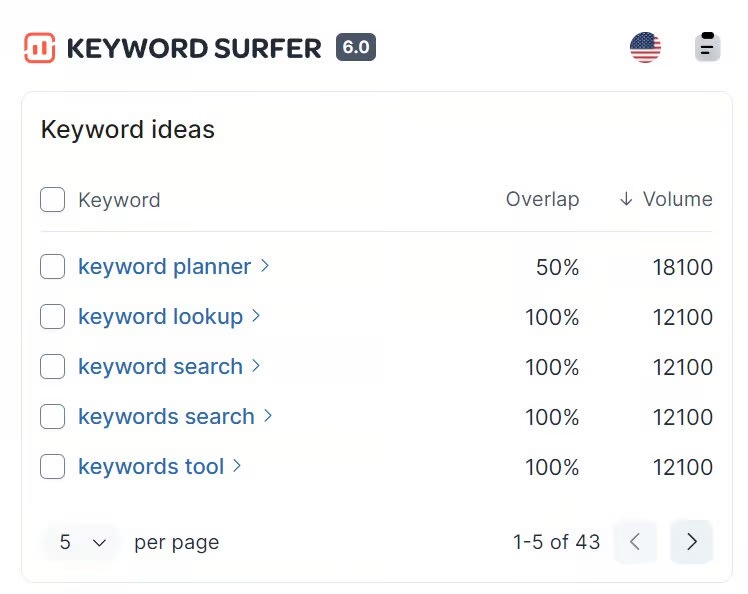
Keyword Surfer features include search volume display overlaying SERP results, CPC data revealing advertising values, related keywords panel showing additional opportunities, content word count metrics analyzing top-ranking page lengths, visibility metrics displaying domain strength indicators, and completely free operation without usage caps.
The Keyword Surfer extension integrates seamlessly with Google search, enriching existing interfaces without workflow disruption.
Compared to KeywordTool.io, Keyword Surfer delivers contextual keyword metrics during natural search activities completely free. KeywordTool.io requires navigating to separate platforms and conducting specific searches with monthly subscription costs.
Keyword Surfer provides lightweight keyword intelligence embedded within existing browsing workflows. Keyword Surfer is the better alternative to KeywordTool.io for casual researchers requiring quick keyword validation without committing to comprehensive platforms or monthly fees.
Keyword Surfer pricing is free without subscriptions, premium tiers, or feature restrictions. The extension requires Chrome browser installation and Google account authentication. All functionality operates perpetually free without usage limits or upgrade prompts.
Pros noted in Keyword Surfer reviews include completely free unlimited access, convenient browser integration, which eliminates platform switching, useful for quick keyword validation during research, content length metrics informing writing targets, and simple installation requiring minimal technical knowledge.
Cons of Keyword Surfer include browser-only functionality restricting usage to Chrome, limited advanced features compared to dedicated platforms, dependency on Google search workflows, no historical data or trend analysis, and occasional loading delays on slower connections.
23. KeywordsPeopleUse: Best KeywordTool.io Alternative for Long-Tail Search Questions
KeywordsPeopleUse is a long-tail keyword research platform that extracts real user search questions from Google, People Also Ask (PAA), Autocomplete, Reddit, and Quora. KeywordsPeopleUse focuses on uncovering questions, semantically related terms, and intent-based clusters that reveal informational gaps across topics.
KeywordsPeopleUse emphasizes real-time data, multi-source question mining, and long-tail discovery rather than traditional keyword volume tables.

KeywordsPeopleUse provides Google Autocomplete expansion, People Also Ask crawling, Reddit and Quora scraping, semantic keyword discovery, AI-generated keyword lists, keyword clustering, deep search, bulk searches, search alerts, and CSV or image export.
KeywordsPeopleUse includes AI content tools, search history, API access, and curated keyword lists for topic management. KeywordsPeopleUse groups questions by search intent and structures them into clusters for planning content around real user concerns.
KeywordsPeopleUse functions as a KeywordTool.io alternative because KeywordsPeopleUse prioritizes question extraction and long-tail intent mapping while KeywordTool.io outputs generic keyword suggestions without deep PAA or community-driven insights.
KeywordTool.io focuses on search volume expansion, while KeywordsPeopleUse identifies emerging questions, nuanced queries, and informational gaps.
KeywordsPeopleUse fits teams that need question-based keyword research, while KeywordTool.io, as a keyword grouper tool, fits teams that need broad keyword lists. KeywordsPeopleUse offers clustering and topical question mapping that KeywordTool.io does not provide.
KeywordsPeopleUse pricing begins at $15 per month for Lite with 150 monthly credits. KeywordsPeopleUse Standard costs $39 per month for 500 credits, and KeywordsPeopleUse Pro costs $79 per month for 1,500 credits. KeywordsPeopleUse Unlimited costs $299 per month with unlimited searches and higher clustering limits.
KeywordsPeopleUse is cheaper than KeywordTool.io because KeywordTool.io starts at $89 per month, which makes KeywordsPeopleUse between $50 and $74 cheaper, depending on the plan.
According to the KeywordsPeopleUse review, the advantages include real-time question extraction, multi-source keyword inputs, clear question clusters, long-tail opportunity discovery, and strong semantic coverage.
KeywordsPeopleUse disadvantages include credit-based limitations, reduced analytical depth compared to full SEO suites, and clustering constraints on lower-priced plans.
24. Majestic: Best KeywordTool.io Alternative for Link-Based Keyword Context Analysis
Majestic is a backlink intelligence platform that maps the web at scale and analyzes link patterns, anchor text context, topical authority, and trust metrics across billions of URLs. Majestic emphasizes link-based keyword insights through Trust Flow, Citation Flow, and Topical Trust Flow, which identify authoritative topics and anchor text patterns across referring domains.
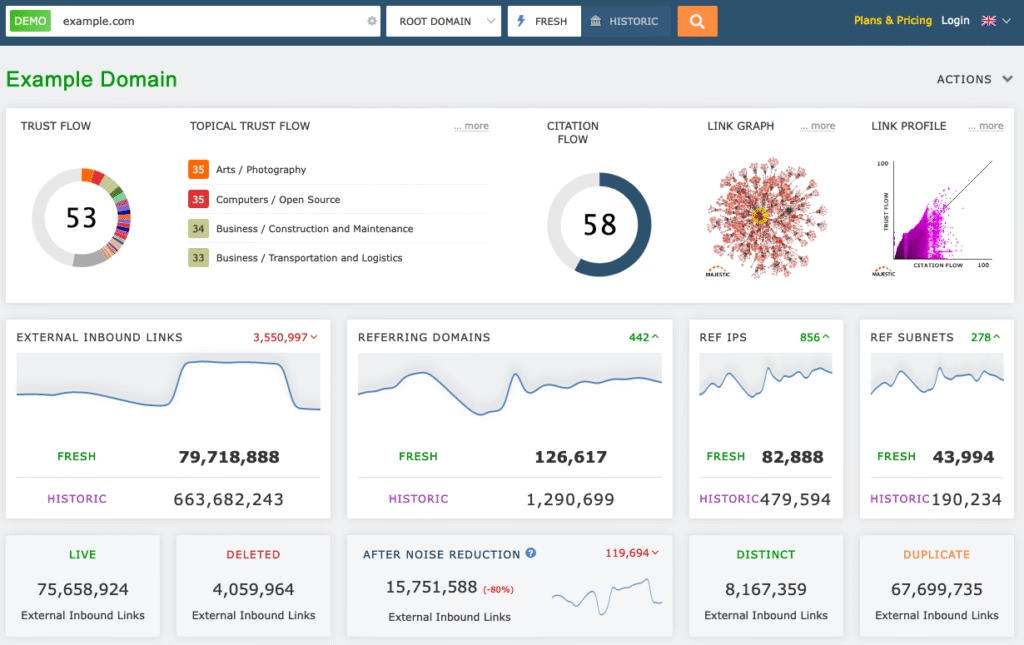
Majestic provides Site Explorer, Link Context, Link Graph, Topical Trust Flow, anchor text breakdowns, backlink history, neighbourhood checks, keyword-based link reports, historic and fresh backlink indexes, raw exports, and an industry-grade API.
Majestic evaluates the text surrounding backlinks, link density, link placement, and page-level relevance. Majestic provides a Keyword Generator and Keyword Checker, which extract keyword context from anchor text across the index.
Majestic functions as a KeywordTool.io alternative because Majestic identifies keywords through backlink context rather than through autocomplete scraping. KeywordTool.io outputs large lists of surface-level suggestions, while Majestic reveals keywords embedded in anchor text, referring page content, topical categories, and cross-domain link ecosystems.
Majestic fits workflows that prioritize authority evaluation, link-driven keyword validation, and competitive link profiling, while KeywordTool.io fits workflows that prioritize fast keyword expansion.
Majestic pricing begins at $49.99 per month for Lite, which provides Fresh Index access, Site Explorer, Keyword Checker, Link Context, Link Graph, and one million analysis units. Majestic Pro costs $99.99 per month with Historic Index access, 20 million analysis units, raw data exports, backlink history, and advanced tools. Majestic API costs $399.99 per month with 100 million analysis units and full API features.
Majestic is cheaper than KeywordTool.io on the entry plan because KeywordTool.io begins at $89 per month, which makes Majestic Lite $39 cheaper while offering deeper link-based metrics.
The pros included in the Majestic review are backlink coverage, authoritative link quality metrics, contextual anchor text extraction, and long-term index depth. Majestic disadvantages include the absence of keyword volume data, limited SERP-focused features compared to all-in-one platforms, and a workflow that prioritizes link interpretation over content planning.
25. Keywordly: Best KeywordTool.io Alternative for Real-Time Keyword Alerts
Keywordly is a keyword monitoring platform that provides real-time alerts when specified keywords appear in search results, social media, news sources, or competitor content.
Кeywordly emphasizes keyword surveillance over research. It targets brand managers, content marketers, and competitive intelligence professionals requiring immediate notification of keyword-related events. Keywordly operates through customizable alert triggers and multi-channel monitoring integrations.
Keywordly features include real-time keyword alerts notifying when keywords appear in tracked sources, competitor monitoring tracking rival keyword usage and content publication, SERP change notifications alerting to ranking fluctuations, social media tracking identifying keyword mentions across platforms, and customizable alert thresholds filtering by relevance and priority. Integration with Slack, email, and SMS enables immediate team notification.
Compared to KeywordTool.io, Keywordly provides keyword monitoring and alerting rather than research and suggestion generation. KeywordTool.io extracts autocomplete variations without ongoing surveillance or competitive tracking. Keywordly enables proactive response to keyword-related events and competitive actions.
Keywordly is the better alternative for teams that need real-time keyword intelligence and competitive monitoring rather than static research outputs.
Keywordly pricing requires custom quotes based on monitored keyword volumes, alert frequencies, and integration requirements.
Pros noted in Keywordly reviews include valuable real-time alerts enabling quick competitive responses, useful competitor monitoring revealing content strategies, customizable alert thresholds reducing notification noise, multi-channel tracking providing comprehensive coverage, and integration options facilitating team workflows. C
ons of Keywordly include limited traditional keyword research functionality, potential alert fatigue from high-volume keywords, custom pricing lacking transparency, specialized focus limiting broader SEO utility, and a smaller platform lacking extensive third-party integrations.
26. Bing Webmaster Tools: Best KeywordTool.io Alternative for Microsoft Search Keyword Data
Bing Webmaster Tools is a free SEO platform provided by Microsoft that delivers keyword research, rank tracking, site auditing, and performance analytics for Bing search engine optimization.
Bing Webmaster Tools provides official Microsoft search data, including keyword impressions, click-through rates, and ranking positions across Bing, Yahoo, and AOL search networks. Bing Webmaster Tools targets SEOs and webmasters who require comprehensive Bing optimization insights without subscription costs.
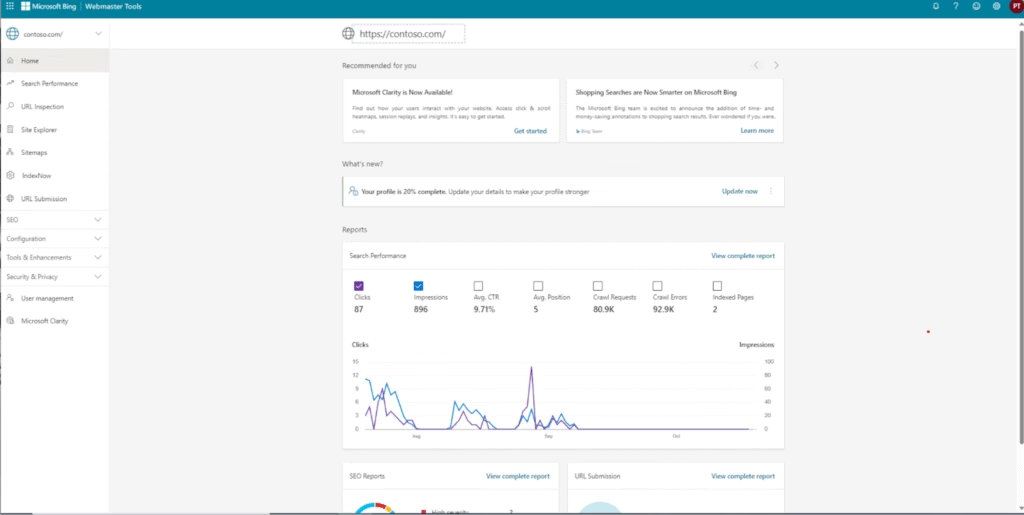
Bing Webmaster Tools features include keyword research showing search volume and competition on Microsoft networks, rank tracking and monitoring Bing search positions, site audit identifying technical issues and crawl errors, backlink analysis revealing incoming link profiles, and search performance reporting displaying impressions, clicks, and CTR metrics.
The platform integrates with Microsoft Clarity for behavior analytics and provides SEO recommendations through automated suggestions.
Compared to KeywordTool.io, Bing Webmaster Tools provides official Microsoft search data completely free while focusing exclusively on Bing network optimization. KeywordTool.io supports multiple platforms (Google, YouTube, Amazon) but requires subscriptions for actionable data.
Bing Webmaster Tools is the better KeywordTool alternative for businesses that are targeting Microsoft search traffic and require official Bing keyword intelligence without costs.
Bing Webmaster Tools pricing is free without subscriptions, usage limits, or premium tiers. The platform requires Microsoft account authentication and site verification through meta tags or DNS records. All functionality operates perpetually free without feature restrictions.
Compared to KeywordTool.io at $89 monthly, Bing Webmaster Tools eliminates keyword research costs while providing authoritative data directly from Microsoft search networks.
Pros mentioned in the Bing Webmaster Tools review include completely free access without subscriptions, official Microsoft search data ensuring accuracy, useful for businesses targeting Bing traffic, comprehensive site auditing identifying technical issues, and integration with Clarity providing behavior insights.
Cons of Bing Webmaster Tools include a smaller search volume compared to Google, limited utility for Google-focused strategies, fewer advanced features compared to comprehensive platforms, less frequent updates than competitive tools, and a smaller user community, limiting support resources.
27. AlsoAsked: Best KeywordTool.io Alternative for People Also Ask Keyword Mapping
AlsoAsked is a tool that extracts live People Also Ask data directly from Google and maps question relationships into structured intent clusters. AlsoAsked focuses on user intent, real query patterns, and topical depth through visual trees that uncover how searchers explore a topic during a session.

AlsoAsked provides live PAA crawling, PNG exports, CSV question sets, Deep Search with expanded intent branches, Bulk Search for up to 1,000 queries, intent clustering, answer snippet extraction, ranking URL extraction, page title extraction, encoded relationship data, and a synchronous or asynchronous API with webhook support.
AlsoAsked provides cached search history and region-specific query targeting across any country and language.
AlsoAsked functions as a KeywordTool.io alternative because AlsoAsked reveals real user questions instead of autocomplete suggestions. KeywordTool.io expands phrases through modifiers, while AlsoAsked identifies zero-volume queries, pain points, and follow-up questions driven by Google’s internal intent groupings.
AlsoAsked fits research workflows that prioritize PAA-driven clustering, question mapping, content architecture, and topical authority. KeywordTool.io fits workflows that prioritize suggestion volume.
AlsoAsked pricing begins at $15 per month for Lite with 150 credits, PAA extraction, autocomplete data, semantic terms, Reddit and Quora results, keyword lists, search alerts, and limited history. Standard costs $39 per month with 500 credits and one year of history. Pro costs $79 per month with 1,500 credits and two years of history.
The advantages of AlsoAsked include real-time PAA extraction, deep intent mapping, multi-market targeting, zero-volume keyword discovery, and export flexibility. The disadvantages include limited SERP metrics, no keyword volume data, and search limits tied to monthly credits, according to the AlsoAsked review.
28. QuestionDB: Best KeywordTool.io Alternative for Blog Topic Ideas
KeywordDB is a keyword discovery tool that focuses on long-tail keywords, question-based queries, and low-competition opportunities, which positions KeywordDB as a content-ideation engine for blogs and informational search. KeywordDB extracts real user queries, identifies hidden long-tail terms, and highlights low-competition opportunities that align with early-stage content planning.

KeywordDB includes long-tail keyword extraction, search volume data, keyword difficulty scoring, CPC values, CSV and image exports, and trend analysis across multiple languages. KeywordDB also includes SERP feature detection, month-by-month historical search trends, and niche-specific low-competition suggestions that surface blog-ready topics.
KeywordDB is an alternative to KeywordTool.io because KeywordDB uncovers long-tail questions and low-competition blog topics that KeywordTool.io does not emphasize.
KeywordDB works best for blog ideation and informational content planning. KeywordDB performs worse for multi-platform coverage and high-volume dataset extraction.
KeywordDB pricing starts at $9.99 per month for the Solo plan, which equals $119.88 per year, with 100 searches per month. The Business plan costs $29.99 per month (400 searches per month), and the Enterprise plan costs $69.99 per month (1000 searches per month). KeywordDB costs significantly less than KeywordTool.io at $89 per month, making KeywordDB a more budget-friendly alternative for blog-first users.
Upsides included in the KeywordDB review are strong long-tail coverage, low-competition keyword discovery, and detailed SERP feature analysis, while the downsides include monthly search caps, limited competitive intelligence, and smaller datasets than enterprise SEO platforms.
29. Twinword Ideas: Best KeywordTool.io Alternative for Semantic Keyword Grouping
Twinword Ideas is an AI-driven keyword research platform that groups keywords by semantic similarity, user intent, and topic patterns, which positions Twinword Ideas as a semantic keyword tool rather than a volume-first database.
Twinword Ideas analyzes intent, patterns, and LSI connections to surface keyword clusters that support structured content and topical completeness.

Twinword Ideas includes automatic keyword grouping, intent filters for know, do, buy, and local, relevance scoring, keyword efficiency scoring, accurate search volume, CPC values, and Google SERP checks. Twinword Ideas also includes LSI Graph exploration, news-based trending terms, keyword imports, popular topic detection, and multilingual coverage across 46 languages with more than 230 geo targets.
Twinword Ideas is an alternative to KeywordTool.io because Twinword Ideas specializes in semantic grouping and user intent, while KeywordTool.io focuses on raw keyword lists and multi-platform scraping. Twinword Ideas works best for semantic research and content structure. Twinword Ideas performs worse for large-scale keyword exports and high-volume suggestions.
Twinword Ideas pricing begins at $18 per month for the Plus plan, with 60 searches per day. The Pro plan costs $40 per month with 300 searches per day, and the Agency plan costs $89 per month with 1,500 searches per day and up to five users. Twinword Ideas costs less than KeywordTool.io at $89 per month entry plan and offers higher semantic depth for content teams.
The pros highlighted in the Twinword Ideas review are strong semantic clustering, user intent filters, and relevance scoring that improves content planning, while cons include daily search caps, limited exports on lower plans, and smaller keyword breadth compared to large traditional keyword databases.
30. Long Tail Pro: Best KeywordTool.io Alternative for Profit-Focused Long-Tail Keywords
Long Tail Pro was a niche keyword research platform built around discovering high-conversion long-tail keywords through its proprietary Keyword Competitiveness (KC) score.
As of June 5, 2024, the Long Tail Pro website and software went fully offline and stopped operating. By March 3, 2025, the Long Tail Pro platform remained inaccessible, the website no longer resolved, and the business stopped operations entirely. Long Tail Pro is no longer available as a functioning product.
Long Tail Pro served affiliate marketers and niche site builders who targeted low-competition SERPs with commercial intent. Long Tail Pro included SERP analysis, KC scoring, rank tracking, keyword filtering, and workflow features for identifying profitable long-tail opportunities.
31. Jaaxy: Best KeywordTool.io Alternative for Affiliate Marketers & Niche Keyword Research
Jaaxy is a niche-focused keyword research tool built specifically for affiliate marketers, offering instant access to long-tail keyword metrics, competition analysis, and domain availability data. Jaaxy emphasizes monetizable keyword discovery, niche validation, and competition intelligence rather than broad SEO workflows.
Jaaxy includes real-time search volume, QSR (Quoted Search Results) for true SERP competition, KQI (Keyword Quality Indicator), traffic estimates, SERP previews, and multithreaded search. Jaaxy incorporates niche brainstorming tools, an affiliate program finder, and “Alphabet Soup” expansion for uncovering undiscovered long-tail terms.
Jaaxy stands out with SiteRank, its proprietary rank-tracking system that monitors positions across Google, Bing, and Yahoo without requiring manual setup. The tool also integrates domain availability for .com, .net, and .org searches, which supports niche site builders and marketers seeking brandable domains.
Jaaxy works as an alternative to KeywordTool.io because it focuses on profitable keywords and affiliate-ready niches, which KeywordTool.io does not specialize in. Jaaxy performs better for evaluating monetizable opportunities, checking domain availability, and handling fast niche validation. Jaaxy performs worse for large-scale keyword harvesting, multi-platform keyword data (YouTube, Amazon, eBay), and advanced SEO workflows.
Jaaxy is a paid tool with a limited free trial that offers 30 searches. Subscription plans typically begin around the mid-range price point, lower than the KeywordTool.io Pro tiers but with narrower use cases.
The upsides mentioned in the Jaaxy review include real-time niche expansion, true competition metrics, domain discovery, and affiliate-focused features. Cons of Jaaxy include a dated interface, less precise metrics compared to enterprise tools, and limited support for broader SEO applications.
Why do People Seek Alternatives to KeywordTool.io Tool?
People seek alternatives to KeywordTool.io because the platform provides limited insights in its free version and focuses narrowly on keyword suggestions without deeper SEO analytics. The free tier only shows keyword ideas while hiding critical metrics like search volume, CPC, and competition levels. This forces users to upgrade before they can make data-driven decisions.
Limited analytics, lack of competitive intelligence, and missing SERP data are the main reasons users move to more complete keyword platforms. Many reviews highlight that KeywordTool.io excels at generating autocomplete-based long-tail ideas but falls short for keyword difficulty scoring, multi-market analysis, or strategic research.
KeywordTool.io does not offer all-in-one SEO capabilities, so users often rely on separate tools for backlink audits, site health checks, or rank tracking. Combined with relatively high pricing and reported frustration around billing or cancellations, the platform becomes a poor fit for marketers that seek a more integrated, value-driven workflow.
What to Look for in a KeywordTool.io Alternative?
The best KeywordTool.io alternative provides complete keyword metrics and deeper search intelligence beyond simple suggestions. Look for platforms that show difficulty scores, intent classifications, and trend history to validate whether a keyword is worth targeting.
A strong alternative to KeywordTool.io includes competitor analysis features that reveal gaps in content, rankings, and topical coverage. Tools that consolidate keyword research, backlink audits, site monitoring, and ranking performance inside one dashboard remove the need for multiple subscriptions.
Localization, multi-language support, and flexible pricing ensure the tool scales with your goals. A clean user experience and clear data presentation make keyword evaluation more actionable for beginners, agencies, and enterprise teams.
Why is Search Atlas the Best KeywordTool.io Alternative?
Search Atlas is the best KeywordTool.io alternative because it delivers a complete SEO ecosystem rather than a standalone keyword generator. The Search Atlas SEO platform replaces multiple tools through a unified environment for keyword intelligence, backlink analysis, content optimization, and technical auditing.
Search Atlas provides complete keyword metrics, including exact search volumes, CPC data, and consolidated difficulty scoring based on real-time rankings. Its AI-driven features expand research into strategic insights with tools like Content Genius and Keyword Gap Analysis. KeywordTool.io only outputs suggestions, while Search Atlas reveals every competitive angle and topical opportunity.
Search Atlas supports multi-domain management, white-label reporting, and scalable monitoring for agencies and large teams. Transparent pricing and all-tier access to core features make it more cost-efficient than competitors that lock essential data behind premium upgrades.
Search Atlas enables marketers to improve ranking performance, accelerate research, and eliminate workflow fragmentation through a complete AI-powered SEO platform.
Start your free trial at Search Atlas and replace KeywordTool.io with a complete AI-powered SEO platform built for agencies, enterprises, and businesses that need scalable keyword intelligence integrated with automated optimization execution.