Anyword alternatives are AI writing and content platforms that replace Anyword for marketing copy, ad creation, landing page text, email campaigns, and long-form content production. These platforms extend beyond conversion scoring by adding SEO research, SERP alignment, workflow automation, and publishing integrations.
Many Anyword reviews note that the platform performs well for conversion-focused short copy, but it remains centered on predictive scoring rather than full content execution. Teams that need keyword research, SERP-based outlines, and long-form drafting, rely on additional tools, which increases workflow friction.
Agencies, growth teams, ecommerce brands, and SEO professionals often require content connected to organic rankings, editorial workflows, or large-scale publishing. These needs push users toward platforms designed for deeper optimization, automation, and cross-channel execution rather than copy scoring alone.
Writers, marketers, agencies, and organizations choose an Anyword alternative when they need content tied to search visibility, publishing systems, team collaboration, or scalable production instead of isolated performance metrics.
The best Anyword alternatives in 2026 are Search Atlas, Jasper AI, and Copy.ai.
What are the Best Anyword Alternatives?
The top 44 best Anyword alternatives cover conversion copy, SEO-driven content, long-form writing, ecommerce automation, rewriting, bulk publishing, personalization, and enterprise-scale content workflows.
The 44 best Anyword alternatives for 2026 are listed below.
| # | Anyword Alternative | Best For | Price |
|---|---|---|---|
| 1 | Search Atlas | Best Anyword alternative | $99 to $399/month |
| 2 | Copy.ai | Creative short-form marketing copy | $49 to $249/month |
| 3 | Jasper AI | Branded long-form content | $49/month to custom |
| 4 | Simplified | All-in-one content and design | Free to $20/month |
| 5 | Writesonic | Multi-format marketing content | $39 to $399/month |
| 6 | Rytr | Budget short-form writing | $9 to $29/month |
| 7 | Describely | Ecommerce product content | $0.75 per product |
| 8 | Letterdrop | Editorial workflows | $299 to custom |
| 9 | ProWritingAid | Editing and readability | Free to $36/month |
| 10 | Wordtune | Rewriting and paraphrasing | $6.99 to $9.99/month |
| 11 | Ahrefs Content Helper | SEO-driven planning | $129 to $1,499/month |
| 12 | ChatGPT | Flexible AI writing | $20 to $200/month |
| 13 | Scalenut | SEO + conversion content | $49 to $149/month |
| 14 | Outranking | SEO research and writing | $19 to $159/month |
| 15 | Jotbot AI | Chat-style writing | $0 to $20/month |
| 16 | Frase | SEO briefs and optimization | $45 to $115/month |
| 17 | Surfer SEO | Real-time content scoring | $79 to $179/month |
| 18 | Clearscope | Semantic SEO optimization | $189 to $399/month |
| 19 | Semrush Writing Assistant | On-page SEO writing | $249 to $499/month |
| 20 | MarketMuse | Topic authority planning | $99 to $499/month |
| 21 | Pepper Content | Outsourced content + AI | $399/month+ |
| 22 | Copymatic | Bulk copywriting | $29 to $66/month |
| 23 | Narrato | Team content operations | $36 to $96/month |
| 24 | TextCortex | Knowledge-based writing | Free to $23.99/month |
| 25 | Copysmith | Ecommerce copy at scale | $19 to custom |
| 26 | ContentBot.ai | Automated content pipelines | $9 to $49/month |
| 27 | Writecream | Personalized outreach | $0 to $49/month |
| 28 | Smart Copy (Unbounce) | Landing-page copy | $74 to $187/month |
| 29 | Byword | Programmatic SEO articles | $99 to $1,999/month |
| 30 | Peppertype | Growth-marketing templates | Custom |
| 31 | ClosersCopy | Sales copywriting | $49.99 to $99.99/month |
| 32 | Hypotenuse AI | Ecommerce descriptions | $19 to $150/month |
| 33 | Koala AI | Lightweight SEO blogging | $9 to $99/month |
| 34 | LongShot AI | Research-backed SEO writing | $19 to $299/month |
| 35 | Article Forge | Automated long-form content | $57/month+ |
| 36 | QuillWord | Academic rewriting | $0 to $19.99/month |
| 37 | QuillBot | Paraphrasing and rewriting | Free to $8.33/month |
| 38 | Arvow | Automated publishing SEO | $59 to $389/month |
| 39 | SEO.ai | SEO-first article creation | $49 to $749/month |
| 40 | Hoppy Copy | Email marketing copy | $199/month+ |
| 41 | Octave HQ | GTM content intelligence | Free to $799/month |
| 42 | Paraphraser.io | Sentence-level rewriting | $23 to $499/month |
| 43 | Twain AI | Sales outreach writing | Free to custom |
| 44 | Claude | Advanced AI writing | $17 to $150/month |
1. Search Atlas: Best Anyword Alternative
Search Atlas is an agentic SEO and content execution platform built for teams that need predictable organic growth rather than isolated copy experiments. Search Atlas connects keyword research, SERP intelligence, semantic optimization, backlink data, and on-site execution inside one unified system.
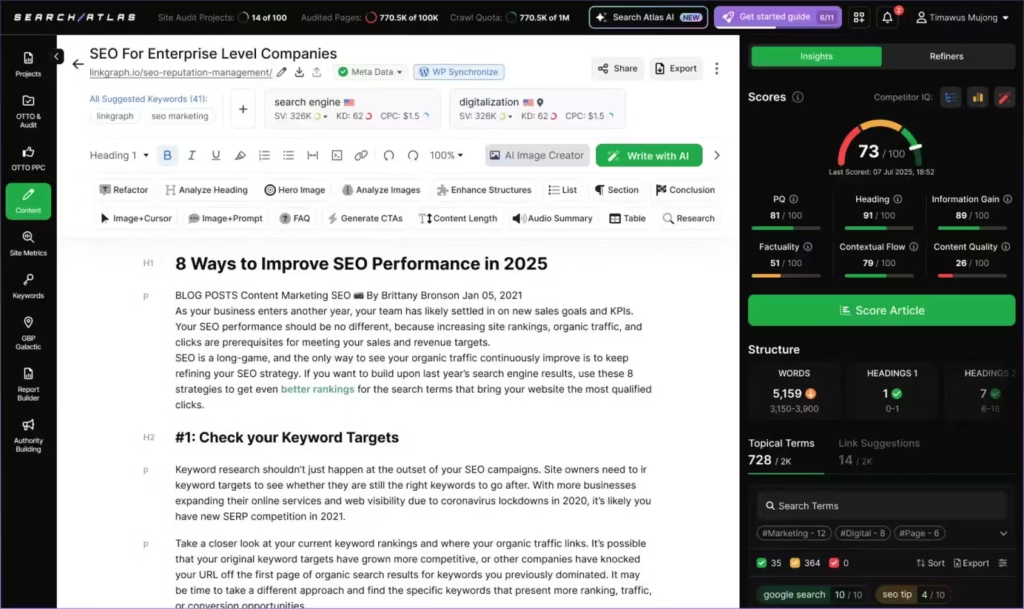
Search Atlas surpasses Anyword by shifting content from conversion scoring into search-driven performance. Anyword evaluates copy through predictive metrics. Search Atlas builds pages around live ranking patterns, competitor benchmarks, and topical authority signals so content earns visibility instead of only testing variations.
Search Atlas Content Genius operates as the semantic writing engine. Content Genius creates and expands drafts using SERP analysis, keyword mapping, and passage-level guidance. The editor highlights missing subtopics, restructures headings, and increases topical depth based on how ranking pages actually perform.
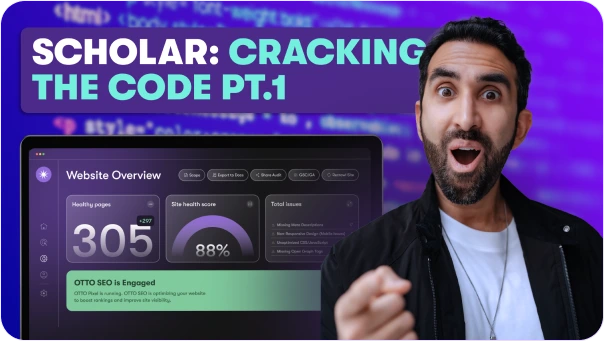
Search Atlas measures quality through Scholar, the content scoring system that grades pages from 0 to 100 for clarity, intent match, accuracy, and information gain. Anyword estimates conversion potential.
Search Atlas extends far beyond writing through its full SEO stack. The platform runs backlink research, technical audits, internal linking analysis, topical planning, and page-level performance tracking inside the same environment.
OTTO SEO powers execution. OTTO applies optimizations directly on the website by updating titles, internal links, schema, and page structure in real time. That removes the manual publishing gap that exists in Anyword’s draft-only workflow.
Search Atlas is a paid tool with pricing ranging from $99 to $399 per month. That cost replaces separate tools for keyword research, SEO optimization, content scoring, and on-site execution.
Pros of Search Atlas review include autonomous SEO optimization, SERP-driven writing, and scalable topic planning. The primary limitation is a learning curve for teams new to system-level SEO automation but guided onboarding simplifies adoption.
2. Copy.ai: Best Anyword Alternative for Creative Short-Form Marketing Copy
Copy.ai is an AI writing system built for fast creation of short marketing messages. Copy.ai turns brief instructions into advertising copy. Copy.ai operates as a creative generation engine rather than a performance scoring system.
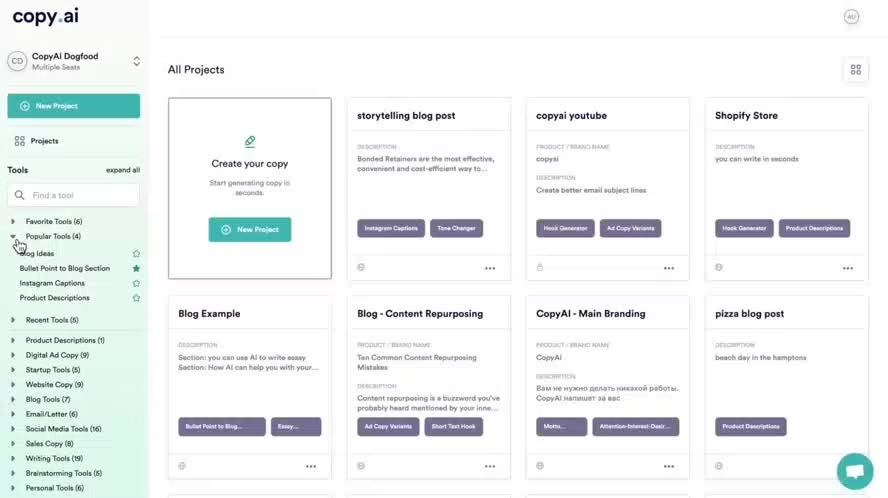
As an alternative to Anyword, Copy.ai focuses on creative short-form marketing copy. That design makes Copy.ai a stronger choice for teams that test creative angles, emotional hooks, and messaging styles across ads and social channels.
Core features include structured templates for paid ads, outreach emails, social captions, blog openers, and product copy. Tone and language controls keep voice consistent across markets while localization settings adapt outputs for regional campaigns. A workflow layer manages project organization, and automated content runs that push drafts into live marketing processes.
Copy.ai is a paid tool with pricing ranging from $49 to $249 per month. The $49 plan provides unlimited word generation with access to templates and brand voice controls. Higher-tier plans add workflow automation, and platform integrations for campaign-level execution.
Pros of Copy.ai include high-speed idea production, wide variation across creative angles, and strong localization for global campaigns. Cons of Copy.ai include weak SEO intelligence, no SERP-based optimization layer, and recurring phrasing during long sessions.
3. Jasper AI: Best Anyword Alternative for Long-Form Content and SEO‑Driven Articles
Jasper AI is a content automation platform designed for marketing teams that publish branded material at scale. Jasper AI produces extended blog articles, and editorial drafts that maintain voice consistency across every output. Jasper AI combines writing automation with brand control and team workflows in one unified system.
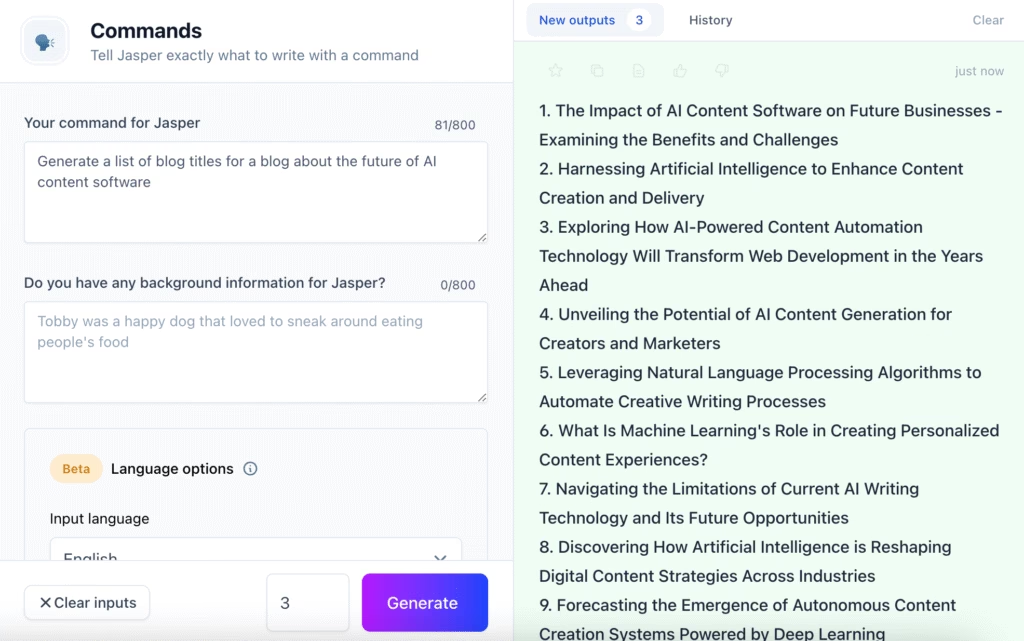
Compared to Anyword, Jasper AI operates in a different production tier. Anyword concentrates on short marketing lines and predictive conversion scores. Jasper AI focuses on structured article generation, topic expansion, long-form editorial workflows. That difference places Jasper AI ahead for organizations that publish blogs, guides, and SEO-driven articles.
Core features in Jasper AI revolve around controlled content production. Jasper AI structures blog posts, email sequences, ad variations, and long-form rewrites through guided drafting stages. Collaboration layers route drafts through review, approval, and revision stages across distributed marketing teams.
Jasper AI is a paid tool with pricing ranging from $49 per month to custom enterprise plans. The $49 Creator plan provides core writing tools for individuals. The $69 Pro plan adds collaboration tools, brand voice management, and image generation. Business plans expand access through API connectivity and advanced workflow controls.
Pros of Jasper AI include stable brand consistency, strong long-form writing quality, campaign-level workflow control, and collaboration systems. Cons of Jasper AI include a learning curve for new users, and limited native SEO analysis.
4. Simplified: Best Anyword Alternative for All‑In‑One Content and Design Workflows
Simplified is a creative platform that merges AI writing, graphic design, video tools, and social publishing. Simplified enables teams to generate copy, visuals, and campaign assets from a single interface rather than relying on separate tools for each production stage.
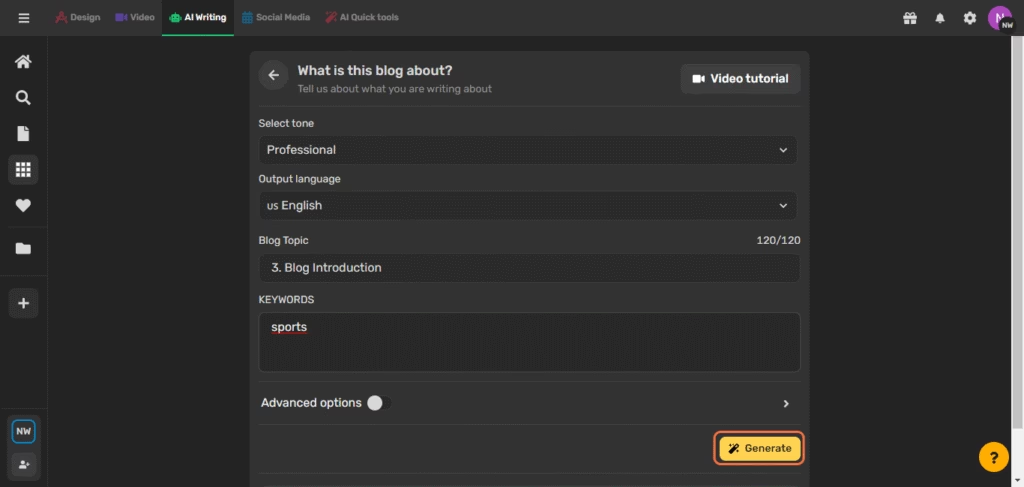
Against Anyword, Simplified delivers a broader execution layer. Simplified extends beyond copy by pairing writing with design assets, publishing controls, and campaign scheduling. That structure positions Simplified as a stronger option for teams that run full marketing campaigns.
Core features in Simplified connect writing with creative production. Simplified generates blogs, ad text, and captions through AI writing tools. Design templates create brand-ready visuals. AI-driven video tools produce short clips. A built-in social planner schedules posts and tracks campaign activity.
Simplified is a paid tool with pricing ranging from free access to $20 per month, based on publishing limits and collaboration access.
Pros of Simplified include unified writing and design workflows, low entry pricing, built-in publishing tools, and strong collaboration across creative teams. Cons of Simplified include weak SEO intelligence, shallow keyword insights, limited long-form editing controls, and reduced depth for ranking-driven content strategies.
5. Writesonic: Best Anyword Alternative for Versatile Marketing Content on a Budget
Writesonic is an AI content platform built to generate blogs, landing pages, and marketing copy from a single writing system. Writesonic covers multiple content categories through one interface that handles articles, social text, ad copy, and promotional pages.
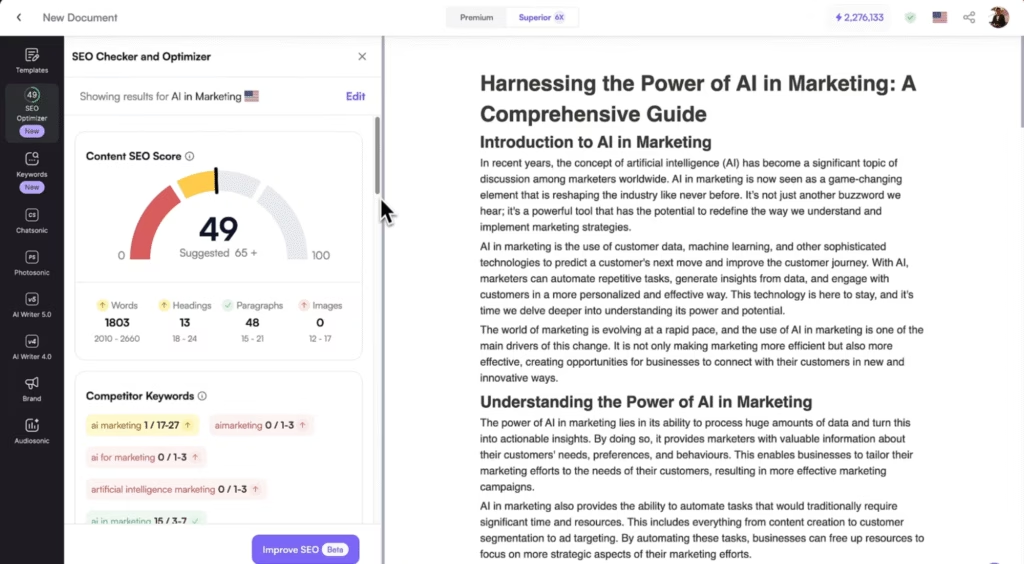
Compared to Anyword, Writesonic operates across a broader production scope. Writesonic expands into full content creation by handling blogs, landing pages, and editorial assets at scale. That design makes Writesonic more practical for marketers and bloggers who manage multiple formats rather than single-line ad testing.
Core features include a SEO Optimizer that reviews keyword usage and content quality inside drafts. Outline builders shape article structure before writing begins. Rephrasing tools preserve tone while rewriting sections. Chatsonic connects research, drafting, and WordPress publishing to reduce manual handoffs during content deployment.
Writesonic is a paid tool with pricing ranging from $39 to $399 per month. Lower plans target individual creators and solo marketers. Higher plans add advanced integrations, reporting layers, and multi-user collaboration for agency and team environments.
Pros of Writesonic review include fast article creation, built-in SEO scoring, flexible format coverage, and strong value for teams that manage blogs, landing pages, and marketing copy. Cons of Writesonic include unstable quality on very long articles, tighter usage limits on entry plans, and a dense interface that slows new users during early adoption.
6. Rytr: Best Anyword Alternative for Budget‑Friendly, Fast Copywriting
Rytr is a lightweight AI writing platform built for rapid, low-cost text generation. Rytr produces ads, emails, headlines, and product descriptions across more than 30 languages through a streamlined writing interface.
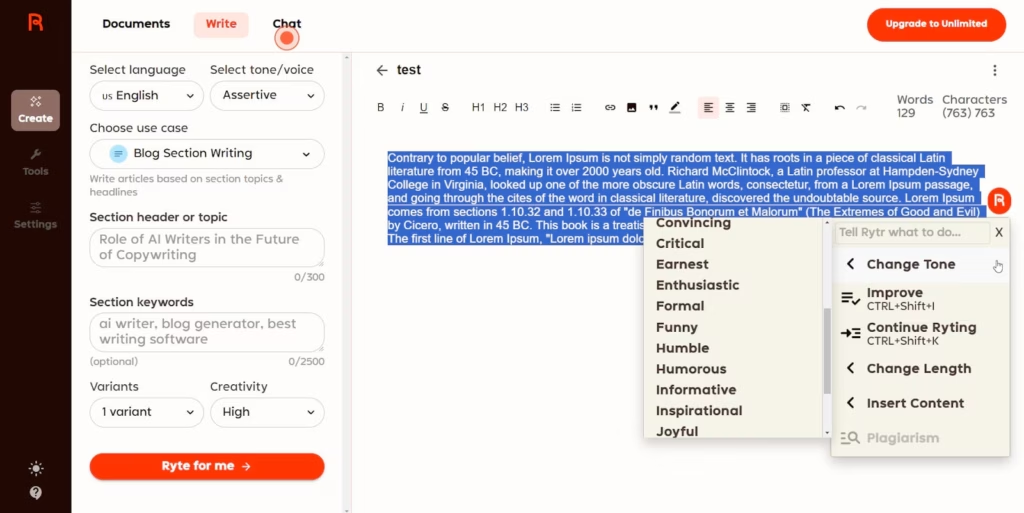
As an alternative to Anyword, Rytr follows a different operating model. Rytr emphasizes instant generation and affordability across many writing tasks. That contrast positions Rytr as a better fit for creators who need quick outputs without enterprise-level analytics.
Core features in Rytr center on simple writing workflows. Rytr generates paragraphs, rewrites sentences, and applies tone controls through reusable style presets. A browser extension enables direct drafting inside web-based editors and publishing platforms, which shortens the path between writing and publishing.
Rytr is a paid tool with pricing ranging from $9 to $29 per month. Entry plans provide basic writing access. Higher tiers expand tone libraries, language options, and usage limits.
Pros of Rytr include extremely low pricing, fast generation speed, and simple controls that keep short-form copy production efficient across ads, emails, and product listings. Cons of Rytr include weak long-form output, minimal SEO intelligence, repetitive phrasing during extended use, and limited control for structured content workflows
7. Describely: Best Anyword Alternative for Product‑Focused Content
Describely is an AI ecommerce content platform built to manage large product catalogs through automated writing and structured data control. Describely produces product descriptions, titles, metadata, and attribute fields through SKU-level automation that keeps brand language and formatting consistent across thousands of listings.
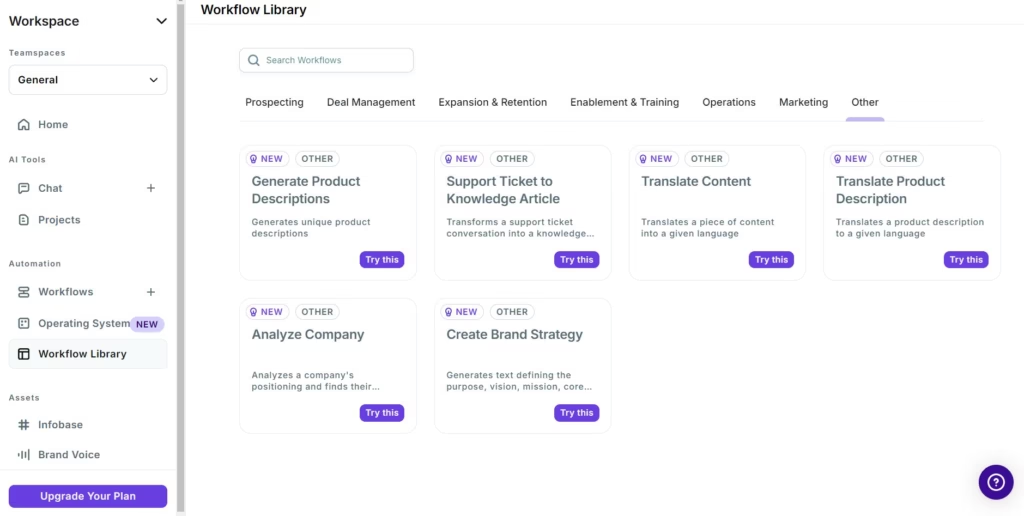
Describely outperforms Anyword by focusing on catalog-wide product content at scale through ecommerce-native automation. Describely stands ahead for retailers that manage inventory, attributes, and listings.
Core features inside Describely center on bulk commerce workflows. Describely generates product descriptions in batches while applying SEO-focused metadata and structured attributes tied to each SKU. Custom guidelines control attribute order, labeling, and language so listings stay uniform across marketplaces and stores.
Describely is a paid tool with pricing ranging from $0.75 per product to custom enterprise plans per month. Data enrichment credits start at $0.55. Image processing credits start at $0.05. Enterprise pricing scales based on catalog size and automation depth.
Pros of Describely include rapid bulk generation, ecommerce-specific content structures, strong catalog governance, and consistent product language. Cons of Describely include weak long-form writing, heavy reliance on clean product data, and limited value outside ecommerce-focused workflows.
8. Letterdrop: Best Anyword Alternative for Content‑Marketing and Editorial Workflows
Letterdrop is a B2B content operations platform built to manage editorial production from planning through distribution. Letterdrop connects writing, collaboration, publishing, and analytics inside one system that aligns marketing output with revenue-focused campaigns.
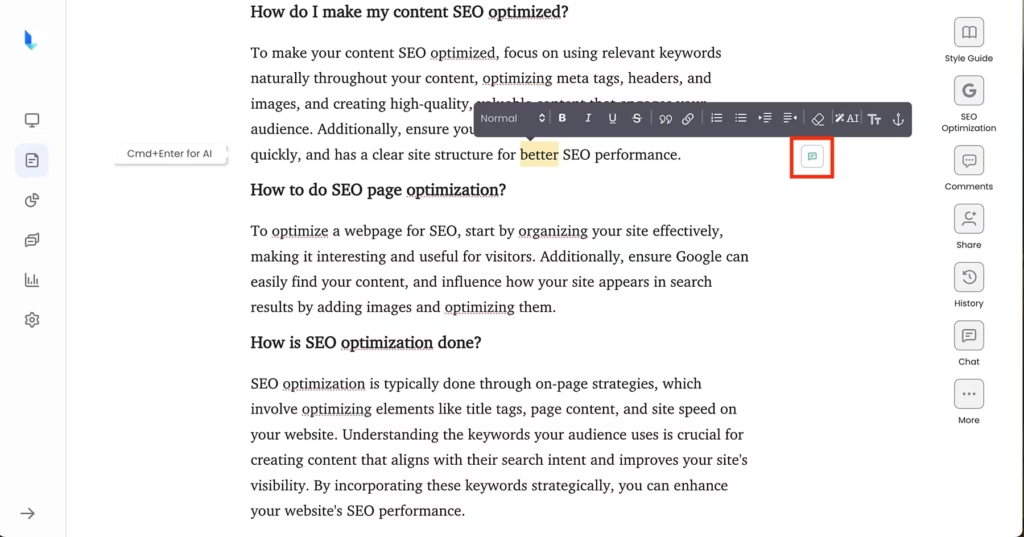
Compared to Anyword, Letterdrop works across a broader operational layer. Letterdrop controls the full content lifecycle by organizing drafts, approvals, publishing, and channel distribution inside one workflow. That structure positions Letterdrop as a stronger option for content-driven marketing teams rather than copy-only optimization.
Core features inside Letterdrop combine writing with distribution. AI-assisted drafting produces blogs and social posts. Sales enablement workflows align assets with outreach. Social listening, CRM connections, and content libraries connect published material with pipeline-focused campaigns.
Letterdrop is a paid tool with pricing ranging from $299 per month to custom enterprise pricing. The $299 plan covers core content workflows. Growth and Enterprise tiers expand integrations, automation depth, and team-level configuration through annual contracts.
Pros of Letterdrop include unified editorial operations, strong content repurposing, and LinkedIn-focused distribution. Cons of Letterdrop include high entry pricing, reported technical instability, and limited flexibility outside structured workflows.
9. ProWritingAid: Best Anyword Alternative for Editing, Polishing and Readability
ProWritingAid is a writing improvement platform built to refine grammar, clarity, pacing, and structural quality across creative, academic, and business content. ProWritingAid scans text for passive voice, repetition, sentence flow, and stylistic issues while applying direct corrections and deep editorial analysis across long documents.
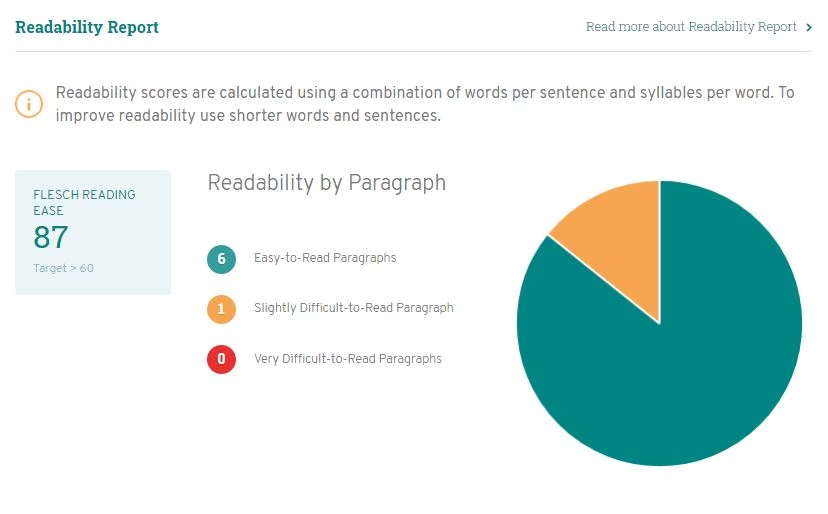
ProWritingAid operates in a different quality layer than Anyword. ProWritingAid examines the technical mechanics of writing by measuring readability, rhythm, and structure. That distinction makes ProWritingAid a stronger option for writers who prioritize polish and linguistic accuracy over campaign performance scores.
Core features include over 25 analysis reports that evaluate grammar, style, readability, pacing, dialogue, consistency, and structure. Paraphrasing tools reshape sentences. A plagiarism checker validates originality. A contextual thesaurus expands vocabulary control. Integrations with Scrivener, Word, and Google Docs apply feedback inside long-form writing environments.
ProWritingAid is a paid tool with pricing ranging from Free to $36 per month. The Free plan limits word counts and AI access. Premium removes most restrictions while adding advanced style rules, custom guides, and collaboration. Premium Pro increases AI usage and introduces daily chapter critiques with workshop access.
Pros of ProWritingAid include strong grammar and style diagnostics, and powerful long-form integrations. Cons of ProWritingAid include a strict free tier, no mobile application, and dense reports that overwhelm writers during early use.
10. Wordtune: Best Anyword Alternative for Rewriting and Paraphrasing Existing Copy
Wordtune is an AI writing tool designed to reshape sentences, refine tone, and clarify meaning across any type of text. Wordtune rewrites passages into shorter, longer, or cleaner versions while preserving the original message and communication intent.
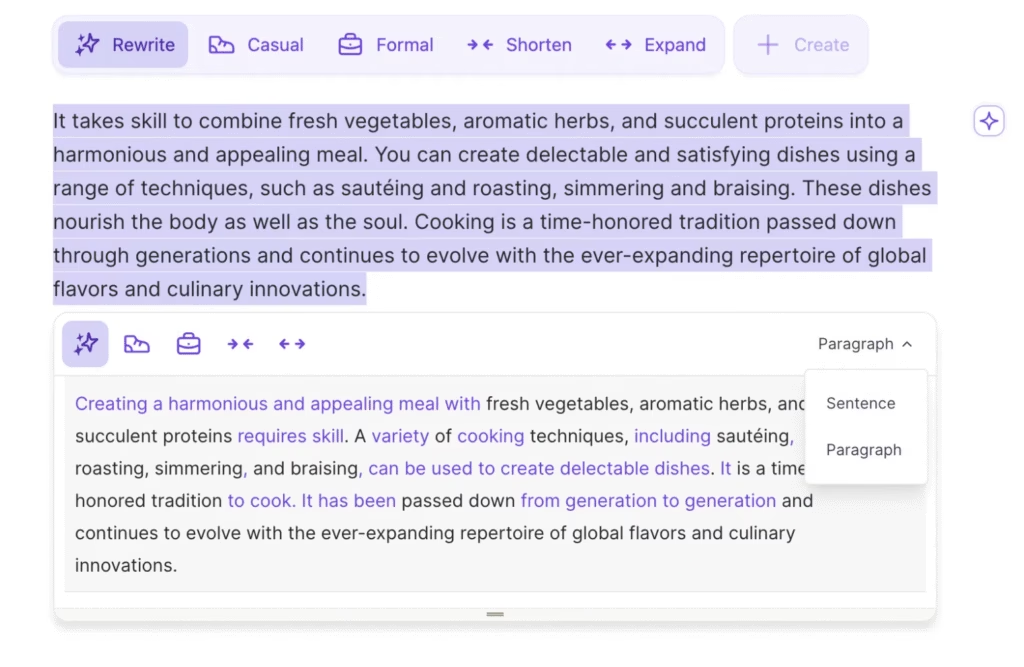
As an alternative to Anyword, Wordtune focuses on refinement rather than generation. Wordtune works on existing drafts by adjusting structure, tone, and clarity. Wordtune stands ahead for rewriting, editing, and paraphrasing workflows rather than original copy production.
Core features in Wordtune center on sentence-level transformation. Sentence and paragraph rewriting adjusts clarity and tone. Tone switching moves text between formal, casual, and neutral styles. Summarization condenses long passages. Length controls expand or shorten content. Grammar correction improves readability without changing meaning.
Wordtune is a paid tool with pricing ranging from $6.99 to $9.99 per month. A Free tier provides limited rewriting. Paid plans unlock tone control, length variation, and unlimited paraphrasing.
Pros of Wordtune include fast rewriting speed, precise tone adjustment, and clean sentence restructuring. Cons of Wordtune include weak SEO capabilities, limited control for technical writing, restrictions on the Free tier, and fewer advanced tools for long-form content editing.
11. Ahrefs Content Helper: Best Anyword Alternative for SEO‑Driven Content Planning and Writing
Ahrefs Content Helper is part of the Ahrefs platform that manages keyword research, backlinks, rankings, and technical site analysis in one system. Ahrefs Content Helper guides writers through topic discovery, SERP patterns, and search-aligned outlines so content reflects how pages rank rather than how prompts read.
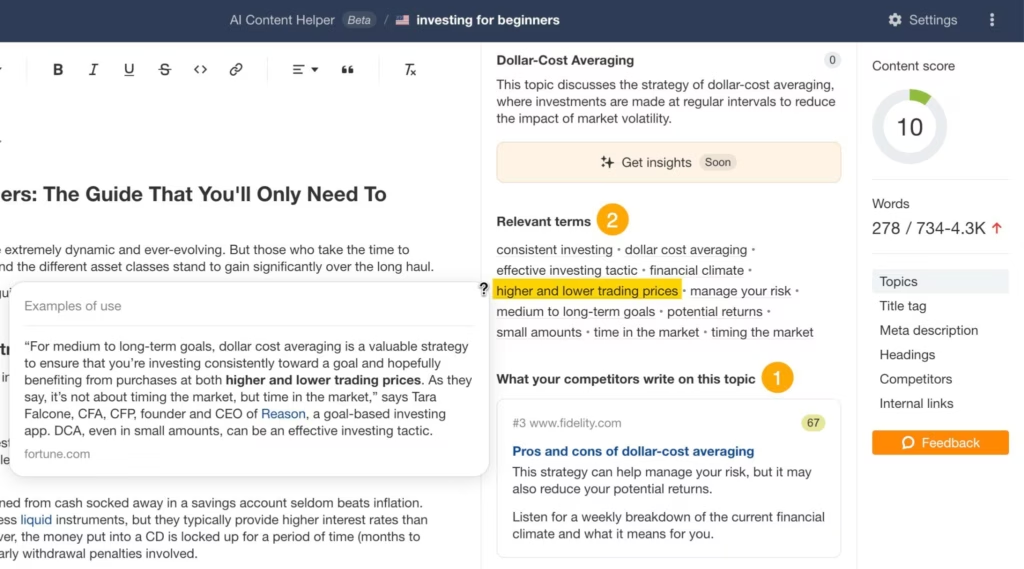
Against Anyword, Ahrefs Content Helper works from search data instead of conversion prediction. Anyword evaluates marketing copy through performance modeling. Ahrefs Content Helper uses competitor pages, keyword trends, and SERP layouts to shape article structure before writing begins.
Core features inside Ahrefs span full SEO research. Backlink tracking reveals anchor text trends, referring domains, and historical link growth. Keyword explorers map search demand. Rank trackers monitor page movement. Those layers combine with Content Helper to produce outlines and writing guidance tied to real ranking signals.
Ahrefs Content Helper is a paid tool with pricing ranging from $129 to $1,499 per month. Higher tiers add users, projects, and data volume. A limited Free tier exists through standalone tools like the backlink checker and keyword generator.
Pros of Ahrefs review include deep backlink intelligence, fast data processing, accurate SERP-based topic guidance, and a clean cloud interface. Cons of Ahrefs Content Helper include high subscription costs, tier-based data limits, no built-in AI drafting engine, and reliance on external writing tools for full content production.
12. ChatGPT: Best Anyword Alternative for Flexible, Open‑Ended Content Generation
ChatGPT is a general-purpose AI writing platform built for ideation, drafting, and exploratory content creation across formats. ChatGPT responds to prompts through conversational interaction, which allows real-time changes in tone, depth, and structure during writing.
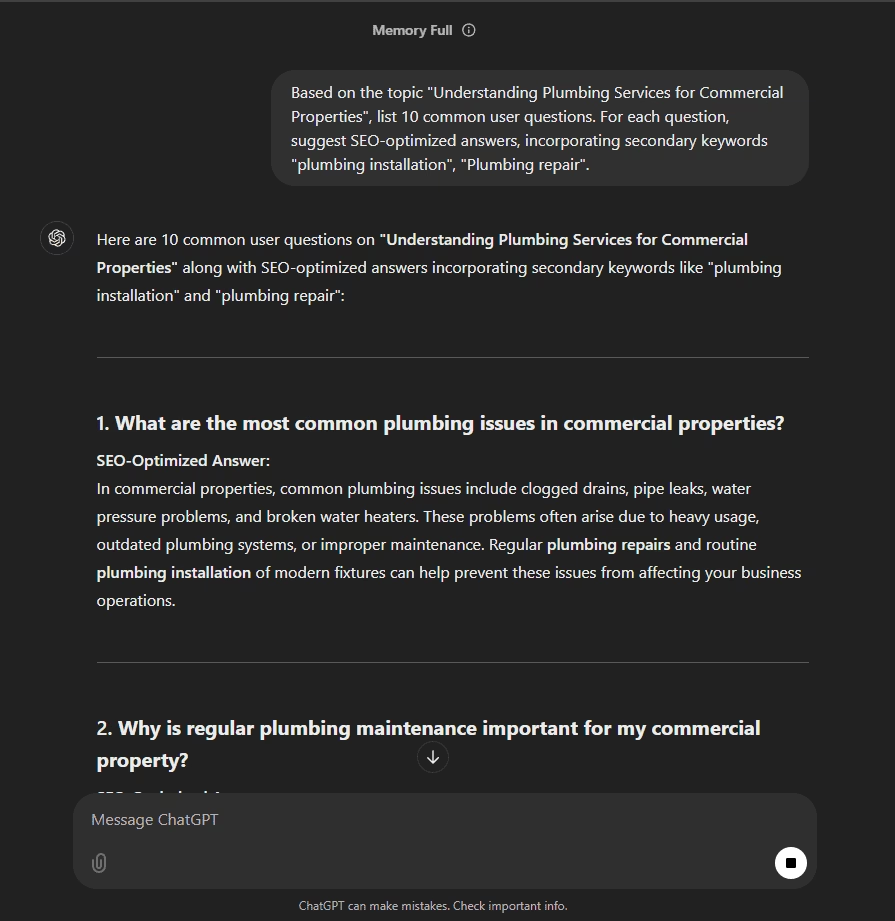
Compared to Anyword, ChatGPT operates as an open-ended generation engine. ChatGPT adapts continuously through dialogue, which enables evolving outlines, expanding sections, and contextual refinement across long drafts. That flexibility positions ChatGPT as a stronger option for creative and editorial workflows rather than conversion-focused copywriting.
Core features inside ChatGPT center on adaptive text generation. Tone control adjusts voice. Long-form drafting produces articles and guides. Structured rewriting reshapes existing content. Idea expansion builds new sections as prompts change. Content evolves dynamically through iterative conversation instead of fixed templates.
ChatGPT is a paid tool with pricing ranging from $20 to $200 per month. A Free tier allows limited testing. Paid plans expand model access, message volume, and generation capacity.
Pros of ChatGPT include high flexibility, fast ideation, strong multi-style writing, and natural conversational control across many content formats. Cons of ChatGPT include no native SEO research tools, limited SERP alignment, repetition during long sessions, and dependence on prompt quality for consistent output.
13. Scalenut: Best Anyword Alternative for SEO and Content Marketing with Conversion in Mind
Scalenut is an AI-driven SEO platform that combines keyword research, SERP analysis, and content optimization inside one workflow. Scalenut identifies search intent, builds article structures, and applies live scoring so writers produce search-aligned content that connects discovery with conversion outcomes.
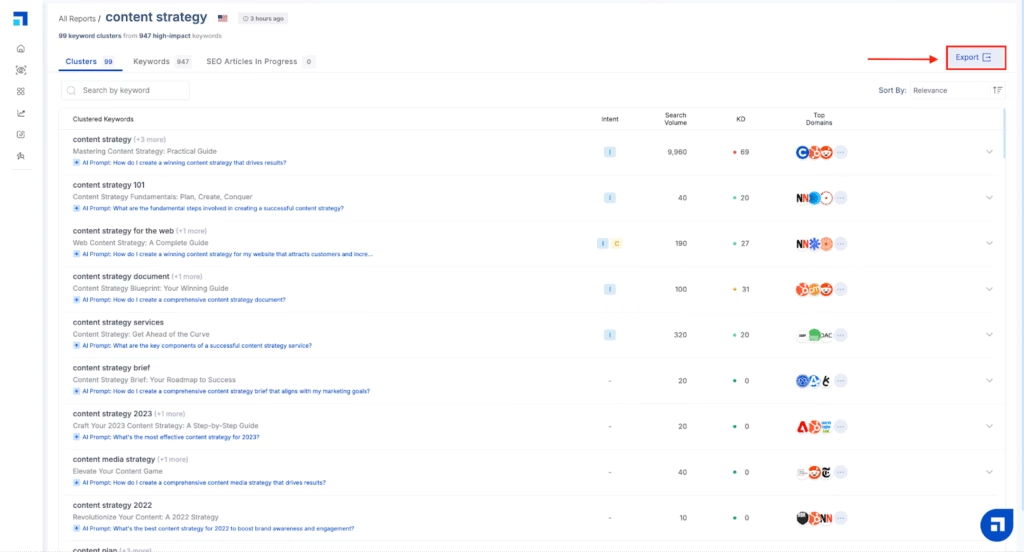
Scalenut outperforms Anyword in SEO and content marketing with conversion in mind, holistic content workflows, and search-aligned optimization. Scalenut builds content from SERP data, keyword clusters, and intent signals before writing begins. That structure places Scalenut ahead for teams that connect SEO planning with revenue-focused content rather than isolated ad copy.
Core features in Scalenut drive search-oriented production. Keyword clustering groups terms by intent. A live SEO editor applies NLP scoring during drafting. A SERP analyzer compares pages against ranking competitors. The AI Copywriter handles short-form needs. The SEO Assistant refines long-form articles through structure checks and optimization signals.
Scalenut is a paid tool with pricing ranging from $49 to $149 per month. Entry plans provide limited content credits. The Growth tier expands article allowances. The Pro tier adds deeper analysis and access to additional tools.
Pros of Scalenut include fast keyword clustering, integrated SERP-based guidance, and strong on-page optimization. Cons of Scalenut include uneven tone in AI-generated sections, restricted rewriting depth on lower tiers, content credit limits, and dependence on manual review.
14. Outranking: Best Anyword Alternative for SEO‑Optimized Content and Research
Outranking is an AI-powered SEO content platform built to guide research, drafting, and optimization through structured, step-driven workflows. Outranking uses live SERP data and ranking comparisons to shape briefs and articles around what search engines reward.
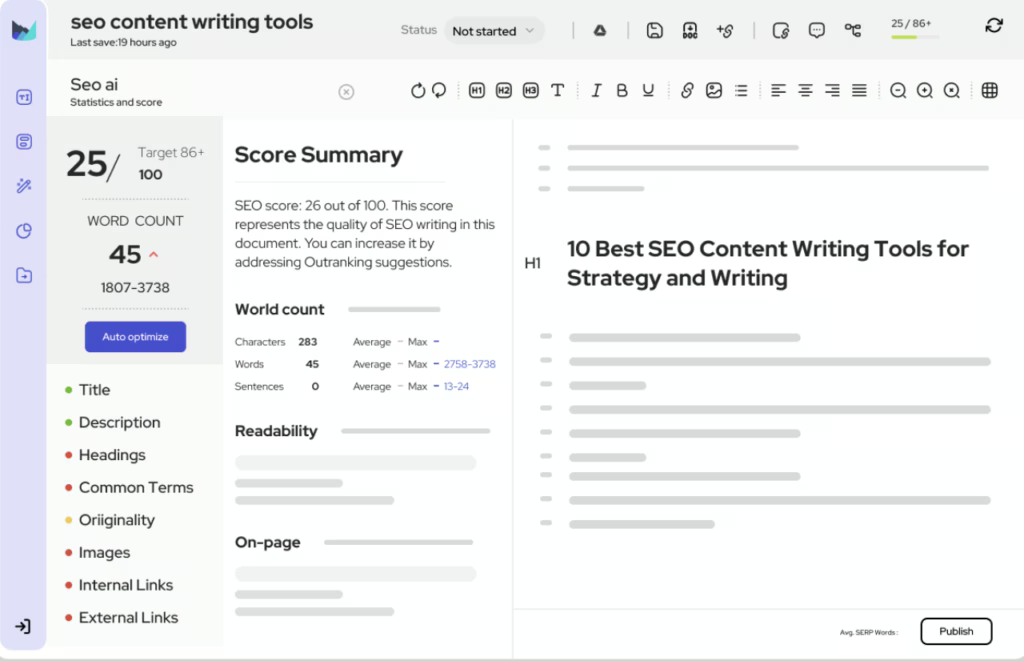
Against Anyword, Outranking operates at a strategic SEO level. Anyword focuses on high-converting marketing copy and predictive scoring. Outranking structures long-form content through keyword research, and ranking requirements. That difference places Outranking ahead for teams that publish research-driven pages designed to compete in organic search.
Core features inside Outranking center on guided execution. Structured workflows move content from outline through optimization. Real-time SEO scoring applies ranking signals. Keyword clustering groups terms. Automated internal linking connects pages. Collaboration tools and WordPress integration push finished content into publishing pipelines.
Outranking is a paid tool with pricing ranging from $19 to $159 per month. Lower tiers cover a small number of SEO documents. Higher plans expand document limits and workflow depth. Agency plans use custom pricing for scaled operations.
Pros of Outranking include clear step-based workflows, integrated keyword clustering, built-in internal linking, and strong SEO guidance across the full content lifecycle. Cons of Outranking include credit-based limits, a steeper onboarding process, missing backlink analysis, and no full rank tracking for ongoing performance monitoring.
15. Jotbot: Best Anyword Alternative for Quick, Simple and Chat‑Style Content Generation
Jotbot AI is a conversational writing and document assistant built for fast drafting, research, and text refinement. Jotbot AI generates drafts, summarizes material, finds sources, and edits text while learning an individual writing style through Language Style Matching (LSM) to create more natural, personalized output.
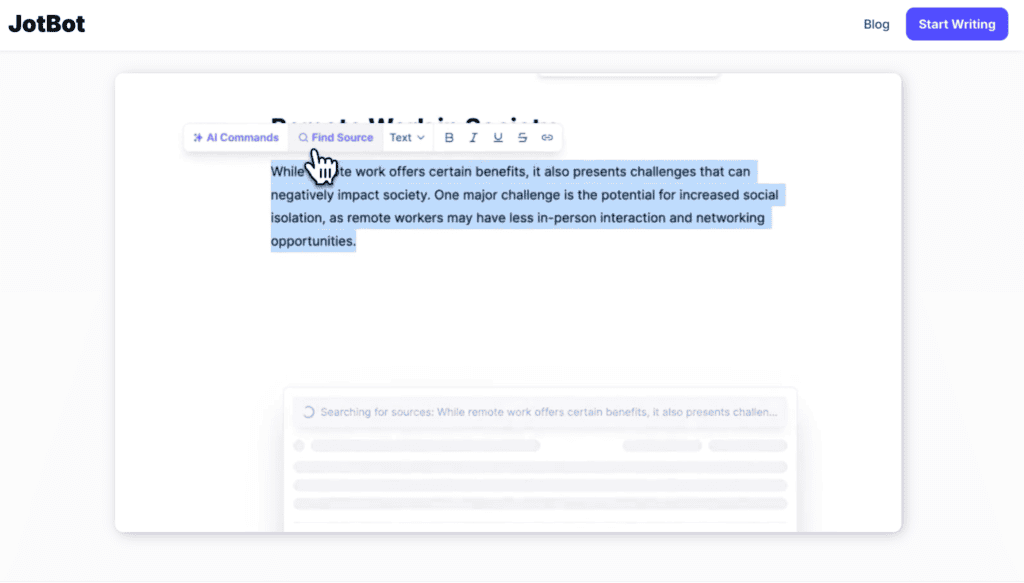
Compared to Anyword, Jotbot AI operates through live conversation instead of performance modeling. Jotbot AI uses back-and-forth dialogue to explore ideas, shape drafts, and refine text in real time. That interaction style makes Jotbot AI a stronger option for students, researchers, and writers who prefer chat-driven workflows over campaign-focused copy optimization.
Core features include a Research Assistant that finds credible sources, summarizes PDFs and websites, and allows chat-based interaction with references. Content Generation produces outlines, drafts, and product descriptions directly inside documents. Editing and Polishing applies autocomplete, paraphrasing, grammar correction, and style refinement.
Jotbot AI is a paid tool with pricing ranging from $0 to $20 per month. The Free plan provides 10 credits per day, access to three sources, and basic features. The Unlimited plan at $20 adds unlimited credits, unlimited autocomplete, unlimited sources, unlimited video uploads, upgraded AI models, and priority feature access.
Pros of Jotbot AI include an intuitive interface, rapid drafting, strong writer style matching, effective research tools, and smooth PDF and website summarization for academic and professional workflows. Cons of Jotbot AI include occasional factual errors, and general data privacy concerns associated with cloud-based AI writing platforms.
16. Frase: Best Anyword Alternative for AI‑Assisted SEO Briefs and Content Optimization
Frase.io is an AI SEO content platform that converts search data into structured briefs and optimized drafts. Frase.io reviews ranking pages to identify topics, questions, and keyword patterns that define how high-performing articles achieve search visibility.
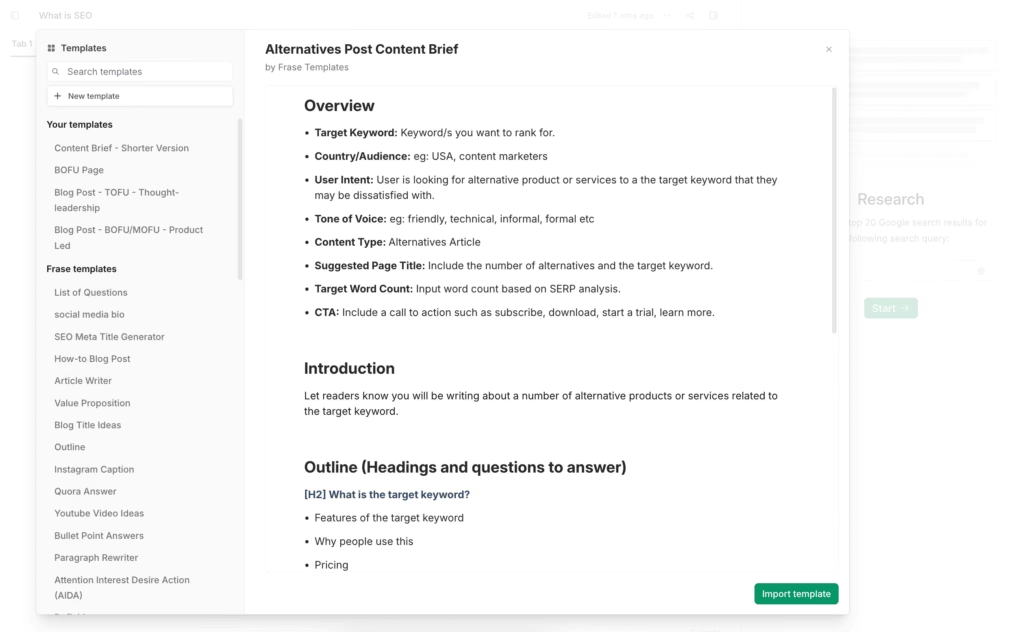
As an alternative to Anyword, Frase.io operates inside the SEO workflow. Anyword centers on marketing copy and performance scoring. Frase.io builds content from SERP research, intent mapping, and optimization signals. That approach positions Frase.io ahead for long-form articles that target organic rankings rather than ad-driven messaging.
Core features in Frase.io emphasize research-led writing. SERP-based briefs outline topics and questions. Search intent mapping defines coverage depth. Optimization feedback guides drafting. Shared editors enable collaboration. Integrations with Google Docs and WordPress connect research, writing, and publishing inside one flow.
Frase.io is a paid tool with pricing ranging from $45 to $115 per month. Entry plans target individual creators. Higher tiers expand collaboration and workflow controls. A free trial grants full platform access before subscription.
Pros of Frase review include fast SERP research, clear article outlines, strong optimization signals, and smooth connections between research and publishing workflows. Cons of Frase.io include project limits on lower plans, extra fees for advanced AI documents, and limited technical SEO capabilities beyond on-page optimization.
17. Surfer SEO: Best Anyword Alternative for Data‑Driven SEO Content Optimization
Surfer SEO is an on-page content optimization platform built around SERP analysis and live ranking signals. Surfer SEO studies top-ranking pages for a keyword and converts competitive patterns into rules for structure, depth, and formatting during content creation.

Against Anyword, Surfer SEO applies search data instead of conversion modeling. Surfer SEO guides articles through keyword targets, layout benchmarks, and competitor comparisons. Surfer SEO stands ahead for teams that write content designed to compete in organic search rather than ad-focused messaging.
Core features in Surfer SEO focus on ranking alignment. The Content Editor enforces keyword frequency, heading structure, and competitive thresholds while drafts develop. NLP-driven models extract ranking signals from top pages and translate them into actionable targets that shape SEO-focused articles.
Surfer SEO is a paid tool with pricing ranging from $79 to $179 per month. Entry plans include audits, keyword research, and content optimization. Higher tiers add collaboration options, activate AI modules, and unlock API access.
Pros of Surfer SEO review include precise on-page scoring, strong international SEO coverage, accurate SERP benchmarks, and a streamlined interface for building search-aligned content.
Cons of Surfer SEO include an onboarding learning curve, limited flexibility for specialized brand voice, and dependence on strict optimization targets that restrict creative freedom.
18. Clearscope: Best Anyword Alternative for Highly Optimized SEO Content
Clearscope is an SEO content optimization platform built to align drafts with SERP expectations through semantic analysis. Clearscope reviews ranking pages and converts competitor patterns into structured guidance for topic coverage, relevance, and article completeness.
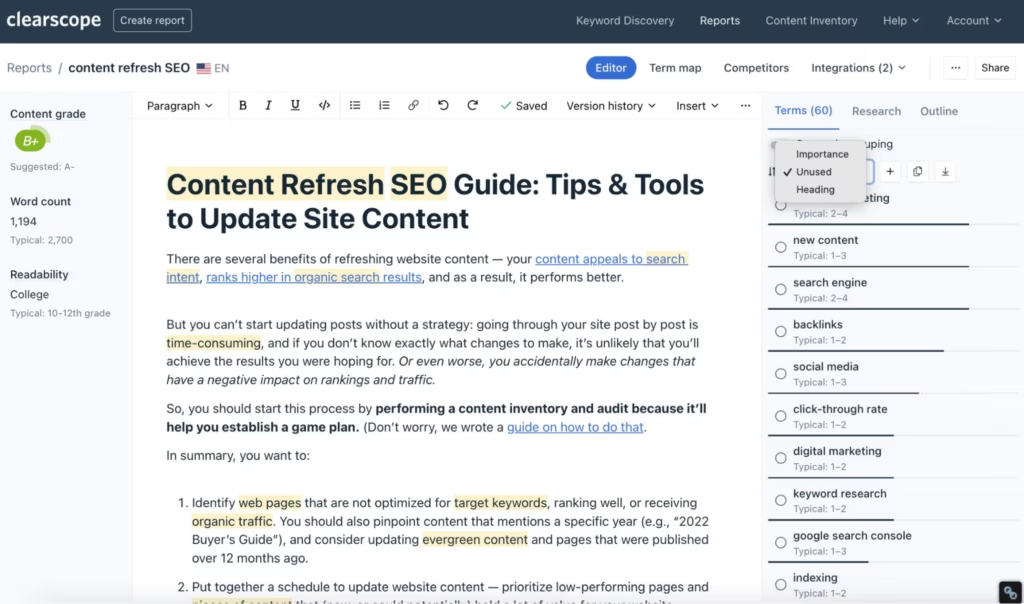
Compared to Anyword, Clearscope focuses on refinement rather than generation. Anyword creates marketing copy with A B testing and performance scoring. Clearscope analyzes existing drafts and guides them toward topical depth. That contrast places Clearscope ahead for teams that polish content for ranking rather than producing promotional copy.
Core features in Clearscope emphasize structured SEO control. The Content Editor evaluates readability, keyword balance, and topic coverage. The Term Map groups related concepts based on competitor usage. Content Reports define headings, priority terms, and required questions that shape ranking-ready pages.
Clearscope is a paid tool with pricing ranging from $189 to $399 per month. Entry plans provide access to the Content Editor and content reports. Higher tiers expand usage limits, collaboration tools, and enterprise features like single sign-on and crawler whitelisting.
Pros of Clearscope review include consistent SERP analysis, stable editorial standards at scale, accurate semantic modeling, and a clean interface that keeps optimization focused. Cons of Clearscope include limited technical SEO features, high pricing for small teams, and the risk of over-optimization from strict content score targets.
19. Semrush Writing Assistant: Best Anyword Alternative for SEO and On‑Page Optimization
Semrush Writing Assistant is an AI editing system embedded inside the Semrush SEO platform. Semrush Writing Assistant applies live SEO rules, readability checks, and keyword guidance directly inside Google Docs, WordPress, and Microsoft Word during drafting.
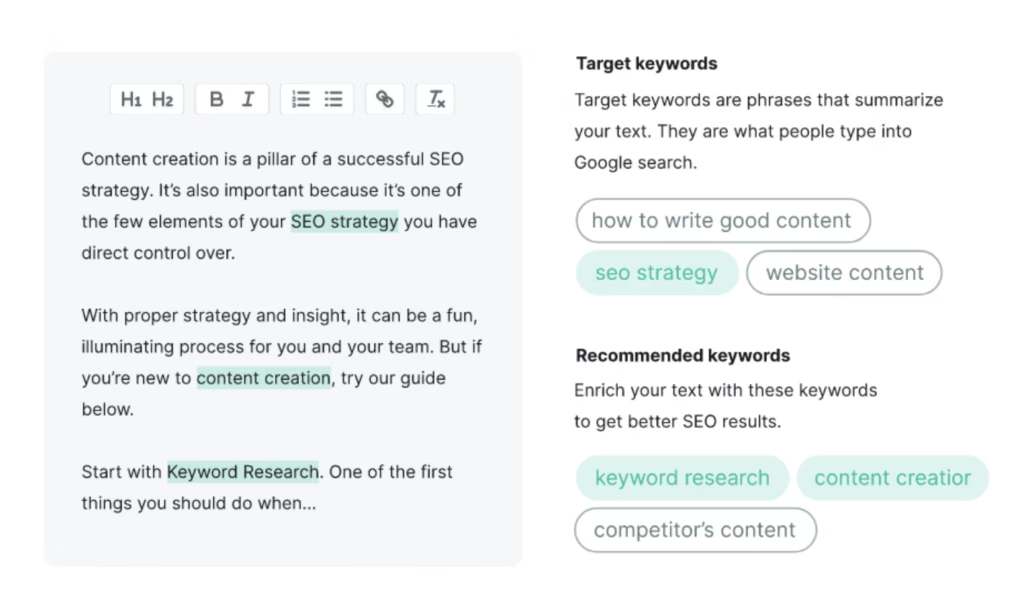
Compared to Anyword, Semrush Writing Assistant works from search intelligence rather than conversion prediction. Semrush Writing Assistant uses Semrush keyword data and competitor signals to shape on-page optimization in real time.
Core features in Semrush Writing Assistant center on in-editor optimization. Keyword tracking monitors usage levels. Tone analysis checks consistency. Plagiarism detection validates originality. Alerts flag keyword stuffing, recommend content length, surface missing alt text, and identify structural improvements that improve on-page performance.
Semrush Writing Assistant is a paid tool with pricing ranging from $249 to $499 per month, with an optional AI add-on at $20 per month for 10,000 AI words. Access depends on the underlying Semrush subscription tier.
Pros of Semrush review include accurate SEO scoring, tight editor integrations, real-time on-page feedback, and strong alignment with Semrush keyword and competitor data. Cons include extra charges for AI usage, uneven tone analysis in formal writing.
20. MarketMuse: Best Anyword Alternative for Deep Content Strategy and Topic Modeling
MarketMuse is an AI content intelligence platform built to guide topic authority and long-term content planning. MarketMuse evaluates semantic depth, coverage gaps, and topic alignment through advanced natural language processing models.
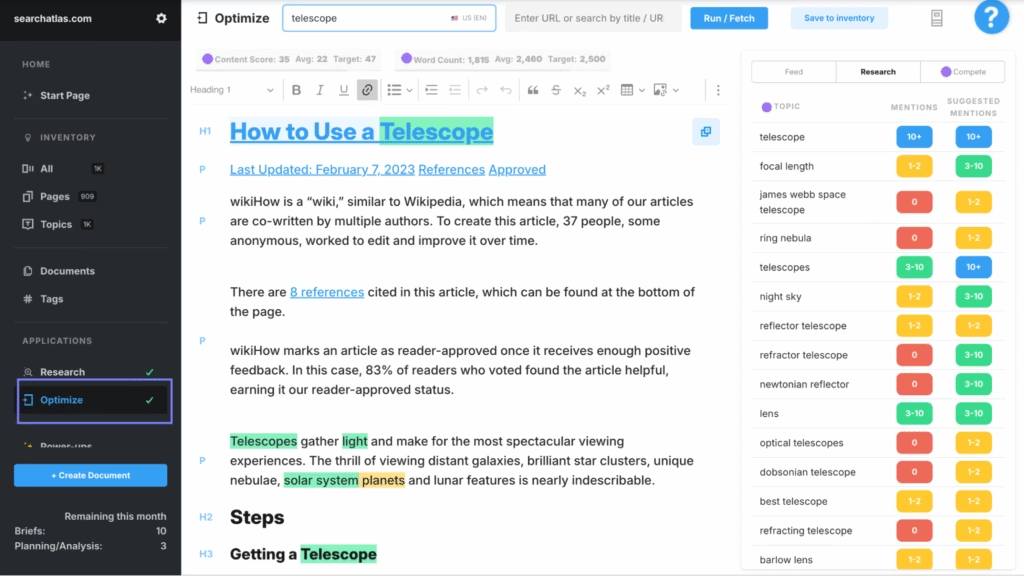
Against Anyword, MarketMuse works at a strategic level. MarketMuse analyzes SERPs to reveal topic opportunities and difficulty levels. That difference places MarketMuse ahead for teams that plan editorial strategy around topical authority rather than copy generation.
Core features in MarketMuse center on concept-driven analysis. Content inventory tools identify decay and gaps. Topic models map semantic relationships. The Optimize workspace applies inline scoring. Competitive Content Analysis reviews SERPs to recommend word counts, subtopics, and relevance signals that raise domain-level authority.
MarketMuse is a paid tool with pricing ranging from $99 to $499 per month. Optimize starts at $99. Research starts at $249. Strategy starts at $499. A Free tier provides limited topic modeling and scoring.
Pros of MarketMuse include domain authority metrics, proprietary topic modeling, personalized difficulty scores, and strong strategic guidance for large editorial programs. Cons of MarketMuse include higher pricing, limited keyword discovery, and reduced flexibility for teams that require fast, lightweight content workflows.
21. Pepper Content: Best Anyword Alternative for Outsourced Content Creation and AI Synergy
Pepper Content is a content marketing platform that blends AI tools with a large creator marketplace. Pepper Content connects businesses with vetted writers and designers while managing production, publishing, and performance tracking.
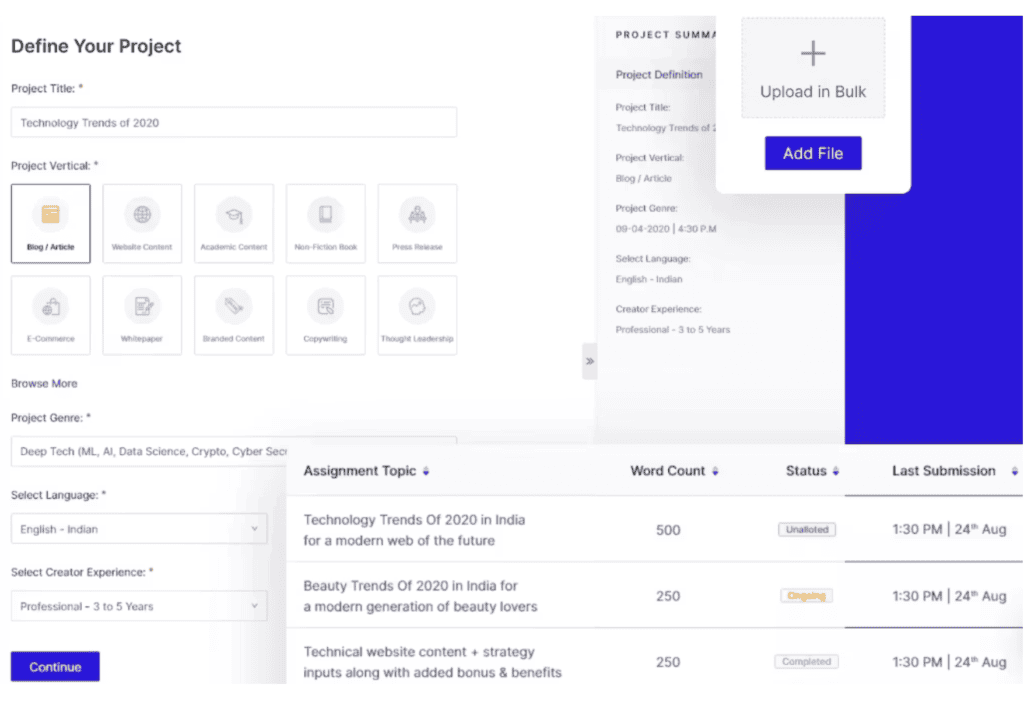
Compared to Anyword, Pepper Content operates through a hybrid execution model. Pepper Content combines AI with access to over 100,000 human creators and industry experts. That structure positions Pepper Content as a stronger option for companies that outsource blogs, whitepapers, videos, and social content rather than relying on automated copy alone.
Core features include content creation that covers blogs, ebooks, whitepapers, product content, videos, social creatives, and thought leadership. Strategy and Analytics provide SEO planning, content gap analysis, and performance tracking. Talent Management connects brands with skilled writers and designers through a vetted marketplace.
Pepper Content is a paid tool with pricing ranging from $399 per month to custom plans. The Premium plan at $399 includes three users, keyword research, content research, an AI writing assistant, and Pepper Docs. Additional users cost $49 per month.
Pros of Pepper Content include AI-assisted workflows, and integrated tools for managing complex content programs across many formats. Cons of Pepper Content include complaints about creator pay, inconsistent management quality, and confusing internal processes.
22. Copymatic: Best Anyword Alternative for Bulk Copywriting and Marketing Automation
Copymatic is an AI writing platform built for rapid production of articles and marketing pages. Copymatic generates blogs, ads, and landing copy through a system designed for speed, simplicity, and large-scale output.
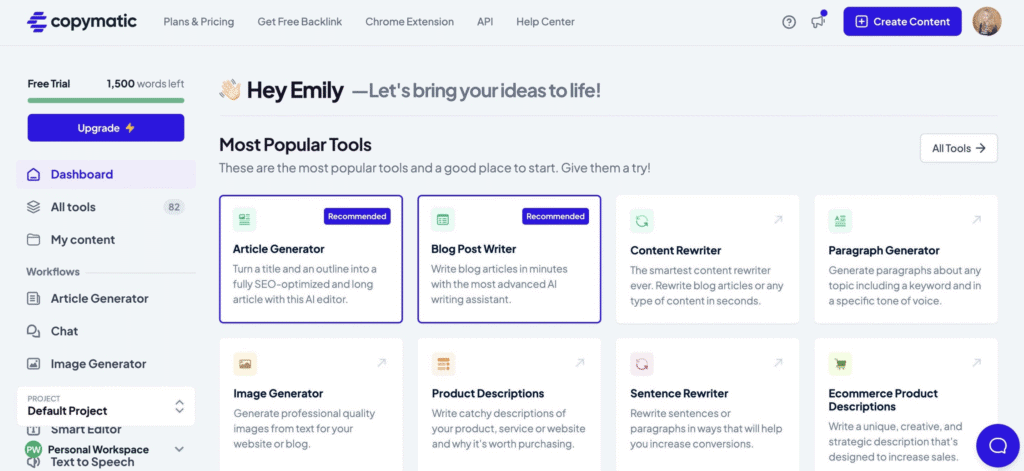
Against Anyword, Copymatic focuses on volume rather than performance scoring. Copymatic produces many variants through automated workflows that push high quantities of text into multi-channel campaigns. That contrast makes Copymatic a better fit for teams that require fast bulk generation instead of predictive optimization.
Core features include over 80 templates for blog posts, landing pages, ads, and product descriptions. Long-form generators create 1,000-plus-word drafts within minutes and apply basic SEO structure for publishing workflows.
Copymatic is a paid tool with pricing ranging from $29 to $66 per month. Lower tiers target individual users. Higher plans increase content limits and team access.
Pros of Copymatic include very fast output, simple operation, and strong coverage for ads, blogs, and landing pages at scale. Cons of Copymatic include generic phrasing in many drafts, limited depth for specialized topics, and frequent need for human editing before publishing.
23. Narrato: Best Anyword Alternative for Team‑Based Content Operations
Narrato is an AI-driven content marketing and workflow platform built to manage collaborative content production. Narrato connects ideation, writing, optimization, review, and publishing inside one workspace that keeps teams aligned across every stage of delivery.
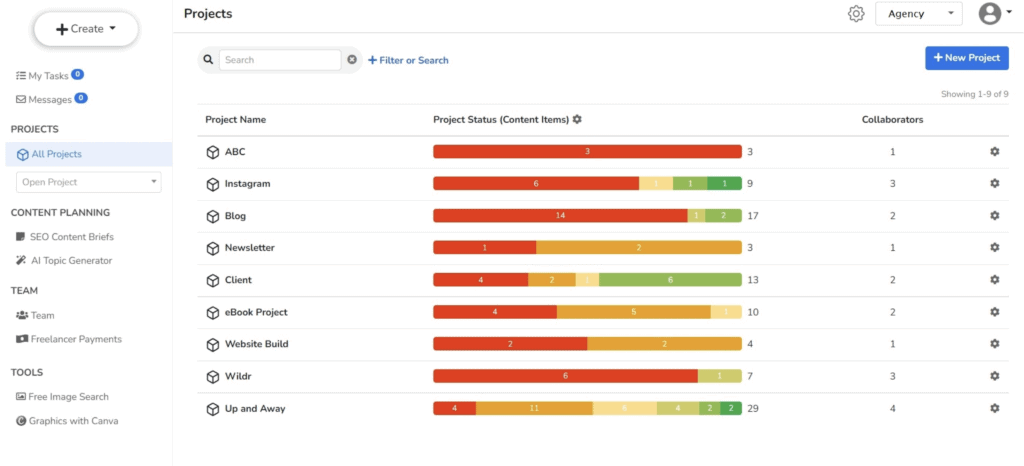
Compared to Anyword, Narrato focuses on coordinated execution. Narrato organizes shared editorial spaces, task assignments, calendars, and approval loops that keep teams synchronized. That design makes Narrato a stronger option for organizations that run content through structured workflows rather than solo drafting.
Core features include an SEO Optimization that builds keyword research and SEO briefs with structure and readability guidance. Workflow and Project Management provide task assignments, content calendars, Kanban boards, custom workflows, and team management for in-house and freelance teams.

Narrato is a paid tool with pricing ranging from $36 to $96 per month. The Pro plan at $36 includes four user seats, unlimited projects, and 400,000 AI characters with content workflows, SEO briefs, and social publishing. The Business plan at $96 adds unlimited AI writing, brand voices, bulk generation, API access, WordPress publishing, and white labeling.
Pros of Narrato include a clean interface, strong AI writing and optimization, full content lifecycle management, and collaboration tools. Cons of Narrato include fast credit depletion, AI output that needs voice refinement, onboarding complexity, uneven customer service, and high pricing.
24. TextCortex: Best Anyword Alternative for Using Company Data and Knowledge‑Based Content
TextCortex is an AI writing platform designed for in-context editing across browsers, documents, and business tools. TextCortex generates and rewrites text directly where teams work instead of requiring separate writing environments.
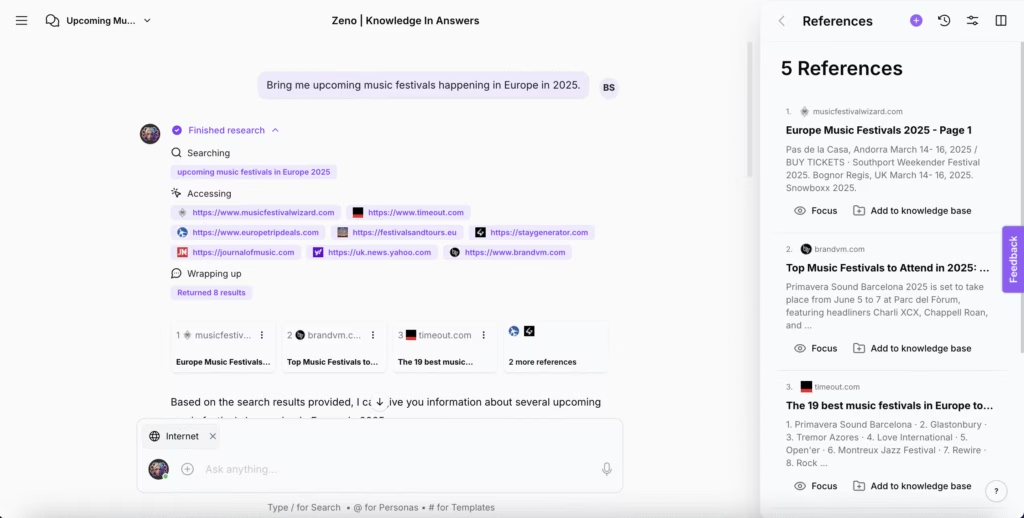
Against Anyword, TextCortex emphasizes internal knowledge. TextCortex integrates proprietary data through custom knowledge bases that feed ZenoChat and inline writing tools. That approach makes TextCortex stronger for organizations that require knowledge-grounded content rather than ad-centric generation.
Core features in TextCortex focus on in-place writing. ZenoChat acts as a configurable assistant. A browser toolbar rewrites content on web pages. Custom knowledge bases guide articles, emails, and social posts with company-specific data.
TextCortex is a paid tool with pricing ranging from free access to $23.99 per month. Free plans include limited credits. Paid tiers increase usage, unlock knowledge bases, and add privacy controls. Enterprise plans extend organization-level governance.
Pros of TextCortex include multilingual output, strong brand customization, and flexible knowledge-based writing across many work environments. Cons of TextCortex include limited free usage, higher cost per volume, and frequent need for manual editing.
25. Copysmith: Best Anyword Alternative for Bulk Copy Generation and E‑Commerce
Copysmith is an AI copywriting platform built to serve ecommerce brands and digital marketers. Copysmith produces product descriptions, ad copy, blog content, and social posts through workflows designed to manage large catalogs and multi-channel campaigns.
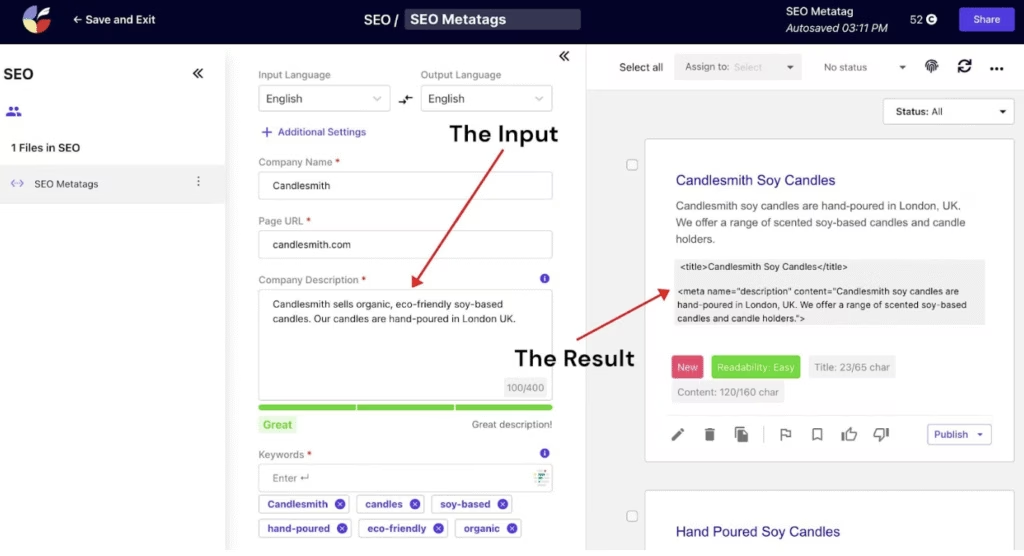
Compared to Anyword, Copysmith operates at volume and commerce scale. Copysmith emphasizes mass production of product listings and ad variations while connecting directly to ecommerce platforms. That difference makes Copysmith a stronger option for businesses that require large quantities of retail and promotional content rather than performance modeling.
Core features include Bulk product description generation that handles thousands of SKUs. Ad variant testing creates multiple campaign versions. Translation tools adapt copy for global markets. Collaboration options keep teams aligned while copy moves across channels.
Copysmith is a paid tool with pricing ranging from $19 to custom enterprise plans per month. Enterprise plans provide tailored features and larger usage allowances based on business requirements.
Pros of Copysmith include fast bulk generation, tight ecommerce integrations, consistent product copy, and efficient ad creation for retail-focused campaigns. Cons of Copysmith include repetitive phrasing across large runs, limited SEO depth, and a less intuitive user interface.
26. Contentbot.ai: Best Anyword Alternative for Flexible Short and Mid‑Length Content at Scale
ContentBot.ai is an AI content automation platform designed for startups and SaaS teams that run ongoing publishing pipelines. ContentBot.ai generates blogs, landing pages, and product content through structured workflows that emphasize scale and automation.
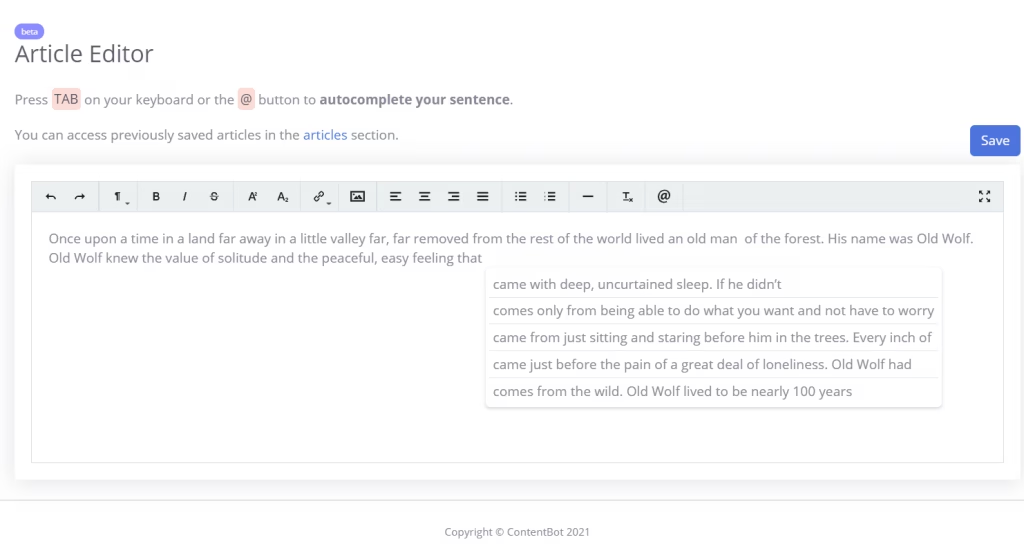
Against Anyword, ContentBot.ai prioritizes volume and process control. ContentBot.ai automates the creation of short ideas and mid-length articles across platforms through repeatable workflows. That structure places ContentBot.ai ahead for teams that manage recurring content rather than isolated ad experiments.
Core features in ContentBot.ai center on automation. Long-form generation produces articles. Bulk processing handles large batches. Plagiarism checks validate originality. SEO integrations guide optimization. AI Flows build multi-step pipelines that generate, rewrite, and prepare content without manual intervention.
ContentBot.ai is a paid tool with pricing ranging from $9 to $49 per month, with prepaid options starting at $0.50 per 1,000 words. Subscription tiers scale word limits and workflow complexity. Prepaid plans enable high-volume production at flexible costs.
Pros of ContentBot.ai include automation-driven workflows, strong long-form generation, and native WordPress and Chrome integrations that connect writing with publishing. Cons of ContentBot.ai include uneven draft quality, rising costs for advanced automation, and the need for editorial refinement on complex or technical subjects.
27. Writecream: Best Anyword Alternative for Personalized Outreach Content (Emails, LinkedIn)
Writecream is an AI content platform designed for personalized outreach and large-volume marketing production. Writecream creates cold emails, LinkedIn messages, ads, scripts, and social content through automation-driven workflows that scale prospect-specific messaging.
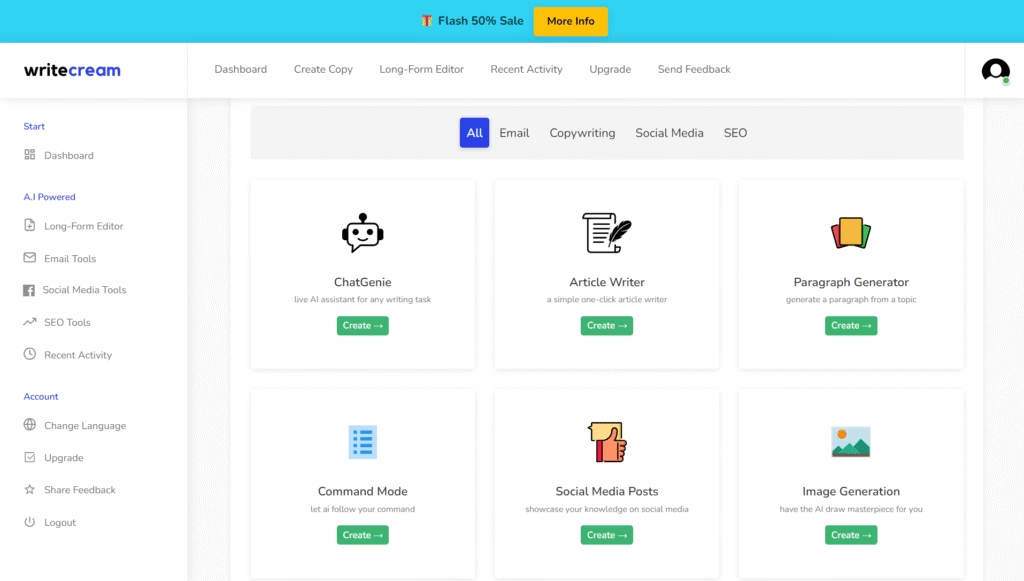
Compared to Anyword, Writecream centers on personalization. Writecream inserts prospect data into outreach templates to produce unique intros and customized messages at scale. That focus makes Writecream a stronger option for teams that run outbound campaigns rather than conversion-tested advertising copy.
Core features in Writecream revolve around automated personalization. The platform generates tailored openings for cold emails and backlink outreach. Content extends into images and audio. A large template library speeds up execution across marketing and sales channels.
Writecream is a paid tool with pricing ranging from $0 to $49 per month. The Free plan provides limited credits. The $29 Unlimited plan targets individual creators. The $49 Unlimited Pro Max plan adds team seats, faster processing, and expanded media generation.
Pros of Writecream include strong personalization, low entry pricing, and fast generation for high-volume outreach across email and LinkedIn campaigns. Cons of Writecream include tight credit limits, uneven AI image quality, output that needs manual cleanup for longer text, and reduced control over tone consistency across large campaigns.
28. Smart Copy by Unbounce: Best Anyword Alternative for Landing Page and Conversion‑Focused Copy
Smart Copy by Unbounce is an AI copywriting platform designed for conversion-centered marketing assets. Smart Copy produces headlines, ad copy, emails, and landing page sections through CRO-focused templates built to increase clicks and sign-ups.
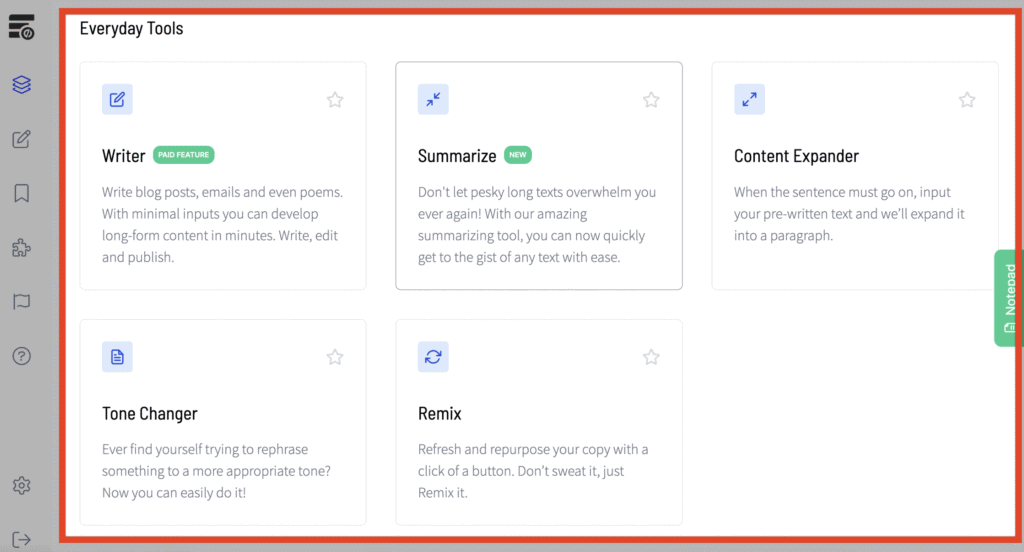
Against Anyword, Smart Copy operates at the page level. Anyword predicts performance for copy variants. Smart Copy applies CRO frameworks to shape headlines, CTAs, and page messaging. That difference positions Smart Copy as a stronger option for marketers that build landing pages and campaigns around conversion structure rather than numeric scoring.
Core features in Smart Copy emphasize conversion execution. Headline optimization, copy remixing, and cross-channel alignment keep messaging consistent from ad to page. Browser and desktop apps enable fast iteration.
Smart Copy by Unbounce is a paid tool with pricing ranging from $74 to $187 per month. The Build plan starts at $74 and includes Smart Copy and landing pages. Higher tiers add A/B testing, Smart Traffic, and advanced targeting. Agency plans use custom pricing.
Pros of Smart Copy include fast conversion copy, and seamless landing page integration across Unbounce campaigns. Cons of Smart Copy include generic output without editing, shallow long-form capabilities, and limited use cases outside performance-driven marketing content.
29. Byword: Best Anyword Alternative for Clean, Lightweight Long‑Form Writing
Byword is an AI content platform built for large-scale, SEO-optimized article production. Byword generates long-form pages from keywords, titles, and bulk inputs, which positions the platform for agencies that run programmatic content campaigns across many URLs.
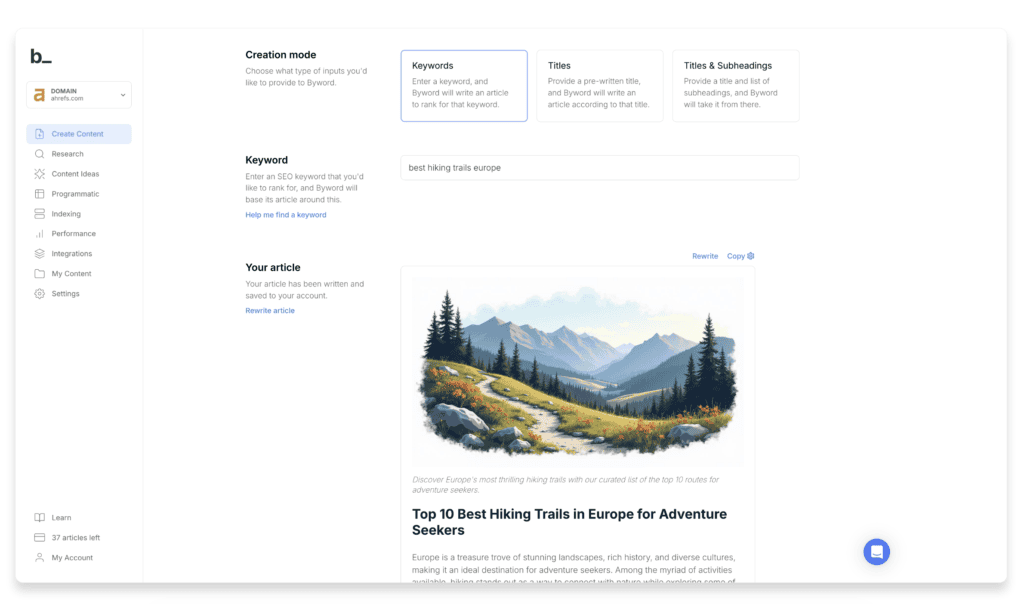
Against Anyword, Byword operates in a different production layer. Anyword centers on marketing copy and performance scoring. Byword focuses on structured long-form output with a clean interface and strong publishing controls. That contrast places Byword ahead for teams that deploy hundreds or thousands of SEO pages rather than ad-driven text variants.
Core features in Byword focus on automated publishing at scale. Long-form article generation builds full pages from keyword sets. Internal linking suggestions connect related pages. Custom templates define brand voice, tone, and layout. Bulk operations deploy content across multi-page campaigns with consistent formatting.
Byword is a paid tool with pricing ranging from $99 to $1,999 per month. The Starter plan costs $99. The Standard plan costs $299. The Scale plan costs $999. The Unlimited plan at $1,999 adds a dedicated server, priority support, and beta feature access.
Pros of Byword include scalable long-form production, and structured workflows for multi-page publishing operations. Cons of Byword include a steeper learning curve, the need for template tuning, and higher costs at the upper tiers for very large production volumes.
30. Peppertype: Best Anyword Alternative for Fast, Templated Growth‑Marketing Content
Peppertype is an AI writing platform built for rapid creation of short marketing copy. Peppertype produces ads, social posts, and email headlines through a template-driven interface that accelerates daily campaign work.
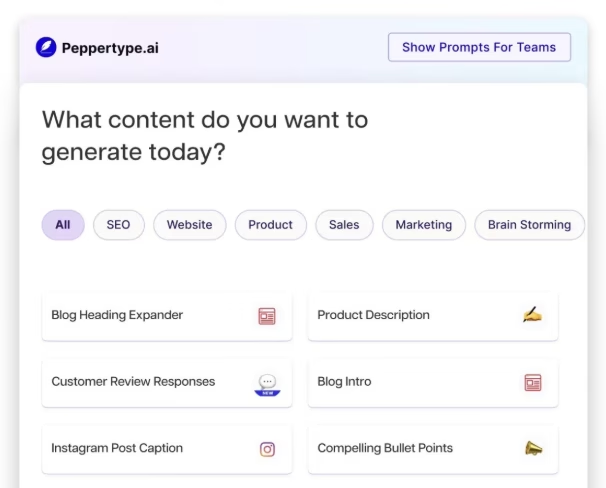
Compared to Anyword, Peppertype prioritizes speed over prediction. Peppertype delivers ready-to-use formats for growth marketing across many channels. That structure positions Peppertype as a better fit for teams that push frequent campaigns rather than optimizing variants through scoring.
Core features include a Content Idea Lab that identifies untapped keywords, measures ranking difficulty, and surfaces topical trends. Generated copy aligns with keyword intent. Collaboration tools enable coordinated production across multi-member marketing teams.
Peppertype is a paid tool with pricing ranging from free trials to custom enterprise quotes per month. Access to full pricing requires a demo, with costs based on feature access, template libraries, and usage limits.
Pros of Peppertype include fast short-form creation, a wide range of templates, and collaboration tools that keep growth teams moving quickly. Cons of Peppertype include weak long-form output, limited language options, repetitive phrasing, and higher pricing compared with some short-form copy alternatives.
31. ClosersCopy: Best Anyword Alternative for Direct‑Response, Sales‑Driven Copy
ClosersCopy is an AI copywriting platform designed around persuasion frameworks and revenue-focused messaging. ClosersCopy creates ads, landing pages, and email sequences through templates built for marketers and entrepreneurs who prioritize conversion over experimentation.
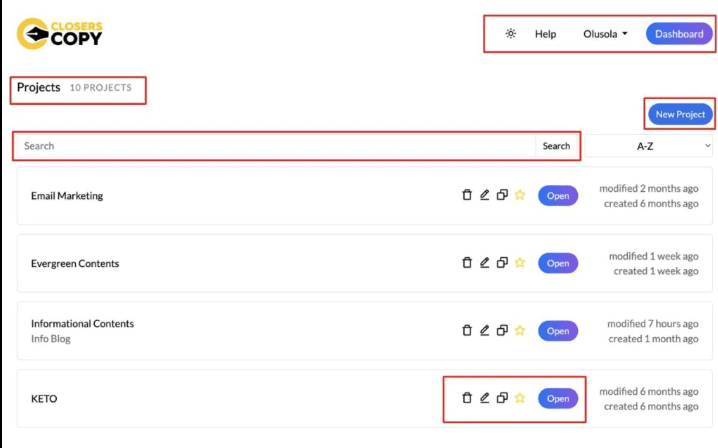
Compared to Anyword, ClosersCopy centers on sales psychology rather than predictive scoring. ClosersCopy applies proven scripts, niche templates, and motivation-driven structures that shape messaging toward revenue outcomes. That difference places ClosersCopy ahead for direct-response campaigns that rely on persuasion instead of statistical testing.
Core features include a large template library that covers ad copy, funnels, and email sequences. AI text generation produces drafts from those frameworks. Basic content scoring offers limited quality checks. Collaboration tools enable team access. Content runs and light SEO audits exist, though analytics integrations and plagiarism detection remain absent.
ClosersCopy is a paid tool with pricing ranging from $49.99 to $99.99 per month. A lifetime license ranges from $327 to $741 based on usage limits and feature access.
Pros of ClosersCopy include extensive template libraries, and easy entry for beginners who write ads, emails, and short-form promotional content. Cons of ClosersCopy include outdated optimization tools, limited platform integrations, and no plagiarism checking.
32. Hypotenuse AI: Best Anyword Alternative for Scalable E‑Commerce Product Descriptions
Hypotenuse AI is an AI writing platform designed for ecommerce brands that publish large product catalogs. Hypotenuse AI produces product descriptions, category pages, and marketplace copy through bulk workflows that preserve brand tone and SEO structure.
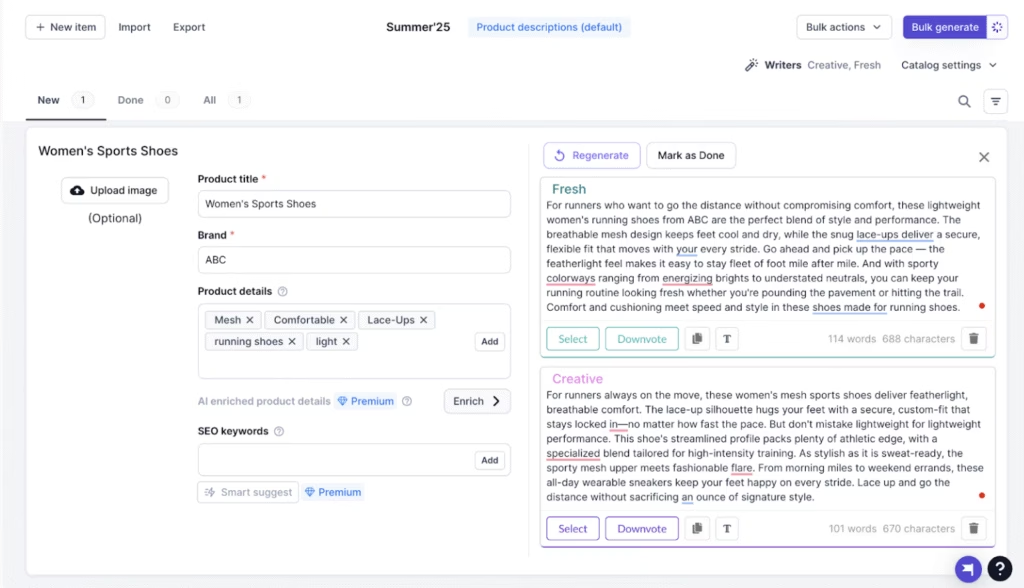
Against Anyword, Hypotenuse AI operates at catalog scale. Hypotenuse AI manages bulk product data, long-tail keywords, and marketplace formatting for retail content. That focus makes Hypotenuse AI a stronger option for ecommerce teams that generate thousands of listings rather than ad variants.
Core features in Hypotenuse AI focus on retail automation. Bulk description generation handles large inventories. Brand tone controls keep voice consistent. Semantic enrichment and long-tail keyword usage improve marketplace and search alignment.
Hypotenuse AI is a paid tool with pricing ranging from $19 to $150 per month. Lower tiers allows marketing content. Higher plans unlock bulk ecommerce workflows and automation. A seven-day free trial is available.
Pros of Hypotenuse AI include scalable catalog output, consistent brand voice, and strong formatting for marketplace and ecommerce platforms. Cons of Hypotenuse AI include limited campaign tools and pricing that exceeds budgets for early-stage or small ecommerce brands.
33. Koala AI: Best Anyword Alternative for Affordable, Lightweight Copy Support
Koala Writer is an AI content platform built to produce SEO-focused long-form articles from live search data. Koala Writer reviews real-time SERP structures, keyword intent, and competitor layouts before generating full drafts that follow ranking patterns.
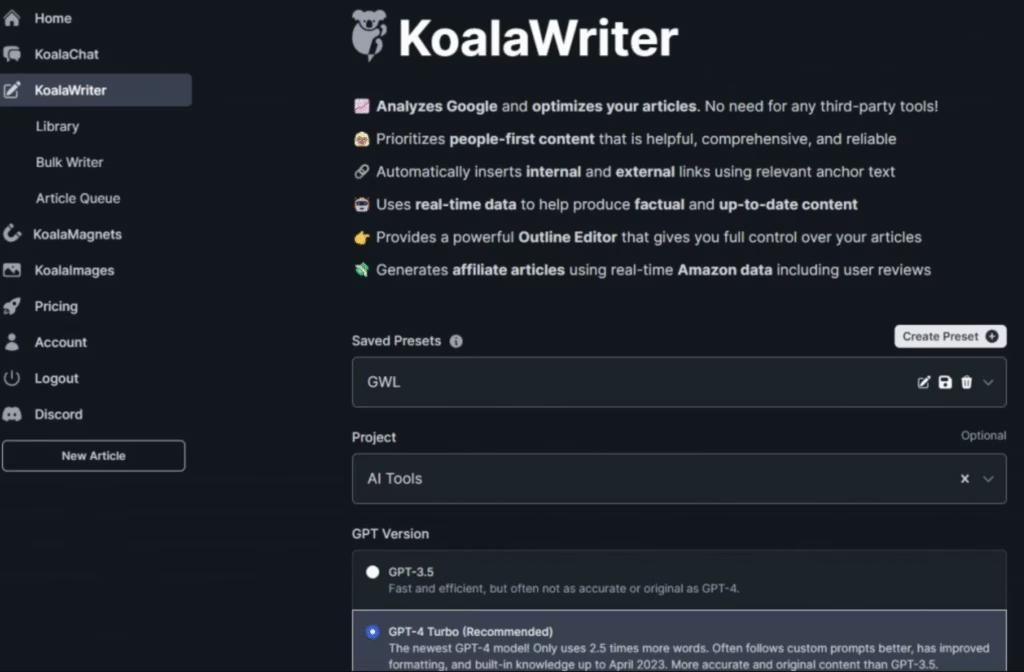
Compared to Anyword, Koala Writer targets low-cost, fast publishing. Koala Writer produces budget-friendly blog content through simple workflows that emphasize SEO alignment. Koala Writer is a better fit for creators that publish frequently without complex optimization layers.
Core features in Koala Writer focus on automated SEO drafting. One-click article generation builds complete posts. SERP-based outline analysis shapes structure. WordPress integrations enable direct publishing. Specialized modes cover affiliate posts, product comparisons, and structured blog formats.
Koala Writer is a paid tool with pricing ranging from $9 to $99 per month. Entry plans provide smaller word limits. Higher tiers increase output volume, unlock stronger models, and activate advanced SEO workflows.
Pros of Koala Writer include fast article creation, and an intuitive publishing flow for bloggers that manage frequent SEO updates. Cons of Koala Writer include higher per-article costs on advanced models, limited depth for expert topics, and restricted editing control.
34. LongShot AI: Best Anyword Alternative for Research‑Backed, Long‑Form SEO Content
LongShot AI is a long-form content platform built around factual accuracy and research-based writing. LongShot AI combines topic discovery, drafting, verification, and optimization inside one system designed for extended SEO articles.
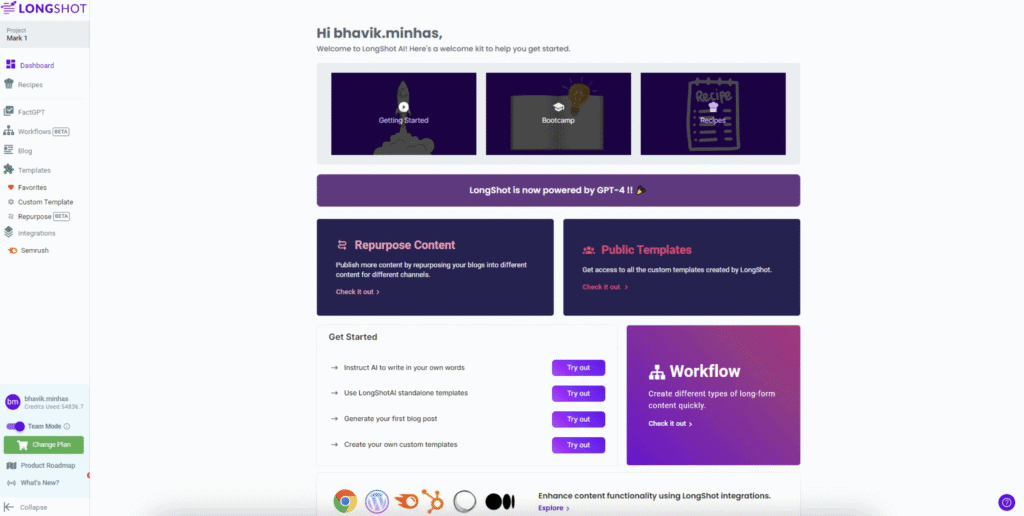
Against Anyword, LongShot AI emphasizes research rather than performance scoring. Anyword models conversion probability for marketing copy. LongShot AI uses validation tools, competitor comparisons, and on-page analysis to guide search-aligned articles. That difference places LongShot AI ahead for creators that publish fact-driven long-form content.
Core features in LongShot AI focus on accuracy. FactGPT validates claims. Citation tools confirm references. A Semantic SEO Checker compares drafts against ranking competitors. Publishing integrations connect content with WordPress and Google Docs.
LongShot AI is a paid tool with pricing ranging from $19 to $299 per month. A 5-day trial is available for $1.
Pros of LongShot AI include dependable long-form quality, built-in fact checking, and accessible pricing for teams that publish research-backed articles. Cons of LongShot AI include credit-based limits, and interface constraints that slow navigation during large content projects.
35. Article Forge: Best Anyword Alternative for Automated Long‑Form Article Creation
Article Forge is an automated AI writing platform built to generate full SEO articles from a single keyword. Article Forge produces complete drafts with structure, media elements, and basic optimization through a one-click workflow designed for speed and volume.
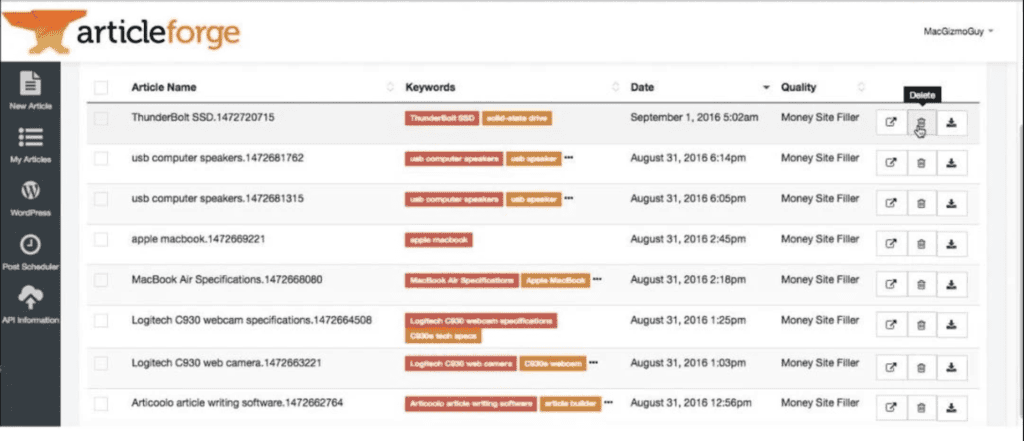
Compared to Anyword, Article Forge operates through automation rather than performance modeling. Article Forge generates entire long-form pages without step-by-step editing, which makes it better suited for high-volume content pipelines rather than copy testing.
Core features in Article Forge center on automatic production. One-click article creation builds full posts. Bulk content tools handle large batches. Real-time research pulls trending topics into drafts. WordPress integration publishes directly to live sites.
Article Forge is a paid tool with pricing ranging from $57 per month to custom business plans. Standard tiers provide fixed monthly word limits. Higher plans expand usage capacity, user seats, and API access.
Pros of Article Forge include fast bulk article creation, cost efficiency at scale, and direct CMS publishing through WordPress integration. Cons of Article Forge include uneven draft quality without human review, and weaker results on technical or highly specialized topics.
36. QuillWord: Best Anyword Alternative for Rewriting, Paraphrasing and Content Variation
QuillWord is an AI writing and research assistant built for students, academics, and professionals who refine existing text. QuillWord improves drafts through rewriting, paraphrasing, citation handling, and research-based editing inside a unified workspace.
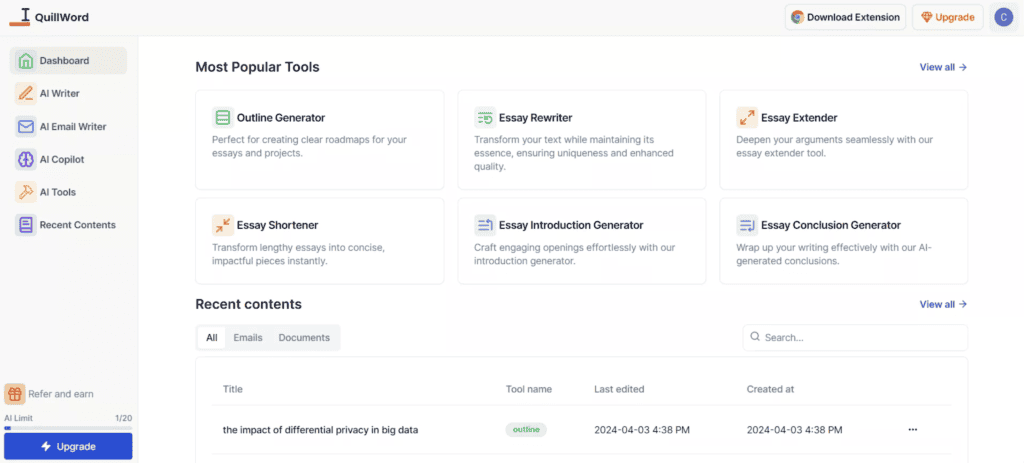
Against Anyword, QuillWord focuses on transformation rather than generation. Anyword creates marketing copy with performance scoring. QuillWord reshapes existing material through multiple writing modes and research tools, which places it ahead for content variation.
Core features in QuillWord combine editing with research. AI Writer and Autocompletion provide inline suggestions. Research Copilot summarizes papers and retrieves real-time insights. Document Interaction allows uploads of PDFs and website URLs for conversational analysis.
QuillWord is a paid tool with pricing ranging from $0 to $19.99 per month. The Free plan offers 10 AI creations per day with access to advanced models, Copilot, and up to 3 personas and knowledge bases. The Premium plan at $19.99 provides 1,000 AI creations, 1GB storage, expanded personas, expanded knowledge bases, and priority support.
Pros of QuillWord include a simple interface, strong research assistance, citation features, and high-quality rewriting across academic and professional writing. Cons of QuillWord include occasional rephrasing inaccuracies, and dependence on user review for factual precision.
37. Quillbot: Best Anyword Alternative for Paraphrasing and Rewriting Existing Text
QuillBot is an AI writing platform built to refine clarity, originality, and grammatical quality across academic, professional, and creative writing. QuillBot restructures sentences while preserving meaning, which enables precise paraphrasing and controlled language improvement.
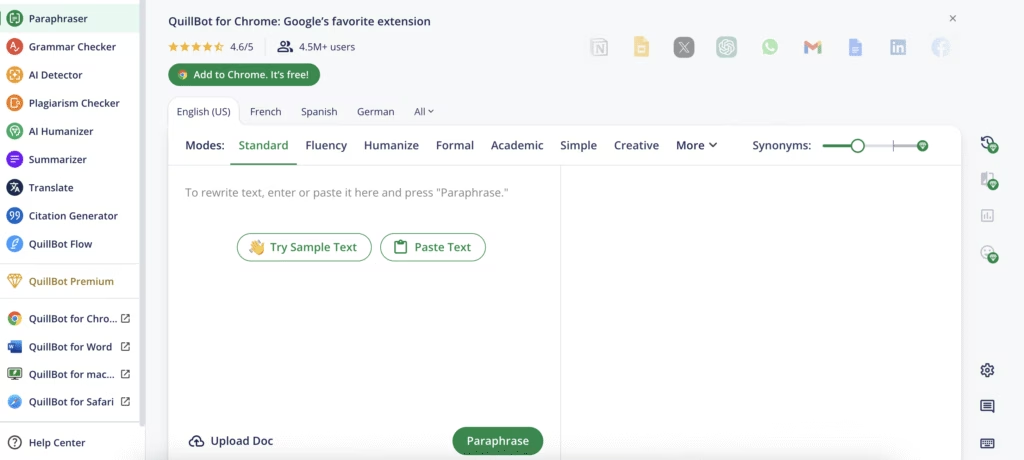
Compared to Anyword, QuillBot centers on rewriting rather than generation. Anyword creates conversion-focused marketing copy with performance scoring. QuillBot transforms existing drafts through its paraphrasing engine and academic tools. That difference places QuillBot ahead for large volumes of text that require revision, citation handling, and originality checks.
Core features in QuillBot emphasize text transformation. An AI paraphraser reshapes sentences. Grammar correction fixes language issues. Writing modes, synonym controls, and word-freeze settings adjust tone and structure with precision.
QuillBot is a paid tool with pricing ranging from $0 to $8.33 per month. The Free plan covers basic rewriting and grammar checks. Paid tiers unlock advanced paraphrasing controls and extended usage.
Pros of QuillBot include accurate paraphrasing, multilingual support, and strong controls for tone and structure across academic and professional writing. Cons of QuillBot include weak handling of nuanced subject matter, and the need for manual review on complex or technical content.
38. Arvow: Best Anyword Alternative for Automated Content Publishing and Indexing
Arvow is an AI-powered SEO automation platform built for large-scale content production and publishing. Arvow generates, optimizes, refreshes, and publishes articles directly to websites through a full-cycle workflow.
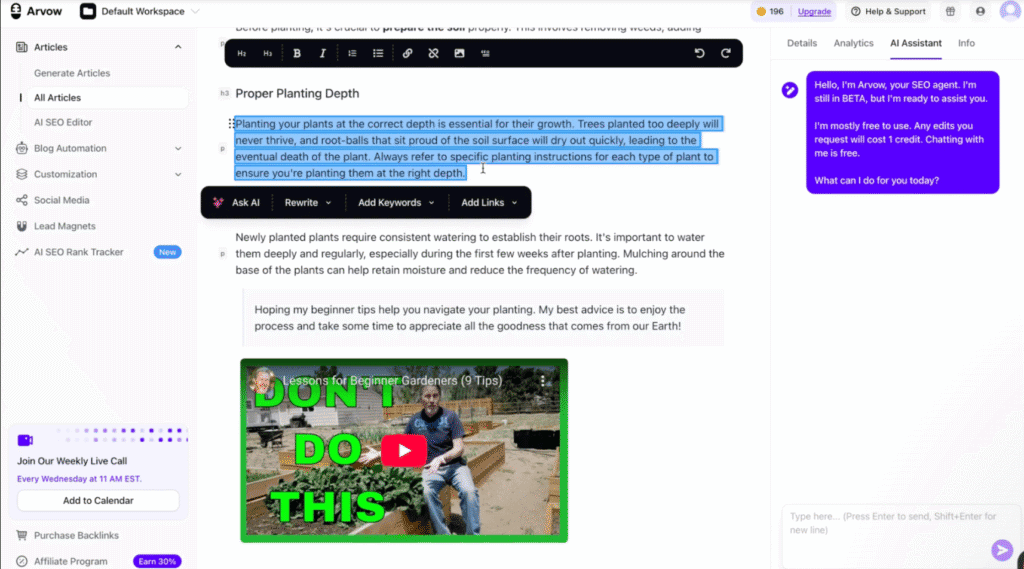
Against Anyword, Arvow manages execution rather than copy scoring. Anyword focuses on data-driven writing assistance. Arvow controls creation, optimization, and publishing from keywords to indexed pages. That difference places Arvow ahead for teams that automate SEO pipelines instead of drafting individual marketing messages.
Core features in Arvow drive end-to-end automation. The AI Article Writer builds long-form pages from keywords and headlines. Knowledge Base uploads train output on brand documents, URLs, and internal data to align with E-E-A-T requirements.
Arvow is a paid tool with pricing ranging from $59 to $389 per month. The $59 Solo plan offers individual workflows. The $89 Business plan expands credit limits. The $389 Agency plan scales production across multiple clients. Pay-as-you-go credits add flexible volume.
Pros of Arvow include automatic content refresh, direct site publishing, and scalable SEO production across many pages and domains. Cons of Arvow include limited creative control, reliance on automation, and the need for human review to verify facts and refine article quality.
39. SEO.AI: Best Anyword Alternative for SEO‑First Content Generation
SEO.AI is an AI platform built to automate search-focused article production through data-driven analysis. SEO.AI reviews keyword patterns, competitor pages, and search intent to generate long-form content designed to match ranking opportunities.
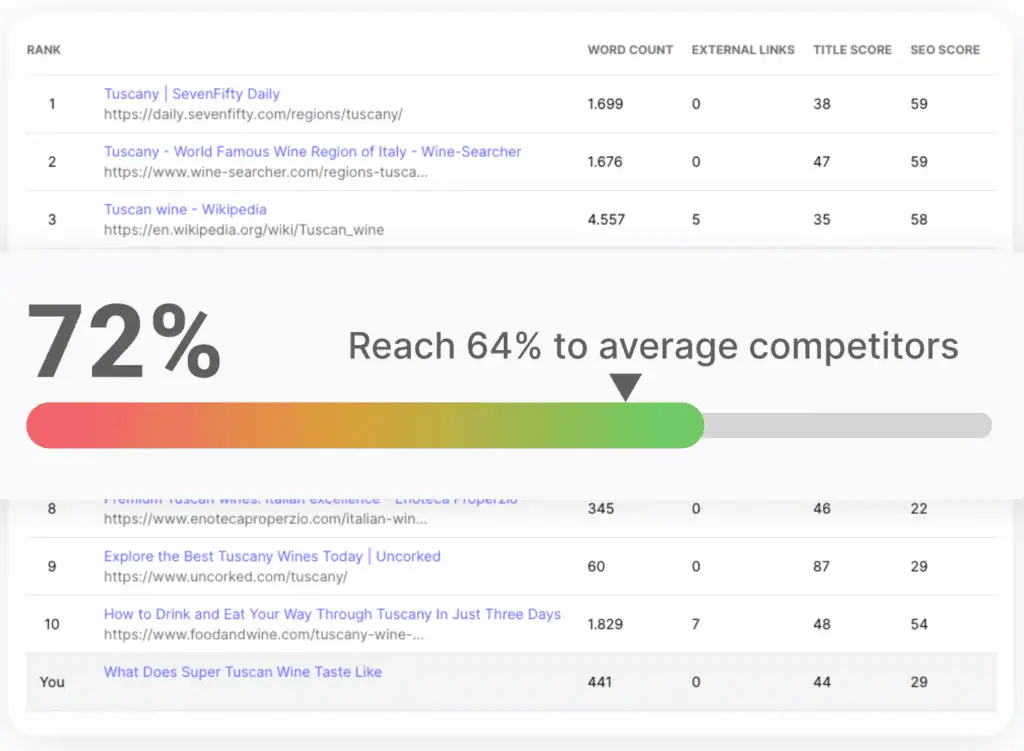
Compared to Anyword, SEO.AI operates from an SEO-first workflow. Anyword centers on conversion scoring for marketing copy. SEO.AI builds content through ranking signals, topical coverage, and keyword gaps. That structure positions SEO.AI as a stronger option for teams that publish SEO pages to build topical authority rather than optimize ads.
Core features in SEO.AI emphasize automated optimization. AI-generated outlines shape article structure. SEO Scores identify content gaps. Automated fixes fill missing metadata. Internal linking recommendations strengthen site architecture. Those workflows reduce manual research and accelerate scalable content creation.
SEO.AI is a paid tool with pricing ranging from $49 to $749 per month. Entry plans fit freelancers and small sites. Enterprise tiers expand project limits, add advanced keyword gap analysis, and provide dedicated onboarding.
Pros of SEO.AI include fast long-form production, efficient SEO workflows, and strong alignment between keyword research and published content. Cons of SEO.AI include factual accuracy risks, limited creative variation, and generic output without human review and editing.
40. Hoppy Copy: Best Anyword Alternative for Quick AI-Generated Marketing Copy
Hoppy Copy is an AI-powered email marketing and copywriting platform built to generate campaign content at high speed. Hoppy Copy creates email sequences, ads, and promotional copy through automation that combines writing, design, and delivery inside one system.
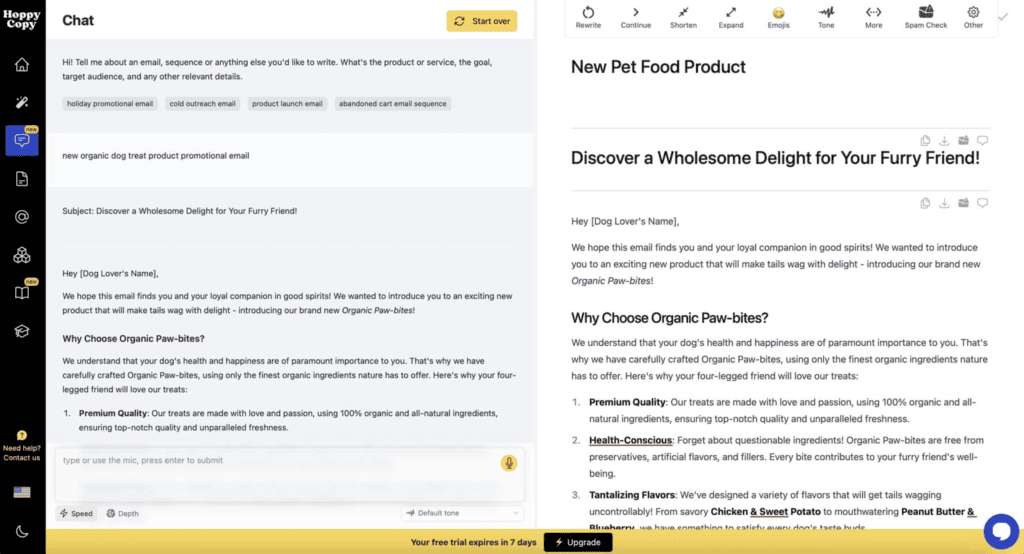
Against Anyword, Hoppy Copy emphasizes execution speed rather than prediction. Anyword applies performance scoring to copy variants. Hoppy Copy provides ready-made templates and formula-based writing that produces campaign content rapidly. That approach places Hoppy Copy ahead for marketers that prioritize fast output over statistical testing.
Core features in Hoppy Copy combine copy and email delivery. AI Copywriting generates subject lines, body text, ads, and product copy. The Email Marketing Platform manages campaigns, segmentation, and sends. Brand Voice tools adapt output to specific styles. Workflow tools merge AI writing, editing, email delivery, and form building in one interface.
Hoppy Copy is a paid tool with pricing ranging from $199 per month to custom enterprise plans. The Platform plan at $199 includes 3 users, 3 workspaces, newsletter engines, brand voices, competitor tracking, and email sending up to 3,000 subscribers. The Managed plan at $399 adds expert-run newsletters, automated flows, and a dedicated account manager.
Pros of Hoppy Copy include fast campaign creation, specialized email AI, strong brand voice tools, and responsive customer service. Cons of Hoppy Copy include uneven AI consistency, risk of spam triggers, and interface friction on mobile devices.
41. Octave: Best Anyword Alternative for AI‑Driven Content Research and Writing
Octave HQ is an AI-powered Go-To-Market platform built to transform product data, and market signals into sales playbooks and outbound messaging. Octave HQ analyzes ICPs, and market context to generate structured strategies that guide sales and marketing execution.
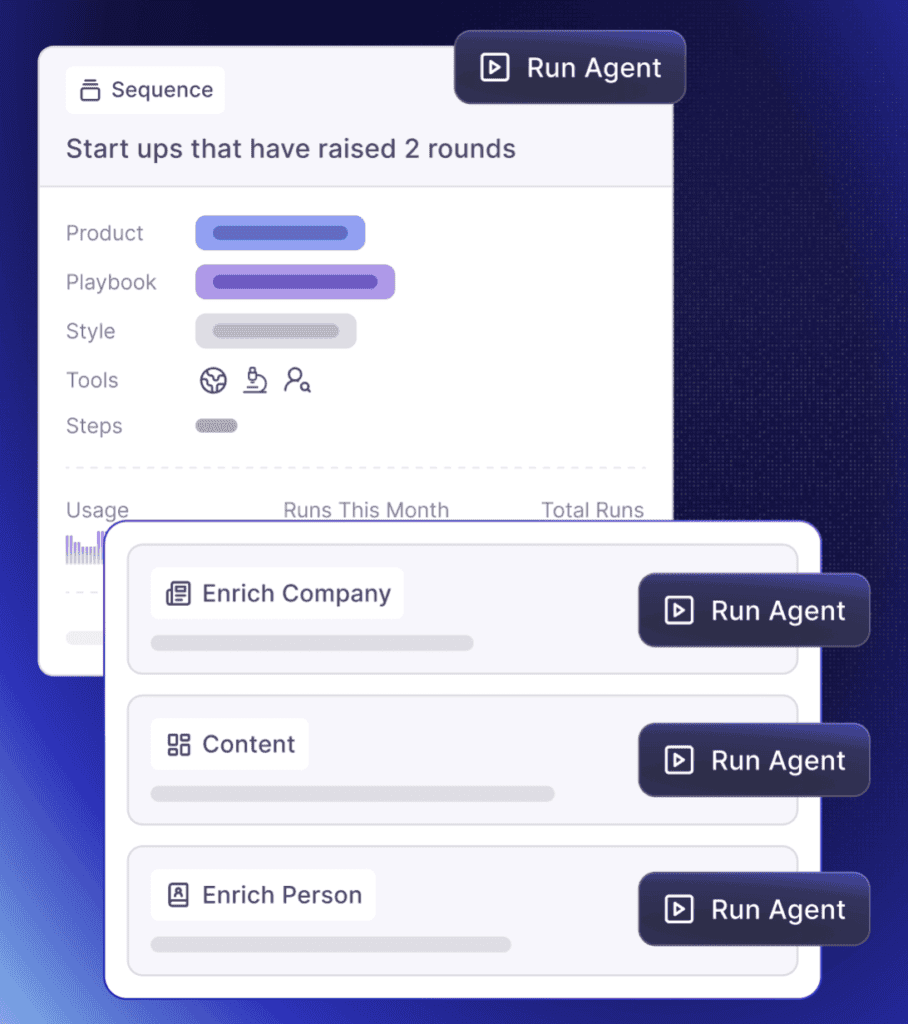
Compared to Anyword, Octave HQ operates at a research and planning layer. Octave HQ builds context through persona mapping, topic discovery, and audience insights before writing begins. That approach positions Octave HQ as a stronger option for teams that require research-backed messaging rather than variant-level optimization.
Core features in Octave HQ drive GTM automation. Generative GTM agents research prospects and build playbooks. Contextual Intelligence ingests product, customer, and market data to ground messaging in real pain points. Workflow Automation handles lead qualification and message creation. Personalization at Scale produces hyper-targeted emails and scripts across every prospect.
Octave HQ is a paid tool with pricing ranging from Free to custom enterprise plans per month. The Base plan offers one offering and 100 credits. The Boost plan at $399 expands playbooks and elements. The Turbo plan at $799 increases capacity and credits. Ultra uses custom pricing with advanced agents and a dedicated CSM.
Pros of Octave HQ include major time savings, rich contextual research, persona-driven messaging, and AI agents that automate GTM planning and content generation. Cons of Octave HQ include rising costs at scale and limited automation depth beyond messaging generation.
42. Paraphraser.io: Best Anyword Alternative for Rewriting and Sentence-Level Paraphrasing
Paraphraser.io is an AI rewriting platform built to improve clarity, uniqueness, and readability across many writing styles. Paraphraser.io restructures sentences and adjusts vocabulary in real time to produce clean, original variations.
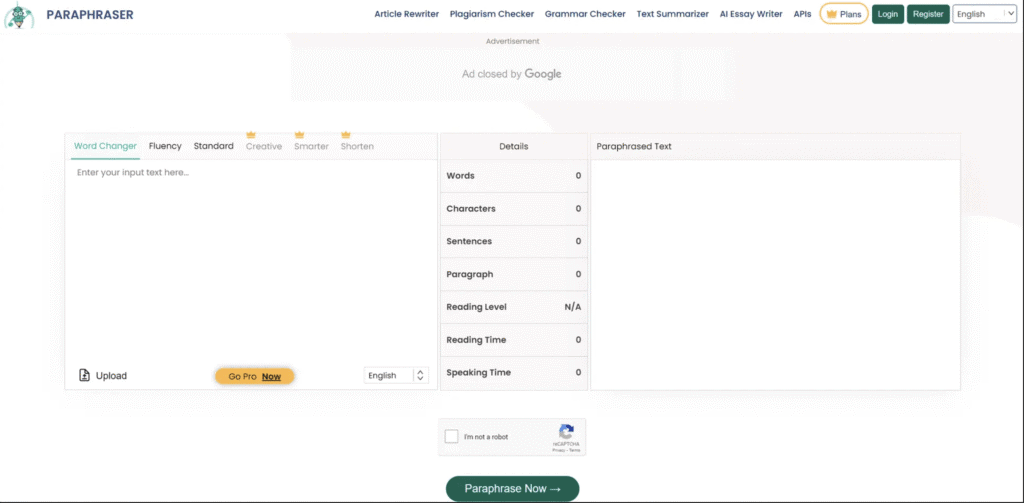
Against Anyword, Paraphraser.io specializes in transformation. Paraphraser.io delivers fast, sentence-level rewrites through focused paraphrase modes. That difference places Paraphraser.io ahead for lightweight editing and quick text variation.
Core features in Paraphraser.io center on rewriting control. Summarization condenses long text. Multi-language support and API access extend high-volume workflows. NLP-driven rewrites preserve meaning while increasing uniqueness.
Paraphraser.io is a paid tool with pricing ranging from $23 to $499 per month. Entry plans include 46,000 words and basic rewriting. Higher tiers raise limits and unlock advanced features.
Pros of Paraphraser.io include diverse rewrite modes, strong language coverage, and high value for rapid paraphrasing across many content types. Cons of Paraphraser.io include inconsistent accuracy, slow processing on long documents, and limited integration.
43. Twain: Best Anyword Alternative for Short-Form Copy and Idea Generation
Twain AI is a communication assistant built for sales and marketing teams that create outreach messages across email and LinkedIn. Twain AI produces personalized drafts through dynamic templates, prospect data, and real-time writing guidance that keeps messaging clear and spam-filter friendly.
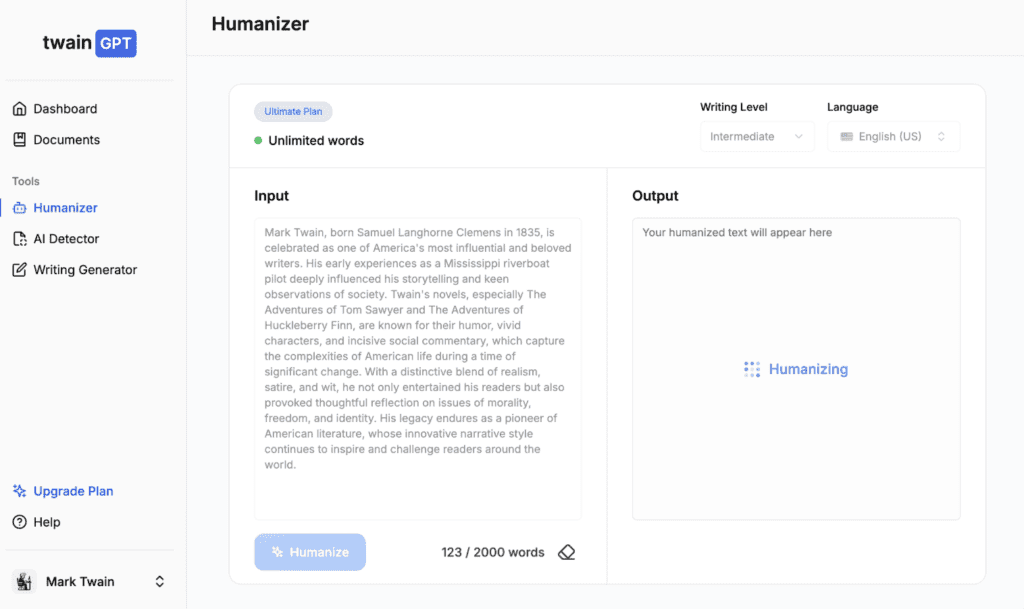
Compared to Anyword, Twain AI prioritizes speed and interaction. Twain AI offers instant suggestions, conversational drafting, and quick templates that accelerate ad headlines, social captions, and short promotional copy. That structure positions Twain AI as a stronger option for teams that rely on rapid idea output rather than performance-based optimization.
Core features include a Message Optimization that applies live suggestions that adjust tone, confidence, and structure. Outreach Automation builds multi-channel sequences and follow-ups. Integrations operate through browser extensions that enhance inbox and LinkedIn workflows.
Twain AI is a paid tool with pricing ranging from free access to custom plans per month, based on usage and organization size.
Pros of Twain AI include strong personalization, and real-time writing feedback that improves email and LinkedIn performance. Cons of Twain AI include limited industry-specific depth, persona management challenges, and dependence on a Chrome-based workflow.
44. Claude: Best Anyword Alternative for Advanced AI Conversational Writing
Claude is an AI assistant built for writing, analysis, and complex content creation. Claude generates marketing materials, technical documentation, research summaries, and detailed analytical projects through conversational interaction.
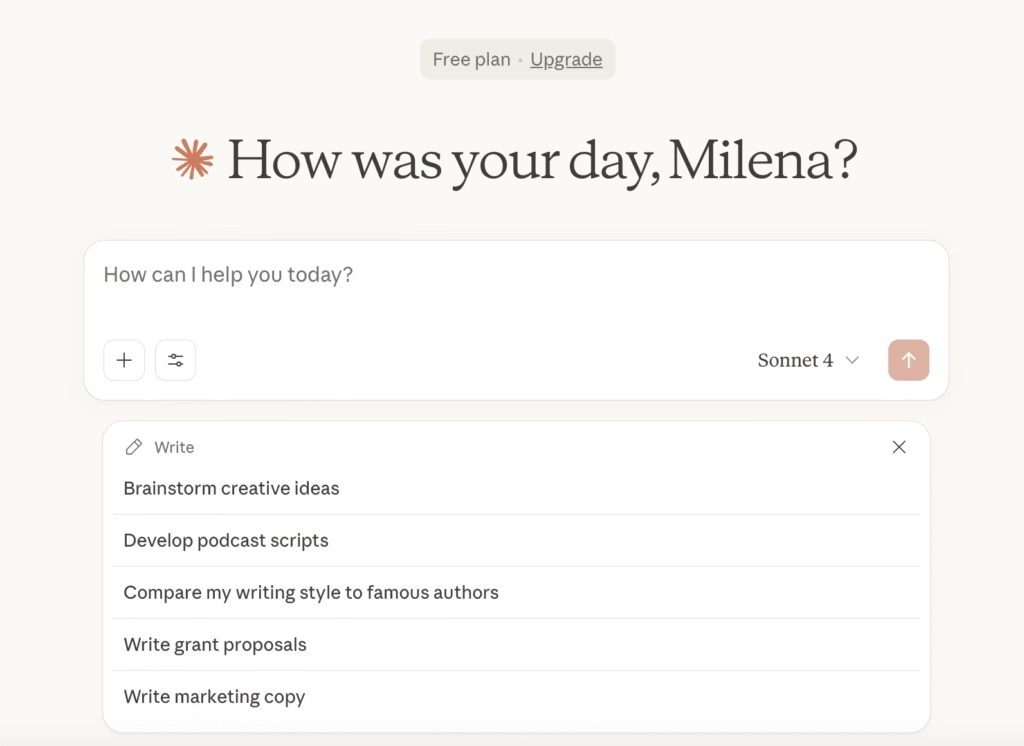
Against Anyword, Claude operates at a reasoning layer. Anyword scores marketing copy for conversion. Claude applies deep context, dialogue-style drafting, and multi-step expansion to produce richer text. That difference positions Claude as a stronger option for long documents and nuanced writing rather than performance-optimized copy.
Core features in Claude emphasize sustained understanding. Advanced reasoning modes guide analysis. Extended context windows manage long documents. Multilingual comprehension enables cross-language editing.
Claude is a paid tool with pricing ranging from $17 to $150 per month. Individual plans range from $17 to $100. Team plans range from $25 to $150. A Free plan provides limited access for light tasks.
Pros of Claude include strong reasoning, and smooth conversational refinement across complex writing projects. Cons of Claude include cautious response behavior, usage caps on paid tiers, and reduced performance on highly niche or ambiguous topics.
Why do People Seek Alternatives to Anyword Tool?
People seek Anyword alternatives because the platform centers on conversion scoring rather than full content execution. Teams that need SEO research, SERP analysis, or long-form structuring require separate tools, which increases workflow complexity.
Anyword produces optimized ad copy and short marketing text, but content teams spend time rebuilding drafts for blogs, guides, and SEO pages. Platforms that handle long-form structure and search alignment reduce editing overhead at scale.
SEO gaps influence platform changes. Anyword scores copy for tone and performance, but lacks keyword clustering, SERP-based briefs, internal linking guidance, and ranking-driven optimization. Teams that rely on organic traffic prefer systems that connect writing directly to search results.
Cost and scope mismatch affect buying decisions. Anyword pricing reflects conversion modeling, but many teams need broader research, content production, and automation layers within the same budget.
That combination of SEO gaps, workflow isolation, long-form constraints, and pricing alignment leads many teams to seek Anyword alternatives built for scale and full-funnel content execution.
What to Look for in an Anyword Alternative?
The best Anyword alternatives go beyond conversion scoring and short-form copy generation. A strong replacement expands SEO coverage, long-form production, and workflow execution without locking teams into performance metrics alone.
The 4 main features to look for in an Anyword alternative are listed below.
- Search-Driven Content Capabilities. Select platforms that include keyword research, SERP analysis, content briefs, and ranking signals so writing aligns with organic search demand rather than only ad performance.
- Long-Form and Structured Writing Control. Choose tools that produce blog posts, guides, and landing pages with outline logic, topic coverage, and internal consistency instead of short copy fragments only.
- Brand Voice and Context Management. Prioritize systems that store tone rules, terminology, and contextual memory across projects so multi-brand or multi-client work stays consistent without manual re-training.
- Workflow Integration and Automation. Adopt platforms that connect with CMS, analytics, and collaboration tools so content moves from research to publishing without copy-paste friction.
What is the Difference Between Anyword vs. Copy.ai?
The difference between Anyword and Copy.ai is that Anyword centers on predictive conversion scoring, while Copy.ai focuses on fast, template-driven GTM content creation.
The Anyword vs Copy.ai comparison reveals a functional split. Anyword operates as a performance copy engine that scores ad text, and calls to action based on expected conversion outcomes. Copy.ai functions as a creative production platform, generating many variations across ads, emails, social posts, and marketing workflows through a large template library.
Search Atlas moves beyond this divide by connecting AI writing with SEO research, SERP intelligence, and automated execution inside a single operating system.
What is the Difference Between Anyword vs. Jasper?
The difference between Anyword and Jasper is that Anyword focuses on optimized copy with predictive analytics, while Jasper operates as a full-scale content creation platform for long-form and brand-driven marketing.
The Anyword vs Jasper comparison shows a workflow contrast. Anyword scores copy for performance and conversion likelihood across ads and landing pages. Jasper manages content across blogs, campaigns, and brand libraries with structured workflows, templates, and long-form drafting tools.
Both Anyword and Jasper produce marketing content, but they target different teams. Anyword suits paid media and growth teams that rely on data-backed copy decisions. Jasper suits content marketers and brand teams that need volume, consistency, and long-form production across channels.
Search Atlas extends beyond both by combining AI writing, SEO analysis, SERP modeling, and live on-site execution in one connected system.
Why is Search Atlas the Best Anyword Alternative?
Search Atlas stands out as the best Anyword alternative because it connects AI writing with SEO intelligence and live execution inside one operating system. Instead of scoring copy for conversion probability, Search Atlas turns every page into part of a measurable search growth strategy driven by real SERP data.
Anyword optimizes headlines, ads, and short marketing text through predictive performance models. Search Atlas goes further by shaping content through keyword demand, competitor analysis, and topical authority before writing even begins. That approach produces pages built to rank, not just test variations.
Search Atlas removes the execution gap that exists in Anyword workflows. OTTO SEO applies titles, internal links, schema, and structural changes directly on the website, which eliminates manual publishing and optimization steps that slow down teams using draft-only tools.
Search Atlas creates a unified SEO environment that links research, writing, scoring, and on-site optimization inside one system. That structure delivers faster iteration, stronger organic visibility, and scalable content growth from every article. Try Search Atlas free for 7 days!