The Featured Snippet Eligibility Checklist defines the structural, semantic, and technical requirements that make content eligible for a featured snippet at position zero in Google search results. A featured snippet is a concise extract from a webpage that appears above traditional organic listings and answers a query directly inside the SERP. Google snippets are displayed in paragraph, list, table, or video format depending on search intent, and they occupy the most visible organic placement, which explains why they are called “position zero.” Featured snippets appear above standard results and sometimes alongside AI Overviews, shaping how information is consumed without requiring a click.
Featured Snippet eligibility depends on page-one ranking, direct answer structure, intent alignment, authority signals, and technical optimization. Content must rank within the top 10 organic results and provide a 40 to 60 word concise answer immediately under a matching question heading. Structured formatting using headings, lists, and tables increases extraction probability, while schema markup, mobile optimization, image clarity, page speed, and descriptive alt text improve crawlability and visibility. Authority through E-E-A-T signals, freshness updates, and internal linking strengthen selection probability, while mistakes such as weak intent targeting, poor formatting, outdated data, AI hallucinations, or nosnippet directives prevent snippet inclusion.
Tracking and maintaining featured snippet performance requires ongoing monitoring of impressions, clicks, CTR, and position volatility across high-value queries. Google Search Console and rank tracking tools measure snippet ownership, lost placements, and competitor displacement patterns. Regular content refresh, competitor analysis, and alignment with evolving SERP features preserve visibility as AI Overviews reshape search behavior. The Featured Snippet Eligibility Checklist matters because position zero visibility influences zero-click searches, voice responses, brand authority, and AI citation patterns, making featured snippet optimization a foundational discipline in modern search strategy.
What Are Featured Snippets?
Featured snippets are a Google search result format that displays a direct answer extracted from a web page at the top of the Search Engine Results Page (SERP). Featured snippets reverse the traditional listing structure because Google shows the descriptive passage first and the blue link below it. The meaning of featured snippets refers to the highlighted answer box that occupies the highest organic visibility position.
What defines the structure of a featured snippet? Featured snippets contain an extracted passage, a source URL, and a page title inside a bordered answer box. Featured snippets pull content from one ranking webpage. Featured snippets do not generate new summaries but display a verbatim or lightly reformatted excerpt from the source page.
What is a featured snippet example in practice? A featured snippet example appears above the first organic result and answers a query in 40-60 words. Featured snippets commonly appear for definition queries, comparison queries, and process-based searches. Featured snippets frequently include an image aligned with the extracted text.
Why did Google introduce featured snippets? Google introduced featured snippets in 2018 to provide immediate answers without requiring a click. Featured snippets reduce friction in information retrieval because Google surfaces the relevant passage directly. Featured snippets now function as structured inputs for AI-generated overviews in Search Generative Experience environments.
How do featured snippets differ from answer boxes and AI Overviews? Featured snippets extract content from one external webpage, while answer boxes use internal Google databases, and AI Overviews generate multi-source summaries. Featured snippets maintain a single-source citation model. AI Overviews aggregate multiple sources through generative systems.
What are the defining characteristics of featured snippets? Featured snippets have 3 defining characteristics. They are prominent placement, direct answer extraction, and measurable click-through impact. Featured snippets appear above organic listings and often before People Also Ask results. Featured snippets display a direct excerpt from a webpage. Featured snippets reduce first-position organic click-through rate by approximately 46% and capture around 8% of total clicks on SERPs where they appear.
How often do featured snippets appear in search results? Featured snippets appear on approximately 4.77% of all queries according to Semrush. Featured snippets appeared on approximately 10.5% of mobile SERPs in the United States and 16.4% in the United Kingdom. A page that earns a featured snippet achieves around 10.7% organic click-through rate.
Why do featured snippets matter in the search ecosystem? Featured snippets control position zero visibility and influence both click behaviour and AI-generated summaries. Featured snippets depend on organic ranking systems that select authoritative and relevant pages. Featured snippets cannot be purchased through paid advertising. Featured snippets shape how Google and AI systems surface trusted information inside answer-driven search environments.
Why Are Featured Snippets Called Position Zero?
Featured Snippets are called Position Zero because they appear above the traditional number one organic search results in Google SERPs. Featured Snippets occupy a placement that precedes the first organic listing. This placement positions Featured Snippets at a numerical rank before position 1, which defines the Position Zero label.
How does placement above the number 1 organic result define Position Zero? Featured Snippets display at the very top of Google organic search results, above all standard listings. Featured Snippets appear before the first blue link. This placement makes Featured Snippets distinct from the highest-ranking organic result because Featured Snippets visually and structurally precede it.
Why does immediate answer delivery reinforce the Position Zero concept? Featured Snippets provide immediate answers directly inside the SERP without requiring a click. Featured Snippets extract a concise passage and display it in a highlighted box. This immediate answer format reduces the need to navigate to external pages and concentrates visibility in a single, dominant position.
What does the term zero signify in ranking logic? The term zero signifies a ranking position that exists before position one in organic results. Featured Snippets receive the Position Zero designation because they rank above the first organic result while remaining organic in nature. Featured Snippets represent a placement that is numerically and visually superior to position one.
How does Google determine which content earns Position Zero? Google awards Position Zero to content that delivers concise, authoritative, and query-matching answers. Featured Snippets originate from pages that rank on page one and demonstrate strong relevance signals. Position Zero reflects Google’s selection of the most direct and structured answer available for a specific query.
Where Featured Snippets Appear in SERP Results?
Featured Snippets appear at the top of Google organic Search Engine Results Pages (SERPs), above traditional organic listings. Featured Snippets reverse the standard layout by presenting the descriptive excerpt before the link. This placement establishes Featured Snippets as zero-position results.
What are the most common placements of Featured Snippets inside SERPs? Featured Snippets commonly appear as standalone answer boxes at the top of the SERP and within the People Also Ask section. The People Also Ask section presents expandable questions. Each expanded question reveals a Featured Snippet extracted from a relevant webpage.
How do AI Overviews affect the placement of Featured Snippets? AI Overviews appear above Featured Snippets when both formats are present in the SERP. Featured Snippets still appear alongside AI Overviews in 45.39% of searches where AI Overviews exist. Featured Snippets appear in only 8.61% of searches when AI Overviews are absent, which demonstrates a strong coexistence pattern.
What visual characteristics distinguish Featured Snippets in SERPs? Featured Snippets display in a card-style format with enhanced visual emphasis. Featured Snippets contain a paragraph, list, table, or video preview. Featured Snippets show extracted information from a target page and emphasise it with structured formatting.
How do Featured Snippets differ from answer boxes in placement and source? Featured Snippets extract content from external webpages, while answer boxes display information from Google’s internal databases. Featured Snippets link directly to a source page. Answer boxes present information without attributing it to an external ranking page, which differentiates their origin and data source.
Why Do Featured Snippets Matter for SEO?
Featured Snippets matter for SEO because they secure position zero, increase click-through rate, strengthen brand authority, improve user experience, maintain zero-click visibility, and align content with AI retrieval systems. Featured Snippets control the most visible organic placement in Google SERPs. This placement directly influences traffic, perception, and structured answer eligibility.
How do Featured Snippets secure position zero in search results? Featured Snippets secure position zero by appearing above the number one organic result. Featured Snippets occupy the highest organic screen position even when a page does not rank first. Approximately 11.3% of search results include a Featured Snippet, which prevents competitors from controlling the top organic visibility.
Why do Featured Snippets significantly increase click-through rate? Featured Snippets increase click-through rate because they attract attention through dominant placement and direct answer formatting. One agency reported that Featured Snippets captured 35.1% of clicks in 2022. AgentSync reported that 14% of blog views originated from URLs holding a Featured Snippet, and one snippet-driven URL achieved 5.8% CTR compared to a 1.8% site average.
How do Featured Snippets establish brand authority? Featured Snippets establish brand authority because Google selects content that demonstrates clarity, accuracy, and relevance. Featured Snippets function as an algorithmic endorsement. AgentSync observed a 150% increase in branded keyword searches after earning multiple Featured Snippets, which indicates increased recognition and trust.
How do Featured Snippets improve user experience? Featured Snippets improve user experience by delivering instant, structured answers directly inside the SERP. Featured Snippets reduce navigation steps and display concise explanations. Clicking a Featured Snippet directs the visitor to the exact section of the page that contains the extracted answer.
Why do Featured Snippets maintain visibility in zero-click searches? Featured Snippets maintain visibility in zero-click searches because they display the brand inside the answer box even without a visit. Approximately 58% of Google searches end without a click. Featured Snippets ensure exposure during these interactions and reinforce brand recall through repeated SERP presence.
How do Featured Snippets align content with AI search systems? Featured Snippets align content with AI search systems because they structure information in concise, extractable passages. AI systems rely on short, factual explanations that mirror Featured Snippet formatting. Structured snippet-ready content increases the likelihood of reuse inside AI-generated summaries.
How Do Featured Snippets Differ From Organic Search Results?
Featured Snippets differ from organic search results in placement, format, extraction method, and interaction model. Featured Snippets appear in position zero above all organic listings. Organic search results appear below Featured Snippets and require user selection to access content.
How does placement distinguish Featured Snippets from organic results? Featured Snippets occupy the top organic section of the SERP, while organic results follow beneath. Featured Snippets appear above standard blue links and often above paid advertisements. Organic results compete for positions one through ten inside the standard ranking structure.
How does content format differ between Featured Snippets and organic results? Featured Snippets display extracted paragraphs, lists, tables, or video previews inside a highlighted box. Organic search results display a title tag, URL, and meta description without direct answer extraction. Featured Snippets visually separate themselves with bounding boxes and structured formatting.
How does user interaction differ between Featured Snippets and organic results? Featured Snippets provide immediate answers without requiring a click, while organic results require navigation. Featured Snippets streamline the search process. Organic results require users to evaluate titles and descriptions before visiting a page.
How do eligibility requirements differ between Featured Snippets and organic rankings? Featured Snippets require high-ranking pages with clear structure and concise answers. Over 70% of Featured Snippets originate from pages that do not rank first but rank within the top ten. Organic rankings prioritise authority, backlinks, and relevance signals without requiring answer-box formatting.
How do Featured Snippets affect visibility and authority differently from organic results? Featured Snippets amplify perceived authority because Google extracts and highlights the content directly. A SEMrush case study reported a 500% traffic increase after earning a Featured Snippet. Organic results increase visibility through ranking position alone, while Featured Snippets increase both visibility and perceived credibility.
How do search engines evaluate content differently for Featured Snippets compared to organic rankings? Search engines evaluate Featured Snippet eligibility based on clarity, structure, and informational intent. Informational queries beginning with what, how, why, when, or who frequently trigger Featured Snippets. Organic rankings tolerate broader content structures, while Featured Snippets require precise and extractable formatting.
How do Featured Snippets integrate with voice search compared to organic results? Featured Snippets function as the primary spoken response source in voice search systems. Voice assistants frequently read Featured Snippet content verbatim. Organic search results do not directly supply spoken answers in voice interfaces.
What Are the Different Types of Featured Snippets?
Featured Snippets appear in distinct structural formats that match how Google extracts and displays direct answers inside the SERP. Featured Snippets adapt to query intent by presenting definitions, steps, comparisons, or media-based explanations in structured layouts. Featured Snippets often coexist with AI Overviews, which synthesise multi-source summaries and appear above or alongside snippet formats in modern search results. The 4 main types of Featured Snippets are listed below.
- Paragraph Snippets (Definition Boxes)
- List Snippets (Ordered and Unordered)
- Table Snippets (Data-Driven Results)
- Video Snippets and Voice Search Results

Paragraph Snippets (Definition Boxes)
Paragraph Snippets are a type of Featured Snippet that display a short text excerpt, typically 40-50 words, at the top of Google search results. Paragraph Featured Snippets provide direct, text-based answers to informational queries. Paragraph Featured Snippets reverse the standard organic format by presenting the descriptive excerpt before the blue link.
How did Paragraph Featured Snippets become the dominant snippet format? Paragraph Featured Snippets became the most common snippet type as Google evolved its algorithms to deliver immediate answers. Paragraph Featured Snippets account for approximately 82% of all Featured Snippets. Google systems evaluate whether a page provides a clear and concise answer and elevate that passage to position zero.
How do Paragraph Featured Snippets differ from other Featured Snippet types? Paragraph Featured Snippets differ from List, Table, and Video Snippets because they focus exclusively on a single block of explanatory text. Paragraph Featured Snippets extract one concise paragraph rather than steps, structured data, or media content. Paragraph Featured Snippets often include a thumbnail image aligned with the excerpt.
What are the main appearances of Paragraph Featured Snippets? Paragraph Featured Snippets appear as direct answers, inside People Also Ask results, and alongside Knowledge Graph entities. Direct Answer Snippets resolve what, how, or why queries in one structured paragraph. People Also Ask expansions reveal Paragraph Featured Snippets under related questions. Knowledge Graph integrations display Paragraph Featured Snippets next to entity-based panels.
What dependencies influence Paragraph Featured Snippet eligibility? Paragraph Featured Snippets depend on structured formatting, logical content organization, and explicit question-answer alignment. Google systems select passages that clearly resolve common queries. Pages that use descriptive headings and tightly structured paragraphs increase selection probability.
How do Paragraph Featured Snippets interact with AI Overviews and other SERP features? Paragraph Featured Snippets compete with AI Overviews for top-of-page visibility in modern search results. AI Overviews generate multi-source summaries, while Paragraph Featured Snippets extract a single authoritative passage. Paragraph Featured Snippets reduce click-through rate because users receive the answer directly inside the SERP.
How do Paragraph Featured Snippets affect voice search and deduplication? Paragraph Featured Snippets frequently function as the spoken answer in voice search systems. Voice interfaces read the extracted paragraph directly. Google’s 2020 deduplication update prevents a page that earns a Paragraph Featured Snippet from appearing again as a standard organic listing on the first page.
List Snippets (Ordered and Unordered)
List Snippets are a type of Featured Snippet that display information in numbered or bulleted format to answer step-based or grouped queries. List Snippets extract structured items from a webpage and present them directly at position zero. List Snippets appear for process queries, rankings, comparisons, and collections.
How do Ordered and Unordered List Snippets differ? Ordered List Snippets present sequential steps, while Unordered List Snippets present grouped items without a required order. Ordered List Snippets commonly answer how-to queries. Unordered List Snippets commonly answer best types, or example queries.
What distinguishes List Snippets from Paragraph Snippets? List Snippets structure answers into discrete items, while Paragraph Snippets present one continuous text block. List Snippets emphasize hierarchy and item separation. Paragraph Snippets emphasize concise explanation in 40-60 words.
What eligibility factors influence List Snippet selection? List Snippets depend on clear heading structure, concise item formatting, and strong organic ranking signals. Pages ranking within the top 10 results frequently trigger List Snippets. Structured HTML lists increase extraction accuracy.
Table Snippets (Data-Driven Results)
Table Featured Snippets are a type of Featured Snippet that display extracted data in rows and columns at the top of Google search results. Table Featured Snippets visualize structured comparisons, statistical values, pricing data, and schedules directly inside the SERP. Table Featured Snippets convert webpage tables into concise answer boxes.
How do Table Featured Snippets differ from other SERP features? Table Featured Snippets differ from Local Packs, Knowledge Panels, Rich Snippets, and Answer Boxes because they extract tabular data from external webpages. Table Featured Snippets present structured comparison data. Knowledge Panels and Answer Boxes rely on Google’s internal databases.
What are the defining characteristics of Table Featured Snippets? Table Featured Snippets are defined by structured data presentation, prominent placement, and interactive navigation. Table Featured Snippets appear at position zero in a bordered box. Table Featured Snippets display selected columns instead of the full original table. Clicking a Table Featured Snippet directs the user to the relevant page section.
What technical dependencies influence Table Featured Snippet eligibility? Table Featured Snippets depend on clean HTML table structure, header tags, and top 10 organic rankings. Google systems extract rows and columns from properly formatted tables. Over 70% of Featured Snippets originate from pages outside the number one position.
What impact do Table Featured Snippets have on visibility and authority?
Table Featured Snippets increase visibility and strengthen perceived authority due to dominant placement. Case studies report traffic increases up to 500% and organic growth up to 677% after securing table-based Featured Snippets.
Video Snippets and Voice Search Results
Video Featured Snippets are a type of Featured Snippet that display a video thumbnail as the primary answer to a user query at position zero. Video Featured Snippets extract a specific segment from a video and highlight a timestamp that directly answers the query. Video Featured Snippets commonly originate from YouTube.
How do Video Featured Snippets function in search results? Video Featured Snippets display a large thumbnail, title, and timestamped segment that directs users to the relevant moment in the video. Clicking the snippet opens the hosting platform at the highlighted timestamp. This structure reduces navigation time and increases answer precision.
What types of queries trigger Video Featured Snippets? Video Featured Snippets commonly appear for how-to, demonstration, and instructional queries. Google systems prioritize visual explanations for action-based searches. Instructional segments frequently appear with direct timestamp linking.
What characteristics define Video Featured Snippets? Video Featured Snippets are defined by prominent placement, timestamp precision, and visual answer delivery. Video Featured Snippets appear at position zero above organic results. Voice search systems frequently read the associated transcript, which integrates video snippets into voice responses.
How do Video Featured Snippets compete with other snippet types? Video Featured Snippets compete with Paragraph, List, and Table Snippets for position zero visibility. Video Featured Snippets represent the least common format but provide a strong visual advantage for instructional content.
How to Get Featured Snippets: Eligibility Checklist?
Getting Featured Snippets requires satisfying ranking, intent, structure, technical, and maintenance requirements that align with Google’s extraction systems. How to get Google Featured Snippet visibility depends on earning position zero eligibility through structured and authoritative content. The 5 core eligibility areas are listed below.
- Ranking and Authority Checklist.
- Keyword and Intent Checklist.
- Content and Structure Checklist.
- Technical and On-Page SEO Checklist.
- Maintenance Checklist.
1. Ranking and Authority Checklist
The Ranking and Authority Requirements for Featured Snippets require first-page rankings, strong organic visibility, authoritative topical coverage, and high content quality. Featured Snippets are extracted from pages that already demonstrate relevance and credibility in organic search. The 4 Ranking and Authority Requirements for Featured Snippets are listed below.
- Rank on Page One.
- Achieve High Organic Visibility.
- Establish Authoritative Content.
- Ensure High Content Quality.
Why must a page rank on page one to qualify for a Featured Snippet? A page must rank on page one because Google selects Featured Snippets from the top organic results. Pages ranking within positions 1 through 10 qualify for extraction eligibility. Over 70% of Featured Snippets originate from pages outside position one but within the top 10 results.
Rank on Page One
Ranking on page one requires competitive gap analysis, authority building, on-page optimization, technical performance improvement, and structured visibility reinforcement. Ranking on page one depends on aligning content depth, relevance, and authority signals with top-performing results.
How does competitive gap analysis improve page one ranking? Competitive gap analysis identifies missing content elements compared to top-ranking pages. Pages must expand topical coverage, improve media assets, and refine semantic alignment. Content clusters must reinforce the primary keyword with supporting subtopics.
How does authority building increase ranking probability? Authority building strengthens domain trust through high-quality, niche-relevant backlinks. Backlinks from industry directories and reputable publications increase ranking signals. Consistent citation patterns improve domain credibility.
How does on-page optimization support page one ranking? On-page optimization ensures keyword alignment in title tags, URLs, H1 headings, and structured subheadings. Internal linking must connect related supporting pages. Content structure must match informational or commercial intent precisely.
How does technical performance influence ranking? Technical performance improves crawl efficiency and user experience metrics. Page speed optimization through caching, CSS minification, and JavaScript compression reduces load times. Core Web Vitals stabilization improves ranking stability.
How does local optimization contribute to page one results? Local optimization strengthens geo-relevance through structured data and verified business signals. Embedding Google Business Profile maps and implementing LocalBusiness schema markup reinforces local search presence. Regular profile updates with geotagged media and review signals increase local visibility.
How long does ranking improvement typically require? Ranking improvements typically require 90-120 days when competitive and technical signals align consistently. Sustained execution across authority, structure, and performance produces measurable page one progression.
Achieve High Organic Visibility
Achieving strong organic visibility requires expanding topical authority, increasing keyword coverage, strengthening SERP feature presence, and maintaining technical SEO health. Organic visibility measures how frequently a domain appears across relevant unpaid search results. Organic visibility reflects cumulative ranking strength across a defined keyword set.
How does topical authority increase organic visibility? Topical authority increases organic visibility by expanding depth, breadth, and freshness across related keyword clusters. Pages that cover primary and supporting subtopics rank for a wider query set. Comprehensive content hubs increase share of voice across informational intent.
How does keyword coverage influence visibility growth? Keyword coverage increases visibility when pages rank consistently across multiple related queries. Ranking positions 3 through 7 for 300 keywords produces higher cumulative visibility than ranking positions 1 through 2 for 5 isolated keywords. Visibility measurement focuses on controlled keyword sets instead of isolated rankings.
How do SERP feature placements contribute to organic visibility? SERP feature placements expand visibility beyond standard organic listings. Featured Snippets, AI Overviews, map packs, and video results increase screen real estate ownership. Visibility increases when content appears across multiple SERP elements.
How does technical SEO support sustained visibility? Technical SEO strengthens crawlability, indexation stability, and structured data clarity. Schema markup enhances entity interpretation. Page speed and Core Web Vitals stability preserve ranking positions. Continuous audits prevent sitewide visibility decline.
Establish Authoritative Content
Establishing authoritative content requires demonstrated expertise, a distinct point of view, consistent publishing, and verifiable evidence. Authoritative content earns trust from both users and search systems. Authoritative content differentiates a brand through clarity and original contribution.
How does expertise strengthen authority? Expertise strengthens authority by presenting firsthand experience, proprietary insights, and deep research. Author credentials, lived experience, and data-backed claims reinforce credibility. Demonstrated expertise builds repeat citation patterns.
How does a distinct point of view reinforce authority? A distinct point of view establishes memorable positioning and conceptual ownership. Content that presents a clear stance supported by case studies and evidence differentiates itself from generic summaries. Original frameworks and proprietary research increase recognition.
How does consistency contribute to authoritative status? Consistency reinforces authority through predictable publishing cadence and thematic focus. Regular updates and evergreen content maintenance sustain trust signals. Authority compounds over time through repeated exposure and citation.
How do credibility and evidence validate authoritative content? Credibility validates authoritative content through citations, case studies, testimonials, and data references. Linking to reputable sources and triangulating claims strengthens factual integrity. Transparent disclosures and factual verification increase trustworthiness.
Ensure High Content Quality
Ensuring high content quality requires audience alignment, structured presentation, editorial discipline, measurable performance tracking, and continuous refinement. High-quality content satisfies user intent and maintains technical and editorial precision.
How does audience alignment improve content quality? Audience alignment improves quality by matching content format and depth to user intent. Informational queries require step-by-step clarity. Analytics data reveals drop-off points and engagement depth to refine structure.
How does structured presentation enhance quality perception? Structured presentation enhances quality through clear headings, concise paragraphs, bullet lists, and visual reinforcement. Readability increases engagement and reduces bounce rates. Formatting consistency supports scanning behavior and comprehension.
How do editorial and quality assurance processes protect standards? Editorial and quality assurance processes protect standards through fact-checking, proofreading, and defined style guidelines. Pre-publishing checklists prevent grammar errors, broken links, and inconsistent branding. Standardized workflows maintain scalable quality control.
How does performance measurement refine content quality? Performance measurement refines quality by analyzing engagement metrics, conversions, and scroll depth. Bounce rate, time on page, and conversion signals reveal structural weaknesses. Data-driven updates strengthen long-term ranking and trust signals.
How do audits and updates sustain long-term quality and topical authority? Audits and updates sustain long-term quality by refreshing declining content and reinforcing topical authority across related queries. Regular reviews preserve factual accuracy and relevance. Continuous improvement aligns content with algorithm updates and evolving search behavior, which strengthens topical authority signals over time.
2. Keyword and Intent Checklist
The Keyword and Search Intent Requirements for Featured Snippets require targeting question-based queries, identifying existing snippet triggers, analyzing snippet structure, and optimizing for People Also Ask (PAA) expansion. Featured Snippets appear primarily for informational intent queries where Google detects a clear question-answer format. The 4 Keyword and Search Intent Requirements for Featured Snippets are listed below.
- Target Question-Based Queries.
- Identify Existing Snippets.
- Analyze the Current Snippet.
- Focus on “People Also Ask” (PAA).
Why must pages target question-based queries to earn Featured Snippets? Targeting question-based queries increases eligibility because Featured Snippets primarily trigger for informational intent. Queries beginning with what, how, why, when, and who frequently generate snippet extraction. Direct question phrasing aligns page structure with Google extraction logic.
Target Question-Based Queries
Targeting question-based queries requires identifying informational intent phrases and structuring content to provide direct, concise answers. Question-based queries typically begin with what, how, why, when, where, or who. Question keywords account for approximately 8% of daily searches, which represents substantial search volume.
How do question-based queries improve Featured Snippet eligibility? Question-based queries improve eligibility because Featured Snippets primarily trigger for informational search intent. Approximately 41% of Featured Snippets originate from question-based searches. “Why” queries generate paragraph snippets frequently, while “How” queries generate list snippets in 52% of cases.
How can high-value question keywords be discovered? High-value question keywords are discovered through keyword tools, PAA extraction, forum analysis, and Search Console filtering. Tools for keyword research include Search Atlas, Ahrefs, Semrush, and AnswerThePublic. Filtering Google Search Console queries by question modifiers identifies page one opportunities with existing impressions.
Identify Existing Snippets
Identifying Featured Snippet opportunities requires analyzing page one rankings, existing snippet triggers, weak competitor snippets, and SERP feature ownership. 99.58% of Featured Snippets originate from pages ranking in the top 10 results. Only 30.9% originate from the number one position.
How do existing rankings reveal snippet opportunities? Existing rankings reveal snippet opportunities when pages rank between positions two and five. Pages already on page one have a significantly higher probability of snippet acquisition. High-volume keywords with existing snippet triggers represent quick-win targets.
How do weak snippets signal replacement potential? Weak snippets signal replacement potential when answers are outdated, vague, improperly formatted, or incomplete. Poor list formatting, missing comparison columns, or overly long paragraphs create replacement openings. Structured and concise improvements increase snippet capture probability.
How do research tools assist in snippet discovery? Research tools identify snippet-triggering keywords and competitor ownership patterns. The tool for SERP analysis includes Ahrefs, Semrush, Moz Keyword Explorer, and STAT Search Analytics. Filtering by SERP features isolates keywords that already generate Featured Snippets.
Analyze the Current Snippet
Analyzing existing Featured Snippets requires evaluating format type, answer length, keyword structure, performance metrics, and competitor alignment. Featured Snippets appear in paragraph, list, table, and video formats, with paragraph snippets representing approximately 70-82% of cases.
How does format analysis improve snippet targeting? Format analysis improves targeting by matching content structure to the snippet format Google currently displays. “How” queries frequently trigger list snippets. “Why” queries frequently trigger paragraph snippets. “Which” queries frequently trigger table snippets.
How does answer length influence snippet success? Answer length influences success because optimal paragraph snippets range between 40 and 50 words. Immediate direct answers must appear within the first two sentences. Concise formatting increases extraction probability.
How do performance metrics validate snippet effectiveness? Performance metrics validate effectiveness through impressions, clicks, CTR, and average position tracking. A 2017 Ahrefs study found that Featured Snippets earn approximately 8.6% of total clicks. High impressions combined with low CTR indicate structural misalignment.
Focus on “People Also Ask” (PAA)
Using People Also Ask requires extracting related questions, structuring concise 40-50 word answers, and optimizing formatting for frequent SERP refresh cycles. PAA boxes appear in 51.85% of searches and 70% of searches containing Featured Snippets.
How can PAA clusters expand snippet opportunities? PAA clusters expand opportunities by revealing related long-tail question variations. Expanding 7-10 related PAA questions identifies additional snippet-triggering keywords. PAA visibility increased 34.7% in the US from February 2024 to January 2025.
How is the PAA answers be structured for eligibility? PAA answers must provide a direct, self-contained paragraph immediately below the question heading. The concise answer remains between 40 and 50 words. Header tags must match the PAA question verbatim to reinforce alignment.
How does schema markup strengthen PAA inclusion? FAQ schema markup increases PAA inclusion probability by clarifying question-answer structure. Schema must remain visible in rendered HTML. Duplicate FAQ schema across multiple pages reduces eligibility.
3. Content and Structure Checklist
The Content Structure Requirements for Featured Snippets require direct answer placement, snippet-focused formatting, intent-aligned structure, concise paragraphs, and clear header hierarchy. Featured Snippets extract structured content that matches query intent precisely. The 5 Content Structure Requirements for Featured Snippets are listed below.
- Directly Answer the Query.
- Use “Snippet Bait” Content.
- Match Format to Query.
- Keep Paragraphs Short.
- Use Proper Header Hierarchy.
Why must content directly answer the query for Featured Snippets? Content must directly answer the query because Google extracts the most concise and explicit response for position zero. The direct answer appears immediately after the question heading. Paragraph answers remain between 40 and 60 words to maximize extraction probability.
Directly Answer the Query
Providing direct answers requires placing a clear, explicit response immediately below the question heading in 40-60 words. Direct answers resolve the core query without filler, transitions, or indirect framing. Direct answers prioritize clarity, factual precision, and immediate intent satisfaction.
How does the structure of a direct answer appear? The structure of a direct answer begins with the definitive statement, followed by a concise supporting context. The first sentence resolves the question explicitly. The following one or two sentences expand the answer with clarifying detail while remaining focused.
Why must direct answers avoid unnecessary elaboration? Direct answers must avoid unnecessary elaboration because Featured Snippets extract compact passages. Paragraph answers exceeding 60 words reduce extraction precision. Focused statements improve snippet eligibility and user comprehension.
Use “Snippet Bait” Content
Using Snippet Bait content requires intentionally structuring short, extractable answer blocks that mirror Google snippet formats. Snippet Bait isolates one query per heading and presents a concise, factual answer directly below it. Snippet Bait formatting increases extraction clarity.
How are Snippet Bait paragraphs formatted? Snippet Bait paragraphs remain between 40 and 50 words and answer the question immediately. The question must appear as an H2 or H3 heading. The following paragraph must contain a self-contained answer without promotional language.
How does HTML structure reinforce Snippet Bait formatting? HTML structure reinforces Snippet Bait formatting through clear heading hierarchy and proper list or table markup. List Snippets require <ul> or <ol> structure. Table Snippets require semantic <table> tags. Structured markup improves extraction probability.
Match Format to Query
Matching content format to search intent requires aligning structure with informational, navigational, transactional, or commercial intent categories. Informational queries require concise explanations. Transactional queries require product or conversion pages. Commercial queries require comparisons.
How does informational intent influence snippet formatting? Informational intent frequently triggers paragraph or list snippet formats. “How” queries often produce numbered lists. “Why” and “What” queries frequently produce paragraph snippets.
How does SERP analysis guide format alignment? SERP analysis identifies dominant content type, format, and angle across the top 10 results. An incognito search reveals whether Google favors listicles, guides, product pages, or videos. Matching the dominant format increases ranking and snippet probability.
Keep Paragraphs Short
Writing short and focused paragraphs requires developing one controlling idea supported by logically ordered sentences. Each paragraph must center on a single topic introduced in the topic sentence. Supporting sentences must reinforce that controlling idea without deviation.
How does paragraph length affect focus and snippet eligibility? Paragraph length affects focus because underdeveloped or excessively long paragraphs reduce clarity. Effective paragraphs typically contain three to five sentences. Paragraphs shorter than 50 words lack development, while overly long blocks reduce scannability.
How does coherence improve paragraph clarity? Coherence improves clarity through logical progression and repetition of key terms. Parallel sentence structure, transition words, and controlled keyword reinforcement strengthen unity. Logical bridges connect ideas without introducing unrelated concepts.
Use Proper Header Hierarchy
Using a clear heading structure requires organizing content with hierarchical H1 through H6 tags that reflect topic relationships. Headings communicate content organization to users, browsers, and assistive technologies. Proper hierarchy improves navigation and search engine interpretation.
How is the heading hierarchy structured? Heading hierarchy must progress sequentially without skipping levels. H1 represents the main page topic and appears once. H2 introduces primary sections. H3 and lower levels introduce subsections under the nearest parent heading.
Why are descriptive headings critical for Featured Snippets? Descriptive headings signal query relevance and improve extraction accuracy. Headings framed as questions align directly with search intent. Clear headings reduce user friction and increase content scannability.
4. Technical and On-Page SEO Checklist
The Technical SEO Requirements for Featured Snippets require structured markup, mobile optimization, image optimization, page speed performance, and descriptive accessibility signals. Technical SEO ensures Google can crawl, interpret, and extract content accurately for position zero. The 5 Technical SEO Requirements for Featured Snippets are listed below.
- Add Schema Markup.
- Ensure Mobile-Friendliness.
- Optimize Images.
- Boost Page Speed.
- Use Descriptive Alt Text.
Why must Schema Markup be implemented for Featured Snippets? Schema Markup clarifies entity relationships and content type for search engines. Structured data improves Google’s interpretation of FAQs, How-to content, Articles, and definitions. JSON-LD implementation increases semantic clarity and strengthens snippet eligibility.
Add Schema Markup
Adding Schema Markup requires selecting the correct Schema.org type, generating structured data in JSON-LD format, embedding it in the page source, and validating it through testing tools. Schema Markup improves search interpretation by clarifying entities and relationships, which increases rich result eligibility and click-through rate.
How is the correct schema type selected? Selecting the correct schema type requires mapping page intent to the most specific Schema.org entity. Product pages require Product schema. FAQ pages require the FAQPage schema. Article pages require Article or BlogPosting schema. The most specific type improves semantic clarity.
How is the JSON-LD schema generated and placed? Generating JSON-LD schema requires creating structured code blocks and embedding them within the HTML or section. JSON-LD is Google’s preferred format because it separates structured data from visible content. Manual coding, CMS plugins, or structured data generators streamline implementation.
How is Schema Markup validated after implementation? Validating Schema Markup requires testing with the Schema.org Validator, Google Rich Results Test, and Google Search Console. Errors must be resolved immediately because an invalid schema prevents eligibility. Regular audits preserve structured data integrity and performance tracking.
Ensure Mobile-Friendliness
Ensuring Mobile-Friendliness requires implementing responsive design, improving page speed, prioritizing mobile-first layout, and meeting Core Web Vitals thresholds. Mobile optimization directly influences search visibility because Google applies mobile-first indexing.
How does responsive design improve mobile performance? Responsive design ensures content dynamically adapts to screen size using flexible grids and CSS media queries. Responsive layouts prevent horizontal scrolling and zooming. Percentage-based widths and scalable media maintain structural consistency across devices.
How does page speed influence mobile ranking? Page speed influences ranking because 53% of users abandon mobile pages that take longer than 3 seconds to load. Optimizing images, minimizing CSS and JavaScript, and enabling browser caching reduce load time. Core Web Vitals metrics (Largest Contentful Paint and Interaction to Next Paint) determine mobile performance quality.
How are mobile usability elements structured? Mobile usability requires readable font sizes, touch-friendly buttons, and simplified navigation. Font size must exceed 16px for readability. Tap targets must follow minimum spacing standards. Collapsible navigation improves usability on small screens.
Optimize Images
Optimizing images for Featured Snippets requires high-resolution visuals, correct sizing, structured schema markup, and contextual alignment with the answer paragraph. Google evaluates image clarity, formatting, and structural consistency before displaying images inside snippet boxes.
How is image size and resolution configured? Image size meets a minimum 1200px width for indexing and maintains a natural aspect ratio. Paragraph snippet images typically display at 600–800px desktop width and 300–400px mobile width. Images are exported at 1.5–2x display size to maintain quality after compression.
How does schema markup support snippet image eligibility? Schema markup supports eligibility by defining ImageObject or StepImage attributes with accurate width and height properties. Dimensions must match the actual image size to prevent validation errors. Step-by-step content requires each step to contain a properly defined ImageObject.
How are image files and alt attributes structured? Image filenames must remain descriptive and keyword-aligned without generic naming patterns. Files (how-to-optimize-images.webp) improve semantic clarity. Alt attributes must describe the image in context without keyword stuffing.
Boost Page Speed
Boosting page speed requires optimizing images, reducing script load, enabling compression, improving server response time, and meeting Core Web Vitals thresholds. Page speed directly influences conversion rate, bounce rate, and search ranking performance.
How do Core Web Vitals influence performance? Core Web Vitals measure loading speed, interactivity, and visual stability. Largest Contentful Paint must remain below 2.5 seconds. Interaction to Next Paint must remain below 200 milliseconds. Cumulative Layout Shift must remain below 0.1.
How does image compression accelerate page speed? Image compression reduces file size and lowers network transfer time. WebP format loads faster than JPG and PNG. Lazy loading images below the fold reduces initial page load time by up to 30%.
How does server optimization improve load time? Server optimization improves load time through reduced Time to First Byte below 200ms. CDN deployment decreases geographic latency. Managed hosting environments increase resource allocation and response consistency.
Use Descriptive Alt Text
Using descriptive alt text requires writing concise, context-driven image descriptions that communicate purpose and meaning. Alt text supports accessibility, SEO interpretation, and snippet visibility by clarifying image context.
How long does alt text remain? Alt text remains under approximately 125 characters for optimal screen reader performance. Alt text must describe relevant content rather than visual aesthetics. Overly long or vague descriptions reduce clarity.
What content must alt text include? Alt text must describe the image function and relevant contextual information. Logos require a full text description. Charts require a summary of key trends. Buttons require action descriptions, “Search the catalog”.
What content must alt text avoid? Alt text must avoid filler phrases, keyword stuffing, file names, or decorative labeling. Phrases (“image of”) must not appear. Decorative images require null alt text written as alt=”” to prevent screen reader distraction.
5. Maintenance Checklist
The Maintenance Requirements for Featured Snippets require consistent content updates, ongoing performance monitoring, and validation against snippet exclusion directives. Featured Snippets change frequently due to competitor updates, algorithm shifts, and query evolution. The 3 Maintenance Requirements for Featured Snippets are listed below.
- Update Content Regularly.
- Monitor and Refine.
- Check for “NoSnippet” Rule.
Why must content be updated regularly to retain Featured Snippets? Content must be updated regularly because freshness influences snippet stability and competitive replacement risk. Approximately 70% of Featured Snippets originate from content published or refreshed within the past two to three years. Updating statistics, clarifying definitions, and refining answer structure preserve eligibility.
Update Content Regularly
Keeping content updated requires scheduled audits, performance monitoring, structured refresh workflows, and strategic content governance. Content updates preserve ranking stability and protect Featured Snippet eligibility. Freshness influences search visibility because Google rewards updated and relevant content.
How often is content reviewed? Content is reviewed every 3-6 months, with evergreen content evaluated every 6-12 months. Major structural updates do not occur within the first six months of publication unless performance declines. High-priority SEO pages require quarterly review cycles.
What actions are included in a content refresh? Content refresh actions include updating statistics, replacing outdated references, fixing broken links, improving structure, revising meta descriptions, and refining schema markup. Replacing outdated data improves click performance. Breaking long text blocks into concise paragraphs increases readability and snippet eligibility.
How is performance after updates measured? Performance after updates is measured through impressions, clicks, CTR, and ranking position tracking in Google Search Console. Rising impressions and CTR confirm improved alignment. Declining engagement requires further refinement and structural adjustment.
Monitor and Refine
Monitoring Featured Snippet performance requires tracking impressions, clicks, click-through rate, and average position for snippet-triggering queries. Monitoring identifies content that qualifies for position zero and detects competitor displacement.
Which tools support Featured Snippet monitoring? Monitoring tools include Google Search Console, Ahrefs, Semrush, and SE Ranking. Google Search Console filters queries under “Search Appearance” for rich results. Third-party rank trackers display snippet ownership changes and SERP volatility.
What signals indicate snippet loss or instability? Snippet loss appears as a shift from position 1.0 to higher average positions, combined with an impression decline. Low CTR on high-impression snippets indicates answer misalignment. Weekly tracking of high-value keywords prevents extended snippet loss.
How does the AI Overview overlap evaluation? AI Overview overlap must be evaluated because Featured Snippets appear alongside AI Overviews 45.39% of the time. Monitoring snippet presence helps estimate indirect AI visibility. Snippet ownership remains the most reliable proxy for voice and AI sourcing.
Check for “NoSnippet” Rule
Avoiding NoSnippet issues requires validating robots.txt access, removing conflicting directives, and reviewing nosnippet or max-snippet configurations. Robots.txt blocks prevent Google from crawling content, which stops snippet generation.
How does robots.txt cause NoSnippet problems? Robots.txt disallow rules prevent Googlebot from accessing page content, resulting in “No page information in search results.” Google may index the URL, but cannot extract descriptive snippets. Removing crawl blocks restores snippet eligibility.
How does nosnippet affect Featured Snippets? The nosnippet meta tag blocks all snippet display, including Featured Snippets and AI Overviews. Pages using remain indexed but display without descriptive text. Removing nosnippet restores snippet eligibility.
How does data-nosnippet provide selective control? Data-nosnippet excludes specific HTML sections from snippet extraction while preserving page-level eligibility. This directive protects proprietary content segments without blocking the entire page. Incorrect implementation prevents extraction accuracy.
How does max-snippet influence snippet length? Max-snippet limits the maximum character length Google can display in search snippets. The directive restricts preview length. A value of max-snippet:0 functions equivalently to nosnippet and blocks snippet visibility.
How Featured Snippets Drive Zero-Click Searches?
Featured Snippets drive zero-click searches by displaying immediate, concise answers directly on the Search Engine Results Page (SERP), which removes the need for users to click through to a website. Featured Snippets occupy position zero above organic listings. This dominant placement turns the SERP into the final destination instead of a navigation layer.
How does instant answer delivery change user behavior? Instant answer delivery trains users to expect complete responses without leaving Google. Nearly 60% of Google mobile searches end without a click. Approximately 57% of mobile users and 53% of desktop users complete searches without selecting any result, which reflects growing zero-click behavior.
How does snippet placement affect organic click distribution? Snippet placement reduces click share for traditional organic results when a Featured Snippet appears. Position one results receive 28.5% CTR when no snippet exists. Position one results receive 23.3% CTR when a Featured Snippet appears at position zero, which confirms traffic redistribution.
What snippet formats most strongly contribute to zero-click outcomes? Paragraph, List, and Table Snippets most strongly contribute to zero-click outcomes because they summarize answers in immediately scannable formats. Paragraph Snippets resolve direct definition queries. List Snippets resolve step-based queries. Table Snippets resolve comparison queries without requiring further navigation.
How do Featured Snippets influence voice search zero-click behavior? Featured Snippets function as the primary data source for voice search responses. Approximately 40.7% of voice search answers originate from Featured Snippets. Smart speakers read snippet content directly, which eliminates website visits.
Why do zero-click searches create visibility trade-offs? Zero-click searches increase brand exposure while reducing direct website traffic. Content displayed inside a Featured Snippet builds authority and recognition. Reduced click-through opportunity limits on-site conversions when the snippet fully satisfies the query.
How SEO strategy adapt to zero-click search behavior? SEO strategy must optimize for snippet visibility while designing content that encourages deeper engagement beyond the extracted answer. Direct answers secure position zero. Expanded context, unique data, and compelling next steps increase the probability of click-through despite zero-click trends.
How to Track Featured Snippets Performance?
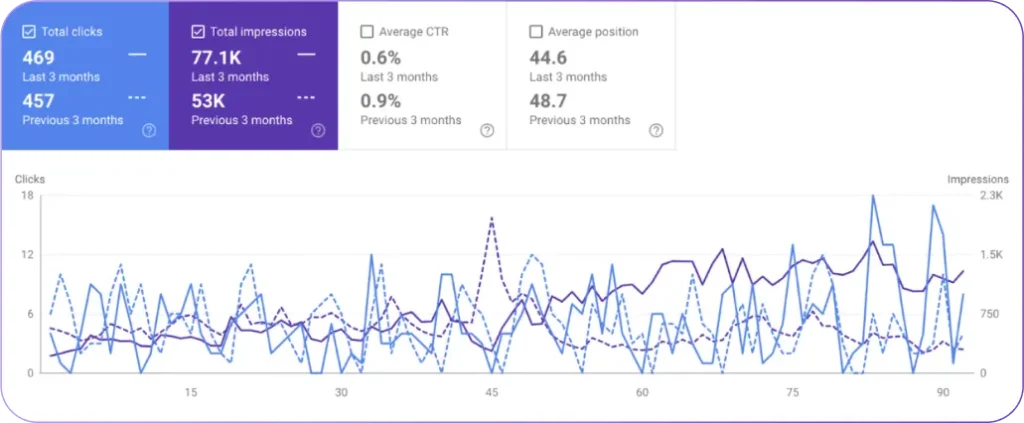
Tracking Featured Snippets performance requires monitoring impressions, clicks, click-through rate (CTR), and average position using Google Search Console and third-party rank tracking tools. How you track a featured snippet accurately depends on identifying snippet-triggering queries and measuring visibility shifts over time.
Which tools are used to track Featured Snippets? Google Search Console and third-party SEO platforms provide the core tracking framework. Google Search Console filters queries under “Search Appearance” for “Rich results,” “How-to,” or “FAQ” to isolate snippet-triggering impressions. The tool for tracking includes Semrush Position Tracking, Ahrefs Rank Tracker, and SE Ranking Position Tracker, which display owned, new, and lost snippets.
What metrics determine Featured Snippet performance? Impressions, clicks, CTR, and average position determine Featured Snippet performance. Impressions measure snippet eligibility and visibility. Clicks measure engagement. CTR, calculated as Clicks ÷ Impressions, indicates snippet relevance and compellingness. A shift from average position 1.1-2.5 often signals snippet loss.
How do you track a featured snippet in Google Search Console? Tracking a featured snippet in Google Search Console requires filtering the Performance report by query and search appearance. Add a “Search Appearance” filter for rich results. Sort by impressions to identify high-visibility snippet queries. Compare date ranges month-over-month to detect snippet gains or losses.
How can Featured Snippet clicks be tracked in GA4? Featured Snippet clicks can be tracked in GA4 by capturing the #:~:text= URL fragment using Google Tag Manager variables. Create custom JavaScript variables in GTM to extract highlighted snippet text. Send snippet parameters to GA4 as event-scoped custom dimensions. Analyze landing page performance and snippet-driven conversions.
How often is Featured Snippet performance reviewed? High-value snippet keywords require weekly monitoring, while sitewide analysis requires monthly review. Weekly review prevents the loss of extended snippets for priority queries. Monthly analysis reveals broader trend shifts and competitor displacement patterns.
Why does tracking Featured Snippets matter in the AI search environment? Tracking Featured Snippets provides early signals for AI Overview visibility and Generative Engine Optimization alignment. Featured Snippets appear alongside AI Overviews 45.39% of the time. Monitoring snippet ownership serves as a proxy for voice search sourcing and AI citation patterns.
What Makes Content Eligible for a Featured Snippet?
Content becomes eligible for a Featured Snippet when it ranks on page one, provides a direct and concise answer, matches search intent, demonstrates strong E-E-A-T signals, and follows structured formatting that Google can extract. Featured Snippets are selected algorithmically and cannot be manually requested or purchased.
Why must content rank on page one to qualify? Content must rank within positions 1 through 10 to qualify for Featured Snippet selection. Approximately 70% of Featured Snippets originate from pages not ranked first but still within the top 10 results. Page one visibility establishes baseline eligibility for extraction.
How does direct answer structure influence eligibility? Direct answer structure increases eligibility because Google extracts concise responses that resolve the query immediately. Paragraph snippets typically remain between 40 and 55 words. The direct answer must appear within the first two sentences under a matching question-based heading.
Why does formatting impact Featured Snippet selection? Formatting impacts selection because Google prefers structured content that is easy to parse. Bullet lists trigger list snippets. HTML tables trigger table snippets. A clear H1, H2, and H3 hierarchy reinforces semantic clarity and improves snippet extraction accuracy.
How do keyword intent and query type affect snippet format? Keyword intent and query type determine which snippet format Google displays. “What,” “Who,” “When,” and “Where” queries typically trigger paragraph snippets. “How” queries frequently trigger list snippets. “Which” and comparison queries frequently trigger table snippets.
How does E-E-A-T strengthen Featured Snippet eligibility? Strong Experience, Expertise, Authoritativeness, and Trustworthiness signals increase eligibility because Google prioritizes credible sources. Comprehensive coverage, updated statistics, cited evidence, and consistent terminology reinforce trust. Fresh content published within the past two to three years shows higher snippet representation rates.
Can content creators opt out of Featured Snippets? Content creators can opt out by implementing the nosnippet meta directive or using data-nosnippet attributes. The nosnippet tag blocks all snippet extraction. The max-snippet directive limits preview length but does not guarantee removal. Removing snippet eligibility sacrifices position zero visibility.
What Are the Common Mistakes That Prevent Featured Snippet Ranking?
The common mistakes that prevent Featured Snippet ranking include targeting the wrong intent, failing to provide direct answers, poor formatting, weak authority signals, technical SEO deficiencies, outdated content, lack of competitor analysis, and exposure to AI hallucination risks. Featured Snippet eligibility requires structured, verifiable, and extractable content aligned with informational intent.
How does incorrect content targeting prevent Featured Snippet ranking? Incorrect content targeting prevents ranking when pages fail to answer question-based queries directly. Google extracts concise answers that resolve informational intent immediately. Delayed answers or promotional framing reduce extraction probability.
How does poor content structure block snippet inclusion? Poor content structure blocks inclusion when the content lacks concise answers and a clear hierarchy. Paragraph snippets require 40-55-word responses under a matching question heading. Missing list formatting or absent HTML tables prevent list and table snippet eligibility.
Why does failure to rank on page one prevent snippet eligibility? Failure to rank on page one prevents eligibility because Google selects Featured Snippets from the top 10 results. Pages outside positions 1 through 10 rarely receive snippet extraction. Weak internal linking and low keyword optimization reduce first-page ranking potential.
How do weak authority and E-E-A-T signals reduce snippet selection? Weak authority and low E-E-A-T signals reduce selection because Google prioritizes trusted and verifiable sources. Lack of credible backlinks, citations, and demonstrated expertise limits competitiveness against established domains.
How do technical SEO errors block Featured Snippet ranking? Technical SEO errors block ranking when pages suffer from crawl barriers, slow load times, or missing structured formatting. Broken links, poor Core Web Vitals, and improper schema implementation reduce extraction reliability.
Why does outdated or unverified content reduce snippet stability? Outdated or unverified content reduces snippet stability because Google favors fresh, accurate, and fact-checked information. Content lacking updates declines in snippet frequency. Regular data refresh preserves relevance.
How do AI hallucinations affect Featured Snippet eligibility? AI hallucinations affect eligibility when content contains fabricated, unverified, or inaccurate claims generated without validation. AI hallucinations undermine trust signals and reduce E-E-A-T strength. Fact-checking, citation validation, and human editorial review prevent hallucination-driven inaccuracies that weaken snippet qualification.
How does ignoring competitors and SERP analysis harm the snippet strategy? Ignoring competitor and SERP analysis harms strategy because Google favors specific formats already visible in results. Reviewing existing snippet structures reveals optimal formatting patterns. Failure to adapt reduces replacement probability.
How do flawed keyword strategies prevent Featured Snippet ranking? Flawed keyword strategies prevent ranking when targeting overly broad terms instead of long-tail, question-based queries. Question keywords increase snippet trigger probability. Keyword stuffing reduces readability and harms extraction quality.
Do Featured Snippets Still Matter in the Age of AI Search?
Do Featured Snippets still matter in the age of AI search? Yes, Featured Snippets still matter in the age of AI search because they continue to drive visibility, support voice search, and serve as fallback answers when AI Overviews are unavailable. Featured Snippet visibility has declined, but Featured Snippets remain active and strategically important in modern SERPs.
How has AI search impacted Featured Snippet visibility? AI Overviews have reduced overall Featured Snippet prevalence but have not eliminated them. Featured Snippet visibility dropped by 64% between January and June 2025, declining from 15.41% to 5.53% across 1 million SERPs. Queries yielding Featured Snippets decreased by 35% between September 2024 and March 2025. AI Overviews now appear for approximately 19% of queries, frequently replacing traditional snippet placements.
Why do Featured Snippets remain valuable despite AI Overviews? Featured Snippets remain valuable because they still answer direct, fact-based queries efficiently. Simple informational searches (“What is machine learning?”) continue to trigger paragraph snippets. Featured Snippets can occupy up to 50% of mobile screen space, maintaining strong visual dominance.
How do Featured Snippets support voice and AI ecosystems? Featured Snippets remain critical for voice search because digital assistants frequently pull spoken answers from snippet content. When AI Overviews cannot generate a response, Google defaults to displaying a Featured Snippet as a fallback answer. This fallback behavior confirms continued operational importance within AI-driven search environments.
Why does SEO strategy continue prioritizing Featured Snippets? SEO strategy continues prioritizing Featured Snippets because they influence AI citation patterns, voice responses, and position zero visibility. Featured Snippets provide structured, extractable content formats that align with AI retrieval systems. Position zero visibility remains a measurable competitive advantage even as AI Overviews expand.
Can Multiple Pages From the Same Site Rank for Featured Snippets?
No, multiple pages from the same site cannot occupy both the Featured Snippet position and a separate organic listing on page one for the same query. Google implemented snippet deduplication on January 23, which counts the Featured Snippet as one of the 10 organic results instead of allowing an additional listing.
How does snippet deduplication work in Google search results? Snippet deduplication removes the duplicated organic listing from page one when a URL earns the Featured Snippet. Before this change, a page could appear both as a Featured Snippet and as a standard organic result. After deduplication, the snippet URL replaces the traditional organic slot within the top 10 results.
Does deduplication apply to all SERP features? Deduplication does not apply to image carousels, People Also Ask boxes, or other rich result formats. If the snippet text originates from URL-01 and the image originates from URL-02, only URL-01 is removed from duplicate organic placement. URL-02 remains eligible in other SERP elements.
Can multiple pages from the same site rank for Featured Snippets across different queries? Yes, multiple pages from the same site can rank for Featured Snippets across different queries. Deduplication applies only within a single query result set. Different pages from the same domain remain eligible for different snippet-triggering keywords.
What strategic implication does deduplication create? Deduplication increases the importance of structured answer optimization because only one URL secures position zero per query. Content must target distinct queries across separate pages to expand the snippet footprint. Query clustering and intent segmentation prevent internal competition for the same snippet.
How Often Do Featured Snippets Change?
Featured Snippets change frequently, with some keywords switching snippet ownership multiple times per week. Volatile queries often include broad definitions, comparison topics, and informational queries with many competing answers. Frequent rotation signals that Google continues testing alternative responses.
Why do some Featured Snippets change more frequently than others? Featured Snippet volatility increases for queries where multiple pages provide similarly structured answers. Definitions that allow varied phrasing create higher competition. Broad informational topics generate more replacement opportunities.
How does Google’s evolving strategy influence snippet changes? Google continuously refines snippet triggers and sometimes removes snippets entirely for specific queries. Google has tested format adjustments and introduced AI Overviews that replace traditional snippets in certain cases. This evolution reflects an ongoing balance between instant answers and external traffic distribution.
What algorithmic factors influence Featured Snippet replacement? Content relevance, formatting clarity, authority signals, and engagement metrics influence snippet replacement. Lower-ranking pages can capture the snippet if the answer formatting is clearer and more concise. Google prioritizes answer precision over pure ranking position.
How does competition affect snippet stability? Competition directly impacts snippet stability because competitors frequently optimize content to replace existing snippet holders. Updated statistics, improved structure, and clearer step formatting increase replacement probability. Regular content refresh reduces snippet displacement risk.
How often are Featured Snippet rankings reviewed? Featured Snippet rankings require weekly monitoring for high-value queries and monthly review for broader keyword sets. SERP volatility remains high across informational queries. Continuous monitoring prevents extended visibility loss.
What is the Optimal Answer Length for Featured Snippets?
The featured snippet optimal answer length is 40-60 words for paragraph snippets. Approximately 85% of paragraph Featured Snippets fall within the 40–60 word range. Answers shorter than 40 words often appear incomplete, while answers longer than 60 words are frequently truncated or rejected.
Why is the 40–60 word range considered optimal? The 40–60 word range fits Google display limits while preserving information density. Desktop snippets rarely exceed 320 characters. Mobile snippets display approximately 380 characters, which favors 45–50 word answers for stability.
How many sentences does a paragraph snippet contain? Paragraph snippets typically contain 2-3 sentences. Very few snippets contain 4 sentences, and none exceed 5 sentences in observed datasets. The direct answer appears within the first two sentences for extraction eligibility.
How does information density influence snippet success? Information density influences snippet capture by maximizing distinct facts within the 40–60 word range. High-density answers containing 5–7 clear facts outperform shorter, vague answers. A 58-word answer with 7 specific facts outperformed a 42-word answer with limited detail.
Does optimal length apply only to paragraph snippets? Yes, the 40–60 word guideline applies specifically to paragraph Featured Snippets. List snippets typically contain 5–10 items, often totaling 40–45 words. Table snippets commonly contain 3–4 columns and 5–10 rows, with concise cell text under 25 characters.
What is Google’s official minimum length requirement? Google does not publish a fixed minimum length requirement for Featured Snippets. Snippet length varies by language, device, and query type. Content must provide “enough text” to deliver a useful answer, which reinforces the 40–60 word standard as the practical optimization range.