Google Search Console platform properties now let creators and publishers see how Instagram, TikTok, X, and YouTube content performs across Google Search and, where eligible, Discover and Google News.
Google announced the feature on July 7, 2026, calling it a new Search Console property type for social and video platforms. The feature is rolling out gradually over the coming weeks, so some accounts may not see it yet.
The update matters because social content has always had a measurement gap. Marketers could see how a post performed inside TikTok, Instagram, X, or YouTube, but they had no native Google report showing which social posts were getting discovered through Search. Platform properties close part of that gap by bringing social URLs into Search Console reporting.
What platform properties show
Platform properties report Google performance for supported social accounts and channels. Search Console currently supports four platforms: Instagram, TikTok, X, and YouTube.
Each account or channel is added as its own property, which means a brand with Instagram, TikTok, X, and YouTube accounts would need to create separate platform properties for each one.
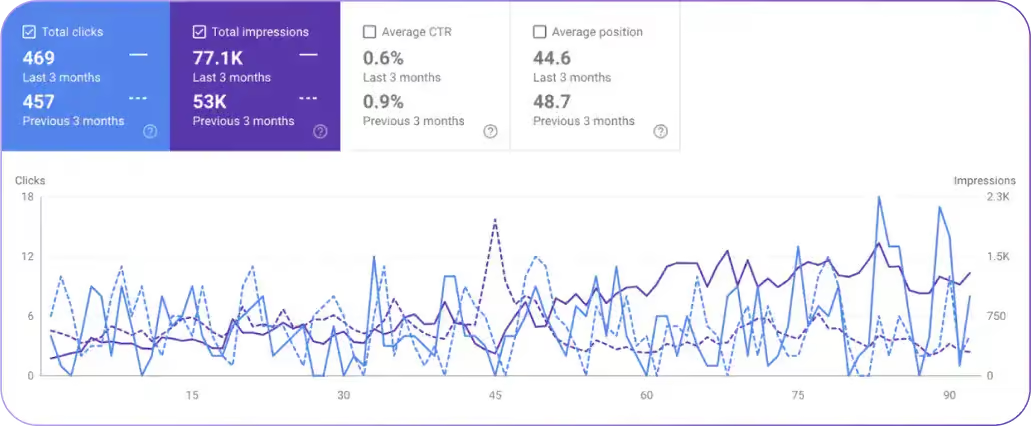
Once verified, the reports can show total clicks, impressions, average click-through rate, average search position, top-performing posts, queries that led users to the content, recent traffic trends, and click-based achievements.
Google says the Performance report can be filtered and sorted by specific posts and queries. Data can also be exported for analysis outside Search Console.
What it does not show
Platform properties do not replace native social analytics.
Google's help documentation says the reports only show how supported social content performs on Google. They do not show how many people saw a video, post, or story inside the social platform itself. For example, a TikTok video impression on TikTok does not appear in Search Console. A TikTok video impression in Google Search can.
Google also notes that Discover and Google News reports only appear when the content receives traffic from those surfaces.
How marketers can set it up
To add a platform property, open Search Console, choose Add property, select one of the supported platforms, and follow the verification flow. Google says ownership is checked periodically, so access can pause if the external platform connection expires.
New properties may show empty charts at first. Google says it can take a few days for performance data to appear after setup.
Why Google is doing this now
This is not Google's first step toward connecting Search Console with social content.
In December 2025, Google tested social channel reporting inside Search Console Insights for a limited set of websites. That experiment showed clicks, impressions, top social pages, trending queries, audience location, and traffic from surfaces such as Image Search, Video Search, News Search, and Discover.
Platform properties appear to expand that idea. The earlier version depended on channels Google automatically associated with a website. The new version lets creators and publishers add supported platform accounts directly as Search Console properties.
The timing also fits Google's broader push to make Search a discovery layer for social and video content. The Verge reported that Google recently began letting large creators and publishers claim dedicated Search profiles that can include platform links and pinned social videos.
What this changes for SEO and social teams
Search and social teams now have a shared report for a channel that used to sit between them.
A short-form video can rank in Google. An Instagram post can earn impressions from a query. A YouTube video can pull discovery from web search, video search, Discover, or News, depending on where it appears. Platform properties give marketers a first-party way to see that behavior instead of guessing from referral traffic or platform-side analytics.
The practical use cases are straightforward: identify which social posts earn Google impressions, find the search queries attached to high-performing social content, compare Google demand against native social engagement, decide which social posts deserve a matching blog post or landing page, and spot branded and non-branded queries where social content is already visible.
For brands, this makes social content part of search reporting. For creators without a website, it gives Search Console a use case that does not depend on owning a domain.
The larger takeaway: Google is treating distributed content as part of search visibility. Website rankings still matter, but marketers now have another place to measure how their content appears when people search.