Google Discover is a content feed that surfaces articles, videos, and updates based on user interests without requiring a search. Instead of responding to queries, it predicts what people want to read and places that content directly in front of them.
Google Discover exists as a major traffic channel inside the Google ecosystem, reaching 800 million users every month. This scale creates a unique opportunity for publishers and brands to generate large volumes of traffic without relying on traditional search queries.
Success in Google Discover follows a different model from traditional SEO. Content needs to attract clicks, deliver value, and maintain engagement to maintain visibility. Visual impact, topic relevance, and user satisfaction determine whether content gets shown and stays visible.
Google Discover SEO focuses on aligning content with user interests and behavior. This includes building strong E-E-A-T signals, creating visually compelling pages with large images, maintaining fast mobile performance, and covering topics with depth and consistency.
This guide explains how Google Discover works, what determines visibility, and how to improve your chances of appearing in the feed. It covers ranking factors, eligibility requirements, content strategies, and tools for building a scalable Google Discover traffic channel.
What Is Google Discover?
Google Discover is a personalized content feed from Google that shows articles, videos, and news without requiring a search query. It introduces content based on user interests and behavior, which shifts discovery from search-driven to interest-driven browsing.
The feed is a mobile-first surface within the Google ecosystem. This placement keeps content constantly visible and turns browsing into a continuous, scroll-based experience rather than a session triggered by a query.
Google Discover presents content through visual cards. Each card includes a large image, a headline, the publisher’s name, and a publication date. This structure creates a visually driven feed that encourages passive consumption, where users scroll without a defined intent or goal.
The feed updates dynamically for each session. The content shown changes across users, devices, and time because the system continuously recalculates relevance using new behavioral data and updated content signals.
The scale of Google Discover makes it a major traffic source. The platform reaches around 800 million users globally each month, which creates strong visibility opportunities for publishers and brands that appear in the feed.
Where Does Google Discover Appear and How Do Users Interact With It?
Google Discover appears mainly on mobile across the Google app, Chrome new tab, and mobile homepage, where users scroll through personalized content feeds. It captures attention during moments when users are not actively searching but still open to consuming content.
The feed shows up in environments tied to everyday browsing behavior. The Google app remains the most prominent entry point, where users open it with no specific intent. Chrome’s mobile new tab introduces content during idle browsing moments, while the mobile homepage integrates discovery alongside search activity in a more subtle way.
User interaction focuses on quick, low-friction actions that influence future content exposure. Following topics or websites increases visibility for related content, while hiding cards or selecting “see less” removes unwanted themes. These interactions act as direct input signals that reshape the feed experience over time.
Most engagement happens during short sessions, often during commutes, breaks, or downtime, where users scroll quickly through multiple cards. This pattern explains why traffic often spikes at specific times during the day.
The experience of Google Discover is expanding into desktop environments as Google tests broader distribution. In 2025, early rollouts appeared on the Google.com homepage in regions in New Zealand and Australia. This shift brings personalized, interest-based content directly into desktop browsing, creating new visibility opportunities outside mobile-only distribution.
What Types of Content Appear in Google Discover?
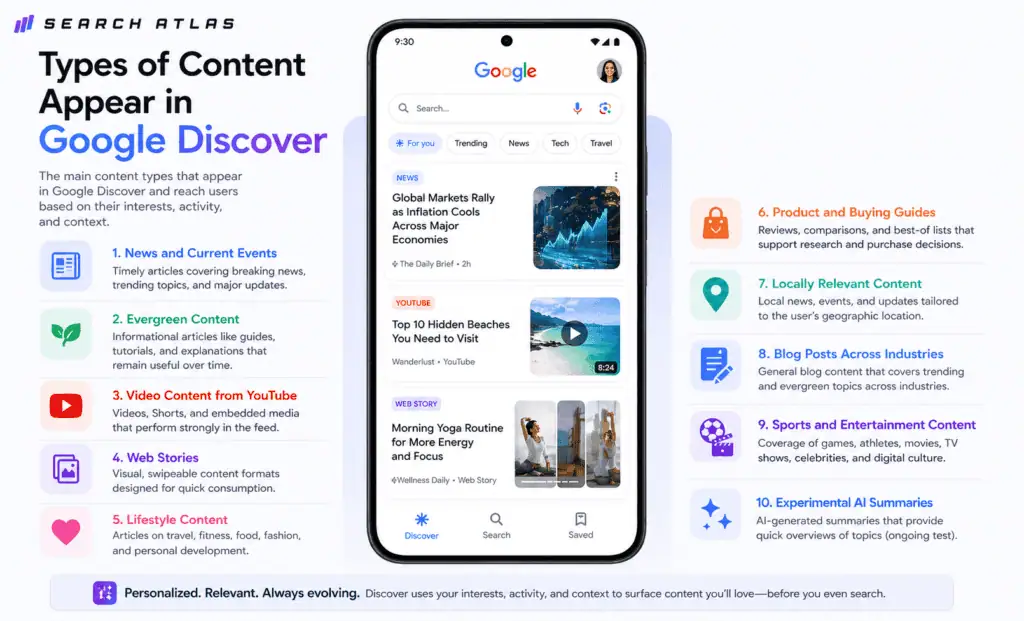
Discover different content types and SEO strategies with Search Atlas.
Google Discover shows multiple content types, from breaking news to evergreen guides, based on user interests and behavior. The feed blends fresh updates with long-lasting content, which creates continuous visibility opportunities across different formats and industries.
The main content types that appear in Google Discover include:
- News and Current Events: Timely articles covering breaking news, trending topics, and major updates across politics, technology, business, and entertainment. These pieces gain visibility quickly after publication, then decline as interest shifts toward newer developments.
- Evergreen Content: Informational articles that remain useful over time, such as guides, tutorials, and explanations. These pages reappear in the feed whenever they match ongoing user interests, which allows sustained traffic beyond the initial publishing window.
- Video Content from YouTube: Videos, Shorts, and embedded media appear frequently in the feed. Video performs strongly because it aligns with passive consumption behavior, where users scroll and engage without actively searching.
- Web Stories: Visual, swipeable content formats designed for quick consumption. These story-style experiences appear prominently because they match mobile browsing habits and increase interaction through short, engaging sequences.
- Lifestyle Content: Articles focused on everyday interests such as travel, fitness, food, fashion, and personal development. These topics maintain strong performance because they connect to recurring habits and long-term user preferences.
- Product and Buying Guides: Commercial content that supports research and purchase decisions, such as reviews, comparisons, and best-of lists. This type connects discovery behavior with shopping intent and drives traffic to ecommerce-focused pages.
- Locally Relevant Content: Content tailored to geographic location, such as local news, events, and updates. Location-based signals influence what appears, which increases relevance and personalization for each user.
- Blog Posts Across Industries: General blog content remains one of the most common formats in Discover. Blog posts perform well because they align with interest clusters, cover both trending and evergreen topics, and adapt easily to different content strategies.
- Sports and Entertainment Content: Coverage of games, athletes, movies, TV shows, celebrities, and digital culture. These topics benefit from strong engagement cycles driven by events, releases, and trending conversations.
- Experimental AI Summaries: In some cases, Google tests summarized content blocks at the top of the feed. These summaries provide quick overviews of topics and reflect ongoing integration of AI-driven content experiences.
How Does Google Discover Work?
Google Discover works by predicting which content a user will engage with and showing it without a search query. It relies on an interest-based model that selects content based on behavior instead of matching keywords.
The system analyzes signals across the Google ecosystem to understand user preferences. Search history, browsing activity, app usage, location data, and video consumption patterns all contribute to building an interest profile. This profile determines what content appears in the feed at any moment.
Content selection depends on relevance to topics and entities connected to user behavior. Pages are evaluated and mapped to specific subjects, then ranked based on how closely they align with current interests. This process allows content to surface even without recent searches related to that topic.
The system favors content that feels complete and trustworthy within a single page. Pages that clearly present information, maintain accuracy, and match user expectations gain more consistent exposure across different sessions.
Why Is Google Discover Not Based on Search Queries?
Google Discover is not based on search queries because it delivers content based on predicted user interests instead of explicit search intent. It shifts the model from reacting to queries toward anticipating what users want to see before they search.
The system targets moments when users are browsing rather than searching. Opening the Google app or a new tab creates a passive state where there is no defined question or goal. Content appears based on relevance to past behavior instead of matching a typed query.
Interest prediction replaces keyword matching as the core mechanism. Past activity, engagement patterns, and topic preferences determine what appears, which allows content to reach users even when there is no immediate demand or active search happening.
Pages gain visibility not because a user searched for them, but because they match an existing interest profile, which creates new opportunities for exposure outside search queries.
What Is a Google Discover SEO Strategy?
A Google Discover SEO strategy is a content approach focused on getting pages featured in personalized feeds instead of ranking for search queries. It targets moments where users are browsing, not searching, which changes how content gains attention and traffic.
This approach works differently from traditional SEO because it does not depend on keyword rankings. Search optimization focuses on ranking for specific queries, while Discover focuses on being selected for a feed. In this case**, visibility depends on whether content attracts attention in a scroll-based environment.**
Content success depends on how it performs in a feed context. Visual impact, topic relevance, and timing influence whether users stop scrolling and engage. A strong headline and image combination often determines visibility faster than traditional ranking signals.
Traffic behavior follows a completely different pattern. Instead of steady growth tied to rankings, Discover traffic arrives in spikes when content gains traction, then fades as interest shifts. This makes performance more dynamic and less predictable compared to search traffic.
The strategy requires thinking in terms of audience interest, where content needs to align with topics people follow, trends they engage with, and themes they revisit over time. This creates opportunities to reach users before they even think about searching.
What is the Importance of Google Discover for Website Owners?
Google Discover is important for website owners because it generates high-volume traffic from users who did not perform a search. It creates a new acquisition channel where visibility depends on interest, not rankings, which expands reach beyond traditional SEO limits.
The main benefits of Google Discover for website owners include:
- Access to Passive Audiences: Content reaches users who are not actively searching but have a strong interest in the topic. This creates exposure earlier in the user journey, before traditional search interaction begins.
- Higher Engagement Signals: Visitors arriving from Google Discover often engage more deeply with content. Sessions tend to include longer reading time and multiple page views, which strengthens overall site performance metrics.
- Brand Visibility and Recall: Repeated exposure in the feed increases familiarity with a publisher. Seeing the same source multiple times builds recognition and encourages users to return directly for future content.
- Audience Expansion Beyond Keywords: Content reaches users outside predefined search queries. This expands visibility into broader interest-based audiences that traditional keyword targeting does not capture.
- Alternative Traffic Channel: Google Discover provides a separate traffic source independent of search rankings. This reduces reliance on search performance and creates stability during ranking fluctuations.
- Feedback Loop Growth Effect: Engagement reinforces future visibility. When users click, read, or interact with content, the system increases the likelihood of showing similar content again, which strengthens audience connection over time.
- Massive Traffic Spikes: Content can generate large bursts of traffic within a short time. Pages often receive significant visits within days of publication, with peak performance concentrated in short visibility windows.
Google Discover creates a different growth model compared to search. Visibility builds through engagement and repetition rather than rankings, which allows websites to scale reach through content that consistently matches user interests.
How Google Discover Differs from Google News?
Google Discover differs from Google News because Discover predicts user interests, while News organizes and delivers current events. Discover focuses on personalized discovery, while News focuses on timely reporting across major stories.
The difference comes from how content is selected and delivered. Google Discover offers a wider mix of formats, building a feed around individual behavior. Google News is focused on journalism and breaking updates, organizing content based on what is happening in the world.
This distinction affects traffic patterns and content strategy. Discover generates spikes when content captures attention, while News drives steadier traffic tied to ongoing coverage.
The breakdown of how Google Discover differs from Google News is below:
| Aspect | Google Discover | Google News |
| Approach and Purpose | Predicts what users will find interesting using behavior and engagement signals. Content appears proactively without a search. | Aggregates and organizes important news stories. Focus stays on current events and journalistic relevance. |
| Content Type | Includes blog posts, videos, evergreen articles, and trending topics that remain relevant over time. | Focuses on news reporting, breaking stories, and updates from recognized publishers. |
| Personalization | Highly personalized based on activity, interests, location, and followed topics. Each feed is unique. | Limited personalization. Prioritizes major headlines for broad audiences, with smaller personalized sections. |
| Traffic Behavior | Traffic is volatile. Content can spike quickly based on engagement, then decline as interest fades. | Traffic is more stable. Visibility follows consistent publishing and ongoing news cycles. |
| Content Freshness | Does not require a recent publication. Older content can resurface if it becomes relevant again. | Strong emphasis on freshness. A recent publication is critical for visibility. |
| Formatting and Presentation | Displays content as visual cards with large images and headlines designed for scrolling. | Organizes content into headline lists, grouped stories, and topic clusters for structured reading. |
What Makes a Page Eligible for Google Discover?
A page is eligible for Google Discover when it is indexed, follows content policies, and delivers a strong mobile and visual experience. Eligibility starts with technical inclusion and policy compliance, then extends into how content is presented and consumed.
Below are the core requirements that determine whether a page can appear in the feed.
- Indexing and Google Discover Content Policy Requirements
A page needs to meet these mandatory requirements to be eligible for Google Discover:
- Be indexed by Google: The page needs to be crawled and included in Google’s index to enter the Google Discover content pool.
- Follow Discover content policies: Content needs to avoid harmful, misleading, or deceptive practices, including clickbait or unclear sourcing.
- Comply with SafeSearch guidelines: Content needs to be appropriate for a broad audience and pass Google’s filtering systems.
- Use HTTPS: Pages need to load securely to meet technical and trust requirements.
- Be mobile-friendly: Pages need to render properly on mobile devices and provide a smooth reading experience.
These requirements define basic eligibility. Pages that fail any of these conditions are excluded regardless of content quality.
- Image Requirements: 1200px, 16:9, and max-image-preview:large
Visual elements directly impact visibility and performance in the feed:
- Use high-resolution images. Images need to be at least 1200 pixels wide to qualify for large thumbnails.
- Follow a 16:9 aspect ratio. This format matches how content cards appear in the feed.
- Enable max-image-preview:large. This setting allows Google to display larger image previews, which improves visibility.
Strong visuals combined with clear, relevant content increase the chances of appearing and maintaining visibility in the feed.
What Are the Ranking Factors for Google Discover?
The main Google Discover ranking factors are E-E-A-T, engagement quality, topical authority, mobile experience, originality, and strong visuals. The February 2026 Discover Core Update reinforced a quality-first system, where trust, depth, and user satisfaction matter more than clicks or traditional SEO signals.
The 5 most important ranking factors are outlined below.
1. E-E-A-T and Source Trust Signals
Experience, Expertise, Authoritativeness, and Trustworthiness (E-E-A-T) and source trust signals are critical primary ranking factors for Google Discover. Google uses these signals to decide whether a site is reliable enough to recommend content proactively, especially when users did not ask for that content through a search query.
Strong E-E-A-T comes from clear authorship, transparent editorial standards, accurate information, and visible expertise. Author bios, contact pages, About pages, cited sources, original examples, expert review, and real experience all strengthen trust. Content without clear ownership or expertise creates a weaker recommendation signal.
The “Experience” part of E-E-A-T matters strongly in Discover. Firsthand testing, original images, real case studies, expert commentary, and unique observations show that the content comes from real E-E-A-T, not generic rewriting.
2. Mobile Experience and Core Web Vitals
Mobile experience is a major ranking factor because Google Discover is primarily consumed on mobile devices. Pages need to load quickly, display correctly across screen sizes, and remain stable while users scroll or interact with the content.
If a page loads slowly, shifts layout during reading, or feels difficult to navigate, users leave quickly, which weakens engagement signals and reduces the chances of appearing in the feed.
Core Web Vitals matter as a quality signal when similar content competes for visibility. Metrics such as loading speed, visual stability, and responsiveness influence whether a page is considered a high-quality experience. Even strong content can underperform if the page feels slow, unstable, or cluttered.
3. Topical Authority and Interest Alignment
Topical authority and interest alignment determine how often content appears in Google Discover. The system favors sources that build deep, consistent coverage around a defined subject instead of publishing across disconnected topics.
Topical authority comes from structured, repeated coverage. A site that explores a topic through multiple articles, subtopics, and updates sends a clear signal of expertise. Strong internal linking and content clusters reinforce these relationships and strengthen topical authority.
Interest alignment focuses on matching real user behavior. Discover selects content based on what users interact with, not what they search. Content needs to connect to ongoing interests, recurring topics, and engagement patterns.
A focused site with strong topical depth often outperforms broader sites because it creates clearer expertise signals. Consistent coverage and repeated engagement increase the likelihood of being selected and shown in the feed.
4. Engagement Quality
Engagement quality determines whether content continues to appear after it enters the Discover feed. The system evaluates how users interact with content after exposure, not just whether they click.
Click-through rate matters, but what happens after the click matters more. Discover prioritizes content that keeps users reading and engaged, not content that only attracts attention.
Strong signals include reading depth, time on page, return visits, and shares. Weak signals include fast exits, misleading headlines, and content dismissals, which reduce future visibility.
5. 2026 Quality-First Updates
The recent Google update introduced a stronger quality-first model across Google Discover. Google’s February 2026 Discover Core Update changed how content is evaluated and prioritized in the feed.
- Originality is rewarded: Unique insights, data, and firsthand experience outperform rewritten or generic content.
- Clickbait is reduced: Sensational or misleading headlines lose visibility in favor of clear, accurate titles.
- Local relevance increased: Content from sources in the user’s country appears more often.
- Depth and timeliness improved: In-depth and updated content gains more visibility than shallow coverage.
These changes shifted Discover away from a clicks-first system toward a satisfaction-driven model, where trust, clarity, and real value determine long-term visibility.
How Do You Optimize for Google Discover?
Optimizing for Google Discover requires building trust, aligning with user interests, and creating content that earns engagement in a feed environment. Visibility depends on whether Google considers your content reliable, relevant, and engaging enough to recommend.
Each optimization step below reflects how Google Discover selects and promotes content.
1. Demonstrate E-E-A-T Across All Content
E-E-A-T is the foundation of Google Discover visibility. Google uses E-E-A-T as a strict filtering system before any content is recommended. Content without strong trust signals rarely appears, regardless of how well it is written or optimized.
Strong E-E-A-T starts with clear ownership. Every article needs to show who created it and why that person is qualified. A visible author with a detailed profile builds credibility, while an anonymous or generic attribution weakens trust. Supporting pages such as About, Contact, and Editorial Policy reinforce legitimacy and signal that the site operates as a real publisher.
Content that demonstrates firsthand knowledge consistently outperforms generic summaries. This includes real-world testing, original screenshots, case studies, expert commentary, and unique observations. These elements show that the content comes from direct involvement, not rewritten information.
A strong E-E-A-T setup typically includes:
- Authors’ bylines with detailed profile pages.
- Real examples, original visuals, or tested insights.
- Clear sourcing and cited references.
- Updated timestamps that reflect content freshness.
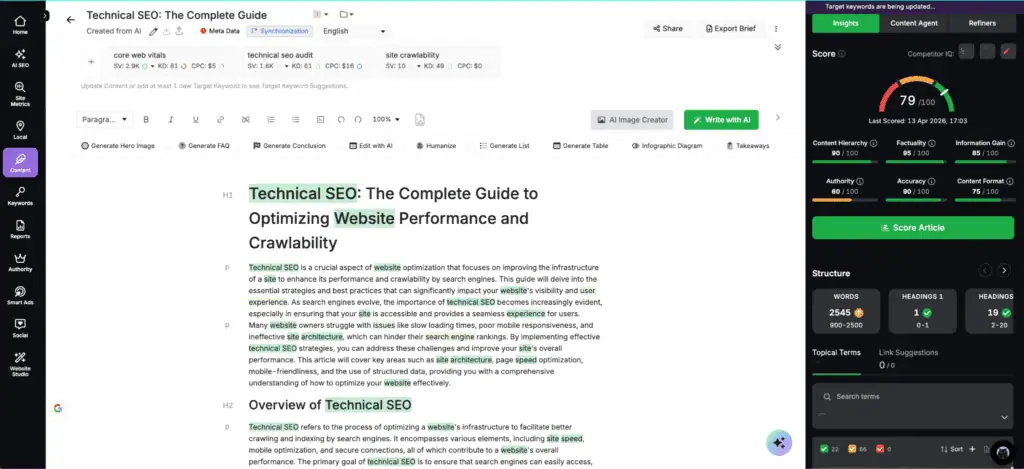
Search Atlas strengthens E-E-A-T through execution, not just guidance. Content Genius analyzes gaps, improves topical depth, and structures content to reflect expertise and authority. Instead of guessing what “quality” means, it translates E-E-A-T into clear, actionable improvements across every page.
2. Build Topical Authority Around Core Topics
Topical authority determines how often a site appears in Discover. Google favors publishers that show deep, consistent expertise in a specific area instead of those publishing across scattered topics.
Authority builds through repetition and structure. A site that continuously covers a topic sends a clear signal of specialization. Over time, this repetition strengthens the association between the site and that subject, increasing the likelihood of appearing in the feed.
A structured content system accelerates this process. The most effective model combines:
- A pillar page that defines the main topic.
- Supporting articles that expand into subtopics.
- Internal links that connect everything into one ecosystem.
This structure mirrors how Google organizes knowledge and user interests. It allows the system to understand not just individual pages, but the depth of coverage behind them.
A site that specializes in one niche gains stronger visibility than a generalist site, even with fewer backlinks or lower domain authority. Discover evaluates expertise at the topic level, not just the domain level.
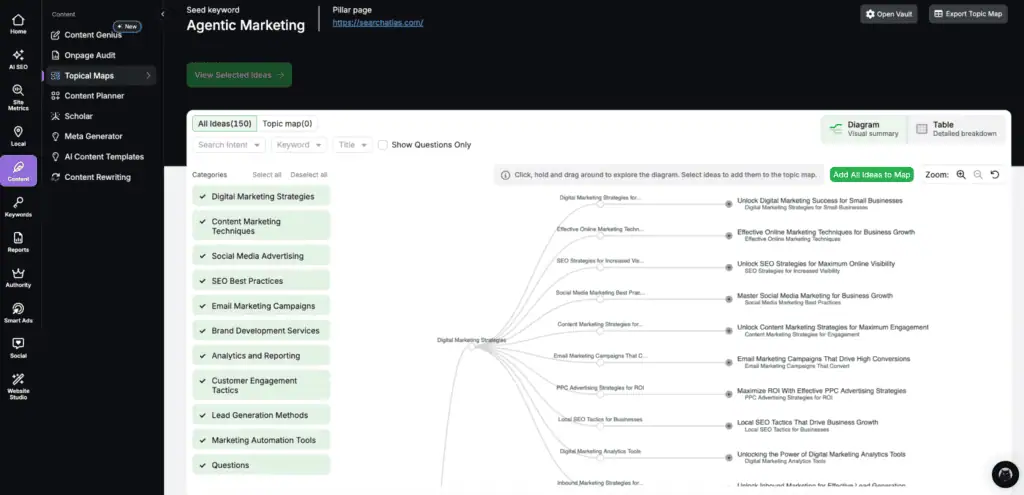
Search Atlas turns topical authority into a scalable system. The Topical Map feature identifies every subtopic, organizes content into clusters, and creates a roadmap for complete coverage. This replaces random publishing with a structured authority-building process.
3. Use High-Quality, Large Images
Visuals are not optional in Google Discover. The feed is built around image-first content cards, which means the image often decides whether a user stops scrolling or ignores the page.
Images need to meet strict technical standards to qualify for full visibility:
- Minimum width of 1200 pixels.
- Preferred 16:9 aspect ratio.
- Enabled max-image-preview:large for full-size display.
Quality matters as much as size. Images need to be relevant, clear, and directly connected to the topic. Generic stock photos, logos, or misleading visuals reduce engagement and weaken performance. Original screenshots, product images, or contextual visuals perform better because they add real informational value.
Performance remains critical. Large images need to be compressed and delivered in modern formats such as WebP. Slow-loading visuals damage both user experience and visibility.
In Discover, the decision happens fast. Users scroll quickly, so the combination of image + headline determines whether content gets attention. Strong visuals increase click-through rates and reinforce engagement signals that drive continued visibility.
4. Optimize Mobile Performance and UX
Mobile performance directly impacts Discover visibility. The entire experience is built for mobile browsing, which means speed, stability, and readability determine whether users engage or leave.
Pages need to load quickly and remain stable during interaction. Core Web Vitals measure this performance and act as a deciding factor when similar content competes. Slow loading, layout shifts, or heavy scripts reduce the chances of being shown.
User experience needs to be frictionless, which means the content needs to be easy to read and navigate on small screens. This includes:
- Clear headings and structured sections.
- Short, readable paragraphs.
- Proper font size and spacing.
Intrusive elements reduce performance. Pop-ups, aggressive ads, and interruptions break the browsing flow and lower engagement. Google Discover favors content that users can consume smoothly without disruption.
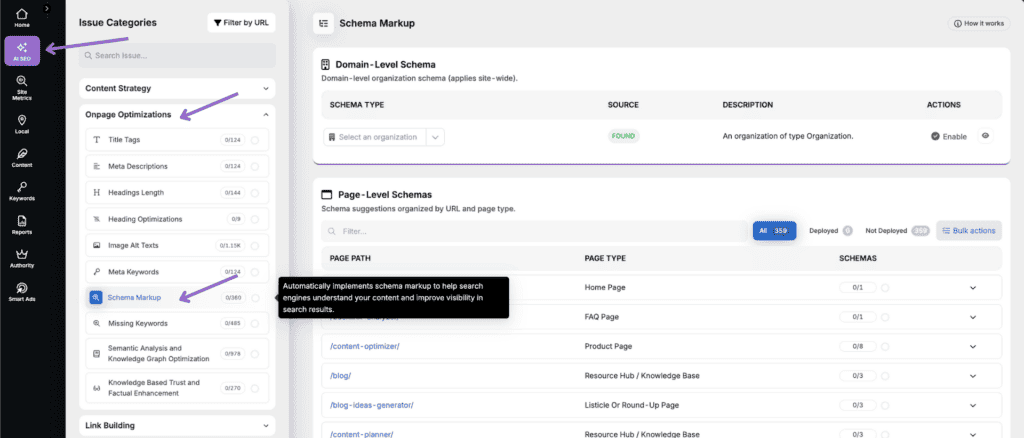
Search Atlas improves mobile performance through technical audits and execution. OTTO SEO identifies speed issues, rendering problems, and UX weaknesses, then provides direct fixes. This removes guesswork and ensures pages meet Google Discover expectations across performance and usability.
5. Publish Content Around Trends and Entities
Discover selects content based on entities and interest signals, not keywords. Content needs to connect to recognizable topics, people, products, or concepts within Google’s knowledge systems.
Trending topics create immediate opportunities. Content published during peak interest can generate rapid visibility within hours. Timing matters because Google Discover surfaces content when the user’s attention is closest.
Evergreen content builds long-term value. Updating existing articles with new data, insights, or developments allows them to reappear in the feed. This creates recurring traffic instead of one-time spikes.
Entity alignment improves selection. Content needs to clearly reference known entities using precise language. This helps Google understand how the page fits into user interests and increases the chances of being recommended.
A balanced strategy works best:
- Use trends for short-term visibility spikes.
- Use evergreen content for consistent traffic.
- Connect both through an entity-driven structure.
Search Atlas strengthens this process through entity analysis and content planning. It identifies relevant topics, maps relationships, and ensures content aligns with how Google Discover interprets user interests.
6. Follow Google Discover Content Policies Strictly
Content policies define baseline eligibility for Google Discover. A page that violates these rules does not appear, regardless of quality, authority, or engagement potential. This makes policy compliance a non-negotiable part of any Google Discover SEO strategy.
Google applies stricter standards in Google Discover than in traditional search because content is recommended proactively. The system needs to protect user trust, which means it filters out anything that feels misleading, unsafe, or low-quality. Content that creates false expectations, exaggerates outcomes, or relies on manipulation loses visibility quickly.
There are 3 critical areas to control:
- Content integrity: Avoid harmful, explicit, or deceptive material. This includes hate speech, dangerous activities, or misleading claims.
- Headline accuracy: Titles need to match the content. Clickbait, curiosity gaps, and sensational phrasing reduce trust and limit distribution.
- Monetization transparency: Sponsored content needs to be clearly labeled and balanced. Pages overloaded with ads or affiliate elements weaken credibility.
Another key factor is visual honesty. Images need to accurately represent the content. Misleading thumbnails or exaggerated visuals damage engagement signals and reduce future visibility.
Avoiding these issues protects visibility. Discover favors content that is clear, honest, and aligned with user expectations. Trust remains a requirement, not an advantage.
7. Optimize for Semantic SEO
Semantic SEO determines how well content connects to topics, entities, and user interests. Google Discover relies on understanding meaning, relationships, and context across content.
Each page needs to clearly define what it is about. Topics, brands, products, and concepts need to be explicitly stated and consistently referenced. This clarity allows Google to map the page to user interest profiles and decide when to surface it.
Strong semantic structure follows a layered approach. The main topic appears clearly in the title and introduction, then expands through supporting sections that deepen the subject. Each section adds new information instead of repeating the same idea in different words.
Content depth matters as much as structure. Pages that explore multiple angles, answer related questions, and connect subtopics perform better because they align with how Google Discover evaluates completeness.
Internal linking reinforces semantic relationships. Linking related pages builds a network that shows topical depth and authority. This network helps Google understand how different pieces of content connect within the same subject area.
There are three core elements to get right:
- Entity clarity. Use precise, unambiguous references to topics and concepts.
- Structured hierarchy. Organize content into logical sections that expand naturally.
- Connected ecosystem. Link related pages to reinforce topic coverage.
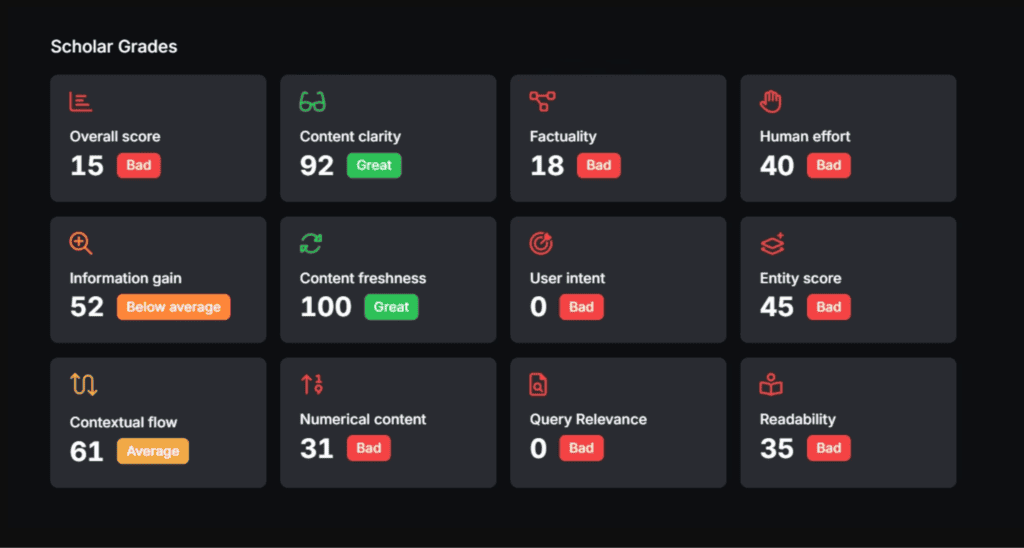
Search Atlas strengthens semantic SEO through Content Genius and the Search Atlas SCHOLAR Tool. SCHOLAR evaluates content through Entity Score, Information Gain, and User Intent Matching. These scores show whether a page clearly defines its main entities, adds original value, and matches what users expect from the topic.
Content Genius then helps expand the article around missing entities, supporting questions, internal links, and relevant subtopics. Together, Content Genius and SCHOLAR turn semantic SEO into a measurable optimization process instead of a manual content guess.
8. Enable the Follow Feature and Build Brand Signals
The Follow feature creates a direct connection between users and publishers. When users follow a site, it sends a strong interest signal that increases the likelihood of future visibility. To enable this feature, a site needs:
- Provide a valid RSS or Atom feed.
- Implement structured data such as Organization and Website schema.
Without these, the site cannot fully participate in follow-based distribution.
Consistency strengthens the signal. Regular publishing keeps the feed active and increases exposure. Irregular updates weaken the connection and reduce visibility over time.
Brand recognition compounds results. Repeated exposure builds familiarity, which increases engagement and trust. Strong brand signals improve how often content is selected and shown.
9. Monitor Performance on Google Discover
Monitoring performance in Google Discover requires tracking how content appears, how users interact with it, and how that behavior changes over time. Google Discover traffic is volatile, which means performance insights need to guide every optimization decision.
Google Search Console (GSC) provides the foundation through the Discover report. This report shows impressions, clicks, and click-through rates, which reveal how often content appears and how often users engage. Patterns in this data highlight which topics, formats, and headlines attract attention in the feed.
Google Analytics (GA4) adds deeper behavioral insights. Segmenting traffic from Google sources allows analysis of session duration, engagement rate, and conversions. This shows whether users only click or actually consume and interact with the content after landing on the page.
A strong monitoring process focuses on a few key actions:
- Track impressions, clicks, and CTR to understand visibility and engagement trends.
- Identify top-performing topics and content formats based on traffic spikes.
- Analyze user behavior to measure satisfaction and content depth.
- Refresh high-performing content with updated data, visuals, and structure.
Iteration drives growth in Discover. Content that performs well should be expanded, updated, and replicated across similar topics. Weak content should be improved or replaced based on engagement signals. Consistent publishing maintains visibility and prevents gaps in exposure.
Image gsc performance
Search Atlas centralizes Google Discover tracking by integrating directly with GSC performance data. This allows you to monitor Google Discover impressions, clicks, and click-through rates in one place, which makes it easier to identify which topics, pages, and content formats are driving visibility in the feed.
Instead of reviewing raw GSC data manually, Search Atlas organizes Google Discover performance into clear insights. You can quickly spot which articles generate traffic spikes, which entities gain traction, and which content patterns repeat across successful pages.
This turns Discover monitoring into a structured process where performance data directly informs what to publish, update, or expand next.
What are the Best Google Discover SEO Tools?
The best Google Discover SEO tools track performance, identify trending topics, and optimize content for engagement and visibility inside the feed. These tools focus on impressions, clicks, user behavior, mobile performance, and content quality signals, which define whether a page gains traction in Discover.
The most effective setup combines Google’s native tools with advanced platforms that turn data into execution. Google tools show what is happening, while platforms like Search Atlas show what to do next and apply changes at scale.
The 5 best Google Discover SEO tools are Search Atlas, Google Search Console, Google Analytics 4, Google Trends, and Google PageSpeed Insights.
1. Search Atlas
Search Atlas is an AI-powered, all-in-one digital marketing platform designed to manage Google Discover SEO optimization. The platform connects performance data with automated actions, which removes the gap between insight and implementation.
Search Atlas tracks Discover performance through GSC integration, showing impressions, clicks, and CTR directly inside the platform. This makes it easier to identify which topics, entities, and content formats generate visibility in the feed.
Search Atlas OTTO SEO applies technical fixes automatically across pages, while Content Genius builds content aligned with engagement and interest signals. The SCHOLAR feature evaluates Entity Score, Information Gain, and User Intent Matching, which ensures content meets semantic and Google Discover requirements.
Search Atlas Site Audit identifies mobile issues, thin content, and structural problems that limit Google Discover inclusion. The Schema Markup Generator ensures proper structured data, and the Report Builder consolidates Google Discover insights into clear dashboards.
This combination creates a full Google Discover workflow where content is planned, optimized, and improved continuously inside one system.
2. Google Search Console
Google Search Console provides the most direct data for Google Discover performance. The Discover report shows impressions, clicks, and CTR, which reveal how often content appears and how users interact with it.
GSC helps identify which pages gain traction, which topics resonate, and when performance changes. These insights guide content updates, publishing strategy, and optimization priorities.
3. Google Analytics 4
Google Analytics 4 analyzes what happens after users click from Discover. It tracks engagement metrics such as session duration, engagement rate, and conversion behavior.
This matters because Google Discover’s success depends on satisfaction, not just clicks. High traffic with low engagement signals weak content performance, while strong engagement reinforces visibility.
4. Google Trends
Google Trends identifies trending topics and rising interest patterns. It shows what users are currently searching and discussing, which helps align content with active demand.
Google Trends helps validate ideas before publishing and supports planning around seasonal or emerging topics. This reduces guesswork and increases the likelihood of capturing attention during high-interest periods.
5. Google PageSpeed Insights
Google PageSpeed Insights evaluates page speed and mobile performance, which directly affect Discover eligibility. It measures load time, layout stability, and overall user experience.
Google PageSpeed Insights highlights technical issues and provides recommendations to improve performance. Faster pages create better user experiences, which strengthens engagement signals and increases the chances of being shown in the feed.
Boost Your Google Discover Performance With Search Atlas
Optimizing for Google Discover does not stop after publishing content. Performance depends on how consistently you refine topics, improve engagement, and adapt to how users interact with your content over time.
Google Discover works as a dynamic system. Visibility shifts quickly based on interest and timing, which means content needs regular updates to stay relevant. High-performing pages are expanded and refreshed, while weaker ones are improved or replaced to maintain visibility.
Search Atlas fits into this process by connecting performance insights with execution. Instead of managing data and updates separately, it brings tracking, content improvement, and optimization into one system, which makes it easier to scale Google Discover performance over time.
This workflow makes optimization faster and keeps everything connected, with fewer manual steps between insight and action. Want to try it? Start your free trial today!
FAQ: Google Discover SEO
Is Google Discover Worth It for B2B and SaaS Websites?
Yes, Google Discover can be valuable for B2B and SaaS when content targets awareness and education. It works best for top-of-funnel topics like industry trends, workflows, and use cases. Discover reaches users before they search, which builds early visibility and brand recognition. The impact depends on producing relevant, engaging content aligned with real user interests.
Is It Hard to Get on Google Discover?
Yes, getting into Google Discover is challenging because the system applies strict quality and trust filters. Content ned to show strong E-E-A-T, high engagement potential, and solid mobile performance. One successful article is not enough. Consistent publishing, clear expertise, and positive user interaction increase the chances of appearing and maintaining visibility over time.
How Long Does Traffic from Google Discover Last?
Google Discover traffic usually comes in short bursts rather than steady growth. Most content receives visibility for a few days, depending on engagement and topic relevance. High-performing pages can return later if interest increases again. This makes Google Discover traffic dynamic, where continuous updates and new SEO content are required to maintain consistent visibility.
What Type of Content Performs Best in Google Discover?
Content that is engaging, visually strong, and aligned with user interests performs best in Google Discover. This includes trend-based articles, evergreen guides, lifestyle content, and videos. Clear headlines, large images, and relevant topics increase performance. Content needs to capture attention quickly and deliver value, since users scroll rapidly through the feed.
What is the Difference Between Google Discover and Google News?
Google Discover recommends content based on interests, while Google News focuses on current events and journalism. Discover includes many content types, from evergreen guides to videos. Google News SEO prioritizes breaking stories and timely reporting from trusted publishers. Content strategies differ because Discover rewards engagement, while News rewards freshness and authority.
What is the Difference Between Google Discover and Google Search?
Google Discover shows content without a query, while Google Search responds to user queries. Search depends on keywords and intent, while Discover depends on behavior and interests. This changes the optimization strategy. Search focuses on rankings, while Discover focuses on engagement, relevance, and content appeal inside a feed environment.
What Ranking Factors Matter Most for Google Discover?
The most important ranking factors are E-E-A-T, engagement, topical authority, mobile performance, and strong visuals. Google evaluates whether content is trustworthy, relevant, and engaging enough to recommend. Unlike search, backlinks and keyword rankings play a smaller role.
What Makes a Page Eligible for Google Discover?
A page is eligible when it is indexed, follows content policies, and meets quality and usability standards. It needs to be mobile-friendly, secure, and visually optimized with large images. Policy compliance is mandatory. After eligibility, visibility depends on engagement, relevance, and trust signals rather than technical setup alone.
How is the Google Discover Feed Generated?
The Google Discover feed is generated using user behavior, interest signals, and engagement patterns. It analyzes search history, browsing activity, location, and interactions across Google services. These signals create an interest profile, which determines what content appears. The feed updates continuously, so visibility changes based on new behavior and content performance.
How Often Should You Publish for Google Discover?
Consistency matters more than frequency, but regular publishing increases visibility opportunities. Sites that publish consistently around core topics build stronger signals over time. Gaps in publishing reduce exposure. A steady cadence, combined with updates to existing content, helps maintain presence in the feed and improves long-term performance.
Can Old Content Appear in Google Discover?
Yes, older content can appear if it becomes relevant again. Discover does not require fresh content only. Evergreen pages can resurface when they match user interests or trending topics. Updating existing content with new data, visuals, or context increases the chances of being shown again in the feed.