Lumar (formerly Deepcrawl) is an enterprise-grade technical SEO platform that provides high-speed website crawling, pre-production testing environments, web accessibility compliance audits, and log file analysis for server-side bot activity. Lumar specializes in technical infrastructure diagnostics with crawling speeds up to 450 URLs/second, supporting complex enterprise workflows and large-scale site audits. While Lumar excels at technical crawling, users seek alternatives due to high enterprise-only pricing (estimated around $2,667 monthly), lack of integrated content creation and keyword research tools, complexity requiring technical expertise, and absence of rank tracking or backlink analysis capabilities found in all-in-one SEO platforms.
Top alternatives to Lumar include Search Atlas, Botify, and Oncrawl. Search Atlas delivers a complete SEO management platform with technical audits, AI-powered content creation through Content Genius, Otto automation for executing optimizations, keyword research, rank tracking, and backlink monitoring at accessible pricing starting at $99/month. Botify provides enterprise-scale crawling and log analysis with custom pricing around $5,000/month, offering similar technical depth to Lumar with enhanced analytics. Oncrawl specializes in advanced technical SEO analysis with data-science integration and custom pricing for organizations requiring deep crawl diagnostics. Users typically choose these alternatives for integrated content tools, accessible pricing structures, comprehensive SEO suites, and AI-driven automation that reduces manual implementation effort.
| # | Lumar Alternative | Best For | Price |
|---|---|---|---|
| 1 | Search Atlas | Overall | $99/month |
| 2 | Botify | Enterprise-scale crawling and log analysis | Custom (~$5,000/month) |
| 3 | Oncrawl | Advanced technical SEO analysis and data-science integration | Custom |
| 4 | ContentKing | Real-time SEO monitoring and instant issue alerts | Custom |
| 5 | Siteimprove | SEO auditing with accessibility and compliance checks | $999/year |
| 6 | Screaming Frog | Desktop-based technical site audits | $279/year |
| 7 | XOVI | All-in-one SEO monitoring and keyword tracking | $99/month |
| 8 | Sitechecker.pro | Continuous site monitoring and on-page audits | $89/month |
| 9 | Seobility | Affordable automated audits and link analysis | €49.90/month |
| 10 | Seodity | Audits, keyword data, and competitor insights | $49/month |
| 11 | Screpy | AI-assisted technical audits and performance scoring | $15/month |
| 12 | Netpeak Spider | In-depth manual crawling and batch audits | $41/month |
| 13 | Seobase | Small teams needing simple technical and on-page insights | N/A (Defunct) |
| 14 | SE Ranking | Auditing and rank tracking with client reports | $65/month |
| 15 | Serpstat | Unified keyword, backlink, and audit management | $69/month |
| 16 | Advanced Web Ranking | Enterprise keyword tracking and SERP analysis | $99–$499/month |
| 17 | AccuRanker | High-frequency, accurate rank tracking | $129/month |
| 18 | Nightwatch | Multi-domain rank monitoring and visualization | $39/month |
| 19 | Ranktracker | Budget-friendly rank tracking and basic audits | N/A |
| 20 | Ryte | Website quality, technical SEO monitoring, and content checks | Custom |
| 21 | Audisto | Large-scale technical site audits | €355/month |
| 22 | seoClarity | Enterprise SEO unifying crawl, content, and link data | $2,500/month |
| 23 | Brightedge | Enterprise SEO automation and content performance tracking | Custom (High enterprise tier) |
| 24 | Conductor | Enterprise SEO and content intelligence | Custom |
| 25 | Semrush | All-in-one SEO, content, and competitive analysis | $199/month |
| 26 | Moz Pro | Audits, links, keyword research, and content | $49/month |
| 27 | Majestic | Backlink intelligence and trust metrics | $49.99/month |
| 28 | Ubersuggest | Keyword and backlink insights at a low cost | $29/month |
| 29 | Yoast SEO | On-page SEO automation and readability optimization | $118/year |
| 30 | SEOptimer | Automated site audits and actionable SEO recommendations | $29 to $59/month |
| 31 | SEOmonitor | Forecast modeling, reporting, and ROI tracking | $115/month |
| 32 | Clearscope | Content relevance optimization with NLP | $129/month |
| 33 | Squirrly SEO | AI-guided WordPress SEO | $9.99/month |
| 34 | SEOquake | Quick SEO diagnostics and on-page checks | Free |
| 35 | SEO Site Checkup | Quick technical and on-page diagnostics | $34.95/month |
| 36 | Sitebulb | Comprehensive technical auditing (desktop) | $18/month |
| 37 | SpyFu | Competitor keyword and PPC analysis | $39/month |
| 38 | iSpionage | Monitoring paid search competitors | N/A |
| 39 | CognitiveSEO | Link audits and penalty recovery tools | $129/month |
| 40 | WebCEO | Agencies managing audits, backlinks, and reporting | $99/month |
| 41 | SimilarWeb | Traffic intelligence and competitive benchmarking | $199/month |
| 42 | Google Search Console | Indexing insights and crawl error monitoring | Free |
| 43 | Bing Webmaster Tools | Bing search performance monitoring | Free |
| 44 | Raven Tools | SEO audits, reporting, and competitor analysis | $49/month |
What are the Best Lumar (Formerly Deepcrawl) Alternatives?
We describe the 44 best Lumar alternatives below.
1. Search Atlas: Best Lumar (Formerly Deepcrawl) Alternative Overall
Search Atlas is an AI-powered SEO platform that integrates content generation, technical optimization, competitor analysis, and automation into a single system. Search Atlas includes Content Genius, trained on over 10,000 Google Patents, and OTTO AI, which automates SEO audits and fixes. Core functions cover keyword research, rank tracking, backlink monitoring, technical site audits, automated content planning, and one-click WordPress publishing.
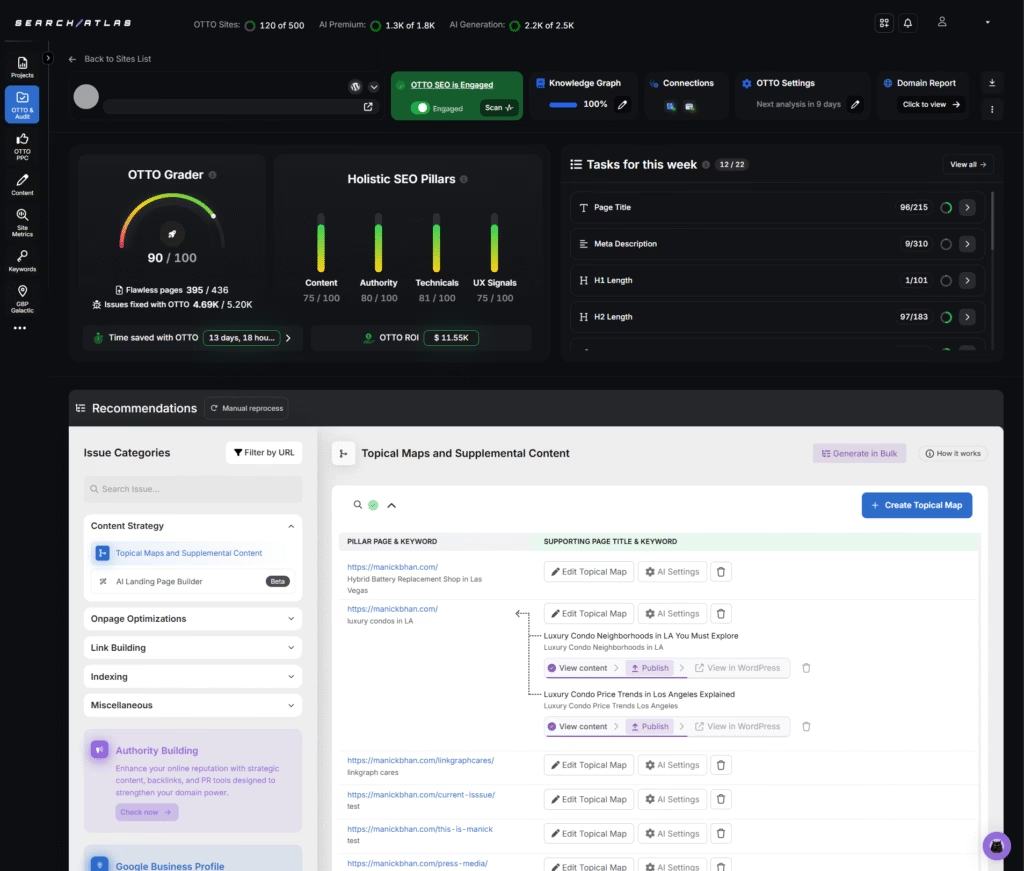
Search Atlas is the best alternative to Lumar for businesses that need affordable, all-in-one SEO management with fully automated technical fixes. Lumar specializes in deep crawling, pre-production testing, and manual technical diagnostics designed for enterprise-scale websites. Search Atlas takes a different approach by combining real-time site auditing with OTTO AI, which automatically corrects technical errors on your site, OTTO Crawl Monitoring for server log analysis, and automated content generation, research, and authority building.
Pricing for Search Atlas starts at $99/month (Starter), scales to $199/month (Growth), and tops out at $399/month (Pro). No free plan is available, but a 7-day free trial is offered. Lumar does not publish pricing publicly, with estimated costs of several thousand per month for crawling 5 million URLs.
According to the latest Search Atlas review, the platform’s advantages include OTTO AI automation that implements fixes directly on websites, unified workflows that replace fragmented toolsets, cost efficiency with crawl capacity reaching 10M pages monthly on Pro plans, and white-labeled reporting for agency clients. Limitations include a steep learning curve and a crawling infrastructure that is less specialized than dedicated enterprise crawling platforms.
2. Botify: Best Lumar (Formerly Deepcrawl) Alternative for Enterprise-scale Crawling and Log Analysis
Botify is an enterprise SEO and content intelligence (CI) platform. Botify provides full-funnel auditing, high-speed crawling, log file analysis, AI-driven anomaly detection via AlertPanel, task prioritization through ActionBoard, and automated SEO implementation with SpeedWorkers and PageWorkers. Botify integrates RealKeywords and Engagement Analytics with Google Search Console and Google Analytics/Adobe Analytics, and allows custom dashboards and data unification across large websites.
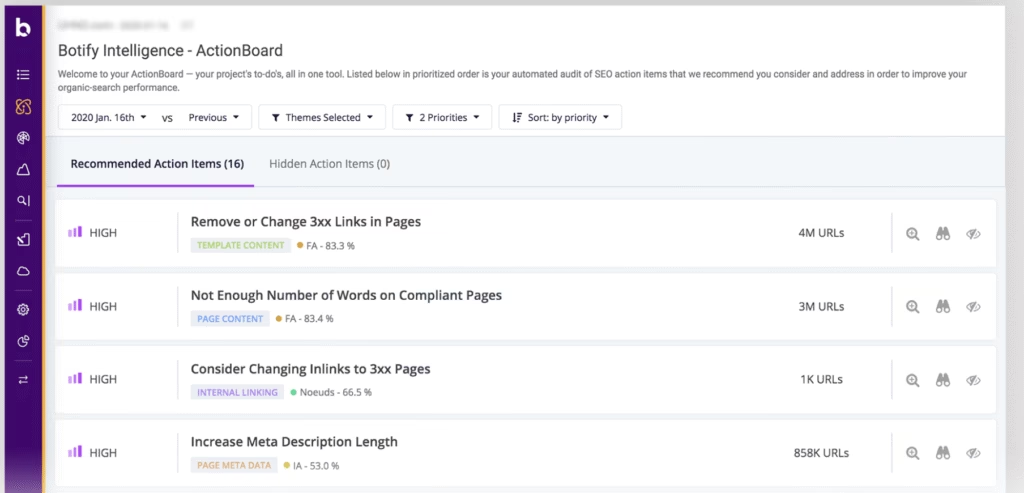
Botify is the best alternative to Lumar for enterprises requiring automated SEO implementation and deeper log file integration. Lumar excels at fast crawling speeds, pre-production testing environments, and web accessibility audits, but stops at diagnostics and recommendations. Botify goes further by automating technical SEO changes directly on sites through SpeedWorkers and PageWorkers, unifying log file data with crawl analytics for continuous indexing insights, and providing an AI-driven AlertPanel for proactive anomaly detection before issues impact rankings.
Pricing for Botify is custom and designed for enterprise deployments. Estimated costs start around $5,000 per month. Lumar pricing is custom and not publicly available, with estimated costs around $2,667/month for crawling 5 million URLs. Both platforms target enterprise budgets.
Botify pros include enterprise-level auditing, unified crawl and log data, AI-driven AlertPanel for proactive error detection, automation for implementing technical changes at scale, and integrated analytics combining search console data with engagement metrics. Cons include high pricing that limits access to large enterprises, a steep learning curve, and limited documentation, which increases reliance on technical teams.
3. OnCrawl: Best Lumar (Formerly Deepcrawl) Alternative for Advanced Technical SEO Analysis and Data Science Integration
OnCrawl is a versatile SEO platform that combines website crawling, log file analysis, and data connectors to provide comprehensive technical SEO insights. OnCrawl offers flexible multi-level crawl strategies that address rendering, speed, site size, and complexity issues while serving different business workflows. OnCrawl features technical issue detection for broken links, duplicate content, and mobile-friendliness problems, log file analysis revealing search engine bot interactions, data connectors integrating Google Analytics and Search Console, customizable crawl configurations, and the OnCrawl Lenses interface.
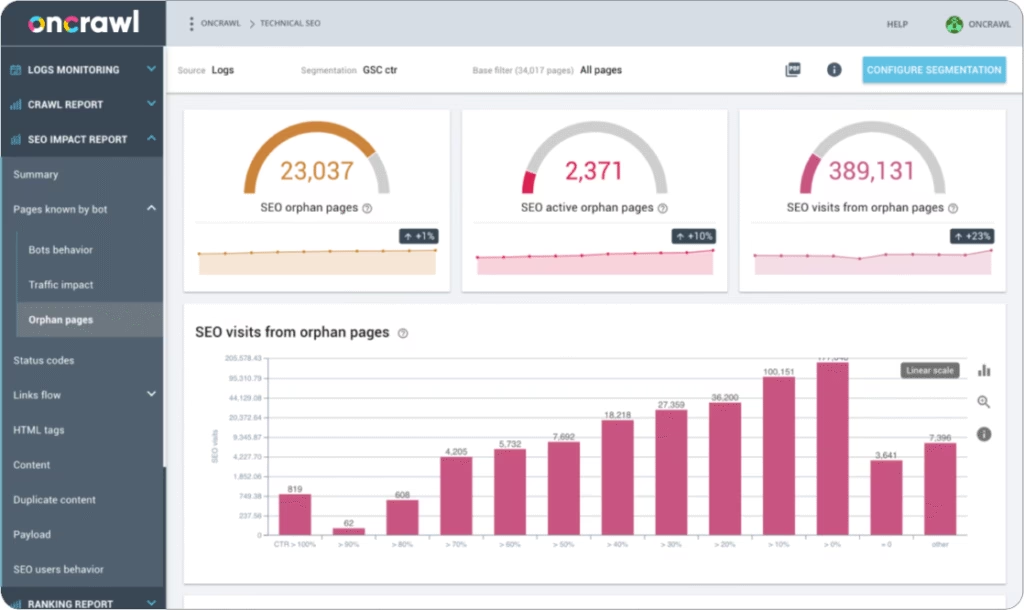
OnCrawl is the best alternative to Lumar for data science integration and customizable crawl workflows. Lumar delivers high-speed crawling, but operates within a fixed crawl framework. OnCrawl differentiates through multi-level crawl strategies that adapt to site complexity, an OnCrawl Lenses interface that translates technical data into business-focused insights, an extensive data connector ecosystem linking crawl results with analytics platforms, and advanced visualization capabilities for identifying patterns across large datasets.
Pricing for OnCrawl is custom and requires consultation with their team. Lumar pricing is custom and not publicly available. Both platforms target enterprise budgets without transparent pricing.
OnCrawl pros include versatile crawling that handles complex site architectures, comprehensive multi-source data integration connecting crawl and analytics data, flexible workflow management adapting to different business needs, and business-focused OnCrawl Lenses analysis that simplifies technical findings. Cons include a lack of pricing transparency, costs that exceed basic crawling tools, and complexity that requires technical expertise to maximize platform value.
4. ContentKing: Best Lumar (Formerly Deepcrawl) Alternative for Real-time SEO Monitoring and Instant Issue Alerts
ContentKing, now integrated into Conductor Website Monitoring following Conductor’s February 2022 acquisition, is a real-time SEO auditing and monitoring platform. The platform provides 24/7 monitoring of web properties, content change tracking that captures all page modifications, real-time alerts for broken SEO elements, log file analysis revealing search engine bot interactions, and cloud-based accessibility with no software installation required. Conductor Website Monitoring tracks new, deleted, and redirected pages continuously and delivers actionable insights through algorithm-driven tasks.
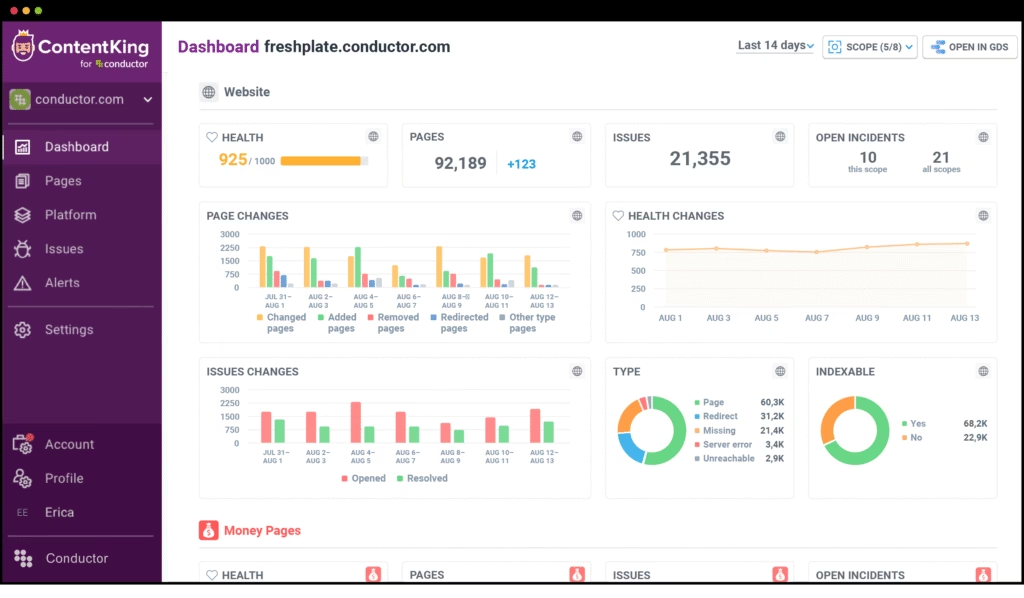
ContentKing is the best alternative to Lumar for businesses requiring continuous real-time monitoring rather than periodic crawl scheduling. Lumar operates on scheduled crawls at high speeds and excels at pre-production testing environments and comprehensive technical audits across 250+ elements.
ContentKing takes a different approach with 24/7 Monitoring™ that detects SEO issues immediately as they occur, Content Change Tracking™ that logs every page modification in real time, and instant alerts that notify teams before search rankings are impacted, eliminating the delay between site changes and detection that occurs with scheduled crawling systems.
Pricing for ContentKing (Conductor Website Monitoring) is custom and requires consultation. Lumar pricing is custom and not publicly available, with estimated costs around $2,667/month for crawling 5 million URLs. Both platforms target enterprise budgets without transparent pricing structures.
ContentKing pros include real-time detection that identifies issues immediately rather than waiting for scheduled crawls, continuous change tracking providing complete visibility into site modifications, proactive alerting that prevents ranking losses, a cloud-based platform requiring no software installation, and integration within Conductor’s broader organic marketing suite for end-to-end SEO management. Cons include custom pricing that limits budget transparency, an enterprise focus that excludes smaller businesses, and real-time monitoring overhead.
5. Siteimprove: Best Lumar (Formerly Deepcrawl) Alternative for SEO Auditing With Accessibility And Compliance Checks
Siteimprove is a digital experience platform that integrates accessibility, SEO, analytics, and content strategy into a single system. Siteimprove offers automated accessibility scanning, WCAG compliance tracking, SEO performance analytics, real-time visitor behavior insights, and content optimization tools.
Siteimprove is the best alternative to Lumar for organizations prioritizing web accessibility compliance alongside technical SEO auditing. Lumar specializes in high-speed crawling, deep technical diagnostics across 250+ SEO elements, pre-production testing environments, and log file analysis for enterprise-scale websites. Siteimprove takes a broader approach by combining technical SEO auditing with automated WCAG compliance scanning, real-time visitor behavior analytics, and content optimization tools.
Siteimprove pricing is customized according to organization size and requirements, typically starting around $999 per year. Lumar pricing is custom and not publicly available, with estimated costs around $2,667/month for crawling 5 million URLs. Both platforms require consultation for enterprise pricing.
The Siteimprove review mentions pros like integrated accessibility, analytics, SEO, and content tools providing comprehensive website quality assurance, real-time insights into user behavior, AI-driven support for optimization recommendations, and unified compliance tracking for organizations with legal accessibility obligations. Limitations include a higher cost compared to SEO-only platforms, less specialized crawling infrastructure than dedicated technical SEO tools, and a more complex setup that requires additional configuration and resources to implement effectively.
6. Screaming Frog: Best Lumar (Formerly Deepcrawl) Alternative for Desktop-Based Technical Site Audits
Screaming Frog SEO Spider is a locally installed technical SEO auditing software built for SEO professionals and consultants who need fast, highly customizable on-demand crawls and detailed technical analysis. Screaming Frog provides a configurable spider engine, advanced crawl settings, a separate log file analyzer, visualization tools, and integrations with Google Analytics, Google Search Console, and PageSpeed Insights for technical insights.
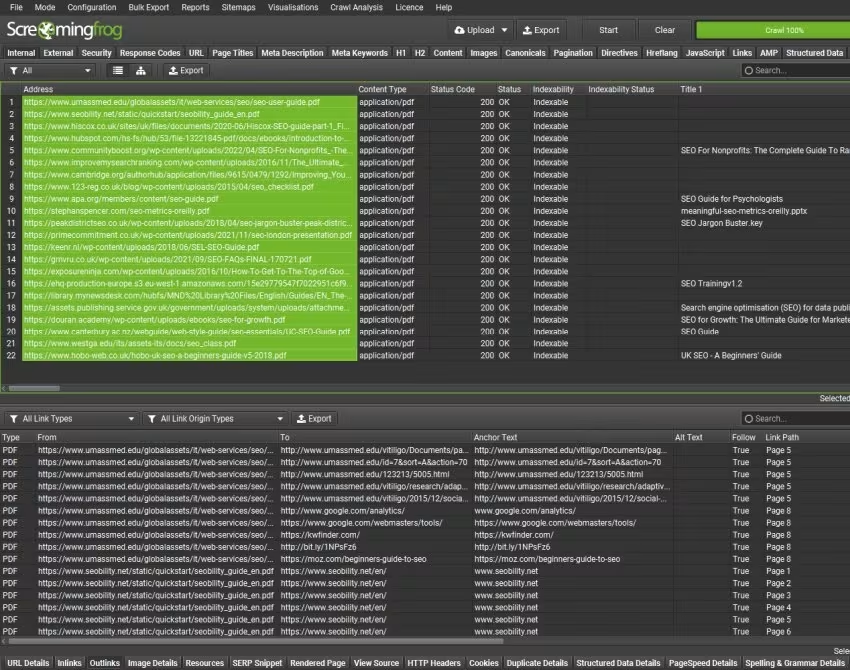
Screaming Frog is the best alternative to Lumar for SEO practitioners who need affordable desktop-based auditing with precise crawl customization. Screaming Frog runs audits locally on your computer, offering direct control over crawl settings, advanced data extraction through XPath and regex patterns, immediate troubleshooting of technical problems without cloud delays, and flexible configurations tailored to specific audit needs.
Pricing for Screaming Frog includes a free version capped at 500 URLs and a paid license at $279 annually, which removes URL limits, adds the Log File Analyser, enables advanced configuration, provides API integrations, and includes updates for the license period. Lumar does not publish pricing, with estimated costs around $2,667 monthly for crawling 5 million URLs, making Screaming Frog substantially more affordable for solo practitioners and small teams.
Screaming Frog pros include affordability with annual licensing instead of monthly subscriptions, extensive crawl customization through detailed configuration settings, fast performance when running audits locally, and a comprehensive log analyzer for server-side evaluation. Cons include no continuous monitoring capability that requires running crawls manually, heavy local resource consumption, and complexity that demands technical knowledge to use advanced features effectively, according to the Screaming Frog review.
7. XOVI: Best Lumar (Formerly Deepcrawl) Alternative for All-in-One SEO Monitoring And Keyword Tracking
Xovi is a comprehensive, all-in-one SEO and online marketing platform designed for agencies and businesses, focusing on site audits, keyword tracking, backlink analysis, competitor benchmarking, PPC/SEA campaign optimization, and integrated reporting. Xovi provides daily ranking updates, backlink monitoring, technical site audits, customizable white-label reports, and integrations with Google Analytics, Google Search Console, and Matomo.
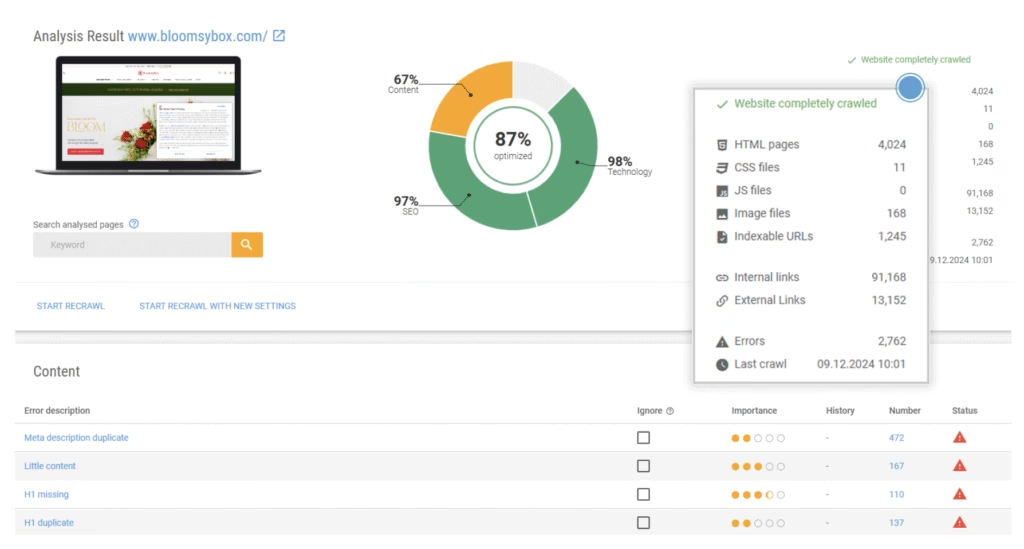
Xovi is the best alternative to Lumar for agencies and businesses seeking a consolidated SEO and marketing platform with transparent pricing. Lumar specializes in enterprise-level technical auditing with crawling speeds reaching 450 URLs/second, pre-production testing environments, web accessibility compliance checks, and log file analysis for large-scale websites. Xovi operates as an all-in-one marketing suite that combines technical site audits with daily keyword rank tracking, backlink monitoring, competitor benchmarking, PPC campaign optimization, and white-label reporting.
Xovi pricing starts at $99/month for the Pro plan with a transparent tier structure. Lumar does not publish pricing, with estimated costs around $2,667 monthly for crawling 5 million URLs, making Xovi significantly more accessible for agencies and mid-sized businesses operating on tighter budgets.
Pros of Xovi include its all-in-one suite combining SEO, PPC, social, and content tools, cost-effectiveness with clear pricing tiers, strong European market focus with relevant data, and support for unlimited projects and keywords. Cons include the absence of real-time 24/7 monitoring that relies instead on scheduled audits and daily updates, smaller global databases compared to enterprise-focused platforms, a steep learning curve, and no permanent free plan, according to the Xovi review.
8. Sitechecker.Pro: Best Lumar (Formerly Deepcrawl) Alternative for Continuous Site Monitoring And On-Page Audits
Sitechecker.pro is a cloud-based SEO checker and website monitoring platform. Sitechecker.pro provides automated alerts for technical issues, on-page SEO guidance, competitor ranking tracking, and white-label reporting. Sitechecker allows multi-project monitoring, segment-specific tracking, and API access for advanced workflows.
Sitechecker.pro is the best alternative to Lumar for businesses seeking affordable continuous monitoring with on-page optimization audits. Sitechecker.pro offers a simpler approach with automated monitoring that sends alerts when technical issues appear, on-page SEO recommendations for content optimization, Google Search Console integration for visibility tracking, and white-label reporting for agencies.
Pricing for Sitechecker.pro starts at $89 per month for the Basic plan, $199 per month for Standard, $449 per month for Premium, and custom pricing for Enterprise plans. Sitechecker.pro is substantially more affordable for small to mid-sized businesses and agencies.
Sitechecker pros include comprehensive monitoring with continuous issue detection, customizable reports for client presentations, Google Search Console integration for search performance data, and white-labeling options for agencies. Cons include limited depth in backlink analysis compared to specialized link tools, less competitor research functionality than all-in-one marketing platforms, and a crawling infrastructure less robust than enterprise technical SEO platforms.
9. Seobility: Best Lumar (Formerly Deepcrawl) Alternative for Affordable Automated Audits And Link Analysis
Seobility is an SEO platform built for technical and on-page SEO analysis. Seobility provides structured evaluations of website performance, keyword optimization, and ranking data while identifying errors that reduce search visibility. The platform includes an SEO Checker for technical and meta diagnostics, a Keyword Checker for keyword optimization measurement, a Ranking Checker for position tracking by region, device, and search engine, and a TF*IDF Tool for analyzing topical relevance against competitors.
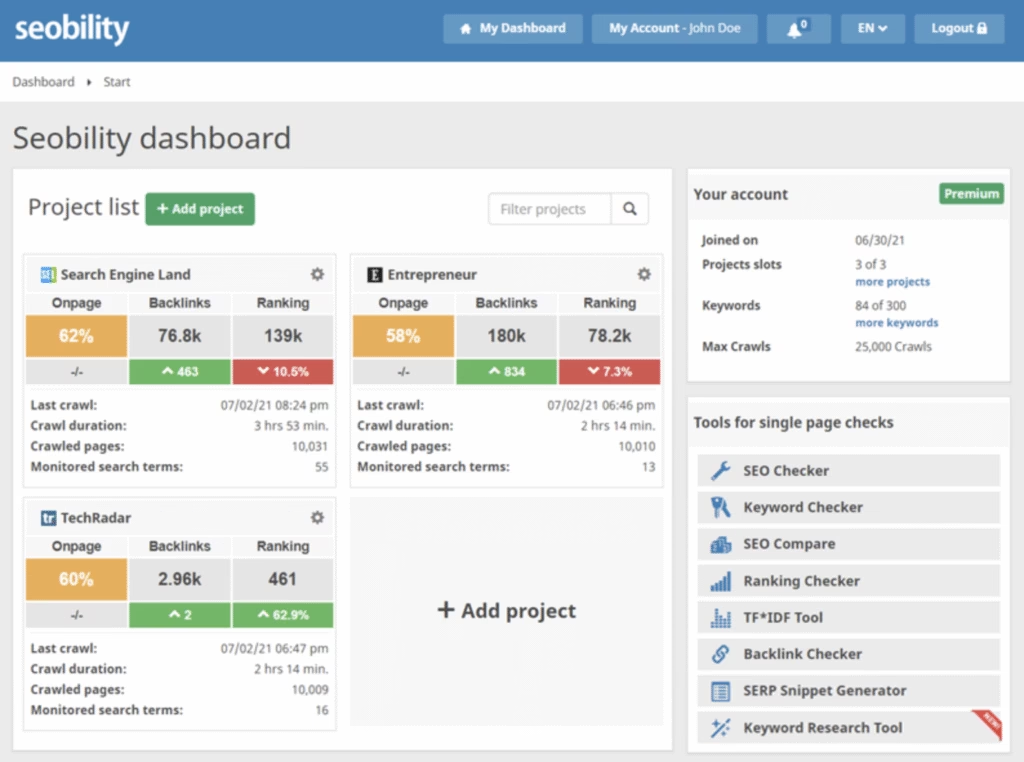
Seobility is the best alternative to Lumar for affordable automated audits and link analysis. Seobility flags crawl errors, broken links, duplicate content, and meta tag issues through automated technical audits, scores keyword optimization based on TF*IDF algorithms, tracks rankings segmented by geographic region and device type, and analyzes topical relevance without requiring enterprise crawling infrastructure or log file integration.
Seobility offers 3 plans (Free, Basic €49.90/month, Premium €179.90/month). Lumar does not publish pricing, but it is significantly more expensive than Seobility.
Seobility pros include detailed technical reporting with specific error identification, keyword optimization analysis using TF*IDF scoring, rank tracking with geographic and device segmentation, and low-cost entry points for budget-constrained users. Cons include daily query limits on the free tier that restrict crawl frequency, minimal automation capabilities for scheduled audits, reduced crawling capacity for sites exceeding 10,000 pages, and no log file analysis for server-side diagnostics, according to the recent Seobility review.
10. Seodity: Best Lumar (Formerly Deepcrawl) Alternative for Combining Audits With Keyword and Competitor Data
Seodity is an all-in-one SEO software platform designed for small to mid-sized businesses and agencies. Seodity focuses on site audits, rank tracking, keyword research, backlink analysis, and AI-driven content creation. Seodity runs automatic weekly site audits, detects technical issues, measures Google Lighthouse metrics, analyzes competitors, and generates automated reports.
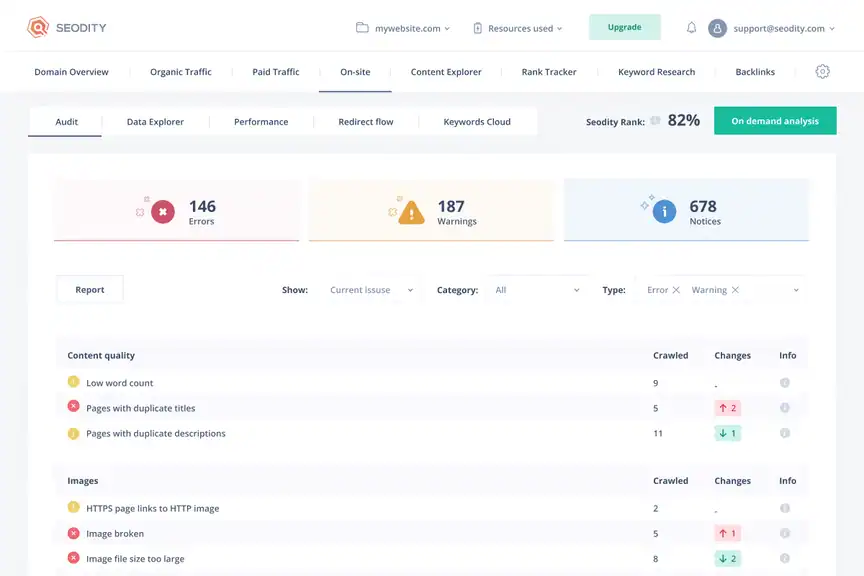
Seodity is the best alternative to Lumar for small to mid-sized businesses that need combined technical auditing with keyword research and competitor tracking at accessible pricing. Seodity executes automatic weekly site audits that flag technical issues and measure Google Lighthouse metrics, tracks keyword rankings and competitor positions, analyzes backlink profiles, and generates AI-driven content using E-E-A-T compliance guidelines within one platform without specialized enterprise crawling infrastructure.
Seodity offers 3 pricing plans (Basic $49/month, Growth $129/month, Advanced $399/month). Seodity is much more affordable than Lumar.
Seodity pros include cost-effectiveness with transparent pricing tiers, a full suite of SEO tools combining audits with keyword and backlink data in one platform, a user-friendly interface for teams without deep technical expertise, unlimited website management across multiple projects, and responsive customer support. Cons include less refinement than enterprise-grade platforms, scalability limits for websites exceeding several hundred thousand pages, weekly audit frequency instead of continuous monitoring, and fewer third-party integrations for connecting external marketing tools.
Users report that Seodity became unresponsive in January 2024, with no customer support available and disabled appointment booking. The website remains live, but it seems the project is defunct.
11. Screpy: Best Lumar (Formerly Deepcrawl) Alternative for AI-Assisted Technical Audits and Performance Scoring
Screpy is an all-in-one SEO platform that monitors site health, analyzes performance, tracks keywords, audits on-page SEO, and provides AI-powered content suggestions. Screpy combines technical monitoring, competitor tracking, and content generation into a single dashboard. The platform includes rank tracking, pagespeed and uptime monitoring, on-page audits, AI article generation, competitor analysis, white-labeled PDF reporting, and team collaboration with unlimited users.
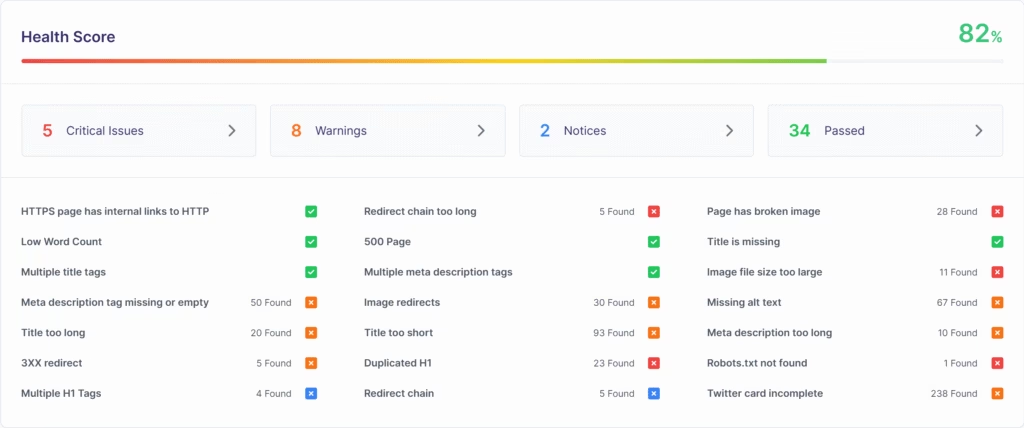
Screpy is the best alternative to Lumar for AI-assisted technical audits and performance scoring. Lumar operates as an enterprise technical SEO platform, while Screpy works better for small businesses. Screpy monitors site health continuously, tracks pagespeed and uptime metrics, audits on-page SEO elements, generates AI-driven content recommendations, and analyzes competitor performance within one dashboard without requiring enterprise crawling infrastructure or log file integration.
Screpy offers a free plan for startups with basic features. Paid plans start at $15 per month for the Lite Plan, $45 per month for the Pro Plan, and $89 per month for the Advanced Plan. Lumar does not publish pricing.
Screpy pros include AI-powered insights for optimization recommendations, fast performance monitoring with uptime tracking, competitor tracking within the platform, unlimited projects and team members across all plans, and automated white-labeled reporting for agencies. Cons include limited crawling depth compared to enterprise platforms, smaller keyword research databases, no pre-production testing environments for QA workflows, no log file analysis for server-side diagnostics, and fewer technical SEO elements analyzed than specialized crawling tools.
12. Netpeak Software: Best Lumar (Formerly Deepcrawl) Alternative for In-Depth Manual Crawling and Batch Audits
Netpeak Software provides desktop tools for on-page SEO auditing, website crawling, backlink monitoring, and SERP data collection. Netpeak Software includes Netpeak Spider, which flags over 100 technical issues per site, Netpeak Checker for bulk on-page audits and SERP data extraction, Limonity On-Page for monitoring unlimited pages with change alerts, and Limonity Backlinks for backlink profile tracking.
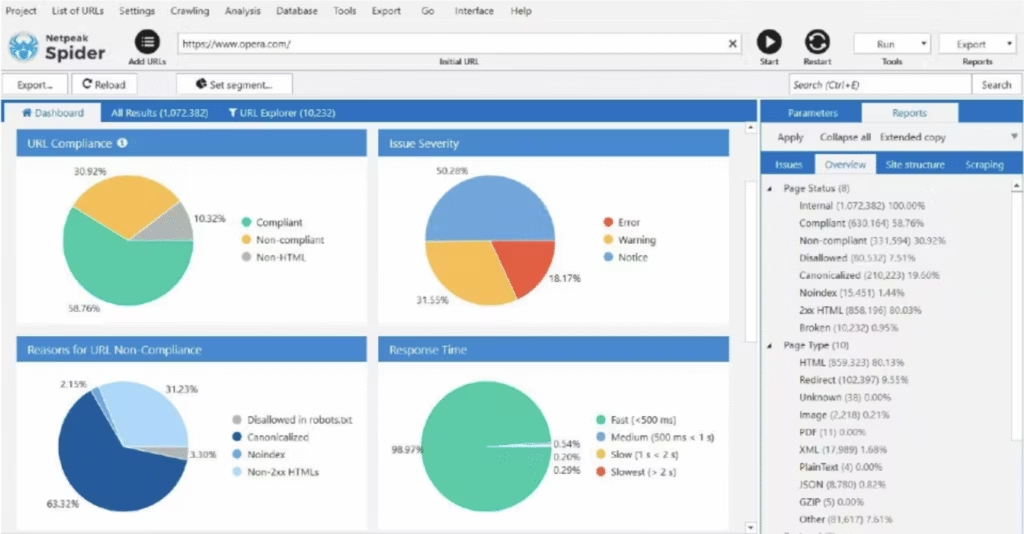
Netpeak Spider is the best alternative to Lumar for in-depth manual crawling and batch audits. Lumar operates as an enterprise cloud platform, while Netpeak Spider runs locally on desktop machines, flags over 100 technical issues per crawl, executes bulk on-page audits through Netpeak Checker, monitors unlimited pages via Limonity On-Page with change notifications, and tracks backlink profiles through Limonity Backlinks without cloud subscriptions or enterprise infrastructure.
Netpeak Spider starts at $41 per month. Netpeak Checker costs $48 per month. Limonity On-Page costs $109 per month. Limonity Backlinks costs $48 per month. Lumar does not publish pricing, with estimated costs around $2,667 monthly for crawling 5 million URLs.
Netpeak pros include fast crawling with detailed technical reports, white-label reporting for agencies, manual control over crawl parameters, and detection of over 100 technical SEO issues. Cons include Netpeak Checker Windows-only compatibility, desktop installation requirements for Limonity tools, no pre-production testing environments, and no log file analysis, according to the Netpeak review.
13. Seobase: Best Lumar (Formerly Deepcrawl) Alternative for Small Teams Needing Simple Technical and On-Page Insights
Seobase functions as an SEO platform that tracks rankings across thousands of locations, researches millions of keyword terms, and analyzes SERP data to benchmark website performance against competitors.
The platform experiences availability problems with minimal official documentation and an inactive website, which restricts access despite active user reviews appearing on third-party platforms.
14. SE Ranking: Best Lumar (Formerly Deepcrawl) Alternative for Auditing and Rank Tracking with Client Reports
SE Ranking is an all-in-one SEO platform designed for agencies, consultants, and growing teams. The platform combines keyword research, rank tracking, content audits, backlink monitoring, and local SEO tools with workflow automation. SE Ranking includes on-page audits, content scoring, backlink monitoring with toxic link detection, city-level rank tracking, marketing plan generation, task workflows, project monitoring, branded reports, and API access for client management.
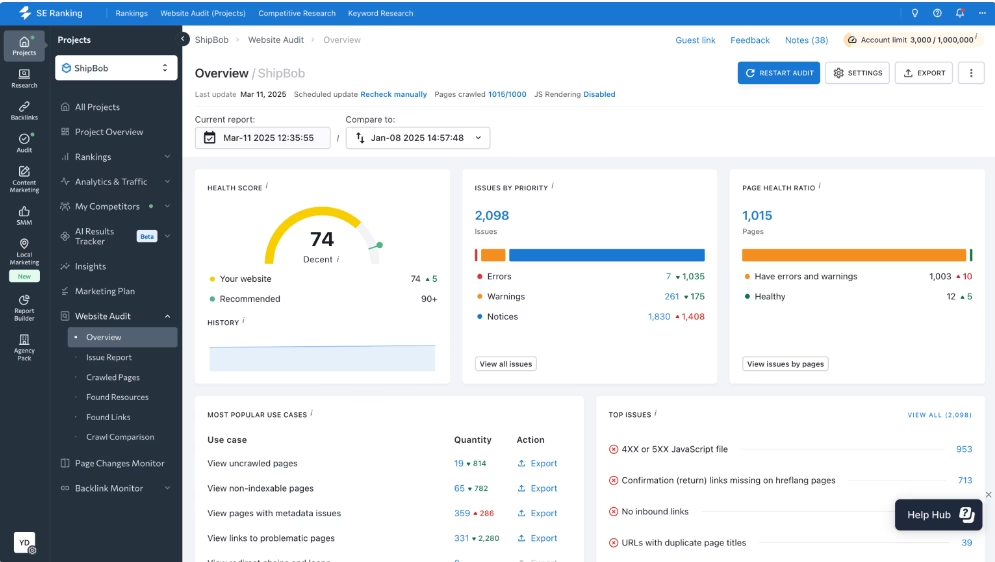
SE Ranking is the best alternative to Lumar for agencies and consultants who need client management tools combined with technical auditing at mid-tier pricing. SE Ranking executes on-page audits with content scoring, monitors backlink profiles with toxic link detection, tracks rankings at city-level granularity, automates client workflows and task management, and generates branded reports through API access without requiring enterprise crawling infrastructure or log file integration.
SE Ranking starts at $65/month for the Essential plan with 5 projects and 500 keywords tracked daily. The Pro plan costs $119/month with 30 projects and 2,000 keywords tracked daily. The Business plan costs $259/month with unlimited projects and advanced features. Lumar does not publish pricing, with estimated costs around $2,667 monthly for crawling 5 million URLs.
According to our SE Ranking review, SE Ranking pros include affordable pricing for agency workflows, an intuitive interface for teams without deep technical expertise, comprehensive SEO tools combining audits with rank tracking and backlink monitoring, and branded reporting for client presentations. Cons include slower processing for site audits exceeding 50,000 pages, shallower backlink index depth than specialized link tools, no pre-production testing environments, and no log file analysis for server-side diagnostics.
15. Serpstat: Best Lumar (Formerly Deepcrawl) Alternative for Unified Keyword, Backlink, and Audit Management
Serpstat is an all-in-one SEO platform that combines keyword research, rank tracking, technical audits, backlink analysis, and content optimization across 230 regions and multiple languages. Serpstat includes intent-based keyword clustering, rank tracking across devices and regions, site audits with prioritized issue severity, backlink comparisons by domain and link type, backlink tracking with shared donor analysis, and AI-powered content modules with white-label reporting options.
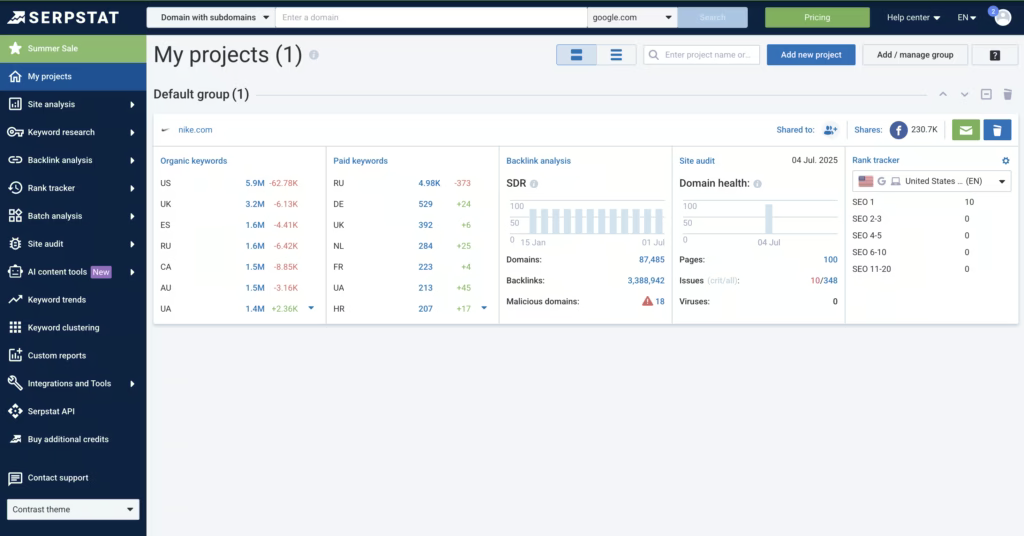
Serpstat is the best alternative to Lumar for small and medium teams that need international SEO management with keyword clustering and content optimization. Serpstat executes site audits with prioritized issue severity rankings, clusters keywords by search intent, tracks rankings across 230 regions and multiple devices, analyzes backlink profiles with shared donor identification, and generates AI-powered content modules within one platform without requiring enterprise crawling infrastructure or log file integration.
Serpstat pricing starts at $69/month for individuals and reaches $499/month for agencies. Discounts lower entry pricing to $55/month, and all plans include a 7-day free trial. The starting plan includes keyword tools, audits, and 10,000 daily checks. Higher tiers provide API access and AI content modules. Lumar does not publish pricing, with estimated costs around $2,667 monthly for crawling 5 million URLs.
Advantages of Serpstat include scalable keyword clustering for content planning, extensive regional databases covering 230 geographic markets, and AI content modules for international SEO workflows. Disadvantages include shallower backlink data than enterprise link tools, keyword volume estimates based on Google Ads data rather than actual search volumes, no pre-production testing environments, and no log file analysis for server-side diagnostics, according to the latest Serpstat review.
16. Advanced Web Ranking: Best Lumar (Formerly Deepcrawl) Alternative for Enterprise Keyword Tracking and SERP Analysis
Advanced Web Ranking delivers high-volume keyword tracking across over 4,000 search engines and locations with granular SERP visibility, pixel-based position analysis, and full agency automation for global campaigns. Advanced Web Ranking provides daily, weekly, bi-weekly, and on-demand updates while tracking desktop, mobile, and local rankings at city or ZIP code precision. Advanced Web Ranking includes competitor benchmarking for up to 50 domains, dynamic keyword groups, unlimited user access, and custom white-label reports.
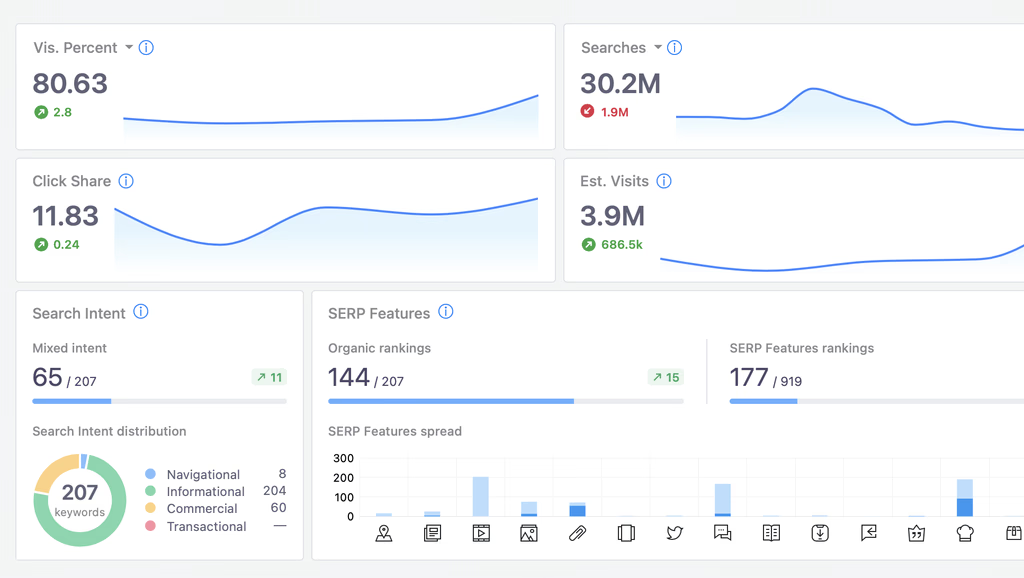
Advanced Web Ranking is the best alternative to Lumar for agencies and enterprises that need scalable rank tracking with extensive search engine coverage and market share metrics. Advanced Web Ranking tracks keyword positions across 4,000+ search engines, analyzes pixel-based SERP positions with above-the-fold visibility metrics, monitors CTR performance, benchmarks up to 50 competitor domains, and generates white-label reports with market share data without requiring technical auditing infrastructure or crawling capabilities.
Advanced Web Ranking costs $99 to $499/month, depending on keyword volume and tracking frequency. Lumar does not publish pricing.
Advanced Web Ranking pros include extensive search engine coverage across 4,000+ platforms, pixel-level position analysis with above-the-fold tracking, unlimited user access for agency teams, and comprehensive white-label reporting with market share metrics. Cons include complexity for basic users without enterprise needs, a higher learning curve than simpler rank trackers, no technical site auditing capabilities, and no crawling infrastructure for identifying on-site SEO issues.
17. AccuRanker: Best Lumar (Formerly Deepcrawl) Alternative for high-frequency, accurate rank tracking
AccuRanker is a specialized SEO tool that provides keyword rank tracking across desktop, mobile, and local SERPs with ZIP-level targeting. AccuRanker delivers AI-driven click-through rate estimates, Share of Voice metrics, competitor segment analysis, and access to a 24-billion-keyword database. AccuRanker identifies SERP features, including featured snippets and local packs, and integrates with Google Search Console, Looker Studio, and Adobe Analytics.
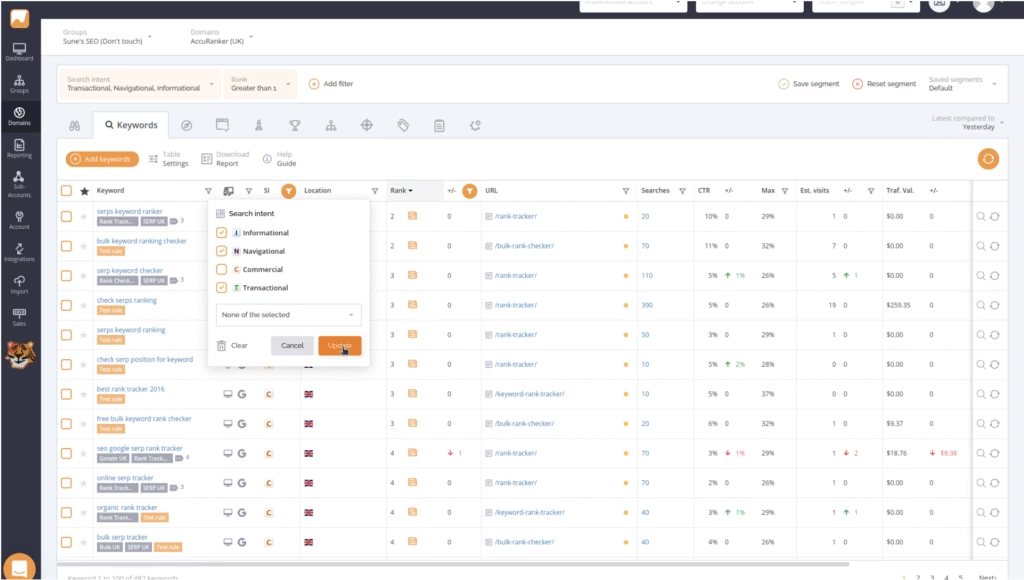
AccuRanker is the best alternative to Lumar for agencies and enterprises that need hyper-local rank tracking with SERP feature detection and competitor analysis.AccuRanker tracks keyword positions with ZIP-level geographic precision, segments rankings by desktop and mobile devices, estimates CTR using AI algorithms, calculates Share of Voice metrics, identifies SERP features like featured snippets and local packs, and integrates with analytics platforms without providing technical auditing infrastructure or crawling capabilities.
AccuRanker pricing starts at $129/month for 1,000 keywords with unlimited users. All plans include geo and device segmentation. AccuLLM, a new LLM tracking feature, starts at $199/month. Lumar does not publish pricing, with estimated costs around $2,667 monthly for crawling 5 million URLs.
AccuRanker pros include rapid rank updates with on-demand refresh capability, granular geo and device segmentation down to ZIP code level, SERP feature detection for tracking featured snippets and knowledge panels, and strong third-party integrations with analytics platforms. Cons include minimal SEO functionality beyond rank tracking without site auditing or crawling, a steeper learning curve for beginners unfamiliar with advanced segmentation, and no technical SEO capabilities for identifying on-site issues, according to our AccuRanker review.
18. Nightwatch: Best Lumar (Formerly Deepcrawl) Alternative for Multi-Domain Rank Monitoring and Visualization
Nightwatch is an SEO monitoring platform designed for agencies and growth-stage companies that manage complex keyword sets across multiple locations. Nightwatch offers daily rank tracking for Google, Bing, YouTube, DuckDuckGo, and Google Local Pack with city-level granularity in over 190,000 locations. Nightwatch supports AI search visibility tracking for systems like ChatGPT, Gemini, and Claude, incorporating SERP evolution under Google SGE and LLMs. The platform features automated white-label reporting, on-page SEO audits, keyword segmentation, API access, Click Potential metrics, Volatility Index, and Search Visibility Score. Nightwatch includes SERP preview by feature type, zipcode-based filtering, and multi-language support.
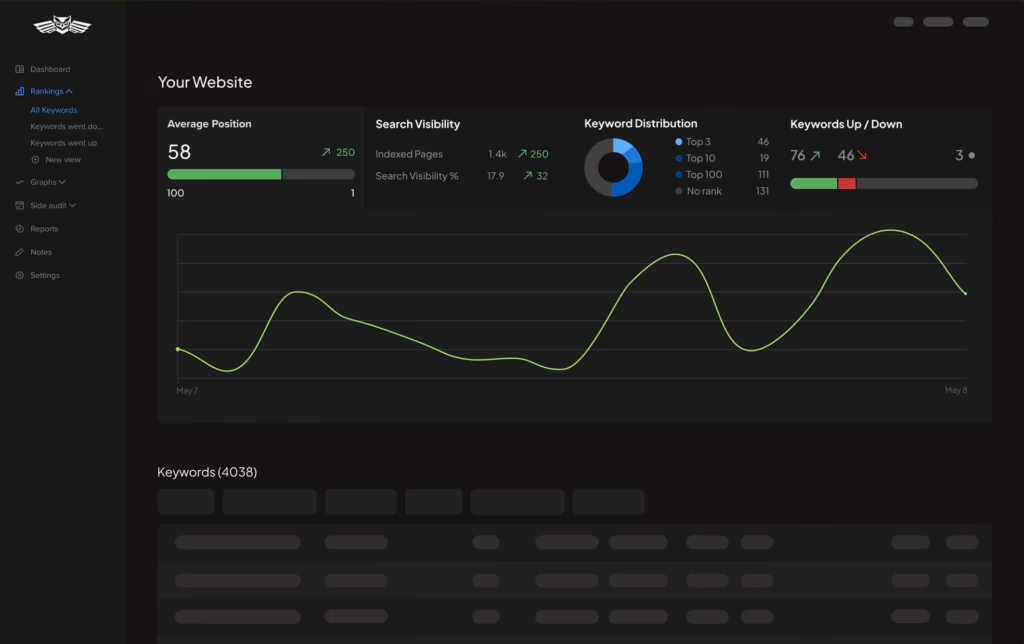
Nightwatch is the best alternative to Lumar for multi-domain rank monitoring with AI search visibility tracking and SERP segmentation. Nightwatch tracks keyword positions across 190,000+ locations with city-level precision, monitors AI search visibility in ChatGPT, Gemini, and Claude, segments SERP features by type like local pack versus organic results, calculates Click Potential and Search Visibility Score, and generates white-label reports without providing technical crawling infrastructure or log file integration.
Nightwatch pricing starts at $39/month for up to 250 keywords with a 14-day free trial. No permanent free tier exists. Pricing scales by keyword volume with flexible billing and no contract lock-ins. Lumar does not publish pricing, with estimated costs around $2,667 monthly for crawling 5 million URLs.
Nightwatch pros include UI design for visual reporting, reliable rank data with daily updates, segmentation capabilities by SERP feature type, AI search visibility tracking for emerging platforms, and zipcode-based filtering for hyper-local campaigns. Cons include the absence of backlink analytics, no technical site crawling capabilities, a steeper learning curve than beginner tools, and limited on-page auditing depth compared to dedicated technical SEO platforms, according to the Nightwatch review.
19. Ranktracker: Best Lumar (Formerly Deepcrawl) Alternative for Budget-Friendly Rank Tracking and Basic Audits
Ranktracker is an SEO platform designed for marketers, agencies, and small businesses that need comprehensive keyword tracking and site optimization tools. Ranktracker offers daily rank tracking for Google, Bing, Yahoo, and Yandex across multiple locations with support for all languages and both mobile and desktop search engines. The platform provides keyword search volumes, keyword difficulty scores, SERP features analysis, ranked keyword auto-discovery, Google My Business tracking, and local tracking. Ranktracker includes a Keyword Finder with a multi-billion keyword database across 67 countries, a SERP Checker with real-time searching, a Backlink Checker with a trillion-scale link database, a Web Audit tool, and an AI Article Writer supporting 28 languages.
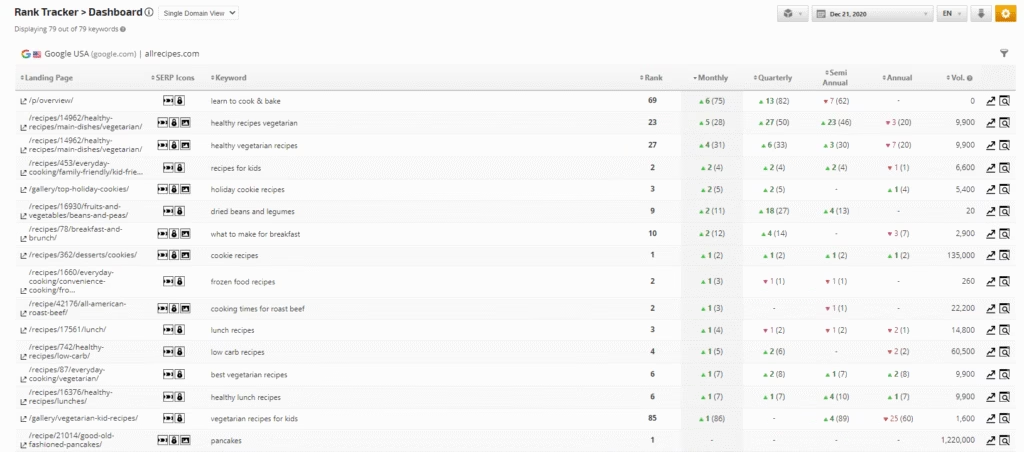
Ranktracker serves as an alternative to Lumar for marketers who need budget-friendly rank tracking and basic audits rather than enterprise-grade technical crawling. Ranktracker focuses on keyword position tracking, keyword discovery from extensive databases, backlink analysis, page auditing, and AI-powered content generation without providing technical crawling infrastructure at enterprise scale or log file integration capabilities.
Ranktracker pricing starts at $24/month for 200 daily tracked keywords with basic features. Plans scale to $59/month, $109/month, and $209/month with increased keyword limits, competitor tracking, pages audited, and backlink rows. All plans include unlimited on-demand reports, AI Article Writer access, and no contracts. Lumar does not publish pricing.
Ranktracker pros include comprehensive rank tracking across multiple locations and search engines, an extensive keyword database, backlink analysis capabilities, AI article writing with multi-language support, affordable entry pricing, and flexible subscription management. Cons include auditing limits that restrict larger sites, backlink row limits on lower tiers, absence of enterprise-grade crawling speeds, no pre-production testing environments, no log file analysis, and limited data on the Starter tier for multi-client agencies.
20. Ryte: Best Lumar (Formerly Deepcrawl) Alternative for Technical SEO Audits, Site Performance Diagnostics, And Compliance Verification
Ryte is a Website User Experience platform designed for technical SEO, site performance monitoring, and compliance management. Ryte reports Core Web Vitals and Lighthouse Web Performance metrics, runs SEO A/B tests, segments pages and keywords, monitors competitors and backlinks, and triggers alerts for changes in rankings or site structure. Compliance features identify non-consented tracking scripts, missing alt tags, and outdated policies. Semrush acquired Ryte in 2024. Ryte features a crawler with JavaScript rendering and mobile viewport simulation, prioritized issue reports for meta tags, status codes, indexability, canonicalization, internal links, and broken resources.
Ryte is the best alternative to Lumar for technical SEO audits, site performance diagnostics, and compliance verification rather than enterprise-scale crawling infrastructure. Ryte focuses on JavaScript rendering, mobile viewport simulation, prioritized issue reporting, Core Web Vitals monitoring, SEO A/B testing, automated alerts for ranking and structure changes, and GDPR compliance checks without providing enterprise-grade crawling speeds or pre-production testing environments.
Ryte pricing depends on session volume, features, and support level. The costs of Ryte plans (Partner, Enterprise, Custom) are not published online. Lumar does not publish pricing.
Ryte pros include detailed technical reporting, compliance monitoring with GDPR and accessibility checks, ranking and keyword analysis, Web Performance diagnostics with Core Web Vitals, and automated alerts for site changes. Cons include a learning curve for advanced features and limited content-generation functionality according to the Ryte review.
21. Audisto: Best Lumar (Formerly Deepcrawl) Alternative for Large-Scale Technical Site Audits
Audisto is an enterprise-focused, cloud-based SEO crawler and analysis platform that provides advanced technical SEO insights, large-scale site audits, and interactive website architecture visualization. Audisto offers high-speed website crawling, architecture graphs, deep technical SEO analysis, change detection with alerts, and customizable reporting integrated with Google Analytics and Search Console.
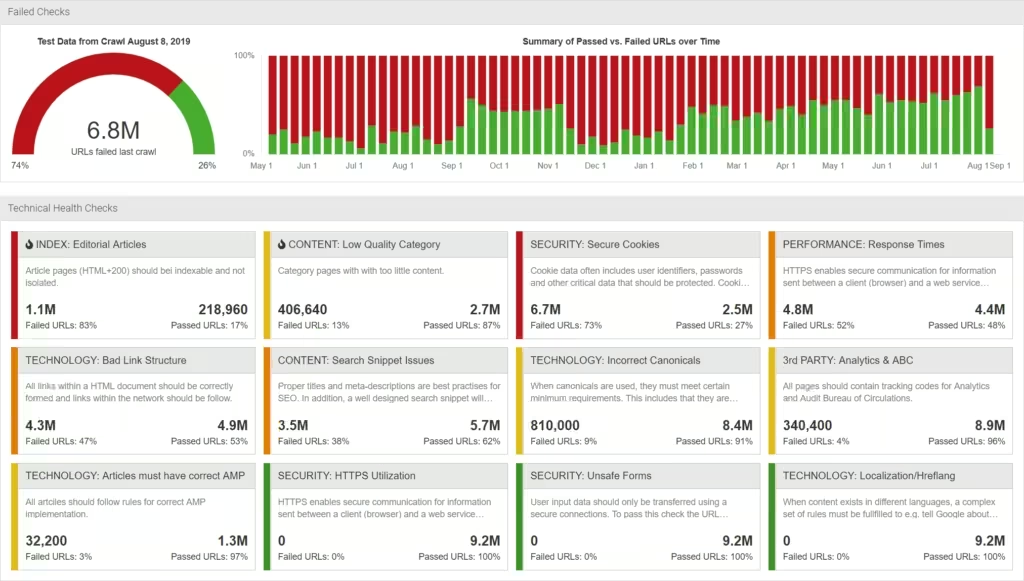
Audisto is the best alternative to Lumar for large-scale technical site audits. Audisto focuses on architecture graphs, deep technical insights, change detection with alerts, customizable reporting, and integration with analytics tools without providing pre-production testing environments or log file analysis capabilities.
Audisto pricing is customized based on the number of URLs crawled, with flexible plans. Ready-made plans include Audisto Crawler at €355/month and Audisto Monitoring at €649/month. Lumar does not publish pricing, but it costs significantly more.
Audisto pros include architecture visualization for complex site structures, enterprise-grade scalability, deep technical insights, and customizable reporting with analytics integration. Cons include higher cost compared to basic SEO tools, steep learning curve for advanced features, and a focus limited to technical SEO without broader keyword research or backlink analysis tools.
22. SEOClarity: Best Lumar (Formerly Deepcrawl) Alternative for Enterprise SEO Unifying Crawl, Content, and Link Data
seoClarity is an enterprise SEO platform for large organizations and agencies requiring scalable SEO management, unifying crawl, content, and link data. seoClarity provides customizable dashboards with drag-and-drop builders, daily data updates, and integration with Google Analytics and Search Console. seoClarity features Clarity 360 for URL-level tracking from detection through conversions, audits performing 100+ technical checks, JavaScript crawling that mimics Googlebot, customizable crawls with speeds from 1-100 pages per second, internal link analysis, log-file analysis, and SEO split testing. The platform includes PCC-SEO integration for side-by-side SEO and PPC comparisons, schema deployment, and Clarity ArcAI for AI search optimization across ChatGPT, Perplexity, Gemini, and Google AI Overviews.
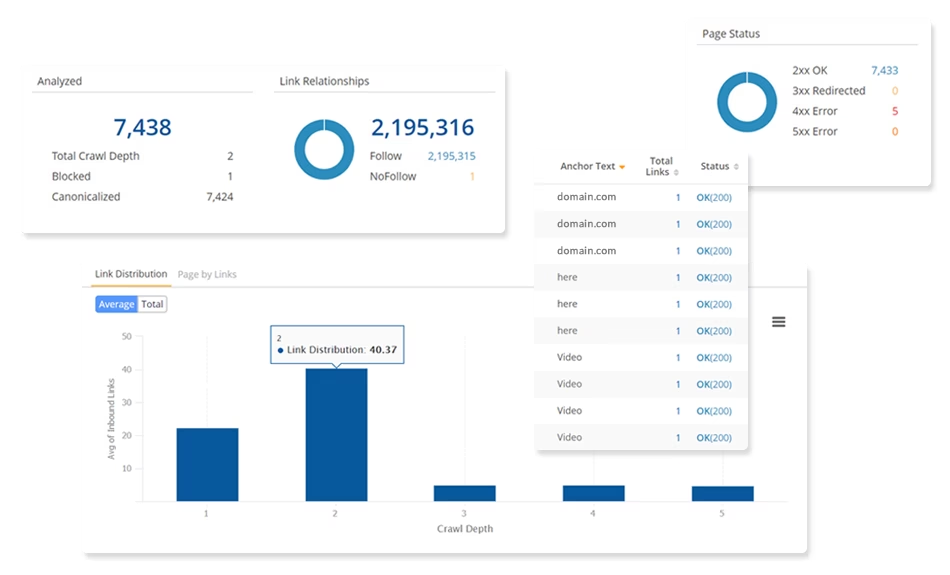
seoClarity is the best alternative to Lumar for enterprise teams needing unified SEO data management with content optimization and AI search tracking. seoClarity focuses on Clarity 360 for unified data aggregation, customizable crawls, SEO split testing, API access to 32+ billion keywords and 4+ billion URLs, and Clarity ArcAI for Answer Engine Optimization without providing pre-production testing environments.
seoClarity pricing starts at $2,500/month for small to medium teams, $3,200/month for advanced analysis tools, and $4,500/month for the Enterprise package. Custom-priced Rankings packages are available. Lumar does not publish pricing, with estimated costs around $2,667 monthly.
seoClarity pros include unified data management through Clarity 360, API access to billions of keywords and URLs, AI search optimization through Clarity ArcAI, SEO split testing, and PCC-SEO integration. Cons include high entry cost at $2,500/month, steep learning curve, and enterprise focus with excessive features for mid-market organizations, according to the seoClarity review.
23. Brightedge: Best Lumar (Formerly Deepcrawl) Alternative for Enterprise SEO Automation and Revenue Attribution
BrightEdge is an enterprise-grade SEO and content performance platform for organizations requiring large-scale technical auditing, advanced data intelligence, and integrated performance reporting. BrightEdge provides ContentIQ, an enterprise auditing system capable of crawling millions of pages, identifying technical errors, prioritizing fixes, and supporting audits for JavaScript frameworks, PWAs, SPAs, and complex international sites. The platform offers customizable audit rules using XPath and RegEx, integrated log file analysis, and StoryBuilder reporting that connects audit results to traffic, conversions, and revenue.
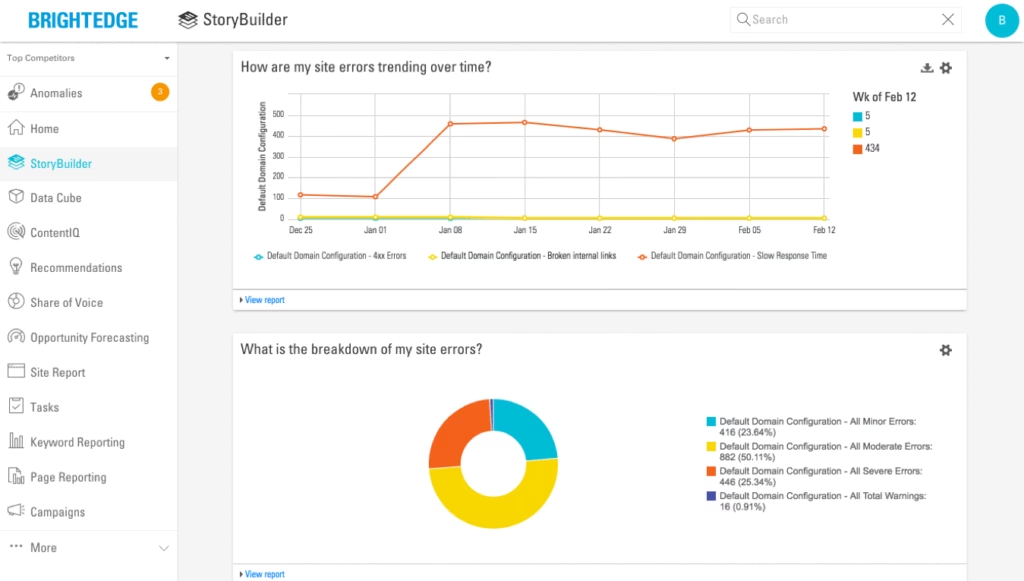
BrightEdge is the best alternative to Lumar for enterprise-level SEO auditing with content performance tracking and revenue attribution. Lumar operates as an enterprise cloud platform with high-speed crawling, pre-production testing environments, web accessibility compliance audits, and log file analysis. BrightEdge focuses on ContentIQ for large-scale crawling, customizable audit rules, integrated log file analysis, StoryBuilder reporting connecting technical data to business metrics, and AI-driven recommendations without providing pre-production testing environments.
BrightEdge pricing is custom and sits in the high enterprise tier. Contracts commonly start in the tens of thousands of dollars per year. Lumar pricing is custom and enterprise-tiered.
BrightEdge pros include large-scale auditing capability, integrated log analysis, AI-driven recommendations, deep competitive insights, and strong enterprise support. Cons include high cost with contracts starting in the tens of thousands annually, steep learning curve, and slower real-time alerting compared to specialized monitoring platforms, according to the BrightEdge review.
24. Conductor: Best Lumar (Formerly Deepcrawl) Alternative for large enterprises integrating SEO and content intelligence
Conductor is an enterprise SEO and content intelligence platform that combines keyword research, rank tracking, competitor analysis, technical site audits, and content performance analytics. Conductor provides SERP visualization, workflow integrations with project management tools like Asana, Trello, and Jira, content opportunity identification, and real-time performance dashboards. Conductor includes dedicated consulting services for technical SEO guidance, strategy development, and site migration support.
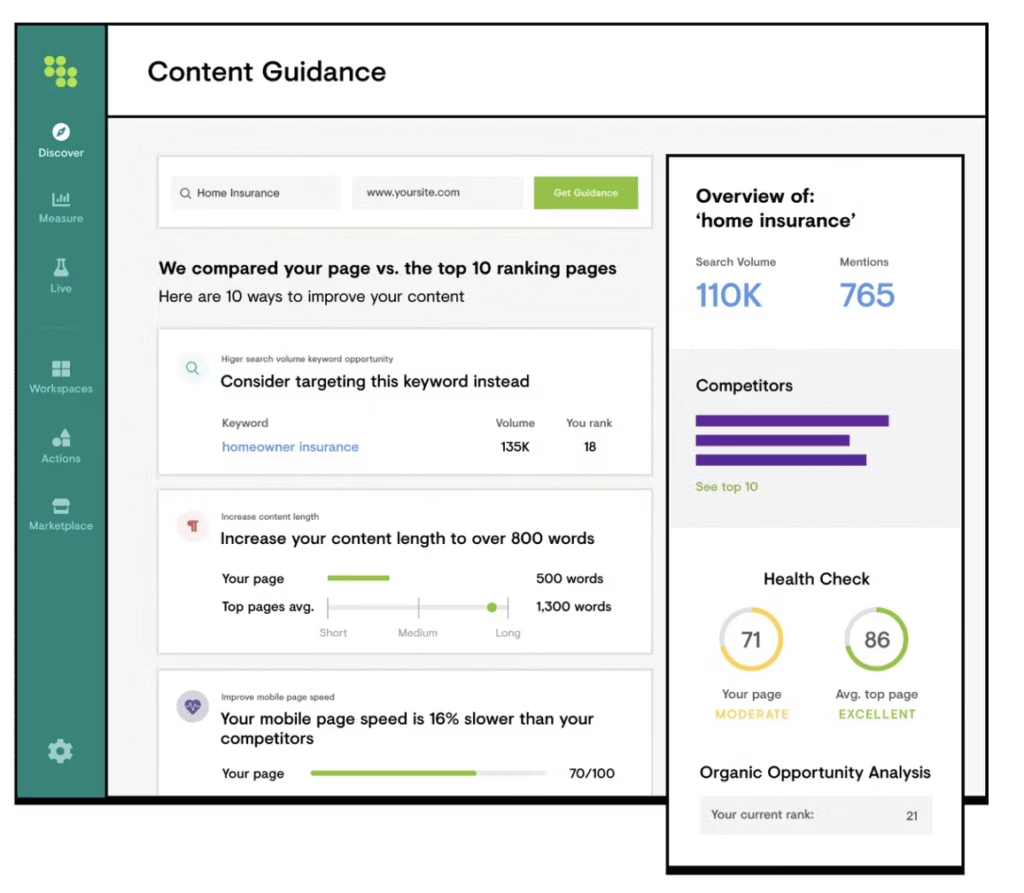
Conductor serves as an alternative to Lumar for teams prioritizing content-driven SEO with strategic consulting rather than pure technical crawling infrastructure. Lumar operates as an enterprise cloud platform with high-speed crawling, pre-production testing environments, web accessibility compliance audits, and log file analysis. Conductor emphasizes content performance insights, competitor market share analysis, workflow integration with project management systems, hands-on consulting for complex websites, and unified content intelligence without providing high-speed crawling infrastructure or pre-production testing capabilities.
Conductor pricing is custom-based on site size, content needs, and business goals. A 3-week free trial is available. Pricing is generally higher than mid-market tools due to enterprise features and consulting support. Lumar pricing is custom.
Conductor pros include unified SEO and content intelligence, competitor benchmarking capabilities, real-time performance dashboards, workflow integrations with project management platforms, and responsive consulting support. Cons include high custom pricing, a learning curve for new users, occasional platform speed issues, rigid contract terms, and reporting limitations according to the Conductor review.
25. Semrush: Best Lumar (Formerly Deepcrawl) Alternative for all-in-one SEO, Content, and Competitive Analysis
Semrush is an all-in-one SEO and marketing platform integrating search optimization, paid advertising tracking, content analysis, and social media analytics. Semrush provides rank tracking, keyword research, backlink monitoring with toxic link identification, technical site audits, ad performance insights, Position Tracking for SERP movements, algorithm shift detection through Sensor, and AI-powered content optimization. Semrush was purchased by Adobe in December 2025.
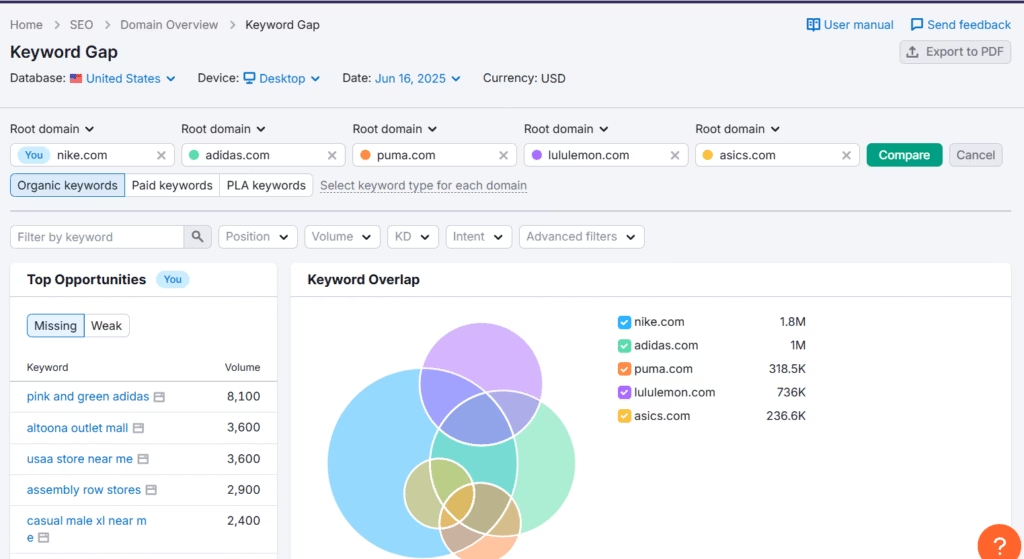
Semrush serves as an alternative to Lumar for all-in-one SEO, content, and competitive analysis. Semrush focuses on keyword databases, backlink analysis, daily SERP monitoring, integrated advertising and content analytics, and algorithm tracking through Sensor without providing enterprise crawling infrastructure or pre-production testing.
Semrush pricing includes annual plans at Starter $199/month, Pro+ $299/month, and Business $549/month. Trials are available, though specialized toolkits like Local SEO or Advertising require additional costs. Lumar does not publish pricing.
Semrush pros include extensive keyword and backlink databases, algorithm tracking, content optimization, cross-channel marketing insights, and AI-assisted recommendations. Cons include higher costs than basic tools, a complex interface for beginners, and additional fees for specialized features, according to the Semrush review.
26. Moz Pro: Best Lumar (Formerly Deepcrawl) Alternative for Comprehensive, User-Friendly SEO Management
Moz Pro is an all-in-one SEO platform combining keyword tracking, link analysis, and technical audits in a centralized dashboard for improving rankings, site health, and domain authority. Moz Pro features Keyword Explorer, Link Intersect, Site Crawl, True Competitors for competitive analysis, and GeoRank for local targeting. Moz is designed for beginners, small businesses, and marketers who value accessible interfaces and training support with well-explained metrics like Domain Authority.
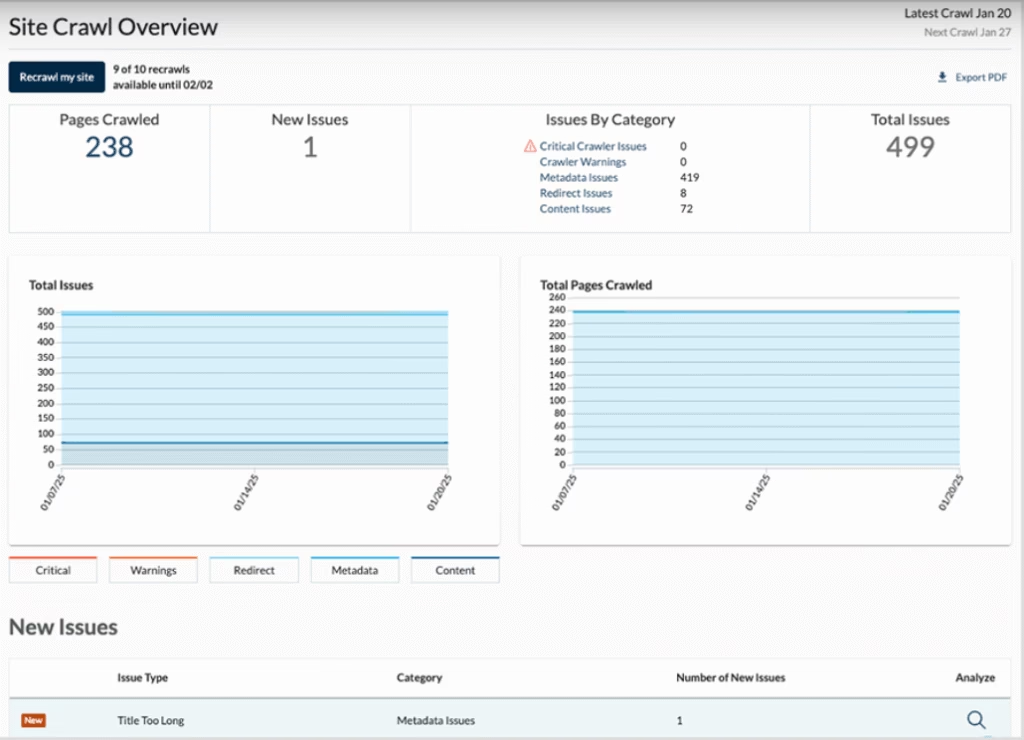
Moz Pro is the best alternative to Lumar for teams needing comprehensive SEO management with user-friendly tools rather than enterprise crawling infrastructure. Moz Pro focuses on accessible keyword tracking, link analysis, technical audits through Site Crawl, True Competitors identification, and GeoRank for local SEO without providing high-speed enterprise crawling or pre-production testing capabilities.
Moz Pro pricing starts at $49/month for solo users. Mid-tier plans like $179/month support 10 sites and 1,500 keywords, while larger tiers expand capacity and tracked domains. Lumar does not publish pricing, but it is much more expensive than Moz Pro.
Moz Pro pros include an intuitive interface, strong onboarding resources, reliable rank tracking, unique features like True Competitors and GeoRank for local targeting, and accessible Domain Authority metrics. Cons include a smaller keyword index and backlink database compared to enterprise platforms, which limits precision in competitive or long-tail environments, according to the Moz review.
27. Majestic: Best Lumar (Formerly Deepcrawl) Alternative for Backlink Intelligence
Majestic is a backlink intelligence platform specializing in link relationships, trust metrics, and domain authority tracking. Majestic provides proprietary metrics, Trust Flow and Citation Flow, for assessing link quality, Site Explorer for detailed backlink profiles including referring domains and anchor text, Link Graph for domain connection mapping, Link Context for backlink positioning analysis, Clique Hunter for identifying competitor link opportunities, and Author Explorer for discovering top link publishers.
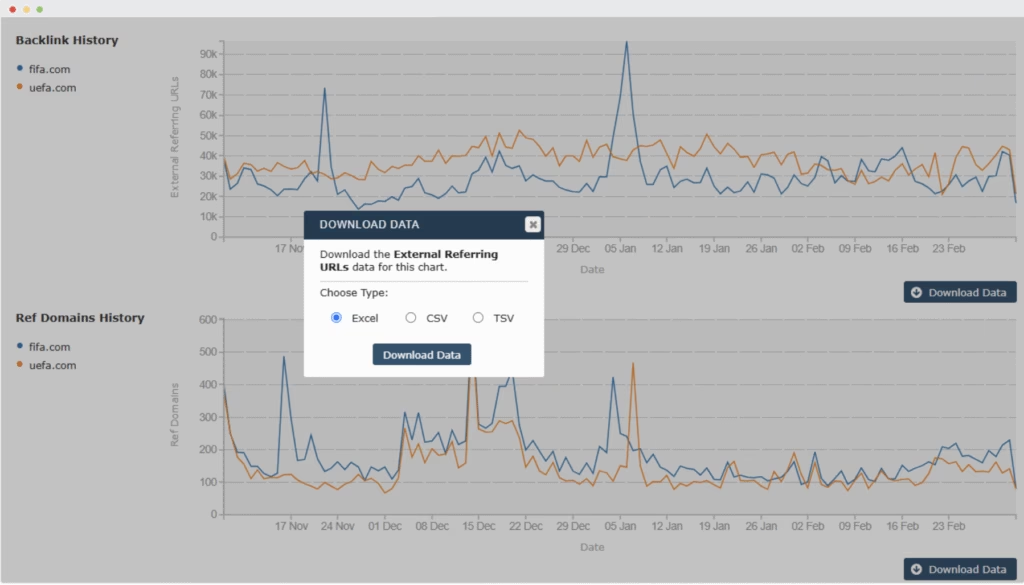
Majestic is the best alternative to Lumar for teams prioritizing backlink intelligence rather than technical site crawling. Lumar operates as an enterprise cloud platform with high-speed crawling, pre-production testing environments, web accessibility compliance audits, and log file analysis. Majestic focuses exclusively on backlink data through Trust Flow and Citation Flow metrics, link graph visualization, historical backlink audits, and competitor link profile analysis without providing technical crawling infrastructure, keyword rank tracking, or on-page optimization.
Majestic pricing starts at $49.99/month (Lite), $99.99/month (Pro) with full Site Explorer and report exports, and $399.99/month (API) for large-scale agencies. Lumar does not publish pricing, with estimated costs around $2,667 monthly.
Majestic pros include granular link metrics, deep historical backlink data, specialized link intelligence tools, and advanced link visualizations, according to the Majestic review. Cons include a steeper learning curve, no keyword rank tracking, and no on-page optimization support.
28. Ubersuggest: Best Lumar (Formerly Deepcrawl) Alternative for Keyword and Backlink Insights at a Low Cost
Ubersuggest is a browser-based SEO platform for freelancers, creators, and small businesses. Ubersuggest provides keyword suggestions powered by Google Autocomplete, daily rank tracking, technical site audits with prioritized error reporting, AI-driven content ideas, backlink monitoring with domain authority filters, and browser extensions for Chrome and Edge that display SERP keyword volumes and technical issue detection.
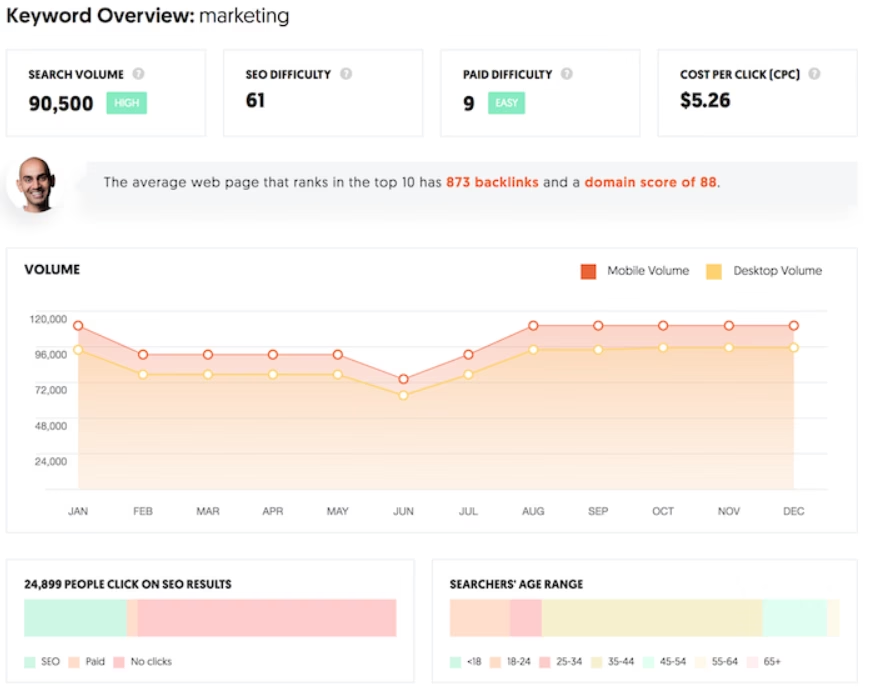
Ubersuggest is the best alternative to Lumar for keyword and backlink insights at a low cost. Ubersuggest focuses on keyword suggestions, daily rank tracking, technical site audits, AI content generation, and backlink monitoring without providing high-speed crawling infrastructure or pre-production testing capabilities.
Ubersuggest pricing starts at $29/month for individuals, $49/month for growing businesses, and $99/month for enterprise users. Lumar does not publish pricing.
Ubersuggest pros include affordable pricing, intuitive navigation, and integrated AI copy tools for content generation and keyword integration. Cons include a smaller backlink database, slower data refresh cycles, and limited scalability according to the Ubersuggest review.
29. Yoast SEO: Best Lumar (Formerly Deepcrawl) Alternative for WordPress On-Page Optimization
Yoast SEO is a WordPress SEO plugin that manages on-page SEO, schema markup, and content readability within the CMS. Yoast SEO provides real-time recommendations while editing posts or pages, helping users optimize metadata, internal links, and indexing decisions. Yoast SEO features an SEO Analysis Panel evaluating title tags, keyword placement, image alt text, and internal links, Readability Checker flagging sentence length and passive voice based on Flesch standards, Social Preview Tool for customizing social media metadata, Canonical URL Control for managing duplicate indexing, Indexing Settings for robots meta tags and XML sitemaps, and Schema Generator for structured data blocks including articles, FAQs, how-tos, and breadcrumbs.
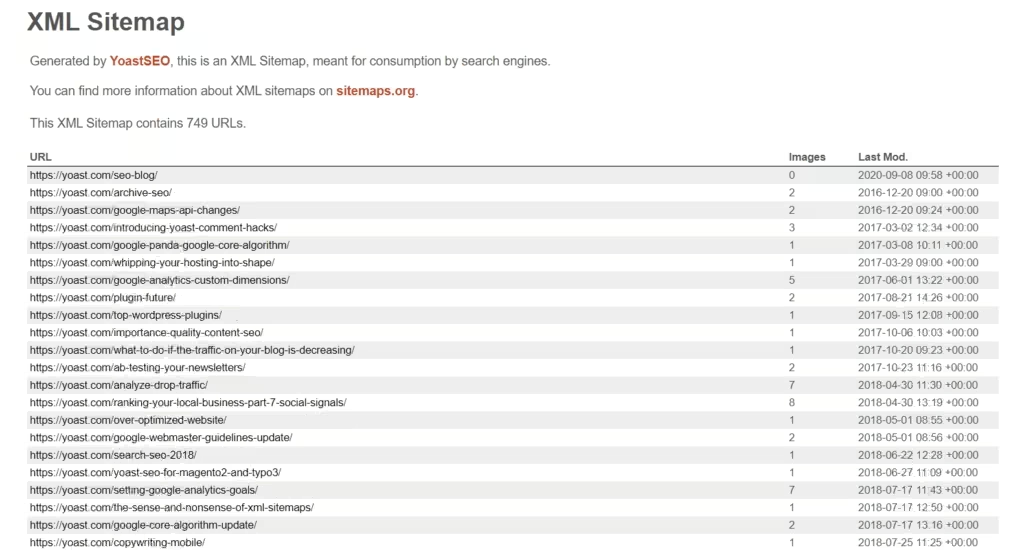
Yoast SEO is the best alternative to Lumar for WordPress on-page optimization. Yoast SEO focuses on real-time content analysis, readability optimization, schema markup generation, canonical URL management, and indexing controls within WordPress without providing technical crawling or multi-site enterprise auditing.
Yoast SEO offers a free plan including SEO analysis, readability checks, schema markup, and social previews. The Premium plan costs $118/year and adds multiple focus keywords, internal linking suggestions, redirect management, and AI-based content insights. Add-ons for WooCommerce, News SEO, Video SEO, and Local SEO are available separately. Lumar does not publish pricing, with estimated costs around $2,667 monthly.
Yoast SEO pros include real-time optimization within WordPress, an accessible interface for non-technical users, comprehensive schema markup generation, a free plan with core features, and affordable premium pricing at $99/year, according to the Yoast SEO Review. Cons include WordPress-only functionality, no technical crawling for large-scale audits, and a lack of multi-site enterprise features.
30. SEOptimer: Best Lumar (Formerly Deepcrawl) Alternative for Quick Technical Assessments
SEOptimer is a streamlined audit and reporting tool for small businesses, marketers, and agencies. SEOptimer analyzes URLs for on-page problems, usability gaps, performance bottlenecks, and fundamental backlink information. SEOptimer includes site assessments, exportable PDF reports, customizable branding, embeddable audit tools for client acquisition, foundational keyword guidance, a Chrome extension, and multi-language capabilities.
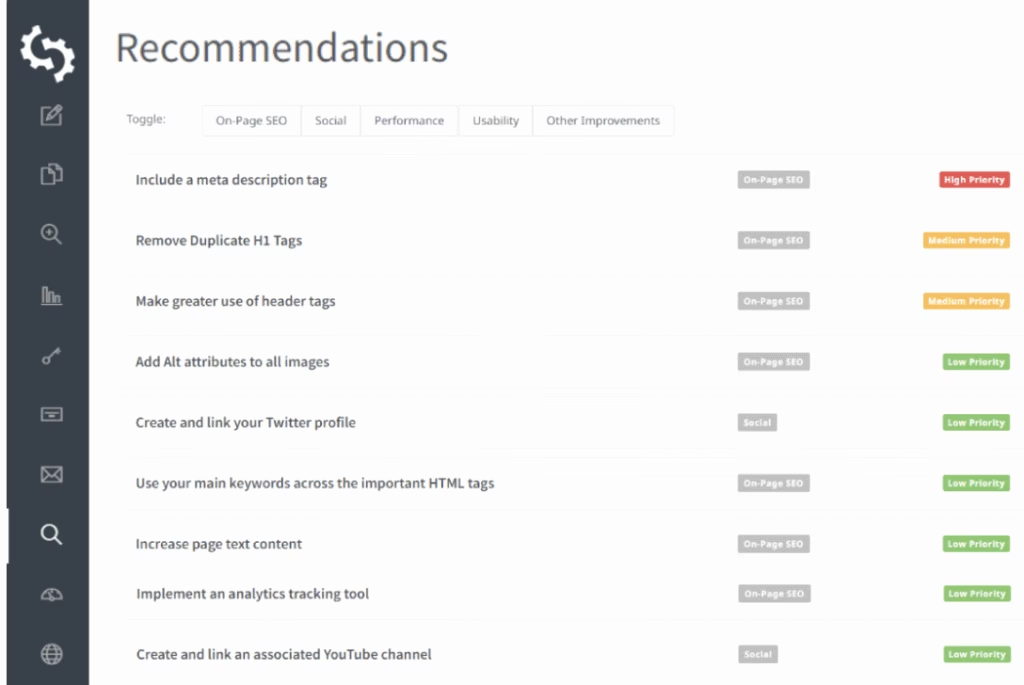
SEOptimer is the best alternative to Lumar for quick technical assessments and presentation-ready reporting rather than large-scale crawling systems. Lumar operates as an enterprise cloud platform with high-speed crawling, pre-production testing environments, web accessibility compliance audits, and log file analysis. SEOptimer focuses on instant technical evaluations, branded PDF outputs, embeddable assessment widgets, and elementary keyword suggestions without offering enterprise crawling speeds, deep competitive intelligence, or comprehensive link analysis.
SEOptimer pricing ranges from $29 to $59/month, with a free tier for fundamental audits. The service targets freelancers and compact agencies seeking affordable entry points. Lumar does not publish pricing, with estimated costs around $2,667 monthly.
SEOptimer pros include organized report formatting, rapid scan completion, adaptable white-label options, and widget embeds for prospect generation. Cons include constrained competitor research, missing advanced API connectivity, and limited keyword strategy or content refinement features, according to the SEOptimer review.
31. SEOmonitor: Best Lumar (Formerly Deepcrawl) Alternative for Forecast Modeling, Client Reporting, and ROI tracking
SEOmonitor is an SEO management platform combining unified tracking, AI content automation, and performance forecasting for agencies and brands. SEOmonitor provides daily rank tracking for Google with AI Overview monitoring, Magic Keywords Research with AI analysis and real-time SERP data, personalized keyword difficulty metrics, Opportunity Score for traffic potential, SEO Forecast with chance indicators, organic traffic data through Google Search Console and Analytics, Content Writer creating articles with automatic brief generation, Content Audit with Impact Ranking for prioritized updates, and agency dashboard for client management.
SEOmonitor is the best alternative to Lumar for agencies needing unified tracking with content automation and forecasting. SEOmonitor focuses on rank tracking with AI Overview monitoring, keyword difficulty analysis, forecasting, AI content generation, and agency client management without providing technical crawling infrastructure or pre-production testing.
SEOmonitor pricing starts at $115/month (Starter) for 1,000 daily tracked keywords and 10 AI articles. The Pro plan costs $347/month for multiple campaigns. Plans include a 14-day free trial. Lumar does not publish pricing.
SEOmonitor pros include unified Google and AI Overview tracking, personalized keyword metrics, forecasting capabilities, AI content automation, and agency client management. Cons include limited technical crawling, Starter plan restrictions, and focus on tracking over site auditing.
32. Clearscope: Best Lumar (Formerly Deepcrawl) Alternative for Optimizing Content Relevance with NLP
Clearscope is an AI-driven content optimization platform that analyzes top-ranking pages for target keywords and provides recommendations to improve semantic relevance, readability, and keyword usage. Clearscope offers AI-generated outlines, keyword suggestions, competitor comparisons, and subtopic recommendations based on Google Autocomplete. Clearscope integrates with CMS platforms like WordPress, Shopify, and HubSpot for seamless publishing and performance tracking.

Clearscope is the best alternative to Lumar for teams focused on content optimization and semantic relevance rather than technical crawling. Lumar operates as an enterprise cloud platform with high-speed crawling, pre-production testing environments, web accessibility compliance audits, and log file analysis. Clearscope focuses on AI-driven content recommendations, keyword targeting, semantic analysis, and CMS integration without providing technical crawling infrastructure, rank tracking, or backlink analysis.
Clearscope pricing starts at $129/month (Essentials) with unlimited users, projects, and AI outlines. The Business plan costs $399/month and adds account management and expanded content tracking. Enterprise plans offer custom pricing. Lumar does not publish pricing, with estimated costs around $2,667 monthly.
Clearscope pros include AI-driven content optimization, precise keyword targeting, semantic relevance analysis, CMS integration for streamlined publishing, and actionable content recommendations. Cons include a narrower feature set without rank tracking or backlink analysis, higher pricing for content-only features, and a focus on optimization over comprehensive SEO capabilities, with more details in the Clearscope review.
33. Squirrly SEO: Best Lumar (Formerly Deepcrawl) Alternative for AI-guided WordPress Optimization
Squirrly SEO is an AI-powered WordPress plugin for beginners needing step-by-step guidance to improve search rankings. Squirrly SEO provides an SEO Live Assistant giving instant feedback while writing on titles, keywords, and images, the Focus Pages feature prioritizing important content with custom improvement tips, the AI Audit Suite automatically finding and explaining SEO problems, a Google ranking tracker within the WordPress dashboard, and a built-in keyword tool for search volume research.
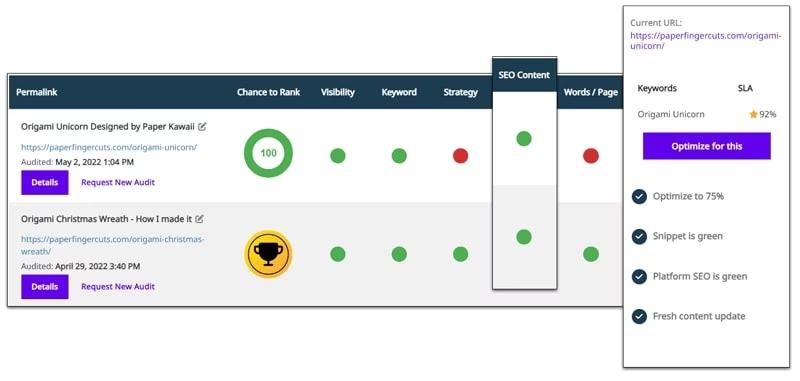
Squirrly SEO serves as an alternative to Lumar for WordPress users needing automated optimization guidance rather than enterprise crawling. Lumar operates as an enterprise cloud platform with high-speed crawling, pre-production testing environments, web accessibility compliance audits, and log file analysis. Squirrly SEO focuses on live content feedback, automated technical audits, prioritized page improvements, and keyword research within WordPress without providing technical crawling infrastructure or multi-site enterprise capabilities.
Squirrly SEO offers a free version for 1 site with basic tools. Paid plans cost $9.99/month (Pro), $51.20/month (Web Dev Kit), and $71.99/month (Business). Lumar does not publish pricing.
Squirrly SEO pros include automated technical assistance, an educational approach with step-by-step guidance, live content feedback, and AI-driven audit recommendations. Cons include an interface that feels cluttered, advanced tasks requiring manual adjustments, and WordPress-only functionality, according to the Squirrly SEO review.
34. SEOquake: Best Lumar (Formerly Deepcrawl) Alternative for Quick SEO Diagnostics and On-Page Analysis
SEOquake is a free SEO plugin providing instant insights into search results and webpage performance. SEOquake overlays key metrics directly under each search result with a sidebar for sorting, exporting, and viewing detailed reports. SEOquake features customizable SERP Overlay displaying metrics for each search result, keyword difficulty estimation, webpage SEO audits including mobile compatibility checks, keyword density analysis with stop-word configuration, internal and external link evaluation, social media statistics, URL and domain comparisons, and CSV export capability. SEOquake is compatible with Google Chrome, Mozilla Firefox, and Opera.

SEOquake serves as an alternative to Lumar for quick SEO diagnostics and on-page analysis. SEOquake focuses on instant SERP overlays, on-page audits, keyword density analysis, link evaluation, and customizable metric displays without providing technical crawling infrastructure or enterprise-scale auditing.
SEOquake is completely free. Lumar does not publish pricing.
SEOquake pros include instant SERP insights, easy browser installation, detailed on-page and link audits, keyword density reports, customizable metrics display, and CSV export capability at no cost. Cons include limited backlink data depth, fewer advanced keyword insights than paid platforms, and occasional browser compatibility requirements for full functionality.
35. SEO Site Checkup: Best Lumar (Formerly Deepcrawl) Alternative for Quick Technical and On-Page Diagnostics
SEO Site Checkup is a technical audit platform for webmasters, small businesses, and agencies, identifying site health issues. SEO Site Checkup evaluates site speed, uptime, mobile usability, security protocols, on-page optimization, and technical errors. SEO Site Checkup features unlimited website analysis, daily monitoring across 70+ SEO factors, competitor benchmarking, keyword position tracking, uptime and speed surveillance, granular URL inspection, and white-label client reporting.
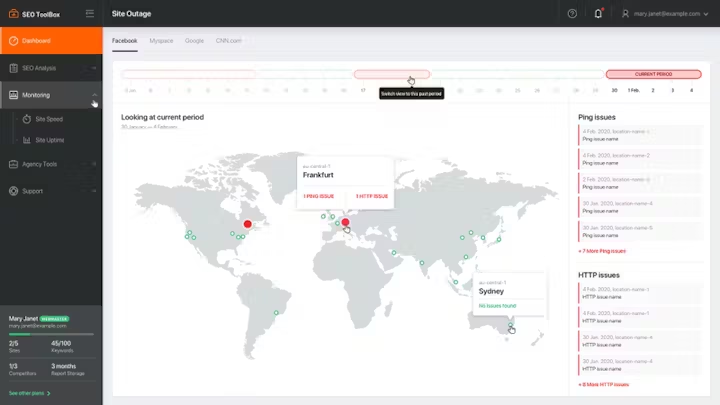
SEO Site Checkup serves as an alternative to Lumar for rapid technical diagnostics and performance monitoring rather than an enterprise crawling infrastructure. SEO Site Checkup focuses on daily monitoring across 70+ factors, immediate error identification, site performance metrics, competitor comparisons, and white-label reporting without providing high-speed crawling or pre-production testing capabilities.
SEO Site Checkup pricing starts at $34.95/month (Basic), $59.95/month (Webmaster), and $109.95/month (Professional). Lumar does not publish pricing, with estimated costs around $2,667 monthly.
SEO Site Checkup pros include rapid, accessible diagnostic reports, daily tracking across multiple technical variables, competitor comparison functionality, and white-label reporting for agency workflows. Cons include constrained rank tracking depth, limited keyword research scope, and reduced strategic capability for enterprise-scale operations.
36. Sitebulb: Best Lumar (Formerly Deepcrawl) Alternative for SEO Visibility and Competitive Analysis
Sitebulb is a desktop and cloud audit tool examining websites for 300+ technical problems using its Evergreen Chromium engine. Sitebulb monitors performance changes over time through historical tracking and trend analysis. Sitebulb provides ranked issue alerts with guidance, side-by-side audit comparisons, JavaScript page rendering, adjustable crawl speeds, customizable PDF and CSV exports, scheduled recurring scans, visual data displays, and XPath extraction. The platform connects with Google Analytics, Search Console, and Sheets. Desktop version scans up to 2 million pages per audit, while the cloud version processes up to 10 million pages with unlimited projects and team collaboration.
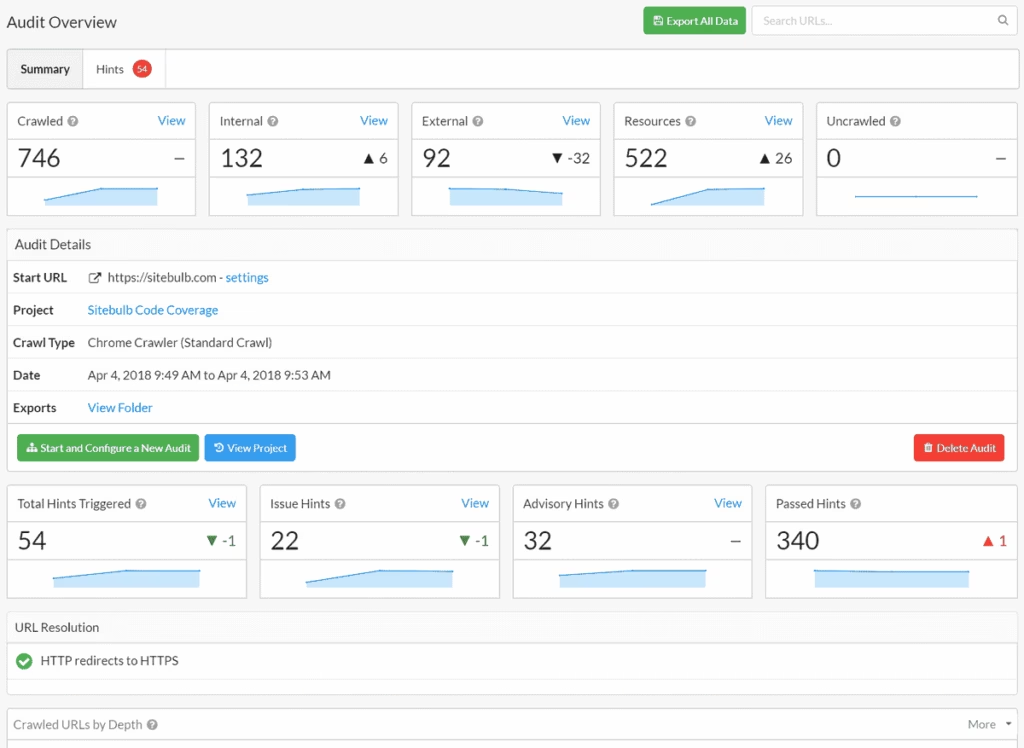
Sitebulb serves as an alternative to Lumar for thorough technical scanning with visual reporting rather than enterprise infrastructure. Sitebulb emphasizes 300+ problem detection, JavaScript rendering, visual data presentation, comparison tools, and scheduled scans without offering pre-launch testing or server log capabilities.
Sitebulb pricing includes desktop plans from $18/month and cloud plans from $245/month. Lumar does not publish pricing, with estimated costs around $2,667 monthly.
Sitebulb pros include extensive problem detection across 300+ areas, clear visual reporting with interactive charts, a development team responsive to user suggestions, and scanning capability up to 10 million pages. Cons include subscription costs challenging for smaller budgets, an initial learning period to use effectively, and ongoing monthly expenses versus single-purchase options.
37. SpyFu: Best Lumar (Formerly Deepcrawl) Alternative for competitor keyword and PPC analysis
SpyFu is a competitor intelligence platform examining how rivals perform in search and paid advertising. SpyFu monitors keyword positions, past visibility patterns, advertising expenditure, and link profiles across websites. The platform offers multi-year historical records, complete ad text archives, Kombat View comparing shared and unique keywords between competitors, RivalFlow AI spotting content weaknesses, unlimited keyword downloads, and ChatGPT integration for AI-powered analysis.
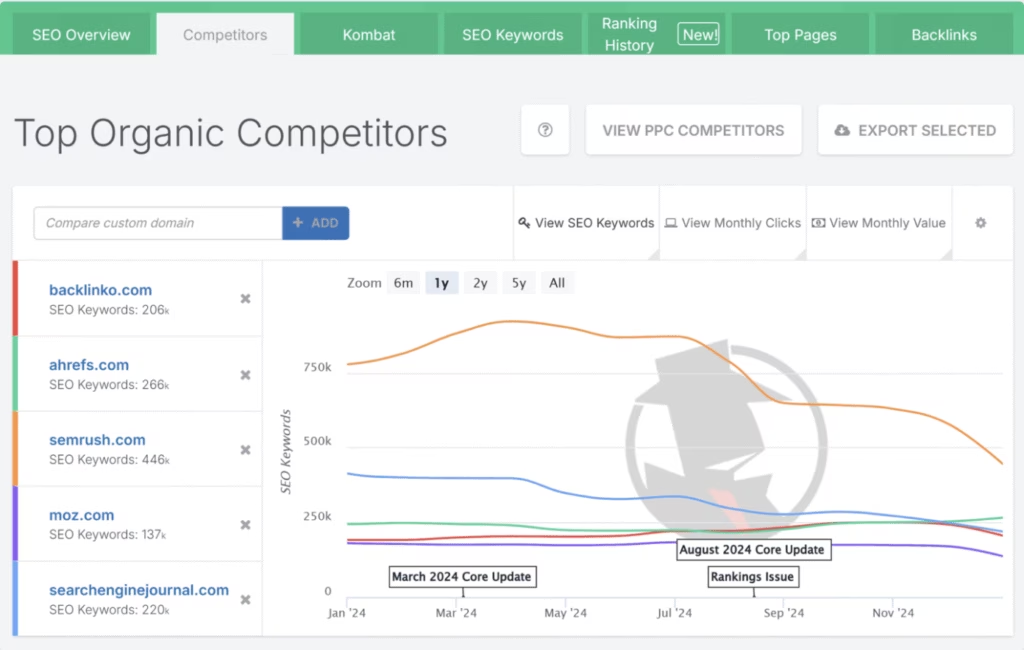
SpyFu is the best alternative to Lumar for competitor research and advertising intelligence, rather than technical website infrastructure. Lumar operates as an enterprise cloud platform with rapid crawling, pre-launch testing environments, web accessibility compliance checks, and server log analysis. SpyFu emphasizes historical keyword visibility, competitive advertising analysis, shared keyword identification, content gap detection, and AI-driven competitor insights without providing technical crawling capabilities or website infrastructure diagnostics.
SpyFu has 3 plans (Basic $39/month, Pro + AI $119/month, Team/Agency $249/month). Lumar does not publish pricing.
SpyFu pros include unlimited keyword downloads, extensive historical records, AI-powered competitor analysis, and white-labeled client reporting. Cons include the absence of technical website scanning features, limited site optimization capabilities, and reduced accuracy in smaller markets, according to the SpyFu review.
38. iSpionage: Best Lumar (Formerly Deepcrawl) Alternative for Monitoring Paid Search Competitors
iSpionage was a competitive intelligence platform that monitored paid search competitors and PPC strategy before shutting down in July 2025. iSpionage tracked competitor ad campaigns, keyword bidding strategies, ad copy variations, landing page designs, and budget allocation patterns. iSpionage featured competitor PPC keyword discovery, ad copy history tracking, landing page monitoring, budget estimation tools, keyword effectiveness scoring, and campaign performance analysis across Google Ads and Bing Ads.
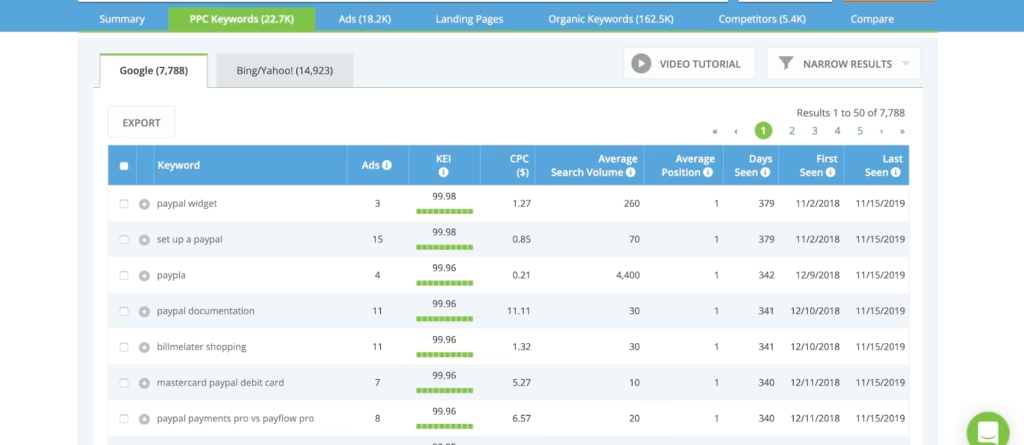
iSpionage was an alternative to Lumar for monitoring paid search competitors and advertising intelligence. iSpionage emphasized PPC competitor tracking, ad copy analysis, keyword bidding insights, landing page monitoring, and budget estimation without offering technical crawling systems or organic search infrastructure diagnostics.
iSpionage was acquired by TapClicks in 2019 and officially shut down as of July 9, 2025. The service is no longer operational.
iSpionage pros included detailed competitor ad tracking, historical ad copy archives, keyword bidding intelligence, landing page analysis, and budget estimation capabilities. Cons included a focus limited to paid search without organic SEO tools, no technical site auditing, and the absence of content optimization features.
39. CognitiveSEO: Best Lumar (Formerly Deepcrawl) Alternative for Link Audits and Penalty Recovery
CognitiveSEO is an SEO platform emphasizing competitive analysis, backlink monitoring, site audits, and keyword tracking. CognitiveSEO identifies ranking changes, link profiles, and technical problems while supporting penalty recovery and algorithm monitoring. CognitiveSEO features SERP trend monitoring, backlink profile comparisons, Rank Tracker with keyword visibility tracking, comprehensive site audits with actionable recommendations, and Google algorithm update monitoring.
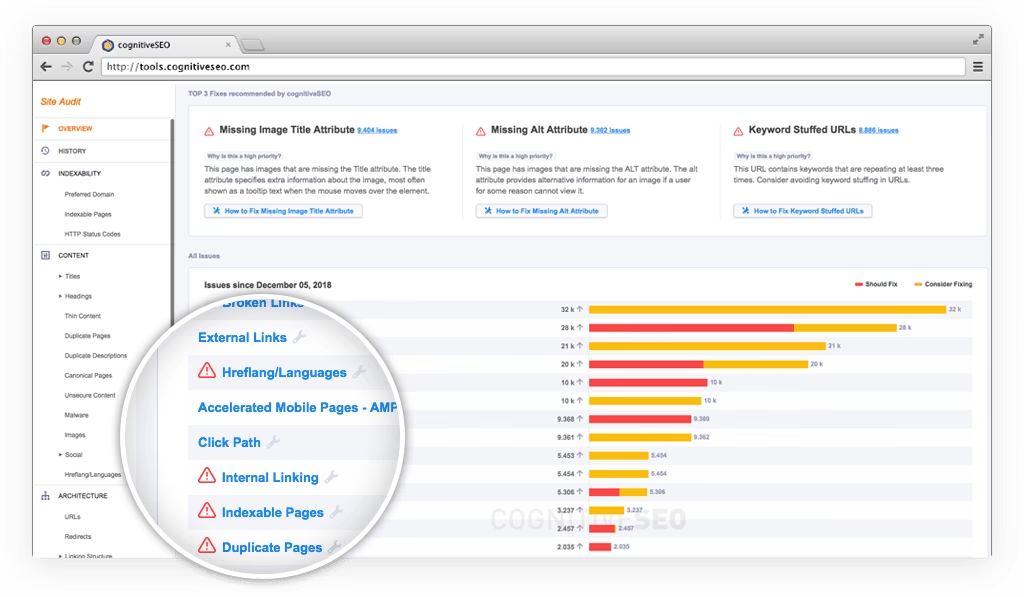
CognitiveSEO serves as an alternative to Lumar for link audits and penalty recovery rather than enterprise crawling infrastructure. Lumar operates as an enterprise cloud platform with rapid crawling, pre-launch testing environments, web accessibility compliance checks, and server log analysis. CognitiveSEO emphasizes backlink profile analysis, link intersection tools, penalty recovery capabilities, daily rank tracking across locations and devices, and competitive keyword gap analysis without providing high-speed crawling or pre-launch testing environments.
CognitiveSEO pricing starts at $129/month (Starter) for 5 campaigns, 150 content audits, and 1,500 rank tracking keywords. Higher plans expand limits and add advanced features. Lumar does not publish pricing, with estimated costs around $2,667 monthly.
CognitiveSEO pros include robust backlink analysis tools, penalty recovery capabilities, and competitive intelligence features, according to the CognitiveSEO review. Cons include a steep learning curve and slower performance when processing large backlink datasets.
40. WebCEO: Best Lumar (Formerly Deepcrawl) Alternative for Agencies Managing Audits, Backlinks, And Reporting
WebCEO is an all-in-one SEO platform for agencies, in-house teams, and individual users, emphasizing white-label reporting. WebCEO provides rank tracking, keyword research, technical audits, content optimization, backlink analysis, competitor monitoring, and social media analytics. WebCEO generates custom-branded reports in 24 languages, schedules automated delivery, and publishes reports on client-accessible domains or subdomains. Features include daily or on-demand rank tracking, a keyword suggestion tool, toxic backlink detection, a task manager for issue resolution, and a customizable SEO portal hosted on your domain.
WebCEO serves as an alternative to Lumar for agencies managing client audits, backlinks, and white-label reporting rather than enterprise crawling infrastructure. Lumar operates as an enterprise cloud platform with rapid crawling, pre-launch testing environments, web accessibility compliance checks, and server log analysis. WebCEO emphasizes white-label client dashboards, automated branded reporting, multi-channel tracking, task assignment workflows, and lead generation widgets without providing high-speed crawling or pre-launch testing capabilities.
WebCEO pricing includes SOLO $36/month, Startup $119/month, Agency Unlimited $99/month plus scanning fees, and Corporate $299/month. Unlimited scanning incurs additional costs. A 14-day free trial is available. Lumar does not publish pricing, with estimated costs around $2,667 monthly.
WebCEO pros include full white-label reporting capabilities, automated client dashboards, built-in lead capture widgets, and multi-language support in 24 languages, according to the WebCEO review. Cons include dated interface design, limited mobile or local SERP analysis, slower processing for large site audits, and extra fees for unlimited scanning.
41. SimilarWeb: Best Lumar (Formerly Deepcrawl) Alternative for Traffic Intelligence and Competitive Benchmarking
SimilarWeb is a digital intelligence platform delivering web, app, and marketplace traffic analysis, audience profiling, and competitive comparison. The platform monitors worldwide and regional traffic patterns, visitor actions, marketing distribution, engagement levels, and AI chatbot interactions. SimilarWeb includes traffic quantification, audience categorization, competitor evaluation, keyword and position monitoring, SERP examination, backlink summaries, site diagnostics, advertising intelligence, AI Brand Visibility, conversion tracking, and historical records spanning 37 months.
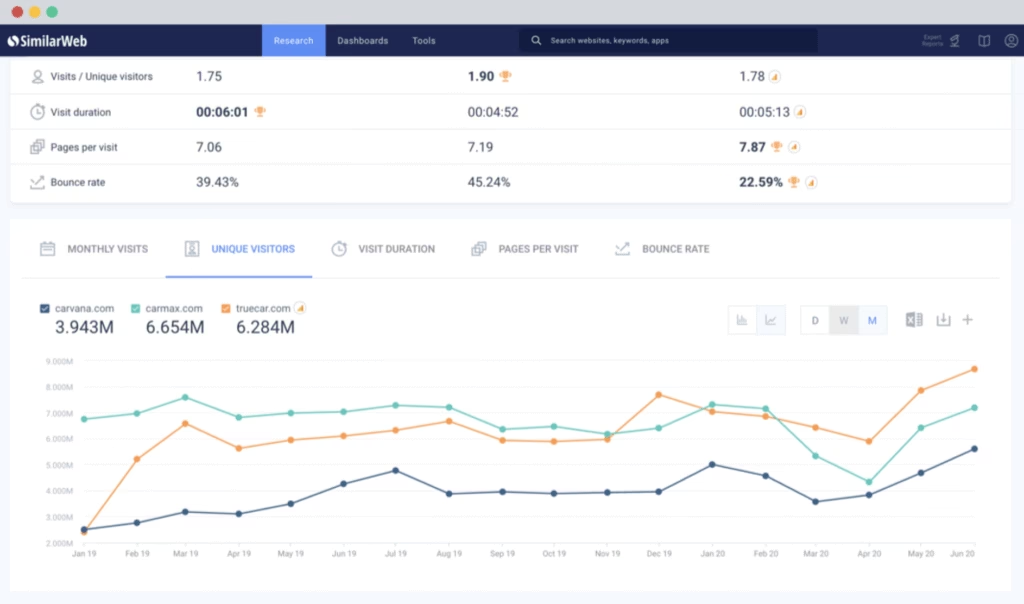
SimilarWeb serves as an alternative to Lumar for traffic intelligence and market comparison rather than technical infrastructure scanning. Lumar operates as an enterprise cloud platform with rapid crawling, pre-launch testing environments, web accessibility compliance checks, and server log analysis. SimilarWeb concentrates on behavioral data analysis, market positioning, multi-channel traffic examination, AI-powered intelligence, and chatbot interaction tracking without offering technical crawling systems or pre-launch testing facilities.
SimilarWeb pricing includes Entrepreneurs $199/month, Competitive Intel & SEO $399/month, and Competitive Intel, SEO & Ads $649/month. Enterprise arrangements are custom-priced with API connectivity, AI agents, and worldwide data access. Lumar does not publish pricing, with estimated costs around $2,667 monthly.
SimilarWeb pros include precise traffic measurement, AI-enhanced intelligence, competitive positioning analysis, multi-channel monitoring, and chatbot interaction tracking, according to the SimilarWeb review. Cons include constrained tactical SEO tools, occasional competitor identification errors, and absent content workflow integration.
42. Google Search Console: Best Lumar (Formerly Deepcrawl) Alternative for Free Search Performance and Indexing Health
Google Search Console (GSC) is Google’s free tool showing how websites appear in Google Search results. GSC provides indexing information, keyword performance, search visibility, and technical problems affecting rankings. The platform reveals exactly how Google’s crawler views and processes sites, offering the most reliable data for diagnosing search performance. GSC features Performance Reports showing impressions, clicks, position, and click rates for keywords and pages, Index Coverage identifying crawl problems and visibility blockers, Page Experience measuring site speed and mobile friendliness, URL Inspection Tool checking individual page status, Sitemaps submission helping Google find important pages, and Manual Actions alerts for penalties or security problems.
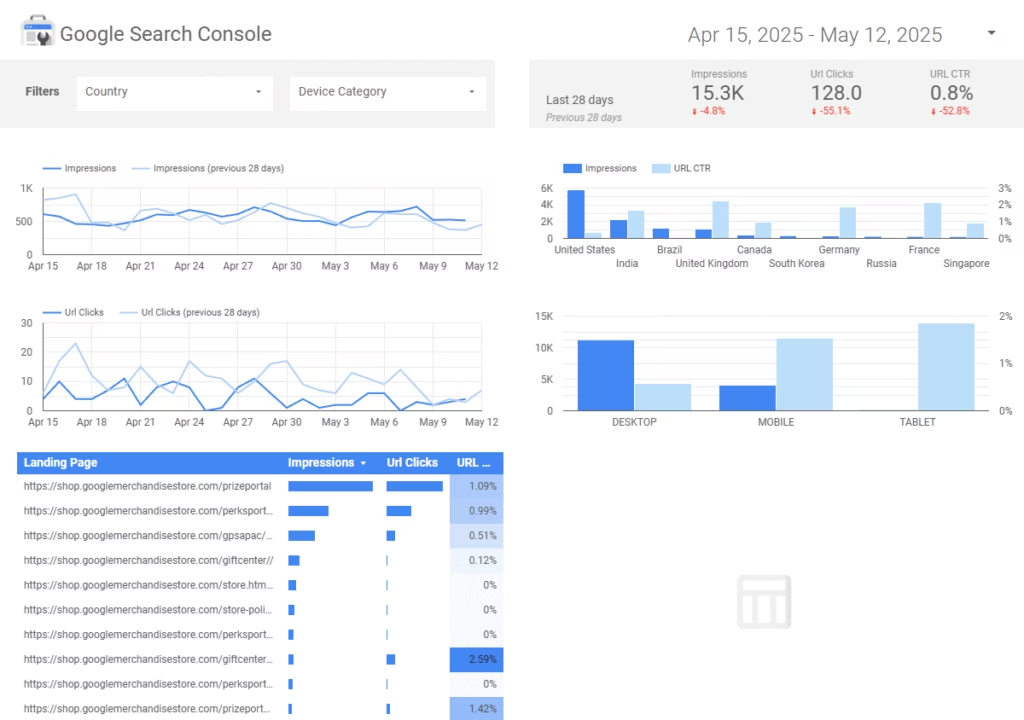
Google Search Console is the best alternative to Lumar for monitoring search performance and indexing health, rather than enterprise scanning systems. Lumar operates as an enterprise cloud platform with rapid scanning, pre-launch testing environments, web accessibility checks, and server log examination. GSC provides direct Google indexing information, keyword performance data, site speed measurements, crawl problem identification, and penalty alerts without offering independent scanning systems, pre-launch testing, or multi-site management tools.
Google Search Console is completely free for all verified site owners.
Google Search Console pros include authoritative data directly from Google, zero cost, real-time crawl problem alerts, keyword performance insights, and site speed tracking. Cons include data limited to Google only, a 16-month history restriction, no competitor comparison, and no advanced scanning or pre-launch testing.
43. Bing Webmaster Tools: Best Lumar (Formerly Deepcrawl) Alternative for Monitoring Bing Search Performance
Bing Webmaster Tools is Microsoft’s free platform for monitoring website performance in Bing Search. Bing Webmaster Tools provides indexing information, keyword performance, search visibility, and technical problem identification affecting Bing rankings. Bing Webmaster Tools features Site Scan for identifying technical issues like broken links and missing metadata, Performance Reports showing impressions, clicks, and CTR for keywords and pages, URL Inspection for checking individual page indexing status, Sitemaps submission helping Bing discover priority pages, SEO Reports offering actionable recommendations, and Keyword Research tool suggesting relevant search terms.
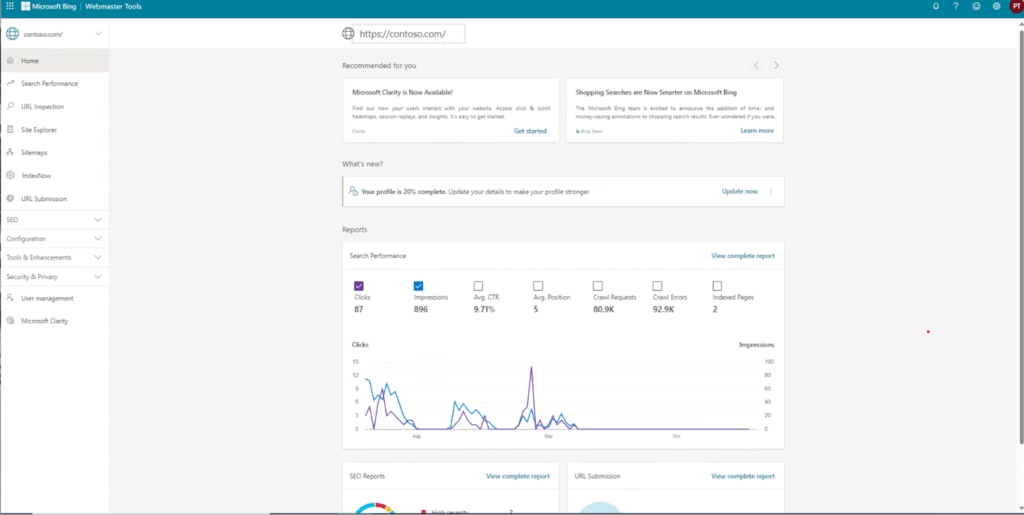
Bing Webmaster Tools is an alternative to Lumar for monitoring Bing search performance and site health, rather than an enterprise crawling infrastructure. Lumar operates as an enterprise cloud platform with rapid scanning, pre-launch testing environments, web accessibility checks, and server log examination. Bing Webmaster Tools provides Bing-specific indexing insights, keyword performance data, site scan diagnostics, and SEO recommendations without offering independent crawling systems, pre-launch testing, or multi-site enterprise management.
Bing Webmaster Tools is completely free for all verified site owners. Lumar does not publish pricing, with estimated costs around $2,667 monthly.
Bing Webmaster Tools pros include authoritative data directly from Bing, zero cost, technical issue identification, keyword research capabilities, and actionable SEO recommendations. Cons include data limited to Bing only, a smaller search market share than Google, no competitor analysis, and no advanced scanning or pre-launch testing features.
44. Raven Tools: Best Lumar (Formerly Deepcrawl) Alternative for combining SEO Audits, Reporting, and Competitor Analysis
Raven Tools is a digital marketing platform for SEO professionals, agencies, and in-house teams managing multi-channel analytics, technical audits, and white-labeled client reporting. Raven Tools combines rank tracking, keyword research, site audits, and backlink monitoring with reporting automation across SEO, social media, PPC, and email channels. Raven Tools features SEO Auditor for technical problem scanning, marketing reports consolidating multiple advertising and profile metrics, Majestic-powered link explorer, and position tracking with competitor benchmarking.
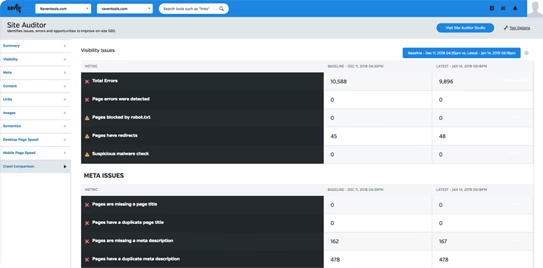
Raven Tools serves as an alternative to Lumar for agencies needing white-label dashboards and cross-channel reporting rather than enterprise crawling infrastructure. Lumar operates as an enterprise cloud platform with rapid scanning, pre-launch testing environments, web accessibility checks, and server log examination. Raven Tools emphasizes white-label client dashboards, multi-channel report consolidation, and cross-platform reporting automation without offering high-speed crawling systems or pre-launch testing.
Raven Tools pricing starts at $49/month and scales to $479/month with up to 320 campaigns, full reporting automation, and API access. A 7-day free trial is available. Lumar does not publish pricing, with estimated costs around $2,667 monthly.
Raven Tools’ pros include cross-platform consolidated reports, clear audit presentations, easy client sharing, and white-label deliverables, according to the Raven Tools review. Cons include a dated interface, longer load times for large projects, and limited AI features.
Why do people seek alternatives to Lumar?
People seek alternatives to Lumar because the platform operates primarily as an enterprise-grade technical crawling infrastructure with pricing and complexity that don’t suit all organizations. Lumar emphasizes high-speed crawling, pre-production testing environments, web accessibility compliance audits, and log file analysis, but lacks integrated content creation tools, keyword research databases, and rank tracking capabilities found in all-in-one SEO platforms.
The pricing structure is not publicly disclosed, with estimated costs around $2,667 monthly for crawling 5 million URLs, making it inaccessible for small businesses, freelancers, and agencies with limited budgets. Users seeking streamlined keyword research, content optimization, backlink analysis, or white-label client reporting often find Lumar’s technical focus too narrow for their needs.
Additionally, the platform’s enterprise orientation requires technical expertise and dedicated resources to maximize its crawling and audit capabilities, which overwhelms teams looking for user-friendly interfaces and immediate actionable insights. These factors drive users to explore alternatives offering comprehensive SEO management, affordable pricing tiers, integrated content tools, and accessible workflows for non-technical users.
What to look for in a Lumar alternative?
What to look for in a Lumar alternative?
The 8 features to look for in a Lumar alternative are listed below.
- Technical Crawling Capabilities. Choose platforms with JavaScript rendering, mobile viewport simulation, and customizable crawl speeds to identify technical issues across complex site architectures and handle enterprise-scale audits.
- Integrated Keyword and Content Tools. Ensure the platform combines rank tracking, keyword research, and content optimization in one interface, eliminating the need for multiple tools to manage organic search performance.
- Accessible Pricing Structure. Opt for platforms with transparent, published pricing tiers starting under $500/month that accommodate small businesses, freelancers, and mid-market agencies without enterprise-only pricing barriers.
- User-Friendly Interface. Select tools with intuitive dashboards, clear visualizations, and actionable recommendations that enable non-technical team members to understand and act on SEO insights without developer support.
- White-Label Reporting. Look for platforms offering customizable, branded reports and client-facing dashboards that agencies deliver under their own branding for improved client communication and retention.
- Automation and AI-Powered Workflows. Prioritize platforms with automated audits, AI-driven content generation, intelligent task prioritization, and workflow automation that reduce manual effort and accelerate SEO execution at scale.
- Comprehensive SEO Suite. Choose all-in-one platforms combining technical audits, backlink analysis, rank tracking, competitor research, and content optimization to reduce tool fragmentation and streamline workflows.
- Integration and API Access. Select platforms with seamless integration to Google Analytics, Search Console, CMS platforms, and project management
Why is Search Atlas the Best Alternative to Lumar?
Search Atlas is the best alternative to Lumar because it delivers a complete SEO management platform combining technical audits, keyword research, rank tracking, content optimization, backlink analysis, and automated execution in one interface. This enables teams to manage crawling, content creation, link building, and performance monitoring without requiring separate enterprise crawling infrastructure or multiple disconnected tools.
Relevant features for Lumar users include technical site audits identifying crawl errors and indexing issues, JavaScript rendering for modern web architectures, SERP feature tracking, competitor analysis, backlink monitoring, and AI-driven automation that executes optimizations directly from the dashboard. Otto, Search Atlas’s AI agent, automates internal linking, meta tag optimization, schema markup deployment, and page authority improvements without manual implementation.
A standout feature is Content Genius, an AI-powered content assistant that ensures content aligns with Google’s indexing standards, maintains high information density, and matches user intent. Its microagent system handles tasks like internal linking, fact-checking, tone adjustments, and visual enhancements, enabling both new content creation and refinement of existing pages. The platform includes a semantic grader to evaluate content quality, user experience, and authority metrics, enabling teams to maintain Google-compliant standards.
Search Atlas is paid, with plans starting at $99/month, and a 7-day free trial. Higher tiers offer multi-domain support, advanced automation, and expanded reporting. Migrate from Lumar to Search Atlas for accessible pricing, integrated content tools, automated SEO execution, and comprehensive workflow management without enterprise-only complexity.