Search Everywhere Optimization (SEOx) refers to a modern search optimization framework that expands traditional search engine optimization beyond Google to all environments where users actively search, discover, and make decisions, including AI systems, social platforms, marketplaces, apps, and voice interfaces. Search Everywhere Optimization is often abbreviated as SEOx, SEvO, or described as SEO 2.0 because Search Everywhere Optimization builds on foundational SEO while adapting visibility strategies to multi-platform search behavior.
Search Everywhere Optimization matters because discovery now occurs across fragmented, intent-driven platforms where rankings alone no longer control exposure. SEOx shifts visibility from page positions to inclusion, mentions, and citations across omnichannel search surfaces, which reflects how users interact with search everywhere environments today.
Search Everywhere Optimization operates across key platforms that collectively define modern multi-platform search. These platforms include traditional search engines, AI and large language models, social and video search, e-commerce marketplaces, app stores, local discovery systems, and voice assistants, each requiring platform-native optimization signals.
Implementing Search Everywhere Optimization requires entity-driven content, platform-specific formats, and structured data consistency across channels. SEOx execution focuses on making information retrievable, reusable, and trustworthy for both algorithms and AI systems while maintaining alignment across omnichannel touchpoints.
Success in Search Everywhere Optimization is measured through omnichannel visibility metrics rather than rankings alone. SEOx performance indicators include AI citations, brand mentions, cross-platform engagement, and assisted conversions, which position SEvO omnichannel SEO as the strategic response to search everywhere behavior.

What is Search Everywhere Optimization?
Search Everywhere Optimization (SEOx) is a multi-platform discovery strategy that expands traditional search engine optimization to ensure brand findability across all digital environments where users search, evaluate, and decide.
This SEOx definition establishes Search Everywhere Optimization as an entity-driven optimization framework that treats every platform with a search interface as an independent discovery engine, including search engines, social media platforms, AI systems, marketplaces, app stores, and voice assistants. The search everywhere meaning reflects a shift from ranking pages on Google to making brands retrievable, citable, and visible wherever intent appears.
What strategic shift defines Search Everywhere Optimization compared to traditional SEO? Search Everywhere Optimization represents a shift from keyword-centric optimization to entity-driven optimization focused on brands, products, and concepts. Search Everywhere Optimization prioritizes clearly defined entities that machine-learning systems can recognize, connect, and reuse across platforms. This evolution matters because modern discovery relies on entity graphs, semantic relationships, and trust signals rather than isolated keyword matches. SEOx aligns content and brand signals so both humans and algorithms interpret the same authoritative meaning.
Why does Search Everywhere Optimization exist in a fractured search landscape? Search Everywhere Optimization exists because the modern search journey is non-linear and fragmented across platforms. A user journey may begin in ChatGPT for explanation, move to TikTok or Instagram for reviews, and end on Google or Amazon for conversion. Search Everywhere Optimization addresses this fragmentation by optimizing presence across each step instead of assuming a single entry point. This structure explains what is search everywhere optimization in practice: coordinated visibility across discovery, evaluation, and transaction layers.
What quantitative evidence supports the SEOx definition? Search Everywhere Optimization is supported by measurable shifts in user behavior and platform economics. Google still refers approximately 66% of web traffic and holds about 91% global market share, yet nearly 60% of Google searches now end without a click because answers appear directly on results pages. Around 40% of Gen Z users prefer TikTok or Instagram for search, while 1 in 10 U.S. internet users uses generative AI as a primary search tool. ChatGPT reached about 800 million weekly active users and refers traffic to more than 30,000 unique domains daily. Marketplaces and apps reinforce this shift, with Amazon reaching roughly $397 billion in U.S. gross merchandise value in 2024, the Apple App Store handling about 400 million searches per week, and global app downloads reaching 235 billion in 2022. Gartner projects that traditional websites will lose 25% of organic traffic to AI-powered experiences by 2026.
What challenges and debates surround the search everywhere meaning? Search Everywhere Optimization faces operational, terminological, and measurement challenges despite broad adoption. Execution often requires cross-functional coordination across many teams, while AI visibility tracking still lacks full automation. Terminology remains contested, with SEOx, SEvO, and OmniSEO® describing largely the same process. Some professionals view SEOx as a rebranding of SEO, while others define it as a necessary evolution from optimizing for search engines to optimizing for search everywhere.
Why Does Search Everywhere Optimization Matter?
Search Everywhere Optimization matters because user discovery, evaluation, and conversion now occur across multiple platforms instead of a single search engine, which makes single-channel SEO structurally insufficient. The importance of Search Everywhere Optimization, also called SEOx, emerges from indisputable shifts in user behavior, platform economics, AI-driven retrieval, and performance measurement that redefine how visibility and revenue form.
Why has multi-platform search behavior replaced single-engine search? Multi-platform search behavior has replaced single-engine search because users fragment discovery across social platforms, marketplaces, AI tools, and forums before converting. Data shows that 40% of Gen Z users prefer TikTok or Instagram over Google for local discovery, recommendations, and how-to content, while 73% of buying decisions originate outside traditional search engines. Users now interact with 5–10 platforms per journey, often starting with AI tools, validating through social proof, and returning to Google only for transaction execution. This fragmentation explains why SEOx matters as a response to distributed intent rather than isolated queries.
Why does zero-click and community-driven discovery increase the importance of Search Everywhere Optimization? Zero-click and community-driven discovery increase the importance of search everywhere because users consume answers and opinions without visiting websites. Nearly 60% of Google searches end without a click, and users append the word “reddit” to Google searches at a rate of roughly 100 searches per second to find authentic, human-centric discussions. At the same time, 67% of users discover new brands through social networks, and 61% of product searches begin directly on Amazon. These behaviors confirm that visibility now depends on presence inside platforms, feeds, and communities, which defines the importance of search everywhere.
Why does AI-driven search fundamentally change how brands gain visibility? AI-driven search changes visibility because generative systems synthesize single authoritative answers instead of ranking lists of links. Approximately 58% of consumers report replacing traditional search engines with AI platforms for information needs, and 1 in 10 U.S. internet users now use generative AI as their primary search tool. ChatGPT alone reached 800 million weekly active users and sent referral traffic to more than 30,000 unique domains daily in 2024. AI systems select sources based on entity authority across blogs, LinkedIn, Quora, and forums, which means SEOx benefits brands that build a web of authority rather than optimize isolated pages.
Why do marketplaces and app ecosystems make Search Everywhere Optimization revenue-critical? Marketplaces and app ecosystems make SEOx revenue-critical because they capture the highest-intent search behavior. Amazon generated approximately $397 billion in U.S. gross merchandise value in 2024 and functions as the primary search engine for purchase-ready users, with 35% of purchases influenced by AI-based recommendations. Global app downloads reached 235 billion in 2022, positioning app stores as discovery engines rather than distribution channels. These environments convert at higher rates than traditional search, which explains why Search Everywhere Optimization protects revenue by aligning with where intent concentrates.
Why does algorithmic evolution force a shift from rankability to retrievability? Algorithmic evolution forces this shift because modern systems evaluate how easily AI and crawlers can retrieve, interpret, and trust brand information. Instagram content became publicly indexable for professional accounts in July 2025, visual search via Google Lens exceeds 20 billion searches per month, and E-E-A-T now functions as a mandatory trust framework across Google, AI chatbots, and social platforms. Search Everywhere Optimization benefits brands by improving retrievability through transcripts, conversational Q&A formats, and consistent entity signals rather than relying on page rankings alone.
Why does Search Everywhere Optimization reduce risk and improve measurement accuracy? Search Everywhere Optimization reduces risk because dependence on Google alone creates SEO debt and exposes brands to single-algorithm failure. Although organic traffic declines, many companies report stable or increasing revenue, which confirms that demand has shifted across AI and social tools rather than disappeared. A diversified strategy improves resilience and aligns with modern KPIs such as AI citations, brand mentions, share of model, and on-platform visibility instead of rankings alone. These metrics explain why SEOx matters as a long-term visibility and revenue protection strategy, even while Google retains a dominant share of traditional web referrals.
How has Search Behavior Evolved?
Search behavior has evolved from single-engine, link-based navigation into a fragmented, multi-platform, answer-first discovery system. How has search behavior evolution changed market dynamics? Market share data shows platform erosion and diversification rather than total decline. Google share of general information searches fell from 73% to 66.9% between February and August 2025, and its global share dropped below 90% for the first time since 2015. Local search dominance declined from 75% to 67.8%, while platform switching accelerated to 34.8% of users by August 2025. In parallel, ChatGPT usage for general searches tripled from 4.1% to 12.5% in six months, and AI-powered tools accounted for 5.6% of U.S. desktop search traffic by mid-2025, which reshapes any modern search optimization strategy.
What behaviors define the rise of AI-centric and zero-click search? AI-centric search increases answer consumption inside interfaces instead of clicks to websites. Daily AI tool usage doubled from 14% to 29.2% in 2025, and 71.5% of U.S. consumers have used AI search tools, even though only 14% rely on them daily. AI Overviews introduced a zero-click environment where only 8% of users click a standard organic result when an overview appears, and top-ranking pages lose up to 45% of traffic for informational queries. Search sessions now operate as multi-turn conversations with 5–6 exchanges, which shifts intent from finding a URL to consuming synthesized information.
How has social and visual search diversified discovery paths? Social and visual channels now function as primary search surfaces. Thirty-one percent of consumers use social media to answer questions, more than double the current AI search adoption. Forty-nine percent of Gen Z and Millennials prefer social search, and 25% of Gen Z use social platforms as their primary method for local searches, which directly influences Gen Z search patterns. Visual search volume continues to scale, with Google Lens processing 20 billion searches per month, including 4 billion shopping-related queries, and Amazon reporting 70% year-over-year growth in visual searches. Map-based discovery also expanded, with 20% of consumers conducting local searches inside map applications.
What generational shifts explain these changes in search behavior evolution? Generational cohorts adopt search tools differently based on intent and efficiency. Gen Z, identified as AI Natives, shows the highest chatbot adoption at 34% and relies on mobile devices for 80% of searches. Millennials act as Efficiency Seekers who use AI for productivity and professional decisions. Gen X remains cautious and uses AI for technical or educational needs while staying anchored to Google. Boomers adopt AI more slowly but report high satisfaction after adoption. Traditional search usage among ages 16–27 stands at 67%, below the general population average of 72%, which reinforces generational divergence in search optimization strategy.
How has search methodology and intent changed over time? Search methodology evolved from 1990s keyword matching to relevance-based ranking in 1998, then to semantic intent in 2013, and finally to natural language processing with BERT in 2019. This evolution drives a strategic shift from Search Engine Optimization to Answer Engine Optimization, where visibility depends on being the direct source for AI-generated answers. Users now apply hybrid behavior by using AI for synthesis and traditional search for verification, and no qualitative participants relied exclusively on generative AI. Linguistically, ChatGPT reached verb-like usage, which signals behavioral normalization similar to the earlier adoption of “Google” as a verb.
What barriers and nuances temper this evolution? Habit persistence and trust concerns slow full replacement. Default browser settings and ingrained ad-avoidance behaviors keep traditional search sticky, while 45% of consumers remain hesitant to use AI due to bias, misinformation, and privacy concerns. At the same time, efficiency gains compress a 10-minute manual search into a shorter interaction, which sustains adoption pressure. Conflicting data shows nuance: Google share declines while total query volume grows, social preference data ranges from 29% to 49% for younger users, and 79% of AI users prefer the experience even though only 5% set it as default. These dynamics confirm expansion, not substitution, across the modern search landscape.
What are the Differences Between Search Everywhere Optimization vs Search Engine Optimization?
Search Everywhere Optimization and Search Engine Optimization (SEO) differ across 5 critical operational dimensions that determine strategic approach and resource allocation. The difference between SEO and SEOx reflects how discovery has expanded beyond traditional search engines into AI systems, social platforms, marketplaces, and other search-enabled environments.
Traditional SEO vs search everywhere optimization contrasts page-level ranking inside search engines with entity-level visibility across a distributed discovery ecosystem.
| Operational Dimension | Traditional Search Engine Optimization (SEO) | Search Everywhere Optimization (SEOx) |
|---|---|---|
| Primary Target | Google and Bing organic search results within traditional search engines. | 30+ discovery platforms, including AI search tools, social media platforms, marketplaces, app stores, and voice assistants. |
| Goal | Rankings, organic traffic, and SERP visibility for website pages. | Omnichannel visibility, brand mentions, and multi-platform discovery across search-enabled systems. |
| Content Type | Website-focused, keyword-optimized articles and static pages. | Platform-adaptive formats, including videos, social posts, structured answers, marketplace listings, and app metadata. |
| Optimization Driver | Keywords, backlinks, and technical on-page signals. | Entities, context, conversational intent, and retrievability across systems. |
| Measurement | Rankings, impressions, click-through rate (CTR), and organic traffic. | Citations, brand mentions, placement in AI responses, cross-platform engagement, and multi-touch attribution. |
SEOx encompasses traditional SEO as a foundational element while expanding optimization to the complete modern search ecosystem. Sites with strong technical SEO foundations perform better across all SEOx platforms because AI tools, social algorithms, and marketplace ranking systems favor authoritative, well-structured, and consistently defined entities.
Traditional SEO remains essential for crawlability and indexation, but SEOx extends visibility beyond clicks by optimizing for selection, citation, and reuse across fragmented discovery environments.
How Does Search Everywhere Optimization Work?
Search Everywhere Optimization works by treating the digital discovery ecosystem as a single integrated system and aligning brand information so it remains retrievable, interpretable, and selectable across all search-enabled platforms. How SEOx works in practice depends on coordinating multiple optimization disciplines under one framework instead of executing isolated channel tactics. The SEOx framework unifies traditional Search Engine Optimization, Generative Engine Optimization, and Answer Engine Optimization so brand entities remain consistent across search engines, AI systems, social platforms, marketplaces, and voice interfaces.
What framework governs how Search Everywhere Optimization operates? Search Everywhere Optimization operates through a multi-pillar framework built on SEO, GEO, and AEO, which collectively manage crawlability, retrievability, and answer eligibility. This framework spans eight execution areas: traditional SEO, app store optimization, e-commerce search, social media and video search, AI and Large Language Models, voice search, local search, and emerging or niche platforms. SEOx execution typically follows a 70-20-10 allocation model, where most resources reinforce proven channels while controlled investment expands visibility into new search behaviors without destabilizing existing performance.
How do generative AI systems influence how SEOx works? Generative AI systems synthesize responses by predicting entity relationships and retrieving context from authoritative sources rather than ranking links. Search Everywhere Optimization aligns with this mechanism by prioritizing retrievability through 3 conditions. These include presence in trusted data sources such as Wikipedia and Reddit, recognition through consistent association with industry topics and peers, and accessibility through technical crawlability for AI agents. Authority increases when brands emit overwhelming signals across multiple formats, such as articles, videos with transcripts, social posts, directory listings, and community contributions, instead of relying on a single content asset.
Why does entity-based optimization replace keyword-based tactics in SEOx execution? Entity-based optimization enables AI systems and modern search algorithms to understand relationships, attributes, and relevance at scale. Search Everywhere Optimization shifts execution toward structured data, explicit definitions, and schema markup so systems can map brands accurately within knowledge graphs. Citation strategy differs by intent, where transactional visibility depends on third-party mentions and informational visibility depends on conversational, well-structured on-site content that AI systems can reuse directly.
What Platforms Fall Into Search Everywhere Optimization?

Search Everywhere Optimization encompasses 8 core platform categories that represent where modern users conduct searches, make purchase decisions, and discover brands in 2026. Search Everywhere Optimization treats each platform category as an independent search and discovery environment with its own visibility and ranking logic. Search Everywhere Optimization aligns platform optimization requirements into a unified brand visibility strategy so entities remain consistent across fragmented discovery systems.
The 8 main platform types for SEOx are below.
1. Traditional Search Engines
Traditional search engines are web-based search and discovery platforms that rank indexed pages using relevance, authority, and technical accessibility signals. Why do traditional search engines fall into Search Everywhere Optimization? Traditional search engines act as the foundational platform category because Traditional SEO provides the technical and semantic data layer that supports broader platform optimization across the SEOx framework. Visibility and ranking in traditional search engines increasingly matter even without clicks because nearly 60% of Google searches result in zero-click outcomes, where users consume answers on the results page.
Traditional search engines operate at massive volume, with Google processing about 8.3 billion searches per day, which keeps traditional search engines as a primary discovery surface even as platform share becomes contested across all search environments. Platform optimization for traditional search engines focuses on crawlability, site speed, structured data and schema markup, and explicit entity definitions because these inputs support both traditional ranking and AI crawler accessibility.

2. Social Media and Video Search
Social media and video search platforms are native search and discovery platforms where users find answers through feeds, recommendations, and keyword-driven internal search. Why do social media and video search platforms fall into Search Everywhere Optimization? Social media and video search platforms drive early-stage discovery and validation for younger demographics, including Gen Z search behavior, where Instagram (67%) and TikTok (62%) surpass Google Search (61%) for local business discovery. Visibility and ranking on social media and video search platforms depend on engagement signals, including watch time, retention, likes, shares, and comments, which makes platform optimization dependent on content performance inside the platform algorithm.
Social media and video search platforms expand web visibility because Google indexes and ranks social content in results experiences, which increases the search real estate available for optimized videos and posts. Platform optimization for social media and video search requires platform-native content, descriptive captions and titles, on-screen text or subtitles, accessibility metadata such as alt text, and consistent brand entity signals across profiles and posts.
3. AI and Large Language Models (LLMs)
AI platforms and Large Language Models are answer-first search and discovery systems that retrieve information and synthesize responses instead of returning ranked link lists. Why do AI and Large Language Models fall into Search Everywhere Optimization? AI platforms and Large Language Models influence discovery because users increasingly start queries inside generative interfaces, and ChatGPT alone reaches 800 million weekly active users while referring traffic to more than 30,000 unique domains daily in 2024. Visibility and ranking in AI platforms operate through selection, mentions, and citations rather than traditional position-based ranking, which shifts platform optimization toward retrievability and entity clarity.
AI platforms and Large Language Models rely on authoritative sources and consistent entity relationships, which makes presence in trusted ecosystems and consistent brand attributes essential for search discovery. Platform optimization for AI and Large Language Models prioritizes structured content, explicit definitions, schema markup, and consistent facts across surfaces so AI systems can retrieve, verify, and cite brand information.
4. E-Commerce Search
E-commerce search platforms are transaction-focused search and discovery platforms where users compare products and complete purchases inside marketplace ecosystems. Why does e-commerce search fall into Search Everywhere Optimization? E-commerce search matters because high-intent buyers use marketplace search as a primary discovery path, and Amazon reached approximately $397 billion in U.S. gross merchandise value in 2024, which reflects the scale of marketplace-driven purchasing.
Visibility and ranking in e-commerce search depend on conversion signals, pricing competitiveness, product relevance, and listing completeness, and visibility and ranking also increase with strong review volume and user-generated content. Platform optimization for e-commerce search focuses on product titles, bullet points, images, attribute completeness, review generation, and consistent product entity data so search discovery improves inside marketplace algorithms.
5. App Store Search (ASO)
App store search platforms are closed search and discovery environments where applications compete for visibility through app store ranking algorithms. Why does app store search fall into Search Everywhere Optimization? App store search drives search discovery because users actively use app stores to find solutions, with 70% of mobile users using app store search and 65% of downloads occurring after a search query.
Visibility and ranking in app store search concentrate at the top of results because users rarely scroll beyond the top 10 listings, which makes ranking position a primary visibility gate. Platform optimization for app store search includes keyword-focused titles and descriptions, optimized visual assets, strong ratings and reviews, and consistent update activity signals, which collectively improve visibility and ranking in Apple App Store and Google Play.
6. Voice Search
Voice search platforms are conversational search and discovery systems that surface a single answer or a short set of results through voice assistants and voice-enabled devices. Why does voice search fall into Search Everywhere Optimization? Voice search operates across a fragmented assistant ecosystem where Google Assistant and Siri often rely on Google data, while Alexa and other assistants often rely on Bing and additional sources such as Apple Maps, Amazon databases, Wikipedia, or Wolfram Alpha, depending on the query type.
Visibility and ranking in voice search depend on natural language alignment because approximately 80% of voice queries use conversational phrasing and question formats. Platform optimization for voice search requires concise answers, question-based content formatting, fast technical performance, and structured data that supports machine extraction so assistants can deliver reliable search discovery responses.
7. Local Search and Maps
Local search and maps platforms are location-based search and discovery environments that connect users to nearby businesses through listings, map packs, and directory ecosystems. Why does local search fall into Search Everywhere Optimization? Local search drives search discovery for high-intent geographic queries, and AI systems do not create original local facts and instead aggregate local data from sources such as Google Business Profiles, Yelp, and TripAdvisor.
Visibility and ranking in local search depend on proximity, relevance, prominence, and verification signals, and NAP (Name, Address, and Phone number) consistency functions as a primary legitimacy signal that platforms use to validate business entities. Platform optimization for local search includes accurate business profiles, consistent Name-Address-Phone data across directories, review acquisition, and locally aligned entity attributes that improve visibility and ranking in maps and local packs.
8. Emerging and Niche Platforms
Emerging and niche platforms are specialized search and discovery platforms where users seek authentic, community-driven, or vertical-specific answers outside mainstream search engines. Why do emerging and niche platforms fall into Search Everywhere Optimization? Emerging and niche platforms influence search discovery because users actively seek peer validation and discussion-based evidence, including high-frequency behavior where users add “reddit” to queries to find forum-based perspectives.
Visibility and ranking on emerging and niche platforms depend on topical relevance, contribution quality, community engagement, and consistency of entity facts across discussions and profiles. Platform optimization for emerging and niche platforms focuses on authoritative participation, consistent brand entity representation, and content formats that match each platform’s discovery mechanics, including discussion answers on Reddit and Quora and visual collections on Pinterest.
What are the Key Factors for Search Everywhere Optimization?
Search Everywhere Optimization relies on a defined set of strategic and technical factors that determine whether a brand remains visible across modern, multi-platform search and discovery environments. Key factors for Search Everywhere Optimization align entity clarity, platform-native execution, and technical accessibility so search engines, AI systems, social platforms, marketplaces, and voice assistants retrieve, interpret, and surface brand information consistently.
The 6 main factors for SEOx are below.
- Entity-Driven Content and Topical Authority. Entity-driven content and topical authority form the foundation of Search Everywhere Optimization. Search Everywhere Optimization requires brands to optimize for clearly defined entities, including brands, people, products, and concepts, rather than isolated keywords. Interconnected pillar pages, intentional internal linking, and consistent topical coverage signal subject ownership to algorithms. This structure increases retrievability and reinforces authority across search, AI, and social discovery systems.
- E-E-A-T (Experience, Expertise, Authoritativeness, Trustworthiness). E-E-A-T functions as a trust validation layer that directly affects visibility and ranking across platforms. Search Everywhere Optimization depends on demonstrated experience, verified expertise, authoritative sourcing, and factual trustworthiness to qualify content for inclusion in AI-generated answers and high-trust search results. These signals are especially critical for YMYL industries, where algorithms apply stricter credibility thresholds before surfacing content.
- Platform-Specific Optimization. Platform-specific optimization ensures that content aligns with the native ranking and visibility systems of each discovery environment. Search Everywhere Optimization adapts execution for social media, video platforms, marketplaces, app stores, AI systems, and traditional search engines without fragmenting brand identity. Visibility and ranking depend on engagement signals on social platforms, conversion metrics on marketplaces, citation eligibility in AI systems, and crawlability in traditional search.
- User-First, Conversational Content. User-first, conversational content aligns Search Everywhere Optimization with modern search behavior and AI language processing. Natural language phrasing, question-based structures, and direct answers improve comprehension for users and extraction accuracy for AI models. This content approach increases eligibility for synthesized answers, voice search responses, and zero-click discovery experiences.
- Structured Data and Schema Markup Structured data and schema markup create the semantic layer that enables algorithmic understanding across platforms. Search Everywhere Optimization uses schema types such as Organization, Person, Product, and FAQ, along with properties like sameAs and mentions, to reinforce entity identity and relationships. This structured layer improves crawlability, retrievability, and citation likelihood for both search engines and AI systems.
- Website Speed and Technical Performance. Website speed and technical performance determine whether content remains accessible to search engines and AI crawlers. Search Everywhere Optimization requires fast load times, optimized media, reliable crawlability, and transcript availability for audio and video content. Strong Core Web Vitals performance and accessible formats prevent visibility loss and support ranking stability across all SEOx platforms.
These 6 factors define how Search Everywhere Optimization functions as a unified strategy. Brands that align entity clarity, trust signals, platform-specific execution, conversational content, structured data, and technical performance achieve sustained visibility across the modern search ecosystem.
How to Optimize for Search Everywhere?

Implementing Search Everywhere Optimization requires 7 strategic actions that build upon traditional SEO foundations while expanding visibility to AI platforms, social networks, marketplaces, and voice assistants. Each action includes platform-specific applications to ensure coverage across the complete search ecosystem.
The 7 steps to optimize for SEOx are below.
1. Demonstrate E-E-A-T
E-E-A-T refers to Experience, Expertise, Authoritativeness, and Trustworthiness as the credibility signals that qualify content for visibility and ranking across search and discovery systems. E-E-A-T matters because platforms filter sources before they grant high visibility, and AI systems cite a limited set of trusted entities in synthesized answers. Search Everywhere Optimization uses E-E-A-T to increase eligibility across Google and Bing rankings, AI citations, and social trust signals created by consistent expert presence. Execute E-E-A-T by adding first-hand experience evidence, clear author credentials, accurate and up-to-date facts, and third-party authority signals such as reputable mentions and backlinks. Reinforce E-E-A-T using schema markup for Organization, Person, Article, and Review, and by connecting identity through sameAs properties across verified profiles.
2. Organize Content for Efficient Crawling and Information Retrieval
Efficient crawling and information retrieval refers to structuring a site so search engines and AI crawlers are able to access, interpret, and index content without friction. Efficient crawling matters because content not crawled remains invisible, and crawl inefficiency reduces how often important pages enter indexes that power search and AI retrieval. Search Everywhere Optimization depends on efficient crawling because SEOx requires consistent access across traditional bots and AI agents with limited bandwidth. Execute efficient crawling by keeping priority pages within 1 to 3 clicks from the homepage, preventing orphan pages through internal links and XML sitemaps, and reducing crawl waste from duplicate URLs and redirect chains. Maintain index clarity through canonical tags, clean architecture, and consistent structured data that improves retrieval accuracy.
3. Enhance Search Results with Images and Videos
Enhancing search results with images and videos refers to publishing and optimizing visual media so platforms can index, rank, and surface content in visual-first discovery environments. Visual media matters because modern search behavior includes YouTube as a major discovery engine and short-form video platforms as primary research tools for younger users. Search Everywhere Optimization uses images and videos to expand visibility and ranking across SERP features, social feeds, and AI systems that synthesize multi-format sources. Execute visual optimization by using high-quality thumbnails, descriptive filenames and metadata, and transcripts or captions to make media crawlable. Add SRT caption files and on-screen text where relevant, and optimize media compression so visuals improve visibility without degrading site speed.
4. Strengthen Contextual Relevance Through Internal Linking
Contextual relevance through internal linking refers to connecting related pages using descriptive anchor text so crawlers and AI systems understand topical relationships and entity structure. Internal linking matters because internal links control crawl paths, distribute authority, and prevent orphan content that search systems ignore. Search Everywhere Optimization relies on internal linking because AI systems interpret topic networks and entity clusters to assess topical authority and to select content for synthesized answers. Execute internal linking by building pillar pages supported by cluster pages, linking related pages contextually within body content, and keeping a flat architecture where key pages remain within 1 to 3 clicks. Use consistent anchor text that describes the destination entity or topic, and audit internal links monthly or quarterly to remove broken paths and underlinked priority pages.
5. Improve Website Performance and Load Speed
Website performance and load speed refer to the technical delivery of content, including Core Web Vitals, media efficiency, and server responsiveness that affect visibility and ranking. Speed matters because slow pages increase abandonment and reduce ranking competitiveness, and crawl systems allocate limited resources to domains with poor performance. Search Everywhere Optimization depends on speed because SEOx requires accessibility for Google and Bing crawlers and for AI crawlers that abandon slow or error-prone sites. Execute speed improvements by optimizing images into modern formats, compressing media, limiting third-party scripts, and using CDNs to reduce latency. Maintain strong Core Web Vitals performance because technical stability supports visibility across traditional results, AI extraction, and platform referrals.
6. Prioritize Platforms Strategically
Strategic platform prioritization refers to selecting 2–3 primary platforms where the audience searches and then expanding coverage using staged resource allocation. Platform prioritization matters because Search Everywhere Optimization fails when execution spreads too thin across dozens of channels without consistent quality. Search Everywhere Optimization applies prioritization through the 70-20-10 approach, where core performance remains protected while the brand expands visibility into emerging discovery systems. Execute prioritization by identifying the platforms that drive search discovery and conversions for the audience, then adapting one core asset into platform-native formats such as short-form video, long-form video, social posts, and structured Q and A content. Maintain unified brand entities across chosen platforms so visibility and ranking signals reinforce each other instead of fragmenting.
7. Stay Agile and Monitor Trends
Staying agile and monitoring trends refers to continuously tracking platform changes, user behavior shifts, and performance signals so optimization adapts before visibility declines. Agility matters because search and social algorithms change frequently, and AI-driven systems shift selection logic as interfaces and models evolve. Search Everywhere Optimization requires agility because SEOx performance depends on multiple ranking systems, which increases volatility and multiplies failure points when strategies remain static. Execute agility by running regular technical audits, refreshing outdated content, and tracking visibility metrics across platforms rather than relying only on traffic. Maintain a prioritized backlog of optimization tasks and test small changes before scaling, using analytics tools to identify which platforms and content formats produce the highest visibility and ranking lift.
SEOx implementation begins with technical foundations (speed, crawlability, structured data), then expands to content strategy (E-E-A-T, multimedia) and distribution (platform prioritization, trend monitoring). Brands typically see initial visibility improvements within 3 to 6 months with full ecosystem impact at 9-12 months.
What are the Success Metrics for SEOx?
Success metrics for SEOx measure multi-platform visibility and business impact by tracking how often a brand appears, gets cited, and drives outcomes across search and discovery systems. SEOx success metrics expand beyond traditional rankings because Search Everywhere Optimization performance depends on visibility inside AI answers, social and video feeds, marketplaces, app stores, and local ecosystems rather than website traffic alone.
The 5 main success metrics for SEOx are listed below.
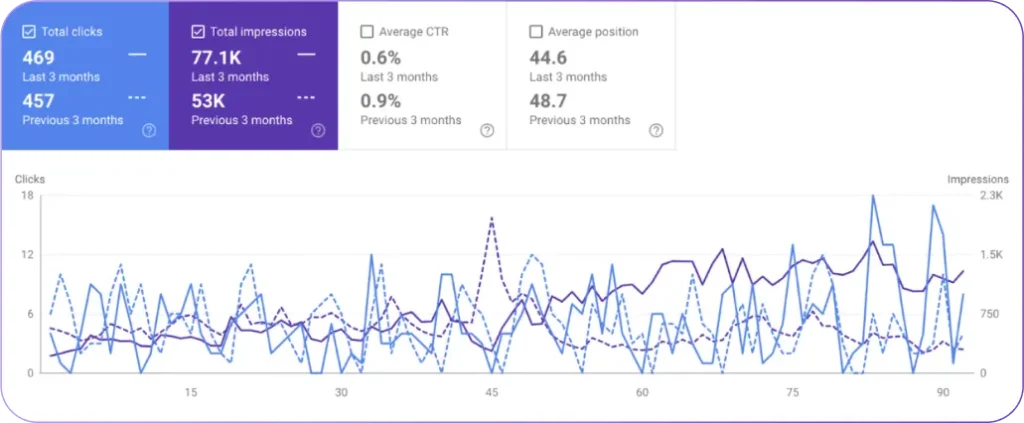
- Leading visibility indicators. Leading indicators measure early discoverability gains before revenue changes appear. Leading visibility indicators for SEOx include organic impressions, total clicks, keyword coverage, Share of Voice, and platform visibility frequency across a defined keyword or topic set. These metrics indicate whether content is being surfaced consistently across traditional search engines and platform-native search environments before downstream conversions occur.
- AI-specific success metrics. AI-specific success metrics measure whether generative systems select a brand as a trusted answer source. SEOx AI metrics include AI citations, brand mentions, and placement ranking inside AI-generated responses. Citations track direct source links from systems such as ChatGPT, Perplexity, and Gemini, while mentions track brand references with or without links. Placement ranking measures the order in which a brand appears when AI systems list multiple sources, which strongly influences perceived authority and user trust in zero-click environments.
- On-platform engagement and discovery metrics. On-platform engagement metrics measure how platform algorithms interpret content value for visibility and ranking. SEOx platform metrics include video views, watch time, saves, shares, comments, profile visits, and marketplace listing engagement. These metrics signal whether content earns algorithmic distribution inside social feeds, video recommendations, app stores, and e-commerce search results, where engagement directly determines reach.
- Cross-platform attribution and referral measurement. Attribution metrics connect search everywhere exposure to downstream actions across channels. SEOx attribution relies on analytics segmentation, including Google Analytics 4 custom channel groups that isolate referrals from AI and discovery sources such as chatgpt.com or perplexity.ai. Multi-touch attribution evaluates how multiple platform interactions contribute to conversion rather than assigning credit to a single click, reflecting the fragmented and non-linear search journey.
- Lagging business KPIs. Lagging indicators measure the outcomes that SEOx targets ultimately. SEOx business KPIs include qualified leads, conversions, app downloads, product sales, pipeline value, and revenue growth. These metrics confirm whether SEOx visibility, engagement, and citation gains translate into measurable commercial impact across the full multi-platform search landscape.
Does SEOx Replace Traditional SEO?
No, Search Everywhere Optimization (SEOx) does not replace traditional SEO; it extends and depends on it. Traditional SEO remains the foundational layer that enables discoverability across all other search environments, including AI search, social platforms, marketplaces, and voice assistants. Without strong technical SEO, crawlability, indexing, and authority signals, brands struggle to appear in AI Overviews, generative responses, or cross-platform search results. Industry consensus increasingly frames SEOx as an evolutionary framework that builds on traditional SEO rather than discarding it.
Can Small Businesses Implement SEOx Without Enterprise Resources?
Yes, small businesses can implement SEOx without enterprise-level resources by prioritizing a limited number of high-impact platforms and focusing on foundational visibility rather than full-scale omnichannel coverage. SEOx does not require optimization across every platform simultaneously. Small teams can start with traditional SEO, local search, and one or two discovery platforms where their audience is most active. Lightweight GEO and AEO tactics (structured content, clear entity definitions, consistent brand signals) are achievable without large budgets. While enterprise brands benefit from scale and tooling, SEOx principles are adaptable and can be executed incrementally with modest resources.
How Long Does SEOx Implementation Take to Show Results?
Initial results typically appear within 3 and 6 months, with meaningful impact occurring between 6 and 12 months. Early SEOx signals often emerge sooner in the form of increased impressions, indexing frequency, AI mentions, or social visibility, especially after technical fixes or content improvements. However, sustained results (consistent AI citations, stable cross-platform visibility, and revenue impact) require time for authority and entity recognition to compound. As with traditional SEO, timelines vary based on competition, execution speed, and existing brand authority, but SEOx follows a similar maturation curve with earlier visibility signals and later business outcomes.
What Budget Should Brands Allocate to SEOx?
There is no fixed universal budget, but SEOx typically requires a reallocation rather than a replacement of existing SEO spend. Most brands fund SEOx by expanding traditional SEO budgets to include AI visibility, platform-native content, and measurement tools. Small businesses invest a few hundred to a few thousand dollars per month, while mid-market and enterprise brands often allocate five-figure monthly budgets depending on scope.
A practical benchmark is to align SEOx investment with organic revenue goals, often using a target of allocating roughly 7 to 12% of total revenue toward organic visibility across platforms. The defining factor is not spend size but strategic focus and execution quality.
What Is Answer Engine Optimization (AEO) and How Does It Relate to SEOx?
Answer Engine Optimization (AEO) is a component of SEOx, not a separate replacement. AEO focuses on structuring content so AI systems, voice assistants, and search features can extract and present it as a direct answer rather than a list of links. SEOx includes AEO as one of its operational layers alongside traditional SEO, GEO, social search optimization, and platform-specific strategies. While AEO concentrates on answer formatting, clarity, and extractability, SEOx coordinates those efforts across all search and discovery environments to ensure consistent brand visibility.
How Does Generative Engine Optimization (GEO) Differ from Search Everywhere Optimization?
GEO is a subset of SEOx, not an alternative to it. Generative Engine Optimization focuses specifically on influencing how AI systems like ChatGPT, Gemini, and Perplexity retrieve, synthesize, and cite information within generated responses. SEOx is the broader strategic framework that includes GEO alongside traditional SEO, AEO, social search, marketplaces, app stores, voice search, and emerging platforms. In practice, GEO optimizes for AI citation and representation, while SEOx ensures coordinated visibility across the entire fragmented search ecosystem where those AI systems source, validate, and reinforce brand authority.