SEO writing is a specialized content creation approach that combines high-quality writing with search engine optimization techniques to improve visibility, rankings, and user engagement. SEO writing focuses on creating valuable content that satisfies user intent while incorporating strategic keywords and following search engine best practices. SEO content writing helps websites attract organic traffic, establish topical authority, and convert visitors into customers.
SEO writing serves as the foundation for digital marketing success by connecting businesses with their target audience through search engines. An SEO writer who masters SEO writing techniques creates content that ranks well in search results, drives consistent traffic, and builds brand credibility. The best practices for SEO writing involve understanding user behavior, keyword research, content structure, and technical optimization to deliver content that performs well in search engines and resonates with readers.
What is SEO Writing?
SEO writing is the practice of creating online content with the specific goal of ranking in search engine results pages (SERPs). SEO writing involves keyword research, optimizing content structure, and aligning with user intent to improve visibility and relevance. SEO writing includes crafting compelling copy, formatting headings semantically, and ensuring the content satisfies both search engines and human readers.
Writing SEO content requires integrating target keywords, analyzing top-ranking formats, and addressing search intent. Writers must understand how search algorithms interpret structure, semantics, and engagement metrics. SEO writing improves content discoverability, dwell time, and authority across topics.
An SEO content writer is a professional who plans, creates, and optimizes content for performance in search rankings. SEO content writers balance keyword strategy, technical formatting, and natural language flow to produce rankable, high-value content that drives qualified traffic.
What is the importance of SEO Content Writing?
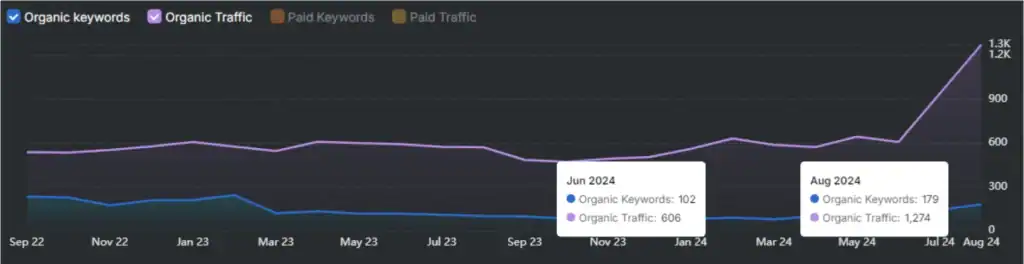
SEO content writing drives organic traffic growth, improves search engine rankings, and establishes websites as authoritative sources in their respective industries.
Writing content for SEO enables businesses to reach potential customers who are actively searching for relevant information, products, or services. SEO content writing creates sustainable traffic growth without relying solely on paid advertising, which provides long-term value for businesses and content creators.
SEO content writing builds topical authority by covering comprehensive topics within specific niches. Search engines reward websites that consistently publish high-quality, relevant SEO content by improving their rankings for related keywords. Content writer SEO knowledge helps businesses establish expertise, attract qualified leads, and increase conversion rates through targeted content that addresses specific user needs and search queries.
How to Write SEO-friendly Content?

Writing SEO-friendly content requires conducting thorough keyword research, understanding search intent, and structuring information in ways that search engines interpret and users consume. Good content writing balances technical optimization with reader engagement, which creates SEO content that performs well across all metrics.
The top 10 SEO writing tips to write SEO-friendly content are below.
1. Conduct Keyword Research
Keyword research for SEO writing involves identifying and analyzing search terms that users enter into search engines to guide content creation. Keyword research forms the foundation of SEO content strategy by revealing what audiences search for, how often they search, and how competitive those terms are. Keyword research guides content topics, structure, and optimization decisions for maximum visibility.
Effective keyword research encompasses primary keywords (main topics), secondary keywords (supporting terms), long-tail keywords (specific phrases), and semantic keywords (related concepts). Comprehensive keyword research ensures content targets multiple relevant queries while building topical authority.
The Search Atlas Keyword Magic Tool simplifies keyword research by providing search volume, competition data, and intent classification. Use keyword clustering to group related terms into content themes, and analyze keyword gaps with the Search Atlas Keyword Gap Analysis Tool to identify missing opportunities competitors are capturing.

2. Identify User Intent
User intent refers to the underlying goal behind a search query (whether the user wants to learn, find, compare, or buy something). Identifying user intent is one of the main SEO writing tips because it determines which content formats Google prefers to rank for each query.
User intent falls into four primary categories of informational (seeking knowledge), navigational (finding specific sites), transactional (ready to purchase), and commercial investigation (researching options).
Understanding search intent helps you create content that satisfies user needs, which improves rankings, reduces bounce rates, and increases engagement. Content that matches intent is more likely to be featured in top results, answer boxes, or other SERP features.
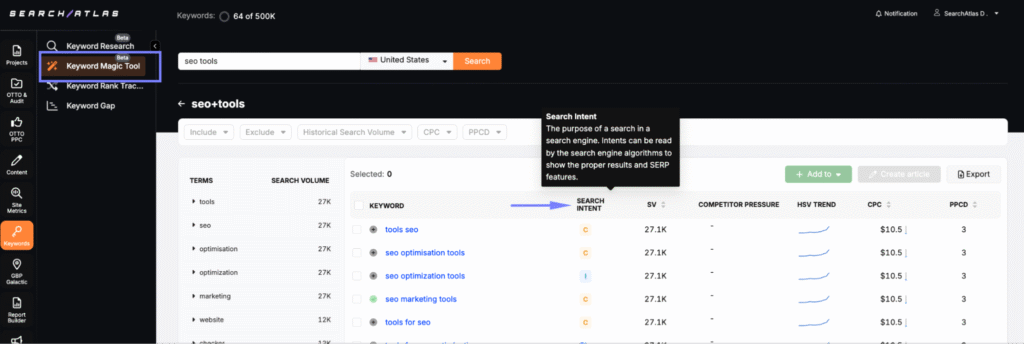
Use the Search Atlas Keyword Magic Tool to identify and validate intent for each target keyword. The Search Atlas Keyword Magic Tool labels search intent directly in the keyword table and provides SERP previews for deeper context.
Focus on informational queries for blog posts, commercial investigation for comparison content, and transactional keywords for landing pages. Check featured snippets and top-ranking formats to confirm what users expect to see before writing.
3. Analyze SERP Competitors
SERP competitor analysis involves examining top-ranking content for target keywords to understand ranking factors and content requirements. SERP analysis reveals what search engines consider valuable content and helps identify optimization opportunities. SERP analysis guides content structure, length, and topic coverage decisions for competitive advantage.
SERP analysis examines content format, depth, technical elements, and user experience factors across top-ranking pages. This information reveals patterns in successful content and identifies gaps where superior content can capture rankings.
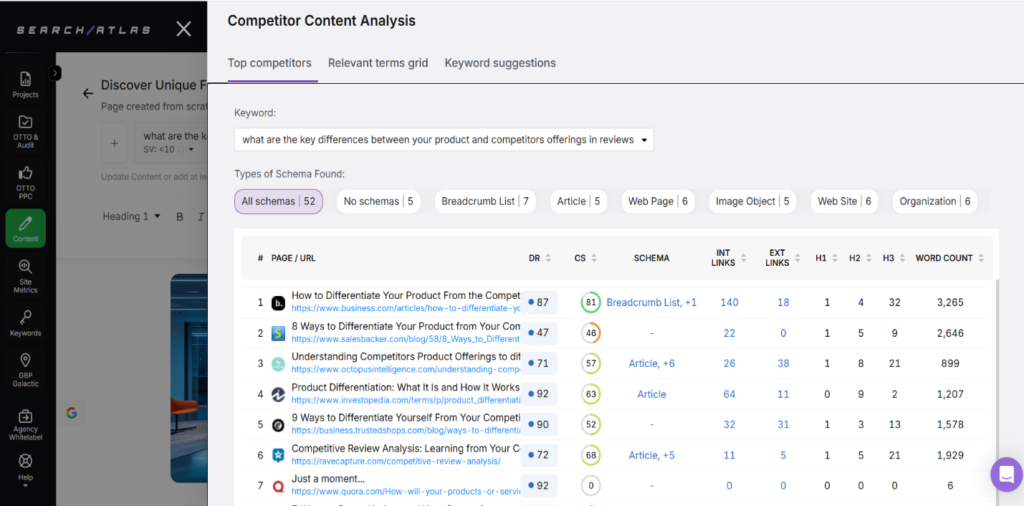
The Search Atlas Content Genius Tool automatically analyzes top-ranking content for target keywords, providing insights into competitor strategies and optimization opportunities. Examine the top 10 results for content formats, heading structures, and topic coverage patterns to identify content gaps and improvement opportunities.
4. Map Content to Funnel Stage
Mapping content to the funnel stage involves aligning content types with specific customer journey stages to guide users toward conversion effectively. Content mapping ensures that content serves strategic business purposes while meeting user needs at different decision points. Mapping content to the funnel stage improves user experience and conversion rates by providing relevant information at the right time.
Content mapping addresses three primary funnel stages. The 3 funnel stages are top-of-funnel (awareness content like educational articles), middle-of-funnel (consideration content like comparisons), and bottom-of-funnel (decision content like product pages). Each funnel stage requires different content approaches and optimization strategies.
Create content that naturally leads users to the next stage through relevant internal links and strategic calls-to-action.
5. Select Target Topics
Target topic selection involves choosing subjects that align with audience interests, search intent, and business goals. These topics shape your content calendar and influence how well your site builds topical authority. The goal is to identify themes that drive qualified traffic and fit naturally within your broader SEO strategy.
Effective topic selection requires evaluating search volume, ranking difficulty, and content gaps across your site. Topics that offer a balance of demand, strategic alignment, and low-to-medium competition tend to yield better ranking opportunities and engagement. Relevance to your product or service offering should guide every decision.
Use the Search Atlas Topical Maps Generator tool to streamline the topic selection process. Start by entering a seed keyword to generate related clusters organized by category, intent, and strategic value.
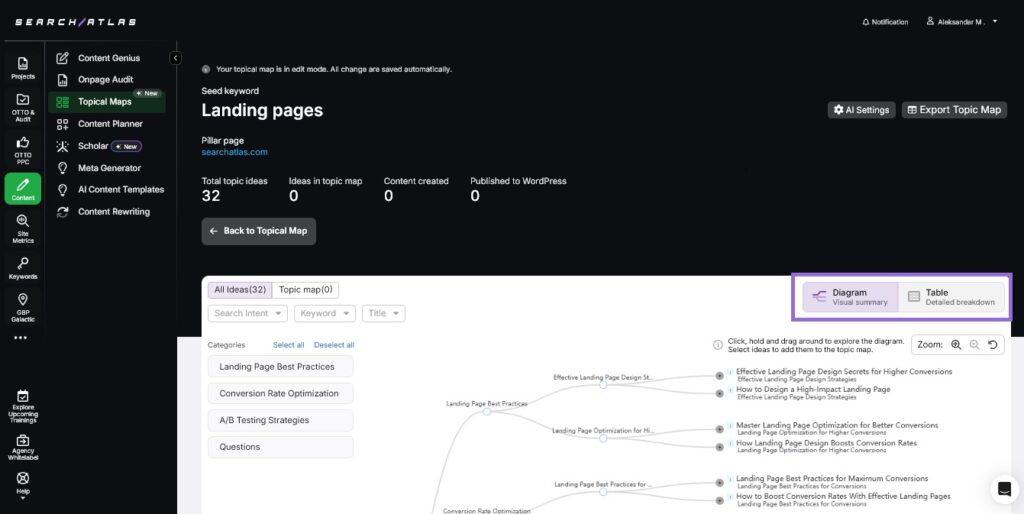
As shown in the visual diagram, you can explore these ideas by theme (e.g., “Landing Page Best Practices” or “Conversion Rate Optimization”), then click to save topics into your editable map.
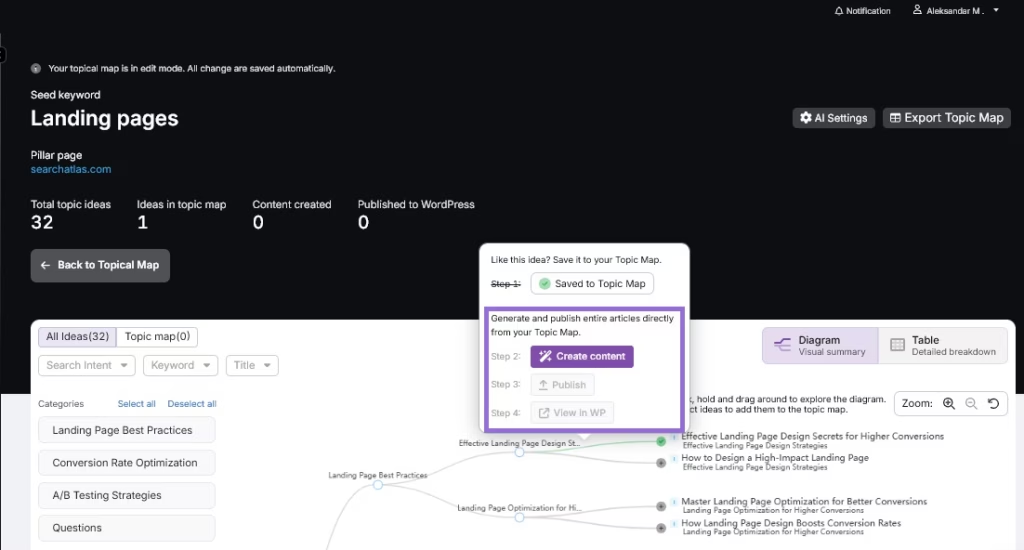
Once saved, proceed directly to content creation with the built-in “Create Content” feature. The Search Atlas Topical Maps Generator links every topic idea to its potential role in your SEO strategy, allowing you to structure pillar pages and supporting content around clearly defined opportunities. Use this structure to guide internal linking, boost semantic relevance, and scale content aligned with search demand.
6. Structure Content Outline
Content outline structure involves organizing information in logical, hierarchical formats that improve readability and search engine understanding. Content structure affects both user experience and search rankings by making information easier to navigate and comprehend. Well-structured content increases engagement, reduces bounce rates, and improves search performance.
Effective content structure incorporates heading hierarchy (H1, H2, H3 tags), paragraph organization, list implementation, and visual breaks. This type of content organization creates a logical information flow while maintaining user attention and improving comprehension across all content sections.
Best SEO for bloggers tips suggest creating detailed outlines before writing, using transition words for smooth flow, and implementing schema markup to help search engines understand content structure.
7. Optimize for Semantic SEO
Semantic SEO optimization involves creating content that search engines understand contextually through related terms, entities, and topic relationships. Semantic SEO goes beyond keyword matching to encompass meaning, intent, and conceptual connections. Semantic writing improves content relevance and ranking potential for related queries.
SEO semantic writing includes entity recognition, topic clustering, natural language processing, and contextual relationships. Semantic SEO strengthens topical authority and improves rankings for diverse, related search queries while enhancing user experience.
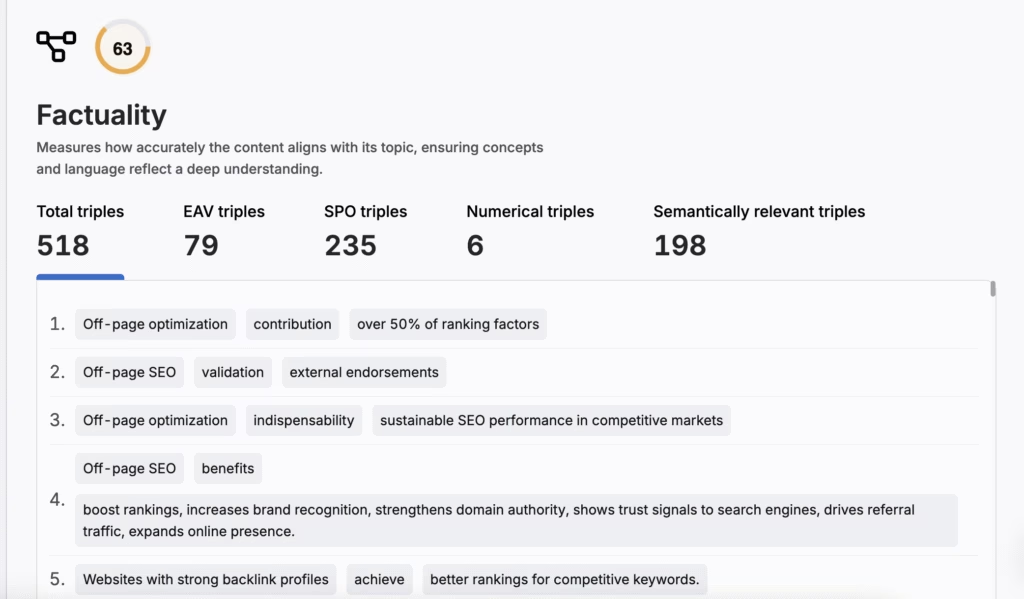
The Search Atlas Scholar Tool provides semantic analysis features that identify entity relationships, topic clusters, and optimization opportunities within content.
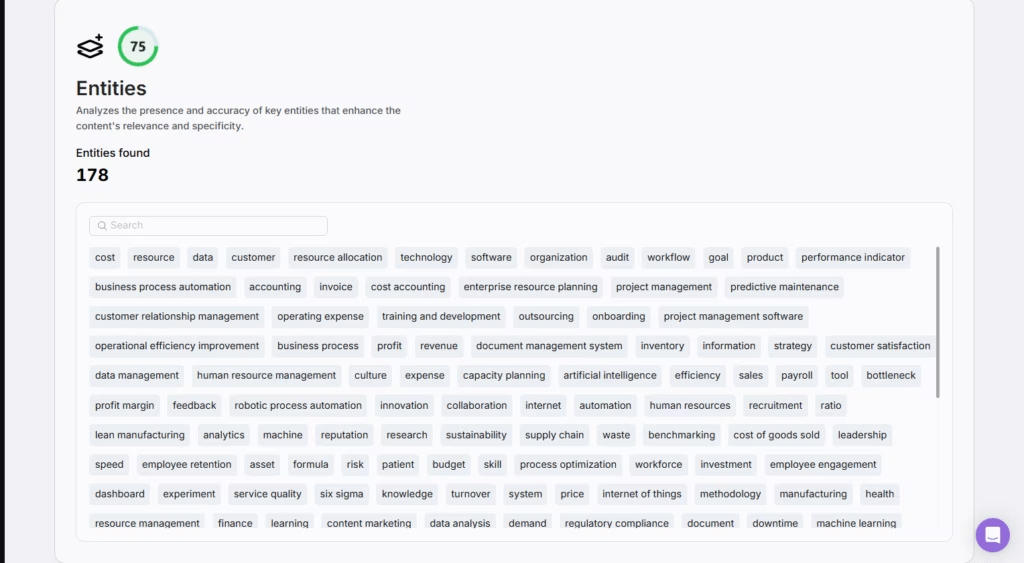
The Search Atlas Scholar Tool helps you include related terms naturally, create comprehensive topic coverage, and establish connections between concepts through internal linking and supporting information.
8. Write High-Quality, Engaging Content
High-quality and engaging content communicates information clearly, answers the query directly, and maintains structural depth across headings, paragraphs, and sections. The goal is to write SEO content that holds attention while delivering factual, well-organized answers that search engines recognize as authoritative.
Effective SEO content avoids vague phrasing, generic intros, and surface-level treatment of topics. Instead, it includes unique insights, relevant examples, and precise formatting, such as proper heading hierarchy, balanced paragraph length, and integrated data points. These qualities help your content stand out on crowded SERPs and trigger engagement signals.
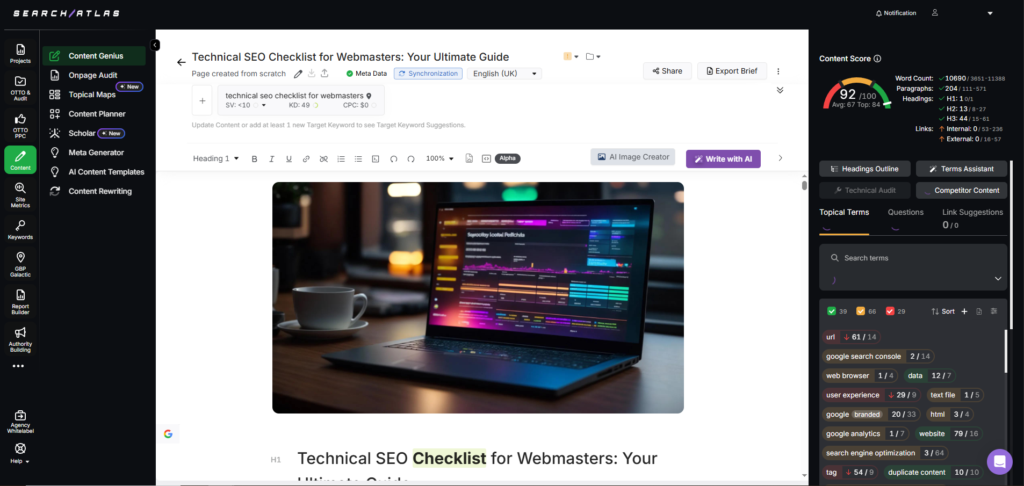
Use the Search Atlas Content Genius Tool to streamline the content production process. The Search Atlas Content Genius Tool scores your draft against top-ranking competitors using on-page benchmarks like NLP coverage, heading structure, word count, and readability. You can write manually or generate AI drafts based on your saved folder settings.
Fine-tune output using features like “Terms to Include,” “Questions to Answer,” and AI model selection. Once optimized, you can push articles directly to WordPress from the editor.
9. Implement Technical SEO Elements
Technical SEO elements make your content discoverable, understandable, and indexable by search engines. While SEO content writing quality drives relevance, technical structure ensures that pages load correctly, metadata signals intent, and internal links distribute ranking power. Technical and on-page SEO elements include title tags, meta descriptions, heading structure, schema markup, internal links, and alt text for images.
Once your content is written and optimized semantically, it still needs technical validation to perform in search. This includes injecting primary keywords into titles, optimizing heading lengths, deploying internal links between related pages, and adding structured data to help search engines interpret page context.
Use the Search Atlas OTTO SEO Tool to automate these on-page and technical SEO elements across your entire content set. OTTO SEO acts as your AI SEO agent, scanning each page, identifying missing or suboptimal components, and deploying HTML-based fixes in real time.
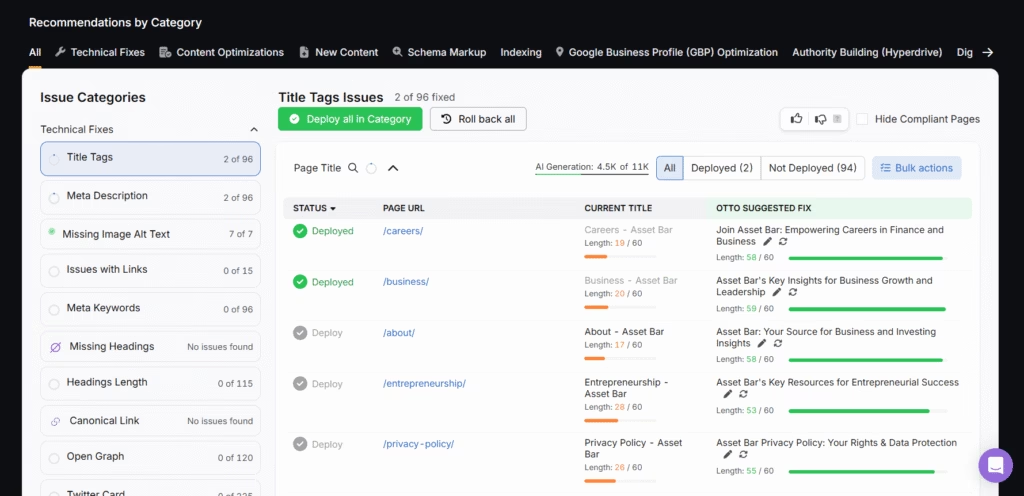
OTTO SEO adds internal links between thematically related content, rewrites meta descriptions for engagement, and embeds NLP terms as invisible elements for semantic indexing.
OTTO SEO applies schema markup, corrects broken links, and ensures title tags and headings match intent. This hands-free automation turns good content into fully optimized assets ready to rank.
10. Monitor and Optimize Performance
Performance monitoring involves tracking content metrics to identify optimization opportunities and measure success over time. Continuous monitoring ensures your SEO content writing maintains effectiveness and adapts to changing search algorithms. It enables data-driven improvements and sustained growth in search performance.
Performance monitoring tracks search rankings, organic traffic, engagement metrics, and conversion metrics. These indicators reveal content competitiveness, user satisfaction, and business value while identifying areas for improvement and optimization.
The Search Atlas SEO platform provides comprehensive performance monitoring tools that track rankings, traffic, and engagement metrics across all content. Establish baseline metrics, monitor performance regularly, and make data-driven improvements while updating content to maintain relevance and freshness.
Are There Any SEO Writing Guidelines to Follow?
Yes, SEO writing guidelines provide specific rules and best practices that help writers create content that performs well in search engines while delivering value to users. SEO writing guidelines cover technical aspects, content quality standards, and optimization techniques that influence search engine rankings. Following established SEO writing guidelines ensures consistent content quality and improved search performance.
SEO based content writing includes using descriptive title tags, optimizing meta descriptions, incorporating keywords naturally, and maintaining proper content structure. Technical SEO writing guidelines cover page loading speed, mobile optimization, and proper HTML markup. Content quality guidelines emphasize originality, accuracy, and user value as primary ranking factors.
Search engines regularly update their algorithms and ranking factors, making it essential to stay current with SEO writing best practices. Guidelines help writers adapt to these changes while maintaining content quality and search performance. Following proven SEO for content writers guidelines reduces the risk of penalties and improves long-term content success.
What is an SEO Content audit?
An SEO content audit is the process of evaluating website content to determine its performance, topical alignment, and optimization quality for search engines. An SEO content audit uncovers issues in keyword usage, metadata, structure, internal linking, and semantic coverage. It helps prioritize updates, identify low-performing pages, and support visibility improvements.
An SEO content audit improves quality content writing by refining topical depth, eliminating outdated assets, and aligning with semantic SEO principles. Pages that lack relevance, completeness, or clarity are flagged for rewriting, merging, or removal. This improves content performance, supports crawl efficiency, and increases topical authority.
SEO writing assistants and audit tools accelerate the process of quality content writing by detecting semantic gaps and user intent mismatches. An SEO content audit helps editors improve existing pages instead of replacing them entirely, which supports efficient content operations and strategic ranking gains.
What SEO Tools to use for Content Writing?
SEO content writing tools support research, optimization, and publishing by improving technical accuracy, semantic clarity, and keyword alignment. Writers use these tools to create content that satisfies user intent, follows SEO best practices, and performs in search results.
Free SEO tools from Google offer baseline support for content ideation and keyword validation. Google Keyword Planner provides monthly search volumes and competition scores. Google Trends shows real-time interest by region and time frame. Google Search Console tracks impressions, click-through rates, and top-performing queries. These tools offer value for early-stage planning, but they require manual interpretation and do not support on-page optimization at scale.
Paid tools automate SEO workflows and provide deeper analysis across keyword clusters, competitor performance, and semantic coverage. The Search Atlas SEO Software Platform combines tools that handle the full SEO content lifecycle. The Keyword Magic Tool clusters keywords by intent and search opportunity. Content Genius reverse-engineers SERPs and scores content by on-page benchmarks. Scholar analyzes factuality, entity usage, and semantic clarity. OTTO SEO applies schema markup, internal links, and on-page fixes. Report Builder generates white-labeled reports with keyword rankings and content health scores. Search Atlas tools work together to support long-form SEO website content writing with real-time execution and scalable optimization.
Writers and strategists use integrated suites like Search Atlas when managing high-volume workflows, technical constraints, and intent-driven outlines. For additional software comparisons across keyword research, content optimization, and semantic analysis, review the best SEO content optimization tools used by enterprise teams and SEO professionals.
Is AI writing good for SEO?
Yes, AI writing is good for SEO when writers use it to generate structured drafts that align with search intent and keyword strategy. AI writing speeds up production and supports outline formatting, but unedited content often fails to meet quality standards.
SEO AI writing refers to content generation powered by artificial intelligence that targets keywords and follows SERP patterns. An SEO writing assistant improves efficiency by suggesting headings, metadata, and related entities.
AI writing supports SEO only when editors validate structure, relevance, and clarity before publishing. Use the semantic scoring in the best AI writing tools, like the Search Atlas Content Genius tool, to refine AI-generated drafts and increase ranking potential.
How to Start an SEO Content Writing Agency?
Starting an SEO content writing agency means building a scalable operation that delivers keyword-targeted, search-optimized content. A professional SEO writing agency requires defined services, editorial systems, and automation infrastructure.
The five steps to start an SEO content writing agency are below.
1. Define your core services. Offer keyword research, blog content, landing pages, on-page SEO, and white label support.
2. Build SEO-optimized writing samples. Use ranking blog posts and high-intent landing pages to showcase quality and topical authority.
3. Set pricing models by word count, topic complexity, and deliverables. Align prices with funnel stage, keyword volume, and required optimization layers.
4. Automate content workflows using a white label SEO platform. Use white label SEO to streamline SEO tasks, including keyword integration, schema, and link updates.
5. Create editorial processes that support enterprise clients. Build briefs, revision stages, and SOPs for delivering consistent content at scale.
Use enterprise SEO systems to manage volume, maintain quality, and scale your SEO writing agency with operational clarity.
What is the difference between SEO Writing and Web Content Writing?
SEO writing refers to the practice of creating content designed to rank in search engines, while web content writing focuses on informing or converting users without necessarily targeting keywords. SEO writing content includes blog posts, guides, and pillar pages that match search intent and include structured keyword integration. Web content writing includes About pages, service descriptions, or brand stories that support user experience but are not necessarily optimized for rankings.
The goal of SEO writing is visibility, traffic, and ranking performance. The goal of web content writing is brand clarity, trust, and user engagement. SEO in content writing involves keyword placement, metadata, and topical coverage. Web content writing supports navigation, conversion, and brand messaging without SERP formatting or optimization constraints.
What is the difference between SEO Writing and SEO Copywriting?
SEO writing informs, educates, and ranks. SEO copywriting persuades, converts, and sells. SEO writing content is long-form and designed to match search queries across the funnel, while writing copy for SEO targets transactional intent with CTAs, headlines, and landing pages.
Write SEO content to satisfy informational queries and build authority over topics. Use SEO copywriting to increase conversions through product pages, ad copy, and sales-driven language. For high-converting content that supports organic rankings, combine both strategies under a structured SEO copywriting framework.
What to know about SEO Writing Besides Google EEAT?
SEO writing supports Google SEO content guidelines by reinforcing Experience, Expertise, Authoritativeness, and Trustworthiness (EEAT). SEO optimized content ranks higher when it includes Google EEAT supporting elements like clear sourcing, factual accuracy, human input, and structured formatting. Search engines reward content that demonstrates topical depth, aligns with search intent, and reflects first-hand knowledge. Use SEO writing to structure paragraphs around entities and reinforce Google EEAT through author bios, citations, and clarity.
What is the Relation between SEO Writing and SEO Strategy?
SEO writing is the execution layer of an SEO strategy that translates keyword plans and topical maps into rankable content. A content SEO strategy defines what to write and why, while SEO writing determines how it is structured and optimized. An effective content writing strategy includes aligning each piece with funnel stages, clustering topics, and integrating internal links. Use SEO writing to deliver on the intent, coverage, and structure defined in the SEO strategy.


 Allan F.