An SEO strategy is a plan for how a website will earn more organic traffic from search engines such as Google. It decides which keywords and topics to target, which pages to create or improve, which technical problems to fix, and how to build authority through backlinks, in an order tied to business goals.
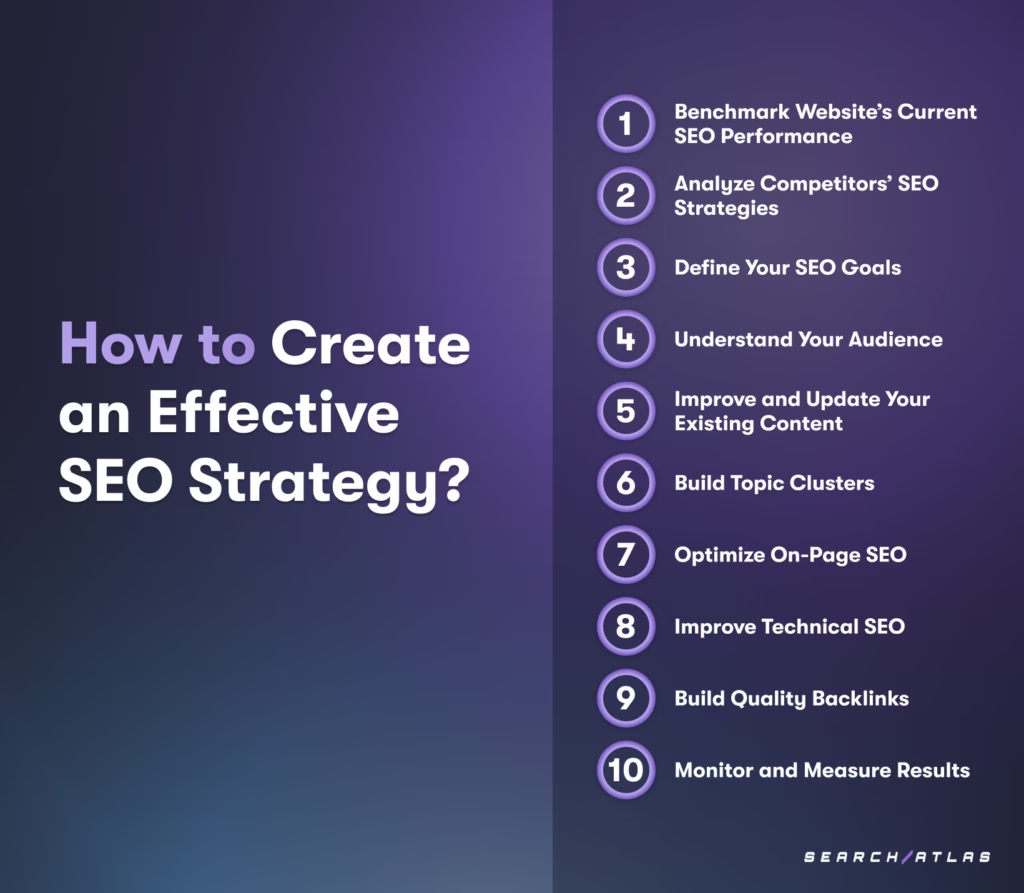
This guide defines an SEO strategy (also called an SEO plan), covers the main types, and walks through 10 steps to build one: benchmark your site, study competitors, set goals, research your audience, update existing content, build topic clusters, fix on-page and technical SEO, earn backlinks, and measure the results.
What is an SEO Strategy?
An SEO strategy is a plan to improve a website’s visibility in search engine results pages (SERPs) and turn that visibility into qualified traffic and conversions. It sets the objectives, the target audience and keywords, the order of work, and the resources each part needs.
The difference between a strategy and a list of SEO tasks is prioritization. A strategy says which work comes first and why, so content, technical fixes, and link building support the same goals instead of competing for time.
For example, an SEO strategy for an online clothing store might target seasonal fashion keywords with blog posts, speed up product pages, earn links from fashion blogs, and optimize category pages for high-intent search terms.
What is the Importance of an SEO Strategy?
An SEO strategy matters because organic growth depends on doing the right work in the right order. Without one, teams publish content nobody searches for, fix low-impact technical issues first, or build links to pages that cannot convert.
A strategy also makes SEO measurable. Each goal has a baseline and a metric, so you can see which work moved rankings, traffic, or conversions and adjust when search algorithms, user behavior, or competitors change.
It connects the parts of SEO marketing, such as content, link building, and technical optimization, so each one supports the others.
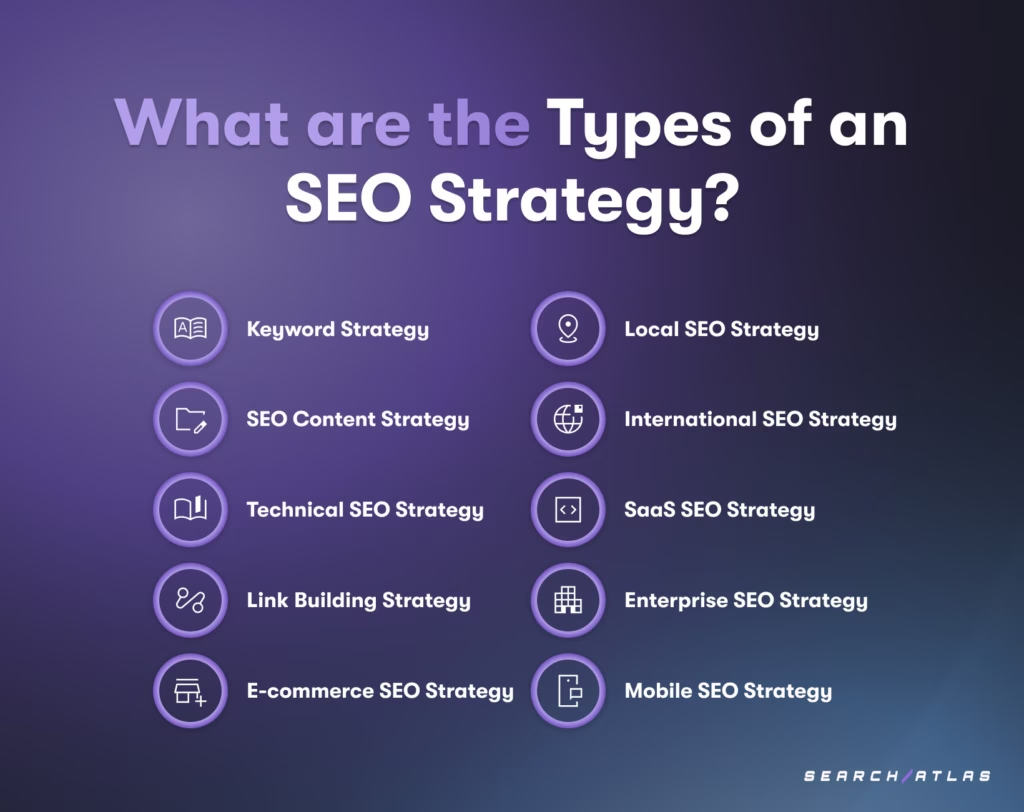
What Are the Types of an SEO Strategy?
The type of SEO strategy depends on the business, its audience, and its site. Most sites combine several of the types below.
- Keyword strategy. Chooses the search terms to target based on relevance, intent, volume, and difficulty. It sets the targets for content and on-page work.
- SEO content strategy. Plans which pages to create and update so each one matches a keyword’s intent and the site covers its topics in depth.
- Technical SEO strategy. Fixes how search engines crawl, render, and index the site, including speed, mobile rendering, and site structure.
- Link building strategy. Earns backlinks from relevant, reputable sites to raise the authority of key pages.
- E-commerce SEO strategy. Focuses on product and category pages, faceted navigation, duplicate content, and product structured data.
- Local SEO strategy. Targets location-specific searches through Google Business Profile, local pages, reviews, and citations.
- International SEO strategy. Serves several countries or languages with hreflang tags, country-specific URLs, and localized content.
- SaaS SEO strategy. Targets problem- and solution-focused B2B keywords and connects content to product sign-ups.
- Enterprise SEO strategy. Runs SEO across sites with thousands of pages, where templates, governance, and cross-team workflows matter most.
- Mobile SEO strategy. Makes sure pages load quickly and work well on phones, which is what Google indexes first.
How to Create an Effective SEO Strategy?
Step by step
Build an SEO strategy in ten steps
Step through the sequence here. Each step is explained in the sections below.
You create an effective SEO strategy in 10 steps, starting with where your site stands today and ending with a measurement routine that tells you what to change next.
1. Benchmark Your Website’s Current SEO Performance
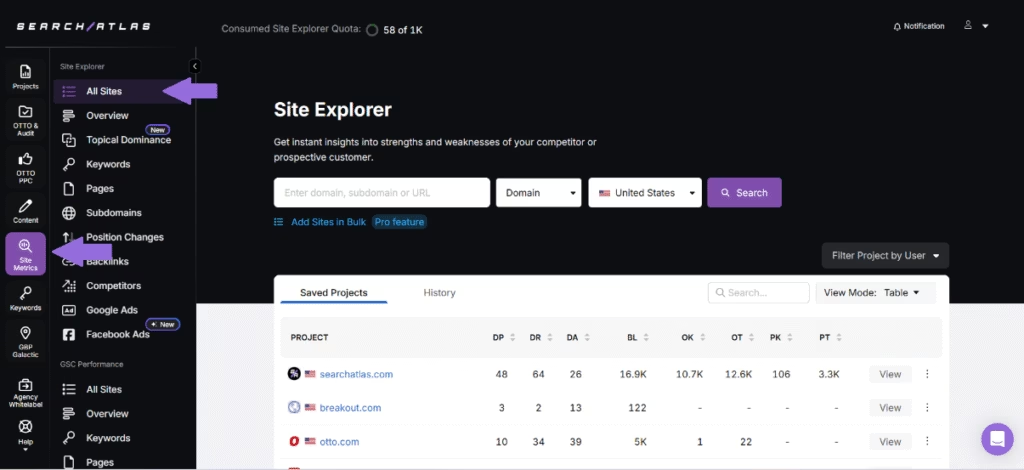
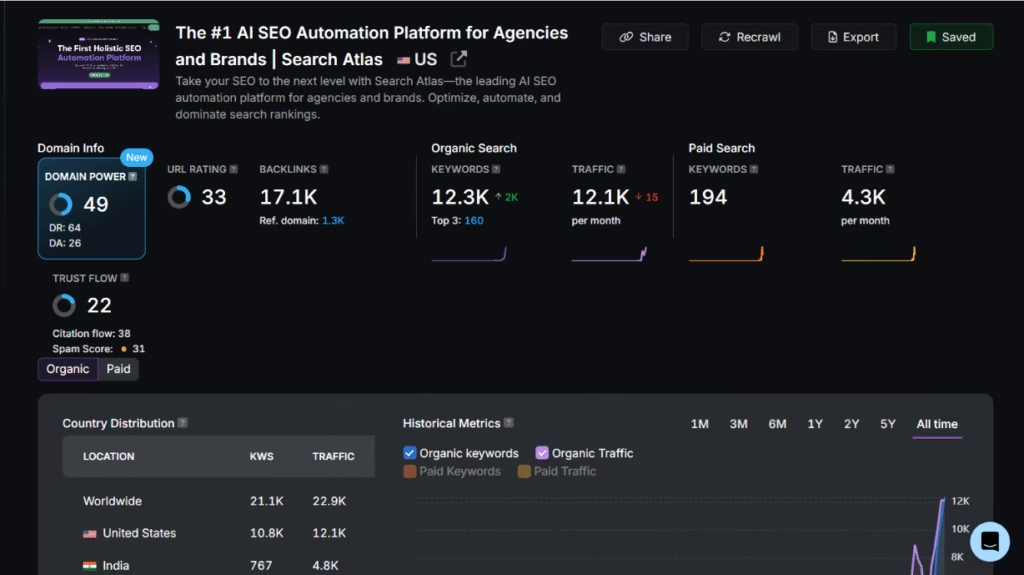
Benchmarking records how your site performs in search today, so every later change has a baseline to measure against. Capture organic traffic, ranking keywords, top pages, backlinks, and authority, and note the pages that already earn most of your traffic.
The benchmark also shows where to start. Pages that rank on page two, technical errors on high-traffic templates, and topics where you rank for nothing are the usual first targets.
Search Atlas Site Explorer builds this baseline from a domain and a country. It reports Domain Power alongside Domain Authority and Domain Rating, organic and paid traffic, ranking keywords, backlinks, and spam score.
2. Analyze Competitors’ SEO Strategies
Competitor analysis shows which keywords, content, and links are already working in your market. Look at the sites that outrank you for your target keywords, not only your business competitors, since a publisher or directory may hold the positions you want.
Four comparisons cover most of what you need: who your organic competitors are, which keywords they rank for that you don’t, which sites link to them but not to you, and which topics they cover more thoroughly.
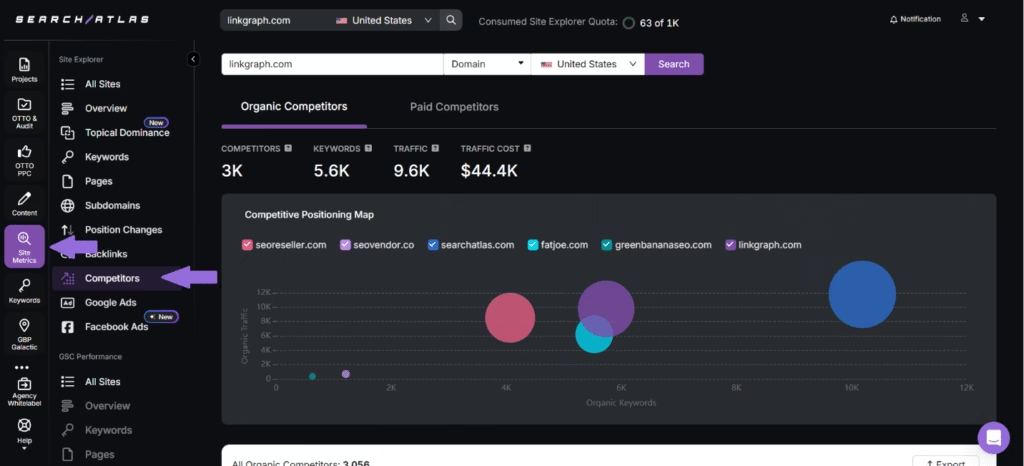
In Search Atlas, the Competitors tab in Site Explorer lists your top organic competitors by shared keywords and organic traffic.
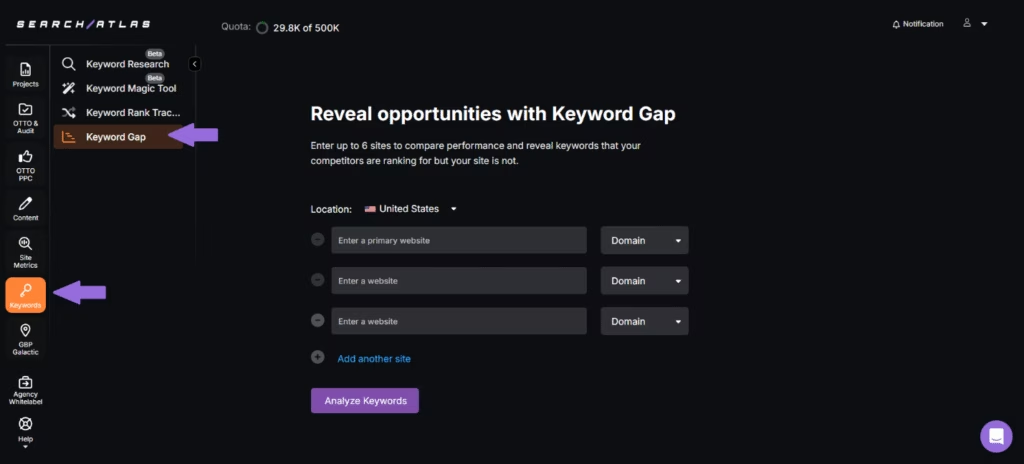
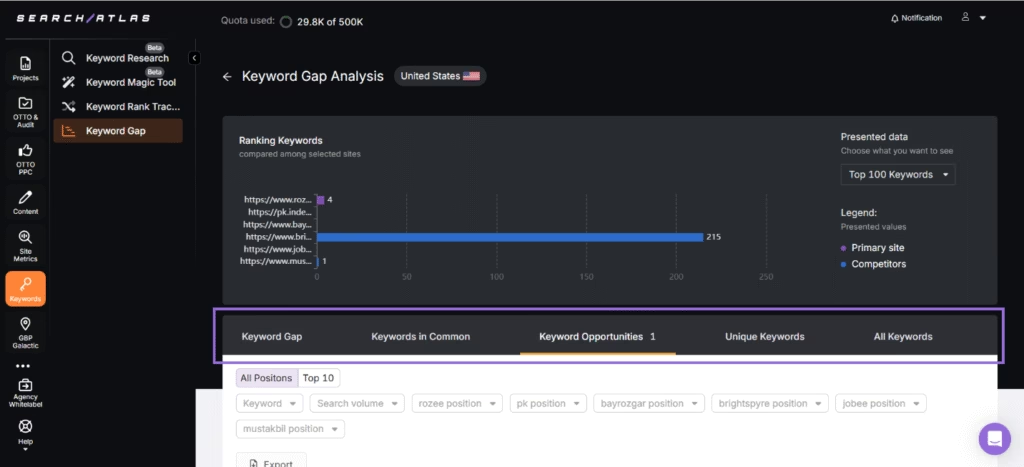
Keyword Gap compares up to 6 domains, your site and up to five competitors, on search volume, position, intent, difficulty, and traffic potential, and lists the keywords competitors rank for that you don’t.
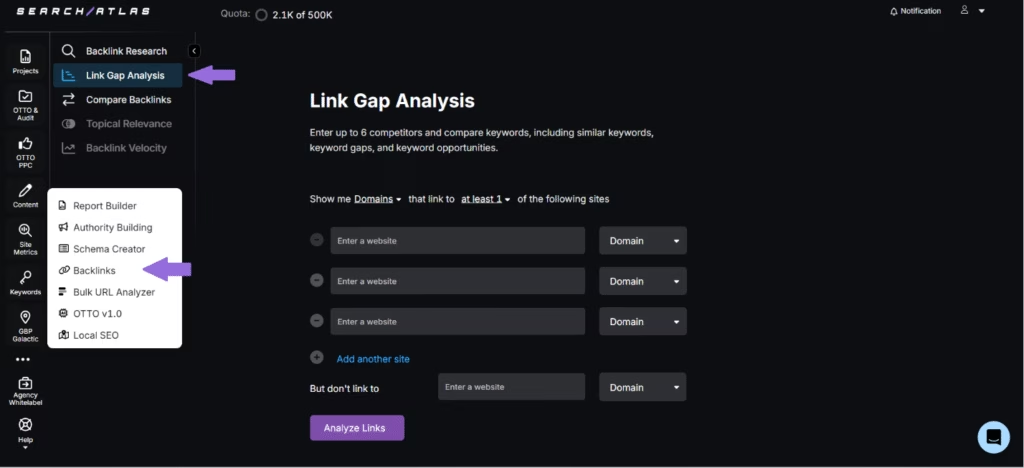
Backlink Gap Analysis compares up to 6 domains and lists the sites that link to your competitors but not to you, with their authority and spam scores.
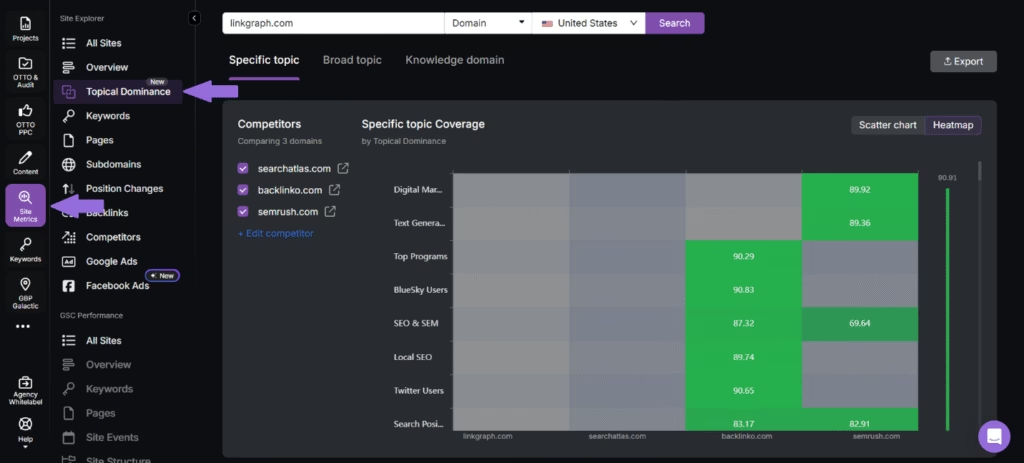
The Topical Dominance tab scores how thoroughly your site and a competitor’s cover each topic, so you can see where their coverage is deeper than yours.
3. Define Your SEO Goals
SEO goals are the measurable results the strategy should produce, such as more organic traffic, more keywords in the top 10, more leads, or more organic revenue. Tie each goal to a business objective: if the business wants more online sales, the SEO goal might be organic revenue from product pages rather than total traffic.
Make each goal specific, measurable, achievable, relevant, and time-bound (SMART), for example “grow organic sign-ups from 40 to 60 a month by the end of Q2.” Pair a long-term goal with short-term milestones, write the goals down for everyone involved, and review them each quarter against the data.
4. Understand Your Audience
Understanding your audience means knowing who you want to reach, what they search for, and what they need from the page they land on. Search engines rank pages that satisfy the query, so content built around real questions performs better than content built around guesses.
Five sources help you build that picture:
- Analytics: Google Analytics shows which pages your current visitors use and where they leave.
- Search queries: Google Search Console shows the exact queries that bring people to your site.
- Search intent: the pages ranking for a keyword show whether searchers want a guide, a comparison, a product, or a local result.
- Customer conversations: sales calls, support tickets, and surveys surface the language customers use.
- Communities: forums, Reddit, and social media show the questions people ask in their own words.
Turn what you learn into a few audience personas, each with its main questions and the keywords that express them.
5. Improve and Update Your Existing Content
Updating existing content is often the fastest SEO win, because the pages already have URLs, links, and some rankings. A refresh can recover lost traffic or move a page from page two to page one without starting from zero.
Start with pages that rank in positions 8 to 20, pages whose traffic has dropped, and pages with high impressions but few clicks. For each one:
- Compare the page with the pages outranking it for its main keyword.
- Update facts, statistics, prices, and references that are out of date.
- Add the subtopics and questions the ranking pages cover and yours does not.
- Improve readability with shorter paragraphs, clear headings, and visuals.
- Fix broken links and outdated images.
- Rewrite the title tag and meta description to match what searchers want.
- Update the date only when the content has meaningfully changed.
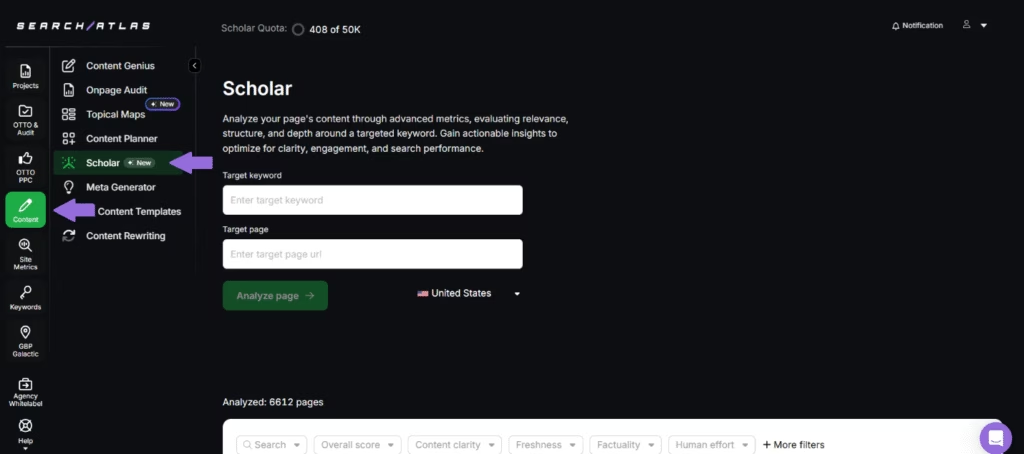
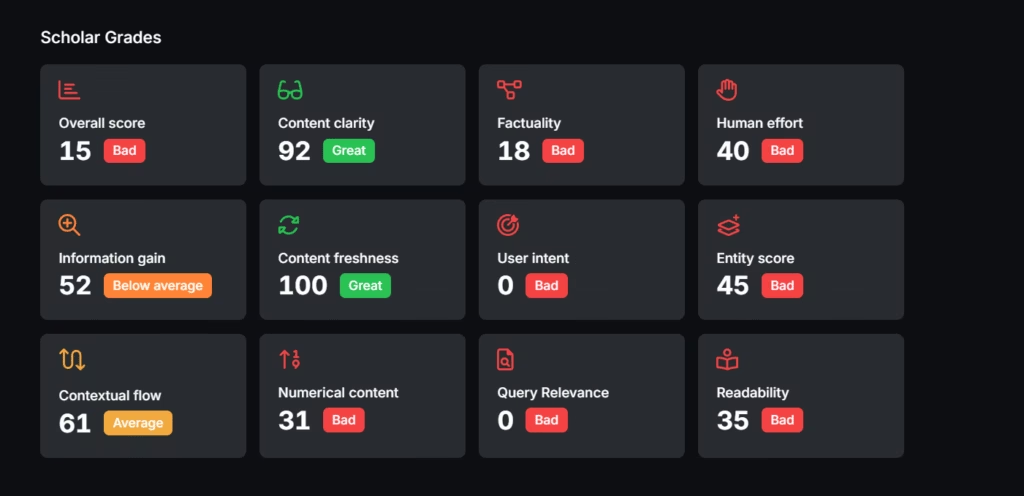
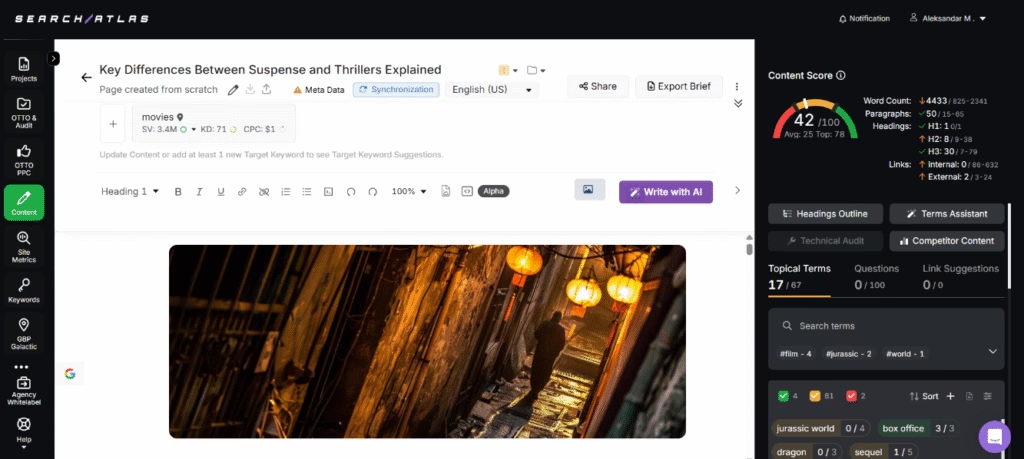
Search Atlas SCHOLAR grades a page or draft against a target keyword across 12 dimensions, including factuality, information gain, and readability, using Page Quality and information retrieval signals. Enter the keyword, add the URL or draft, and it returns a score with the areas to improve.
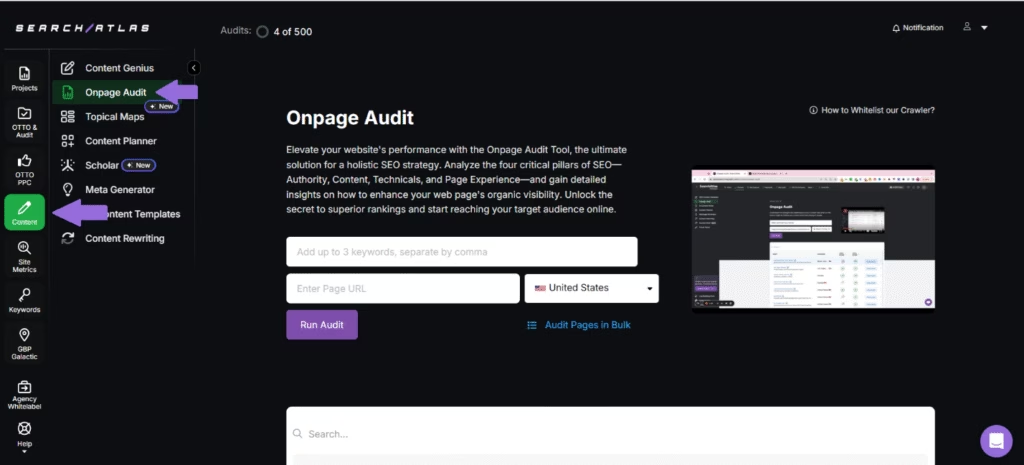
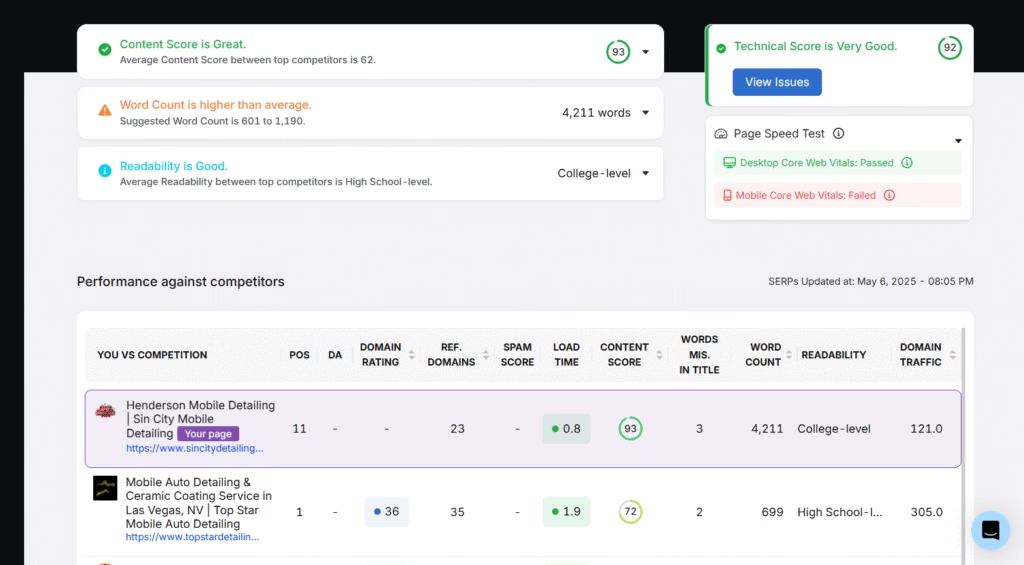
The Search Atlas On-Page Audit compares a page with the pages ranking for up to 3 target keywords on content score, word count, readability, and technical factors, so you can see where it falls short.
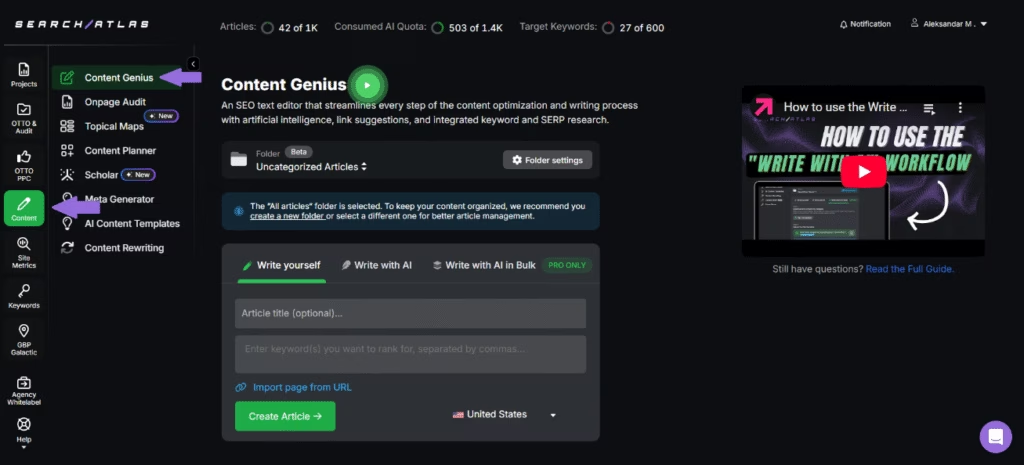
Search Atlas Content Genius researches the SERP for a keyword, builds a brief with suggested headings, questions, and terms, and can rework an existing article or write a new one, graded with SCHOLAR.
6. Build Topic Clusters
A topic cluster groups related content around one core subject, which helps search engines see the depth of your coverage and helps readers move between related pages. Each cluster has three parts:
- A pillar page that covers the main topic broadly.
- Cluster pages that each cover one subtopic in depth.
- Internal links from every cluster page to the pillar, from the pillar to each cluster page, and between closely related cluster pages.
To build a cluster, pick a core topic tied to a product or service, research the long-tail keywords around it, and group them by intent. Each group becomes a cluster page. Write the pillar, link everything together, and add new cluster pages as you find new questions.
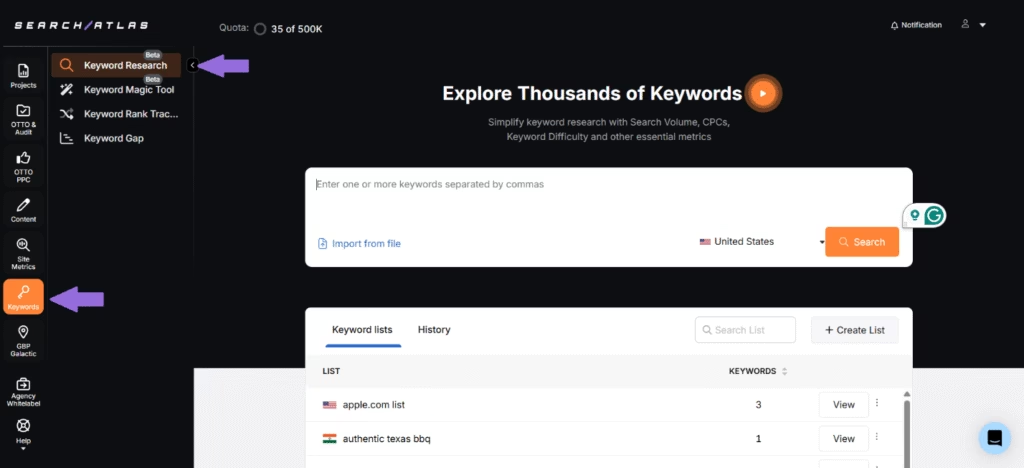
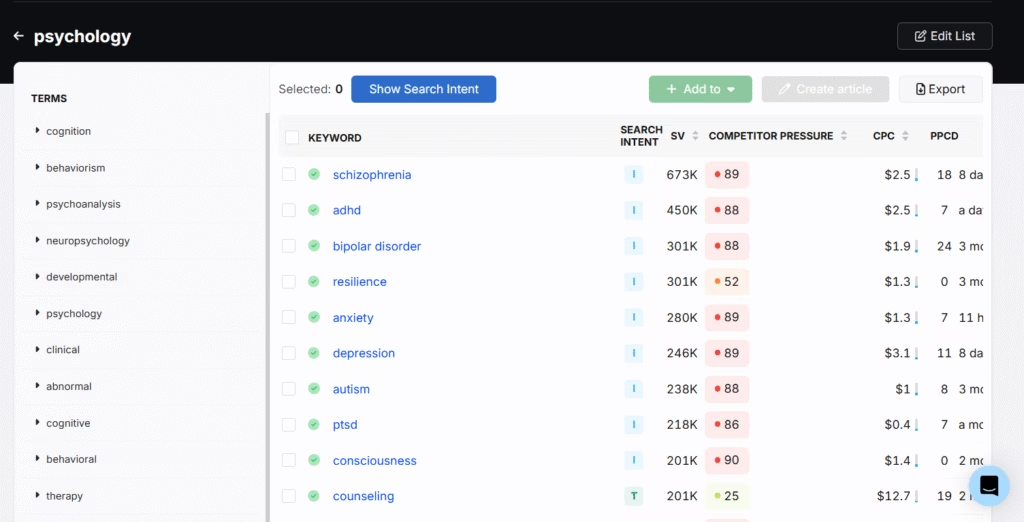
Search Atlas Keyword Research shows search volume, CPC, keyword difficulty, related keywords, and questions for a seed keyword, drawn from a database of more than 5.2 billion keywords. That gives you the raw list for pillar and cluster pages.
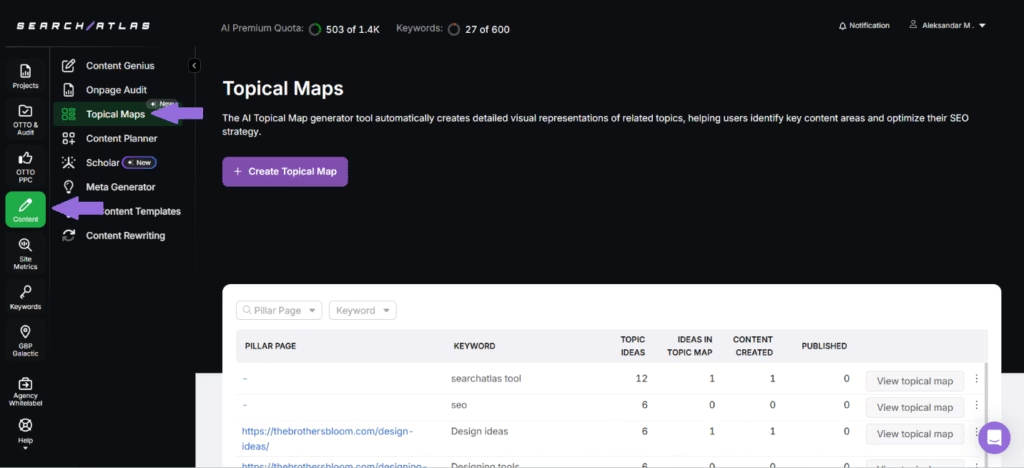
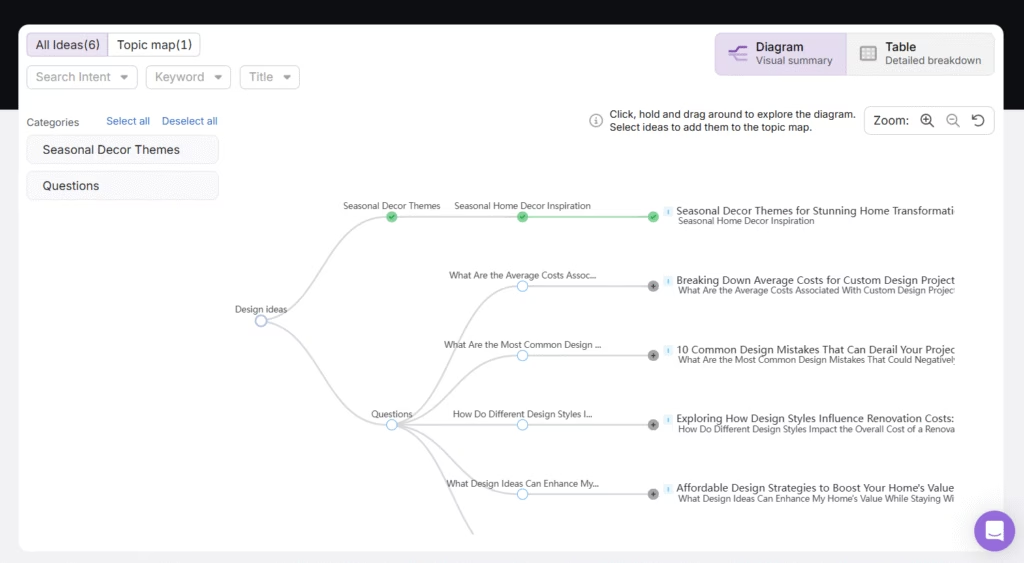
Search Atlas Topical Maps turn a seed keyword into clusters with a pillar and supporting pages, set by country and language, shown as an interactive diagram or a table.
7. Optimize On-Page SEO
On-page SEO is the work of optimizing each page’s content and HTML so search engines understand what it covers and searchers click it. The checklist below covers the elements that matter most.
- Put the target keyword in the title tag, H1, URL, opening paragraph, and at least one subheading.
- Write a title tag and meta description that promise what the searcher wants.
- Use a logical H1, H2, H3 structure that mirrors the questions the page answers.
- Match the search intent and cover the subtopics the ranking pages cover.
- Give images descriptive file names and alt text.
- Link to related pages with descriptive anchor text.
- Keep pages fast and usable on mobile.
- Add schema markup where it matches the content, such as FAQ, Product, or Article.
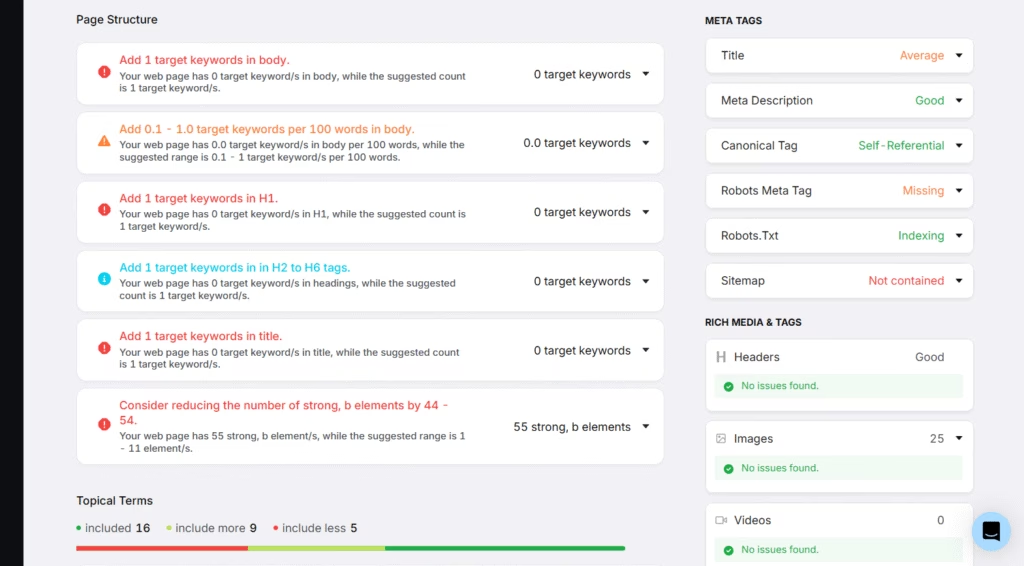
The Search Atlas On-Page Audit checks these elements for a URL, including keyword placement, headings, metadata, internal links, and Core Web Vitals, and shows how the page compares with the top-ranking pages.
8. Improve Technical SEO
Technical SEO makes sure search engines can crawl, render, and index your pages. Technical problems cap what content and links can achieve, because a page Google cannot crawl or index cannot rank.
Cover these basics:
- Serve every page over HTTPS.
- Use responsive design so pages work on mobile, which Google indexes first.
- Improve load speed by compressing images, caching, and reducing unused JavaScript and CSS.
- Submit an XML sitemap and keep robots.txt from blocking important pages.
- Use canonical tags to resolve duplicate content.
- Fix broken links, redirect chains, and orphaned pages.
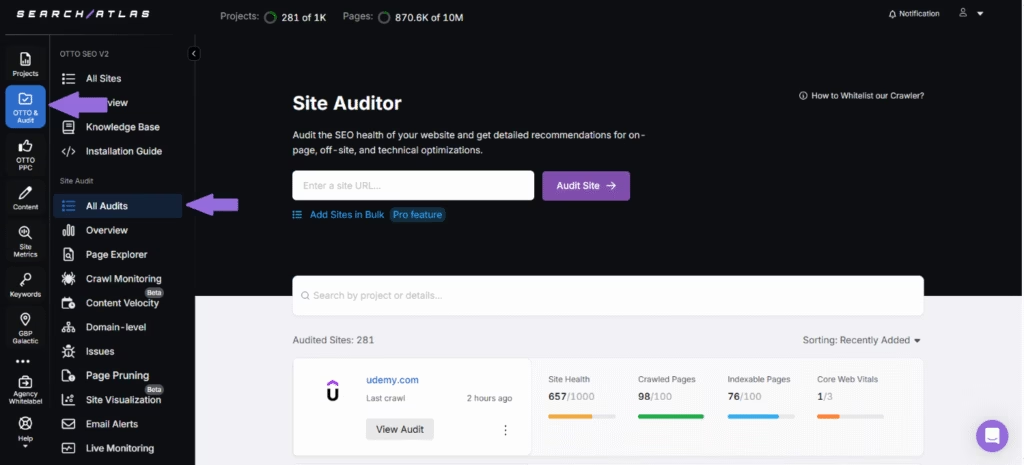
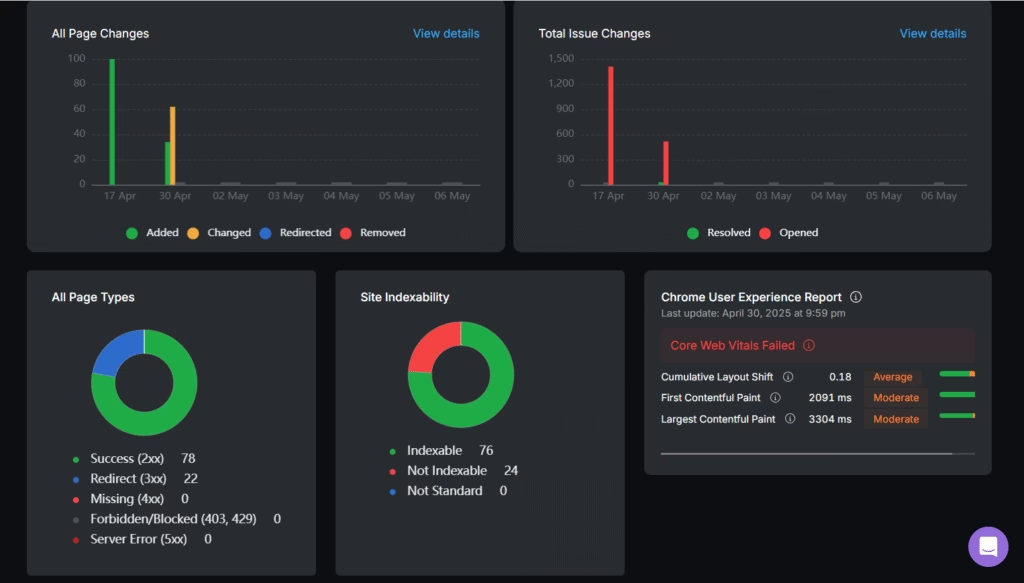
The Search Atlas Site Auditor crawls your site on a schedule you set, scores site health from 0 to 1,000, and lists issues by category with how-to-fix guidance. It can combine crawl data with Google Search Console and Google Analytics 4 data, so you can fix issues on your highest-traffic pages first.
9. Build Quality Backlinks
Backlinks are links from other sites to yours, and Google treats them as a signal of trust and importance. Quality matters more than quantity: one link from a relevant, well-linked site can outweigh dozens from weak ones. See our guide to backlinks for how Google evaluates them.
The main ways to earn quality backlinks:
- Publish content others want to cite, such as original research, in-depth guides, and free calculators.
- Write guest posts for relevant sites in your industry.
- Find broken links on other sites and offer your content as the replacement.
- List your business in reputable industry directories.
- Run digital PR campaigns and pitch journalists with data or expert commentary.
- Partner with complementary businesses on content.
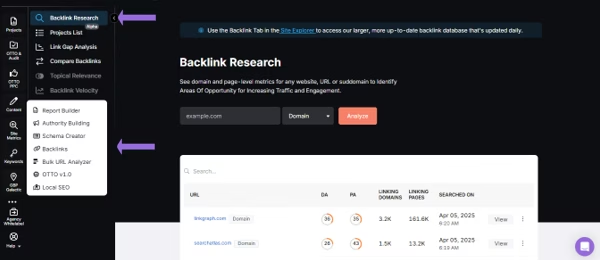
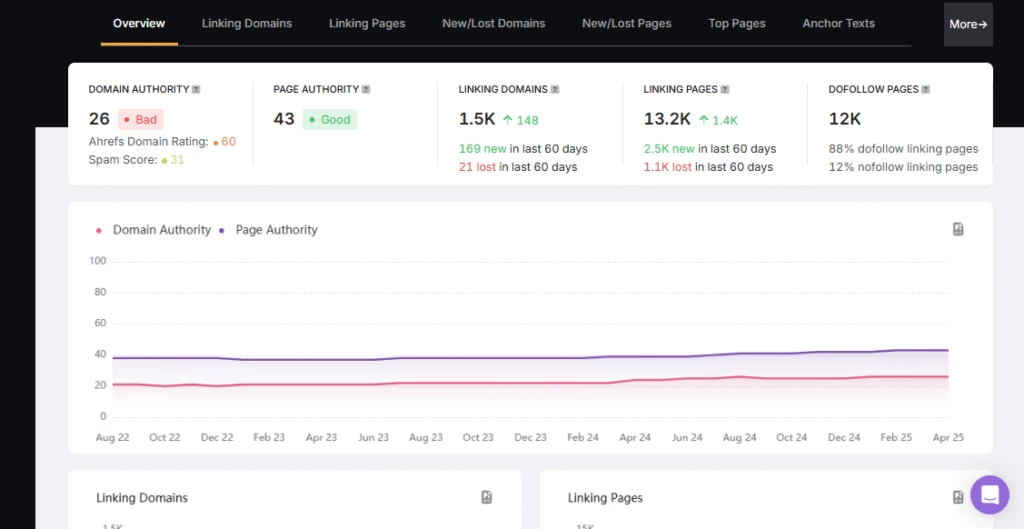
Search Atlas supports several of these. Link Laboratory is a marketplace for guest post placements, Press Release Distribution syndicates releases across 9+ channels and 130+ outlets, and Backlink Research shows where competitors earn their links, with anchor text and link history.
10. Monitor and Measure Results
Measuring results tells you which parts of the strategy are working and which to change. Review the numbers monthly, and set the review before you start so a drop is caught early.
Track these metrics against your benchmark:
- Organic traffic and conversions in Google Analytics, by landing page.
- Impressions, clicks, and click-through rate by query and page in Google Search Console.
- Keyword rankings for your target terms.
- Backlinks and authority over time.
- Technical health from regular site audits.
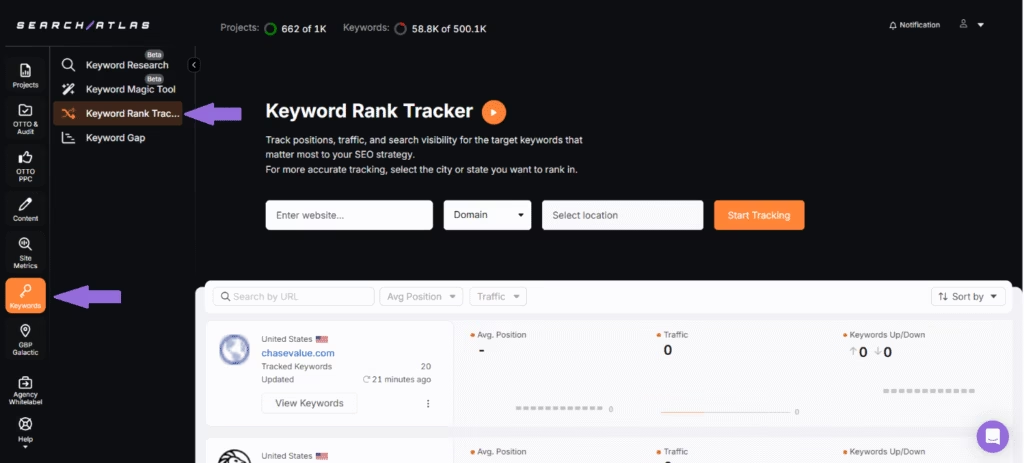
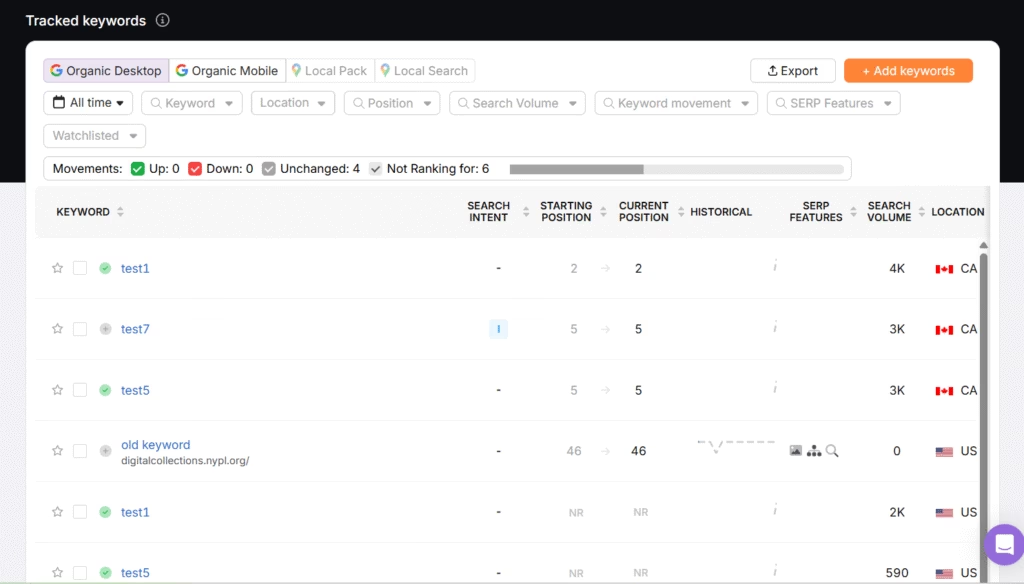
The Search Atlas Keyword Rank Tracker tracks target keywords by device and location, with SERP features such as featured snippets and People Also Ask, and tracks up to 6 competitor domains alongside yours.
How Can AI Be Used to Enhance Your SEO Strategy?
AI improves an SEO strategy by handling the research and repetitive work that slows a strategy down. It can expand a seed keyword into clusters, summarize what the top-ranking pages cover, draft briefs and content, and scan a site for technical issues.
The strongest use is execution. Instead of producing a list of fixes for someone to implement, some platforms deploy the fixes. Search Atlas OTTO SEO ships technical and on-page changes, such as titles, meta descriptions, schema, and internal links, through one pixel on any CMS, with every change logged and reversible.
AI still needs direction: the goals, audience, and priorities in your strategy decide what it should work on. See our AI SEO guide for more.
Which Tools Help You Create an SEO Strategy?
Free Google tools cover the basics of an SEO strategy. Google Search Console shows indexing status, technical errors, and the queries each page ranks for. Google Analytics shows how visitors behave and convert. Google Keyword Planner and Google Trends show keyword demand and how it changes over the year.
An SEO platform adds competitor data and execution. Search Atlas covers each step in this guide:
| Step | Search Atlas skill |
|---|---|
| Benchmark and competitor research | Site Explorer, Keyword Gap, Backlink Gap Analysis |
| Keyword and topic research | Keyword Research, Topical Maps |
| Content updates and new content | SCHOLAR, On-Page Audit, Content Genius |
| On-page and technical fixes | Site Auditor, OTTO SEO |
| Link building | Backlink Research, Link Laboratory, Press Release Distribution |
| Measurement | Keyword Rank Tracker, Report Builder |
See all Search Atlas features for the full list.
What is the Difference Between SEO Strategy and SEO Content Strategy?
The difference between SEO strategy and SEO content strategy is scope. An SEO strategy covers everything that affects organic visibility: technical SEO, on-page SEO, content, links, and measurement. An SEO content strategy covers only the content part: which pages to create and update, which keywords and intents each one targets, and how they link together.
The content strategy sits inside the SEO strategy. It fills the content gaps the wider strategy identifies and supports its goals across each stage of the buyer’s journey.
What is the Relation Between SEO Strategy and SEO Best Practices?
SEO best practices are the standard techniques search engines recommend, such as clean URLs, descriptive title tags, fast mobile pages, logical headings, and helpful content. An SEO strategy decides which of those practices to apply first, on which pages, and toward which goal.
Best practices are the building blocks; the strategy is the plan for using them.
What is the Relation Between SEO Strategy and SEO Campaign?
An SEO strategy is the ongoing, long-term plan; an SEO campaign is a time-bound project within it. A campaign has one goal and an end date, such as ranking a new product page, building links to a set of articles, or driving traffic before a seasonal sale.
A campaign usually bundles several tasks, such as publishing content, outreach, landing page updates, and audits, and its results feed back into the strategy.