Ecommerce SEO is a search marketing discipline that improves organic rankings, category discoverability, and product page conversions for online stores. It captures high-intent shoppers seeking products before marketplace aggregators or retail competitors intercept their purchase journey. Unlike content publishing, online retail search requires managing faceted navigation, dynamic inventory stockouts, and high-volume structured data across extensive SKU catalogs.
Search Atlas unifies technical crawl governance, automated Product JSON-LD deployment via the OTTO Pixel, competitive search intelligence, and multi-location local retail management into a single software suite. This guide outlines the platform capabilities that allow ecommerce brands to scale organic revenue without developer dependencies.
Key Takeaways
- Faceted navigation and filter parameters create indexation bloat unless stores enforce canonical rules and structured crawl parameters.
- Product JSON-LD deployed via the OTTO Pixel establishes Google Merchant Center rich snippet eligibility without theme file modifications.
- Content Genius and Content Planner produce bottom-of-funnel category hubs and buying guides aligned with commercial search intent.
- Autonomous on-page execution via OTTO deploys metadata updates, internal links, and technical fixes with complete change logs and rollback controls.
- Unified reporting connects Google Search Console metrics, local store visits, and paid Google Ads data into single revenue attribution dashboards.
TL;DR
What is an ecommerce SEO platform?
An ecommerce SEO platform is specialized software that audits, manages, and improves organic search rankings across online retail catalogs. It automates structured data deployment, identifies competitor keyword gaps, and resolves technical crawl bottlenecks.
How does Search Atlas handle out-of-stock products?
Search Atlas monitors inventory status through site audits and Search Console integrations. It helps retailers configure 301 redirects to related product categories or preserve URL equity with clear stockout signals.
Can Search Atlas deploy Product schema without developer assistance?
Yes. The Schema Markup Generator builds valid Product JSON-LD, which OTTO deploys directly to storefronts through the lightweight OTTO Pixel.
Calculate Your Catalog Crawl Efficiency and Organic Revenue Lift
Evaluate your online store crawl economics with the interactive simulator below. Adjust active catalog SKUs, category filter dimensions, monthly organic visits, average order value (AOV), and storefront conversion rates to measure your crawl budget allocation and recoverable annual revenue:
Ecommerce catalog crawl & revenue simulator
Model parameter URL bloat from faceted navigation filters and calculate recoverable annual sales from edge canonical rules.
e.g. Size, Color, Price, Brand, Availability
Uncanonicalized filter variations
With OTTO edge canonicals
From indexing deep SKUs
Projected incremental revenue
A healthy ecommerce site keeps parameter URL bloat under control and routes crawl equity directly to revenue-generating SKUs. When stores resolve faceted navigation traps with edge canonical rules, indexable coverage expands and commercial rankings rise.
Core Challenges of Large-Scale Ecommerce SEO
Online retail search requires distinct technical approaches that content sites never encounter. Managing thousands of dynamically updated URLs creates distinct operational bottlenecks for growth teams.
- Catalog Scale and Duplicate Content: Managing thousands of products often produces duplicate descriptions and boilerplate text across color and size variations.
- Faceted Navigation Crawl Bloat: Product filters like size, price, and color generate millions of indexable parameter URLs that exhaust crawl budgets.
- High-Resolution Media Performance: High-resolution product galleries often slow down mobile page load times and degrade Core Web Vitals scores.
- Marketplace Competition: Independent brands compete directly against retail giants like Amazon, Walmart, and Target for commercial head terms.
- Dynamic Inventory Volatility: Products that go out of stock or discontinue can trigger soft 404 errors and broken internal link paths.
What Makes Search Atlas Different for Ecommerce SEO?
Search Atlas is an autonomous SEO platform engineered to resolve ecommerce catalog bottlenecks. It provides real-time monitoring for inventory fluctuations, automates schema deployment across large catalogs, and tracks competitor movements across search engine results pages.

1. Scalable Technical SEO and Site Audits
Technical SEO for ecommerce maintains the underlying site infrastructure so search engines can crawl, index, and rank product categories without friction. It targets site speed, mobile responsiveness, structured data validation, and clean canonical hierarchies across faceted filters.
Search Atlas pairs the Site Auditor with OTTO SEO to detect and deploy fixes through the lightweight OTTO Pixel. Teams maintain full governance through approval controls and rollback logs.

The Site Auditor scans entire ecommerce catalogs to detect broken links, redirect loops, missing alt attributes, and soft 404 stockouts. It continuously monitors performance against connected Google Search Console telemetry, notifying developers when crawl anomalies emerge.

The Schema Markup Generator builds valid Product JSON-LD and deploys it sitewide through the OTTO Pixel. When launching extensive product catalogs, store teams combine technical audits with programmatic SEO indexing strategies to prevent parameter index bloat. The URL Indexer submits updated URLs directly to search engines for prompt discovery.
2. Ecommerce Competitor Research
Competitor intelligence for online retail uncovers keyword strategies, category structures, and backlink networks used by rival storefronts. Analyzing established competitors reveals high-converting search queries and untapped market categories.
Search Atlas provides 4 core competitive research modules:
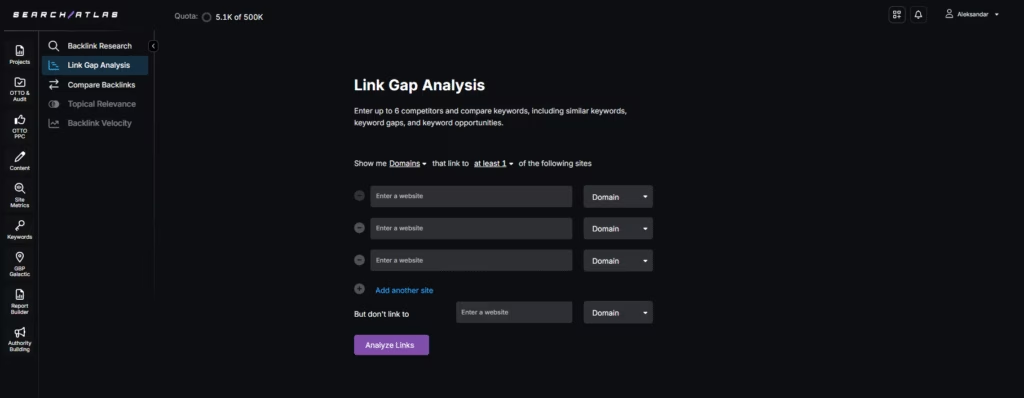
- Keyword Gap Analysis: Compares keyword rankings across up to 6 competing domains to isolate missing commercial queries.
- Backlink Gap Analysis: Identifies referring domains linking to industry competitors but missing from your backlink profile.
- Site Explorer and Domain Power (DP): Evaluates site authority and organic visibility against direct category competitors.
- Topical Dominance: Generates a heatmap showing content completeness across product lines compared to industry benchmarks.


 Use the Topical Dominance feature to evaluate how thoroughly each competitor covers specific topics, with scores ranging from 0 to 100.
3. Commercial Content Planning and Creation
Ecommerce content creation produces written product descriptions, category hubs, and buying guides that rank for search queries and drive conversions. High-performing retail content balances informative product specifications with persuasive copy.
Search Atlas supports retail content workflows through 4 integrated applications:
- Content Planner: Expands root product terms into targeted keyword clusters organized by buyer intent.
- Content Genius: Generates structured product and category drafts guided by real-time SERP entity models.
- SCHOLAR: Scores draft content for information gain, semantic completeness, and search engine guidelines.
- Landing Page Generator: Builds high-converting promotional pages and regional service landers rapidly.


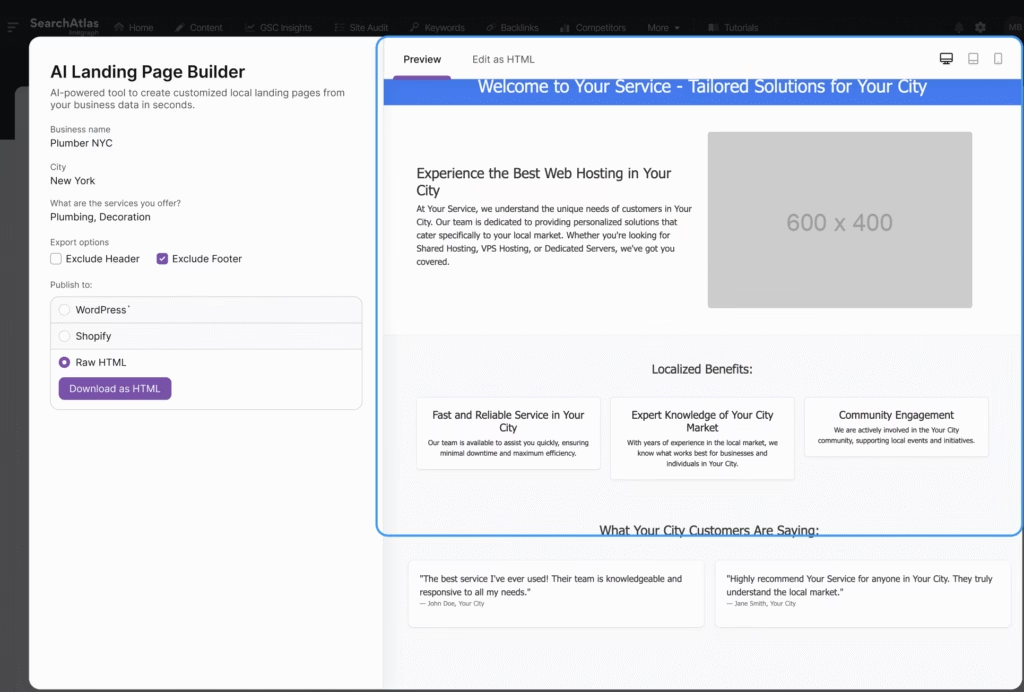
Using Content Genius and Content Planner together allows retail teams to create buying guides, comparison hubs, and promotional landing pages that satisfy commercial search intent.
4. Backlink Acquisition and Digital PR
Link building for ecommerce earns external authority signals from relevant publications, product reviewers, and retail directories. Strong backlinks establish brand credibility and improve ranking potential for competitive commercial keywords.
Search Atlas provides two distinct link acquisition workflows:
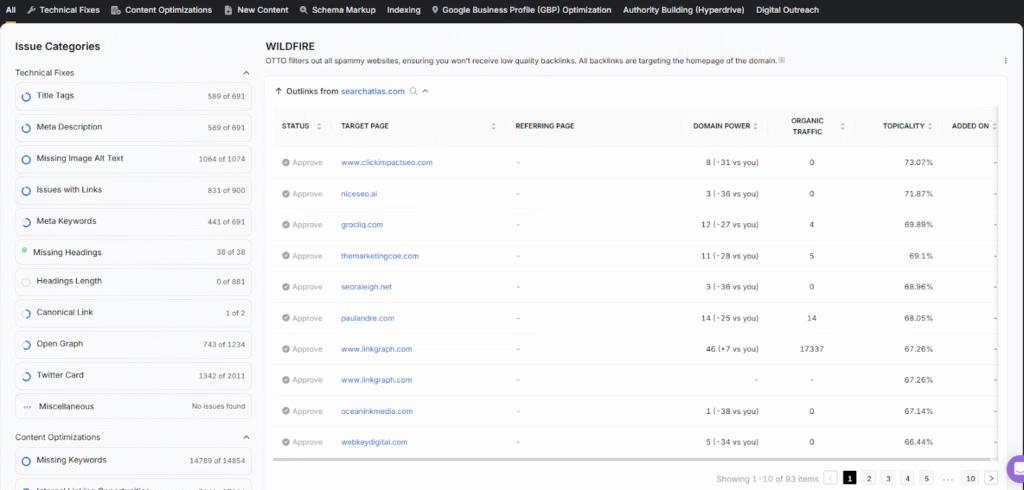
- WILDFIRE: Connects your store with matched, high-quality partner domains in related industries, facilitating contextual link exchanges under strict quality controls.
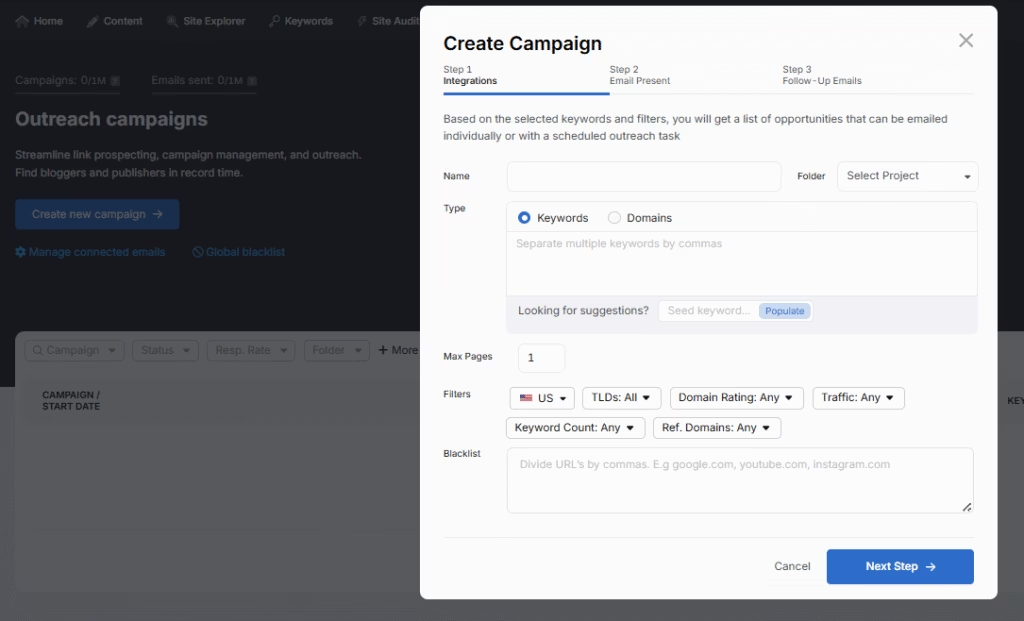
- Digital PR and Outreach: Coordinates media campaigns, press distribution, and journalist pitches from a centralized outreach platform.
5. Local SEO for Multi-Location Retail Stores
Local SEO for ecommerce optimizes visibility for physical retail stores and regional delivery zones. Local search queries like "clothing boutique near me" require consistent business listings and well-maintained Google Business Profiles.
Search Atlas equips retail brands with complete local search management tools:
- Local SEO Heatmaps: Visualizes Google Maps rankings across neighborhood grid coordinates for targeted product queries.
- Citation Builder: Synchronizes Name, Address, and Phone (NAP) records across leading retail directories to eliminate inconsistent location data.
- GBP Automations: Schedules localized product updates and drafts automated review responses aligned with brand voice.
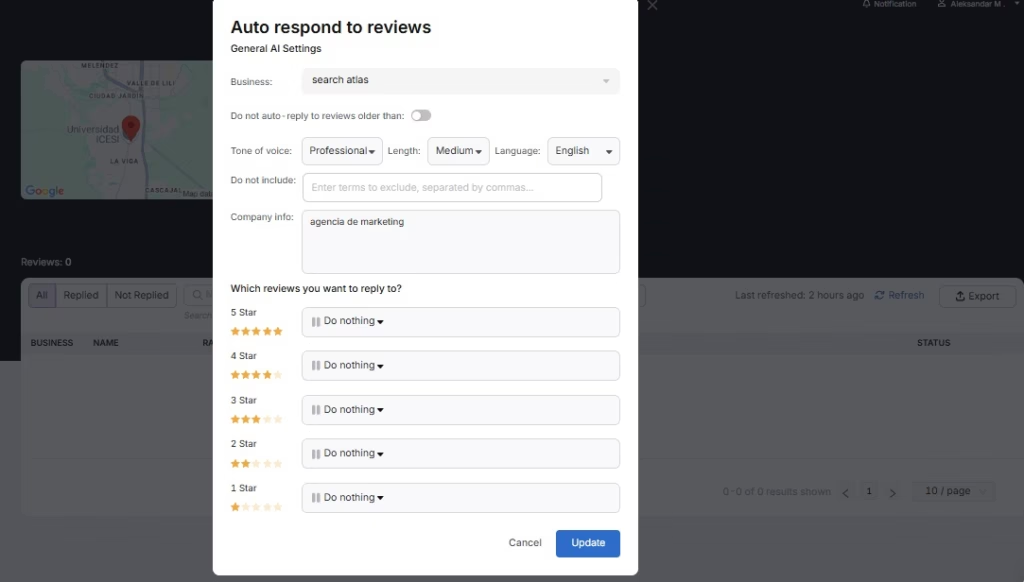
Multi-location retailers use GBP Galactic to maintain location profiles, monitor local review sentiment, and capture nearby foot traffic.
6. Autonomous SEO Execution with OTTO
OTTO SEO evaluates technical signals across storefronts and deploys approved optimizations through the lightweight OTTO Pixel. Store teams review, approve, and revert updates without manual theme code edits.
- Evaluates On-Page Signals: Scans metadata, heading hierarchy, structured data, internal links, and page speed across catalog pages.
- Deploys Supported Adjustments: Applies approved metadata and internal linking structures directly through the edge Pixel.
- Injects Product Structured Data: Builds valid Product JSON-LD to support rich snippet eligibility in Google search.
- Accelerates URL Discovery: Connects with the URL Indexer to submit updated catalog paths to search engines.
- Monitors Page Performance: Continuously audits updated URLs to confirm changes hold and rankings advance.
7. Integrated Performance and Revenue Reporting
Ecommerce marketing leaders require clear analytics that tie search engine visibility directly to retail sales and customer acquisition. Isolated tool dashboards obscure the actual shopper journey from initial query to final checkout.

The Search Atlas Report Builder aggregates Google Search Console telemetry, organic ranking trends, paid Google Ads conversions, and local store interactions into white-labeled dashboards. Retail brands also track brand citations across AI answer engines like ChatGPT and Perplexity through our LLM Visibility platform. Retail teams track category-level ROI across regional markets and seasonal promotions.
8. Native Ecommerce Platform Integrations
Search Atlas connects natively with leading ecommerce content management systems, including Shopify, WordPress, and custom headless frameworks.
 Optimize your Shopify store SEO with Search Atlas, your solution for higher rankings, better visibility, and increased sales.
The native Shopify integration enables retailers to generate optimized product descriptions, audit collection pages, and push metadata directly from their store environment. Store operators can review our Shopify SEO checklist to audit theme structures and configure robots directives. The OTTO Pixel runs across any CMS platform, establishing uniform technical execution without custom engineering support.
9. Google Ads Coordination with Smart Ads
Smart Ads coordinates paid search campaigns alongside organic search efforts, providing complete search results page coverage for competitive retail keywords.

While organic SEO builds compounding authority over time, paid ads deliver immediate visibility for new catalog launches, flash sales, and competitive brand terms. Managing both channels from Search Atlas ensures keyword insights from paid campaigns inform organic content priorities.
Why Ecommerce Brands Choose Search Atlas
Retail growth teams choose Search Atlas because it consolidates disparate search workflows into an integrated platform:
- Automated Technical Governance: OTTO deploys validated Product schema and metadata fixes via the Pixel with full approval controls.
- Topical Category Depth: Content Genius and Content Planner structure collection pages to satisfy commercial intent.
- Audited Content Standards: SCHOLAR evaluates product guides for clarity and search engine quality guidelines before publication.
- Authoritative Link Acquisition: WILDFIRE and Digital PR build high-trust editorial backlinks from verified industry sources.
- Cross-Channel Revenue Attribution: Report Builder links keyword movement and site visits directly to transaction conversions.
Search Atlas Pricing Plans for Retail Teams
Search Atlas offers transparent subscription tiers designed for single online boutiques, scaling retail catalogs, and enterprise multi-store operations:
| Plan | Price (Monthly) | Target Team | Key Capabilities Included |
|---|---|---|---|
| Starter | $99 / mo | Emerging online boutiques | 1 seat, 1 OTTO project, 2,000 tracked keywords, core site auditing, and content optimization. |
| Growth | $199 / mo | Scaling multi-category stores | 3 seats, 2 OTTO projects, 3,500 tracked keywords, and LLM Visibility tracking. |
| Pro | $399 / mo | High-volume catalog brands | 5 seats, 4 OTTO projects, 100 GSC projects, 6,000 tracked keywords, and white-label reporting dashboards. |
| Agency | $999 / mo | Retail agencies & enterprise portfolios | 10 seats, 10 OTTO projects, portfolio-level capacity, and dedicated onboarding engineering. |
| Enterprise | Custom | Global retail corporations | Custom API data quotas, tailored tooling limits, and dedicated SLA support. Explore Enterprise Brand SEO and Enterprise Agency SEO. |
All plans provide access to OTTO SEO, Site Auditor, Content Genius, SCHOLAR, WILDFIRE, and real-time reporting, drawing on one shared monthly pool of Universal Credits. For companies expanding across multiple acquisition channels, compare our SaaS SEO platform analysis or explore our white-label SEO software for agency client reporting.
Start your 7-day free trial today to audit your product catalog and test automated schema deployment, or request an enterprise quote for multi-store catalog deployments.