Knowledge Graph Optimization is a specialized technical SEO discipline that structures digital assets into interconnected, machine-readable semantic networks using the Resource Description Framework (RDF). Search engines parse knowledge graphs by evaluating subject-predicate-object triples, reconciling ambiguous textual tokens into verified entities registered in global databases. The primary function of Knowledge Graph Optimization is to establish persistent ontological identity, enabling automated inclusion in Google Knowledge Panels, Bing Copilot grounding, and generative AI search engines.
flowchart TD
    subgraph RDF_Triples["The RDF Triple Foundation"]
        Subject["Subject (@id)<br/>https://searchatlas.com/#software"]
        Predicate["Predicate (Relationship)<br/>schema:creator / P178"]
        Object["Object (Target Entity)<br/>https://linkgraph.com/#org"]
        Subject -->|Predicate| Object
    end

    subgraph LOD_Reconciliation["Linked Open Data (LOD) Layer"]
        Subject -->|owl:sameAs| Wikidata["Wikidata QID<br/>wikidata:Q11696"]
        Subject -->|sameAs| GKnowledge["Google Knowledge Graph<br/>kg:/g/11s9..."]
    end
Modern search engine parsers no longer treat schema markup as disconnected, page-level snippets. Instead, they ingest enterprise schema as a continuous Directed Acyclic Graph, resolving coreference chains and synthesizing brand authority across distributed web domains.
The RDF Triple: Anatomy of Semantic Information Retrieval
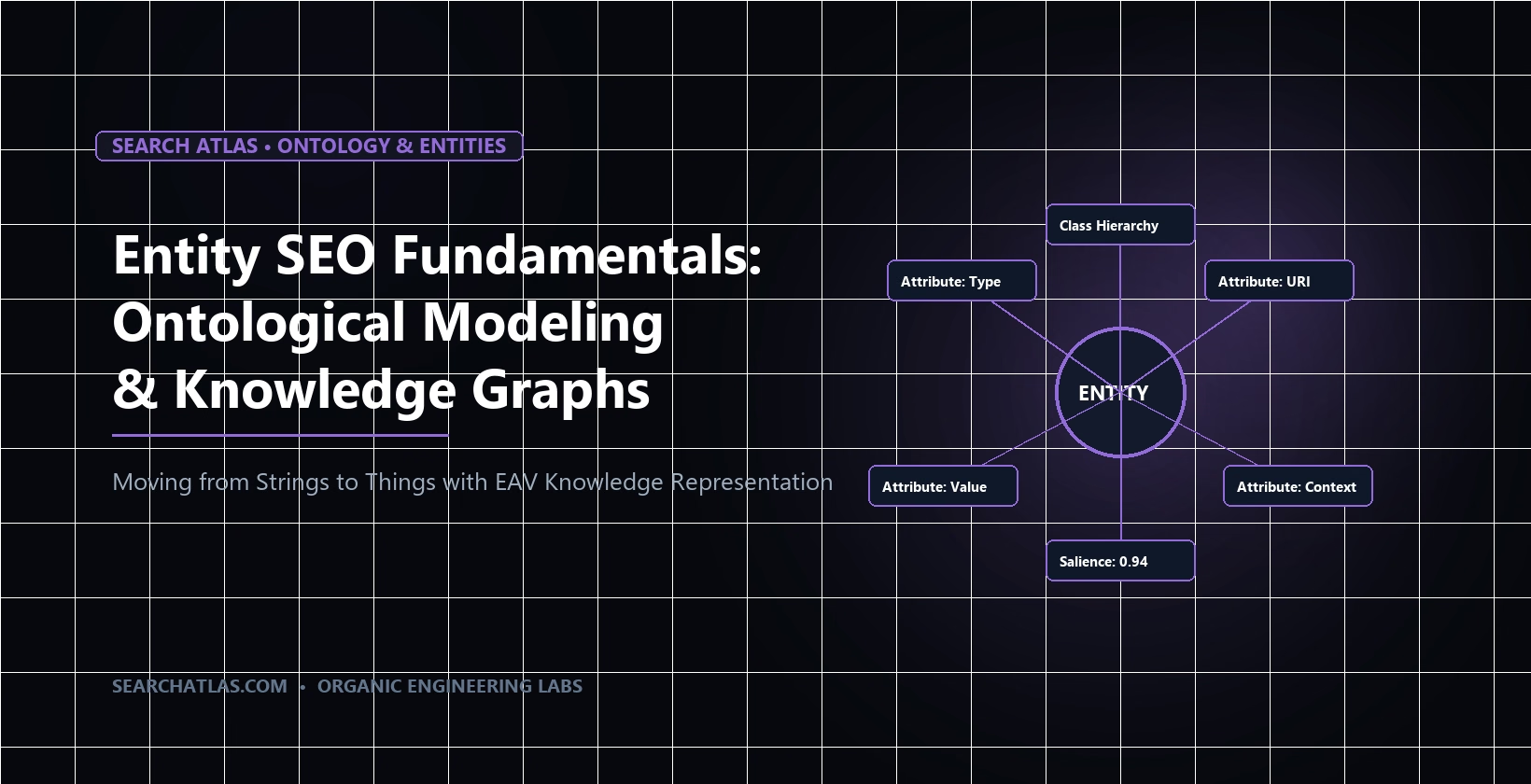
The Resource Description Framework triple is a standardized data modeling grammar that represents human knowledge as a three-part factual statement composed of a subject, predicate, and object. Search engine knowledge extractors utilize RDF triples to populate their knowledge vaults and validate factual assertions against linked open data repositories (US9390174B2, US10331706B1). The precision of an RDF triple is governed by the formal constraints of the W3C OWL 2 standard.
- The Subject: The primary entity being described, identified by a uniform resource identifier (URI).
- The Predicate: The directional relationship or property binding the subject to the object (e.g.,
schema:parentOrganizationor Wikidata propertyP749). - The Object: The target entity, literal value, or nested schema object that completes the proposition.
{
  "@context": "https://schema.org",
  "@type": "SoftwareApplication",
  "@id": "https://searchatlas.com/#software",
  "name": "Search Atlas",
  "applicationCategory": "BusinessApplication",
  "operatingSystem": "Web-based",
  "creator": {
    "@type": "Organization",
    "@id": "https://linkgraph.com/#organization",
    "name": "LinkGraph"
  }
}
When webmasters deploy fragmented JSON-LD blocks across headers and footers without referencing shared @id nodes, search engine spiders encounter disconnected entity islands. Disconnected nodes fail entity resolution and cannot transfer PageRank or topical authority across the graph.
The Persistent URI Invariant (@id Anchoring)
A persistent URI is an immutable, canonical web address that functions as the unique machine-readable identifier for a specific real-world entity. Knowledge representation algorithms require persistent identifiers to prevent coreference collapse when entity attributes or branding change over time. The structural validity of an enterprise knowledge graph requires that every entity retain a single persistent @id across all pages and regional locales.
flowchart LR
    PageA["/blog/seo-tools/"] -->|references| MasterID["Persistent Node<br/>https://searchatlas.com/#software"]
    PageB["/compare-seo-tools/"] -->|references| MasterID
    PageC["/pricing/"] -->|references| MasterID
PageD["/es/blog/seo-tools/"] -->|references| MasterID- Never use URL-dependent identifiers for non-document entities: An article document node belongs at
https://example.com/article#webpage, but the author entity must be anchored athttps://example.com/author#person. - Cross-Language Parity: In multilingual environments, Spanish (
/), English (/en/), and Portuguese (/pt/) editions must reference the identical@idfor corporate and product entities, preventing localized entity splitting.
The Unified @graph Schema Pattern
The Unified @graph pattern is an advanced JSON-LD encoding architecture that groups all on-page semantic entities into a single, cohesive array of interconnected nodes. Search engine web rendering engines parse unified @graph schemas in linear time, bypassing quadratic reconciliation loops across disjointed script blocks. The operational standard requires nesting Organization, WebSite, WebPage, Article, and ItemAvailability under a single root @graph container.
{
  "@context": "https://schema.org",
  "@graph": [
    {
      "@type": "Organization",
      "@id": "https://searchatlas.com/#organization",
      "name": "Search Atlas",
      "url": "https://searchatlas.com",
      "sameAs": [
        "https://www.wikidata.org/wiki/Q11696",
        "https://www.crunchbase.com/organization/searchatlas",
        "https://www.linkedin.com/company/searchatlas"
      ]
    },
    {
      "@type": "WebSite",
      "@id": "https://searchatlas.com/#website",
      "url": "https://searchatlas.com",
      "name": "Search Atlas Platform",
      "publisher": {
        "@id": "https://searchatlas.com/#organization"
      }
    },
    {
      "@type": "WebPage",
      "@id": "https://searchatlas.com/blog/knowledge-graph-optimization/#webpage",
      "url": "https://searchatlas.com/blog/knowledge-graph-optimization/",
      "name": "Knowledge Graph Optimization: Triples, Persistent URIs & Schema Graphs",
      "isPartOf": {
        "@id": "https://searchatlas.com/#website"
      }
    }
  ]
}
Notice the explicit use of persistent @id pointers inside the WebSite and WebPage declarations. This establishes an unbroken mathematical chain from the individual blog post back to the parent enterprise entity.
Linked Open Data (LOD) & Multi-Source Reconciliation
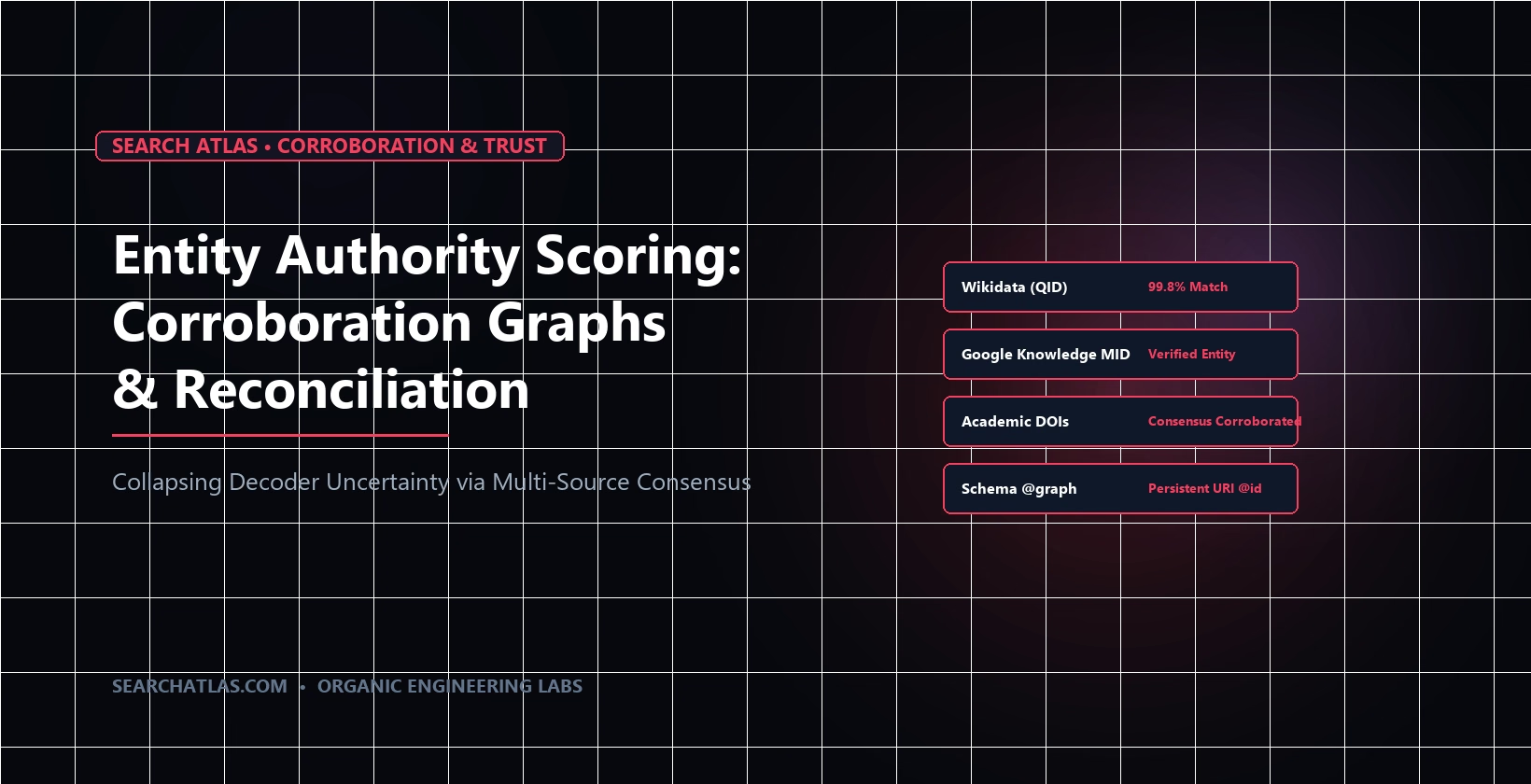
Linked Open Data is an international semantic web initiative that interconnects structured public databases through standardized RDF protocols. Search engine knowledge reconcilers query Linked Open Data hubs (primarily Wikidata, DBpedia, and Google MIDs) to verify whether private entities possess third-party corroboration. Aligning entity triples with Wikidata QIDs collapses probabilistic uncertainty in generative LLMs and secures Knowledge Panel establishment.
- Wikidata Property Integration: Align company attributes with specific Wikidata properties:
P31(instance of) toQ11696(Software application).P178(developer / creator) toQ43229(Parent corporation).P856(official website) to canonical home URL.
- Authority Directory Corroboration: Supplement JSON-LD
sameAsarrays with verified profiles on Crunchbase, G2, Capterra, SourceForge, and Gartner Digital Markets.
Internal Graph Traversal & PageRank DAG Bridges
Hyperlink structures and schema graphs must operate in structural harmony. If your JSON-LD schema declares that this page is part of the central entity cluster, your physical HTML document must provide in-content contextual hyperlinks to related cluster nodes: