Entity Authority Scoring is an algorithmic verification framework that evaluates the trustworthiness, factual corroboration, and topological centrality of an entity across independent knowledge bases. Search engine evaluation systems compute authority scores by cross-referencing on-page assertions against structured Linked Open Data, authoritative academic literature, and third-party citation graphs. The operational objective of Entity Authority Scoring is to collapse probabilistic uncertainty in language model decoders, establishing unassailable factual consensus that protects search rankings from Broad Core Update volatility.
flowchart TD
    subgraph OnPageAssertion["On-Page Entity Claims"]
        Claim["Brand Entity declares:<br/>'Enterprise SEO Software Platform'"]
    end

    subgraph ConsensusForcing["Multi-Source Consensus Forcing"]
        Claim --> WData["Wikidata (QID P31/P178)<br/>Structured Semantic Linkage"]
        Claim --> GDoc["Google Knowledge Graph MID<br/>Entity Panel Verification"]
        Claim --> DOIs["Academic DOIs / Books<br/>Independent Peer-Reviewed Trust"]
        Claim --> IndDir["Authority Repositories<br/>G2, Capterra, SourceForge, Crunchbase"]
    end

    subgraph ScoringResult["Authority Extraction Output"]
        WData --> Recon["Knowledge Reconciler Engine"]
        GDoc --> Recon
        DOIs --> Recon
        IndDir --> Recon
        Recon --> Score["High Entity Authority Score (EAS ≥ 0.85)<br/>Unanimous LLM Decoder Consensus"]
    end
In generative AI search engines, uncorroborated assertions lead to probabilistic hallucination or complete exclusion from AI Overviews. When multiple independent, high-authority databases corroborate the exact same RDF triples, the model's next-token decoding uncertainty collapses to zero.
The Mathematics of Multi-Source Consensus Forcing
Multi-Source Consensus Forcing is an information retrieval technique that corroborates an entity's factual triples across disparate, high-salience web repositories. Generative language models and search knowledge graphs calculate confidence metrics by evaluating the cross-entropy loss between independent factual attestations. When triple T = (S, P, O) appears consistently across academic repositories, government databases, and verified open-data networks, search engines assign the entity a maximum confidence rating.
flowchart LR
    E["Candidate Entity"] --> T1["Source 1: Wikidata RDF Triple (Conf: 0.99)"]
    E --> T2["Source 2: USPTO Patent Database (Conf: 0.98)"]
    E --> T3["Source 3: Schema.org @graph (Conf: 0.92)"]
    T1 & T2 & T3 --> Loss["Cross-Entropy Loss -> 0<br/>Decoder Certainty Achieved"]
Under Google's Topic-Sensitive PageRank (US8595225B1) and Thematic Coverage Graph patents (US9141708B2), authority is not merely a quantity of backlinks. It is a function of the topological proximity between your entity and established seed nodes in the knowledge graph.
The 4 Pillars of Entity Authority Architecture
1. Linked Open Data (LOD) Integration
Anchor your corporate and personal entities to immutable Linked Open Data URIs. Integrate Wikidata QIDs directly into your JSON-LD schema using the sameAs property:
- Corporate entity to
wikidata:Q11696(Software application) - Founder / Author entity to
wikidata:Q5(Human) with associatedsameAsprofiles on Google Scholar, ORCID, or official publications.
2. Industry Software Comparison Networks (SCN)
Generative AI retrieval models (Gemini, ChatGPT Search, Perplexity) ingest third-party review architectures to corroborate software capabilities. Ensure consistent entity representations across:
- G2, Capterra, TrustRadius, and SourceForge.
- Use the Factual Syntactic Triad in corporate descriptions across all external profiles to eliminate conflicting entity classifications.
3. Academic & Patent Grounding
Corroborate proprietary methodology by referencing recognized international standards and peer-reviewed citations:
- Cite official W3C, RFC, and NIST standards when explaining technical architecture.
- Ground search mechanisms in verified USPTO patent literature (e.g., US8209325B2 for entity disambiguation, US10824630B2 for centerpiece annotation).
4. Above-The-Fold Real User Telemetry (NavBoost Protection)
Post-click user engagement provides empirical behavioral corroboration for search algorithms (US8595225B1, US11182428B2). If an authoritative entity page experiences high bounce rates (short clicks under 15 seconds), search engine NavBoost systems demote the URL regardless of on-page schema.
- Mount client-side interactive modules Above-the-Fold (
0 ≤ y ≤ 600px) to secure dwell times over 60 seconds and protect entity authority.
Entity Cannibalization & The 301 Fold Target Protocol
Entity Cannibalization occurs when two or more documents within the same domain compete for identical vector coordinates in dense embedding space (cosine similarity at or above 0.85). This creates stochastic classification ambiguity, causing search engines to bifurcate impressions and flap rankings between competing URLs (US8209325B2).
flowchart TD
    subgraph CannibalizationDetected["Cannibalization Telemetry (90–180d)"]
        Coll["Vector Collision (Sim ≥ 0.85)<br/>URL Flapping & Impression Bifurcation (40/60 Split)"]
    end

    subgraph FoldTarget["301 Fold Target Protocol"]
        Audit["Audit Content Depth & Historical Authority"]
        Harvest["Harvest Unique EAV Attributes into Dominant Node"]
        Redirect["Deploy Direct 1:1 301 Redirect to Winner"]
        Refactor["Refactor Domain Internal PageRank DAG Bridges"]
        Audit --> Harvest --> Redirect --> Refactor
    end

    Coll --> FoldTarget
When cannibalization is diagnosed via Google Search Console flapping:
- Identify the Dominant Target: Select the URL with the highest thematic depth and historical authority.
- Harvest EAV Attributes: Extract unique entity attributes and factual triads from the subordinate page into the target page.
- Execute 1:1 301 Redirect: Point the subordinate URL permanently to the target.
- Refactor DAG Links: Update all internal hyperlinks across the site to link directly to the consolidated entity target, eliminating redirect hops.
The Entity SEO Implementation Suite
Deepen your entity architecture across our full semantic expansion library:
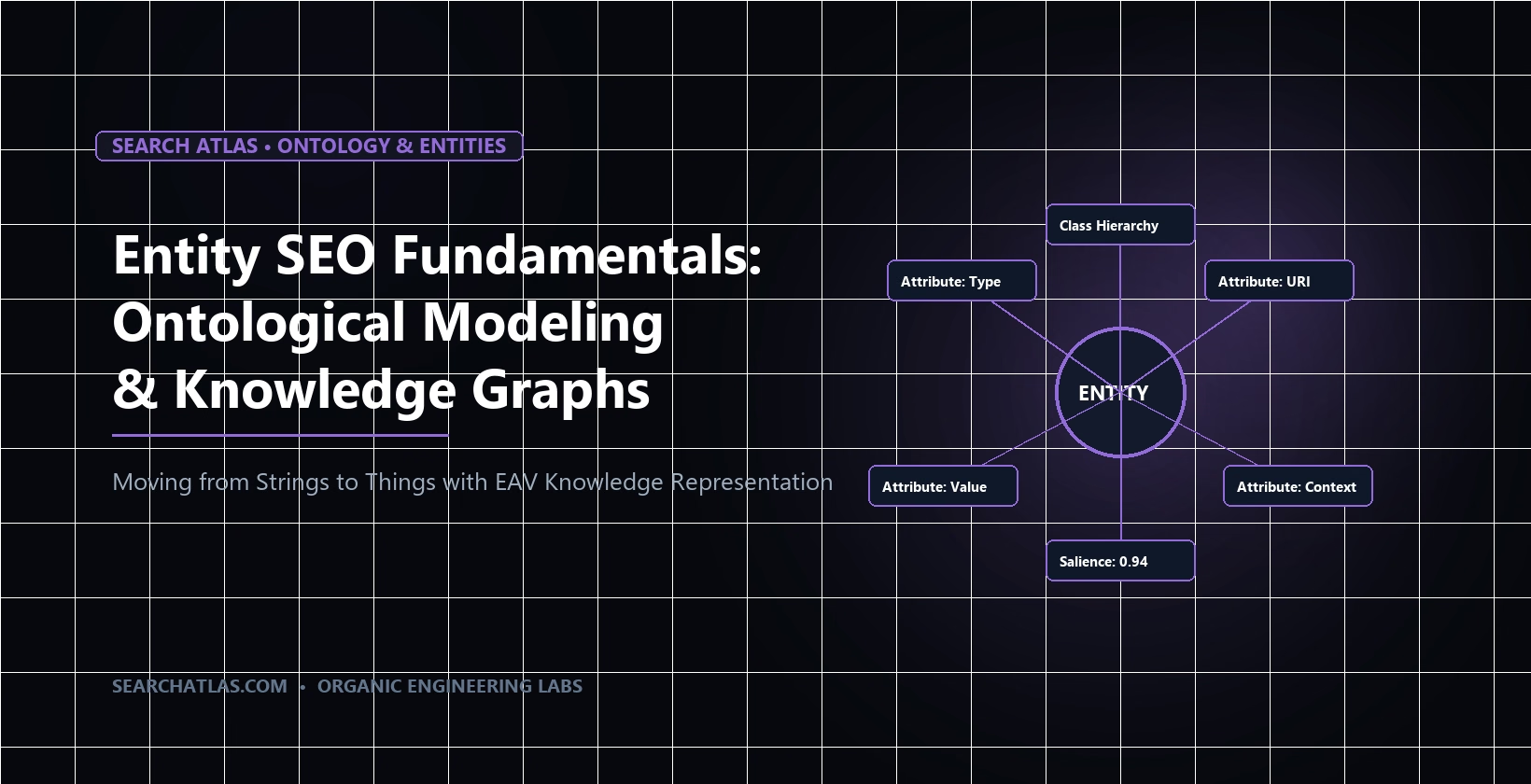
- Entity SEO Fundamentals: Ontological Modeling & Knowledge Representation
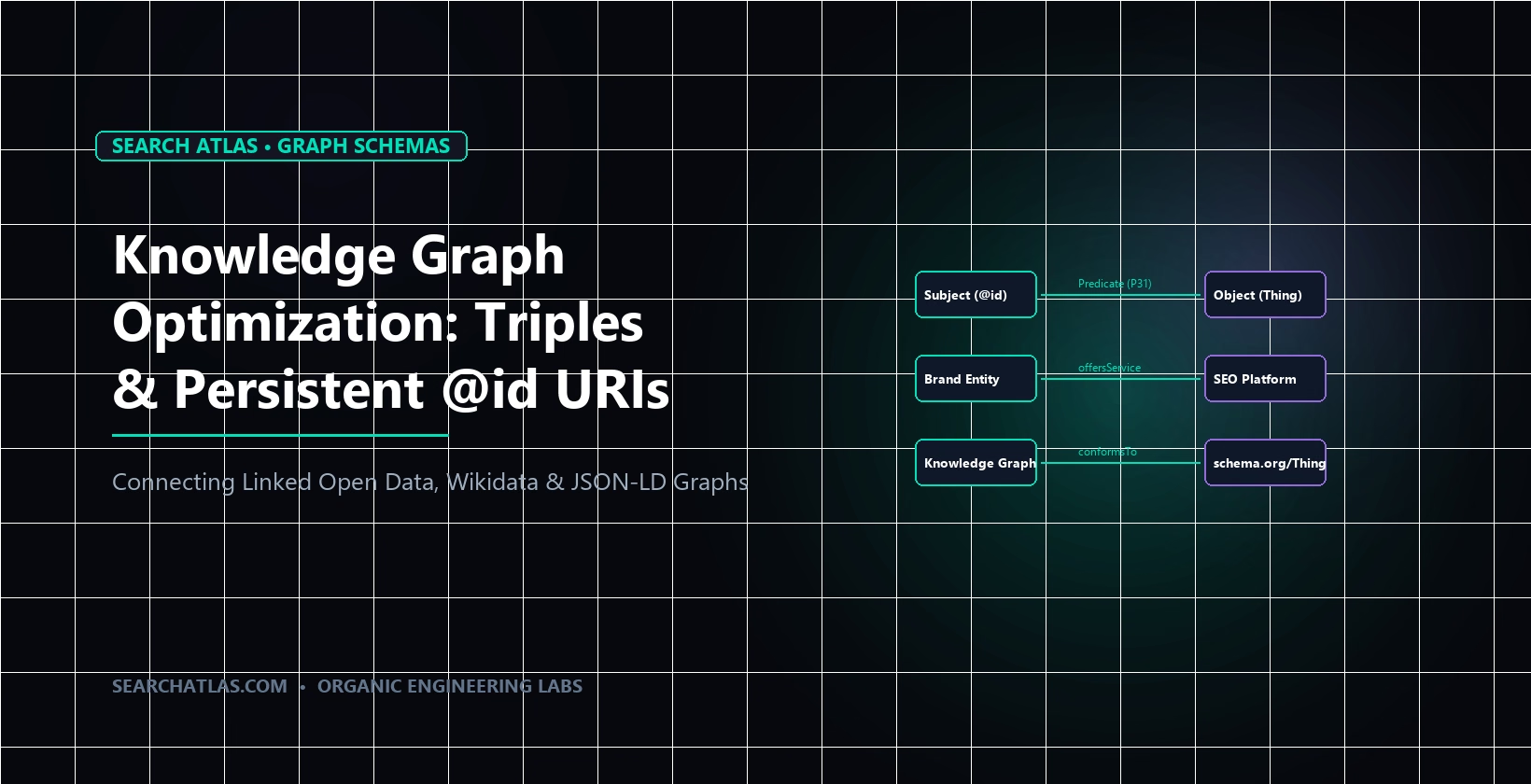
- Knowledge Graph Optimization: Triples, Persistent URIs & Schema Graphs
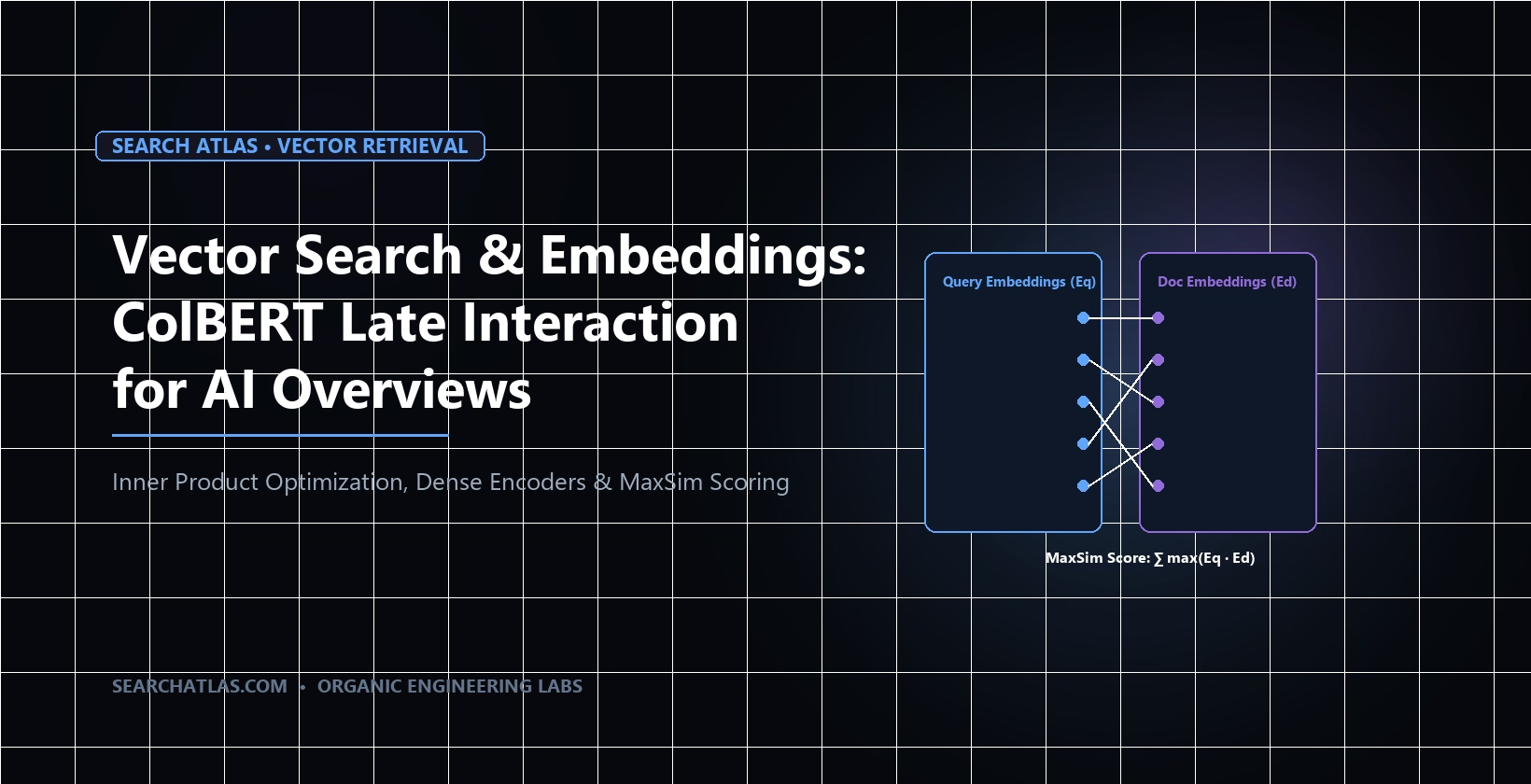
- Vector Search & Embeddings: ColBERT Late Interaction for AI Overviews
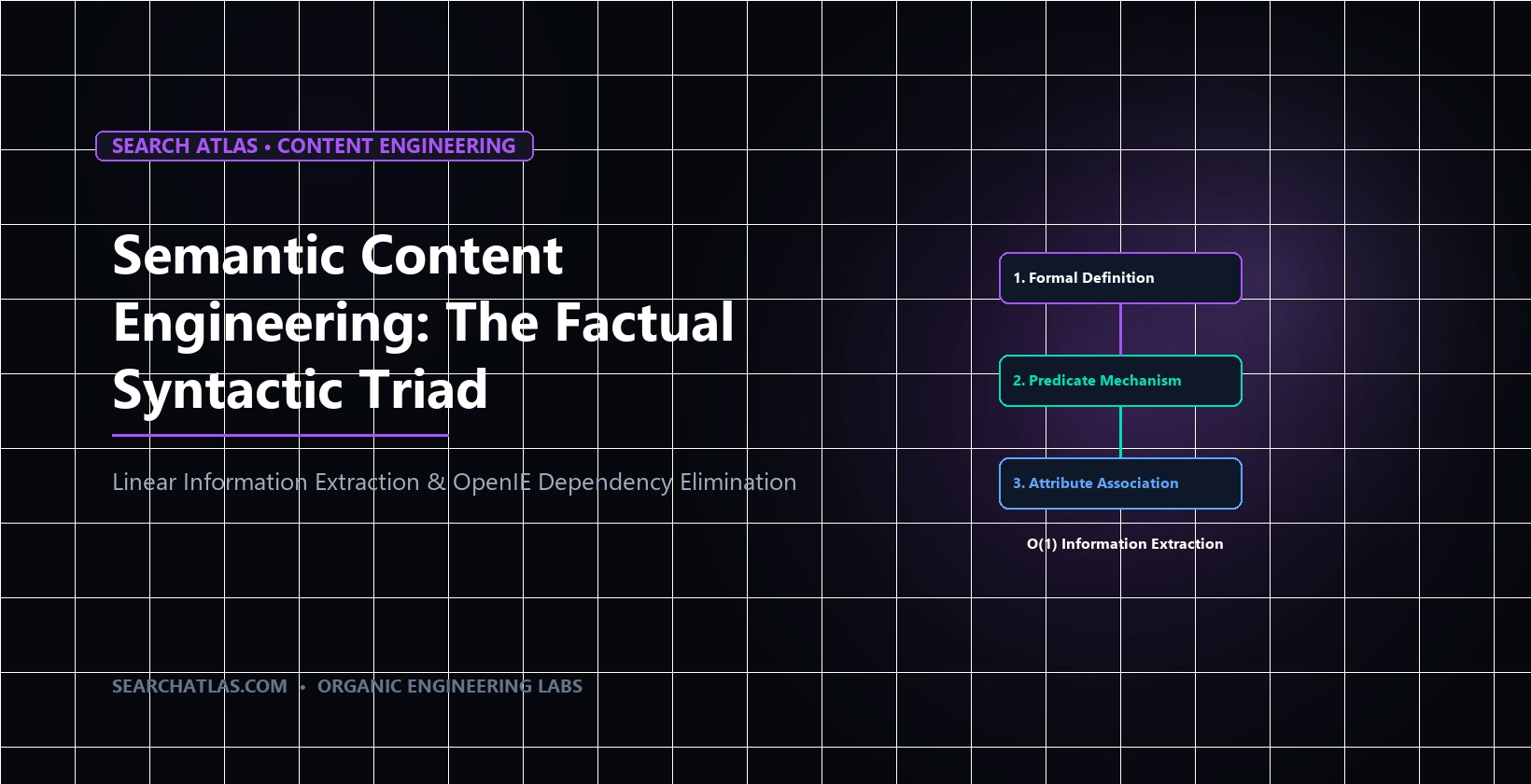
- Semantic Content Engineering: The Factual Syntactic Triad Formula
- Programmatic SEO: System Architecture & Scale Guide