Tracking ChatGPT traffic means identifying, measuring, and analyzing website visits, mentions, and conversions that originate from ChatGPT-generated answers and AI-driven referrals. ChatGPT traffic refers to user sessions influenced directly through links such as utm_source=chatgpt.com or indirectly through brand exposure inside AI answers. Businesses track ChatGPT traffic because AI systems function as answer-first discovery engines, which shift visibility from ranked pages to citation inclusion and zero-click influence. As generative AI adoption expands, ChatGPT traffic represents a measurable share of referral, assisted, and branded search growth.
To track ChatGPT traffic accurately, businesses combine referral analysis, UTM parameter tracking, custom AI channel grouping, and visibility measurement inside analytics platforms. In Google Analytics 4, marketers filter “Session source/Medium” to identify traffic from chatgpt.com, create custom AI channel groups to isolate conversational referrals, and analyze landing pages receiving AI-driven sessions. Advanced tracking methods include monitoring citation frequency, AI Share of Voice, AI Answer Inclusion Rate, engagement metrics, and LLM conversion rate, which often exceeds traditional organic conversion performance. These structured tracking approaches allow brands to track ChatGPT traffic beyond surface-level referral reports and quantify AI-driven discovery impact.
Increasing ChatGPT traffic requires aligning content with generative retrieval patterns, entity clarity, and citation eligibility. Businesses increase ChatGPT traffic by building topical authority, optimizing for Experience, Expertise, Authoritativeness, and Trustworthiness (E-E-A-T), implementing schema markup, publishing original research, maintaining content freshness, and writing answer-first structured sections that AI systems extract easily. Consistent measurement, entity-based optimization, and conversational query alignment improve answer inclusion, strengthen AI visibility, and convert high-intent users more effectively within evolving AI search ecosystems.

What is ChatGPT Traffic?
ChatGPT Traffic is a web traffic metric that measures user interactions with the ChatGPT platform, defined by platform-specific visits, AI-driven prompts, engagement growth, and generative AI market share. ChatGPT Traffic includes total visits, weekly active users, daily prompt volume, AI-referred interactions, and platform-level usage analytics. ChatGPT Traffic differs from general web traffic because ChatGPT Traffic reflects AI-mediated conversational behavior instead of traditional page-based browsing.
How did ChatGPT Traffic emerge and grow? ChatGPT Traffic emerged with the launch of ChatGPT by OpenAI as a conversational artificial intelligence system and expanded rapidly through global adoption of LLMs (Large Language Models). ChatGPT Traffic doubled its share of total internet traffic from 0.0793% to 0.1587% within the first 4 months of 2025. ChatGPT reached 800 million weekly active users in October 2025, increasing from 400 million in February 2025. ChatGPT recorded 6.165 billion visits in October 2025 and processed 2.5 billion prompts per day, while AI-referred traffic increased 527% between January and May 2025.
What are the core quantitative properties of ChatGPT Traffic? The core quantitative properties of ChatGPT Traffic include visit volume, prompt processing scale, and generative AI market dominance. ChatGPT Traffic accounts for 81.13% of the generative AI traffic market share. ChatGPT generates $10 billion in annual recurring revenue, projected to reach $20 billion by the year end. The scale of visits, prompts, and revenue demonstrates sustained platform growth and commercial viability.
What behavioral and market signals define ChatGPT Traffic? ChatGPT Traffic reflects measurable user behavior shifts toward AI-based discovery and brand research. 36% of surveyed users discovered a new product or brand through ChatGPT in 2025. 47% of Gen Z users identified AI search as their primary discovery channel. 77% of Americans have used ChatGPT as a search engine, and nearly 25% prefer ChatGPT over Google. These behavioral signals confirm that ChatGPT Traffic influences digital marketing, brand visibility, and purchasing journeys.
What are the structural dependencies and competitive dynamics of ChatGPT Traffic? ChatGPT Traffic depends on user engagement, platform accessibility, and global internet connectivity while competing with traditional search engines and other AI systems. ChatGPT Traffic enables marketers to reach AI-native audiences and increases brand discovery inside generated answers. 47% of marketers use ChatGPT for promotion, 76% consider visibility inside LLM answers essential in 2025, and 2 in 3 marketers plan to increase AI visibility investment. The United States accounts for 15.1% of ChatGPT Traffic, and India accounts for 9.3%, which reflects global distribution and competitive digital influence.
Why is Tracking Traffic From ChatGPT Important?
Tracking traffic from ChatGPT is important because AI systems now function as primary information gateways that influence discovery, evaluation, and purchasing decisions. Users increasingly rely on ChatGPT and other large language models to receive synthesized answers instead of browsing ranked search results. When ChatGPT includes or excludes a brand in generated responses, it directly affects visibility before a website visit occurs.
Why does AI-driven search change how visibility must be measured? AI-driven search changes visibility measurement because large language models generate direct answers rather than presenting clickable link lists. Traditional analytics focus on rankings and clicks, while ChatGPT traffic requires monitoring answer inclusion, citation frequency, referral sessions, and assisted conversions. Without tracking ChatGPT traffic, brands cannot quantify AI-level exposure or understand how conversational interfaces influence demand.
Why does tracking ChatGPT traffic improve the optimization strategy? Tracking ChatGPT traffic improves optimization strategy because it provides measurable signals for Answer Engine Optimization (AEO), Generative Engine Optimization (GEO), and Artificial Intelligence Optimization (AIO). Monitoring ChatGPT referrals, engagement rates, and conversion performance reveals whether AI-generated mentions translate into high-intent sessions. AI-referred visitors often convert at higher rates than traditional organic traffic, which increases the strategic value of AI visibility.
Why does tracking ChatGPT traffic support long-term competitive resilience? Tracking ChatGPT traffic supports competitive resilience because AI discovery shifts budget allocation, content strategy, and authority building toward answer-level inclusion. 47% of marketers already use ChatGPT for promotion, and 76% consider appearing in ChatGPT answers essential in 2025. Businesses that measure and analyze ChatGPT traffic can adapt faster, strengthen entity authority, and maintain presence inside AI-generated responses as conversational search expands.
What is the Difference Between ChatGPT vs Gemini Traffic?
The primary difference between ChatGPT traffic and Gemini traffic is that ChatGPT traffic is larger in absolute volume, while Gemini traffic is growing at a significantly faster rate. ChatGPT represents an established generative AI traffic source with billions of monthly visitors, whereas Gemini represents a rapidly expanding AI platform with aggressive year-over-year growth. This difference matters because traffic scale and growth velocity influence platform selection for marketing and visibility strategy.
How do traffic trends compare between ChatGPT and Gemini? ChatGPT traffic shows a recent short-term decline, while Gemini traffic shows sustained short-term growth. ChatGPT decreased by 5.6% month-over-month in December, while Gemini increased by 28.4% during the same period. Year-over-year growth highlights stronger expansion momentum for Gemini at 563.6%, compared to 49.5% for ChatGPT. These growth rates indicate that Gemini follows an aggressive expansion strategy, while ChatGPT focuses on stabilizing and maintaining its user base.
How do visitor volumes and market position differ? ChatGPT leads in total visitor volume and established market position, while Gemini operates as a fast-scaling challenger. ChatGPT recorded 5.5 billion visitors in December, compared to Gemini’s 1.7 billion visitors. ChatGPT benefits from broad brand recognition and a mature global user base. Gemini benefits from accelerating adoption curves and emerging market expansion. Absolute scale favors ChatGPT, while relative growth favors Gemini.
When should businesses prioritize ChatGPT over Gemini? Businesses should prioritize ChatGPT when immediate reach, brand recognition, and stable traffic patterns are required. ChatGPT provides access to a large and established audience, which supports campaigns focused on scale and predictable engagement. ChatGPT suits projects that rely on credibility, familiarity, and consistent user behavior.
When should businesses prioritize Gemini over ChatGPT? Businesses should prioritize Gemini when targeting rapid growth environments and emerging AI engagement opportunities. Gemini suits startups and growth-focused brands that aim to capitalize on 563.6% year-over-year expansion. Gemini supports strategies that seek innovative positioning and early adoption advantages in expanding AI ecosystems.
Can both ChatGPT and Gemini traffic support strategic growth? Yes, both ChatGPT and Gemini traffic can support strategic growth depending on business objectives. ChatGPT provides stability and scale, while Gemini provides expansion velocity and emerging opportunity. Organizations that balance established presence with high-growth experimentation can leverage both platforms to diversify AI-driven visibility and engagement.
What are the Key Methods to Track ChatGPT Traffic?
The key methods to track ChatGPT traffic are Google Analytics 4 Traffic Acquisition reporting, Custom AI Channel Groups, GA4 Explore reports, UTM parameter tracking, and Google Search Console analysis. These methods identify referral sessions, isolate AI-driven traffic sources, analyze engagement and conversion behavior, and ensure crawl and indexing visibility.
Each method captures a different dimension of ChatGPT traffic measurement, from direct attribution to structural discoverability.
1. Use Google Analytics 4 Traffic Acquisition Report
The GA4 Traffic Acquisition Report is a key method to track ChatGPT traffic because it enables direct identification of ChatGPT traffic using the “Session source / Medium” filter. In Acquisition → Traffic acquisition, users filter by “Session source / Medium” and search for “gpt” or chatgpt.com to isolate referral sessions. ChatGPT traffic often demonstrates higher engagement, with a 10.4-minute average session duration compared to 8.1 minutes from Google, and 12.4 pages per session compared to 11.8. Custom reports and landing page filtering reveal which URLs receive AI-driven sessions and which content ChatGPT users engage with most.
2. Create a Custom AI Channel Group
A Custom AI Channel Group is essential for tracking ChatGPT traffic because default GA4 reports classify ChatGPT traffic as general referral traffic, which limits attribution clarity. Creating a dedicated “Artificial Intelligence” channel using regular expressions groups traffic from chat.openai.com, perplexity.ai, claude.ai, gemini.google.com, copilot.microsoft.com, and other AI sources. Custom channel groups bypass character limits in standard filters and scale as new AI platforms emerge. AI citation referral traffic converts on average 4.4 times higher than traditional organic traffic, which increases the importance of accurate AI channel segmentation.
3. Use Google Analytics 4 Explore Report for Deep Analysis
The GA4 Explore Report is important for tracking ChatGPT traffic because it enables granular analysis beyond standard channel reporting. ChatGPT link clicks sometimes appear as Direct or Unassigned traffic when UTM parameters are missing, which underreports AI impact. Using Explore with custom channel group filters allows marketers to isolate sessions, analyze engagement trends, duplicate tabs for segmentation testing, and rename explorations for structured tracking. This method supports advanced behavioral analysis and long-term monitoring of ChatGPT traffic performance.
4. Use UTM Parameters Features
UTM parameters are critical because they allow precise attribution of ChatGPT-generated referral traffic inside analytics platforms. When ChatGPT appends utm_source=chatgpt.com, analytics tools record ChatGPT as the session source instead of Direct traffic. Without UTMs, attribution inflates Direct traffic metrics and distorts channel performance reporting. UTMs also provide campaign-level insight that helps optimize prompts, measure conversions, and evaluate ChatGPT-driven engagement across landing pages.
5. Analyze Google Search Console
Google Search Console is important for tracking ChatGPT traffic because it monitors indexing, ranking trends, and crawl accessibility that influence ChatGPT discoverability. Search Console and Bing Webmaster Tools reveal whether AI-accessible content is indexed and visible in search results. Proper robots.txt configuration and accurate XML sitemaps ensure that OAI-SearchBot and Bingbot can crawl pages effectively. Tracking, indexing, and crawl health support the structural foundation required for ChatGPT to retrieve, reference, and drive traffic from published content.
Which Metrics Matter Most for ChatGPT Traffic?

Title: chatgpt-metrics.1640×995
Alkt: metrics for chatgpt traffic
The metrics that matter most for ChatGPT traffic are Brand Mentions and Citations, AI Visibility Score, AI Answer Inclusion Rate, and AI Referral Traffic. These metrics measure presence inside AI-generated answers, competitive visibility across prompts, inclusion frequency in responses, and direct referral impact. Together, these indicators quantify both exposure and performance within AI-driven discovery systems.
1. Brand Mentions and Citations
Brand Mentions measure how often a brand name appears in ChatGPT responses, while Citations measure how often ChatGPT references and links to a source. Brand mentions indicate awareness visibility, while citations indicate authoritative source selection. ChatGPT mentions brands 3.2 times more frequently than it provides citations, and average citation frequency remains below 1 per prompt.
How should businesses track Brand Mentions and Citations effectively? Businesses should track Brand Mentions and Citations by monitoring AI-generated responses across high-intent prompts and calculating mention frequency percentage. A citation frequency target of 30% or more for core category queries signals strong AI authority, while top-performing brands exceed 50%. Tracking mention distribution across informational, commercial, and transactional queries reveals competitive positioning gaps.
2. AI Visibility Score
AI Visibility Score is a composite metric that measures a brand’s overall presence across AI platforms based on mentions, citations, referral traffic, and query coverage. AI Visibility Score reflects how frequently a brand appears in tracked prompts relative to competitors. It connects prompt-level inclusion data with macro-level AI presence trends.
How should the AI Visibility Score be monitored and optimized? Businesses should track the AI Visibility Score weekly and target a consistent upward trajectory of at least 10% quarter-over-quarter improvement. AI visibility tools cluster prompts by topic, benchmark AI Share of Voice against competitors, and identify citation gaps. Increasing topical authority, schema implementation, and entity clarity improves the AI Visibility Score over time.
3. AI Answer Inclusion Rate
AI Answer Inclusion Rate (AAIR) measures the percentage of tracked prompts where a brand appears inside the AI-generated answer. AAIR quantifies inclusion probability and reflects competitive AI penetration. Leading brands target an AAIR between 25% and 45% for strategic query clusters.
How should businesses improve and measure AI Answer Inclusion Rate? Businesses should measure AAIR across predefined prompt sets and segment by query intent to identify inclusion patterns. Increasing mention volume from 11–30 monthly mentions correlates with 168% traffic lift, while 150+ monthly mentions correlate with 425% traffic lift. Monitoring AAIR alongside citation frequency reveals whether visibility converts into answer dominance.
4. AI Referral Traffic
AI Referral Traffic measures the number of website sessions originating directly from AI platforms such as ChatGPT. AI Referral Traffic reflects click-through behavior and conversion value from AI-generated links. ChatGPT accounts for approximately 80% of AI referral traffic across industries, and AI referral growth has increased more than 357% year-over-year.
How should AI Referral Traffic be analyzed for performance? Businesses should analyze AI Referral Traffic by measuring sessions, engagement rate, conversion rate, and revenue per session inside GA4 custom AI channel groups. AI-driven visitors convert up to 4.4 times higher than traditional organic traffic in several studies. Tracking AI Referral Traffic alongside LLM conversion rate and assisted conversions provides a full-funnel measurement of ChatGPT traffic impact.
5. Question Coverage & Relevance
Question Coverage & Relevance measures how comprehensively and accurately a brand’s content answers the full set of conversational queries that users ask ChatGPT within a specific topic cluster. Question Coverage quantifies the percentage of tracked prompts where the brand provides a complete and contextually aligned answer. Relevance evaluates whether the content directly satisfies user intent using structured, semantically aligned responses that AI systems can extract and reuse.
Why does Question Coverage & Relevance matter most for ChatGPT traffic performance? Question Coverage & Relevance matter most because ChatGPT prioritizes content that directly answers user questions with clarity, completeness, and semantic alignment. AI systems retrieve and synthesize information based on intent satisfaction rather than keyword matching. If content fails to address high-frequency conversational prompts, AI Answer Inclusion Rate declines, and citation probability decreases. Strong coverage increases answer inclusion, strengthens AI Visibility Score, and supports higher mention frequency across informational, commercial, and transactional query types.
How should businesses measure and improve Question Coverage & Relevance? Businesses should measure Question Coverage by mapping tracked prompts to content assets and calculating inclusion percentage across defined query sets. Teams should cluster prompts by topic, compare inclusion gaps against competitors, and update content to answer missing high-intent questions explicitly. Writing structured, answer-first sections with clear entity definitions, concise explanations, and schema markup improves extraction accuracy. Maintaining updated FAQ sections and aligning content with natural-language query patterns increases relevance signals and strengthens ChatGPT traffic acquisition potential.
Search Atlas LLM Visibility Tool tracks Brand Mentions and Citations, AI Visibility Score, AI Answer Inclusion Rate, and AI Referral Traffic.
How to Increase ChatGPT Traffic?
Websites increase ChatGPT traffic by aligning content, authority, and technical signals with how large language models retrieve, evaluate, and cite information. Ranking on ChatGPT depends on structured answers, entity clarity, E-E-A-T alignment, schema implementation, and measurable AI visibility. ChatGPT favors authoritative, semantically organized, and citation-ready content that satisfies user intent directly.
1. Build Topical Authority
Why is building topical authority important to increase ChatGPT traffic? Building topical authority increases ChatGPT traffic because large language models retrieve and cite information from domains that demonstrate consistent, high-authority expertise across a defined subject area. Topical authority refers to comprehensive coverage of a topic cluster supported by structured entities, interconnected subtopics, and consistent expertise signals. When ChatGPT evaluates sources for answer generation, it prioritizes domains that show depth, clarity, and semantic completeness.
How does the use of large language models increase the importance of topical authority? Large language models such as ChatGPT and Perplexity prioritize authoritative domains when extracting information for generated answers. These systems analyze entity relationships, semantic coverage, and factual consistency across pages. Content that demonstrates repeated, structured expertise within a topic increases retrieval probability and citation likelihood, which directly increases ChatGPT traffic.
How does increased visibility in AI-powered answers drive qualified traffic? Increased visibility in AI-generated answers drives qualified ChatGPT traffic because authoritative sources appear more frequently in synthesized responses. When a domain dominates topical clusters, AI systems select it as a primary reference point. Strong answer inclusion increases brand exposure at the discovery stage and channels high-intent users to the cited source.
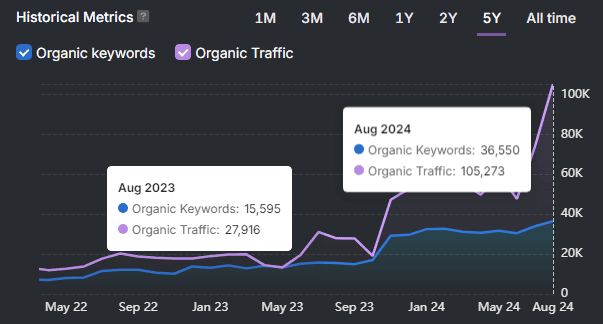
Why is the traffic growth from topical authority strategically significant? Traffic growth from topical authority is strategically significant because it produces measurable and scalable performance improvements. Sites implementing topical authority strategies achieved 1,385% traffic growth over 12 months. Sites using topical clustering generated 73% more traffic while publishing 40% less content compared to traditional keyword-focused strategies. These results demonstrate that structured authority outperforms isolated keyword optimization for increasing ChatGPT traffic.
2. Correct AI-Generated Errors
Why is correcting AI-generated errors important to increase ChatGPT traffic? Correcting AI-generated errors increases ChatGPT traffic because accuracy, reliability, and factual consistency directly influence retrieval, citation, and user trust signals. AI systems evaluate source credibility during answer synthesis. When published content contains inconsistencies, outdated information, or unverifiable claims, inclusion probability decreases and visibility inside AI-generated responses declines.
Why is high user frustration and error frequency a critical factor? High user frustration reduces engagement and weakens long-term platform trust, which indirectly impacts referral traffic stability. Users reported repeated hallucinations, fabricated outputs, and incorrect recommendations throughout 2025. Negative user experiences reduce confidence in AI-generated answers and increase scrutiny of cited sources, which raises the importance of maintaining precise and verifiable content.
How does the perception of reliability influence ChatGPT traffic? Perceived reliability influences ChatGPT traffic because trust signals determine whether AI systems continue referencing a source. Users described the model as inaccurate and unreliable during reported performance dips. When AI platforms face credibility concerns, authoritative and well-maintained domains gain competitive advantage because retrieval systems favor stable, trusted information sources.

Why does perceived model decline create strategic opportunity? Perceived decline in model performance creates strategic opportunity for authoritative publishers to strengthen inclusion signals. Users reported repeated task failures and increasing mistake frequency, which increased demand for dependable content. Websites that correct inaccuracies quickly, update factual data, and reinforce E-E-A-T signals increase citation probability and sustain ChatGPT traffic growth during volatility phases.
3. Optimize for E-E-A-T
Why is optimizing for E-E-A-T important to increase ChatGPT traffic? Optimizing for Experience, Expertise, Authoritativeness, and Trustworthiness (E-E-A-T) increases ChatGPT traffic because AI systems prioritize credible, high-quality, and verifiable sources during answer generation. E-E-A-T functions as a quality evaluation framework that influences both search engine rankings and AI retrieval systems. When content demonstrates structured expertise and transparent authority signals, inclusion probability inside AI-generated answers increases.
Why is prioritizing trustworthy and valuable content significant for AI visibility? Prioritizing trustworthy and valuable content is significant because search engines and AI systems aim to deliver reliable information to users. Aligning content with E-E-A-T strengthens credibility through expert authorship, factual accuracy, secure HTTPS implementation, and transparent policies. This alignment increases the likelihood of higher visibility in search results and stronger citation eligibility in ChatGPT responses.
How can implementing E-E-A-T strategies impact rankings and traffic? Implementing E-E-A-T strategies can positively impact rankings, which indirectly increases ChatGPT traffic through stronger authority signals. A reported case showed a measurable ranking improvement after applying E-E-A-T enhancements on a review site. Improved rankings increase crawl frequency, backlink acquisition, and domain trust, which reinforce AI retrieval signals and citation probability.
Why does E-E-A-T function as a structured content quality framework? E-E-A-T functions as a structured framework because it evaluates content based on demonstrable experience, subject-matter expertise, recognized authority, and measurable trust signals. This framework encourages the inclusion of author credentials, case studies, references, structured FAQs, and transparent contact information. When content aligns with these elements, it becomes more reliable for AI systems to extract, summarize, and cite, which supports sustained ChatGPT traffic growth.
4. Implement Technical SEO
Why is implementing Technical SEO important to increase ChatGPT traffic? Implementing Technical SEO increases ChatGPT traffic because AI systems require crawlable, indexable, and structurally accessible content to retrieve and cite information. Technical SEO refers to optimizing site architecture, crawl directives, speed performance, structured data, and indexing infrastructure so that search engines and AI crawlers can access and interpret content efficiently. Without technical accessibility, even authoritative content remains invisible to AI systems.
Why is a well-optimized website structure essential for ChatGPT traffic? A well-optimized website structure is essential because AI crawlers rely on clear architecture and internal linking to understand topical relationships. Logical URL hierarchies, contextual internal links, and clean navigation improve entity mapping and semantic interpretation. Clear structure increases crawl efficiency and strengthens retrieval signals used during AI answer generation.
How does configuring robots.txt impact ChatGPT traffic? Configuring robots.txt impacts ChatGPT traffic because blocked AI crawlers cannot access or index content. Websites must allow OAI-SearchBot and Bingbot to crawl relevant sections. If these bots are restricted, content cannot be retrieved for synthesis, which eliminates inclusion potential inside AI-generated answers.
Why is mobile responsiveness critical for ChatGPT traffic growth? Mobile responsiveness is critical because approximately 60% of AI searches originate from mobile devices. Pages that fail to render correctly on mobile reduce engagement and ranking signals. Responsive design ensures consistent usability across devices, which improves behavioral metrics and supports AI visibility.
Why does page speed optimization affect ChatGPT traffic? Page speed optimization affects ChatGPT traffic because faster-loading pages improve user engagement and search ranking signals. Pages that load in under 3 seconds reduce bounce rates and increase session duration. Search engines incorporate speed into ranking evaluation, which influences the authority signals that AI systems consider during retrieval.
How does schema markup enhance AI content understanding? Schema markup enhances AI content understanding by providing structured data that defines entities, relationships, and attributes explicitly. Implementing JSON-LD schema for FAQs, products, pricing, offers, and organizational data improves extraction accuracy. Structured markup increases the likelihood of appearing in AI summaries and synthesized responses.
Why are XML sitemaps necessary for ChatGPT traffic visibility? XML sitemaps are necessary because they ensure that all indexable pages are discoverable by search engine crawlers. Submitting sitemaps to Bing Webmaster Tools and maintaining accurate sitemap updates improves indexing completeness. Indexed pages are more likely to be retrieved during AI synthesis.
Why is fixing crawl and indexing issues essential for AI-driven traffic? Fixing crawl and indexing issues is essential because unresolved technical errors prevent AI systems from accessing reliable content. Regular audits in Google Search Console and Bing Webmaster Tools identify broken links, redirect chains, and indexing gaps. Resolving these issues strengthens crawl stability and increases the probability of inclusion inside ChatGPT-generated answers.
5. Earn Citations and Reviews
Why is earning citations and reviews important to increase ChatGPT traffic? Earning citations and reviews increases ChatGPT traffic because citation frequency strongly correlates with referring domains, domain trust, review platform presence, and page-level authority signals. Citations represent how often ChatGPT selects and references a domain inside generated answers. Websites with over 32,000 referring domains are 3.5 times more likely to be cited, and URLs with a Page Trust score above 23 begin to show measurable citation growth.
How do backlinks and domain trust influence ChatGPT citation frequency? Backlinks and domain trust influence ChatGPT citations because AI systems prioritize high-authority domains during source selection. Websites with over 350,000 referring domains receive an average of 8.4 citations, while domains with up to 2,500 referring domains average 1.6–1.8 citations. Domains with Domain Trust (DT) scores above 90 earn almost 4 times more citations than domains with DT below 43. Increasing high-quality referring domains strengthens retrieval eligibility and citation probability.
Why are review platforms significant for ChatGPT citation visibility? Review platform presence increases ChatGPT citation likelihood because AI systems evaluate external validation signals when selecting sources. Domains featured on Trustpilot, G2, Capterra, Sitejabber, and Yelp earn between 4.6 and 6.3 citations, compared to 1.8 citations for domains without review presence. Customer reviews reinforce brand legitimacy, which increases the probability of brand mentions and source selection inside AI-generated answers.
How does Page Trust influence page-level citation growth? Page Trust influences citation growth because AI systems evaluate URL-level authority signals when selecting references. URLs with Page Trust scores above 23 begin to generate tangible citation increases, while URLs reaching 28 or higher average 8.2 citations. Strengthening page-level authority through internal linking, backlink acquisition, and content depth improves inclusion frequency and supports sustained ChatGPT traffic growth.
6. Write Answer-First Content
Why is writing answer-first content important to increase ChatGPT traffic? Writing answer-first content increases ChatGPT traffic because large language models extract concise, structured responses positioned at the beginning of clearly defined sections. Answer-first content places the direct definition or solution in the first 1–2 sentences, followed by supporting explanation. This structure aligns with AI retrieval behavior and increases inclusion probability inside generated answers.
How does answer-first formatting align with AI structured extraction methods? Answer-first formatting aligns with AI extraction because ChatGPT parses content into discrete answer blocks rather than reading sequential narratives. When a section begins with a direct, standalone answer under a question-based heading, AI systems can isolate and reuse that segment without distortion. Clear headings, short paragraphs, bullet lists, and entity definitions improve extraction precision and citation eligibility.
Why does answer-first structure improve Top-of-Funnel discoverability? Answer-first structure improves Top-of-Funnel (TOFU) discoverability because AI systems prioritize concise informational responses for early-stage queries. TOFU content targets informational prompts such as “What is,” “How does,” and “Why does.” Structured answers increase the likelihood of citation during awareness-stage searches, which drives qualified ChatGPT traffic from users seeking foundational knowledge.
How does answer-first content facilitate direct citation and knowledge graph integration? Answer-first content facilitates direct citation because structured definitions and explicit entity descriptions integrate cleanly into AI-generated summaries and knowledge graphs. Clear entity naming, factual statements, and consistent terminology strengthen machine interpretation. This structure increases the probability that ChatGPT references the domain as a trusted source, which supports sustained visibility and measurable ChatGPT traffic growth.
7. Use Clear Entity and Schema Markup
Why is using clear entity definitions and schema markup important to increase ChatGPT traffic?
Using clear entity definitions and schema markup increases ChatGPT traffic because structured data improves machine interpretation, citation accuracy, and AI answer inclusion. Clear entity definition means explicitly stating what an entity is, what it does, and why it matters within the first sentences of a section. Schema markup refers to structured data implemented through JSON-LD or microdata that defines questions, answers, products, pricing, organization details, and relationships. AI systems rely on these signals to extract and reuse content reliably.
How does schema markup help search engines and AI assistants understand content?
Schema markup helps AI systems understand content by explicitly labeling entities, attributes, and relationships in machine-readable format. FAQ, HowTo, Product, Offer, and Organization schema clarify price, seller, return policy, shippingDetails, and sameAs properties. When a page marks up structured Q&A blocks, search engines can generate rich snippets, and AI systems can extract precise answer segments without ambiguity.
Why does schema markup increase the likelihood of being referenced in AI summaries?
Schema markup increases reference likelihood because structured clarity reduces interpretation errors during AI synthesis. Comprehensive schema implementation helped Derivate X move from non-visible to #1 on ChatGPT for “Best Martech SEO Agency” within 1.5 months. That ranking generated 30–35 SaaS founder visits monthly, 3–6 booked calls per month, and 2 new clients directly attributed to ChatGPT visibility.
How does clear entity structure improve competitive positioning in AI-generated responses?
Clear entity structure improves competitive positioning because AI systems prioritize structured, trust-enhanced listings when generating comparative answers. Go Fish Digital improved ChatGPT Search visibility by adding a “Notable Clients” section formatted as structured bullet key-value pairs. ChatGPT began extracting and displaying those trust signals in generated listings, which increased inbound inquiries referencing ChatGPT as the discovery source. Structured entity clarity strengthens inclusion probability and supports sustained ChatGPT traffic growth.
8. Publish Original Content and Data
Why is publishing original content and data important to increase ChatGPT traffic? Publishing original content and proprietary data increases ChatGPT traffic because AI systems prioritize unique, authoritative sources when generating answers. Original content refers to first-party research, proprietary studies, surveys, internal data analyses, and unique case studies that cannot be replicated elsewhere. AI models prefer citing definitive sources rather than summaries of already published material, which increases citation probability and referral potential.
How does original research provide unique value for AI retrieval and citation? Original research provides unique value because AI systems seek primary data sources when synthesizing answers. A financial blog publishing independent market trend analysis holds stronger citation eligibility than a site rewriting existing reports. Proprietary insights position a domain as a reference point for a specific entity or topic cluster, which increases AI Answer Inclusion Rate and citation frequency.
Why does proprietary data create indispensable citation assets? Proprietary data creates indispensable assets because AI systems rely on authoritative, non-duplicated information when forming responses. Annual industry reports, benchmark studies, and internally generated datasets establish unique entity ownership within a topic. When no alternative source provides equivalent data, inclusion probability increases and competitive displacement decreases.
How does investing in original content help regain AI referral advantage? Investing in original content strengthens AI referral advantage because citation-driven traffic concentrates around authoritative publishers. ChatGPT sent 243.8 million visits to 250 news and media websites in April 2025, reflecting a 98% increase from January. Although some publishers report AI referrals growing over 1000% year over year, total impact remains uneven. Producing proprietary research increases the likelihood of being included in high-volume AI-generated answers, which supports sustainable ChatGPT traffic growth.
9. Maintain Content Freshness
Why is maintaining content freshness important to increase ChatGPT traffic? Maintaining content freshness increases ChatGPT traffic because AI systems prioritize recently updated, accurate, and time-relevant information during answer generation. Content freshness refers to updating factual data, statistics, examples, and structural formatting within short refresh cycles. Pages updated within 30 days are cited 3.2 times more often than older pages, and recently refreshed content dominates citations across ChatGPT, Perplexity, and Google AI Overviews.
How does recent content influence AI citation frequency? Recent content influences citation frequency because AI systems favor up-to-date sources that reflect current knowledge. Pages refreshed within 30 days consistently outperform older pages in AI answer inclusion. Content updated within 3 months receives twice as many citations as outdated material. In competitive topics, content visibility decay now occurs within 3–6 months, which shortens the effective lifecycle of static pages.
Why does AI traffic conversion rate increase the importance of freshness? AI search visitors convert 23 times better than traditional organic visitors, which amplifies the value of maintaining fresh content. High-intent users who arrive from AI-generated answers demonstrate stronger engagement and action rates. Updating high-performing pages preserves citation frequency and sustains high-converting ChatGPT traffic.
How should businesses operationalize content freshness to sustain ChatGPT visibility? Businesses should implement structured content refresh cycles every 30–90 days for competitive pages. Update statistics, expand sections with new entity coverage, refine answer-first formatting, and validate outbound references. Monitoring citation changes after updates helps measure freshness impact. Continuous refresh strategy stabilizes AI Answer Inclusion Rate and supports long-term ChatGPT traffic growth.
10. Align Content With Conversational Queries
Why is aligning content with conversational queries important to increase ChatGPT traffic? Aligning content with conversational queries increases ChatGPT traffic because large language models prioritize natural-language questions that mirror real user intent. Conversational queries reflect how users speak and interact with AI systems rather than how they type fragmented keywords. Structuring content around direct question-answer patterns increases inclusion probability inside AI-generated responses and improves ranking visibility on ChatGPT.
How does conversational formatting directly answer user intent? Conversational formatting directly answers user intent because AI search behavior has shifted from keyword matching to dialogue-based interaction. Users increasingly ask full-sentence questions such as “What is,” “How does,” and “Why does.” Formatting headings as natural-language questions followed by concise, standalone answers aligns with spoken search patterns and improves AI Answer Inclusion Rate.
Why do AI systems prioritize clearly structured conversational content? AI systems prioritize clearly structured content because structured formatting reduces ambiguity during extraction and synthesis. Headings, subheadings, bullet lists, short paragraphs, and schema markup create machine-readable blocks that AI models can isolate and summarize accurately. Placing concise answers near the top of a section increases retrieval clarity and citation readiness.
Why does optimizing for featured snippets strengthen ChatGPT visibility? Optimizing for featured snippets strengthens ChatGPT visibility because snippet-ready content mirrors the consolidated answer format used by AI systems. Question-based headings followed by brief, self-contained answers increase eligibility for Google featured snippets and AI-generated summaries. This structure creates dual optimization benefits for SEO and Generative Engine Optimization.
How does updating content with FAQs and long-tail queries sustain relevance? Updating content with FAQs and long-tail conversational phrases sustains ChatGPT traffic because AI systems favor content that continuously reflects evolving user questions. Adding FAQ sections in natural language, refining concise answer blocks, and incorporating voice-search phrasing maintain alignment with changing conversational patterns. Continuous refinement preserves inclusion probability and supports long-term ChatGPT traffic growth.
Ranking on ChatGPT requires consistent authority building, structured formatting, citation readiness, and continuous AI visibility tracking. Businesses that combine entity clarity, technical accessibility, and measurable AI optimization signals increase ChatGPT traffic and strengthen competitive presence inside AI-generated answers.
How to Check Competitors Traffic from ChatGPT?
You check competitors ChatGPT traffic by measuring their AI visibility, citation frequency, answer inclusion rate, and estimated AI referral impact using AI visibility tracking tools. Direct access to competitor analytics data is not available, so measurement relies on prompt-level monitoring and citation analysis across AI platforms.
How does the Search Atlas LLM Visibility tool help measure competitor ChatGPT traffic? Search Atlas LLM Visibility tool measures competitor presence inside large language model answers by tracking prompts, brand mentions, citation frequency, and AI Share of Voice. Search Atlas LLM Visibility analyzes how often competitors appear in ChatGPT responses for defined keyword clusters. It clusters prompts by topic, benchmarks AI visibility against competing domains, and identifies gaps in inclusion coverage. Monitoring changes in Answer Inclusion Rate and citation growth over time provides directional insight into competitor AI-driven traffic influence.
What supporting signals indicate competitor ChatGPT traffic impact? Supporting signals include referral domain patterns, branded search growth, content updates aligned with conversational queries, and backlink expansion. If a competitor increases citation frequency, improves AI Visibility Score, and gains prompt coverage across high-intent clusters, the probability of rising ChatGPT referral traffic increases. Tracking competitor entity dominance across informational and commercial prompts provides comparative positioning insight.
How Much Traffic Does ChatGPT Currently Drive?
ChatGPT drives billions of visits monthly and hundreds of millions of referral sessions to external publishers. ChatGPT recorded 6.165 billion visits in October 2025. In April 2025 alone, ChatGPT sent 243.8 million visits to 250 news and media websites, reflecting a 98% increase from January. AI-referred traffic increased 527% between January and May 2025, which confirms accelerating outbound referral growth.
Is ChatGPT Traffic the Same as Direct or Referral Traffic?
No, ChatGPT traffic is not the same as Direct traffic, but it can appear as Referral or Direct depending on tracking configuration. When ChatGPT includes UTM parameters such as utm_source=chatgpt.com, analytics platforms classify sessions as Referral traffic. If UTMs are missing, sessions may appear as Direct or Unassigned traffic, which can distort attribution reporting. Accurate tracking requires custom AI channel grouping and UTM monitoring.
Does ChatGPT Traffic Perform Better Than Traditional Search Traffic?
Yes, ChatGPT traffic often performs better than traditional organic search traffic in conversion efficiency. AI-driven visitors convert up to 4.4 times higher than standard Google organic traffic in multiple observed datasets. AI search visitors have also demonstrated conversion rates up to 23 times higher in certain contexts. Higher intent and direct answer engagement contribute to improved performance metrics.
How Reliable Are ChatGPT Traffic Metrics Today?
ChatGPT traffic metrics are directionally reliable but not fully precise due to attribution limitations and missing UTM parameters. Some ChatGPT clicks appear as Direct or Unassigned traffic in analytics platforms. Referral tracking improves when UTMs are appended automatically, but underreporting still occurs. AI visibility tools provide prompt-level inclusion tracking, yet full-funnel attribution remains partially inferred rather than directly observable.
Will ChatGPT Traffic Improve Over Time?
Yes, ChatGPT traffic is expected to improve over time as AI adoption, platform usage, and referral integration expand. ChatGPT reached 800 million weekly active users in 2025 and continues to increase global adoption. 76% of marketers consider ChatGPT visibility essential, and AI optimization budgets are growing faster than traditional SEO investments. Increased user reliance on AI-driven discovery supports continued growth in ChatGPT referral traffic and citation-based visibility.