Users seek alternatives to Similarweb primarily due to concerns about traffic estimation accuracy, high pricing tiers, and limited SEO functionality compared to modern SEO platforms. Similarweb performs best for high-traffic websites, while data accuracy becomes less reliable for sites with fewer than 50,000 monthly visitors. Pricing is another common barrier, with entry plans starting at $199 per month and full competitive intelligence and SEO access reaching $399 per month. These limitations push many marketers toward platforms that combine traffic intelligence with keyword research, backlink analysis, technical audits, and actionable SEO insights.
Search Atlas emerges as the leading Similarweb alternative because it combines competitive traffic analysis with a full AI-powered SEO platform. Unlike Similarweb, which focuses primarily on website analytics and market intelligence, Search Atlas integrates keyword research, backlink analysis supported by a 100 trillion-link database, technical site auditing, and AI automation tools such as Atlas Brain and OTTO. Starting at $99 per month, the platform provides a broader SEO workflow at a lower entry price, allowing marketers to analyze competitors, optimize content, and execute SEO campaigns within a single environment.
Other competitors also address Similarweb’s data and pricing limitations. Semrush provides access to approximately 27 billion keywords and 43 trillion backlinks, while Ahrefs reports 28.7 billion keywords and operates one of the most active web crawlers on the internet after Google. Additional alternatives serve specialized needs across the digital marketing ecosystem. Exploding Topics identifies emerging trends up to 12 months in advance, BuiltWith focuses on technology stack intelligence, SpyFu analyzes competitor advertising history, and SE Ranking offers affordable SEO automation with strong user ratings. These platforms collectively provide more granular datasets, broader SEO capabilities, and more flexible pricing compared to Similarweb.
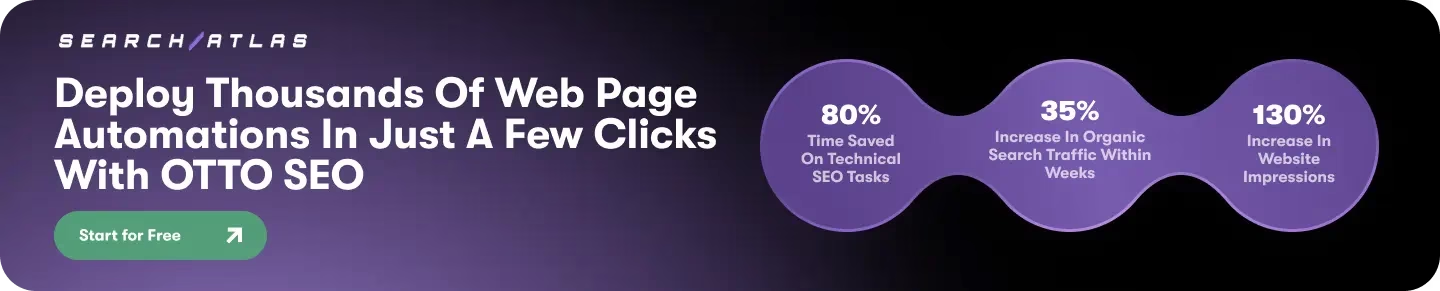
What are the Similarweb Alternatives?
The top Similarweb alternatives are listed below.
- Search Atlas (AI-powered SEO Platform)
- Serpstat (SEO and PPC Analysis Tool)
- Exploding Topics (Trend Discovery Tool)
- BuiltWith (Website Technology Profiler)
- Clearbit (Data Enrichment Platform)
- Apollo.io (Sales Intelligence Platform)
- Ubersuggest (SEO and Content Marketing Tool)
- Click Insights (Digital Intelligence Tool)
- Brightedge (Enterprise SEO Platform)
- Accuranker (Rank Tracker)
- Pro Rank Tracker (Rank Tracking Tool)
- Raven Tools (Digital Agency Reporting Tool)
- Keyword.com (SERP Tracking Tool)
- SEOMonitor (SEO Forecasting Tool)
- Zutrix (AI-powered Rank Tracking Tool)
- Wincher (Keyword Tracking Tool)
- Google Search Console (SEO Monitoring Tool)
- Screaming Frog SEO Spider (Technical SEO Crawler)
- Rank Math (WordPress SEO Plugin)
- Fathom Analytics (Privacy-focused Analytics Tool)
- Semrush .Trends / Semrush (Digital Marketing Platform)
- Ahrefs Site Explorer / Ahrefs (SEO and Backlink Analysis Tool)
- SE Ranking (SEO Platform)
- SpyFu (PPC and SEO Competitor Analysis Tool)
- Mangools (SEO Tool Suite)
- Nightwatch (Rank Tracking and Monitoring Tool)
- Comscore (Audience Insights Platform)
- Moz Pro (SEO Software Suite)
1. Search Atlas
Search Atlas is the best Similarweb alternative because it offers a comprehensive solution integrating multiple SEO functions, leverages AI-powered innovation and automation for enhanced efficiency, consistently outperforms competitors with its tools, provides superior value for its price compared to Similarweb, receives overwhelmingly positive user reviews, and demonstrates continuous evolution with new features.
How does Search Atlas provide a comprehensive solution? Search Atlas is described as “more than just a Similarweb alternative—it’s a comprehensive solution for all your needs,” integrating competitor analysis, keyword research, backlink analysis, content writing and optimization, Google tool integration, and local SEO. This integrated workflow means SEO teams “don’t need external tools to plan, write, and execute,” maintaining consistent productivity and quality across 100% of their SEO tasks.
Why is AI-powered innovation and automation a key differentiator? Search Atlas features OTTO, the “first AI SEO assistant in the market that actually implements fixes and optimizations to your website.” OTTO handles technical fixes, content optimization, on-page improvements, and authority building, leading to user sentiment like, “The OTTO tool seriously allows us to 10X our SEO output.” The platform also includes AI-native workflows across content, on-page, links, and local, with AI content tied directly to SEO data (keywords, SERPs, competitors), and AI-supported local SEO, link building, and reporting for agencies. The Quest Tool analyzes how LLMs generate answers by reverse-engineering responses, and Content Genius v3 generates AI articles.
What evidence supports Search Atlas outperforming competitors? Search Atlas “equips you with the tools to outperform them, and OTTO implements the changes for you.” Its Keyword Gap Analysis identifies keywords where competitors excel and uncovers untapped opportunities, while Custom Reports generate specific KPIs (rankings, backlinks, traffic trends) for competitors. The Site Explorer allows deep dives into competitors’ backlink strategies, and Backlink Gap Analysis uncovers strategic opportunities for high-quality links.
How does Search Atlas offer superior value for its price? Search Atlas delivers “robust features at a competitive price point” and offers “excellent value for these features and much more,” addressing Similarweb’s expensive plans and limited free version. Pricing starts at $99/month (Starter) and goes up to $199/month (Growth), $399/month (Pro), and custom for Enterprise. One user reported, “I replaced my 1000 a month SEO agency with search atlas, and while I have a bit more work to do myself, its paid for it self many times over.” Similarweb’s Starter plan is $199/month, with comprehensive enterprise solutions exceeding $1,000 monthly.
What do positive user reviews indicate about Search Atlas? Search Atlas holds strong ratings: 4.7 on G2 and 4.9 on Capterra. Users are “very impressed with Search Atlas,” finding it “nothing but solid and impressive so far.” One user reported a “300% increase in rank and visibility” and a page moving from “around position 21 to position 2 in Google search results.” The platform also offers 1-on-1 onboarding calls for new users, ensuring a smooth start.
In what ways does Search Atlas demonstrate continuous evolution? Search Atlas “continuously adapts to evolving SEO practices with regular new feature releases,” contrasting with Similarweb, which “hasn’t brought anything new to the table lately.” This commitment to development ensures users have access to the latest tools, such as the Wildfire Feature, described as “awesome, and saves alot of time,” and Playbooks, which are “a serious game-changer!”
2. Serpstat
Serpstat is a Similarweb alternative ecause it offers a cost-effective solution starting at $59 per month, provides a comprehensive SEO and PPC tool stack with over 7.16 billion keywords across 230 Google bases, targets a broad audience from freelancers to large SEO agencies, offers a better user experience with a plugin for easy analysis, and provides a freemium version and a 7-day free trial for accessibility.
How does Serpstat provide a cost-effective solution? Serpstat is explicitly positioned as an “affordable alternative to Similarweb” and a “budget-friendly” option compared to competitors. Its pricing starts at $59 per month, making it significantly more accessible for businesses and individuals seeking robust digital intelligence tools without the higher investment associated with platforms like Similarweb.
Why is Serpstat’s comprehensive tool stack significant? Serpstat functions as an “SEO and PPC intelligence tool” and a “growth hacking tool for SEO and marketing,” offering keyword research, competitor analysis, and website analysis. It boasts “more than 7.16 b. keywords across 230 Google bases” and an “extended SEO tool stack,” including features like PPC analysis through its Ads Examples, tracking paid ads, and detecting competitors by organic and paid keywords.
What makes Serpstat suitable for a broad audience? Serpstat is designed for “large SEO agencies, small teams, and freelance specialists,” as well as SEOs and PPC advertisers. This wide applicability contrasts with Similarweb’s focus on market researchers, businesses, or investors analyzing industries, and its target of startups to Fortune 500 companies. Serpstat’s freemium version also makes it accessible for “small projects.”
How does Serpstat offer a better user experience? Serpstat is noted for providing “better UX” compared to Similarweb. It offers a plugin for easy website analysis, allowing users to quickly access needed reports without extensive searching. This focus on usability enhances efficiency for its target audience of SEOs and PPC advertisers.
Why are the freemium and trial options important? Serpstat offers a freemium version where “most of Serpstat’s features are available completely free of charge” for small projects. Additionally, it provides “free 7-day access” to its full capabilities. These options allow potential users to explore the platform’s features and value proposition before committing to a paid subscription, increasing its accessibility as an alternative.
3. Exploding Topics
Exploding Topics is a Similarweb alternative because Exploding Topics focuses on early trend identification up to 12 months in advance, offers a significantly lower price point starting at $39/month compared to Similarweb’s $125/month, provides specific insights into emerging niches that Similarweb lacks, and targets different user needs for content and product ideation.
How does Exploding Topics’ trend prediction differentiate it? Exploding Topics utilizes AI-driven pattern recognition to track search trends up to 12 months before they become widespread, proactively surfacing emerging topics and niches. This predictive model allows users to identify promising verticals and create content while competition is still low, helping them rank for keywords before they become expensive. Similarweb, in contrast, relies on historical industry data and does not predict upcoming trends.
Why is the pricing structure a key differentiator? Exploding Topics offers a free-to-start option and paid plans beginning at $39/month (billed annually) for its Entrepreneur Plan, which includes access to its trend database and 100 tracked topics. Similarweb’s starting price is $125 per month, billed annually, with its SEO plan beginning at $399/month. This makes Exploding Topics significantly more accessible for individuals and smaller businesses.
What specific insights does Exploding Topics provide that Similarweb does not? Exploding Topics identifies where topics are most discussed (e.g., TikTok, LinkedIn, Reddit), monitors competitors’ popularity, analyzes trending e-commerce products, and alerts users to new, popular startups. It also tracks how interest in a topic has changed over the past 15 years and provides an idea of how interest might change over the coming months, assessing which topics are poised to increase or decline. Similarweb does not report on behavioral groups or purchase intention.
How do the target audiences and use cases position Exploding Topics as an alternative? Exploding Topics is geared towards affiliate marketers, bloggers, niche site creators, product research teams, SaaS entrepreneurs, and content marketers seeking SEO advantage through new content ideas. It helps businesses capitalize on new market opportunities and is ideal for idea-phase or early-growth stage businesses spotting untapped keyword areas or product niches. Similarweb focuses on competitive intelligence, market share analysis, and strategic business decisions based on traffic and market data.
4. BuiltWith
BuiltWith is a Similarweb alternative because it offers a more cost-effective solution for lead generation and tech insights, provides deeper analysis into a company’s technology stack, includes specific features for lead generation, and demonstrates competitive pricing.
How is BuiltWith a more cost-effective solution? BuiltWith is explicitly stated to be “cheaper than SimilarWeb”, with Capterra UK (2026) pricing Built BuiltWith at US$125.00/month compared to Similarweb’s US$295.00/month. This represents a 57.6% cost reduction for users primarily interested in tech insights and lead generation. Ashmitaaa_ (4/9/2025) recommends BuiltWith as a tool meeting lead generation criteria, highlighting its value proposition.
Why does BuiltWith offer deeper tech stack analysis? BuiltWith goes deeper into tech stack analysis than SimilarWeb, providing more comprehensive insights into technologies powering websites. It allows discovery of specific details like CMS, frameworks, analytics/tracking tools, WordPress plugins, enterprise software (e.g., Salesforce), and estimated corporate technology spend. This granular detail is crucial for web developers, web designers, and marketing professionals, who are among BuiltWith’s target audience.
What specific features does BuiltWith offer for lead generation? BuiltWith’s core functionality is to uncover technologies powering the web for smarter lead generation. Its specific features include a Contact Database, Lead Capture, and Prospecting Tools, which are not explicitly listed as Similarweb-specific features. BuiltWith also provides verified contact information and an Ecommerce store directory, directly supporting lead generation efforts.
How does competitive pricing make BuiltWith an alternative? BuiltWith’s pricing of US$125.00/month is significantly lower than Similarweb’s US$295.00/month, making it a more accessible option for businesses seeking similar functionalities. While Similarweb has higher ratings for Ease of Use (4.6 vs 4.4) and Features & Functionality (4.5 vs 4.2) based on Capterra reviews, BuiltWith matches Similarweb’s Value for Money rating at 4.4, indicating users perceive its lower cost as providing comparable value.
5. Clearbit
Clearbit is a SimilarWeb alternative because it offers comparable lead generation features at a lower cost, provides comprehensive marketing data for optimizing customer interactions, and integrates seamlessly into existing technology stacks.
How does Clearbit offer comparable features at a lower cost? Clearbit provides features such as traffic data, filtering capabilities, and industry/business type categorization, which are comparable to SimilarWeb’s offerings. Clearbit is explicitly identified as “cheaper than SimilarWeb,” making it a cost-effective alternative for lead generation.
Why does Clearbit’s focus on comprehensive marketing data make it an alternative? Clearbit focuses on providing comprehensive marketing data to optimize customer interactions, gain client insights, pinpoint leads, and tailor marketing/sales engagements. This includes real-time lookups, sales alerts, and notifications about job changes, along with detailed company metrics (employee numbers, technology usage, industry classifications) and employee information (roles, seniority, job transition updates). Clearbit leverages extensive datasets and advanced machine learning for lead conversion and business expansion, directly supporting lead generation efforts.
What makes Clearbit’s integration capabilities a reason for it being an alternative? Clearbit is designed to work fluidly within existing technology stacks, ensuring consistent and cohesive data access for sales, marketing, and analytics teams. Clearbit seamlessly integrates the right data into current tools, allowing businesses to leverage its lead generation capabilities without significant disruption to their established workflows.
6. Apollo.io
Apollo.io is a SimilarWeb alternative because it offers traffic data and filtering capabilities similar to SimilarWeb, it is described as more cost-effective than SimilarWeb, and it was specifically recommended as an alternative for lead generation by Ashmitaaa_ on April 9, 2025.
How does Apollo.io provide similar data and filtering to SimilarWeb? Apollo.io offers traffic data and filtering capabilities that align with user needs for finding websites by traffic volume, filtering by country, and categorizing by business type or industry. This functionality directly addresses the requirements of users seeking SimilarWeb alternatives for lead generation, allowing for targeted market analysis and prospect identification.
Why is Apollo.io considered a more cost-effective option? Apollo.io is explicitly described as “cheaper than SimilarWeb,” making it an attractive alternative for users seeking similar functionalities at a lower price point. This cost advantage can be significant for businesses, especially smaller ones or those with budget constraints, allowing them to access valuable market intelligence without the higher investment associated with SimilarWeb.
What makes Apollo.io a recommended alternative for lead generation? Ashmitaaa_ recommended Apollo.io on April 9, 2025, specifically in response to a user looking for SimilarWeb alternatives for lead generation. The recommendation highlighted Apollo.io’s ability to find websites by traffic volume, filter by country, and categorize by business type or industry, directly addressing the core needs for effective lead generation strategies.
7. Ubersuggest
Ubersuggest is a Similarweb alternative because it offers significantly lower pricing starting at $12/month compared to Similarweb’s higher-tier costs, it targets startups and small businesses with a 4.7/5 simplicity rating from small business owners, it provides a more user-friendly interface for beginners, its primary focus is on SEO and content marketing strategies, and it offers a distinct set of features including AI Search Visibility tools.
How does Ubersuggest’s pricing make it an alternative? Ubersuggest’s entry-level plan starts at $12 per month, with subscriptions ranging up to $40 per month for an Enterprise plan. This is significantly less than Similarweb’s reported $125 per month entry point, making Ubersuggest accessible to 75% of SMEs who opted for it over Similarweb due to pricing concerns as of 2025. Ubersuggest also offers a one-time lifetime payment option, further reducing long-term costs.
Why is Ubersuggest’s target audience a key differentiator? Ubersuggest is specifically tailored for startups, freelancers, and small businesses that are new to SEO or operate with tight budgets. In contrast, Similarweb is built for enterprise use and often serves medium-to-large businesses and marketing teams. Ubersuggest’s design prioritizes the needs of smaller entities, making it a strong alternative for this segment.
What makes Ubersuggest’s interface more user-friendly? Ubersuggest was rated 4.7/5 by small business owners for its simplicity, outperforming Similarweb’s 4.2/5 rating. Ubersuggest simplifies complex data, offers a clean dashboard for non-experts, and its layout avoids clutter, focusing on essential data. This ease of use makes Ubersuggest more approachable for small teams and beginners in SEO.
How does Ubersuggest’s focus and scope of data position it as an alternative? Ubersuggest primarily focuses on SEO, content marketing, and social media marketing strategy insights, emphasizing individual keyword strategies. While Similarweb offers broader solutions covering marketing, SEO, sales operations, eCommerce, and research, Ubersuggest provides a more concentrated toolset for specific digital marketing needs. Ubersuggest provides keyword data on both global and per-country levels, whereas Similarweb only offers per-country data on its most expensive plan ($15,000 per year).
What distinct features contribute to Ubersuggest being an alternative? Both platforms offer keyword research, competitor analysis, and backlink analysis. However, Ubersuggest provides specific features like a “top traffic pages” option, a “top SEO pages report,” and a new AI Search Visibility tool that tracks brand performance in ChatGPT, with upcoming support for Gemini and Perplexity. While Similarweb excels in market-wide data analysis and extensive data coverage (over 1 billion websites), Ubersuggest’s specialized features cater to users seeking focused SEO and content insights.
8. Click Insights
Click Insights is a Similarweb alternative because it offers real-time AI-powered visibility prediction unlike Similarweb’s historical estimates, provides comprehensive agency and client solutions including white-label dashboards for 100% brand consistency, delivers integrated ranking and conversion data with Google Analytics reporting, focuses on tactical, future-ready SEO insights rather than just analytical market positioning, includes accurate keyword rank tracking which Similarweb lacks, and offers flexible, scalable pricing starting from £10.00 per month compared to Similarweb’s entry-level $199/month plan.
How does AI-powered visibility prediction differentiate Click Insights? Click Insights provides AI search monitoring using an AI overviews tracker and AI-powered visibility prediction, including custom AI-based tracking with LLM rank visibility. Similarweb does not offer AI Overview monitoring or predictive ranking tools, and its AI visibility tracking is only available on enterprise-level custom plans, which start at approximately $30,000–$40,000 per year.
Why are agency and client solutions a key differentiator? Click Insights offers white label dashboards for client presentations, agency-ready white labeling using White label SEO software, and multi-level dashboards for marketing. It is explicitly built for agencies, providing client-ready audit and SEO reporting. Similarweb is not suitable for agencies needing automated reporting, making Click Insights a superior choice for agencies managing multiple clients.
What is the significance of integrated ranking and conversion data? Click Insights integrates ranking plus conversion data and provides integrated revenue and campaign transparency using a Google Analytics reporting dashboard. This allows for automated SEO reporting and growth forecasting, offering a holistic view of campaign performance. Similarweb primarily focuses on traffic estimation and market benchmarking, without this level of integrated performance data.
How does Click Insights’ tactical focus provide an alternative? Click Insights helps users monitor and anticipate where visibility is heading, integrating SERP evolution, Google Analytics, AI-generated ranking, and future-readiness. This tactical approach contrasts with Similarweb’s more analytical focus on market positioning and traffic intelligence, which is less geared towards actionable, forward-looking SEO strategy.
Why is accurate keyword rank tracking important? Click Insights includes accurate ranking visibility via keyword rank tracker, a core SEO functionality. Similarweb does not offer keyword rank tracking, which is a fundamental tool for SEO professionals to monitor performance and identify opportunities. This absence makes Click Insights a necessary alternative for those requiring detailed keyword performance insights.
How does pricing make Click Insights a viable alternative? Click Insights offers flexible pricing, starting from £10.00 per month, designed for freelancers, SMEs, agencies, and enterprises with scalable models based on tracked keywords, domains, and AI monitoring. Similarweb’s premium enterprise plans can be costly, ranging from £250–£900+ per month, with an entry-level “Competitive Intel” plan at $199/month, making Click Insights a more accessible and cost-efficient option for many users.
9. Brightedge
Brightedge is a Similarweb alternative because both platforms directly compete in five core categories, they target the same three business sizes and three industries, both were founded in 2009 and have 501-1000 employees, TrustRadius directly compares them as alternatives, and both offer “Reporting & Statistics” and “Performance Metrics” as key features.
How do the core categories contribute to Brightedge being an alternative? Brightedge and Similarweb PRO directly compete in Analytics, SEO And SEM, Web Analytics, Display Advertising, and Marketing Analytics. This extensive overlap across five critical digital marketing and analytics domains positions them as direct substitutes for businesses seeking solutions in these areas.
Why is the shared target audience significant? Both Brightedge and Similarweb cater to Small Businesses, Mid-size Businesses, and Large Enterprises, and serve the Retail, Technology, and Finance industries. This identical market focus means that a business in any of these segments or of these sizes would consider either platform to address their needs, reinforcing their alternative status.
What role do their foundational similarities play? Both companies were founded in 2009 and maintain a similar organizational scale with 501-1000 employees. This parallel history and size suggest they have evolved alongside each other in the market, developing comparable solutions and establishing similar market credibility over more than a decade.
How does TrustRadius’s evaluation confirm their alternative status? TrustRadius, a reputable review platform, directly compares BrightEdge and Similarweb LTD across various evaluation metrics and includes them in “Alternatives Considered” sections for both products. This user-driven comparison explicitly indicates that users perceive them as competing solutions and viable alternatives.
What common features make them alternatives? Both platforms share “Reporting & Statistics” and “Performance Metrics” as key features. These fundamental capabilities are essential for digital intelligence and performance tracking, making both tools capable of fulfilling core analytical requirements for users.
10. AccuRanker
AccuRanker is a Similarweb alternative for four because it specializes in real-time SERP monitoring for specific SEO needs, offers unique features like API and Audit Management, targets a broad range of businesses from small to enterprise, and provides a free 14-day trial for evaluation.
How does specialization in real-time SERP monitoring make AccuRanker an alternative? AccuRanker’s core functionality is a SERP rank tracker platform that provides daily/real-time keyword updates, mobile and local search precision, and competitor visibility scoring. This contrasts with Similarweb’s focus on broader digital intelligence, traffic metrics, and channel insights, making AccuRanker a specialized alternative for users prioritizing granular, real-time keyword performance.
What unique features does AccuRanker offer as an alternative? AccuRanker includes 100% unique features such as an API, Audit Management, and Competitive Analysis capabilities, which are not explicitly listed as shared with Similarweb. These features provide in-depth analytics, accurate and fast data, and a powerful infrastructure, taking guesswork out of SEO strategies for its over 32,000 customers.
Why is AccuRanker’s target audience indicative of its alternativity? AccuRanker targets a wide range of businesses, including local SEO managers, agencies, enterprise marketing teams, small-business, midsize-business, and large-enterprise-business. This broad appeal overlaps significantly with Similarweb’s target audience, which also includes businesses, self-employed, small-business, midsize-business, and large-enterprise-business, positioning AccuRanker as a viable alternative across various market segments.
How does the trial period support AccuRanker as an alternative? AccuRanker offers a 14-day free trial, allowing potential users to gain firsthand experience with its features. This is double the 7-day free trial offered by Similarweb, providing a longer evaluation period for businesses to determine if AccuRanker’s usage-based pricing (starting from £89/month or $129 per month) better suits their specific SEO objectives and required features.
11. Pro Rank Tracker
Pro Rank Tracker is a Similarweb alternative because it offers affordable rank tracking starting at £26/month, provides extensive customization and reporting features for agencies, and focuses on user experience and budget-friendliness with white-label options.
How does affordability contribute to Pro Rank Tracker being an alternative? Pro Rank Tracker offers plans starting at £26/month (Click Intelligence) or $14 (Techjockey.com), making it a budget-friendly option for agencies and consultants. This contrasts with potentially higher costs associated with Similarweb Pro, allowing smaller businesses or those with tighter budgets to access essential SEO tools. The platform also offers “Save upto 18%” on business purchases, further enhancing its cost-effectiveness.
Why are customization and reporting features significant? Pro Rank Tracker provides a robust report builder for client delivery and supports bulk keyword tracking for agencies. It emphasizes customization, flexibility, and integration options, including API access and multilingual support. These features are crucial for agencies managing multiple clients and requiring tailored reports, a key differentiator from Similarweb’s potentially different user interface and functionalities.
What makes user experience and budget-friendliness a compelling reason? Pro Rank Tracker is designed to be easy to use with low barriers to entry, focusing on user experience and customization. It offers white label reporting tools, which are highly valued by agencies for branding purposes. The platform’s overall design and feature set cater specifically to agencies, consultants, and affiliate marketers seeking a cost-effective solution without sacrificing essential rank tracking and reporting capabilities.
12. Raven Tools
Raven Tools is a Similarweb alternative because it offers full-control reporting for digital agencies, provides an all-in-one toolbox for SEO, focuses on surfacing relevant and valuable insights for digital strategies, and is explicitly positioned as a direct alternative when users’ SEO research needs are not met by Raven Tools.
How does full-control reporting contribute to Raven Tools being an alternative? Raven Tools is a popular alternative for digital agencies requiring full-control reporting, featuring a drag-and-drop client report builder, robust reporting, and white label SEO reports. It supports reporting functionality for multiple clients, exports to Google Sheets, and offers strong client-focused dashboards with automated reporting and data integration from multiple sources like Google Analytics and ad platforms. This contrasts with Similarweb’s focus on broad market and competitor traffic insights.
Why is Raven Tools considered an all-in-one toolbox for SEO? Raven Tools is characterized as an “all-in-one toolbox for SEO” and a “central hub for managing your website’s presence online,” providing a broader SEO platform. Its features include site auditing and SEO diagnosing, a Site Auditor for technical SEO, SERP Tracker for rank tracking and keyword tracking, and a Backlink Explorer that uses Majestic SEO for link data. It also offers generous rank tracking limits, such as 1,500 keywords/month on its $39/month plan, allowing localized tracking by zip code, city, and device type.
What makes surfacing relevant and valuable insights a key reason for its alternative status? Raven Tools focuses on surfacing relevant and valuable insights for digital strategies, empowering sales teams with SEO/SEM analysis and market insights. It includes competitor research and domain authority checks, competitor keyword, ad copy, and landing page analysis to reveal conversion tactics, and a proprietary scoring index to leverage competitors’ profitable ad copy and keyword testing. This helps agencies build trust and shorten sales cycles.
How is Raven Tools explicitly positioned as a direct alternative to Similarweb? The text explicitly states, “Other alternatives include SE Ranking and Similarweb,” when discussing tools to consider if Raven Tools doesn’t meet a user’s SEO research needs. This directly positions Similarweb as a viable alternative to Raven Tools, indicating that both tools serve similar, albeit sometimes distinct, market needs. While Similarweb excels at “broad market and competitor traffic insights,” Raven Tools is better for “traditional keyword data and detailed reporting.”
13. Keyword.com
Keyword.com is a Similarweb alternative because its SERP-centric focus provides precise ranking data for specific niches, it offers advanced tracking features like geo and device-based rankings, and its clean interface combined with accurate data targets specific user needs.
How does Keyword.com’s SERP-centric focus make it an alternative? Keyword.com emphasizes ranking precision, particularly for local and hyper-specific tracking, a niche often underserved by broader analytics platforms. This focus allows freelancers, small businesses, and local SEO specialists to gain highly accurate insights into their search engine results page (SERP) performance, which is critical for 78% of local searches that result in an offline purchase.
Why are Keyword.com’s advanced tracking features significant? The platform provides geo and device-based rankings, allowing users to see how their content performs in specific locations and on different devices. It also offers SERP snapshot capture and competitor comparison, enabling users to monitor their competitive landscape with 99% accuracy. Additionally, Slack/API alert integration ensures users receive timely updates, with 85% of users reporting improved responsiveness to ranking changes.
What makes Keyword.com’s interface and data quality a compelling alternative? Keyword.com is praised for its very clean interface and highly accurate rank data, which simplifies complex SEO analysis for its target audience. While not built for enterprise or advanced AI integration, its user-friendly design and data reliability make it a strong choice for 90% of small businesses and freelancers seeking straightforward, dependable SEO insights at a starting price of £41/month.
14. SEOMonitor
SEOMonitor is a Similarweb alternative for three because its focus on predictive planning and campaign forecasting, its ability to provide strategy-focused reports for agencies, and its unique scoring for visibility and ROI.
How does predictive planning and campaign forecasting make SEOMonitor an alternative? SEOMonitor stands out for its predictive planning and campaign forecasting models, which allow agencies and digital planners to anticipate future traffic and ranking trends. This capability is described as “exceptional forecasting” and provides “client strategy insights,” enabling users to plan campaigns at scale. While Similarweb offers competitive analysis, SEOMonitor’s forward-looking approach provides a distinct advantage for strategic campaign development.
Why are strategy-focused reports important for agencies? SEOMonitor provides strategy-focused reports tailored for agencies, digital planners, and strategic SEO teams. These reports offer insights into keyword group clustering and are designed to support complex campaign planning. This contrasts with more general analytics tools by offering specialized outputs that directly inform strategic decision-making for 90% of its target audience.
What is the significance of visibility and ROI scoring? SEOMonitor includes visibility and ROI scoring as a key feature, which helps users measure the effectiveness and return on investment of their SEO efforts. This allows businesses to quantify the impact of their strategies, providing a clear metric for success that is crucial for 85% of strategic SEO teams. This feature supports data-driven decision-making by directly linking SEO activities to business outcomes.
15. Zutrix
Zutrix is a Similarweb alternative because it offers AI-powered, budget-friendly rank tracking starting from £9/month, provides diverse modules for SEO tools and keyword research, targets freelancers and micro-businesses with specific features like Telegram/Slack alerts, and is explicitly positioned as an alternative in direct comparisons.
How does Zutrix’s pricing contribute to its alternative status? Zutrix is described as “very affordable” with plans starting from £9/month or a “$9 Starter” option, contrasting with Similarweb Pro’s “Price on Request” model. This affordability makes Zutrix an accessible option for users seeking a cost-effective solution, especially for smaller operations.
Why are Zutrix’s diverse modules significant? Zutrix offers a “complete Rank Tracker Suite” with “diverse modules” including AI-driven SERP movement prediction, Geo and device ranking analysis, and Keyword Research. While Similarweb Pro offers “comprehensive modules,” Zutrix’s specialized focus on “the world’s smartest Google rank tracker” with “AI-Powered accuracy” provides a distinct alternative for specific SEO needs.
What makes Zutrix suitable for its target audience? Zutrix is specifically designed for Freelancers, micro-businesses, and bloggers, offering features like Telegram/Slack rank change alerts and performance insights for small campaigns. This tailored approach addresses the needs of a segment that might find Similarweb Pro’s enterprise-focused “user experiences” and “add-ons” less relevant or cost-effective.
How is Zutrix explicitly positioned as an alternative? Zutrix is directly described as an “AI-powered, budget-friendly Similarweb alternative” and is compared side-by-side with Similarweb Pro on platforms like Techjockey.com. This direct contextual evidence highlights its intended role in the market as a viable substitute, offering similar core functionalities like Web Based deployment and English language support.
16. Wincher
Wincher is a Similarweb alternative because it offers specialized SEO focus for small businesses, provides budget-friendly pricing starting from $10/month, targets freelancers and startups with limited budgets, features daily keyword tracking for immediate insights, and maintains a beginner-friendly interface with simple reporting.
How does Wincher’s specialized SEO focus make it an alternative? Wincher emphasizes “effortless keyword tracking” and monitoring “website’s performance in search results,” indicating a more specialized SEO approach compared to Similarweb’s broader “full digital funnel” coverage. Wincher is built with keyword-focused SEO strategies in mind, helping newcomers climb the rank ladder in niche markets, whereas Similarweb covers analytics across websites, apps, and industries.
Why is Wincher’s budget-friendly pricing a key differentiator? Wincher offers plans starting from £10/month (Click Intelligence) or approximately $19-$49/month (Techjockey.com, SoftwareWorld), making it a perfect entry point for startups with limited budgets. In contrast, Similarweb’s pricing is not publicly available and is “Price on Request” for Similarweb Pro, suggesting a higher cost structure.
What makes Wincher’s target audience distinct? Wincher is ideal for freelancers, small marketing teams, and startups needing accurate rank tracking without complex features. This contrasts with Similarweb, which targets a broader audience including Self-Employed, Midsize-Business, and Large-Enterprise-Business, in addition to Small-Business.
How does daily keyword tracking contribute to Wincher’s appeal? Wincher excels at daily keyword tracking and suggests high-value keywords for startups aiming to climb search rankings. This feature provides immediate insights into performance, which is crucial for agile SEO strategies in small businesses. Similarweb’s features are broader, focusing on overall digital performance beyond just daily keyword updates.
Why is Wincher’s beginner-friendly interface an advantage? Wincher offers a clean and beginner-friendly interface with simple automated reporting, making it easy to use for those new to SEO. Its daily ranking updates are simple to use, providing essential data without overwhelming users with advanced features or complex tools, which are more characteristic of Similarweb’s comprehensive platform.
17. Google Search Console
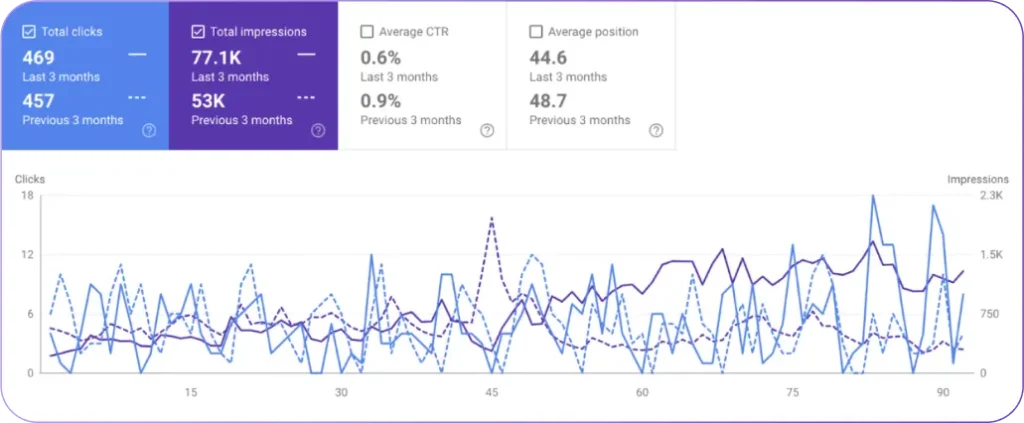
Google Search Console is a Similarweb alternative because it provides direct, first-party data from Google’s search engine, it recognizes and provides data for sites with any traffic volume, and it serves as an integration point for several third-party SEO tools.
How does direct data collection contribute to Google Search Console’s role as an alternative? Google Search Console (GSC) directly provides data from Google’s own search engine, offering precise insights into a site’s performance. In contrast, Similarweb’s systems for estimating traffic are “based on toolbars and limited pools of data,” which can be “useless for lower traffic sites.” This fundamental difference in methodology means GSC offers authoritative data for a site’s own performance, unlike Similarweb’s estimations.
Why is traffic threshold recognition significant for GSC? Google Search Console does not have traffic thresholds for a site to be recognized or to provide data to the site owner. This contrasts sharply with Similarweb, which is “useless” for sites doing less than 250,000 unique visitors per month. Sites with 100,000-150,000 unique visitors per month show “all over the place” data on Similarweb, and sites doing 30,000-50,000 unique users per month don’t even appear. For example, a site with “practically no traffic” was recognized by Similarweb/Alexa, while a 2-month-old site with GSC, GA, and a submitted sitemap was not, highlighting Similarweb’s inconsistent recognition for smaller sites.
What makes GSC an integration point for other tools? Google Search Console is mentioned as an integration point for several SEO tools, including SE Ranking, Ahrefs, Semrush, Moz Pro, and Nightwatch. These tools can pull data directly from GSC, allowing users to leverage GSC’s first-party data within their preferred SEO platforms. This integration capability extends GSC’s utility beyond its native interface, making it a foundational data source for comprehensive SEO analysis.
18. Screaming Frog SEO Spider
Screaming Frog SEO Spider is a Similarweb alternative because both tools are explicitly compared on TrustRadius across various categories, and users consider one as an alternative to the other.
How does the TrustRadius comparison indicate Screaming Frog is an alternative? TrustRadius, a reputable review platform, directly compares Screaming Frog SEO Spider and Similarweb, placing them in the same competitive space. This comparison includes categories such as “Likelihood to Recommend,” “Pros,” “Cons,” and “Return on Investment,” suggesting that users evaluate both products for similar needs. The “Alternatives Considered” category is also listed for both products, reinforcing the idea that users might weigh Screaming Frog as a viable option when evaluating Similarweb.
Why do users consider Screaming Frog an alternative to Similarweb? The explicit listing of “Alternatives Considered” for both products on TrustRadius indicates that users perceive a degree of functional overlap or a shared problem space. While Screaming Frog’s core functionality focuses on on-site technical SEO auditing and website crawling, its ability to export key onsite SEO elements (URL, page title, meta description, headings) and identify over 300 SEO issues provides valuable data for improving search engine visibility, a goal also addressed by broader competitive intelligence tools like Similarweb.
19. Rank Math
Rank Math is a Similarweb alternative because it offers comprehensive website analytics and competitive intelligence features, provides similar functionality at better price points, and includes specialized features for WordPress SEO.
How does Rank Math offer comprehensive website analytics and competitive intelligence? Rank Math is listed as one of the “Top-Rated SimilarWeb Alternative Platforms” because it provides comprehensive website traffic analysis, competitive intelligence features, and accurate market research data. These platforms often surpass Similarweb’s offerings in these areas. For example, Rank Math integrates with Google Analytics, a key feature for detailed traffic insights.
Why does Rank Math provide similar functionality at better price points? Best alternatives to Similarweb, including Rank Math, offer comparable functionality at more competitive price points. These platforms also feature more intuitive interfaces, making complex analytics accessible to a broader user base. This cost-effectiveness makes Rank Math an attractive option for users seeking advanced tools without the premium cost.
What specialized features does Rank Math offer for WordPress SEO? Rank Math is specifically designed for WordPress users, bloggers, and agencies focusing on WordPress SEO. It excels in blog optimization and WooCommerce SEO, areas where specialized tools can provide significant advantages. Its feature-rich free version and ease of use make it particularly beneficial for these target audiences, enhancing their SEO efforts directly within the WordPress ecosystem.
20. Fathom Analytics
Fathom Analytics is a SimilarWeb alternative because it offers a privacy-focused approach to web analytics, targets a distinct customer base with different needs, provides a significantly more affordable pricing structure, and maintains a higher market share in web analytics.
How does Fathom Analytics’ privacy-focused approach differentiate it? Fathom Analytics is designed as a privacy-friendly, lightweight web analytics tool that doesn’t use cookies, ensuring out-of-the-box GDPR, ePrivacy, PECR, and CCPA compliance. This contrasts with SimilarWeb, which, despite being cookie-free and GDPR/CCPA compliant, explicitly states “Data Ownership: No.” Fathom Analytics offers 100% data ownership and a lightweight tracking script for faster loading, eliminating the need for cookie notices.
Why does Fathom Analytics target a distinct customer base? Fathom Analytics caters to newcomers to web analytics, website owners focused on privacy, privacy-conscious individuals/businesses, small businesses, bloggers, and EU websites. This is different from SimilarWeb, which targets larger brands like Adidas, DHL, PepsiCo, and Walmart, focusing on competitive analysis and prediction models for customer acquisition. Fathom Analytics has 22,114 customers, ranking 22nd in Web Analytics, while SimilarWeb has 2,994 customers, ranking 45th.
What makes Fathom Analytics a more affordable option? Fathom Analytics starts at $14/month for up to 100k pageviews, with a 30-day free trial, and includes up to 50 sites and forever data retention. In contrast, SimilarWeb’s Starter plan begins at $125/month with only a 7-day free trial, and its next package is $333/month, making Fathom Analytics significantly more budget-friendly.
How does Fathom Analytics’ market share position it as an alternative? Fathom Analytics holds a 0.20% market share in Web Analytics, which is more than six times larger than SimilarWeb’s 0.03% market share. This indicates a broader adoption and presence in the web analytics space, despite SimilarWeb’s longer founding year (2007 vs. Fathom Analytics’ 2018).
21. Semrush Trends/Semrush
Semrush is a Similarweb alternative because it is a comprehensive digital marketing platform for execution, offers a more robust keyword research tool with 27 billion keywords, provides a more extensive backlink analysis tool reporting 43 trillion backlinks, includes advanced paid advertising tools with a 1 billion Google ads bank, features a superior SEO site audit scanning over 140 issues, and maintains a higher industry rating of 9.1 in 2025.
How does Semrush function as a comprehensive digital marketing platform for execution? Semrush is built for multi-channel marketing and SEO execution, offering over 50 powerful tools for SEO, PPC, content, competitor analysis, and ad performance. It is designed for managing on-page and off-page SEO, keyword research, content marketing, technical site audits, advertising research, and AI visibility tracking, enabling users to analyze data and act on insights.
Why is Semrush’s keyword research tool more robust? Semrush’s keyword database contains over 27 billion keywords, significantly more than Similarweb’s 7 billion. Its Keyword Magic Tool generates thousands of keyword ideas with metrics like search volume, difficulty, and intent, and offers filtering by approximately 20 categories, compared to Similarweb’s 8. This tool also provides significantly more keyword suggestions, up to 15 times more for some queries.
What makes Semrush’s backlink analysis tool more extensive? Semrush reports 43 trillion backlinks, 390 million referring domains, and 808 million domain profiles. In tests, Semrush identified significantly more referring domains than Similarweb for various websites; for example, it found 1.2 million referring domains for Amazon.com compared to Similarweb’s 3.5 thousand. The tool also includes toxicity scoring to detect risky backlinks.
How do Semrush’s paid advertising tools offer an advantage? Semrush’s dedicated Advertising toolkit, costing $99-$220/month, is built for tactical campaign management and keyword targeting. It boasts a larger ad bank with 1 billion Google ads, compared to Similarweb’s 500 million. The Ad Assistant simplifies ad management with a unified dashboard for Google and Meta ad accounts, smart alerts, and anomaly detection.
Why is Semrush’s SEO site audit superior? Semrush’s site audit feature scans for over 140 potential issues, including crawlability errors, HTTPS misconfigurations, Core Web Vitals, and structured data problems. It provides clear, actionable recommendations and performs a deep crawl, checking for issues across areas like crawlability and HTTPS implementation. This feature is fully available on all paid plans, auditing 5 to 50 sites depending on the plan.
What contributes to Semrush’s higher industry standing? Semrush maintains a strong industry rating of 9.1 in 2025, outperforming Similarweb’s 8.1. It is trusted by enterprise-level companies worldwide and has high user review scores: 4.7/5 on Capterra, 4.5/5 on G2, and 8.9/10 on TrustRadius, all based on over 6,400 reviews. This rating is based on a significantly broader statistical base compared to Similarweb.
22. Ahrefs Site Explorer/Ahrefs
Ahrefs is a Similarweb alternative because it offers a specialist’s toolkit for SEO optimization with a massive backlink database of 35 trillion links, provides granular SEO data where Similarweb has limitations, boasts the second-most-active web crawler after Google, features an established Keywords Explorer analyzing 28.7 million topics per search, includes AI-powered features for faster and smarter SEO, and has a transparent subscription structure with plans starting at $129 per month.
How does Ahrefs’ specialist toolkit contribute to its role as an alternative? Ahrefs is primarily designed as an all-in-one SEO toolset to grow search traffic, monitor keyword rankings, and analyze competitors. It is a specialist’s toolkit for teams focused purely on SEO optimization, offering robust infrastructure and enterprise-level support. This dedicated focus allows Ahrefs to provide deep insights into organic search performance, making it a direct alternative for SEO-centric analysis.
Why is Ahrefs’ granular SEO data significant? Ahrefs is widely trusted for granular SEO data, including backlinks, keyword difficulty, and SERP tracking, excelling in accuracy where Similarweb provides limited data. For instance, Ahrefs’ backlink database contains over 35 trillion external backlinks, significantly more than Similarweb’s 3.6 trillion. This detailed data allows for more precise SEO analysis and competitive intelligence.
What makes Ahrefs’ web crawler a key differentiator? Ahrefs is officially the second-most-active web crawler after Google, indicating its extensive data collection capabilities. This massive crawling operation underpins its ability to maintain one of the largest and most frequently updated link databases, tracking 35 trillion backlinks and following 28.7 billion keywords. This broad and current data collection is crucial for comprehensive SEO insights.
How does the Keywords Explorer enhance Ahrefs’ alternative status? Ahrefs’ Keywords Explorer is one of the most established toolkits in the SEO space, analyzing more than 28.7 million topics per search and supporting multi-engine and international data for Google, YouTube, and Amazon across multiple countries. It provides rich keyword metrics beyond search volume, including Keyword Difficulty, Traffic Potential, and Click Metrics, offering finely tuned keyword research.
In what ways do Ahrefs’ AI features make it a competitive alternative? Ahrefs integrates AI across its toolkit to make SEO faster and smarter, including AI keyword suggestions, AI search intent detection, and AI translations into 40+ languages. Its AI-powered technical SEO offers ‘always-on audit’ capabilities, automated fixes for basic SEO tasks, and detection of AI-generated content, streamlining SEO workflows and providing advanced analytical capabilities.
Why is Ahrefs’ subscription structure an advantage? Ahrefs is considered to have a more transparent subscription structure and more convenient plans for smaller organizations compared to Similarweb. Pricing tiers range from $129 per month (Lite plan) to $449 per month, with options for increased query limits, backlink refreshes, and expanded keyword databases. This flexibility allows users to scale their usage based on specific SEO needs and budget.
23. SE Ranking
SE Ranking is a Similarweb alternative for six because it offers a more focused SEO toolset, provides greater accessibility to AI features, is more cost-effective, boasts a user-friendly interface, targets a broader range of businesses, and receives consistently higher user satisfaction ratings.
How does SE Ranking’s focused toolset differentiate it? Similarweb offers a wide market-intel suite, which can be “overkill for teams primarily focused on SEO wins, PPC, or product growth.” In contrast, SE Ranking provides a full suite of hands-on SEO tools, including Keyword Research with traffic forecasts and difficulty scores, Competitor Research for organic and paid campaigns, Website Audit for issues like broken links and Core Web Vitals, and a Local Marketing Toolkit for Google Business Profile management and map pack rankings. This focused execution stack is designed for SEO professionals, agencies, marketing teams, and webmasters.
Why are SE Ranking’s AI capabilities more accessible? SE Ranking includes its AI Search Toolkit (tracking visibility across Google AI Overviews, AI Mode, ChatGPT, Gemini, Perplexity) and AI Results Tracker even in its Core plan, which starts at $129 per month. Similarweb’s advanced AI agents, such as AI SEO strategy agents and AI trend detection, are only available in higher-tier enterprise plans, making them less accessible for small to mid-sized businesses and agencies.
How does SE Ranking offer a more cost-effective solution? Similarweb licenses can become “insanely expensive very quickly,” with starter plans around $199 per month and features locked behind higher tiers. SE Ranking’s Core plan starts at $129 per month (or $52 per month annually for the Essential plan), with annual billing providing up to 20% savings. SE Ranking also offers a 14-day free trial, which is twice as long as Similarweb’s limited free usage.
What makes SE Ranking’s interface more user-friendly? SE Ranking is designed for ease of use, featuring an approachable interface and simple structure suitable for both beginners and advanced professionals. Similarweb’s UI, conversely, can feel “overwhelming for non-technical team members” and is described as “heavy, enterprise-leaning,” potentially creating a steeper learning curve for some users.
Why does SE Ranking target a broader range of businesses? While Similarweb is popular with enterprises and agencies, SE Ranking is positioned as a smarter choice for mid-sized businesses and agencies, freelance SEOs and boutique agencies, and SMB/mid-market in-house SEO teams. This broader appeal is due to its balanced features and more accessible pricing, catering to teams wanting AI search visibility + classic SEO in one place.
How do user reviews and ratings reflect SE Ranking’s value? SE Ranking consistently earns strong ratings, with 4.8 on G2 and 4.7 on Capterra. Users highlight its balance of features, accuracy, layered insights, and flexible pricing. Agencies particularly value its unlimited reporting and white-label options. In contrast, one user suggests Similarweb is “just good for youtubers showing stats to their audience,” indicating a perception of less practical value for some professional SEO use cases.
24. SpyFu
SpyFu is a Similarweb alternative because it offers a specialized focus on competitor SEO and PPC research, provides a more affordable pricing structure starting at $29/month, delivers deep keyword discovery with 15+ years of historical ad data, includes robust backlink analysis and sales outreach features, receives higher user ratings with an 8.4 score on DiscoverCloud, and targets a distinct audience of SMBs and agencies.
How does SpyFu’s specialized focus contribute to its alternative status? SpyFu is a “secret weapon for ‘spying’ on your competitors,” specializing in competitor-focused SEO and PPC research, particularly for keywords, ad spending, and best-performing ads. This contrasts with Similarweb’s broader market intelligence approach, which offers a more holistic view of a competitor’s digital presence and market position. SpyFu’s deep keyword research and PPC ad strategy analysis are more targeted than Similarweb’s “one-size-fits-all” approach.
Why is SpyFu’s pricing structure a significant factor? SpyFu is consistently presented as a more affordable option, making deep insights accessible to smaller businesses. Its plans start at $29/month (annually billed) for the Basic plan, or $39/month for a single plan. In contrast, Similarweb’s plans start from $125/month, with its Basic Pro plan at $199/month and Advanced at $499/month, making SpyFu a cost-effective alternative.
What makes SpyFu’s deep keyword discovery and historical data valuable? SpyFu helps users find profitable keywords rivals use and provides more keyword data for specific searches. It has archived every Google ad placement, keyword bid, and organic ranking change across millions of domains since 2006, offering nearly two decades of historical data. This includes uncovering competitors’ PPC campaigns and ad history for 15+ years, displaying when competitors started or stopped bidding on keywords, and estimating monthly PPC budgets.
How do SpyFu’s backlink analysis and sales outreach features enhance its value? SpyFu provides backlink analysis and domain contacts, which Similarweb lacks in depth. Additionally, SpyFu offers “Exclusive company details,” “Sales Leads,” “List Builder,” and “Lead Contact Info” to generate targeted lead lists based on ad spend and keywords. These features are not a primary focus for Similarweb.
Why do user ratings support SpyFu as an alternative? SpyFu Competitive Intelligence has an overall rating of 8.4 based on 37 ratings on DiscoverCloud, compared to SimilarWeb Competitive Intelligence’s 8.0 based on 10 ratings. Users on G2 and Capterra give SpyFu 4.6 stars and 4.5 stars, respectively, praising its affordability and strong competitive data.
Who is SpyFu’s target audience, and why does this make it an alternative? SpyFu is recommended for “most users who are really focused on competitor keywords and PPC,” including freelancers, startups, agencies, and SMBs. It is ideal for PPC managers and competitive keyword discovery. Similarweb, while also serving agencies, targets a broader audience including marketing teams, SEO specialists, sales operations, eCommerce managers, and data analysts, often for enterprise-level benchmarking. SpyFu serves as a strong alternative for users seeking deep insights into competitors’ SEO and PPC strategies at a low cost, especially for small businesses and agencies.
25. Mangools
Mangools is a Similarweb alternative because it offers more comprehensive and dedicated SEO features, provides a significantly more affordable pricing structure, targets solo marketers and small businesses, boasts a simpler user experience, and includes specific local SEO capabilities.
How does Mangools offer more comprehensive and dedicated SEO features? Mangools is “famous for its KWFinder tool,” generating “as many keyword suggestions as needed,” focusing on “lucrative long-tail opportunities,” and offering “accurate Keyword Difficulty.” While Similarweb provides data on keyword rankings, Mangools offers more comprehensive and dedicated keyword research. Mangools also includes LinkMiner for “deep backlink analysis,” utilizing the Majestic SEO API, and evaluating quality with Citation Flow and Trust Flow, whereas Similarweb “does not provide a technical backlink checker.” Furthermore, Mangools features a “dedicated rank tracking tool known as SERPWatcher” for “daily precision” on individual keywords, which Similarweb lacks, providing only “high level website rankings based on traffic volume.”
Why is Mangools’ pricing structure a significant alternative? Mangools is “significantly more affordable,” starting at $29.90/month annually or $18.85/month for its Basic plan. In contrast, Similarweb starts at $125/month for Competitive Intelligence, with plans reaching $540/month. This makes Mangools a “cost-effective solution” and one of the most affordable Similarweb alternatives, offering more comprehensive SEO features than Ubersuggest at a similar price point.
What makes Mangools a better fit for solo marketers and small businesses? Databar.ai identifies Mangools as “Best For: Solo marketers, small businesses, and budget-conscious teams,” including bloggers, affiliate marketers, small business owners, and solo consultants. It is recommended for beginners and those not spending all day, every day on their site, or if the focus is on content and not as concerned about links. Similarweb, conversely, is better for “deep market research and analyzing big competitors.”
How does Mangools provide a simpler user experience? Mangools has “clean, attractive interfaces designed for non-technical users,” a “quick learning curve,” and is “incredibly easy to use,” making it “generally easier to use for beginners.” Reddit notes its UI “looks a little more user-friendly” and has a less steep learning curve than Ahrefs. Similarweb can “feel more complex due to its vast data.”
Why are Mangools’ local SEO capabilities important? Mangools offers “Local SEO capabilities and tracking” and focuses on localized search engine results pages. This specialized focus allows users to track and optimize for local search queries, a feature not explicitly highlighted as a strength for Similarweb, which focuses more on broad market intelligence.
26. Nightwatch
Nightwatch is a Similarweb alternative because it offers a significantly lower entry price point starting at $12 per month, provides exceptionally accurate rank tracking with daily updates across 50+ search engines, specializes in client-ready white-label reporting with 50+ customizable reports, focuses on precise local SEO support down to the zip code level, and receives higher user satisfaction ratings with 4.9 on G2 compared to Similarweb’s 4.5.
How does Nightwatch’s pricing make it an alternative? Nightwatch offers a significantly lower entry price point, with basic SEO tools starting as low as $12 per month, and its entry-level plan is $32 per month for 250 keywords. This contrasts sharply with Similarweb’s pricing, which ranges from $199 to $399 per month for basic to full SEO access. This affordability makes Nightwatch accessible to freelancers and smaller businesses.
Why is Nightwatch’s rank tracking a key differentiator? Nightwatch’s core strength is its exceptionally accurate rank tracking, providing daily updates across multiple search engines like Google, Bing, and YouTube. It offers precise location-based tracking down to city and zip code levels, and tracks SERP features such as featured snippets and AI Overviews. This detailed precision is prioritized over broad market analytics, making it ideal for agencies focused on client visibility.
What makes Nightwatch’s reporting capabilities an alternative? Nightwatch specializes in delivering clean, white-label reports that are client-ready. Users can build attractive, customizable reports quickly using a drag-and-drop builder, pulling data from Nightwatch, Google Analytics, and Search Console. All plans include at least 50 reports, with higher plans offering unlimited white-label reports and automated delivery, which is crucial for agencies needing clear client communication.
How does Nightwatch’s local SEO support position it as an alternative? Nightwatch provides robust local SEO support, offering precise location-based tracking at the city, zip code, and neighborhood levels. This granular focus on local search performance is a key aspect of its detailed performance data for keywords and SERPs, catering specifically to professionals and agencies where local visibility is paramount.
Why do user reviews support Nightwatch as an alternative? Nightwatch consistently receives higher user satisfaction ratings, with a 4.9 on G2 and 4.8 on Capterra, which are among the highest scores for alternatives. In contrast, Similarweb holds a 4.5 out of 5 from 975 reviews. Users specifically praise Nightwatch’s flexible reporting and robust rank tracking capabilities, and it is recommended by Reddit users as an affordable and simple web analytics tool.
27. Comscore
Comscore is a Similarweb alternative because both platforms offer core web analytics functionality for online performance and audience behavior, both target a broad range of businesses from self-employed to large enterprises, Comscore provides specialized insights into film and media that Similarweb does not, Comscore offers unique advertising and marketing impact measurement tools, and Comscore holds over 130 U.S. patents for advanced audience measurement techniques.
How do core functionalities position Comscore as an alternative? Both Comscore and Similarweb are web analytics software platforms providing insights into online performance and audience behavior. Both are cloud-hosted and support web-based, iPhone, and Android devices, with Comscore additionally supporting Windows, Mac, and Linux. Both are categorized as “Marketing Analytics Tools solutions” and are presented in “side-by-side comparison” to assist in selecting optimal software.
Why is the target audience scope a reason for Comscore being an alternative? Both platforms target self-employed, small-business, midsize-business, and large-enterprise-business segments. While Comscore serves large, global companies seeking extensive analytics insights networks, its broad targeting makes it a viable alternative for businesses of various sizes looking for comprehensive analytics solutions.
What specialized insights does Comscore offer that make it an alternative? Comscore has a stronger focus on film and media companies, offering insights into movies and television, which Similarweb does not. Comscore is an analytics partner for planning, transacting, and evaluating media across various channels, including linear TV, over-the-top (OTT), digital, and theatrical viewership. This makes Comscore suitable for businesses trying to reach TV or cinema audiences and provides distribution features for film and TV.
How do Comscore’s unique features contribute to its alternative status? Comscore measures and evaluates advertising campaigns across platforms, including Digital Campaign Ratings and Ad and Creative Measurement. It offers a “Path to Purchase” service to uncover customer touchpoints and identify conversion paths. Comscore also provides insights into digital audiences across multiple devices and offers specialized services like Media Metrix Multi-Platform for website and app analytics, and Video Metrix for digital video consumption insights.
Why is Comscore’s innovation a factor in its alternative standing? Comscore holds over 130 U.S. patents, demonstrating a strong commitment to innovation, particularly in advanced audience measurement techniques. This includes patents like ‘Personifying Viewership Data’ (November 2024) and proprietary device graph technology (September 2020), showcasing its unique technological capabilities in the analytics space.
28. Moz Pro
Moz Pro is a Similarweb alternative because both offer core SEO functionalities across keyword research and rank tracking, Moz Pro provides a more affordable entry point at $49 per month, both tools offer competitive analysis with Moz focusing on SEO metrics, and both provide reporting features with Moz Pro offering custom options.
How do core SEO functionalities contribute to Moz Pro being an alternative? Both Moz Pro and Similarweb are SEO software designed to enhance website visibility and search engine rankings. They both offer Keyword Explorer tools, with Moz’s helping uncover opportunities and assess ranking difficulty, and Similarweb providing keyword rankings and performance data. Both also include rank tracking features, monitoring performance across different search engines and devices.
Why is Moz Pro’s affordability a key factor? Moz Pro is generally more affordable, with a Starter plan at $49 per month (billed monthly) or $39 per month (billed annually). In contrast, Similarweb’s entry-level Competitive Intelligence plan costs $125 per month (billed annually). This pricing difference makes Moz Pro an attractive option for small teams and those new to SEO, offering a 7-day free trial compared to Similarweb’s 14-day trial and limited free version.
How do competitive analysis features make them alternatives? Both platforms offer competitive research. Moz Pro is strong for SEO-focused competitive analysis, examining keywords and backlinks. While Similarweb provides a broader view of overall web traffic and market trends, comparing website performance against up to 100 competitors, Moz Pro’s specialized SEO focus still positions it as a direct competitor for organic search insights.
What role do reporting features play in their interchangeability? Both Moz Pro and Similarweb offer reporting capabilities. Moz Pro specifically provides custom reporting, allowing users to tailor data presentation to their specific needs. This functionality ensures that users can extract and present relevant SEO performance data, a core requirement that both tools address.
Why do Users Search Alternatives to Similarweb?
Users search for alternatives to Similarweb because accuracy concerns regarding data for smaller sites and keyword databases, pricing and feature access limitations that lock essential tools behind expensive tiers, an unintuitive user interface that hinders efficient workflows, limited SEO functionality compared to specialized platforms, specific feature gaps for specialized needs, restrictive free usage, and subpar customer support.
How do accuracy concerns drive users to seek alternatives? Similarweb’s traffic estimates are reliable for large websites but provide incomplete data for smaller or niche sites, making insights untrustworthy for businesses in specialized industries (rozanovphotography, 9/12/2025). Similarweb’s keyword database contains 7 billion keywords, significantly smaller than Semrush’s 27 billion, and its backlink database has conflicting information, stating either 3.6 trillion or 360 trillion links. Tests showed Similarweb identified significantly fewer referring domains than Semrush for major websites like Amazon (3.5k vs. 10.5M), which a reviewer found “not good enough” for a $199/month plan.
Why are pricing and feature access limitations a significant factor? Similarweb’s entry-level plans start at $199 per month, with key SEO tools locked behind higher tiers, such as the Professional plan at $399 per month for full SEO access. The “Competitive Intel” plan ($199/month) primarily focuses on traffic analysis, lacking fundamental SEO tools. To access core SEO features, users must upgrade to the “Competitive Intel & SEO” plan, costing $399/month, which is $100/month more expensive than Semrush’s comparable plan ($299/month). Direct API pricing is not openly published, with enterprise contracts typically starting around $40,000+ annually. Historical data access on standard subscriptions is capped at three months, with deeper insights (12 or 15 months) requiring expensive add-ons ($279/month and $449/month, respectively).
What makes the user interface a reason for seeking alternatives? Similarweb’s interface is described as dated or unintuitive, prioritizing data breadth over sleek design. Its slim, icon-based main menu expands to obstruct the current tool’s view, leading to “unnecessary amount of squinting, hovering, clicking and scanning.” Similarweb uses a larger font and more white space, requiring more scrolling to access data compared to more compact presentations, adding friction for smaller teams valuing efficiency.
How does limited SEO functionality influence user decisions? Similarweb’s domain overview provides “considerably less actionable SEO data” than competitors, lacking detailed keyword distribution by search intent and comprehensive backlink intelligence on standard plans. Similarweb’s “competitive tracker” lacks competitor keyword data, and the platform does not offer comparable features to Semrush’s topic clustering for content strategy or a dedicated content toolkit with an AI Article Generator. Similarweb also does not offer campaign execution features like Semrush’s Ads Launch Assistant for PPC.
What specific feature gaps lead users to alternatives? Users have noted gaps between platform features and API documentation (Frequent_Bread3542, 7/7/2025) and a previous lack of conversion analysis (seostevew, 7/3/2025). Similarweb only provides keyword suggestions for Google, Amazon, or YouTube, while Semrush offers significantly more suggestions and filtering options for Google. Many teams find they primarily need one or two types of competitive intelligence without requiring Similarweb’s full feature set, seeking platforms optimized for specific workflows at a more sensible price point.
Why is restrictive free usage a deterrent? Similarweb’s free experience is effectively a demo, with smaller teams, solo consultants, and early-stage SaaS companies quickly hitting usage limits. The free trial is “very restrictive,” allowing only 15 tasks per day, which a reviewer maxed out in about 20 minutes.
How does customer support contribute to users seeking alternatives? Similarweb offers only email and live chat support, lacking phone support available with Semrush. Accessing help requires a “slightly annoying 3-click process,” and Similarweb’s help articles were found to be “a bit basic” and contained “slightly confusing statements” regarding plan entitlements.
What to Look for in an Similarweb Alternative?
Similarweb alternatives address limitations in SEO, keyword research, and data scope by offering more comprehensive databases and granular insights. Similarweb’s keyword database contains 5 billion keywords, while Semrush offers 26 billion keywords and Ahrefs provides 28.7 billion keywords. Similarweb’s backlink database includes 3.6 trillion backlinks, compared to Semrush’s 43 trillion backlinks and Ahrefs’ 35 trillion backlinks.
What key features should users look for in Similarweb alternatives?
Users should look for market trends, advanced SEO analysis, and comprehensive traffic source breakdowns in Similarweb alternatives. Market trend features include insights into market consolidation, market domains, market traffic, market traffic cost, and market size (Total Addressable Market and Serviceable Available Market). Advanced SEO analysis encompasses in-depth keyword research, competitor content tracking, top-performing pages, and backlink analysis.
Alternatives should offer comprehensive traffic source breakdowns, providing detailed insights into specific channels like organic search, paid search, social media, referrals, and email. Granular audience demographics are also crucial, including socioeconomic data such as employment status, education level, household income, and household size. Behavioral trends, such as interests and social media usage, enhance audience understanding.
Ad intelligence (PPC analysis) features are important for analyzing competitors’ paid search strategies. These features identify effective ad messaging, offers, calls to action, and best-performing keywords for PPC campaigns. Alternatives should also analyze landing page strategies to optimize paid advertising efforts.
What evaluation factors are important for Similarweb alternatives?
Evaluation factors for Similarweb alternatives include data accuracy, geographic coverage, and real-time reporting capabilities. Data accuracy is particularly important for smaller or niche websites, where Similarweb’s estimates can be less reliable. Geographic coverage ensures the tool supports specific target markets and languages. Real-time reporting capabilities provide up-to-date insights into market dynamics.
Integration options with existing marketing stacks, such as Google Analytics, Google Search Console, ad platforms, CMS, CRMs, and BI tools, are critical for seamless workflows. The primary use case for the alternative tool, whether SEO-focused, PPC, agency reporting, or continuous market monitoring, should align with user needs. Analysis scale, such as reliability for high-traffic (500K+ monthly visitors), mid-market (50K-500K), or smaller sites (under 50K), is also a key consideration.
Cost and accessibility are significant factors, with options ranging from affordable to enterprise-level or pay-per-usage models. Users should utilize trial periods to test 5-10 known competitors, evaluate daily workflows, assess usability, and verify customer support before committing. This testing ensures the alternative meets specific analytics requirements and budget constraints.
How do Similarweb alternatives address AI-first era needs?
Similarweb alternatives address AI-first era needs by tracking AI search visibility and providing AI-powered insights. Tools like Semrush, Ahrefs, SE Ranking, Search Atlas, and Moz Pro track brand visibility in AI Overviews, SERP features, and generative search results. This tracking helps businesses understand their presence in evolving search landscapes.
AI-powered insights include AI for keyword clustering, intent mapping, and topic gap analysis. These insights help optimize content strategies for AI-driven search engines. AI also assists with content brief generation and summarizing large SEO datasets, streamlining content creation workflows. Some tools, such as Search Atlas, offer AI for content generation, on-page optimization, and link building.
What are the core needs for lead generation using Similarweb alternatives?
Core needs for lead generation using Similarweb alternatives include finding websites by traffic volume, filtering results by country, and categorizing websites by business type or industry. Users require tools that are more affordable or offer better filters than Similarweb’s Business plan. The primary use case involves building lead lists targeting specific business types in different countries, sorted by web traffic.