New vs. returning visitors is a core web analytics segmentation method that separates first-time visitor sessions from repeat visitor sessions through browser-based tracking identifiers. The meaning of new vs. returning visitors explains how analytics platforms classify audience behavior through stored cookies and session continuity, which reveals differences between acquisition traffic and retention traffic. This distinction clarifies what new and returning visitors mean in practical analytics reporting.
New vs. returning visitor data matters because analytics platforms evaluate acquisition performance, engagement quality, and retention behavior through visitor segmentation. Systems (GA4) identify new visitors and returning visitors through browser-level identifiers, which affects how traffic, conversions, and engagement metrics appear across reports. This segmentation shows what new vs. returning visitors mean in analytics workflows, where visitor classification shapes attribution, reporting accuracy, and audience analysis.
New vs. returning visitor metrics create measurable insights for businesses operating across search, ecommerce, SaaS, and content-driven environments. New visitor traffic reveals audience growth and acquisition reach, while returning visitor traffic reveals repeat engagement and retention strength. Websites that balance acquisition and retention effectively strengthen conversion efficiency, customer lifetime value, and long-term audience growth across marketing channels.
New vs. returning visitor analysis requires accurate segmentation, behavioral interpretation, and contextual reporting across analytics systems. Strong visitor analysis combines engagement metrics, conversion data, and acquisition channels to reveal how different audience groups interact with a website. The ability to interpret new and returning visitor behavior correctly ensures that businesses improve acquisition strategy, retention performance, and overall marketing decision-making.
What Are New Visitors?
New visitors are website visitors who access a website for the first time during a selected measurement period. Analytics platforms classify a session as a new visitor when no existing tracking identifier matches the incoming browser or device session. New visitor tracking depends on browser cookies, device identifiers, and analytics session recognition systems. This tracking process defines what new visitors are because analytics platforms rely on identifier detection instead of confirmed individual identities.
What triggers the new visitor classification in browser-based tracking? The new visitor classification triggers when the analytics platform cannot find a previously stored identifier at session start. Browser-based analytics systems usually store this identifier inside a first-party cookie connected to the visitor’s browser. A first visit creates a new identifier and attaches that identifier to future sessions from the same browser. Cookie deletion, cookie expiration, private browsing sessions, and browser resets remove that stored identifier, which causes the analytics platform to classify the next session as a new visitor again.
Why does the measurement period affect new visitor counts? The measurement period affects new visitor counts because analytics reports evaluate visitor status relative to the selected reporting window. A person who visited a website 6 months earlier still appears as a new visitor inside a 30-day report if no visit occurred during that timeframe. Analytics systems compare sessions against historical activity inside the selected date range instead of the full lifetime history of the website. This reporting logic changes how analytics platforms calculate first-time traffic across dashboards and acquisition reports.
How does device or browser switching affect new visitor attribution? Device switching and browser switching create separate new visitor records because analytics platforms track identifiers at the browser or device level. A person visiting from Chrome on mobile and Safari on desktop generates two different tracking identifiers and two different new visitor sessions. Browser-level tracking limits attribution accuracy because analytics systems cannot automatically connect sessions across devices without identity stitching systems. Google Signals, User ID tracking, and authenticated account tracking reduce this fragmentation by connecting sessions to the same user identity across environments.
What Are Returning Visitors?
Returning visitors are website visitors whose browser or device already contains a recognized tracking identifier from a previous session. Analytics platforms classify a session as returning when the platform detects an existing identifier connected to earlier website activity. Returning visitor tracking relies on persistent cookies, stored device identifiers, and session retention settings. This tracking process defines what are returning visitors because analytics systems identify repeat sessions through stored identifiers instead of confirmed personal identities.
How does an analytics platform define a returning visitor? An analytics platform defines a returning visitor through identifier recognition during session initialization. The platform checks incoming session data against previously stored browser or device identifiers connected to earlier visits. A matching identifier signals that the browser or device accessed the website before within the configured retention period. Analytics systems classify that session as returning immediately after the identifier match occurs.
What behavior does a returning visitor session indicate? A returning visitor session indicates repeat interaction from the same tracked browser or device. Analytics systems interpret that repeated interaction as evidence that the website has already appeared in the visitor’s browsing history, bookmarks, campaigns, or previous navigation paths. The classification itself does not confirm loyalty, satisfaction, or purchase intent because the returning label only reflects identifier continuity. Repeat visits originate from many scenarios, which range from newsletter clicks and retargeting ads to unfinished purchases and repeated product research.
How does the returning visitor label differ from a loyal user? The returning visitor label represents a technical session state instead of a long-term relationship signal. A visitor who refreshes a shipping page multiple times during one day still counts as returning traffic without showing loyalty behavior. A loyal subscriber reading monthly newsletters from different browsers never appears as a returning visitor because the analytics platform detects separate identifiers. This distinction matters because returning visitor metrics measure tracked repeat sessions rather than emotional connection or customer retention quality.
What Is the Difference Between New and Returning Visitors?
The difference between new and returning visitors depends on tracking identifier recognition at the start of a session. New visitors arrive without a previously recognized identifier, while returning visitors arrive with an existing identifier already connected to prior activity. This distinction separates first-time traffic from repeat traffic inside analytics platforms. This separation explains how analytics systems classify visitor states and evaluate audience engagement patterns.
New visitors represent browsers or devices entering a website without stored tracking continuity. Returning visitors represent browsers or devices that already contain recognized tracking continuity from earlier sessions. This contrast changes how analytics platforms measure engagement, retention, and conversion behavior across traffic segments.
The core differences between new and returning visitors are listed below.
| Aspect | New Visitors | Returning Visitors |
| Definition | Visitors without an existing tracking identifier at session start. | Visitors with a recognized tracking identifier from previous sessions. |
| Session state | Begins as the first recorded session inside the reporting window. | Begins as a repeat recorded session connected to earlier visits. |
| Tracking condition | No matching browser or device identifier exists. | A matching browser or device identifier already exists. |
| Audience familiarity | Limited familiarity with the website, navigation, or brand. | Existing familiarity with the website, products, or content. |
| Common acquisition channels | Organic search, paid ads, social referrals. | Direct traffic, email campaigns, and branded search. |
| Bounce rate tendency | Higher bounce rates due to first-visit exploration behavior. | Lower bounce rates due to prior navigation familiarity. |
| Conversion tendency | Lower conversion rates during initial discovery stages. | Higher conversion rates during repeat engagement stages. |
| Session behavior | Shorter sessions with fewer viewed pages. | Longer sessions with deeper page exploration. |
| Analytics value | Measures audience growth and acquisition reach. | Measures retention, engagement, and repeat interest. |
| Attribution limitation | Device or browser changes create duplicate new visitor records. | Cookie deletion resets the visitor status back to new. |
What is the primary distinction between a new and a returning visitor? The primary distinction depends on whether the analytics platform detects an existing tracking identifier during session initialization. New visitor sessions begin without stored identifier continuity, while returning visitor sessions begin with previously recognized identifiers already attached to the browser or device. Analytics platforms classify visitor status through technical tracking conditions instead of personal identity recognition. This classification process explains why the visitor state reflects device-level tracking rather than actual customer relationships.
How do the behavioral profiles of new and returning visitors typically differ? New visitors typically produce shorter sessions, higher bounce rates, and lower conversion rates during initial website exploration. Returning visitors typically produce deeper engagement because prior familiarity reduces navigation friction and increases interaction confidence. Repeat visitors often view more pages, complete more actions, and spend more time interacting with content or products. These behavioral differences make visitor segmentation essential for engagement analysis and conversion evaluation.
How do acquisition sources differ between new and returning visitor segments? New visitors commonly arrive through acquisition-focused channels that introduce unfamiliar audiences to the website. Organic search, paid advertising, and social referrals frequently generate first-time traffic because those channels prioritize discovery. Returning visitors commonly arrive through retention-focused channels connected to prior awareness and ongoing engagement. Direct navigation, branded search, and email campaigns frequently generate repeat traffic because those channels reconnect existing audiences with the website.
Why does understanding this distinction matter for interpreting analytics reports? Understanding the distinction between new and returning visitors improves interpretation accuracy across engagement and conversion reports. Aggregate metrics combine fundamentally different visitor states, which hides the real source of performance changes inside acquisition or retention data. Separate visitor segmentation reveals whether weak performance originates from poor first visit experiences, weak repeat engagement, or both simultaneously. This segmentation process improves analysis precision because visitor intent and familiarity differ significantly across new and returning traffic groups.
How Do Analytics Platforms Track New vs. Returning Visitors?
Analytics platforms track new vs. returning visitors by assigning browser-based identifiers and checking those identifiers during every session. This tracking process matters because visitor classification affects acquisition reporting, engagement analysis, retention measurement, and conversion attribution across analytics platforms.
Analytics platforms track new vs. returning visitors by creating a unique identifier during the first recorded website interaction. The platform stores that identifier inside a first-party cookie together with session timestamps and tracking metadata. Future visits trigger identifier verification against stored analytics records, which determines whether the session belongs to a new or returning visitor. This verification process allows analytics systems to measure repeat engagement and first-time traffic separately.
Analytics platforms track new vs. returning visitors by comparing active browser identifiers against historical tracking records. A session without a recognized identifier triggers new visitor classification, while a session with a recognized identifier triggers returning visitor classification. This comparison process operates automatically across every tracked session and directly affects audience segmentation inside analytics reports.
Analytics platforms track new vs. returning visitors by relying heavily on first-party cookies for identifier persistence. First-party cookies store tracking information directly through the website domain, which improves continuity across repeat visits compared to older third-party tracking methods. Google Analytics 4 and similar analytics systems use first-party identifiers to maintain session continuity across reporting periods and engagement analysis.
Analytics platforms track new vs. returning visitors by evaluating cookie persistence, browser storage conditions, and privacy restrictions during visitor recognition. Cookie deletion, private browsing sessions, browser resets, and device switching remove or fragment identifiers, which causes the same person to appear as multiple new visitors across analytics reports. This limitation explains why analytics platforms measure browser-level activity instead of perfectly measuring individual human behavior.
How Does GA4 Identify a Returning Visitor?
GA4 identifies a returning visitor through a client ID stored inside the first-party _ga cookie on the visitor’s browser. GA4 reads that client ID during every session and compares it against previous activity records to determine whether the browser visited the website before. This identification process matters because GA4 relies on browser-level identifiers to measure repeat traffic, retention patterns, and engagement continuity across analytics reports.
GA4 identifies a returning visitor by generating a unique client ID during the first recorded website interaction. The platform stores that identifier inside the _ga cookie together with session tracking metadata and timestamps. Future visits trigger cookie verification, which allows GA4 to match the incoming browser against historical session records. This verification process determines whether the session belongs to a new or returning visitor inside the GA4 reports.
GA4 identifies a returning visitor by treating every browser and device combination as a separate identity source. A person visiting from Chrome on desktop and Safari on mobile generates two different client IDs and two independent visitor records. This browser-based tracking model explains why anonymous cross-device attribution remains limited without identity stitching systems enabled.
GA4 identifies a returning visitor by maintaining cookie persistence across repeat sessions and reporting windows. The _ga cookie remains active for a default period of two years, and every new visit refreshes that expiration timer automatically. Cookie deletion, browser resets, and long inactivity periods remove tracking continuity, which forces the next session to register as new traffic again. This persistence system allows GA4 to maintain long-term visitor recognition across repeated website interactions.
GA4 identifies a returning visitor more accurately through User ID tracking and Google Signals integrations. User ID tracking connects authenticated sessions across multiple browsers and devices through a consistent account-level identifier assigned by the website owner. Google Signals extends this identification process by connecting sessions from signed-in Google accounts across devices. These identity stitching systems improve returning visitor attribution accuracy and reduce fragmentation across multi-device browsing behavior.
Why Is New vs. Returning Visitor Data Sometimes Inaccurate?
New vs. returning visitor data becomes inaccurate because analytics platforms rely on browser-level identifiers instead of persistent human identity recognition. Cookie deletion, browser switching, privacy restrictions, and cross-device behavior interrupt identifier continuity, which causes analytics systems to misclassify repeat visitors as new visitors. This misclassification process inflates new visitor counts and reduces returning visitor accuracy across analytics reports.
New vs. returning visitor data becomes inaccurate because analytics systems depend heavily on cookie persistence during session recognition. Browser cookies store the identifiers that analytics platforms use to connect current sessions with previous website activity. Cookie expiration, manual deletion, and privacy-focused browser settings remove those identifiers, which forces analytics systems to generate fresh visitor records. This identifier reset breaks continuity across repeat sessions and changes visitor classification results.
New vs. returning visitor data becomes inaccurate because analytics platforms treat browsers and devices as separate tracking environments. A single person using mobile, desktop, and tablet devices generates multiple independent identifiers across analytics systems. Each identifier creates a separate visitor profile unless identity stitching systems connect those sessions. This fragmentation explains why cross-device engagement often inflates new visitor metrics while undercounting returning traffic.
New vs. returning visitor data becomes inaccurate because privacy regulations restrict persistent tracking across many regions and browsers. GDPR, ePrivacy frameworks, and browser privacy protections limit cookie storage and identifier persistence during analytics collection. Consent rejection prevents analytics platforms from assigning long-term identifiers in many sessions, which weakens returning visitor recognition across reports. These privacy restrictions directly affect attribution continuity and audience measurement accuracy.
What Does the New vs. Returning Visitor Ratio Reveals About a Website?
The new vs. returning visitor ratio reveals the balance between audience acquisition and audience retention across a website. A high new visitor ratio signals stronger first-time traffic acquisition, while a high returning visitor ratio signals stronger repeat engagement and audience familiarity. This ratio helps analytics teams evaluate whether a website attracts new audiences, retains existing audiences, or both simultaneously.
The new vs. returning visitor ratio reveals how audience behavior changes across different website growth stages. Early-stage websites usually generate higher new visitor percentages because audience awareness and repeat engagement remain limited.
Mature websites often generate stronger returning visitor percentages because repeat readers, customers, and subscribers revisit the website consistently. Tracking ratio changes over time reveal whether a website builds long-term audience retention or depends mainly on one-time traffic acquisition.
What Does a High New Visitor Rate Indicate?
A high new visitor rate indicates strong audience acquisition and expanding first-time traffic reach across a website. High new visitor rates usually originate from organic search, paid campaigns, referral traffic, and social distribution channels that introduce unfamiliar audiences to the website. This acquisition pattern matters because first-time traffic growth increases brand exposure, content discovery, and top-of-funnel visibility.
A high new visitor rate indicates that acquisition channels consistently attract audiences who have not interacted with the website previously. Informational blog content, SEO landing pages, and viral social campaigns commonly generate high percentages of first-time traffic because those formats prioritize discovery and reach. This traffic growth strengthens awareness metrics and expands audience entry points across search and referral ecosystems.
A high new visitor rate indicates different performance conditions depending on engagement quality and retention behavior. Strong acquisition paired with high bounce rates, shallow session depth, and weak conversion activity often reveals retention weaknesses instead of sustainable audience growth. This imbalance shows that visitors arrive successfully but fail to continue interacting with the website after the initial session.
A high new visitor rate indicates structurally normal behavior for websites focused on one-time discovery or campaign-driven traffic. News websites, viral publishers, and campaign landing pages frequently generate large percentages of first-time visitors because repeat engagement is not the primary objective. This context matters because visitor ratios require interpretation according to business goals, audience intent, and content purpose.
What does a high new visitor rate suggest about acquisition performance? A high new visitor rate suggests that acquisition channels effectively reach audiences unfamiliar with the website or brand. Organic search, paid advertising, social campaigns, and referral traffic commonly generate this first-time audience expansion. This acquisition performance strengthens awareness growth and increases exposure across search and discovery channels.
When does a high new visitor rate signal a retention problem? A high new visitor rate signals a retention problem when repeat engagement metrics remain weak across reporting periods. High bounce rates, low conversion activity, and flat returning visitor growth indicate that audiences arrive but fail to re-engage later. This pattern frequently appears on websites lacking newsletter capture, account systems, or repeat engagement incentives.
How should high new visitor rates be interpreted for different site types? Different website models produce different expectations for new visitor behavior and repeat engagement patterns. News platforms and campaign landing pages naturally generate high first-time traffic because content consumption often happens only once. Subscription platforms, ecommerce stores, and membership communities usually require stronger returning visitor activity because repeat engagement directly affects long-term growth.
What acquisition channels most commonly produce new visitor spikes? Paid search, display advertising, influencer campaigns, and newly indexed SEO content most commonly generate spikes in new visitor traffic. These acquisition channels expose the website to audiences without previous browsing history or existing engagement familiarity. Sharp increases in new visitor traffic without matching engagement growth often reveal weak audience targeting or low intent acquisition campaigns.
What Does a High Returning Visitor Rate Indicate?
A high returning visitor rate indicates strong repeat engagement and sustained audience interaction across a website. High returning visitor rates occur when a large percentage of sessions come from browsers or devices with existing tracking history from previous visits. This engagement pattern matters because repeat traffic often reflects stronger familiarity, retention, and ongoing audience interest across content, products, or services.
A high returning visitor rate indicates that visitors repeatedly interact with the website within the selected reporting period. E-commerce platforms, subscription services, and content websites with loyal readership bases commonly generate stronger returning visitor percentages because repeat interaction forms part of the business model. This repeat behavior strengthens retention signals and increases long-term audience value across analytics reporting.
A high returning visitor rate indicates stronger retention performance when repeat traffic aligns with positive engagement metrics. Returning visitors who purchase repeatedly, revisit multiple pages, or interact with accounts demonstrate sustained engagement beyond simple repeat visits. Strong retention emerges when repeat traffic contributes meaningful actions instead of producing shallow or low-value sessions. This distinction explains why the returning visitor rate alone cannot fully measure audience quality or business performance.
A high returning visitor rate indicates potential audience stagnation when new visitor acquisition remains weak over long reporting periods. Websites generating mostly repeat traffic without consistent first-time visitor growth often recycle the same audience instead of expanding overall reach. This imbalance creates growth limitations for e-commerce websites, publishers, and SaaS platforms that require continuous new audience acquisition to offset churn and maintain expansion.
What does a high returning visitor rate signal about audience behavior? A high returning visitor rate signals that a defined audience segment repeatedly revisits the website across multiple sessions. This repeated behavior reflects ongoing familiarity with the website, products, services, or content experience. Strong repeat engagement commonly appears across subscription platforms, ecommerce stores, and content publishers with established readership communities.
How does a high returning visitor rate relate to retention metrics? A high returning visitor rate relates to retention metrics through repeated engagement activity across sessions and reporting periods. Returning visitors who complete purchases, revisit articles, or access accounts repeatedly demonstrate stronger retention behavior and audience continuity. Returning traffic without meaningful interaction contributes less business value despite producing high repeat session counts.
When can a high returning visitor rate mask stagnation? A high returning visitor rate masks stagnation when overall traffic growth remains flat and first-time visitor acquisition weakens consistently. Websites generating mostly repeat traffic without attracting new audiences risk depending too heavily on a limited user base. This stagnation problem becomes especially important for businesses requiring continuous customer acquisition and audience expansion.
What audience segments typically produce high returning visitor rates? Logged-in users, newsletter subscribers, and repeat buyers most commonly generate high returning visitor activity across analytics platforms. These audience segments revisit websites through established relationships instead of one-time discovery interactions. Analyzing which content categories, products, or pages attract repeat visits reveals which website assets sustain long-term audience engagement most effectively.
What Is a Good News vs. Returning Visitor Ratio?
A good new vs. returning visitor ratio depends on the website’s business model, growth stage, and conversion objectives. This ratio matters because analytics platforms use visitor segmentation to measure audience acquisition, retention strength, and engagement continuity across traffic sources. No single percentage works universally across every website because different site types depend on different audience behaviors.
A good new vs. returning visitor ratio changes according to how the website generates value and conversions. Display advertising websites often benefit from higher new visitor percentages because traffic scale drives impressions and ad revenue growth. Subscription platforms, SaaS products, and membership websites benefit from stronger returning visitor percentages because repeat engagement strengthens retention and customer lifetime value. This difference explains why ratio interpretation requires alignment with business objectives instead of generic benchmarks.
A good new vs. returning visitor ratio gains meaning only when compared against engagement quality and conversion behavior. High new visitor percentages paired with strong conversions signal effective audience acquisition and landing page performance. High returning visitor percentages paired with repeat purchases, account activity, or recurring engagement signal strong retention and audience loyalty. This relationship connects visitor ratios directly to measurable business outcomes instead of isolated traffic percentages.
What Is the Recommended Ratio for E-Commerce Sites?
E-commerce sites commonly generate new visitor rates between 55% and 75%, depending on acquisition intensity and customer retention strength. This ratio matters because e-commerce growth depends on balancing first-time customer acquisition with repeat purchase behavior across existing audiences.
E-commerce sites running aggressive paid search, social advertising, and top-of-funnel campaigns usually generate higher new visitor percentages. Established ecommerce brands with loyalty programs, email campaigns, and repeat customer activity usually generate stronger returning visitor percentages. This balance reveals whether growth depends mainly on acquisition or long-term customer retention.
Returning visitors convert at higher rates because prior familiarity reduces purchase friction during the buying process. Repeat visitors already recognize the brand, product range, pricing structure, and checkout experience from previous interactions. This familiarity increases trust and shortens purchase decision cycles across repeat sessions.
E-commerce teams use the new vs. returning visitor ratio to evaluate acquisition efficiency and retention performance simultaneously. High new visitor traffic with weak conversions often signals low intent audience targeting or weak landing page alignment. Low returning visitor activity often reveals weak retention systems, limited reengagement campaigns, or underdeveloped loyalty programs.
What Is the Recommended Ratio for B2B and Content Sites?
B2B and content websites commonly generate higher returning visitor percentages than e-commerce websites because engagement happens across longer decision cycles and repeated content consumption. B2B websites often maintain returning visitor shares between 30% and 50% during active evaluation periods. This ratio matters because repeat visits frequently signal stronger purchase intent and ongoing audience engagement.
B2B websites generate stronger returning visitor activity because prospects revisit pricing pages, product documentation, and case studies across multiple sessions before converting. Enterprise software buyers often interact with the same website repeatedly during research and vendor comparison stages. This repeated engagement makes returning visitor growth an important indicator of evaluation stage intent and pipeline quality.
Content websites generate changing new vs. returning visitor patterns depending on publishing frequency and distribution strategy. Newsletter campaigns, recurring publications, and social promotion cycles regularly increase returning visitor traffic after each content release. Organic search and social discovery channels continuously introduce new audiences between publication cycles. This traffic pattern reflects how content distribution models shape visitor behavior across reporting periods.
Returning visitor activity becomes especially valuable for B2B analysis when repeat sessions involve high-intent pages connected to products, pricing, or demos. Visitors repeatedly reviewing commercial pages usually demonstrate stronger buying intent than first-time visitors reading informational blog content. Segmenting repeat visits by page type improves sales and marketing analysis because engagement intent differs significantly across funnel stages.
How to Analyze New vs. Returning Visitors in GA4?
Analyzing new vs. returning visitors in GA4 means separating first-time traffic from repeat traffic to evaluate acquisition, engagement, and conversion behavior accurately. This analysis matters because new and returning visitors interact differently with websites, which changes conversion patterns, engagement quality, and retention insights across analytics reports. Strong visitor analysis improves audience segmentation, channel evaluation, and optimization decisions across marketing workflows.
The 3 main ways to analyze new vs. returning visitors in GA4 are listed below.
1. Find New vs. Returning Visitor Data Inside GA4 Reports
GA4 reports new vs. returning visitor data through the Acquisition and Engagement reporting sections. Analysts access this data through Reports → Acquisition → User acquisition and apply the “New / Returning” dimension inside report customization panels. This reporting view separates acquisition channels by visitor type, which reveals whether channels generate first-time discovery traffic or repeat engagement traffic. Engagement reports extend this analysis by showing which pages attract each visitor segment most frequently.
GA4 custom reports expand new vs. returning visitor analysis through Explorations and Free Form reports. Analysts add the “New / Returning” dimension inside Explore → Free Form exploration and compare visitor groups against sessions, conversions, revenue, engagement rate, and geography metrics. This comparison process reveals how visitor behavior changes across channels, devices, and landing pages. Custom explorations create deeper segmentation visibility than standard GA4 reports.
GA4 visitor analysis becomes more actionable when engagement and conversion metrics appear beside visitor segmentation data. Engaged sessions, engagement rate, events per session, average session duration, and conversion rate reveal whether behavioral differences meaningfully affect business outcomes. Session counts alone provide limited diagnostic value because traffic volume without engagement context does not explain visitor quality.
2. Create Segments to Compare Visitor Behavior
GA4 segments isolate visitor groups that allow analysis to compare behavior patterns across the same pages, events, and conversion paths. Separate new and returning visitor segments to reveal whether first-time visitors and repeat visitors navigate differently or interact with different content types. Segmentation prevents behavioral averages from hiding important audience differences inside aggregate reports.
GA4 Explorations create visitor segments through Free Form or Funnel exploration reports. Analysts build a new visitor segment by selecting “New / Returning” equals “New” and build a returning visitor segment by selecting “Returning.” Side-by-side segment comparisons reveal differences across conversion rates, content interaction, and navigation behavior between visitor groups. This comparison process identifies friction points affecting first-time visitors differently from repeat visitors.
GA4 audience creation extends visitor segmentation across persistent reporting and remarketing workflows. Audiences created inside Admin → Audiences persist across reporting sessions and integrate with Google Ads campaigns for reengagement analysis. Exploration segments remain limited to individual reports, while persistent audiences create reusable visitor cohorts across marketing workflows.
3. Interpret Engagement and Conversion Differences by Visitor Type
GA4 engagement comparisons reveal how familiarity changes interaction quality across new and returning visitor groups. Returning visitors commonly generate higher engagement rates because prior exposure reduces navigation friction and increases interaction confidence. Similar engagement rates across both groups often signal that the website experience remains accessible and intuitive for first-time visitors.
GA4 conversion comparisons reveal whether website conversions depend heavily on repeated exposure before action completion. Large conversion gaps between new and returning visitors often indicate that visitors require multiple sessions before purchasing, subscribing, or completing goals. This pattern appears frequently across high consideration industries where visitors research products across multiple interactions before converting.
GA4 event-level analysis deepens visitor interpretation beyond surface metrics (session duration alone). Scroll depth, downloads, video plays, add to cart actions, and account events reveal where visitors engage meaningfully or abandon journeys. Event filtering by visitor type identifies where new visitors experience friction and where returning visitors demonstrate stronger purchase or engagement intent.
What are the Best Practices for Using New vs. Returning Visitor Data?
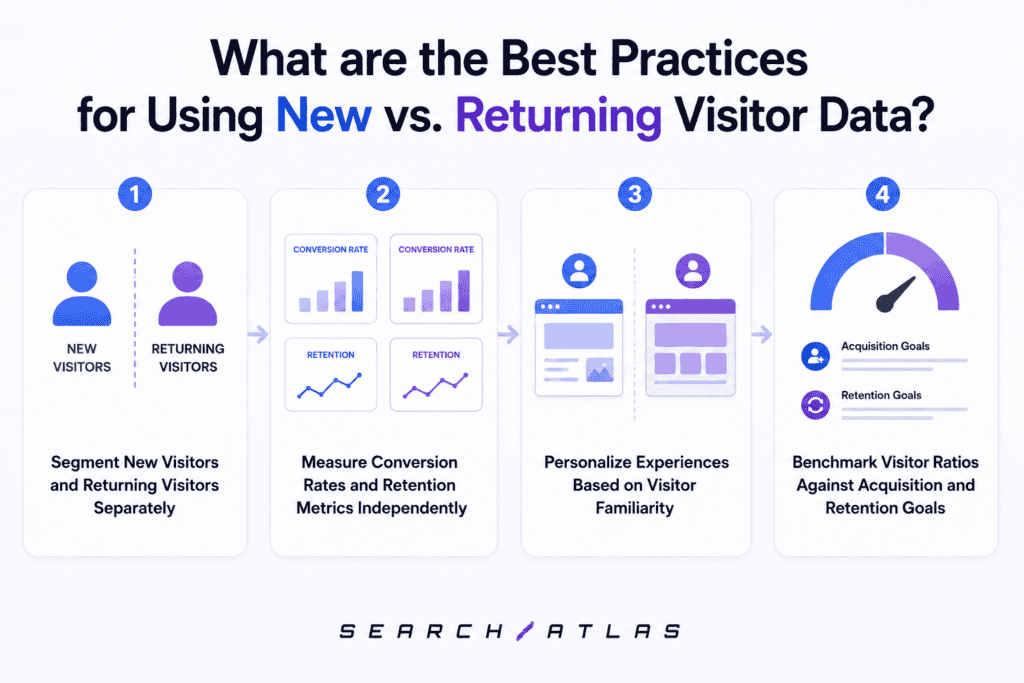
Using new vs. returning visitor data effectively means separating acquisition behavior from retention behavior across analytics analysis. This process matters because new visitors and returning visitors generate different engagement patterns, conversion probabilities, and customer lifecycle signals. Strong visitor segmentation improves attribution accuracy, personalization strategy, retention analysis, and marketing optimization across analytics workflows.
The 5 best practices for using new vs. returning visitor data are listed below.
1. Segment New Visitors and Returning Visitors Separately
Separating new visitors and returning visitors prevents aggregate reporting from hiding important behavioral differences between audience groups. New visitors and returning visitors produce different bounce rates, conversion rates, and engagement patterns, which makes blended metrics analytically misleading. Separate segmentation reveals whether performance changes originate from acquisition quality, retention quality, or both simultaneously. Businesses apply this segmentation by building dashboards with independent reporting rows for each visitor type across sessions, engagement, revenue, and conversion metrics. A practical takeaway is that aggregate visitor metrics rarely describe either audience accurately.
2. Measure Conversion Rates and Retention Metrics Independently
Independent conversion analysis reveals how first-time visitors and repeat visitors contribute differently to revenue and retention growth. New visitor conversion reflects trust building, landing page clarity, and acquisition targeting quality. Returning visitor conversion reflects retention strength, personalization quality, and repeat engagement effectiveness. Businesses apply separate measurements by tracking conversion rate, average order value, purchase frequency, and repeat visit behavior independently for each visitor segment. A practical takeaway is that visitor type segmentation exposes which audience produces long-term business value.
3. Personalize Experiences Based on Visitor Familiarity
Visitor familiarity data improves personalization because new visitors and returning visitors require different website experiences. New visitors respond more strongly to trust signals, product explanations, and simplified navigation structures during early interactions. Returning visitors respond more strongly to continuity features, personalized recommendations, and previously viewed content references. Businesses apply visitor personalization through recommendation systems, saved browsing state, onboarding prompts, and dynamic landing page messaging. A practical takeaway is that personalization works best when visitor familiarity shapes the experience.
4. Benchmark Visitor Ratios Against Acquisition and Retention Goals
Visitor ratio benchmarks become meaningful only when aligned with acquisition objectives and customer lifecycle expectations. High new visitor percentages often reflect strong awareness campaigns, while growing returning visitor percentages often reflect stronger audience loyalty and retention performance. Businesses apply benchmarking by defining visitor ratio targets tied directly to campaign goals, subscription models, or repeat purchase expectations. Tracking visitor ratios across time series reporting reveals whether audience acquisition and audience retention improve together or diverge. A practical takeaway is that visitor ratio trends reveal more value than isolated point-in-time percentages.
5. Analyze Which Marketing Channels Drive Each Visitor Type
Different acquisition channels generate different visitor behaviors, which makes channel-level segmentation essential for attribution analysis. Organic search and paid social commonly generate larger percentages of new visitors, while email campaigns and branded traffic commonly generate larger percentages of returning visitors. Businesses apply channel segmentation inside GA4 by adding the “New / Returning” dimension to acquisition reports and comparing visitor behavior by channel source. This comparison reveals which channels expand audience reach and which channels strengthen retention. A practical takeaway is that marketing channels rarely contribute equally to acquisition and retention simultaneously.
What Tools Help You Track and Segment New vs. Returning Visitors?
Tools for tracking and segmenting new vs. returning visitors identify repeat traffic, measure visitor behavior, and separate acquisition from retention activity across analytics systems. These tools store persistent visitor identifiers and expose visitor type as a segmentable reporting dimension. This functionality matters because visitor segmentation improves engagement analysis, conversion tracking, personalization, and channel attribution across marketing workflows.
The 5 best tools for tracking and segmenting new vs. returning visitors are Search Atlas, Google Analytics 4, Mixpanel, Heap, and Bloomreach.
1. Search Atlas
Search Atlas tracks and segments new vs. returning visitors through direct integrations with Google Analytics 4, Google Search Console, and GBP reporting systems. Search Atlas combines engagement metrics, traffic segmentation, ranking data, click-through rate analysis, and conversion insights inside unified dashboards and reporting workflows.
Search Atlas GSC Performance connects organic search visibility with visitor behavior metrics, which reveal whether new search visitors continue engaging after landing on a page. Search Atlas Report Builder consolidates visitor analytics with rankings, backlinks, and local SEO performance across scheduled reports for agencies and marketing teams. This consolidation matters because retention analysis becomes more actionable when visitor behavior appears beside SEO and acquisition metrics inside the same reporting environment. Search Atlas improves visitor analysis by connecting traffic segmentation directly with search performance and conversion visibility.
2. Google Analytics 4
Google Analytics 4 tracks new vs. returning visitors through the _ga first-party cookie stored on the visitor’s browser. GA4 assigns a client ID during the first recorded session and reads that identifier across future visits to classify sessions as new or returning. Google Analytics 4 measures engagement, conversions, session duration, and acquisition channels by visitor type, which creates detailed segmentation analysis across reports and explorations. This segmentation matters because visitor behavior differs significantly between first-time and repeat traffic. Google Analytics 4 improves visitor analysis through persistent audience tracking and event-level reporting.
3. Mixpanel
Mixpanel tracks visitor behavior through event-based analytics and persistent user tracking across sessions. The platform segments new visitors and returning visitors through behavioral cohorts connected to conversions, retention, and product interaction events. Mixpanel identifies how visitors move through funnels and return across multiple sessions, which improves lifecycle analysis and retention measurement. This visibility matters because repeat engagement often signals stronger purchase intent and long-term customer value. Mixpanel improves behavioral analytics through deep event segmentation and cohort tracking.
4. Heap
Heap captures visitor interactions automatically without requiring manual event tagging across websites and applications. The platform tracks new and returning visitor activity through persistent identifiers connected to session behavior and conversion paths. Heap reveals how visitor groups navigate interfaces, interact with features, and complete key actions over time. This automatic tracking matters because incomplete event implementation weakens segmentation accuracy and behavioral analysis. Heap improves analytics coverage through retroactive event tracking and behavioral segmentation.
5. Bloomreach
Bloomreach tracks visitor behavior and personalizes experiences according to visitor familiarity and engagement history. The platform segments audiences into new and returning visitor groups connected to product recommendations, campaigns, and personalized content delivery. Bloomreach identifies how repeat visitors interact differently from first-time visitors across ecommerce journeys and retention campaigns. This segmentation matters because personalization effectiveness depends heavily on visitor familiarity and historical behavior. Bloomreach improves retention optimization through behavioral targeting and customer journey personalization.
What Are Common Misconceptions About New vs. Returning Visitor Metrics?
Common misconceptions about new vs. returning visitor metrics happen when analytics labels get interpreted as direct measures of human behavior and loyalty. These misconceptions matter because analytics platforms classify browsers and devices through cookies and identifiers, not through perfect person-level recognition. Misinterpreting these metrics creates reporting errors, weak audience analysis, and inaccurate retention conclusions across marketing workflows.
The 6 most common misconceptions about new vs. returning visitor metrics are listed below.
1. A new visitor means a person visiting for the first time. A new visitor label only means the browser or device lacks a recognized tracking identifier at session start. This classification does not confirm that the individual has never visited previously.
2. Returning visitors mean a loyal customer. A returning visitor label only means the browser contains an existing identifier from a previous session. This classification does not confirm satisfaction, retention, or purchase intent.
3. New visitor counts equal total audience reach. One person using multiple browsers or devices generates multiple new visitor records across analytics platforms. This duplication inflates audience estimates and weakens person-level accuracy.
4. Returning visitor counts measure exact retention. Cookie deletion, browser resets, and privacy restrictions reset visitor classification back to new. This reset lowers returning visitor counts even when the same person revisits consistently.
5. Visitor metrics remain perfectly accurate across all devices. Analytics systems track browser and device identifiers independently unless User ID or identity stitching systems connect sessions together. Cross-device behavior fragments attribution and creates duplicate visitor records.
6. Visitor ratios alone explain audience quality. High new visitor percentages or high returning visitor percentages require engagement and conversion context before meaningful interpretation. Visitor ratios without behavioral metrics provide incomplete audience analysis.
These misconceptions show that new vs. returning visitor metrics measure browser-level tracking continuity rather than exact human behavior. Strong analytics analysis avoids these interpretation errors by combining visitor segmentation with engagement data, conversion metrics, and retention signals.
Does Private Browsing Reset a Visitor’s “New” Status?
Private browsing resets a visitor’s “new” status because private browsing sessions do not preserve tracking cookies after the browser window closes. This reset matters because analytics platforms rely on persistent cookies to recognize returning visitors across sessions. Without stored identifiers, every private browsing session appears as a completely new visitor inside analytics reports.
Private browsing resets visitor classification by creating temporary cookie storage that disappears immediately after the session ends. GA4 creates a temporary _ga cookie during the private browsing session and uses that identifier only while the session remains active. Closing the private window deletes the identifier permanently, which forces GA4 to generate a new visitor record during the next private browsing session. This process causes every private browsing visit to register as new traffic instead of returning traffic.
Private browsing resets visitor ratios by inflating reported new visitor percentages across analytics platforms. Audiences that regularly browse through incognito or private mode generate repeated new visitor records despite visiting the same website multiple times. Privacy-focused audiences, developers, journalists, and security researchers commonly produce this tracking pattern more frequently than general audiences. This behavior increases reported acquisition metrics without reflecting actual first-time traffic growth.
Private browsing resets visitor continuity without giving GA4 a mechanism to identify those sessions separately from standard new visitor sessions. GA4 only detects whether a valid tracking cookie exists at session start and cannot determine whether the browser operates in private mode. Both first-time visitors and private browsing sessions present the same technical condition because neither provides a recognized identifier. This limitation means private browsing sessions remain permanently classified as new visitors inside GA4 reporting systems.
Are All “New” Visitors Actually First-Time Users?
No, not all “new” visitors are actual first-time users because analytics platforms classify visitors through browser-level identifiers instead of permanent person-level recognition. This classification matters because cookie deletion, browser switching, and privacy settings frequently reset returning visitors into the new visitor segment. New visitor counts, therefore,e combine genuine first-time arrivals with misclassified repeat visitors across analytics reports.
Analytics platforms classify visitors as new whenever no recognized tracking identifier exists at session start. Returning visitors who clear cookies, switch devices, use privacy browsers, or browse through incognito mode frequently appear as new visitors despite prior website activity. This reset process inflates new visitor counts and weakens the accuracy of first-time audience measurement across analytics systems.
Analytics platforms produce different levels of new visitor accuracy depending on audience behavior and browser privacy conditions. Websites with privacy-conscious audiences often generate larger percentages of misclassified returning visitors because those audiences clear cookies and block tracking more frequently. Privacy-focused browser policies and consent restrictions further reduce persistent visitor recognition across sessions and devices. This variation means new visitor counts represent approximations instead of exact measurements of first-time human arrivals.
Analytics platforms improve first-time visitor accuracy through User ID tracking and authenticated account systems. User ID tracking assigns persistent identifiers to logged-in users, which preserves visitor continuity across browsers and devices even after cookie resets occur. Anonymous traffic remains much harder to identify accurately because no reliable persistent identity exists after cookie deletion. This limitation means businesses often combine new visitor metrics with account-level engagement data to strengthen audience analysis and retention measurement.
Does a High Returning Visitor Rate Always Indicate a Healthy Site?
A high returning visitor rate does not always indicate a healthy site because repeat traffic alone does not confirm engagement, conversions, or business growth. This distinction matters because analytics platforms measure returning sessions through tracking continuity rather than through meaningful visitor outcomes. High returning visitor percentages without strong engagement or conversion activity often hide retention weaknesses and stagnating performance.
A high returning visitor rate coexists with declining engagement, weak conversions, and flat revenue growth across websites. Returning visitors who repeatedly arrive and leave without purchasing, subscribing, or interacting meaningfully generate repeat traffic volume without contributing measurable business value. This behavior creates inflated retention signals while masking weak conversion performance and declining audience quality.
A high returning visitor rate becomes more meaningful alongside strong engagement and revenue metrics across repeat sessions. Conversion rate per returning visit, average revenue per returning user, and repeat engagement growth reveal whether returning traffic generates measurable business outcomes. Rising returning visitor conversion rates combined with stable traffic often signal stronger audience trust and deeper customer relationships. This combination reflects healthier retention performance than repeat traffic volume alone.
A high returning visitor rate reveals weakening loyalty when repeat traffic increases, while conversion efficiency declines simultaneously. Returning visitors who revisit frequently but stop purchasing, subscribing, or engaging with content demonstrate declining audience value despite stable retention metrics. This pattern frequently appears on websites with stagnant experiences, repetitive content, or weakening product relevance. Strong retention analysis, therefore, requires engagement and conversion context besides returning visitor percentages.
Can New and Returning Visitor Data Directly Inform Content Strategy?
Yes, new and returning visitor data directly informs content strategy by revealing which content attracts new audiences and which content retains existing audiences. This distinction matters because acquisition-focused content and retention-focused content require different structures, messaging, and optimization priorities. Visitor segmentation improves content planning by connecting traffic behavior with audience intent across different stages of engagement.
New and returning visitor data maps content types directly to acquisition or retention goals. Informational blog posts and SEO landing pages usually attract larger percentages of new visitors because search discovery introduces unfamiliar audiences to the website. Product tutorials, feature documentation, and comparison pages usually attract larger percentages of returning visitors because repeat visitors revisit those resources during evaluation or ongoing usage. This segmentation reveals which content categories strengthen audience growth and which categories strengthen ongoing engagement. Structuring that acquisition-facing content with a topical map framework improves the odds that a first-time visitor lands on the right entry point for their query, then finds a clear path into the related pages that build toward retention.
A high new visitor rate on a page signals that the content reaches unfamiliar audiences through search, paid campaigns, or referrals. Pages with large percentages of first-time visitors require strong first impression clarity, visible trust signals, and simple navigation structures that reduce confusion immediately. Internal links, clear calls to action, and foundational explanatory content improve engagement because first-time visitors require orientation before deeper interaction occurs. This optimization approach improves acquisition efficiency and strengthens first session engagement quality.
A high returning visitor rate on a page signals that the content fulfills an ongoing reference or task-based need. Pricing pages, documentation hubs, comparison pages, and user resources commonly attract repeat visits because visitors intentionally revisit those assets multiple times. These pages perform better with faster load speed, clearer navigation, and continuously updated information that improves repeat usability. This optimization strategy strengthens retention because returning visitors prioritize efficiency and continuity rather than introductory explanations.