A subdomain in SEO is a prefix placed before the main domain name, such as blog.example.com or shop.example.com, that search engines crawl and evaluate as its own distinct property rather than as part of the root domain. That separation changes how crawl budget, link equity, and topical authority get distributed between the two. Whether a subdomain helps or hurts a site's rankings depends less on the URL structure itself and more on how well the subdomain is linked, maintained, and audited.
Whether content belongs on a subdomain or in a subdirectory is one of the most common structural decisions in technical SEO, and AI answer engines add an open question: whether URL structure affects which pages get cited at all. This guide covers what a subdomain actually does to SEO, how it compares with a subdirectory, when each structure makes sense, what the early evidence says about AI citations, and the best practices for managing a subdomain.

What is a subdomain in SEO?
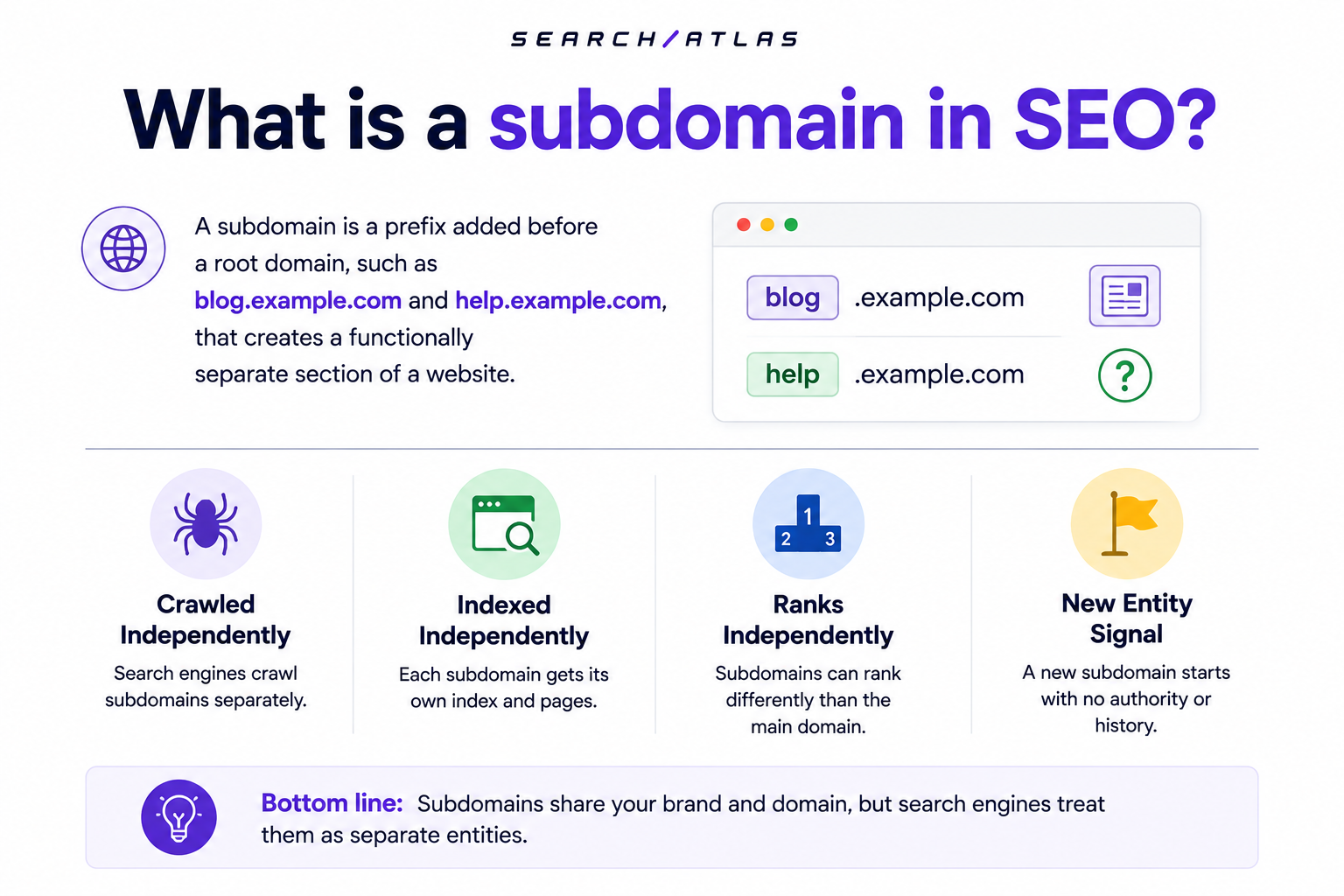
A subdomain is a prefix added before a root domain, such as blog.example.com or help.example.com, that creates a functionally separate section of a website. Search engines crawl, index, and rank a subdomain independently of the main domain it sits under. That means a new subdomain effectively starts as its own entity in the eyes of Google, Bing, and AI crawlers, even though it shares a brand and root domain with the parent site.
Google's guidance is that subdomains and subdirectories can both work, and that changes to a site's URL structure take time to settle in search (source). The practical choice should follow the site's architecture, ownership, and maintenance needs.
Brands still use subdomains deliberately. Apple runs tv.apple.com as its own product surface, Google keeps developers.google.com on its own subdomain for documentation, and Wikipedia splits every language into its own subdomain, such as fr.wikipedia.org and de.wikipedia.org. Each case reflects a real structural or functional reason to separate the content, beyond simple hosting convenience.
How does a subdomain affect SEO?
A subdomain affects SEO by making the main domain treat it as a separate property, not by triggering a ranking penalty. Separate crawl paths, link equity, and topical signals can make management more demanding, especially when the subdomain is weakly linked or maintained independently.
Crawl resources are managed across separate hostnames, links pointing to a subdomain primarily strengthen that subdomain, and topical relevance has to be demonstrated through the subdomain's own content and links. A subdirectory, by contrast, shares those same signals with the root domain by default, which is what makes the two structures behave differently in practice.
What is the difference between a subdomain and a subdirectory for SEO?
A subdomain functions as a separate website that search engines crawl and rank on its own, while a subdirectory sits inside the main domain and consolidates its link and content signals there by default. That single distinction, separate property versus shared property, is what drives every practical difference between the two structures.
| SEO factor | Subdomain (blog.example.com) | Subdirectory (example.com/blog) |
|---|---|---|
| Crawled and indexed as | A separate property | Part of the root domain |
| Inherits root domain authority | No, builds its own | Yes, automatically |
| Google Search Console setup | Needs its own URL-prefix property, or is covered by a Domain property | Covered by the root property |
| Link equity from backlinks | Stays mostly contained to the subdomain | Flows into the whole domain |
| Typical setup effort | Higher, separate hosting, SSL, sitemap | Lower, same infrastructure as the rest of the site |
Subdomains can receive separate crawl allocation and build authority independently of whatever the root domain has already earned. In Search Console, a subdomain needs its own URL-prefix property unless it is already included in a verified Domain property.
Subdirectories keep link equity within the root domain, which is why consolidating content under a folder like /blog/ instead of a prefix like blog.example.com usually makes signals easier to build and track. This distinction shapes crawl efficiency, link distribution, and site architecture, all core pieces of technical SEO.
What does Google actually say about subdomains vs subdirectories?
Google's official position is that subdomains and subdirectories carry no built-in ranking advantage over one another. That neutrality is documented in published comparisons of Google's guidance on the two structures (source). Google's systems can occasionally treat a subdirectory as its own site too, though this is uncommon on English-language websites.
That official neutrality does not always match what happens in practice. Site owners who consolidate a subdomain into a subdirectory frequently report ranking improvements after the move, even when Google never penalized the subdomain directly.
The likely explanation is not the URL structure itself. A migration to a subdirectory usually comes bundled with better internal linking, a content refresh, and a redesign, all of which help rankings independently of where the content lives.
When should you use a subdomain?
Use a subdomain when a website section needs its own crawl path, ranking signals, or user experience distinct from the rest of the site. One of the most common cases is international SEO, where language-specific or country-specific content needs to be kept separate for better targeting.
- You run multilingual websites. International SEO strategies often rely on language-based subdomains, such as fr.example.com, to target different regions with content and hosting tailored to each market.
- You want a separate blog or knowledge base. A subdomain can isolate educational or support content from the commercial focus of the main website, which is useful when the two audiences and content types diverge sharply.
- You need a testing or staging environment. Developers use subdomains to trial site changes without disrupting the live version, since a staging subdomain can be blocked from indexing entirely.
- You manage a dedicated ecommerce store or microsite. A subdomain helps keep complex product catalogs or sub-brands distinct from the core site, a common pattern in ecommerce SEO when a company runs multiple storefronts under one brand.
When should you avoid using a subdomain?
Avoid a subdomain when the content is closely related to the rest of the site and would benefit more from sharing its authority. In these cases, keeping content under the main domain in a subdirectory is usually the more effective structure.
- The content is closely related to your main site. It should share link equity and topical authority rather than being split across multiple properties that each have to earn relevance separately.
- You want unified SEO audit tracking. Even when one Domain property in Search Console covers every subdomain, each host still needs its own robots.txt, sitemap, and crawl configuration, so monitoring and error tracking stay split instead of consolidating on a single site.
- Crawl efficiency is a priority. Consolidating content within the main domain simplifies indexation and ensures search engines allocate crawl resources to the pages that matter most, instead of splitting them across separate properties.
Do subdomains affect AI search visibility and citations?
Whether a subdomain or subdirectory gets cited more often in AI answers is still unsettled, and what has been published so far is early and contested. Some agencies report that subdirectory blogs pick up more AI citations than subdomain blogs, though the available evidence is small-sample vendor data rather than published research, and other analyses find no structural preference at all.
One proposed explanation is that a subdirectory blog may benefit from stronger existing internal links and topical associations, but this mechanism is not established as a universal rule. A subdomain blog may need to build those associations through its own content, links, and crawl history.
Because the effect is unsettled, the practical move is to measure it on your own properties rather than assume a structural rule. LLM Visibility inside Search Atlas tracks brand mentions, sentiment, and share of voice across ChatGPT, Gemini, Perplexity, and SearchGPT. Structure-level citation data is not something this tool resolves, so pair brand-level visibility tracking with referral and landing-page analytics to see which property is actually being surfaced.
What are the best practices for subdomains in SEO?
The best subdomain practices are to manage each property independently and monitor technical, content, and performance health across the network.
The best practices for subdomains in SEO are listed below.
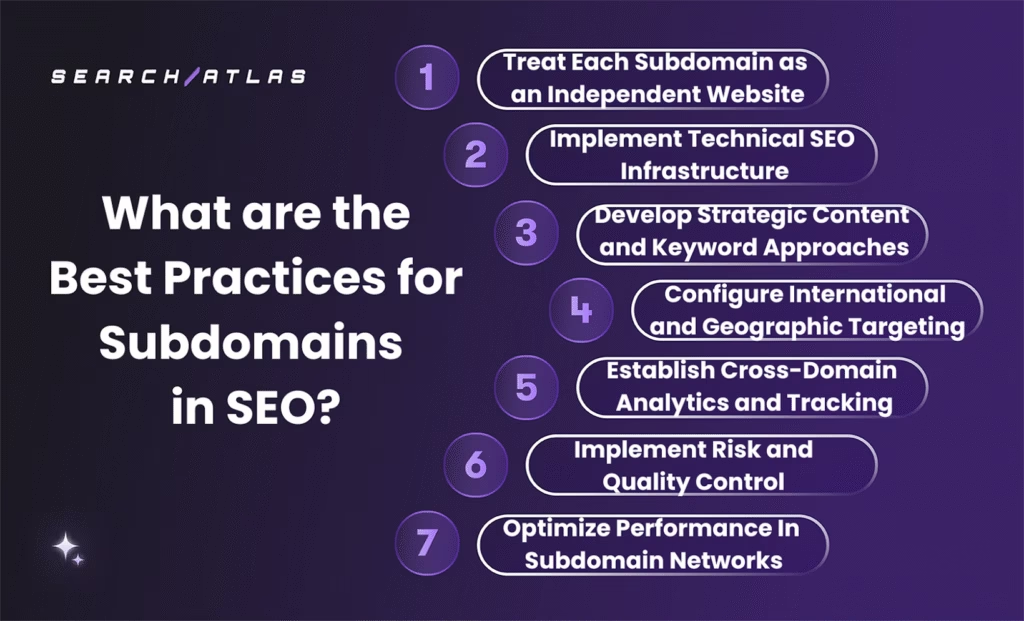
1. Treat each subdomain as an independent website
Each subdomain functions as a distinct website entity and needs its own SEO strategy. Search engines evaluate subdomains independently of the main domain, and a subdomain does not automatically inherit domain authority, trust signals, or ranking benefits from the parent domain just because it shares a brand name.
Subdomain independence affects visibility, authority building, and content strategy. Each subdomain needs dedicated keyword research, content creation, and link-building work of its own, since its success depends on individual optimization rather than on the performance of the main domain.
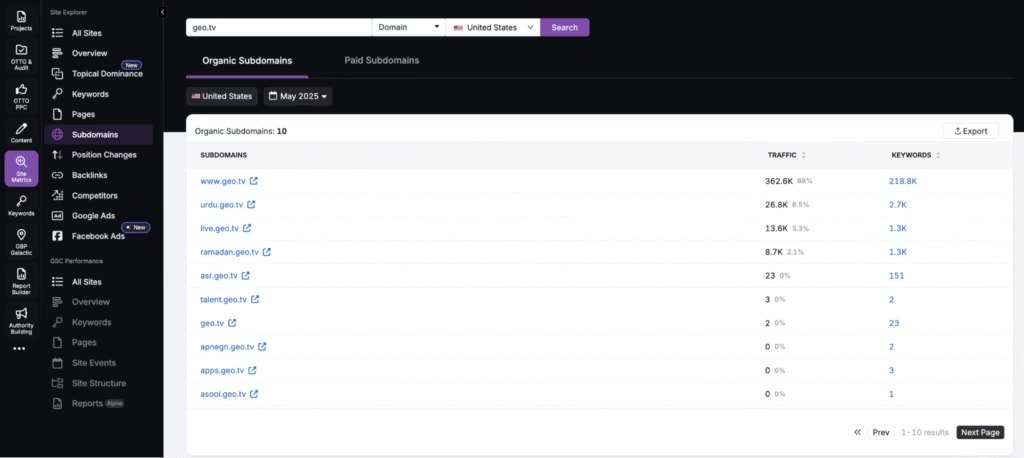
Site Explorer inside Search Atlas provides analysis for each subdomain through backlink data, Domain Power scores, spam scores, and organic keyword tracking. Enter a subdomain URL directly into Site Explorer to view authority metrics, competitive positioning, and ranking performance specific to that subdomain property, rather than data blended in with the main domain.
2. Build separate technical SEO infrastructure for each subdomain
Technical SEO infrastructure has to be established independently for each subdomain. Every subdomain needs its own robots.txt file, XML sitemap, canonical tags, and SSL certificate, since these elements do not carry over from the main domain automatically. Structured data markup and mobile-responsive design also need to be implemented and checked on each property.
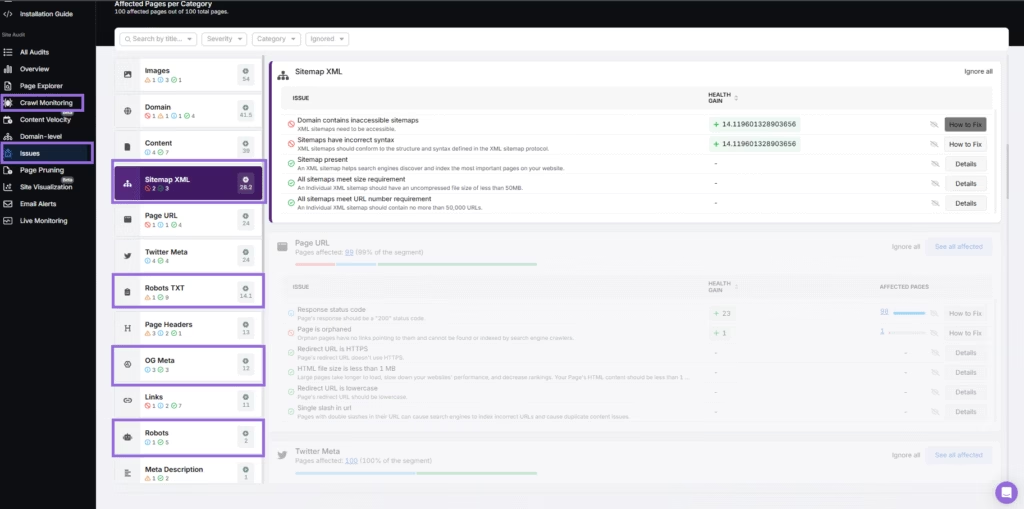
Site Auditor inside Search Atlas can crawl each subdomain separately to surface technical issues, broken links, and optimization gaps specific to that property. Point Site Auditor at a subdomain URL with its own crawl settings to review technical findings and page-level audit data.
3. Plan subdomain content and keywords to avoid cannibalization
Subdomain content strategy has to complement the main domain's topics without competing against them for the same keywords. A subdomain offers a real opportunity for domain-specific keyword targeting, but only if the content plan is built to avoid overlap with what the main domain already ranks for.
Strategic content planning for a subdomain starts with identifying primary keywords, supporting phrases, and semantic variations that the main domain is not already covering. Content quality on the subdomain directly affects its own authority and ranking potential, so research the subdomain's keyword opportunities separately from the main domain's to find non-competing terms that genuinely add coverage rather than splitting it.
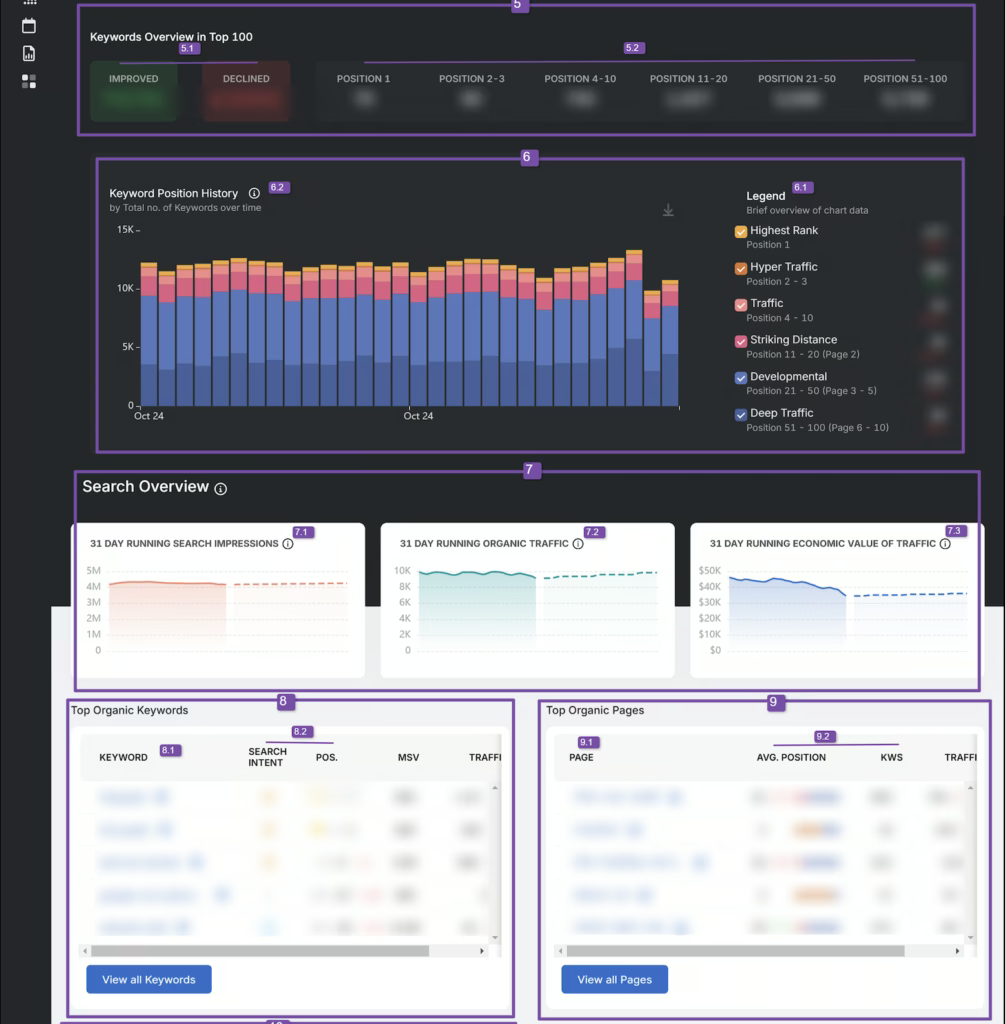
Search Atlas Keyword Research can help identify subdomain-specific opportunities through search volume, competitor, and SERP-feature analysis. Research each subdomain separately to find non-competing terms that complement the main domain strategy. See the Keyword Research tool for keyword discovery and historical trend analysis.
4. Configure international and geographic targeting on regional subdomains
International subdomains enable geographic targeting through hreflang implementation and regional content built for the local market. Geographic subdomains, when used deliberately, improve visibility in target markets, but regional targeting requires technical precision and real content adaptation, rather than a translated copy of the main site.
International optimization on a subdomain includes correct hreflang tag implementation, country-specific hosting where it matters for load times, localized content built for regional search behavior, and ongoing monitoring of how each market performs once launched.
5. Set up cross-domain analytics across subdomain properties
Cross-domain tracking is what makes it possible to measure a full user journey that crosses from the main domain onto a subdomain. Without it, a visitor who starts on the main site and converts on a subdomain (or the reverse) shows up as two disconnected sessions instead of one continuous path, which understates what the subdomain actually contributes.
Setting this up means configuring cross-domain tracking in the analytics platform, sharing conversion goals between the properties, and monitoring each subdomain's performance on its own dashboard as well as in the combined view. Use the analytics and Search Console properties you control to combine reporting where the platform supports it, rather than assuming every subdomain is automatically unified.
6. Monitor quality and performance across the whole subdomain network
Quality and performance problems on one subdomain both affect how the wider domain network is perceived, so security scanning, content review, and performance tracking have to run on every subdomain.
Performance matters just as much as security here. Core Web Vitals, including Largest Contentful Paint, Interaction to Next Paint, and Cumulative Layout Shift, need to be tracked and improved on each subdomain individually, since a fast main site does not make a slow subdomain fast. Site Auditor inside Search Atlas runs scheduled weekly crawls that surface technical, content, and indexability issues on each property.
Frequently asked questions about subdomains and SEO
Do subdomains require separate SEO audits?
Yes, subdomains require separate SEO audits. Search engines crawl and evaluate them as independent properties, so errors, duplicate content, and indexation problems have to be diagnosed on each one individually. Running dedicated SEO audits on every subdomain catches crawl waste, missing tags, and broken links that would stay invisible if only the root domain gets analyzed.
Does Google Search Console treat subdomains separately?
Yes, when you use a URL-prefix property: it covers only the exact prefix, so blog.example.com needs its own verification. A Domain property, by contrast, aggregates every subdomain, protocol, and subpath under one verified property, which is the simpler setup when you own the root domain.
Do subdomains impact crawl budget allocation?
Yes, subdomains can affect crawl allocation. Search engines manage crawl resources across hostnames rather than subtracting every subdomain from a fixed main-site budget. A new subdomain can still delay discovery when its sitemaps, internal links, or server responses are weak.
Should you move a subdomain to a subdirectory?
Sometimes, but the URL structure itself is rarely the reason. Before migrating, map every old URL to its replacement, preserve internal-link destinations, and expect temporary volatility while search engines recrawl the new paths.