Multiplayer marketing is a model where strategy is held jointly by the team and an AI agent, executed across every live marketing surface, and kept in sync as the business moves. It contrasts with single-player marketing, where one person runs one prompt against one task and strategy stays wherever the last person wrote it down.
The first wave of marketing AI gave individuals point tools: a writing assistant, a content generator, and an ad optimizer. Each one is useful in isolation, but each one operates on the asset in front of it, with no view of the broader system. Multiplayer marketing is what emerges when the agent holds the full picture, and the team executes against it together.
The multiplayer marketing model addresses a specific failure mode that single-player tools cannot see: drift. Assets pass local metrics while quietly misrepresenting where the company has moved. Multiplayer marketing is built to catch and correct that continuously, not just at campaign review.
What is wrong with single-player marketing?
Single-player marketing fails at the strategy layer, not the execution layer.
A single-player tool helps one person complete one task: write this ad, draft this email, summarize this report. That task gets done. The output is often good. But the tool has no view of the whole strategy, so it cannot tell when the completed task conflicts with where the company has moved. It optimizes the asset and hands it back.
This failure is invisible in the short term. Each piece of output passes local review. The ad has the right CTR. The email has decent open rates. The landing page converts at an acceptable rate. None of those metrics surface the larger problem: the copy is incrementally diverging from what the company actually is, as the company moves and the tools keep executing against where it was.
The result is that strategy lives in someone’s head, or in a campaign brief that is read once and archived. The team executes against it until someone — usually a new hire or a frustrated executive — notices the gap and calls for an audit.
Compare single-player and multiplayer SEO tools with Search Atlas.
What is the drift problem in marketing?
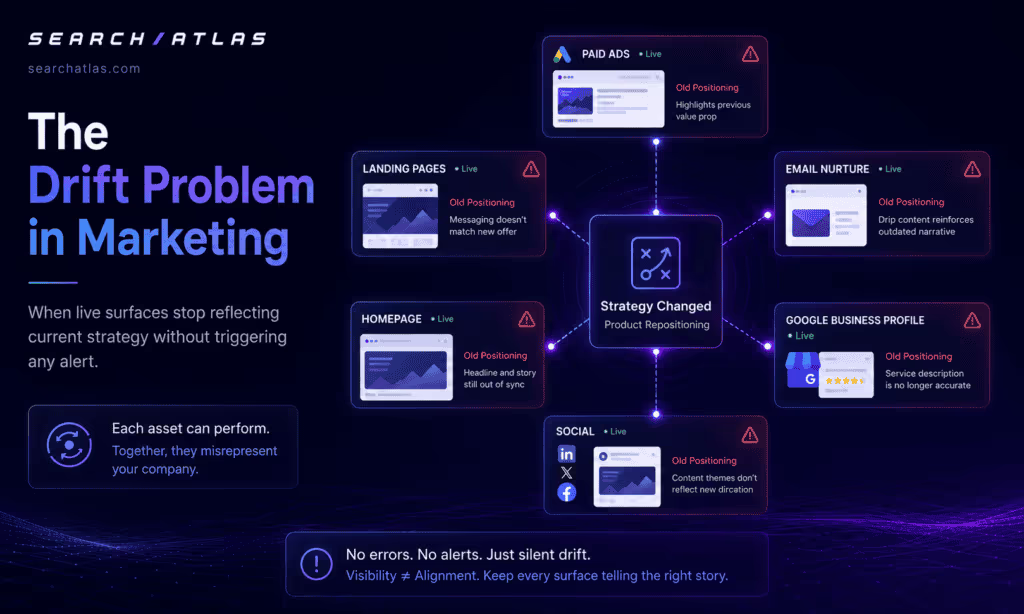
Drift is when a live marketing surface stops reflecting the current strategy without triggering any alert.
Consider what happens after a product repositioning. The company updates the homepage and the pitch deck. The sales team gets a new one-pager. But the paid ads, running against a creative brief from eight months ago, still sell the old positioning. The landing pages that those ads point to still describe features from the previous product version. The email nurture sequence still uses the old customer story. The Google Business Profile still lists the old service category.
None of these assets is broken by the metrics the platforms track. The ad has a good CTR. The landing page has an acceptable conversion rate. The email sequence has normal open rates. Each asset is performing fine locally. Collectively, they misrepresent the company to every prospect who encounters them.
Drift does not cost clicks; it costs coherence. And coherence problems are expensive to find. Auditing live surfaces manually across paid, organic, email, GBP, and social requires someone to hold the current strategy in their head and compare every asset against it. That happens when someone notices, which typically means months of drift before anyone catches it.
The longer the drift runs, the harder it is to correct. Each surface requires a separate fix. Each fix has to go through its own review and approval process. A repositioning that could have propagated across surfaces in a week instead takes months of piecemeal correction, and the team is never quite sure whether they caught everything.
What does multiplayer marketing mean?
Multiplayer marketing means strategy is no longer a document one person owns. It becomes a living system that the team and an agent build and maintain together.
The practical difference is where the agent works. A single-player tool asks a person to come to it with a task. A multiplayer agent shows up where the team already works: the Slack threads where positioning changes get discussed, the ClickUp tasks where campaign briefs live, the Teams channels where creative direction evolves. Sitting inside those surfaces, the agent absorbs strategy changes as they happen, not after they have been formalized into a brief and passed down the chain.
This is the mechanism that makes strategy visible. The agent does not wait for someone to update a document and share it. It holds the current state of the strategy because it is in the room where the strategy is happening. From that position, it can identify where a live surface is out of step with what the team just decided, draft the fix, and surface it for approval.
The team is not handing tasks to a tool. The agent is participating in the strategy and acting on it. That is the shift multiplayer marketing describes.
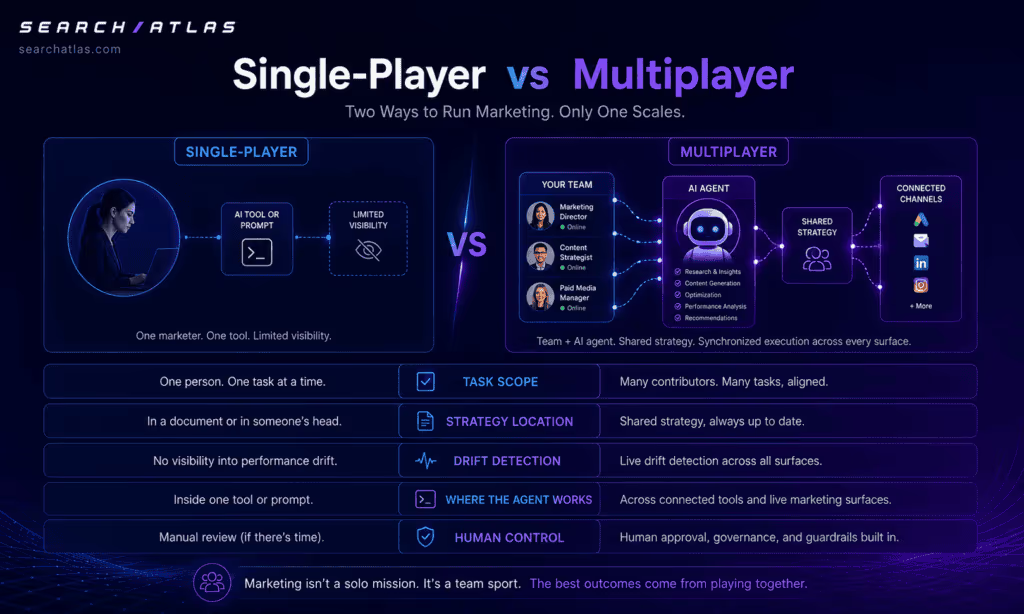
Single-player vs. multiplayer marketing
| Dimension | Single-player | Multiplayer |
|---|---|---|
| Task scope | One asset at a time | Full strategy in view |
| Strategy location | Stored in a doc or someone’s head | Held jointly by team and agent |
| Drift detection | None — each asset evaluated locally | Live surfaces watched against current positioning |
| Where the agent works | A separate tool the user goes to | Inside Slack, Teams, ClickUp |
| Human control | User prompts each action | Agent proposes; human approves before anything ships |
The column that matters most is drift detection. Every other capability difference is an efficiency gain. The inability to detect drift is a structural failure that compounds over time. A team that cannot catch drift at the strategy layer will eventually invest in correcting it at the surface layer, which is slower, more expensive, and less systematic than catching it early.
How does self-healing marketing work?
Self-healing marketing runs on a five-step loop that monitors live surfaces against current strategy and corrects drift before it compounds.
- Sense. The agent watches strategy and live surfaces together, holding current positioning, active briefs, and live copy in parallel. This is what separates it from a single-player tool: the agent does not just see the asset in front of it. It sees the asset in relation to everything the team has established as the current strategy.
- Detect. When a surface drifts from current positioning, the agent identifies the specific gap: an ad running messaging the company moved away from, a landing page describing a feature set that has since changed, or a GBP listing using a category that no longer matches the business. The agent does not need someone to manually compare the asset to the brief. It holds both.
- Propose. The agent drafts the fix — specific replacement copy aligned to current positioning, not to where the company was when the asset was first written. The proposal is actionable: the updated headline, the corrected body copy, and the revised GBP description. Not a general recommendation to “revisit the messaging.”
- Approve. A human reviews and gates every change. Nothing ships without sign-off. The approval gate is not optional. It is what makes the system usable for teams with compliance requirements, brand standards, legal review processes, or any surface where unauthorized changes create risk.
- Heal. The agent updates the live surface and continues watching. The fix is not a one-time correction. The agent remains connected to the surface and will flag it again if a future strategy change creates a new gap.
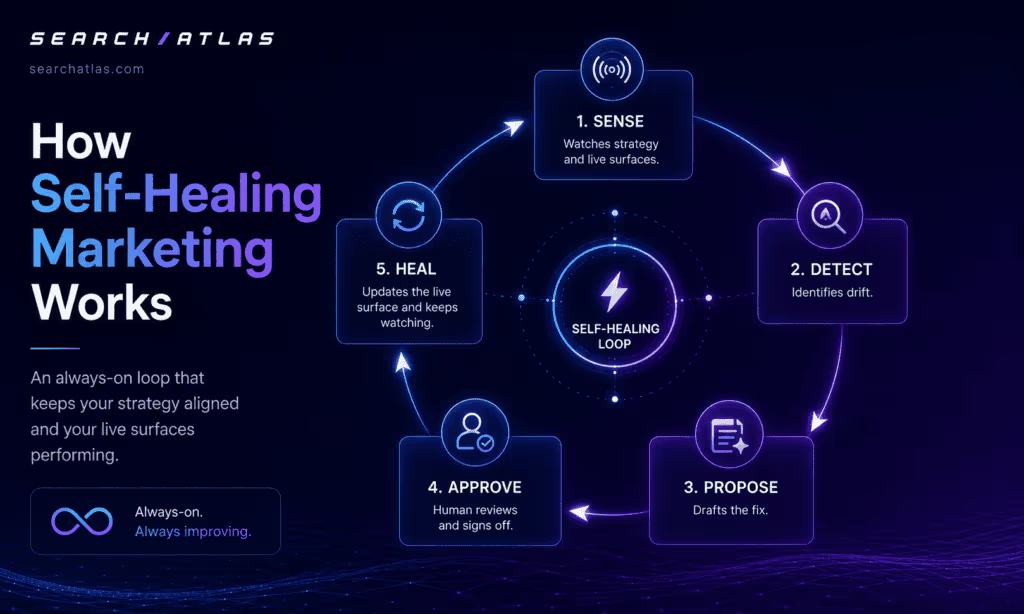
This loop runs continuously. Strategy is no longer set-and-forget. Surfaces stay true to current positioning without anyone having to schedule an audit.
What an AI CMO is, how it executes, and where Atlas Agent fits into this model.
What does it look like in practice?
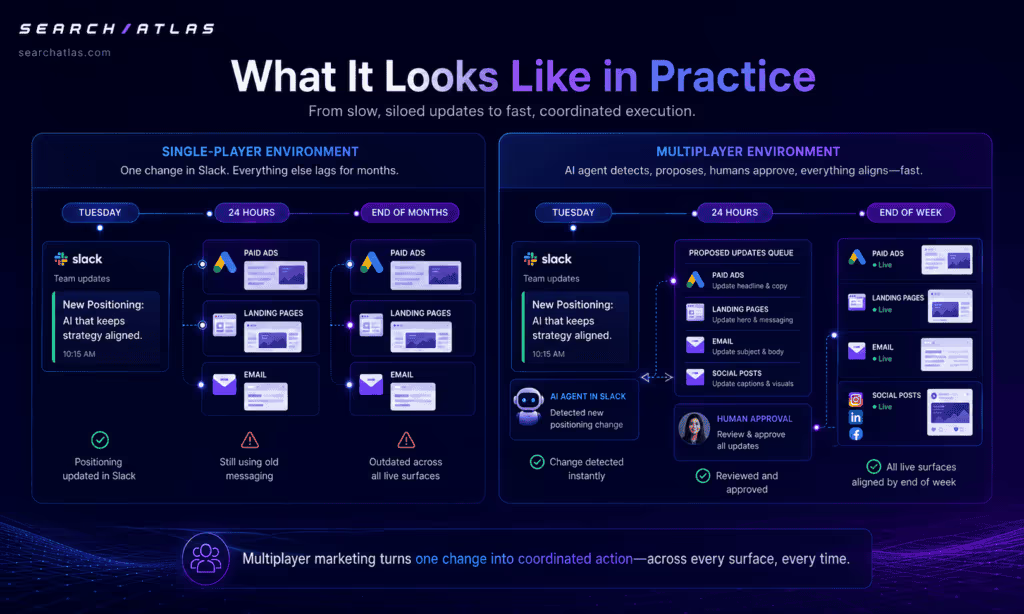
A company repositions its product. New target segment. New core message. New differentiators. The decision is made in a Slack thread on a Tuesday. By Wednesday, the homepage will have been updated, and the pitch deck will be in progress.
In a single-player environment: the paid campaigns keep running against the brief from six months ago. No one has time to audit seventeen ad sets. The landing pages still describe the old product angle. The email nurture sequence still uses the customer story from the previous positioning. Over the next three months, every prospect who clicks an ad lands on a surface that misrepresents what the company now is. The disconnect does not show up in any dashboard until someone does a full audit.
In a multiplayer environment, the agent is in the Slack thread. It registers the repositioning as a strategy change and begins comparing connected surfaces against the new direction. Within 24 hours, it surfaces a queue of proposed updates — specific ad copy replacements, revised landing page sections, updated email body text — for the team to review. The team approves. By the end of the week, the live surfaces reflect what was decided on Tuesday.
The difference between those two outcomes is whether the agent has a view of strategy at the moment it changes, and whether it can act on that view across every surface where the strategy lives.
What does omnichannel mean in a multiplayer system?
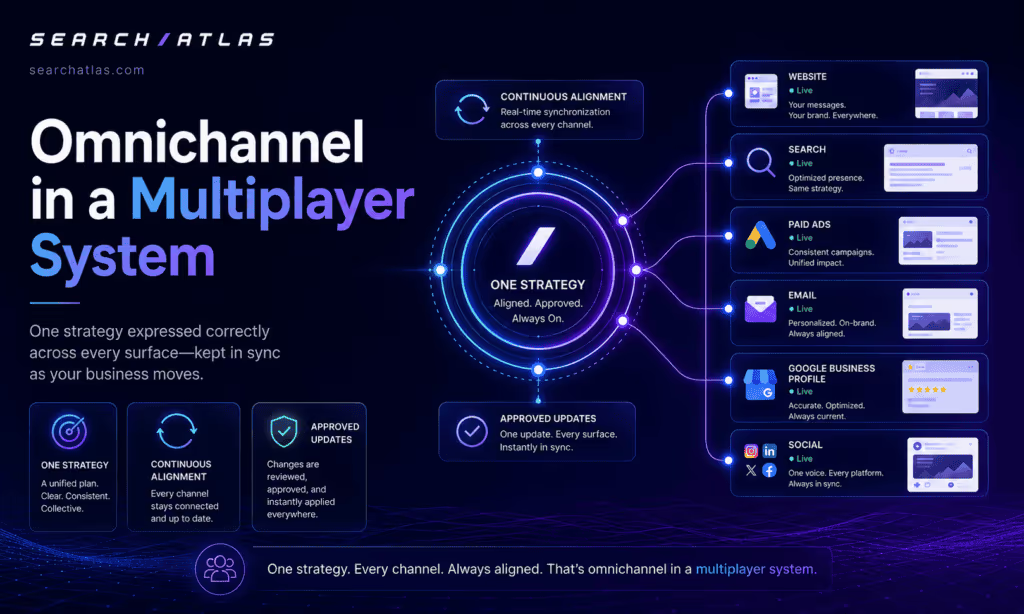
In a multiplayer system, omnichannel means one strategy expressed correctly across every surface and kept in sync as the business moves, not many channels managed separately with occasional alignment efforts.
The conventional use of omnichannel describes coverage: the company has a presence on search, social, email, paid, and GBP.
The problem is that many channels managed separately have many opportunities for drift. Each channel has its own team, its own tools, and its own cadence. They each execute against some version of the strategy — rarely the same version, and rarely updated at the same time.
Multiplayer marketing holds them together. The same strategy governs what the website says, what the ads say, what the GBP says, what the email sequence says, and what the social posts reinforce. When the strategy changes, the agent detects the delta across every connected surface and surfaces the updates for approval. The channels are not independent tracks that get aligned at quarterly reviews.
Why do enterprises need multiplayer marketing most?
The bigger the organization, the more places drift can hide.
More channels, more people touching positioning, more time between strategy decisions and surface updates. A startup with three people can enforce consistency through proximity — everyone knows what the company is saying because everyone is in the same room. A team of fifty cannot. The gap between what was decided in a leadership meeting and what is live in the market grows with every person who handles the assets in between.
At enterprise scale, additional failure modes compound the drift problem. Acquisitions bring legacy brand assets that predate the current positioning. Regional teams localize campaigns in ways that diverge from the central strategy. Product updates outpace the content and growth teams responsible for reflecting them. Legal review creates delays that leave live surfaces lagging behind the approved strategy for weeks.
Self-healing is not a convenience at that scale. It is the only systematic way to close the gap between what the organization intends to say and what is actually live. Manual auditing cannot keep pace with the surface area. The teams responsible for it are already at capacity. The only way to maintain coherence across hundreds of assets, dozens of people, and multiple markets is to give the agent a continuous view of the strategy and the ability to act on drift when it detects it.
FAQ
What is Atlas Agent?
Atlas Agent is Search Atlas’s Copilot CMO: an AI agent that helps teams run and repair their full marketing stack. It holds the team’s current strategy in view, watches live surfaces against it, and flags, proposes, and — with approval — applies corrections when surfaces drift from current positioning. It works inside Slack, Microsoft Teams, and ClickUp, and connects to live surfaces including websites, ad accounts, and Google Business Profiles.
Is multiplayer marketing a specific product or a strategic model?
Multiplayer marketing is a strategic model. Atlas Agent is Search Atlas’s product that implements it. The model describes how teams and AI agents hold strategy together and keep live surfaces aligned to it as the business moves. Any organization can adopt the model; the technology is what makes it operationally viable at scale.
How is multiplayer marketing different from using an AI writing tool?
An AI writing tool completes a task: write this, rewrite that. It has no view of the broader strategy and cannot flag when the output conflicts with where the company has moved. Multiplayer marketing requires an agent that holds the whole strategy in view, watches live surfaces against it, and acts on gaps rather than just responding to prompts. The distinction is not capability — it is scope.
What surfaces does a multiplayer marketing system cover?
A multiplayer system covers any connected live surface: website copy and landing pages, paid ad accounts, Google Business Profile listings, and content across collaboration channels. The defining feature is that the agent can see and act on those surfaces directly — not just generate text for a human to paste in manually.
What is the difference between multiplayer and integrated marketing?
Integrated marketing is a planning discipline focused on message consistency across channels. Multiplayer marketing is an operational model with an AI agent actively maintaining coherence as the business changes in real time. Integrated marketing asks teams to align before a campaign launches. Multiplayer marketing keeps surfaces aligned continuously, after launch and through every strategy change that follows.