A marketing AI tool is software that uses machine learning or generative AI to complete a specific marketing task, such as writing ad copy, scheduling social posts, or tracking keyword rankings, with little manual input. That definition matters because it draws a line most listicles blur: a marketing AI tool handles one job well, while a small number of platforms now run several jobs at once and act on what they find. Knowing which category you're shopping in changes what "best" even means.
Adoption has moved past the experimental phase. Salesforce's State of Marketing 2026 research put generative AI use in at least one recurring marketing workflow at 87%, up from 51% just two years earlier. HubSpot's AI Trends data shows marketers who lean on AI now publish 4.1 times more content per person per month than their pre-AI baseline, and recover an average of 6.1 hours a week that used to go into manual production. The tools below are organized by what they actually do, not by a generic ranking, so you can match a category to the task you're trying to get off your plate.
A marketing AI tool applies machine learning or a large language model to a defined marketing function, ranging from keyword research to ad bidding to email send-time optimization. Most fall into one of a few buckets: content generation, SEO and search visibility, paid media automation, social and community management, and workflow orchestration. Some tools stay narrow on purpose, and a design generator that only makes thumbnails doesn't need to also run an ad budget. Others are built to cover several of these functions at once and hand off data between them automatically, which is a different shopping decision than picking a single-purpose app.
The distinction that matters most in 2026 isn't "AI-powered" versus "not AI-powered," since nearly every marketing product now claims some AI feature. It's whether the software only recommends an action or actually executes it. A keyword tool that flags a ranking drop is doing analysis. A platform that rewrites the page, resubmits it for indexing, and reports the change in a Slack channel is doing execution.
How to Evaluate a Marketing AI Tool Before You Buy It
Evaluate a marketing AI tool on four things: what it actually automates versus what it only suggests, how it prices AI usage, whether it connects to the data you already have, and how much oversight you keep over what it publishes or spends. Run through these before a demo turns into a subscription.
- Separate recommendation from execution. Ask the vendor directly what happens after the AI finds an issue. If the answer is "it shows you a report," a person still has to act on every item.
- Check how AI usage is metered. Some platforms charge per word or per generation and the cost climbs fast at scale. Others use a shared credit pool across every AI action, which is easier to forecast.
- Confirm the data connections you need. A tool that can't pull from Google Search Console, Google Analytics, or your ad accounts is working from partial information, no matter how good its writing sounds.
- Look for an approval layer. Anything that publishes content or spends ad budget on its own should let a person gate changes before they go live. Full autonomy with no review step is a liability, not a feature.
- Read reviews for the failure mode, not just the average score. G2 and Capterra ratings show what happens when the tool works. The written reviews show what happens when it doesn't.
The State of AI Marketing Tool Adoption in 2026
Marketing teams aren't asking whether to use AI tools anymore, they're asking which ones to keep. A few figures set the scale of that shift. Salesforce's State of Marketing 2026 report found generative AI adoption climbing steadily by company size, from 73% at solo and micro-teams up to 94% at enterprise organizations. Gartner's CMO Spend Survey shows AI content and copy tools absorbing 42% of the average AI budget, with 81% of CMOs expecting that spend to grow again over the next 12 months.
The return depends heavily on which task the AI is doing. McKinsey's Global AI Survey found AI-assisted content drafting returning roughly 3.2x on the labor it replaces, personalization engines around 2.7x, and ad copy generation about 2.3x. Enterprise teams, which tend to feed these systems more historical data, see a blended ROI near 3.4x compared to 2.3x for smaller teams working with less history.
The category also carries a real quality risk. Search ranking studies from 2026 found that purely AI-generated pages land in the top 3 organic results about a third as often as content that had substantial human editing. Teams that edited AI drafts by at least 20% of the total word count reported 2.7x better organic traffic outcomes than teams that published AI output with light or no review. The tools worth paying for make that editing step faster, not skip it.
The 12 Best Marketing AI Tools in 2026, by Category
The category a marketing AI tool belongs to tells you more about fit than its star rating does, so the list below groups tools by the job they do rather than ranking them against each other head to head.
Complete Marketing Platform: Search Atlas
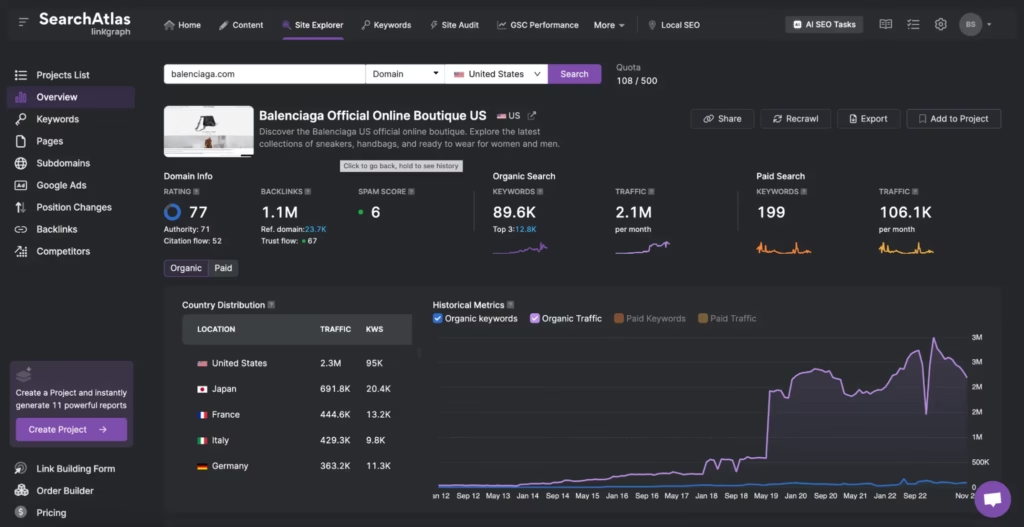 Search Atlas Site Explorer: research keywords, analyze competitors, and track authority in one workspace.
Search Atlas is the growth engine that runs your marketing while you sleep, not a single-category tool. Most platforms in this space do one job well and stop there.
Search Atlas is built to run SEO, AEO, content, paid search, and local visibility all from one system, sharing data across every function instead of exporting it between logins. That's the category shift worth naming upfront: the fair comparison isn't Search Atlas against a single-purpose tool, it's Search Atlas against the five or six subscriptions a team would otherwise stitch together.
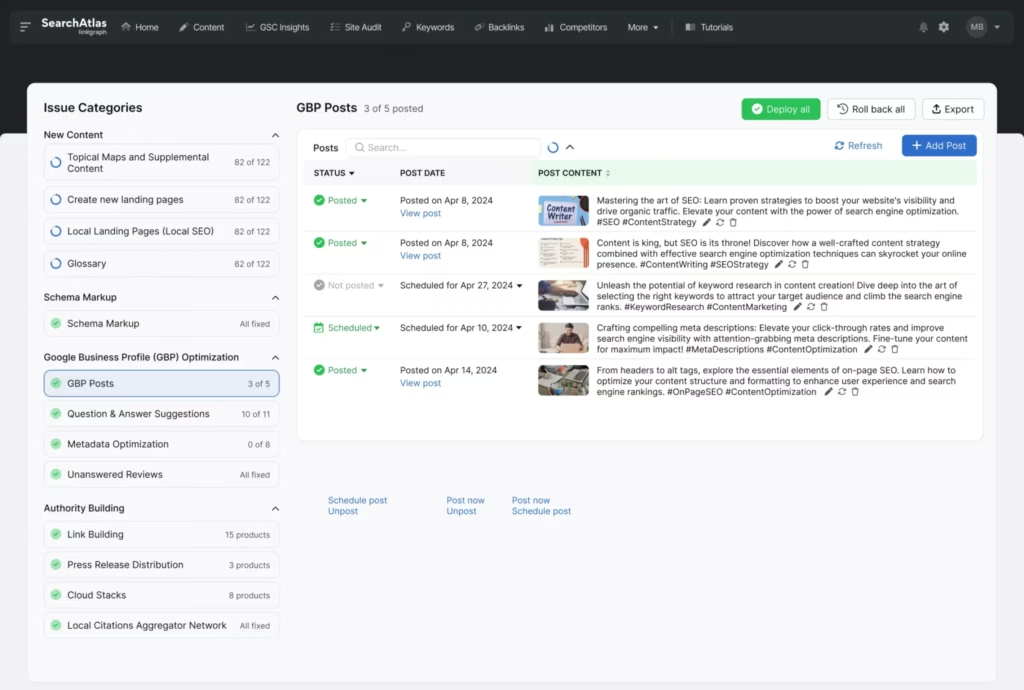 OTTO reads site health, GSC, and GBP data, then ships the fix.
On the SEO and technical side, OTTO reads a site's Google Search Console and Google Analytics data, its Google Business Profile, and its current content, then deploys the fix directly, whether that's a title tag, a schema markup gap, or an internal link.
On the content side, Content Genius drafts and scores copy against entity coverage, SERP intent, and a 12-dimension grading system called Scholar, so the writing gets checked before it publishes rather than after it starts underperforming.
On the paid side, Smart Ads builds and runs Google Ads campaigns inside the same workspace (more on that in the paid advertising section below). And its LLM Visibility tool tracks how often a brand gets cited inside ChatGPT, Claude, Gemini, and Perplexity answers, which matters as more buyers start their research inside an AI assistant instead of a search box.
For the full picture of how AEO differs from traditional SEO, our guide to answer engine optimization breaks down what it takes to get cited instead of just ranked, and this piece on getting cited by AI covers the tactical side.
Pricing starts at $99/month for the Starter plan and runs to $399/month for Pro, with custom pricing above that for larger teams, and every plan includes a 7-day free trial. Search Atlas holds a 4.7/5 rating on G2 and 4.8/5 on Capterra, and Gartner named it the #1 SEO platform for customer satisfaction and usability. The tradeoff is a real learning curve on the more advanced automation settings, though onboarding calls are included on every plan to shorten it.
AI Content Writing: Jasper
Jasper is a dedicated AI writing platform built around templates, a rewriting module, and long-form content generation for marketing teams. It's a reasonable choice for a team that only needs drafts and plans to run its own SEO scoring and publishing separately. Where it falls short of a platform like Content Genius is depth: Jasper's templates don't pull live SERP data to adjust keyword targeting in real time, and its rewriter doesn't run output through a semantic grading system before handing it back. For a side-by-side breakdown of what changes when a team moves off Jasper entirely, see our migration guide from Jasper to Search Atlas. For a wider survey of writing-focused options, our roundup of AI content writing tools covers more of the field.
Social Media Management: Sprout Social
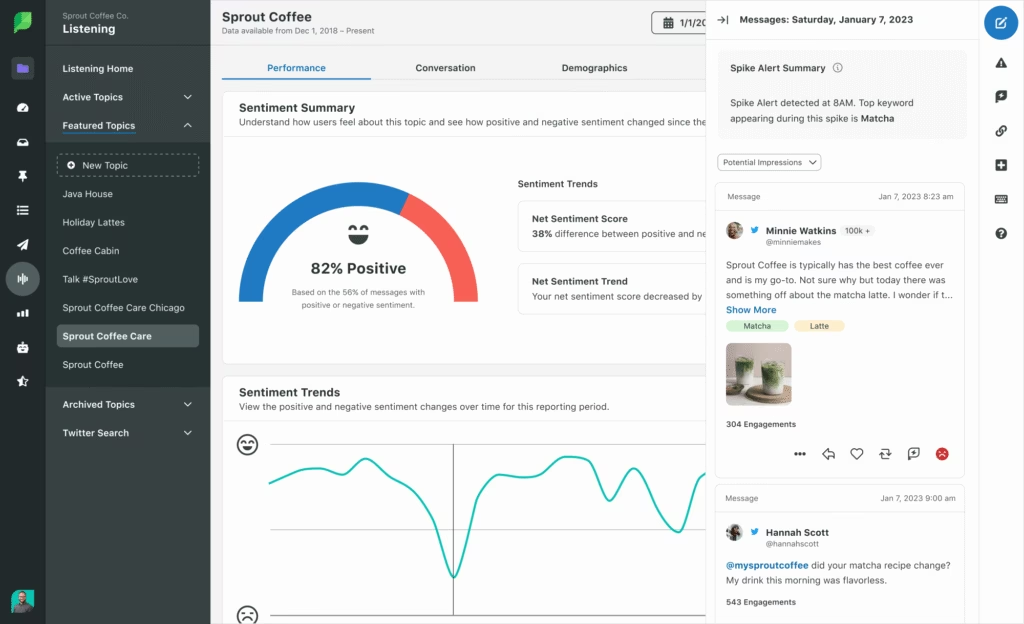 Via Sprout Social
Sprout Social manages posting, engagement, and reporting across a brand's social accounts from a single dashboard, with AI layered in for scheduling and response drafting. It suggests content themes based on audience behavior, flags optimal posting windows by platform, and runs sentiment analysis across mentions so a team can see how a campaign is landing, not just how many times it went out.
Its AI Assist feature also drafts customer service replies in the brand's tone and routes conversations to the right team member, which matters for brands running community management at real scale.
The tradeoff is price. Plans start at $199/month for a single seat and climb past $399/month for advanced tiers, and adding users compounds the cost quickly for larger teams. Sprout Social carries a 4.4/5 rating on G2 and 4.1/5 on Gartner Peer Insights.
Video and Visual Content: Synthesia and Lexica
 Via Lexica Art
Lexica converts a text description into a finished image, which covers most of the ad creative, blog header, and social thumbnail work a marketing team needs without hiring a designer for every asset. Its output quality is strong for photorealistic subjects, though prompts with several specific requirements (an exact product, a specific pose, a particular background) still need a few regenerations to land. Review scores are mixed against its category peers, with a 2.6/5 on Trustpilot, so it's worth testing on a brand's typical prompts before committing to a paid tier.
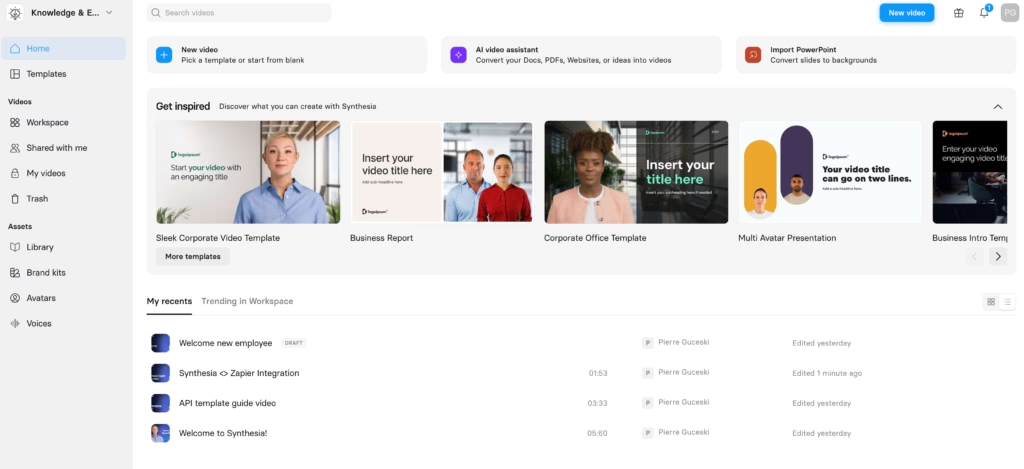 Via Synthesia
Synthesia turns a written script into a finished video with an AI presenter, removing the need to book talent, rent a studio, or schedule a shoot. It supports well over 100 languages and dozens of digital avatars, which makes it useful for training videos, product explainers, and localized ad creative that would otherwise need a full production budget per language.
The catch is that the avatars still read as synthetic in close-up, and the free and starter tiers cap monthly video minutes hard enough that a content team will outgrow them fast. Synthesia holds a 4.7/5 rating on G2 and 4.7/5 on Capterra.
Influencer Marketing: Influencity
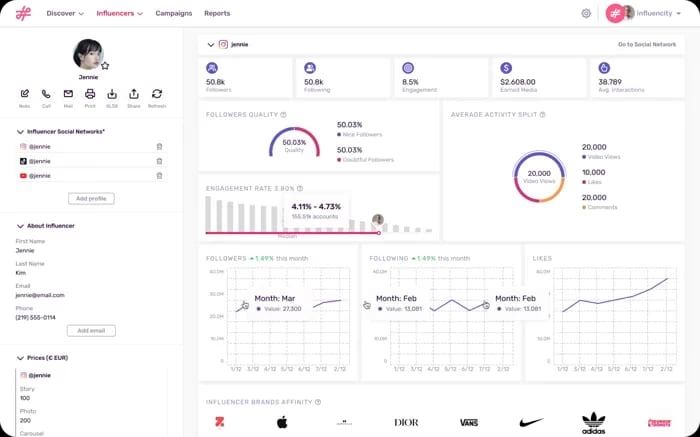 Via Influencity
Influencity manages influencer discovery, outreach, and campaign tracking from one dashboard, with filters that narrow a search by audience demographics, engagement rate, and follower authenticity. Its analytics go deeper than most competitors on follower demographics and fake-follower detection, and its Shopify integration ties influencer posts directly to sales.
The platform charges $198/month across its Basic, Professional, and Business tiers, with the differences mostly in monthly result volume and stored influencer counts rather than feature access, plus custom Enterprise pricing above that. The tradeoff is that Instagram Story metrics still need to be tracked manually, and support runs through email only. Influencity holds a 4.5/5 rating on G2 and 4.2/5 on Capterra.
Paid Advertising Automation: Trellis and Smart Ads
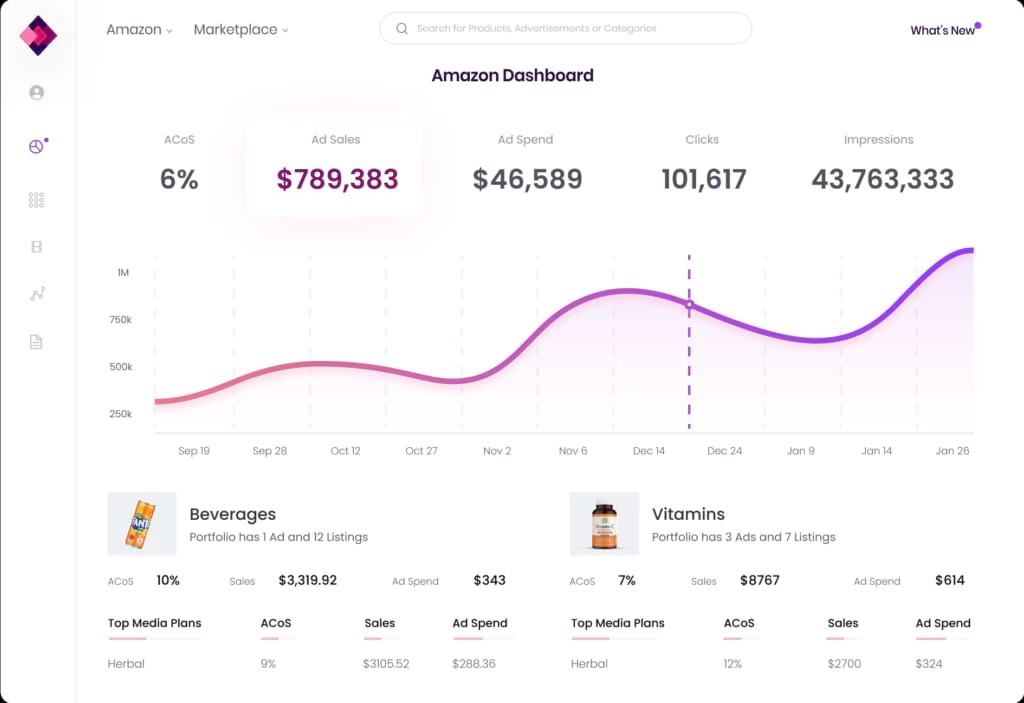 Via Trellis
Trellis is an ecommerce advertising platform that uses AI to adjust product pricing and ad spend across retail advertising channels in response to live market shifts. A team sets the boundaries, market position, target profit margin, sales goals, and Trellis makes the daily pricing and bid adjustments inside them. It's built for ecommerce sellers running ads across marketplaces, not general B2B or service-business advertisers. Trellis doesn't publish self-serve pricing (a sales call is required for a quote), and reviewers note a real learning curve during onboarding despite the guided setup. It holds a 4.1/5 on G2.
As mentioned above, Search Atlas covers this same ground for search advertising through Smart Ads, which builds, runs, and optimizes Google Ads campaigns directly inside the platform. It clusters keywords into single-themed ad groups, writes ad copy matched to search intent, reallocates budget toward what's converting, and filters out low-quality traffic with automatic negative keyword rules, all with an approval checkpoint before anything ships live. For a broader look at how AI now handles paid search work, see our guide to AI for Google Ads.
Brand Monitoring: Brand24
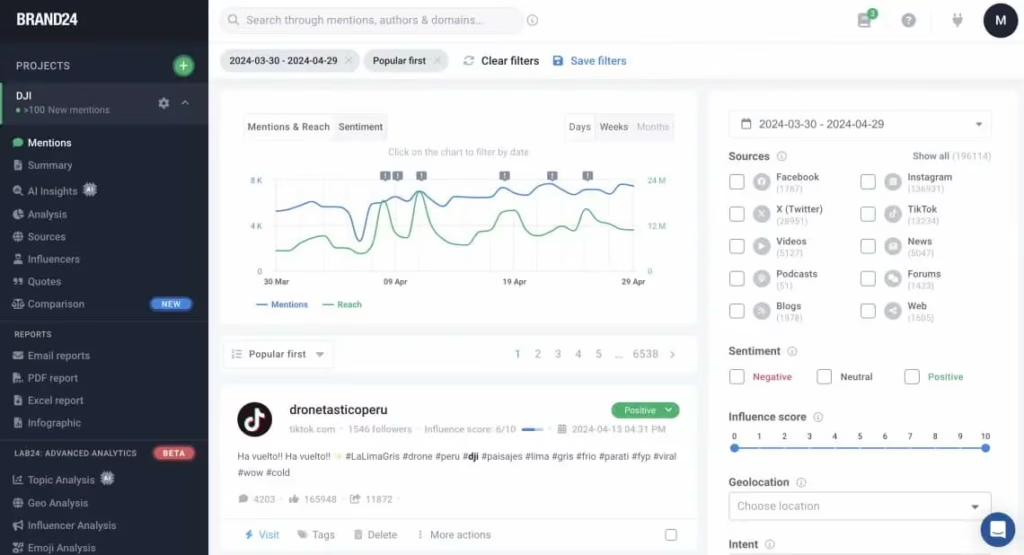 Via Brand24
Brand24 tracks where a brand, its products, and its competitors get mentioned across social media, news sites, blogs, and forums, then scores the sentiment behind each mention. It's built for reputation monitoring and competitive tracking rather than content creation or ad management, which keeps it focused but means it needs to sit alongside other tools rather than replace them. Plans start at $119/month for a single keyword project and scale to $399/month for broader keyword and mention volume. Some reviewers find the navigation unintuitive at first, and the volume of raw mention data can be more than a small team wants to sift through daily. Brand24 holds a 4.6/5 rating on G2 and 4.7/5 on Capterra.
Email Marketing: Seventh Sense
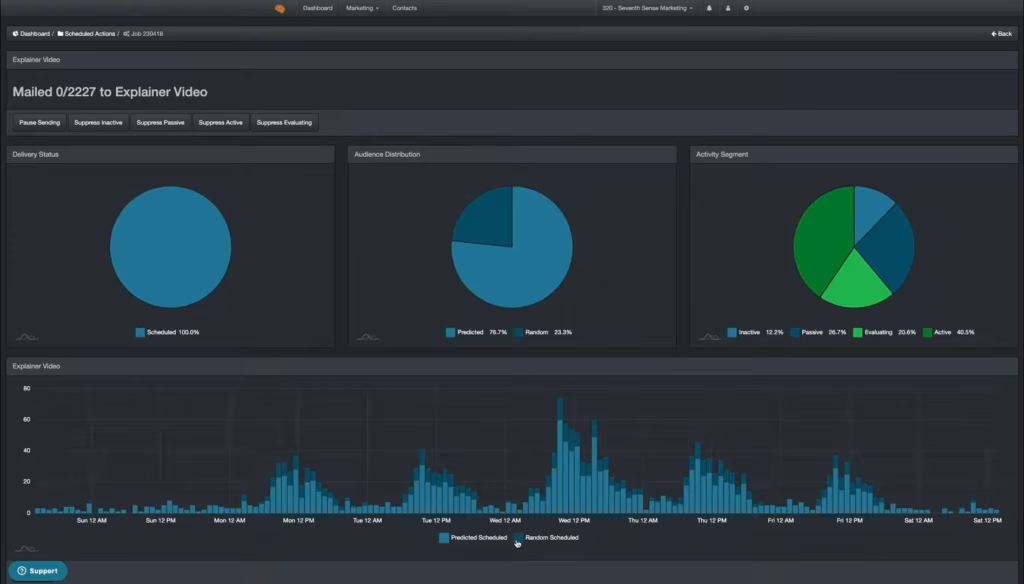 Via Seventh Sense Youtube Channel
Seventh Sense is an AI email optimization platform that predicts the best send time for each individual recipient, instead of sending an entire list at one scheduled hour. It plugs directly into HubSpot and Marketo, learning each contact's open and click history to time delivery around when that specific person is actually likely to engage. That personalization comes at a real cost for Marketo users specifically, where pricing jumps sharply compared to the HubSpot tier, and a few reviewers note the platform leans harder on its own AI judgment than some teams are comfortable with. Plans start at $80/month for HubSpot accounts with 5,000 contacts and scale up from there.
Seventh Sense reviews
- G2: 4.8/5
- Capterra: 5/5
CRM and Lead Nurturing: HubSpot Breeze AI and Conversica
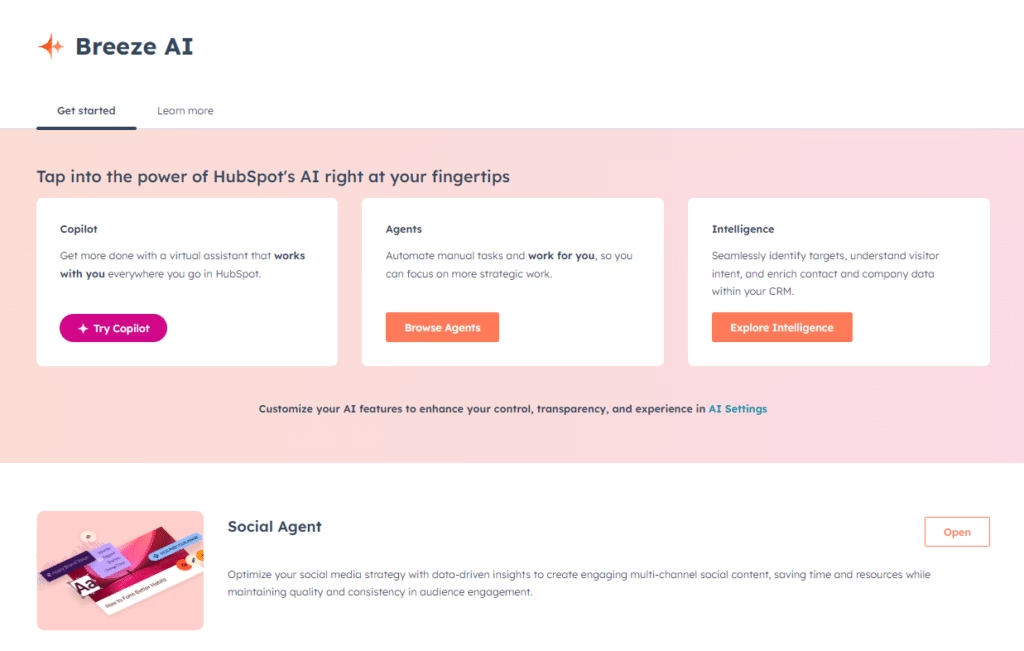 Via HubSpot
HubSpot Breeze layers AI onto HubSpot's CRM to rank prospects, forecast purchasing behavior, and draft marketing copy from inside the same system that already holds a company's contact data. Its predictive lead scoring learns from a business's own historical conversion data rather than a generic model, which tends to make it more accurate the longer a team has used HubSpot. Free tools exist at $0/month, but the useful AI features live in the Starter tier at $20/month and the Professional tier at $890/month, and exceeding a plan's contact quota triggers an automatic upgrade with no way to opt out.
Conversica runs the outbound side of lead nurturing through AI assistants that email or message leads directly, follow up automatically, and read intent and sentiment to adjust the next message. It's built for volume, following up with leads a sales team would otherwise let go cold, and it integrates with most major CRMs. Pricing isn't published, a demo and quote are required, and a few reviewers note that viewing the AI's actual questions to a lead requires logging into a separate dashboard rather than seeing everything inside the CRM.
Conversica holds a 4.5/5 rating on G2 and 4.6/5 on Capterra, and HubSpot Breeze carries a 4.4/5 on G2 and 4.5/5 on Capterra.
Workflow Automation: Zapier
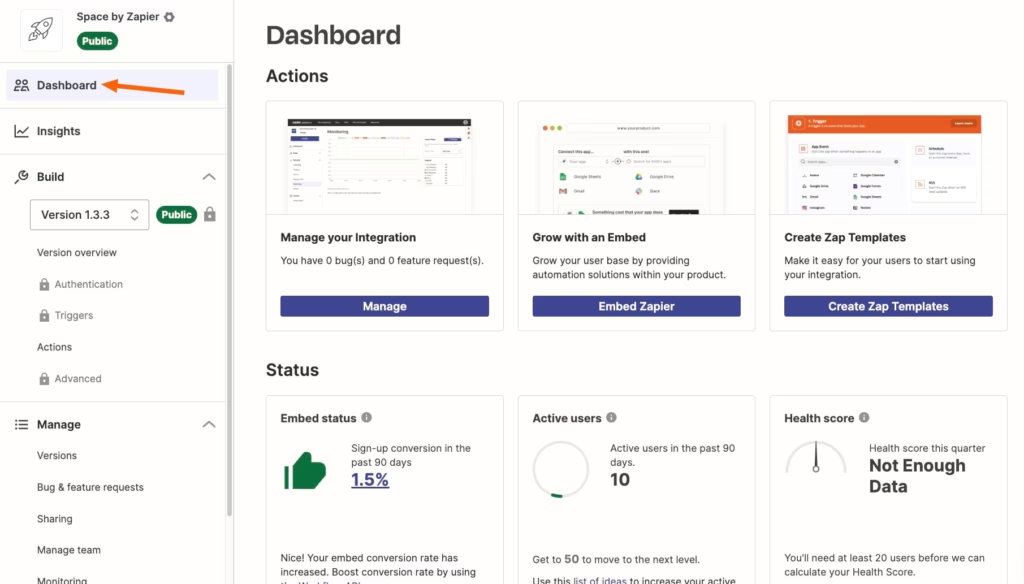 Via Zapier
Zapier connects marketing apps to each other using if-then logic, so an action in one platform automatically triggers a task in another without a developer building the integration. It doesn't generate content or run campaigns itself. Its job is to move data between the tools that do, such as adding a new lead from a form into a CRM, then triggering a welcome email sequence, then logging the interaction in a shared spreadsheet. That makes it the connective layer underneath a marketing stack rather than a replacement for any single piece of it.
The free plan covers 100 tasks a month with basic two-step automations, and the Professional plan runs $186.48/month for 750 tasks with multi-step automations and webhooks. Reviewers note that changing one step in an existing automation sometimes requires rebuilding it rather than editing it in place. Zapier holds a 4.5/5 rating on G2 and 4.7/5 on GetApp.
What Happens When You Stop Buying Individual Tools
Most marketing teams don't set out to run fifteen subscriptions, it happens one urgent problem at a time: a gap in social coverage gets Sprout Social, a slow quarter gets an influencer platform, a content bottleneck gets a writing tool. Eighteen months later, the stack costs more than a junior hire and nobody owns the handoffs between each piece. Our guide to building an AI marketing stack walks through why that pattern breaks down.
The alternative gaining ground in 2026 isn't a bigger stack, it's one system that runs SEO, content, paid search, and visibility work together and shares data across all of it instead of exporting spreadsheets between logins. Search Atlas is built around that model rather than assembled from separate acquisitions, which is the practical difference between a platform and a stack.
Our ranked comparison of AI CMO platforms looks at execution depth across the category, and our breakdown of AI competitor analysis covers how the same consolidation logic applies to competitive research.
Whatever combination ends up on a team's list this year, re-run the evaluation checklist above against each platform quarterly. A tool that only recommended changes a year ago might execute them directly today, and the right stack for 2026 probably won't be the right one for 2027.