⚡ Strategic Trade-Off Analysis: Programmatic vs Editorial
Assess the operational velocity, capital expenditure, and crawl governance requirements of both approaches before allocating development resources.
Formal Definition and Strategic Overview
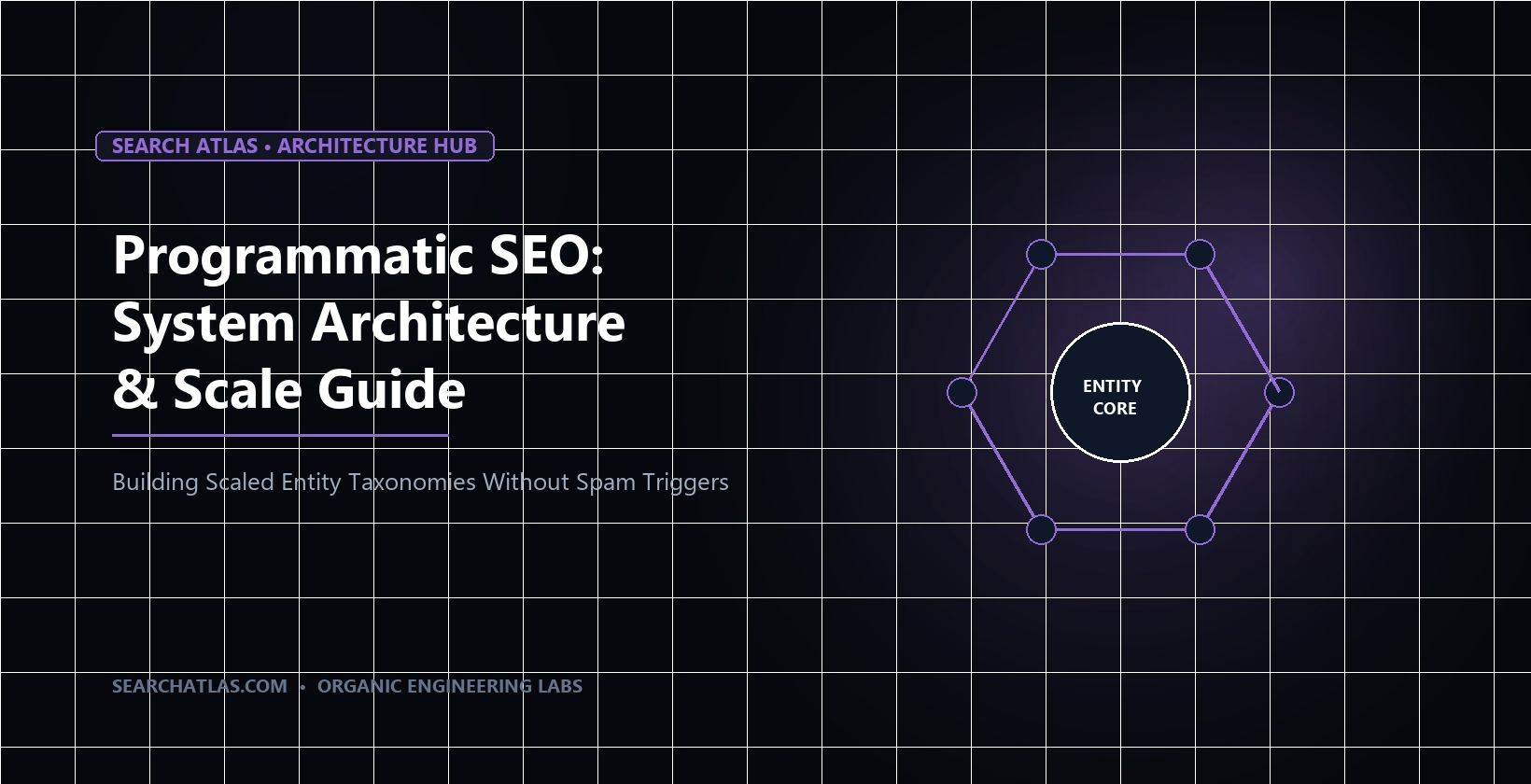
Programmatic SEO is an automated information architecture that deploys database-driven web pages at scale to capture distributed long-tail search demand. Traditional SEO is an editorial and technical practice that crafts individual bespoke documents to achieve top rankings for competitive head terms. The defining economic divergence between the two methodologies is marginal production cost, where programmatic scaling exhibits near-zero marginal cost per document following initial engineering deployment.
Neither approach is universally superior. High-growth digital companies increasingly execute a hybrid model: deploying traditional editorial pillars to build topical authority and earn organic backlinks, while leveraging programmatic subdirectories to capture transactional, high-intent buyer queries across thousands of specialized permutations.
flowchart TD
    subgraph EditorialStrategy["Traditional Editorial SEO"]
        EdPillars[Flagship Thought Leadership Pillars]
        Backlinks[Earned High-Authority Editorial Backlinks]
        BrandTrust[Brand Entity Anchor & Citable Research]
        EdPillars --> Backlinks
        Backlinks --> BrandTrust
    end

    subgraph ProgrammaticStrategy["Programmatic SEO Scale"]
        Database[(Proprietary Data Records)]
        Templates[Dynamic Component Templates]
        LongTail[Thousands of Long-Tail Intent Landers]
        Database --> Templates
        Templates --> LongTail
    end

    BrandTrust ==>|Internal PageRank Transfer| Templates
Comparative Architectural Analysis
| Dimension | Traditional Editorial SEO | Programmatic SEO |
|---|---|---|
| Primary Target Queries | Short-tail and medium-tail head terms ("best crm software"). | Granular, combinatorial long-tail queries ("hubspot vs salesforce api limits"). |
| Creation Bottleneck | Content writers, subject matter experts, and editors. | Data engineers, frontend developers, and schema architects. |
| Cost Structure | Linear: cost scales proportionally with every additional article ($300–$1,500 per URL). | Asymptotic: high initial engineering capex ($10,000–$30,000), followed by near-zero marginal cost per URL. |
| Indexation Risk | Minimal: low volume and high editorial uniqueness ensure stable indexation. | Moderate to High: requires strict folder maturation and kinematic governance to prevent spam demotions. |
| Conversion Characteristics | Broad top-of-funnel brand education with moderate conversion rates (1%–3%). | Hyper-specific transactional intent yielding significantly higher commercial conversion rates (4%–8%). |
The Symbiotic Conversion Flywheel
The true competitive advantage emerges when traditional and programmatic search architectures are linked in a unified conversion flywheel:
- Authority Inflow: The editorial hub publishes original industry benchmarks, research studies, and definitive guides that attract external backlinks and establish domain trust.
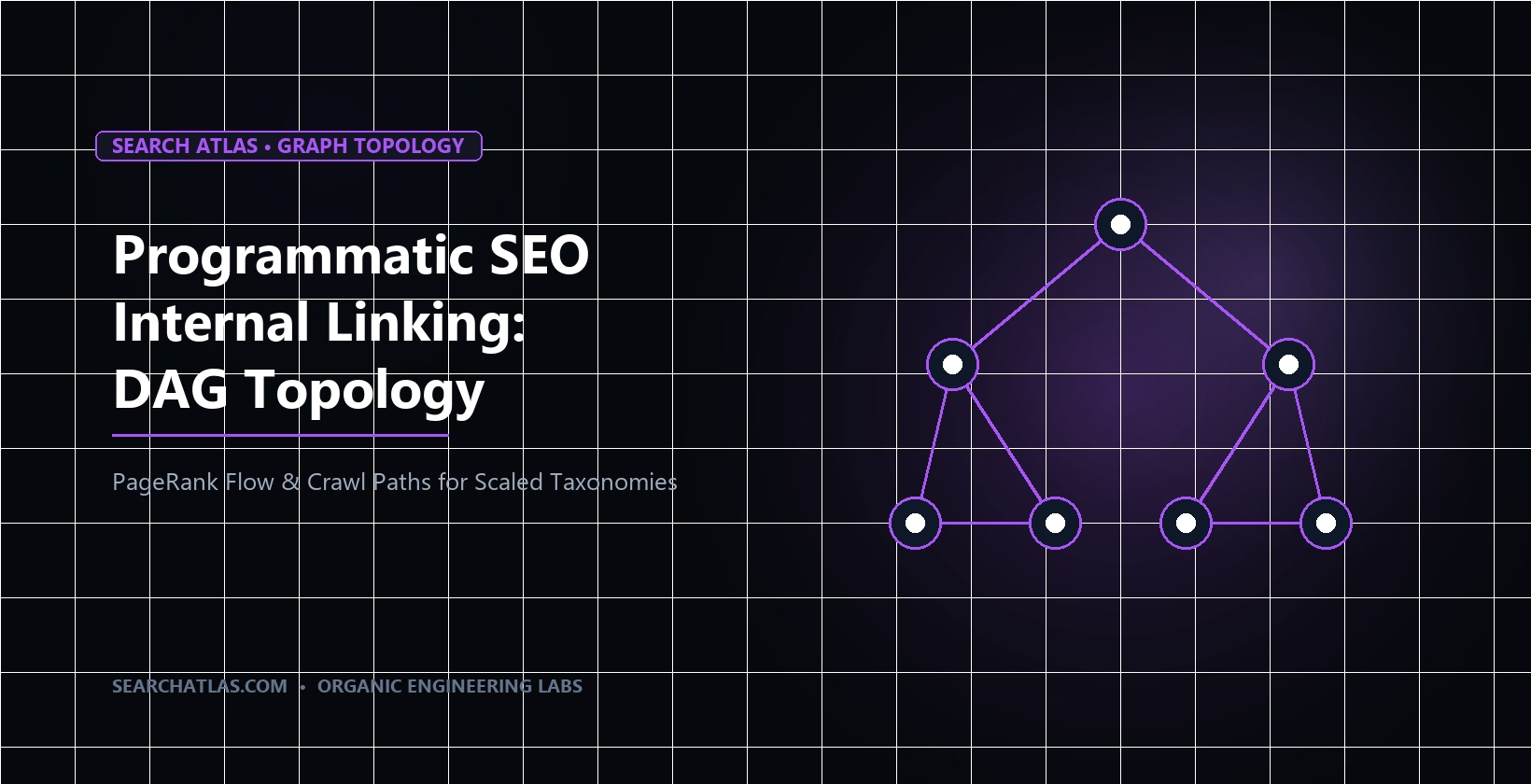
- PageRank Distribution: Through carefully engineered internal PageRank DAG bridges, the editorial pillars funnel link equity down into the Programmatic SEO Hub and database-driven subdirectories.
- Transactional Capture: The programmatic pages capture users at the exact moment of decision, offering instant attribute diffing and structured utility tooling.
- Organic Reinvestment: Conversion revenue and user engagement signals feed back into continuous database enrichment and editorial expansion.
By balancing the qualitative depth of traditional SEO with the quantitative scale of programmatic architecture, modern organizations establish resilient, defensible search dominance across the entire organic search landscape.