Dark funnel is the portion of the buyer journey that occurs in channels where purchase intent exists, but attribution data does not. The meaning of dark funnel explains how buyers discover brands, evaluate solutions, and form preferences through private conversations, communities, recommendations, podcasts, newsletters, and other environments that analytics platforms cannot measure directly. This definition clarifies what dark funnel means in modern marketing and B2B demand generation.
Dark funnel matters because buyers conduct significant portions of their research before entering measurable marketing channels. Analytics platforms track clicks, visits, and conversions, but they do not track peer recommendations, community discussions, podcast consumption, or private content sharing. This limitation creates attribution gaps that hide the channels responsible for generating awareness, trust, and buying intent. This reality explains why dark funnel influence often appears later through branded searches, direct visits, and conversion activity.
Dark funnel creates measurable challenges for organizations operating in search, content, and demand generation environments. Dark funnel influence distorts attribution reporting, inflates direct traffic metrics, and shifts conversion credit toward the final measurable interaction rather than the source of influence. Brands that ignore dark funnel behavior risk underinvesting in communities, newsletters, podcasts, and other channels that shape buying decisions before measurable engagement begins.
Dark funnel requires a strategy built around audience research, channel mapping, zero-click content, community participation, and influence measurement. Effective dark funnel strategies focus on establishing visibility in the channels where buyers research before they search. Organizations that monitor branded search growth, collect self-reported attribution data, and maintain presence in trusted communities gain a more complete understanding of how demand develops. This approach improves audience reach, attribution accuracy, and long-term brand visibility across both measurable and unmeasurable buyer journeys.
What Is a Dark Funnel?
Dark funnel is the portion of the buyer’s journey that occurs in channels where purchase intent exists, but attribution data does not. Dark funnel activity takes place before a prospect enters any measurable marketing system. Dark funnel interactions happen inside private conversations, closed communities, messaging applications, podcast consumption, peer recommendations, and other environments that do not generate referral data. Dark funnel marketing focuses on understanding and influencing those invisible interactions because those interactions shape buying decisions long before analytics platforms detect buyer interest.
What is the dark funnel in marketing? Dark funnel in marketing describes the collection of untrackable interactions that influence purchase decisions before measurable engagement occurs. Dark funnel activity includes vendor discussions in Slack communities, product recommendations in WhatsApp groups, conversations between colleagues, podcast mentions, and content shared privately between buyers. These interactions create awareness, trust, and preference without producing clicks, referrer data, UTM parameters, or attribution records. Dark funnel influence often appears later as direct traffic, branded searches, demo requests, or unexplained pipeline growth.
How does dark funnel activity affect attribution and measurement? Dark funnel activity creates attribution gaps because attribution systems depend on measurable interactions. Attribution platforms assign credit to channels that generate clicks, sessions, and conversions. Dark funnel interactions generate influence without generating attribution signals. Marketing reports often credit the final touchpoint even though multiple dark funnel interactions shaped the purchase decision beforehand. This limitation explains why direct traffic, branded search growth, and unexplained conversion increases often rise before marketers identify a measurable source of influence.
What Channels Make Up the Dark Funnel?
Dark funnel channels are environments where information influences buying decisions, but attribution data disappears. Dark funnel channels shape awareness, trust, and vendor preference before measurable engagement occurs. Dark funnel channels include private messaging applications, email conversations, Slack communities, Discord servers, podcasts, newsletters, social content, review platforms, and offline discussions.
These channels influence purchase decisions without generating referral data, conversion paths, or attribution records. Dark funnel activity remains invisible until intent appears through direct traffic, branded search, or purchase inquiries.
1. Private messaging apps and email. Private messaging apps and email form one of the largest dark funnel distribution layers. Private messaging apps distribute content through WhatsApp, Telegram, iMessage, and email conversations,s where referral information disappears before a recipient visits a website. SparkToro research tracking 1,113 visits across 11 social networks found that 100% of traffic from WhatsApp and Slack appeared as direct traffic inside analytics platforms. A report shared through a messaging application creates awareness and purchase intent, yet analytics records none of the interactions that created that interest.
2. Slack communities. Slack communities function as dark funnel environments because valuable discussions occur inside private workspaces. Slack communities contain recommendations, product evaluations, implementation advice, and vendor comparisons that search engines never index. A recommendation inside a community of thousands of practitioners creates trust through peer validation rather than brand promotion. That trust influences future buying decisions, yet analytics platforms record only the final website visit. Slack architecture creates one of the strongest combinations of influence and attribution loss in B2B marketing.
3. Discord servers. Discord servers create private discussion environments where buyers exchange recommendations and vendor experiences. Discord communities frequently center on technical subjects, software evaluation, and practitioner-level discussions. A positive recommendation inside a developer community influences future product research and vendor selection. That influence shapes branded searches and direct visits later, but analytics platforms cannot identify the original Discord conversation that created the interest.
4. Podcast audio. Podcast audio creates a dark funnel influence because listeners consume information without generating measurable website activity. Podcast episodes introduce products, ideas, and vendors while audiences commute, exercise, or work. Listeners often remember a brand name without visiting a website immediately. That delayed action disconnects the original influence from the eventual website visit. Podcast mentions generate awareness first, while branded searches and direct visits appear days or weeks later.
5. LinkedIn and X posts. LinkedIn and X function as dark funnel channels because most impressions never generate clicks. LinkedIn posts expose ideas, opinions, and brand messages to thousands of readers who never visit a website. A post with 20,000 impressions and 50 clicks influences far more people than analytics reports suggest. Those readers carry information into future discussions, evaluations, and purchasing decisions. Analytics platforms capture the clicks but miss the much larger awareness layer created by content consumption.
6. Newsletters. Newsletters contribute to the dark funnel through forwarding behavior and delayed engagement patterns. Newsletter subscribers frequently share content with colleagues through email or messaging applications. Those secondary shares create new audiences without attribution data. A subscriber who reads about a vendor in the morning and performs a branded search later creates measurable interest disconnected from the original newsletter. Newsletter influence often appears through increased brand demand rather than newsletter referral traffic.
7. Peer recommendations and offline words. Peer recommendations and offline conversations represent the least measurable dark funnel channels. Peer recommendations occur during meetings, conference discussions, phone calls, and workplace conversations where no digital record exists. A recommendation from a trusted colleague carries significant credibility because the recommendation comes from direct experience rather than marketing content. Buyers frequently enter vendor evaluations with preferences already established through those conversations. Analytics platforms record the final action but never record the recommendation that created the preference.
8. Review platforms. Review platforms become dark funnel channels when buyers research vendors without using tracked referral links. Review platforms expose buyers to ratings, testimonials, and product comparisons that influence purchasing decisions. A buyer reads dozens of reviews before typing a vendor’s URL directly into a browser. That behavior creates a direct visit rather than a referral visit. Review platforms influenced the decision, but attribution systems assign no credit to the original research activity.
What Is the Difference Between the Dark Funnel and Dark Social?
The difference between the dark funnel and dark social lies in scope, attribution, and influence. Dark social refers to content sharing through private digital channels where referral data disappears. Dark funnel refers to all untrackable influence that shapes buying decisions before measurable engagement occurs. Dark social exists inside the dark funnel, while the dark funnel extends beyond private sharing into conversations, recommendations, communities, and other invisible influence channels.
Dark social focuses on link sharing without attribution, which creates direct traffic misclassification in analytics platforms. Dark funnel focuses on influence without attribution, which creates visibility gaps across the entire buyer journey. This distinction explains why dark social represents one channel category while the dark funnel represents a complete framework for understanding hidden buyer behavior.
The core differences between the dark funnel and dark social are below.
| Aspect | Dark Funnel | Dark Social |
| Definition | Broad framework for untrackable buyer influence. | Private digital sharing that strips referral attribution. |
| Scope | Covers all invisible influence channels. | Covers private content-sharing channels only. |
| Primary activity | Shapes awareness, trust, and preference. | Distributes links and content privately. |
| Attribution impact | Hides influence across the buying journey. | Removes referral source data from visits. |
| Digital requirement | Includes digital and offline interactions. | Requires digital link sharing. |
| Examples | Podcasts, peer recommendations, Slack communities, conferences. | WhatsApp, Slack messages, email forwarding, iMessage. |
| Analytics visibility | Influence remains invisible. | Traffic appears as direct visits. |
| Buyer behavior | Forms preferences before measurable engagement. | Creates visits without referral attribution. |
| Strategic challenge | Measures hidden influence. | Identifies hidden traffic sources. |
| Outcome | Produces invisible demand generation. | Produces unattributed website sessions. |
How does dark social relate to the broader dark funnel concept? Dark social is a specific subset of the dark funnel. Dark social occurs when content moves through private digital channels that remove referral information before a website visit occurs. Dark funnel encompasses dark social and every other form of invisible influence. Podcasts, community discussions, peer recommendations, conference conversations, and offline discussions all belong to the dark funnel even when no link exists. Every dark social interaction belongs to the dark funnel, but many dark funnel interactions never involve content sharing.
What mechanism causes dark social to strip referrer attribution? Dark social strips referrer attribution because private messaging platforms rarely pass referral information during link transfers. Messaging applications, embedded browsers, and email clients frequently remove or block HTTP referrer headers. A link shared through WhatsApp appears as direct traffic because the destination website receives no source information. The same behavior occurs across Slack, iMessage, Telegram, and email environments. SparkToro research found that 100% of visits from WhatsApp and Slack appeared as direct traffic inside analytics platforms.
What distinguishes the scope of the dark funnel from the scope of dark social? Dark social focuses exclusively on private digital sharing. Dark social requires a link, a digital interaction, and a resulting website visit. Dark funnel covers a much larger influence on the ecosystem. A buyer who hears a vendor recommendation during a podcast participates in dark funnel activity without receiving a link. A buyer who discusses software options during a conference conversation participates in dark funnel activity without creating any digital record. Dark social represents one visible edge of hidden influence, while the dark funnel captures the entire hidden influence landscape.
What do dark social and the full dark funnel share as a strategic problem? Dark social and the dark funnel create the same attribution challenge. Both generate intent that analytics platforms fail to attribute correctly. Dark social converts social sharing into direct traffic, which hides the true source of visits. Dark funnel converts influence into branded searches, direct visits, and purchase inquiries without revealing the original touchpoint. This attribution gap causes marketing reports to undervalue the channels, content, and conversations responsible for generating buyer interest. The result is incomplete measurement and an inaccurate view of how purchase decisions develop.
How Does Dark Funnel Activity Affect Marketing Attribution and Analytics?
Dark funnel activity affects marketing attribution and analytics by creating buyer intent that attribution systems cannot observe or credit. This effect matters because marketing teams rely on attribution data to evaluate channel performance, allocate budgets, and measure ROI. Dark funnel influence occurs before measurable engagement, which means analytics platforms often assign conversion credit to the wrong touchpoints.
Dark funnel activity affects attribution by generating influence without creating attribution signals. Attribution systems depend on referrer headers, UTM parameters, ad click identifiers, cookies, and recorded sessions to connect marketing activity with conversions. Dark funnel interactions generate none of those signals, which prevents attribution models from identifying where buyer interest originated. This limitation creates gaps between actual influence and reported influence.
Dark funnel activity affects attribution by shifting conversion credit toward the final measurable interaction. Attribution models record the last tracked event before conversion and assign a value to that event. Branded searches, direct visits, and form submissions frequently receive conversion credit because they represent the first visible interaction in the analytics system. This credit assignment ignores the community discussions, peer recommendations, podcast mentions, and private conversations that created the purchase intent. This distortion causes attribution reports to overvalue measurable channels and undervalue invisible influence channels.
Dark funnel activity affects analytics by inflating the reported performance of demand capture channels. Demand capture channels collect existing intent after buyers already know what they want. Paid search campaigns targeting branded keywords often appear highly effective because attribution systems connect those clicks directly to conversions. The community content, educational content, and word-of-mouth activity that generated the branded search remain invisible. This invisibility creates an incomplete understanding of what actually drives demand.
Dark funnel activity affects ROI reporting by disconnecting investment from influence. Marketing reports assign revenue to channels that generate measurable interactions, while dark funnel channels generate influence without measurable interactions. A podcast mentions creating hundreds of future branded searches, yet attribution systems assign value only to the search session. A peer recommendation influences a purchase decision weeks before a website visit occurs, yet attribution systems record only the visit. This disconnect causes ROI calculations to reflect attribution visibility rather than actual buyer influence.
Why do standard attribution models fail to capture dark funnel influence? Standard attribution models fail to capture dark funnel influence because attribution models operate only on measurable events. Attribution models require clicks, visits, referrals, tracking parameters, or conversion paths to assign credit. Dark funnel interactions occur outside those measurement systems, which prevents attribution platforms from recognizing their contribution. This limitation leaves large portions of the buyer journey unaccounted for in attribution reports.
How does dark funnel activity distort marketing ROI reporting? Dark funnel activity distorts marketing ROI reporting by concentrating credit on channels that appear at the end of the conversion path. ROI reports frequently attribute success to branded search, direct traffic, or retargeting campaigns because those channels generate measurable interactions. Community participation, podcast appearances, newsletters, peer influence, and private sharing often create the demand behind those interactions. Attribution systems ignore those earlier influences, which creates an inaccurate picture of marketing performance and investment effectiveness.
How Does Buyer Behavior Drive Dark Funnel Activity?
Buyer behavior drives dark funnel activity because buyers prefer independent research, peer validation, and private discussions before engaging with vendors. This behavior matters because a large portion of the buying journey occurs outside measurable marketing channels. Buyer behavior shapes how information spreads through communities, recommendations, conversations, and content consumption that analytics platforms cannot observe.
Buyer behavior drives dark funnel activity by prioritizing trust before vendor engagement. Buyers seek information from peers, practitioners, communities, and industry experts before interacting with sales teams or completing forms. This research creates awareness and vendor preferences long before measurable engagement occurs. This preference formation explains why many purchase decisions begin before marketing teams identify active buying intent.
Buyer behavior drives dark funnel activity by shifting research into private environments. Buyers evaluate products through Slack communities, Discord servers, newsletters, podcasts, review platforms, and direct conversations. These environments influence vendor selection without creating referral data or attribution records. This influence remains hidden until buyers perform branded searches, visit websites directly, or enter a sales process.
Buyer behavior drives dark funnel activity by increasing reliance on peer recommendations. Buyers trust recommendations from experienced practitioners because those recommendations originate from direct product experience. Peer influence often carries greater credibility than promotional content or advertising. This credibility strengthens dark funnel influence because trusted recommendations frequently shape vendor shortlists before official evaluations begin.
Buyer behavior drives dark funnel activity by extending decision-making across multiple stakeholders. Modern purchasing decisions involve contributors from different departments, roles, and external networks. Each participant conducts independent research and gathers information from different sources. This distributed research creates multiple layers of invisible influence that attribution systems cannot connect to a final conversion.
How Does Dark Funnel Traffic Appear in GA4 and Attribution Tools?
Dark funnel traffic appears in GA4 and attribution tools as direct traffic, branded search activity, and conversions with incomplete attribution paths. This appearance matters because analytics platforms rely on referral information to identify traffic sources. Dark funnel channels remove or bypass that information, which causes attribution systems to assign credit incorrectly or lose visibility entirely.
Dark funnel traffic appears in GA4 as direct sessions when referral data is unavailable. GA4 classifies traffic based on referral signals, tracking parameters, and source information passed during a visit. Dark funnel channels frequently remove those signals before a website visit occurs. This removal causes analytics platforms to categorize dark funnel visits as direct traffic rather than attributing them to their true source.
Dark funnel traffic appears in attribution tools through downstream signals rather than direct attribution. Buyers consume content, receive recommendations, and evaluate vendors through private channels before visiting a website. These interactions generate awareness first and measurable activity later. This delay creates a disconnect between the source of influence and the recorded conversion path.
Dark funnel traffic appears in marketing reports through inflated direct traffic volumes. Attribution platforms assign direct traffic labels whenever referral information is missing. Messaging applications, email clients, embedded browsers, and community platforms frequently create this outcome. This classification causes direct traffic reports to absorb large amounts of dark funnel activity that originated elsewhere.
Dark funnel traffic appears through branded search growth because buyers often return later through search engines after initial exposure. A podcast mention, newsletter recommendation, or community discussion creates awareness before a website visit occurs. That awareness frequently surfaces as a branded search days or weeks later. This pattern makes branded search volume one of the strongest indicators of dark funnel influence.
How does GA4 classify traffic that originates from dark funnel channels? GA4 classifies traffic from dark funnel channels as direct traffic whenever referral information is unavailable. Messaging applications, email clients, and embedded browsers often remove referral data before visitors reach a website. GA4 receives no source information and records the session as direct traffic. SparkToro research found that 100% of traffic from Slack, WhatsApp, and TikTok appeared as direct traffic inside analytics platforms. This classification inflates direct traffic reports and masks the source of visitor interest.
Why does brand search volume increase as a lagging signal of dark funnel activity? Brand search volume increases as a lagging signal because dark funnel influence creates awareness before measurable engagement occurs. Buyers discover brands through podcasts, communities, newsletters, recommendations, and conversations before performing a search. The initial influence creates recognition, while the search occurs later when buyers decide to investigate further. This delay makes branded search growth a downstream signal of earlier dark funnel activity.
How does last click attribution misrepresent the source of dark funnel conversions? Last click attribution misrepresents dark funnel conversions by assigning full credit to the final measurable interaction. Buyers often encounter multiple dark funnel touchpoints before visiting a website. Community discussions, peer recommendations, podcasts, and newsletters frequently shape purchase intent long before a search occurs. Last click attribution ignores those earlier influences and credits only the final search, click, or visit. This limitation overstates demand capture channels and understates demand generation channels.
What does a growing direct traffic volume indicate about dark funnel activity when paired with brand search trends? Growing direct traffic volume alongside rising branded search volume often indicates increasing dark funnel influence. Direct traffic growth suggests more visitors arrive without referral data, while branded search growth suggests stronger brand awareness. These patterns frequently appear after podcast appearances, community exposure, newsletter distribution, or word-of-mouth activity. Neither metric identifies individual touchpoints, but both metrics together reveal the presence of a hidden influence that attribution systems cannot measure directly.
How to Measure and Attribute Dark Funnel Activity
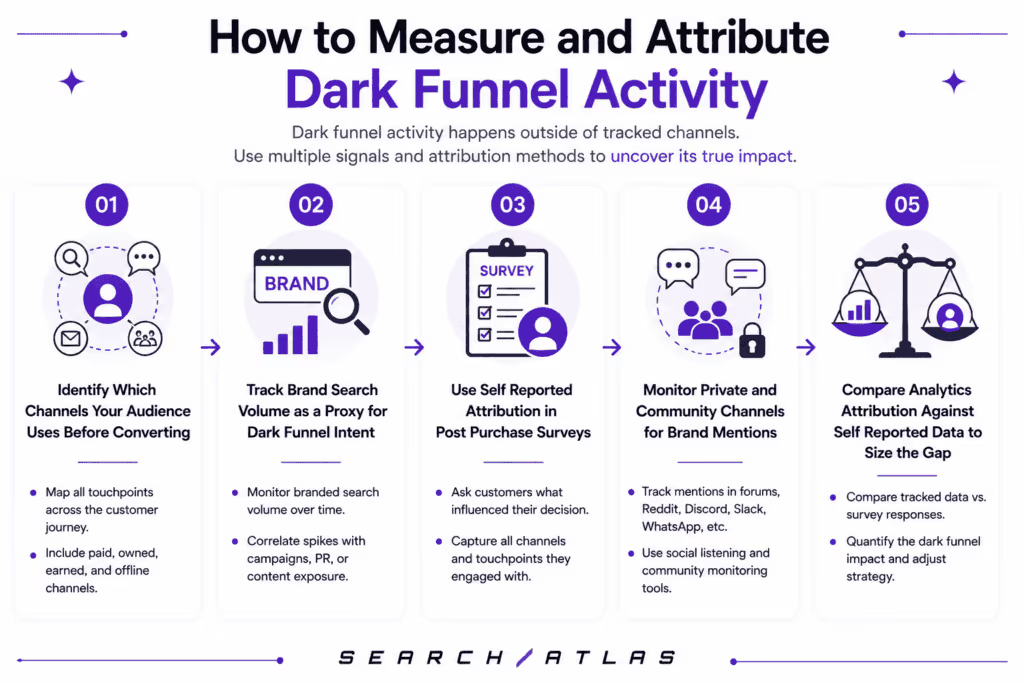
Measuring and attributing dark funnel activity means identifying the hidden channels that influence buying decisions before measurable engagement occurs. This process matters because dark funnel interactions generate awareness, trust, and purchase intent without producing attribution signals inside analytics platforms. Effective dark funnel measurement improves demand generation visibility, strengthens attribution accuracy, and reveals the channels responsible for creating buyer interest before conversion.
The 5 ways to measure and attribute dark funnel activity are listed below.
1. Identify Which Channels Your Audience Uses Before Converting
Channel identification means discovering where buyers conduct research before interacting with measurable marketing assets. This process matters because dark funnel influence varies significantly across industries, audiences, and buying behaviors. Accurate channel identification prevents investment in channels that buyers do not actually use.
Businesses identify dark funnel channels through customer interviews, post-purchase surveys, audience research, and community analysis. These methods reveal the communities, podcasts, newsletters, review platforms, and peer networks that shape purchasing decisions before attribution begins. A practical outcome is a channel map containing three to five dark funnel venues where buyers actively research vendors.
2. Track Brand Search Volume as a Proxy for Dark Funnel Intent
Brand search volume measures how often buyers search for a company, product, or brand name directly. This metric matters because dark funnel influence frequently appears later as branded search activity rather than attributable website visits. Rising branded search demand often indicates growing awareness created through invisible channels.
Businesses monitor branded search volume through Google Search Console and compare search trends against podcast appearances, newsletter features, community discussions, and industry events. Trend analysis reveals whether dark funnel activity coincides with increased brand awareness. A practical rule is to investigate branded search increases that occur without corresponding advertising or media activity.
3. Use Self-Reported Attribution in Post-Purchase Surveys
Self-reported attribution asks buyers directly where they first heard about a brand. This method matters because buyers often remember touchpoints that analytics systems never record. Self-reported attribution captures influence that exists outside measurable referral paths.
Businesses collect self-reported attribution through post-purchase surveys containing dark funnel response options. Effective surveys include community recommendations, newsletters, podcasts, peer referrals, conferences, and review platforms rather than generic marketing categories. A practical takeaway is to compare survey responses against analytics attribution to identify missing sources of influence.
4. Monitor Private and Community Channels for Brand Mentions
Community monitoring tracks conversations occurring in semi-public channels where dark funnel activity becomes partially visible. This monitoring matters because brand discussions frequently appear before measurable engagement begins. Community conversations reveal how audiences evaluate products, compare vendors, and share recommendations.
Businesses monitor brand mentions through Google Alerts, SparkToro, Mention, Reddit discussions, review platforms, and public social conversations. Monitoring identifies trends, recurring questions, and growing awareness signals that analytics platforms cannot connect directly to conversions. A practical rule is to treat public mentions as indicators of broader private conversations happening elsewhere.
5. Compare Analytics Attribution Against Self-Reported Data to Size the Gap
Gap sizing compares analytics attribution with self-reported attribution to estimate hidden influence. This comparison matters because dark funnel channels frequently generate conversions without receiving attribution credit. Gap sizing transforms dark funnel influence from an unknown factor into a measurable estimate.
Businesses build comparison tables showing attributed conversions alongside survey-reported first touchpoints. Large differences between the two datasets reveal where dark funnel influence exists. A practical outcome is a percentage-based estimate of conversion influence that standard attribution systems fail to capture, which improves reporting accuracy and investment decisions.
What are the best practices for Reaching Dark Funnel Audiences?
Reaching dark funnel audiences requires building visibility in the channels where buyers research before they search. This approach matters because dark funnel audiences form opinions, compare vendors, and validate decisions through communities, podcasts, newsletters, peer networks, and private conversations long before measurable engagement occurs. Effective dark funnel strategies increase brand awareness, strengthen buyer trust, and create demand that later appears through branded searches, direct visits, and conversions.
The 6 best practices for reaching dark funnel audiences are listed below.
1. Map the Channels Where Your Audience Researches Before They Search
Channel mapping identifies the communities, publications, podcasts, newsletters, and peer networks where buyers research solutions before engaging with vendors. This process matters because dark funnel behavior varies significantly across industries and audience segments. Accurate channel maps reveal where awareness forms before attribution begins.
Businesses build channel maps through customer interviews, attribution surveys, audience research, and community analysis. These methods uncover the specific venues buyers trust during evaluation. A practical outcome is a prioritized list of channels that guides content distribution, community participation, and brand visibility efforts.
2. Publish Zero-Click Content in Dark Funnel Channels Consistently
Zero-click content delivers complete value inside the platform where audiences consume it. This content format matters because dark funnel audiences prefer information that does not require additional navigation. Native content spreads more frequently through communities and private sharing networks than content that depends on clicks.
Businesses publish zero-click content through LinkedIn posts, community replies, newsletter contributions, social discussions, and podcast appearances. Each format delivers a complete insight, tactic, or perspective without requiring website visits. A practical rule is to prioritize value delivery first and website traffic second.
3. Align SEO Content Angles With the Topics Your Audience Discusses in Dark Channels
Dark channel discussions reveal the questions, concerns, objections, and terminology buyers use during research. These discussions matter because they expose intent patterns that keyword data alone does not reveal. Community conversations frequently uncover decision-making factors before those factors appear in search behavior.
Businesses audit community discussions, newsletters, forums, Reddit threads, and social conversations to identify recurring themes. Those themes become content topics that address real audience concerns rather than assumed interests. A practical outcome is content that earns stronger engagement, sharing, and community references.
4. Track Brand Search Trends as a Feedback Signal for Dark Funnel Reach
Brand search trends measure how awareness generated through dark funnel channels converts into measurable intent. This measurement matters because branded search often becomes the first visible signal of previously invisible influence. Growth in branded demand indicates increasing recognition within the target audience.
Businesses monitor branded queries through Google Search Console and Google Trends while maintaining timelines of podcast appearances, community activity, newsletter placements, and industry events. Trend analysis connects awareness-building efforts with downstream demand generation. A practical rule is to evaluate trends across four to twelve week periods rather than isolated events.
5. Run Periodic Attribution Surveys to Identify Which Dark Channels Drive the Most Influence
Attribution surveys collect first-touch information directly from buyers. This method matters because buyers often remember sources that analytics platforms never record. Attribution surveys reveal which communities, podcasts, newsletters, recommendations, and events generate awareness before measurable engagement occurs.
Businesses deploy post-conversion surveys that ask buyers where they first heard about the brand. Survey options reflect specific channels rather than broad categories. A practical outcome is a ranked list of dark funnel channels based on actual buyer responses rather than assumptions.
6. Build Topic Clusters Around the Branded Query Patterns Dark Funnel Activity Generates
Branded topic clusters capture the search behavior that emerges after dark funnel awareness develops. This strategy matters because buyers frequently validate brands through comparison, review, pricing, and implementation searches before making decisions. These searches represent the visible layer of previously invisible demand.
Businesses monitor branded search queries and identify recurring evaluation patterns. Comparison pages, review content, use case pages, and implementation guides address those patterns directly. A practical outcome is a content ecosystem that captures evaluation stage searches while providing resources for buyer reference during community discussions and peer recommendations.
What Tools Help Track or Attribute Dark Funnel Activity?
The best dark funnel attribution tools identify proxy signals that indicate hidden buyer influence before measurable conversions occur. These tools analyze branded search behavior, AI visibility, audience engagement, attribution surveys, community conversations, and traffic patterns to estimate dark funnel impact. This visibility matters because dark funnel activity occurs in channels that do not generate attribution data, which makes direct measurement impossible.
The fundamental limitation of all dark funnel attribution tools is that they measure signals rather than touchpoints. No tool records private conversations, podcast listening behavior, community discussions inside closed workspaces, or word-of-mouth recommendations. Dark funnel tools estimate influence by analyzing the measurable outcomes that those interactions create. This limitation makes dark funnel measurement directional rather than exact.
The 7 best tools for tracking and attributing dark funnel activity are Search Atlas, Google Search Console, Google Analytics 4, SparkToro, Google Forms, Mention, and Google Trends.
1. Search Atlas
Search Atlas tracks dark funnel influence through AI visibility monitoring, branded search behavior, content performance, and audience demand signals. Search Atlas identifies whether brands appear in AI-generated answers and measures visibility across conversational search environments. This visibility matters because AI platforms increasingly function as dark funnel research channels.
Search Atlas includes LLM Visibility, which tracks brand mentions, citations, share of voice, and visibility across AI systems. LLM Visibility connects visibility trends with content performance and branded demand growth. This connection reveals whether dark funnel awareness translates into measurable buyer interest.
2. Google Search Console
Google Search Console measures branded search demand through impressions, clicks, and query trends. The platform identifies increases in branded searches that frequently result from dark funnel influence rather than direct advertising activity. These trends expose awareness growth that originates outside traditional attribution paths.
Google Search Console matters because branded search volume often acts as the strongest measurable signal of dark funnel activity. Rising branded demand frequently reflects successful podcast appearances, community participation, newsletter distribution, or word-of-mouth recommendations.
3. Google Analytics 4
Google Analytics 4 tracks direct traffic, engagement metrics, and conversion activity. The platform reveals traffic patterns that often indicate dark funnel influence, particularly when direct traffic grows alongside branded search demand. These patterns expose attribution gaps that standard reporting does not explain.
Google Analytics 4 matters because dark funnel traffic frequently appears as direct traffic after referral information disappears. This visibility enables marketers to identify hidden influence trends through behavioral analysis.
4. SparkToro
SparkToro identifies the publications, podcasts, communities, creators, and information sources that audiences consume. The platform reveals where buyers spend attention before entering measurable conversion paths. This audience intelligence matters because the dark funnel strategy depends on understanding where influence originates.
SparkToro enables channel mapping by identifying the podcasts, newsletters, social accounts, and communities most relevant to a target audience. This research creates the foundation for dark funnel distribution strategies.
5. Google Forms
Google Forms captures self-reported attribution through post-purchase and lead generation surveys. The platform collects first-touch information directly from buyers rather than relying on tracking technology. This approach matters because buyers frequently remember sources that analytics systems never record.
Google Forms enables organizations to ask questions about community recommendations, podcasts, newsletters, peer referrals, and other dark funnel channels. These responses reveal sources of influence that remain invisible inside attribution platforms.
6. Mention
Mention tracks brand conversations across social networks, forums, review platforms, blogs, and online communities. The platform identifies increases in brand discussion volume and emerging conversation trends. These signals indicate growing awareness before measurable website engagement occurs.
Mention matters because public conversations often reflect broader private conversations occurring across dark funnel channels. Rising mention volume frequently corresponds with increasing audience interest and future branded demand.
7. Google Trends
Google Trends measures changes in brand interest over time through search demand patterns. The platform identifies whether awareness grows, declines, or spikes following major marketing activities. This measurement matters because dark funnel influence frequently surfaces through search behavior rather than referral traffic.
Google Trends enables comparison between brand interest and dark funnel events (podcast appearances, conference presentations, newsletter features, and community campaigns). This comparison reveals whether awareness-building activities generate measurable market attention.
How Do Dark Funnel Attribution Tools Work?
Dark funnel attribution tools work by analyzing measurable signals that indicate hidden buyer influence before conversions occur. These tools collect behavioral data, attribution data, audience research, intent signals, and self-reported feedback to estimate the impact of channels that traditional analytics platforms cannot measure directly. This process matters because dark funnel interactions occur in private environments where referral data and attribution paths do not exist.
Dark funnel attribution tools work by connecting trackable touchpoints across the buyer journey. Attribution platforms collect website visits, content engagement, form submissions, campaign interactions, and account activity to build a timeline of measurable events. This timeline reveals how buyers move through the purchasing process after becoming visible. This visibility improves attribution accuracy even though the original dark funnel influence remains hidden.
Dark funnel attribution tools work by expanding visibility into anonymous and account-level activity. Advanced platforms identify company-level engagement, intent patterns, and cross-device behavior that standard analytics platforms often miss. This visibility exposes research activity that occurs before lead capture. This exposure creates a more complete view of buyer behavior during the evaluation process.
Dark funnel attribution tools work by identifying the channels where audiences consume information before searching. Audience research platforms analyze publications, podcasts, newsletters, communities, and creators that influence buyer decisions. This research reveals where dark funnel influence originates. This insight improves distribution strategy and channel prioritization.
Dark funnel attribution tools work by collecting self-reported attribution data directly from buyers. Survey platforms capture first-touch information that analytics systems cannot record. This information reveals recommendations, conversations, communities, and content sources that influenced purchasing decisions. This visibility fills gaps left by traditional attribution models.
What does Dreamdata measure, and where are its limits in capturing dark funnel influence? Dreamdata measures first-party marketing and revenue attribution data across the buyer journey. The platform builds account-level timelines that connect website visits, campaign interactions, content engagement, and sales activities. This connection distributes revenue credit across measurable touchpoints and reveals how tracked interactions contribute to conversions.
Dreamdata’s limitation is its dependence on measurable events. Podcast mentions, Slack discussions, community recommendations, and word-of-mouth conversations remain outside the attribution model unless those interactions create a trackable visit or engagement event. This limitation means Dreamdata measures the visible portion of the buyer journey rather than the full dark funnel.
What does HockeyStack measure, and how does its cookieless tracking expand the visible buyer journey? HockeyStack measures account-level attribution, marketing performance, and buyer journey activity across channels. The platform uses cookieless tracking methods that capture more cross-session and cross-device interactions than traditional cookie-based systems. This capability expands visibility into buyer behavior and extends the measurable portion of the customer journey.
HockeyStack’s limitation mirrors other attribution platforms. Private recommendations, podcast consumption, and community discussions remain invisible until a measurable interaction occurs. The platform improves attribution coverage but does not directly measure dark funnel touchpoints.
What does Factors.ai measure, and what distinguishes its approach to the buyer journey? Factors.ai measures account-level engagement, attribution data, buyer intent signals, and anonymous company activity. The platform identifies companies researching products before individual contacts submit forms or identify themselves. This identification expands visibility into early-stage research behavior.
Factors.ai distinguishes itself through company-level identification and intent aggregation. The platform combines account activity with external intent data to reveal organizations that are actively researching a category. This visibility approximates research stage activity without directly observing private dark funnel interactions.
What does SparkToro measure, and how does it serve a dark funnel channel strategy? SparkToro measures audience behavior by identifying the publications, podcasts, newsletters, communities, social accounts, and creators that audiences consume regularly. The platform does not perform attribution. The platform performs audience research that reveals where influence forms before measurable engagement begins.
SparkToro strengthens dark funnel strategy by identifying the specific channels buyers trust during research. This intelligence enables brands to build content distribution plans based on actual audience behavior rather than assumptions. This research creates a data-driven foundation for dark funnel visibility.
How do post-purchase survey platforms complement tool-based dark funnel measurement? Post-purchase survey platforms complement dark funnel measurement by collecting information directly from buyers after conversion. Survey tools capture recommendations, podcast mentions, community discussions, newsletters, and other influences that analytics platforms cannot detect. This collection process reveals touchpoints that remain invisible in attribution reports.
What Are Common Examples of Dark Funnel Influence in Practice?
Dark funnel influence appears when buyer awareness, trust, and purchase intent develop through channels that attribution systems cannot track. These examples matter because dark funnel activity frequently drives conversions without appearing in referral reports, attribution paths, or analytics dashboards. Real-world dark funnel influence often surfaces later through branded searches, direct visits, and conversion activity that appears disconnected from its source.
There are 4 main examples of dark funnel influence in practice.
1. Podcast Guest Appearances That Increase Branded Search Demand
Podcast guest appearances create dark funnel influence by exposing brands to large audiences without generating immediate website visits. Podcast listeners consume insights, remember brand names, and return later through branded searches rather than referral links. This delayed behavior disconnects awareness from attribution.
A podcast appearance that reaches thousands of listeners generates little referral traffic but produces a 15% to 25% increase in branded search volume during the following weeks. This increase reflects growing awareness that originated from the podcast rather than search engines. Branded search growth becomes the visible signal of invisible podcast influence.
2. Community Recommendations That Generate Direct Traffic
Community recommendations create a dark funnel influence when practitioners recommend products inside private channels where referral tracking does not exist. Recommendations inside Slack communities, Discord servers, WhatsApp groups, and private forums often drive website visits without creating attribution records. This behavior hides the source of buyer interest.
A recommendation posted inside a private Slack channel generates multiple direct visits from community members. Analytics platforms record those sessions as direct traffic because no referral information exists. The recommendation creates the demand, but attribution systems credit only the resulting visit.
3. Newsletter Mentions That Influence Future Conversions
Newsletter mentions create a dark funnel influence when readers remember a brand but do not click immediately. Newsletter subscribers frequently discover products through recommendations, analyses, and featured content before returning later through search engines or direct navigation. This delayed engagement separates influence from attribution.
A newsletter feature generates modest click volume while producing significant increases in branded searches and direct visits over the following weeks. Forwarded newsletters amplify this effect because attribution data often disappears during sharing. The newsletter shapes buyer awareness even when referral reports show little activity.
Deep impression social posts create a dark funnel influence through audience exposure rather than traffic generation. Social content frequently reaches thousands of people who consume information without visiting a website. These impressions create familiarity and trust that influence future buying decisions.
A LinkedIn post with 20,000 impressions and 40 clicks exposes a brand message to 19,960 people who never appear in referral reports. Some of those readers later perform branded searches, visit the website directly, or request sales conversations. The impressions create awareness, while the resulting conversions appear disconnected from the original post inside attribution systems.
How Much of Your Direct Traffic Is Actually Dark Funnel?
Dark funnel activity contributes a significant share of direct traffic for many brands, particularly brands that invest heavily in communities, podcasts, newsletters, social content, and word-of-mouth marketing. The exact percentage varies by audience behavior, distribution channels, and marketing strategy. Direct traffic often contains a mixture of true direct visits and unattributed visits that originated from dark funnel channels.
Dark funnel activity contributes to direct traffic because attribution systems classify sessions without referral information as direct. Messaging applications, private communities, email forwarding, embedded browsers, and podcast-driven searches frequently remove attribution data before a website visit occurs. This attribution loss causes dark funnel traffic to appear inside the direct traffic bucket rather than under its true source.
Dark funnel activity contributes to direct traffic through private sharing environments. SparkToro research found that 100% of visits from Slack, WhatsApp, and TikTok appeared as direct traffic inside analytics platforms. This finding demonstrates how frequently attribution systems misclassify visits that originate from dark funnel channels. Brands with active audiences across these platforms often experience substantial dark funnel inflation in direct traffic reporting.
Dark funnel activity contributes to direct traffic through delayed buyer behavior. Buyers frequently discover brands through podcasts, newsletters, community discussions, and peer recommendations before returning later through direct navigation or branded searches. This delay disconnects the source of influence from the eventual website visit. The resulting session appears as direct traffic even though another channel created the initial awareness.
Dark funnel activity contributes to direct traffic in ways that traditional attribution systems cannot measure precisely. Analytics platforms record the final visit but cannot reconstruct the private conversation, podcast mention, or community recommendation that triggered that visit. This limitation makes direct traffic one of the largest containers of hidden influence inside marketing reporting.
How do you estimate the dark funnel share of direct traffic? Estimating the dark funnel share of direct traffic requires analyzing multiple signals together rather than relying on a single metric. Direct traffic trends, branded search growth, and post-purchase attribution surveys provide the strongest combination of evidence. Each signal captures a different outcome of dark funnel influence.
Estimating the dark funnel share begins with direct traffic analysis in GA4. Rising direct traffic often indicates growing unattributed awareness, particularly when no major website, tracking, or campaign changes occurred. This trend becomes more meaningful when direct traffic growth occurs alongside increases in branded search demand.
Estimating the dark funnel share requires comparing direct traffic trends with branded search trends in Google Search Console. Rising branded search volume indicates increasing brand awareness, while rising direct traffic indicates growing unattributed visits. Alignment between both trends often signals expanding dark funnel influence.
Estimating the dark funnel share becomes more accurate when survey data is added. Post-purchase surveys reveal which communities, newsletters, podcasts, recommendations, and channels buyers cite as first touchpoints. Survey responses provide direct evidence of the influence that analytics platforms do not record. Combined analysis of direct traffic, branded search growth, and survey responses produces a practical estimate of dark funnel contribution, even though no system measures it with complete precision.
Is All Direct Traffic Dark Funnel Traffic?
No, not all direct traffic is dark funnel traffic. Direct traffic includes every website visit where analytics platforms receive no referral information. Dark funnel traffic represents one source of direct traffic, but several other traffic sources produce the same classification. This distinction matters because direct traffic and dark funnel traffic overlap without being identical.
Direct traffic includes bookmarked visits, manually typed URLs, offline campaign visits, browser privacy restrictions, and attribution loss from technical limitations. These visits appear as direct traffic even when no dark funnel influence exists. A customer returning through a bookmark creates direct traffic, but that visit does not represent dark funnel activity.
Direct traffic includes dark funnel influence when buyers arrive through channels that remove attribution data before a website visit occurs. Messaging applications, community recommendations, podcast mentions, email forwarding, and private content sharing frequently create this outcome. These visits appear as direct traffic because analytics platforms cannot identify the source.
Direct traffic includes both attributable and unattributable behavior. Some direct visits originate from deliberate navigation, while other direct visits originate from hidden influence channels. This combination makes direct traffic one of the least understood traffic categories inside analytics reporting. Accurate analysis requires separating likely dark funnel activity from traditional direct navigation.
Direct traffic includes signals that indicate dark funnel influence without proving it directly. Rising direct traffic often suggests growing dark funnel activity when paired with increasing branded search demand and survey-reported first touchpoints. These signals improve confidence in dark funnel analysis without providing exact attribution.
New visitor direct traffic is the portion most reliably associated with dark funnel sources. New visitors have no recorded history inside the analytics platform, which means their direct visit originated from an external influence rather than a previous website interaction. This behavior makes new visitor direct sessions a stronger indicator of dark funnel activity than returning visitor direct sessions.
New visitor direct traffic frequently originates from community recommendations, newsletter forwarding, podcast mentions, peer referrals, and private sharing channels. These interactions create awareness before the website visit occurs. The visit appears as direct traffic because attribution information disappears before the session begins.
New visitor direct traffic provides a practical starting point for dark funnel analysis. Segmenting direct traffic into new visitors and returning visitors reveals which portion of direct traffic likely contains hidden influence. This segmentation improves measurement accuracy and creates a clearer estimate of dark funnel contribution.
New visitor direct traffic becomes even more valuable when combined with branded search trends and post-purchase survey responses. Multiple signals moving in the same direction strengthen the case for dark funnel influence. This combined analysis produces a more reliable understanding of how much hidden demand contributes to overall traffic growth.
Whether Dark Funnel Conversions Are Fully Attributable
Dark funnel conversions are not fully attributable to current marketing and analytics tools. Attribution systems depend on measurable signals to connect marketing activity with conversions. Dark funnel interactions occur in private environments that do not generate those signals. This limitation prevents attribution platforms from identifying the complete chain of influence that leads to a conversion.
Dark funnel conversions are not fully attributable because attribution platforms require referral information, tracking parameters, click identifiers, or recorded interactions. Community recommendations, podcast mentions, private conversations, forwarded content, and word-of-mouth discussions rarely generate these signals. The resulting conversion appears inside analytics platforms, but the influences that created the buying intent remain hidden.
Dark funnel conversions are not fully attributable because multiple invisible touchpoints often contribute to a single decision. A buyer discovers a brand through a podcast, validates that brand through a community recommendation, and revisits it after receiving a newsletter mention. The final conversion appears as a direct visit or branded search. Attribution platforms record the final interaction while missing the earlier influences that shaped the purchase decision.
Dark funnel conversions are not fully attributable because current technology measures actions rather than conversations. Analytics platforms record website visits, clicks, form submissions, and purchases. Analytics platforms do not record private discussions, personal recommendations, or passive content consumption. This gap creates structural limits that no attribution model fully resolves.
Dark funnel conversions are not fully attributable, but marketers estimate their influence through supporting signals. Brand search growth, direct traffic trends, community engagement, and post-purchase surveys reveal patterns that indicate hidden influence. These signals improve understanding of dark funnel performance even when precise attribution remains impossible.
What is the correct framing for dark funnel attribution in marketing reporting? Dark funnel attribution requires a bounded estimate rather than a precise attribution number. This approach reflects the reality that dark funnel influence exists outside traditional measurement systems. Accurate reporting focuses on estimating hidden influence instead of claiming exact attribution.
Dark funnel attribution reporting compares measurable attribution data with self-reported attribution data. Analytics platforms show which channels receive credit, while surveys reveal which channels buyers remember as influential. Differences between those datasets reveal the presence of dark funnel influence.
Dark funnel attribution reporting expresses influence as an estimated gap. A report shows that analytics attributes 0% of conversions to community recommendations, while surveys indicate that 25% of buyers first discovered the brand through communities. The difference represents the estimated dark funnel influence rather than a confirmed attribution figure.
Dark funnel attribution reporting improves decision-making because it acknowledges measurement limits while providing actionable insights. This approach creates a more accurate picture of buyer behavior than reports that assume every source of influence appears inside analytics platforms. The result is a reporting framework that reflects how modern buying journeys actually occur.
Whether SEO Content Reaches Dark Funnel Audiences
Yes, SEO content reaches dark funnel audiences indirectly through sharing, recommendations, community discussions, and content references that occur outside measurable attribution systems. SEO content creates visibility through search engines, but its influence often extends far beyond the original organic visit. This extended reach matters because buyers frequently distribute useful content through private channels where attribution data disappears.
SEO content reaches dark funnel audiences when readers share articles inside Slack communities, Discord servers, WhatsApp groups, newsletters, and private conversations. A buyer discovers content through organic search and distributes it to colleagues or community members later. This sharing expands the audience far beyond the original visitor. The resulting exposure creates awareness without generating referral data.
SEO content reaches dark funnel audiences when practitioners reference articles during recommendations and discussions. Comparison pages, research studies, implementation guides, and educational resources often become supporting evidence in conversations about vendors and solutions. These references influence buying decisions even when no one clicks directly from the source. This influence creates a dark funnel distribution that analytics platforms cannot observe.
SEO content reaches dark funnel audiences when podcasts, newsletters, webinars, and community leaders cite valuable resources. A single article generates organic traffic while simultaneously influencing hundreds of buyers through secondary distribution channels. This distribution creates two separate forms of value. Organic traffic represents measurable SEO value, while private sharing represents dark funnel value.
SEO content reaches dark funnel audiences because useful content naturally moves through professional networks. Buyers share resources that answer questions, resolve objections, or simplify decision-making. This behavior transforms SEO content into a dark funnel asset that influences audiences long after the original search visit occurs.