B2B SEO tools are software platforms that help companies selling to other businesses rank for the searches their buyers run, then connect that organic traffic to demo requests and pipeline. A B2B purchase passes through several people and months of research, so the B2B SEO software has to report results to a buying committee and keep a large site crawlable. B2B SEO software also has to track how AI assistants such as ChatGPT, Gemini, and Perplexity mention the brand when buyers ask them to compare vendors.
This guide compares seven B2B SEO platforms: Search Atlas, Semrush, Ahrefs, BrightEdge, Conductor, Botify, and Clearscope. BrightEdge, Conductor, and Botify sell through sales quotes, so their prices are marked as not published.
Disclosure: Search Atlas publishes this guide and is one of the seven platforms compared. Every price was read from the vendor's official pricing page in October 2026 and is listed with its billing term. Review ratings come from G2 and Capterra listings as shown in October 2026.
What do B2B teams need from SEO tools?
B2B teams need SEO tools that tie organic search to pipeline over a long sales cycle and keep large, product-heavy sites healthy, with reports a buying committee will read. A consumer site can judge SEO by sessions and sales in the same week. A B2B site waits months between a first organic visit and a signed contract, so B2B SEO software has to hold that thread for longer.
The strategy behind these needs, from funnel keyword mapping to site architecture, is covered in our B2B SEO guide. The criteria below turn that strategy into a buying filter.
- Attribution across a long sales cycle. A buyer reads a comparison page in March and requests a demo in June. B2B SEO software should report demo requests and form submissions as GA4 key events that the CRM can match to pipeline.
- Reporting for a buying committee. Sales leaders, product marketers, and executives all want SEO results. Count seats per plan, and check that reports arrive on a schedule in a format those readers already open.
- Content by funnel stage and product line. A B2B company with three products needs a separate keyword set and content plan for each. Project and page limits in the B2B SEO platform should match the number of product lines.
- Technical health on a large site. Documentation, resource hubs, and gated content create crawl and indexation problems at scale. B2B SEO software should find those problems and, ideally, fix the on-page ones.
- AI search visibility for considered purchases. Buyers ask AI assistants to shortlist vendors before visiting a website. Tracking whether ChatGPT, Gemini, or Perplexity mentions the brand shows whether the brand reaches that shortlist.
- Governance answers for security review. Many B2B companies need SSO, defined user roles, and approval steps before a change ships. Several vendors reserve SSO for enterprise tiers, so check where SSO sits before comparing prices.
Which B2B SEO tools belong on a 2026 shortlist?
The B2B SEO platforms worth shortlisting in 2026 are Search Atlas for B2B teams that want one agentic platform to run technical SEO, content, AI visibility, and reporting; Semrush for competitive keyword research; Ahrefs for closing an authority gap; BrightEdge and Conductor for enterprise reporting; Botify for crawl scale on very large sites; and Clearscope for funnel-stage content. Search Atlas, Semrush, Ahrefs, and Clearscope publish self-serve prices. BrightEdge, Conductor, and Botify sell through a sales conversation.
| Software | Best for | Entry price and billing term |
|---|---|---|
| Search Atlas | B2B teams that want one agentic platform to run technical SEO, content, AI visibility, and reporting | $99/mo, billed monthly (Starter) |
| Semrush | Competitive keyword research with AI search tracking at the entry tier | $139/mo billed monthly, or $117.33/mo billed annually (SEO plan) |
| Ahrefs | Backlink research for companies with an authority gap | $129/mo, billed monthly (Lite) |
| BrightEdge | Large enterprises that want research data plus automated optimizations | Pricing not published, sales quote |
| Conductor | Cross-functional enterprise teams reporting AEO and SEO to many stakeholders | Pricing not published, usage-based quote |
| Botify | Very large sites where crawling and indexation limit visibility | Pricing not published, demo request |
| Clearscope | Content teams writing pages by funnel stage and product line | $129/mo, billed monthly (Essentials) |
Treat the entry price as a floor. The entry price covers the lowest paid plan, and B2B teams rarely stay there once sales and product marketing ask for their own logins. Security review, contract terms, and other procurement criteria are covered in our SEO vendor evaluation checklist.
1. Search Atlas
 Via Search Atlas
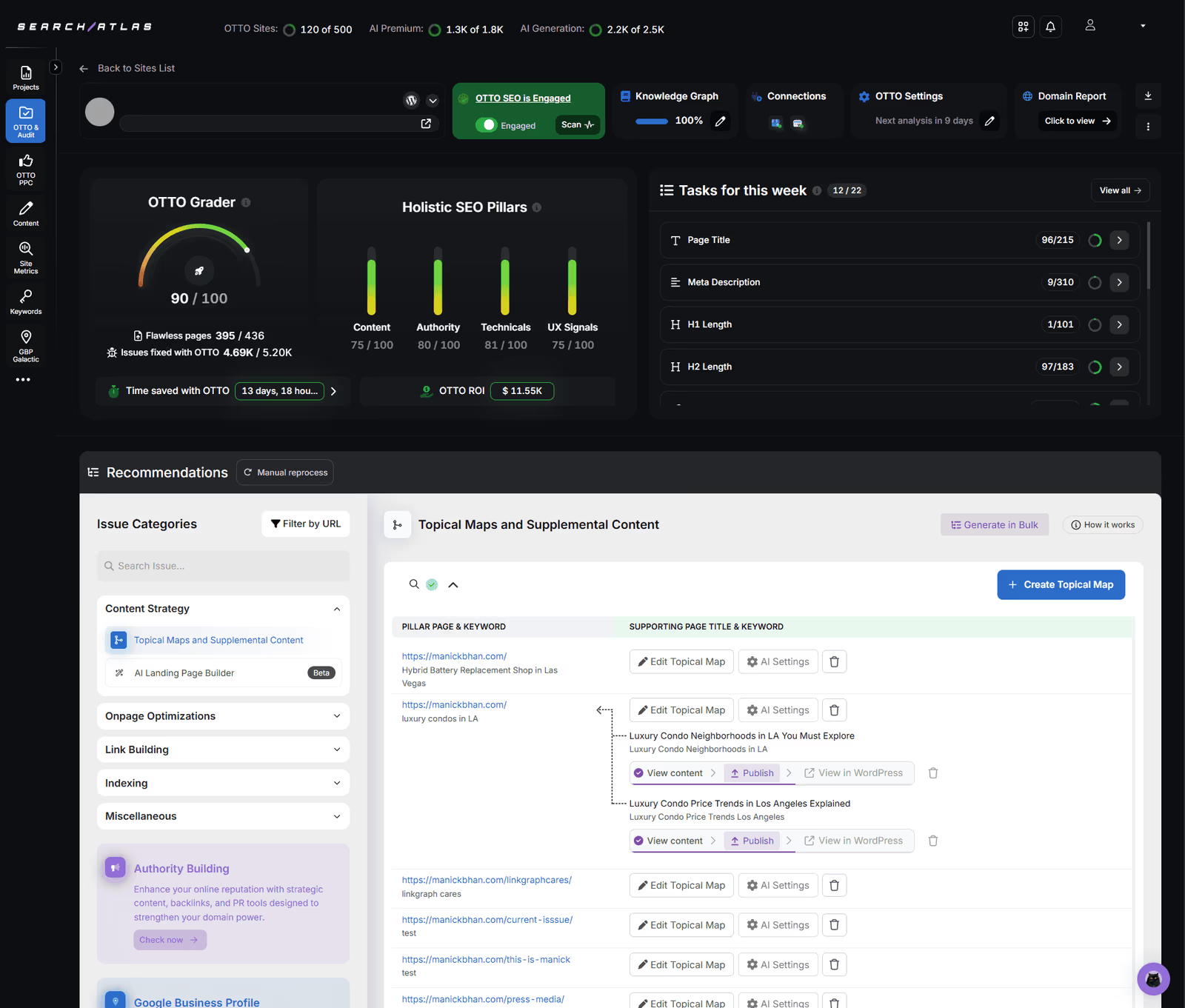
Search Atlas is an agentic SEO platform where Atlas Agent turns a demand generation goal written in plain language, or a Playbook, into a planned set of SEO tasks covering technical fixes, content, authority building, and AI visibility. High-impact changes wait for approval, and safe automations run on their own if the team allows it. For a lean B2B marketing team, that means fewer handoffs between demand generation, product marketing, and the web team.
Alongside Atlas Agent, OTTO SEO ships on-page fixes on solution and comparison pages, LLM Visibility on the Growth plan shows how ChatGPT and Gemini answer the category questions a B2B buyer asks, and the Search Atlas Coworker posts results into Slack or Microsoft Teams. Our guide to Search Atlas for B2B companies walks through the B2B features, from keyword research to link building.
Why does Search Atlas fit B2B teams?
Search Atlas fits B2B teams because one platform plans the SEO work, ships on-page fixes, tracks AI answers, produces funnel-stage content, and reports to stakeholders.
- Atlas Agent for planned execution: a demand generation goal or a Playbook becomes a task plan across technical fixes, content, authority building, and AI visibility, with high-impact changes held for approval.
- OTTO SEO for solution pages: on-page fixes reach solution and product pages without a developer sprint. OTTO SEO offers an approval mode, and any change can be rolled back from the dashboard.
- LLM Visibility for AI answer tracking: the Growth plan shows how ChatGPT, Gemini, and Google AI Mode answer the category questions a buyer asks before visiting a vendor site.
- Content Genius for funnel-stage content: research, briefs, drafts, and content grading for each stage, from educational guides to late-stage comparison pages.
- Report Builder and the Search Atlas Coworker for stakeholder reporting: Report Builder sends scheduled reports, and the Coworker posts performance summaries into the Slack or Microsoft Teams channel a CMO or VP of sales already reads. The Coworker page also lists a HubSpot connection.
What are the main Search Atlas features for B2B teams?
- OTTO SEO for solution pages: title tags, meta descriptions, schema, canonicals, and internal links on product and comparison pages, deployed through a JavaScript pixel.
- Atlas Agent for campaign work: plain-language goals and Playbooks turned into SEO task plans, with an approval step for high-impact changes.
- Search Atlas Coworker for stakeholders: scheduled summaries in Slack or Microsoft Teams, with an optional approval mode for any change it proposes.
- Report Builder for leadership reviews: Google Search Console, GA4, rank tracking, and backlink data in one report sent on a schedule before quarterly business reviews.
- LLM Visibility for considered purchases: brand mentions in ChatGPT, Gemini, and Google AI Mode on Growth, with Copilot and Perplexity added on Pro.
How much does Search Atlas cost?
Search Atlas costs $99 per month on the Starter plan, billed monthly, and the live pricing page lists monthly billing only. The four plans are below.
- Starter: $99/mo, billed monthly. 1 seat, 1 OTTO project, 2,000 tracked keywords, and 50,000 Universal Credits. LLM Visibility is not included.
- Growth: $199/mo, billed monthly. 3 seats, 2 projects, 3,500 tracked keywords, 120,000 credits, and LLM Visibility across ChatGPT, Gemini, and Google AI Mode.
- Pro: $399/mo, billed monthly. 5 seats, 4 projects, 6,000 tracked keywords, 400,000 credits, and white-label dashboards and reporting. LLM Visibility adds Copilot and Perplexity.
- Agency: from $999/mo, billed monthly. 10 seats and 10 projects.
Every plan draws on one shared monthly pool of Universal Credits, which the pricing page calls the execution budget for the whole platform. Search Atlas includes a free trial with free onboarding.
What are the pros and cons of Search Atlas for B2B teams?
Pros
- Fixes on solution pages ship without a developer sprint, with rollback.
- Pipeline meeting attendees get SEO results in Slack or Microsoft Teams.
- AI answer tracking for category questions starts on Growth at $199 per month.
- Monthly billing, with no annual commitment listed on the pricing page.
- Growth includes 3 seats and Pro includes 5, enough for a small internal buying committee.
Cons
- Search Atlas covers many SEO skills, so new users need time to learn the platform, and free onboarding is available.
- AI features draw from a monthly Universal Credits budget, so sites with thousands of pages need usage monitoring.
What do reviewers say about Search Atlas?
Search Atlas holds 4.6 out of 5 on G2 from about 160 reviews and about 4.7 out of 5 on Capterra, as listed in October 2026. Reviewers on G2 mention replacing several separate products with one platform. Semrush and Ahrefs have far more reviews, so a trial on the team's own product pages adds evidence a score cannot give.
2. Semrush
 Via Semrush
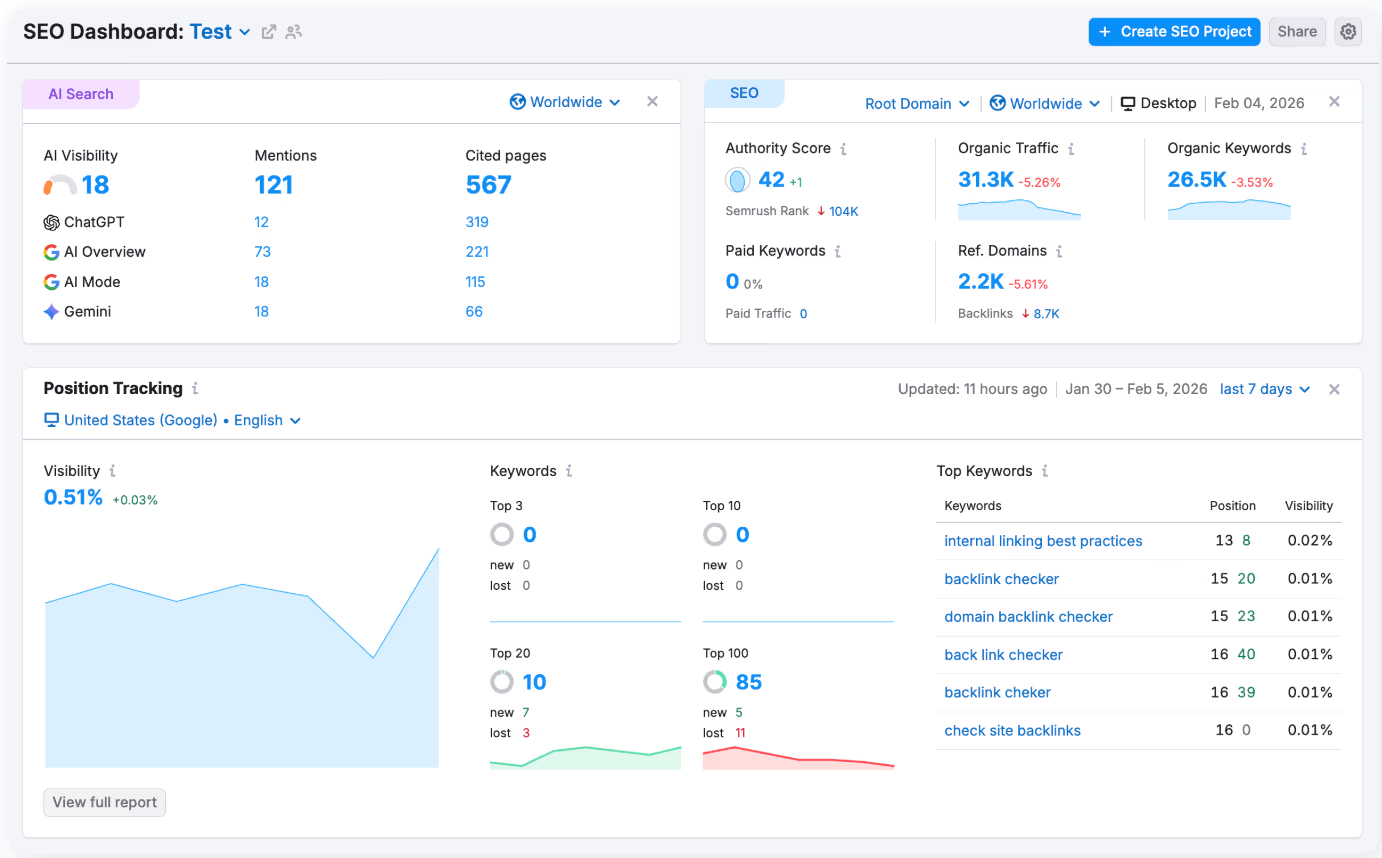
Semrush is a search marketing suite that combines keyword research, competitor analysis, and rank tracking with AI search tracking in one subscription. B2B teams use Semrush to size demand for category terms. Semrush also shows which competitors own the comparison and alternatives queries that buyers run late in a purchase.
The 2026 SEO plan bundles AI search tracking and custom prompt monitoring with its keyword and competitor data. At the entry level, that saves a B2B team from buying a separate AI visibility product. Our Semrush review covers each research module with screenshots.
Why does Semrush fit B2B teams?
Semrush fits B2B teams that need broad competitive research, because its keyword and competitor data show which category and comparison terms rivals already rank for. For a B2B company entering a crowded category, that gap list can become the content plan for each product line. Because the SEO plan tracks AI search results and custom prompts, the team can also check whether AI answers mention the brand when buyers ask category questions.
What are the main Semrush features for B2B teams?
- Keyword Magic Tool and keyword gap: research on category and comparison terms, plus the terms competitors rank for that the brand does not.
- Position Tracking: daily rankings by location, device, and search engine, with competitor movement.
- Site Audit: crawlability, site speed, and schema issues across the domain.
- AI visibility tracking: brand presence across ChatGPT, Perplexity, Gemini, and AI Overviews, with custom prompt monitoring.
- Reports and dashboards: branded reports and dashboards sent on a schedule.
- User roles and project sharing: Owner, Admin, User, and Guest roles, with Viewer and Editor access on shared projects.
- MCP access: Model Context Protocol, a standard way for AI assistants to pull data from the Semrush account.
How much does Semrush cost?
For a B2B team, the Semrush entry point is the SEO plan at $139 per month billed monthly, or $117.33 per month on annual billing. Starter is $199 per month billed monthly or $165.17 per month billed annually. Pro+ is $299 per month billed monthly or $248.17 per month billed annually. Advanced and Enterprise are custom-priced. Additional users are an add-on starting at $45 per month. Semrush also offers a free plan that needs no credit card, plus a 7-day free trial.
What are the pros and cons of Semrush for B2B teams?
Pros
- AI search tracking and custom prompt monitoring are included from the SEO plan.
- Annual billing saves up to 17%.
- A free plan and a 7-day trial let a team test against real competitors before buying.
- Enterprise lists SSO and audit logs for security reviews.
Cons
- Additional users start at $45 per month, which adds up as more stakeholders want access.
- SSO and team governance sit on the custom-priced Enterprise tier.
- API integration and SEO share of voice start on the custom-priced Advanced plan.
What do reviewers say about Semrush?
On G2, Semrush carries a 4.4 out of 5 rating across about 4,000 reviews, as listed in October 2026. That is the largest review base in this comparison, and it spans every company size. B2B buyers get a clearer read by filtering G2 to mid-market and enterprise reviewers.
3. Ahrefs
 Via Ahrefs
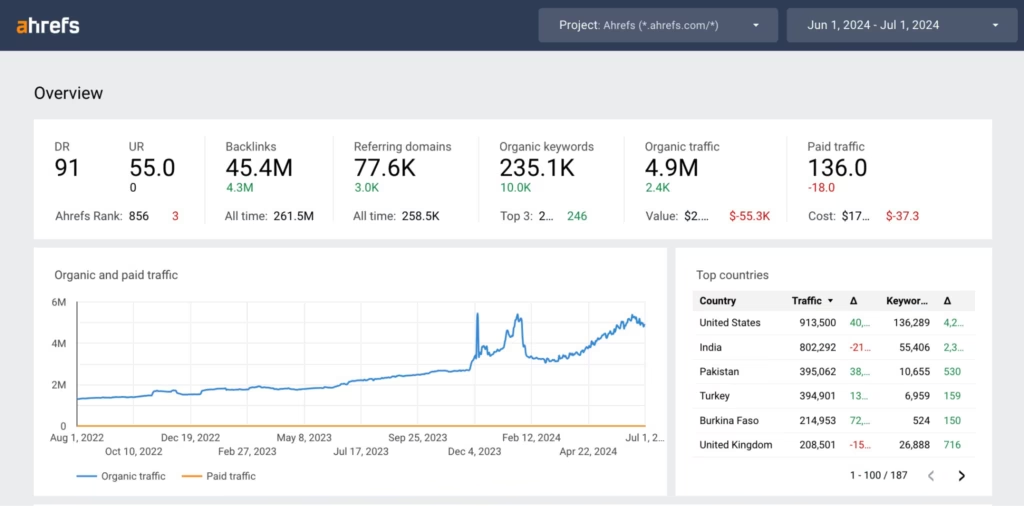
Ahrefs is an SEO research platform built around a large backlink index, with keyword research, Site Explorer, Report Builder, and an AI visibility add-on called Brand Radar AI. B2B teams turn to Ahrefs when authority is the gap. A newer SaaS company competing against category incumbents needs to see who links to those rivals and which pages earn the links.
Ahrefs prices by tier and by seat, which matters once product marketing and content leads want to log in. Each plan includes one user, and every tier caps how many extra seats can be added. Our Ahrefs review covers its credit limits in more detail.
Why does Ahrefs fit B2B teams?
Ahrefs fits B2B teams whose main gap is authority, because its backlink research shows which publications and review sites link to competitors. That list becomes the outreach and digital PR target list for each product line. Larger companies get a security-friendly option in the Enterprise plan, which adds SSO and uncapped API access, plus a commitment that customer data is not used for training.
What are the main Ahrefs features for B2B teams?
- Site Explorer: backlink and organic research on any competitor domain.
- Report Builder: included in the Lite plan's feature list.
- Looker Studio integration: listed from the Advanced tier, for teams that build stakeholder dashboards in Google's reporting product.
- Brand Radar AI: AI visibility tracking from $199 per month, with custom prompt packages at $50, $100, or $250 per month.
- Enterprise: SSO and enterprise-grade security, uncapped API access, and no training on customer data, with an annual commitment.
How much does Ahrefs cost?
For a B2B team, the Ahrefs entry point is Lite at $129 per month billed monthly, with one user included. Lite allows 2 more users at $40 per month each. Standard is $249 per month with up to 5 more users at $60 each, and Advanced is $449 per month with up to 10 more users at $80 each. Paying annually saves up to 17%. Enterprise costs $1,499 per month and requires an annual commitment.
What are the pros and cons of Ahrefs for B2B teams?
Pros
- Backlink research is a direct fit for B2B companies with an authority gap.
- Enterprise lists SSO, uncapped API access, and no training on customer data.
- Report Builder is included from Lite.
- Annual billing saves up to 17%.
Cons
- A sales and marketing group larger than three people outgrows Lite, which caps seats at the included user plus 2 at $40 each.
- Looker Studio integration starts on Advanced at $449 per month.
- AI visibility through Brand Radar AI is an add-on from $199 per month.
- SSO requires Enterprise at $1,499 per month with an annual commitment.
What do reviewers say about Ahrefs?
On G2, Ahrefs carries a 4.5 out of 5 rating across about 700 reviews, as listed in October 2026. The count varies across G2 pages captured on different dates, but the score stays at 4.5 on each of them.
4. BrightEdge
 Via BrightEdge
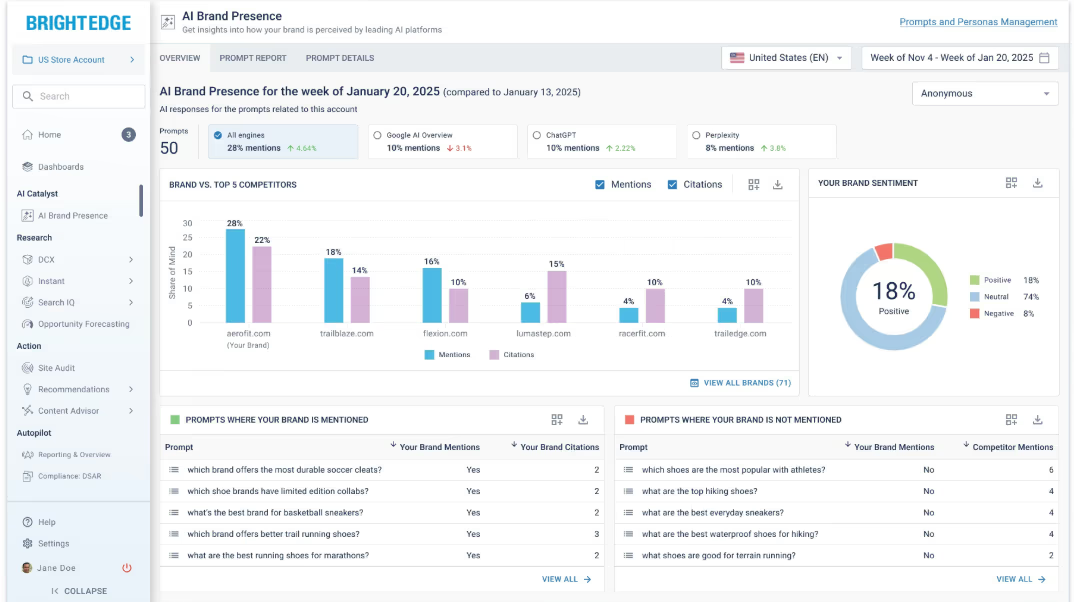
BrightEdge is an enterprise SEO and AI search platform that pairs a large research dataset, Data Cube X, with automation features called Copilot and Autopilot. Its homepage frames the product as integrated SEO performance management, and buying starts with a demo request. The sales-led process and the feature set both point to organizations running several sites, regions, or business units.
For B2B, BrightEdge brings scale plus automation. Autopilot executes automatic website optimizations, while Copilot provides insights the team can act on. AI Hyper Cube looks at the AI interactions that drive demand. Our BrightEdge review walks through each module with screenshots.
Why does BrightEdge fit B2B teams?
BrightEdge fits B2B enterprises that need one SEO system across many product lines and regions, with automation to keep pace with a large site. AI Catalyst, built on BrightEdge's generative parser technology, tracks how the brand appears in AI results. For a company where each division owns its own section of the website, one shared research dataset keeps reporting consistent.
What are the main BrightEdge features for B2B teams?
- Data Cube X: the research dataset behind keyword and content analysis.
- Copilot: surfaces insights the team can act on.
- Autopilot: executes automatic website optimizations.
- AI Catalyst and AI Hyper Cube: track AI search presence and the AI interactions that drive demand.
- Coverage areas: SEO, content, e-commerce, local, and web development.
How much does BrightEdge cost?
BrightEdge does not publish pricing, so every plan is a sales quote that follows a demo request. No dollar figure or billing term appears on its site. Budget conversations happen with the sales team, so ask early about contract length and seat counts.
What are the pros and cons of BrightEdge for B2B teams?
Pros
- Autopilot executes automatic website optimizations.
- Data Cube X gives large teams one shared research dataset.
- AI Catalyst and AI Hyper Cube cover AI search presence.
- Coverage spans content, local, and e-commerce as well as core SEO.
Cons
- No published pricing, so cost is unknown until a sales conversation.
- G2 comparison pages score its ease of use at about 8 out of 10, lower than several peers.
- The demo-first buying process adds time before a team can test BrightEdge.
What do reviewers say about BrightEdge?
BrightEdge holds 4.4 out of 5 on G2 from roughly 800 reviews, as listed in October 2026. G2's review summary highlights its insights, customizable reporting, and content features. Ease of use is the weaker sub-score, at about 8 out of 10.
5. Conductor
 Via Conductor
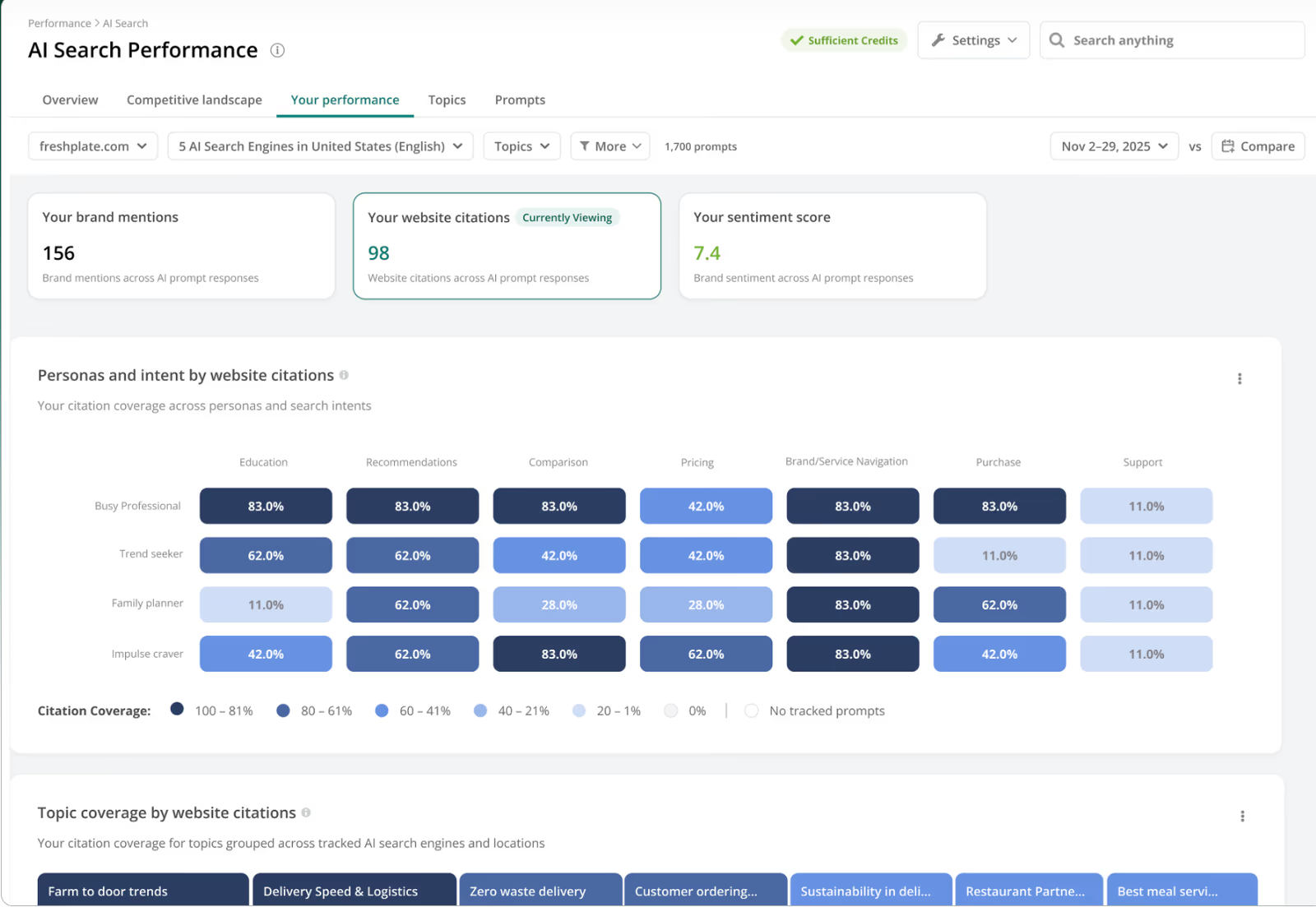
Conductor is an enterprise AEO and SEO platform that combines search and AI answer reporting, website monitoring, and a Writing Assistant under usage-based pricing. AEO, short for answer engine optimization, is the practice of earning mentions and citations in AI-generated answers. Conductor is built for organizations where many departments touch the website.
Conductor sells three tiers. Essentials is aimed at smaller teams, and Growth at teams that want to integrate and automate workflows. Enterprise is for "global, cross-functional organizations needing advanced reporting, governance, and scalability." Our Conductor review covers its interface and each module in detail.
Why does Conductor fit B2B teams?
Conductor fits B2B organizations that report search performance to many internal stakeholders, because its Enterprise tier is built around advanced reporting and governance. Website Monitoring watches 100,000 pages on Essentials, 500,000 on Growth, and sites of any size around the clock on Enterprise. That matters when engineering, product, and marketing all publish to the same domain and a release can break a template overnight.
What are the main Conductor features for B2B teams?
- AEO and SEO reporting: 1,000 pages analyzed on Essentials, 25,000 on Growth, and 125,000+ on Enterprise. Tracked keywords run 500, 5,000, and 60,000+ across those tiers.
- Website Monitoring: 3, 5, or 10+ tracked websites depending on tier.
- Conductor Creator: Writing Assistant, Content Score, Content Profiles, and Internal Link Recommendations, with 60 drafts per year on Essentials and 180 on Growth.
- AI Search Credits: 2,500 on Growth and 2,500+ on Enterprise.
How much does Conductor cost?
Conductor does not publish dollar pricing, and its pricing page describes a usage-based model across three tiers. The page says the model "aligns the value you get to the price you pay." It points visitors to a free trial, a demo, or the sales team. Contract length and billing frequency are not stated.
What are the pros and cons of Conductor for B2B teams?
Pros
- AEO and SEO reporting in one platform, with competitor tracking up to 75+ on Enterprise.
- Website Monitoring covers sites of any size on Enterprise.
- Enterprise is built around governance for cross-functional teams.
- A free trial is offered alongside demos.
Cons
- No published dollar pricing, and billing terms are not stated.
- Essentials tracks 500 keywords and 5 competitors, which a B2B company with several product lines can outgrow quickly.
- Writing Assistant drafts are capped per year on Essentials and Growth.
What do reviewers say about Conductor?
Conductor holds 4.5 out of 5 on G2 from roughly 750 reviews, as listed in October 2026. G2's summary points to ease of use for new users and proactive monitoring of keyword movements as strengths.
6. Botify
 Via Botify
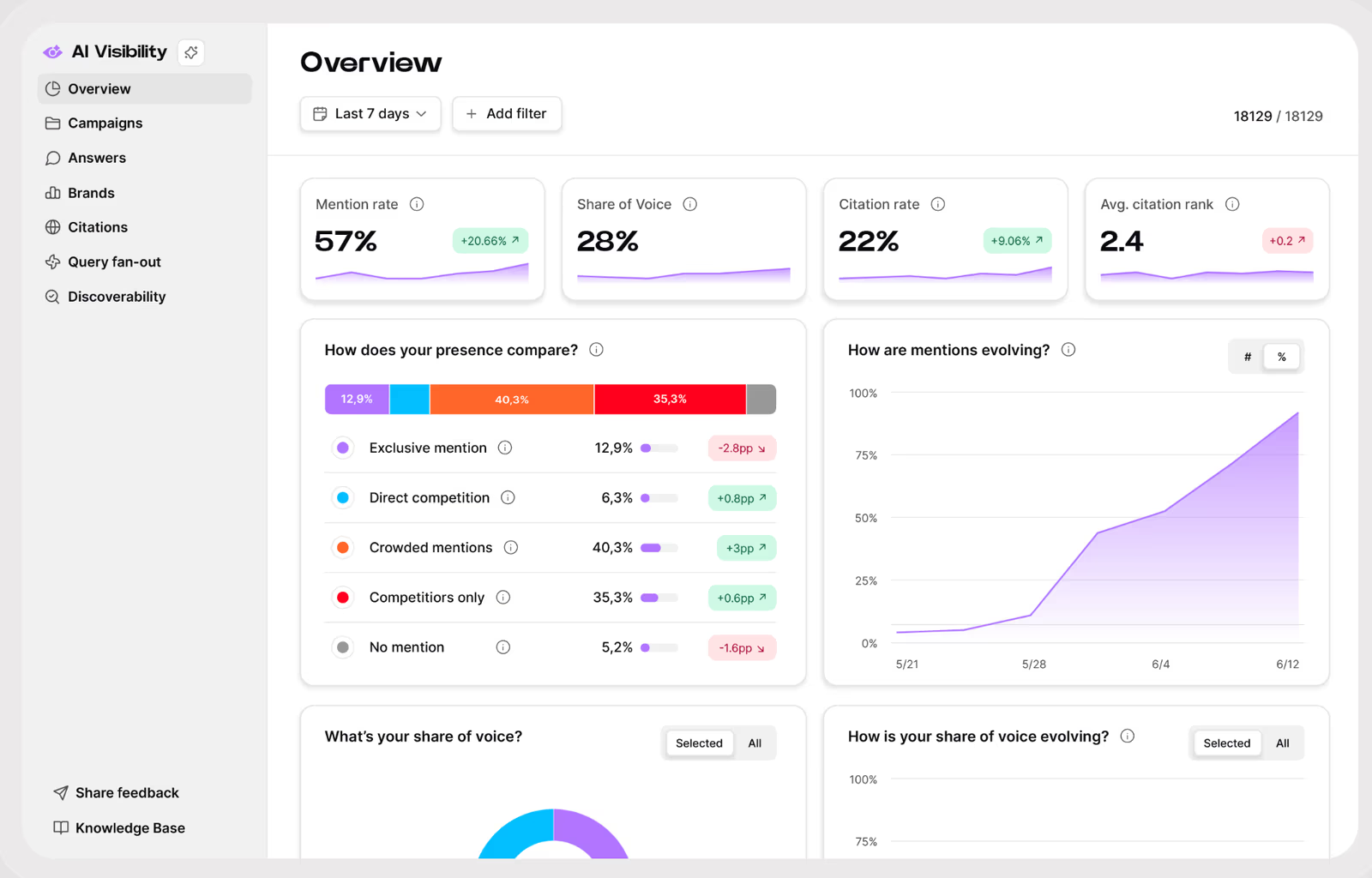
Botify is an enterprise search platform built around crawling, indexation, and automated deployment for very large websites. Some B2B companies publish thousands of documentation, resource, or product pages. For them, the first question is whether search engines and AI crawlers reach those pages at all.
Botify organizes its platform into AI Readiness, AI Activation, and AI Visibility. PageWorkers handles automation and deployment, and SpeedWorkers handles AI agent and bot management. Every path to buying starts with a demo request.
Why does Botify fit B2B teams?
Botify fits B2B companies with very large sites, because its analytics show which sections search engines and AI agents actually crawl and index. ActionBoard turns that data into prioritized actions, and AlertPanel flags problems proactively. The AI Visibility section adds GEO analytics. GEO, short for generative engine optimization, measures how a brand shows up in AI-generated answers.
What are the main Botify features for B2B teams?
- Website analytics and keyword analytics: crawl and search performance data for large sites.
- ActionBoard and AlertPanel: prioritized actions and proactive alerts.
- PageWorkers: automation and deployment of on-site changes.
- SpeedWorkers: AI agent and bot management.
- SmartIndex, SmartLink, and SmartContent: cross-platform indexation, internal linking, and AI-generated content.
- AI Visibility and MCP: GEO analytics, plus an MCP connection for AI assistants.
How much does Botify cost?
Botify does not publish pricing, plan names, or billing terms, and its pricing page offers only demo requests. Treat Botify as an enterprise contract and ask during the demo about minimum terms and crawl volume.
What are the pros and cons of Botify for B2B teams?
Pros
- Crawl and indexation depth for very large sites.
- PageWorkers deploys changes automatically.
- AI Visibility adds GEO analytics next to classic search data.
- Proactive alerts catch problems between reporting cycles.
Cons
- No published pricing or self-serve trial on the pricing page.
- G2 comparison pages score its ease of use at 7.5.
- Botify's crawl capacity exceeds what a smaller B2B site needs.
What do reviewers say about Botify?
Botify holds 4.4 out of 5 on G2 from about 80 reviews, as listed in October 2026. G2 comparison pages rate it 9.1 for technical SEO, its strongest sub-score, and 7.5 for ease of use.
7. Clearscope
 Via Clearscope
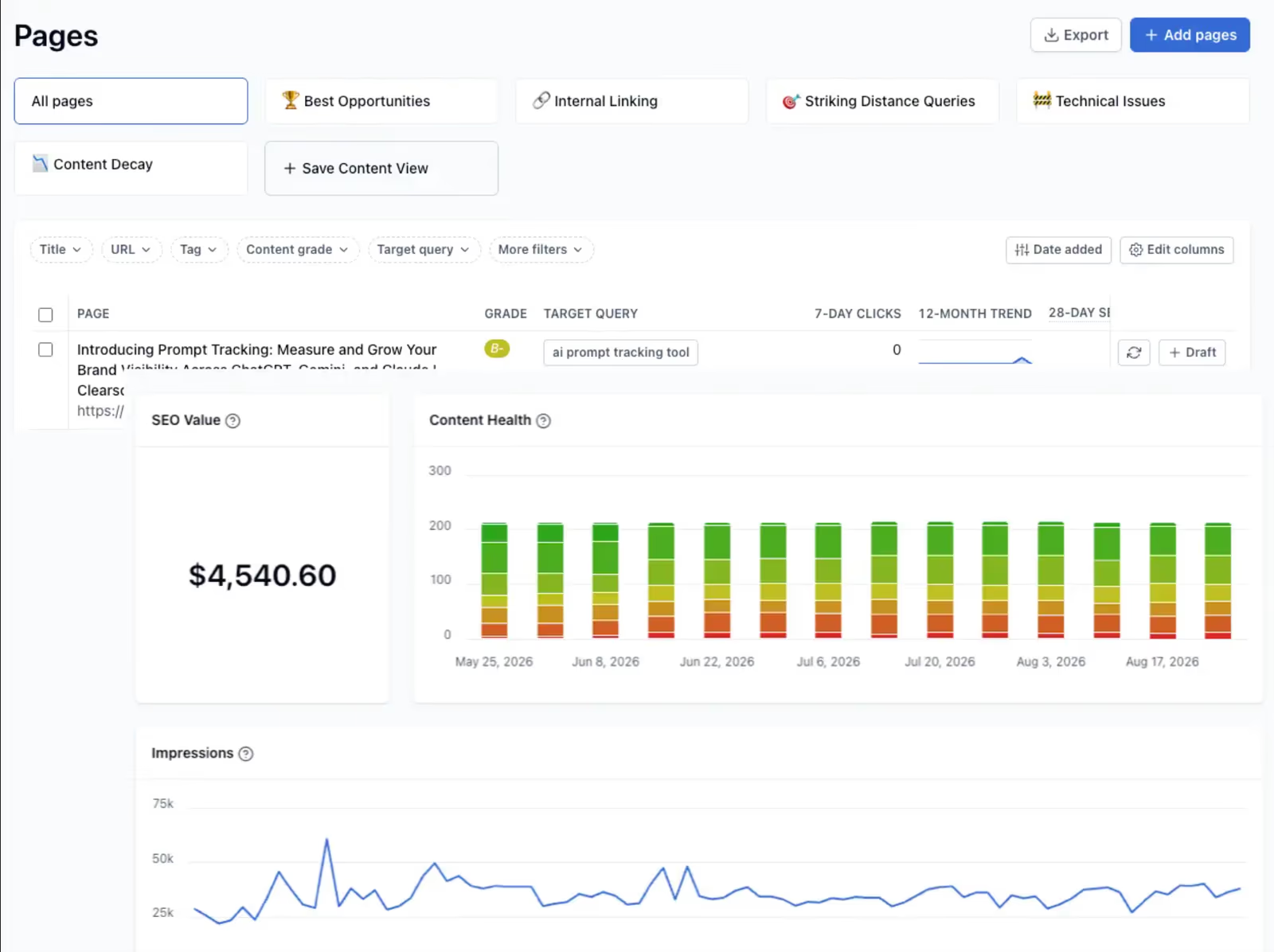
Clearscope is a content optimization platform that grades drafts against a target search query and tracks how pages and queries perform, including in ChatGPT and Gemini. B2B content teams use Clearscope to write one page per funnel stage and product line without guessing which subtopics a buyer expects.
The B2B detail that stands out is seats: every Clearscope plan includes unlimited users and projects. Subject matter experts, product marketers, and freelance writers can all work in the same account at no extra cost. Our Clearscope review covers the editor and reports in depth.
Why does Clearscope fit B2B teams?
Clearscope fits B2B content teams because many B2B pages are written or reviewed by experts outside marketing, and unlimited seats let all of them work in one place. A solutions engineer can check a technical draft without a license request. Query fan-out awareness shows the web searches AI platforms run while building an answer, which helps a team see the questions a buyer's AI assistant asks along the way.
What are the main Clearscope features for B2B teams?
- Content grading and drafts: 20 drafts per month on Essentials and Business.
- Topic explorations: 20 per month on Essentials and 50 on Business.
- Content inventory: 50 tracked pages on Essentials and 300 on Business, with add-on pages sold in tiers up to 5,000.
- AI search tracking: query tracking across ChatGPT and Gemini, brand visibility tracking across search engines and AI systems, and query fan-out awareness, on every plan.
- Search intent recommendations: guidance tied to what the query's searchers want.
How much does Clearscope cost?
Clearscope costs $129 per month on the Essentials plan, billed monthly, with no minimum contract. Business is $399 per month and adds 300 tracked queries and pages plus a dedicated account manager. Enterprise is custom-priced and adds SSO, custom agreements, and crawler whitelisting. Invoicing is available only on yearly custom plans, and Essentials and Business start with a 14-day free trial.
What are the pros and cons of Clearscope for B2B teams?
Pros
- Unlimited users and projects on every plan.
- AI search tracking for ChatGPT and Gemini is included from Essentials.
- A 14-day free trial and no minimum contract on monthly plans.
Cons
- The pricing page lists no site crawler or backlink index, so technical health and link research need another product.
- Essentials tracks only 50 pages, which a B2B site with several product lines can outgrow.
- SSO is limited to the custom-priced Enterprise plan.
What do reviewers say about Clearscope?
Clearscope holds 4.9 out of 5 on G2 from about 90 reviews, as listed in October 2026, the highest score on this list. G2 comparison pages rate it 9.6 for ease of use and about 10 out of 10 for the quality of its customer help.
How should B2B teams evaluate SEO tools across a long sales cycle?
B2B teams should evaluate SEO tools across a long sales cycle by testing each one against the GA4 key events and leadership reports the company already uses, then reviewing the results after a full quarter. Free trials are shorter than a B2B sales cycle, so set up GA4 key events and tracked keywords before the trial starts.
- Mark pipeline actions as key events in GA4. Key events are GA4's name for actions that matter to the business. Google renamed them from "conversions" to align terms with Google Ads. Mark demo requests and contact form submissions so every platform in the trial reports against the same outcomes.
- Track one product line's top ten pages. Add their target keywords to each platform, ask ChatGPT and Gemini which vendors they recommend in that product category, and log which on-page issues each platform finds or fixes during the trial.
- Test one report on a real stakeholder. Send a sales leader or CMO the report each platform produces and ask which one they would read every week. A report nobody opens fails the buying committee test, whatever its data quality.
- Review the decision after one quarter. A single quarter is still shorter than many B2B sales cycles, but it shows whether rankings, AI mentions, and key events move together. Renew, switch, or add a point tool based on that evidence.
Seat counts, security answers, and contract terms belong in the procurement step, and the vendor evaluation checklist linked above covers them.
Does a B2B buying committee need one SEO platform or several tools?
A B2B buying committee is better served by one integrated SEO platform when SEO results go to more people than the SEO team, and by a point tool when one job, such as content grading, dominates the workload. Three separate tools produce three exports that someone has to merge before the pipeline meeting, while one platform sends one scheduled report.
| Point tools | Integrated platform | |
|---|---|---|
| Stakeholder reporting | Merged from several exports | One scheduled report |
| On-page fixes on solution pages | Shipped by the team or developers | Can be shipped by the platform, with approval |
| Examples on this list | Clearscope for content, Ahrefs for links | Search Atlas, BrightEdge, Botify |
Point tools still earn a place when one job dominates. A product marketing team that publishes several comparison pages a month is a strong fit for a dedicated content grader.
Search Atlas, BrightEdge, and Botify all list automated on-page deployment, and of those three, only Search Atlas publishes its pricing, starting at $99 per month billed monthly. For the wider category beyond B2B, our list of SEO tools covers 18 options sorted by job.
Which B2B SEO tool fits each type of B2B team?
The right B2B SEO platform depends on team size and on the job that dominates the workload.
- Small B2B marketing teams: Search Atlas fits, because Growth costs $199 per month billed monthly and includes 3 seats, OTTO SEO fixes, and AI answer tracking. Semrush fits teams focused on competitive research, with the SEO plan at $139 per month billed monthly.
- Teams that want execution beyond monitoring: Search Atlas fits, because Atlas Agent turns goals into planned SEO tasks and OTTO SEO ships on-page fixes with approval and rollback. BrightEdge Autopilot and Botify PageWorkers also deploy changes, under sales-led contracts.
- Teams tracking AI search visibility: Search Atlas tracks ChatGPT, Gemini, and Google AI Mode from Growth and adds Copilot and Perplexity on Pro. Semrush and Clearscope include AI search tracking, and Ahrefs sells Brand Radar AI as an add-on.
- Teams reporting to stakeholders outside marketing: Search Atlas fits, because Report Builder sends scheduled reports and the Search Atlas Coworker posts summaries into Slack or Microsoft Teams.
- Enterprise teams with governance requirements: BrightEdge and Conductor focus on enterprise reporting across many stakeholders and business units.
- Very large sites with crawl problems: Botify focuses on crawling, indexation, and automated deployment at scale.
- Content-only teams with many contributors: Clearscope includes unlimited users on every plan, so subject matter experts review drafts without a license.
- Companies with an authority gap: Ahrefs backlink research shows which publications link to competitors.
B2B SEO tools FAQ
Do B2B SEO tools connect to a CRM?
Few B2B SEO platforms list a CRM connection on their pricing pages. The Search Atlas Coworker page lists HubSpot, and GA4 key events are the common bridge to pipeline stages in any CRM.
Is Google Search Console enough for B2B SEO?
No. Google Search Console covers a team's own site only, so competitor research, AI answer tracking, and scheduled stakeholder reports need a paid platform.
How much do B2B SEO tools cost?
Self-serve B2B SEO platforms start between $99 and $139 per month billed monthly. BrightEdge, Conductor, and Botify price through sales quotes.
Do B2B SEO tools track AI search visibility?
Yes. Search Atlas includes AI search tracking from Growth, Semrush from its SEO plan, and Clearscope on every plan, while Ahrefs sells Brand Radar AI as an add-on.
Which B2B SEO tools include SSO?
Semrush, Ahrefs, and Clearscope list SSO on their enterprise tiers.
How long should a B2B team test an SEO tool?
A B2B team should test an SEO platform for at least one full reporting cycle. Set up GA4 key events and tracked keywords before the trial starts.