⚡ Internal Link Graph Audit: Scaled Topological Distribution
Evaluate your programmatic link topology to ensure maximum PageRank circulation without creating circular crawling traps.
Formal Definition and Graph Theory Mechanics
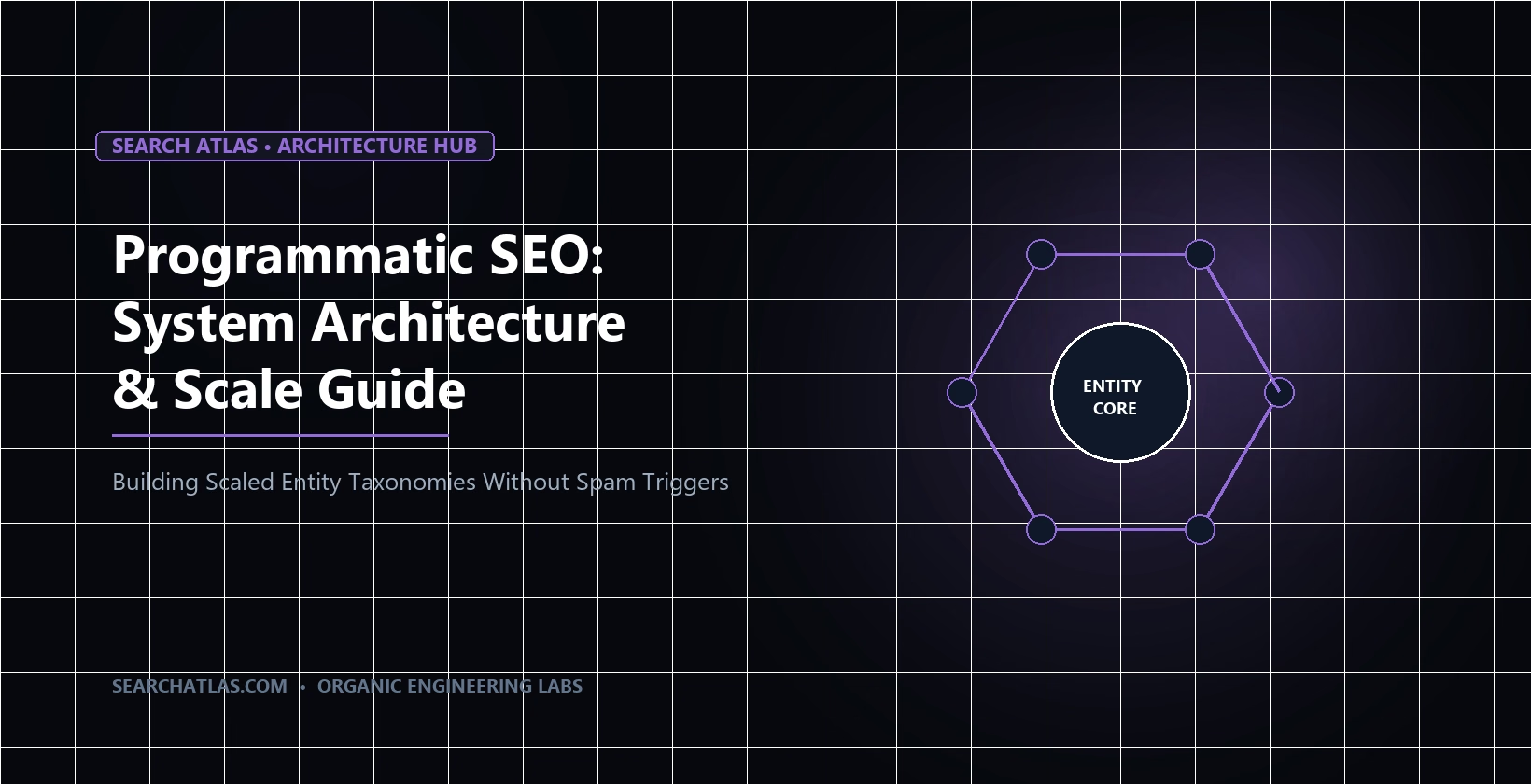
Programmatic internal linking is a structural engineering protocol that models website hyperlinks as a column-stochastic Directed Acyclic Graph (DAG) G = (V, E). Programmatic link architectures operate by dynamically inserting hyperlinked entity references into rendered templates based on shared taxonomy attributes, producing predictable PageRank circulation across thousands of distinct URLs. The primary governing variable of programmatic link graphs is transition probability, dictating how search engine crawlers and users traverse the topical hierarchy.
In programmatic websites with thousands of URLs, arbitrary or unstructured internal linking results in severe crawl inefficiency. If search engine spiders encounter deep click depths (>5 hops from root) or dead-end leaves, significant portions of the catalog will remain unindexed. A mathematically designed internal link DAG guarantees that authority flows from authoritative root pillars down to granular programmatic leaves and back into the core taxonomy.
flowchart TD
    Root[Domain Root / Category Pillar] --> HubA[Taxonomy Hub: Enterprise Tools]
    Root --> HubB[Taxonomy Hub: Mid-Market Tools]

    HubA --> Leaf1[Leaf: Tool A vs Tool B]
    HubA --> Leaf2[Leaf: Tool A Integration]
    HubA --> Leaf3[Leaf: Tool A Pricing]

    Leaf1 <-->|Lateral Sibling Link| Leaf2
    Leaf2 <-->|Lateral Sibling Link| Leaf3

    Leaf1 -.->|Upward Breadcrumb| HubA
    Leaf2 -.->|Contextual Equity Return| Root
The Reasonable Surfer Model in Scaled Environments
Search engines do not distribute PageRank equally across all links on a page. Under Google's Reasonable Surfer Model (US Patent 7,716,225 B1), the weight assigned to a hyperlink transition u to v depends on visual salience and context:
P(u -> v) proportional to f(Position, DOM Container, Font Size, Anchor Specificity)- High-Weight Transitions: Links positioned in the primary editorial container (
<main>or<article>), rendered above the fold (0 to 600px), and using descriptive anchor text transfer maximal PageRank. - Low-Weight Transitions: Links dumped into sitewide footers, tertiary sidebars, or cookie consent banners transfer fractional equity (under 0.5%).
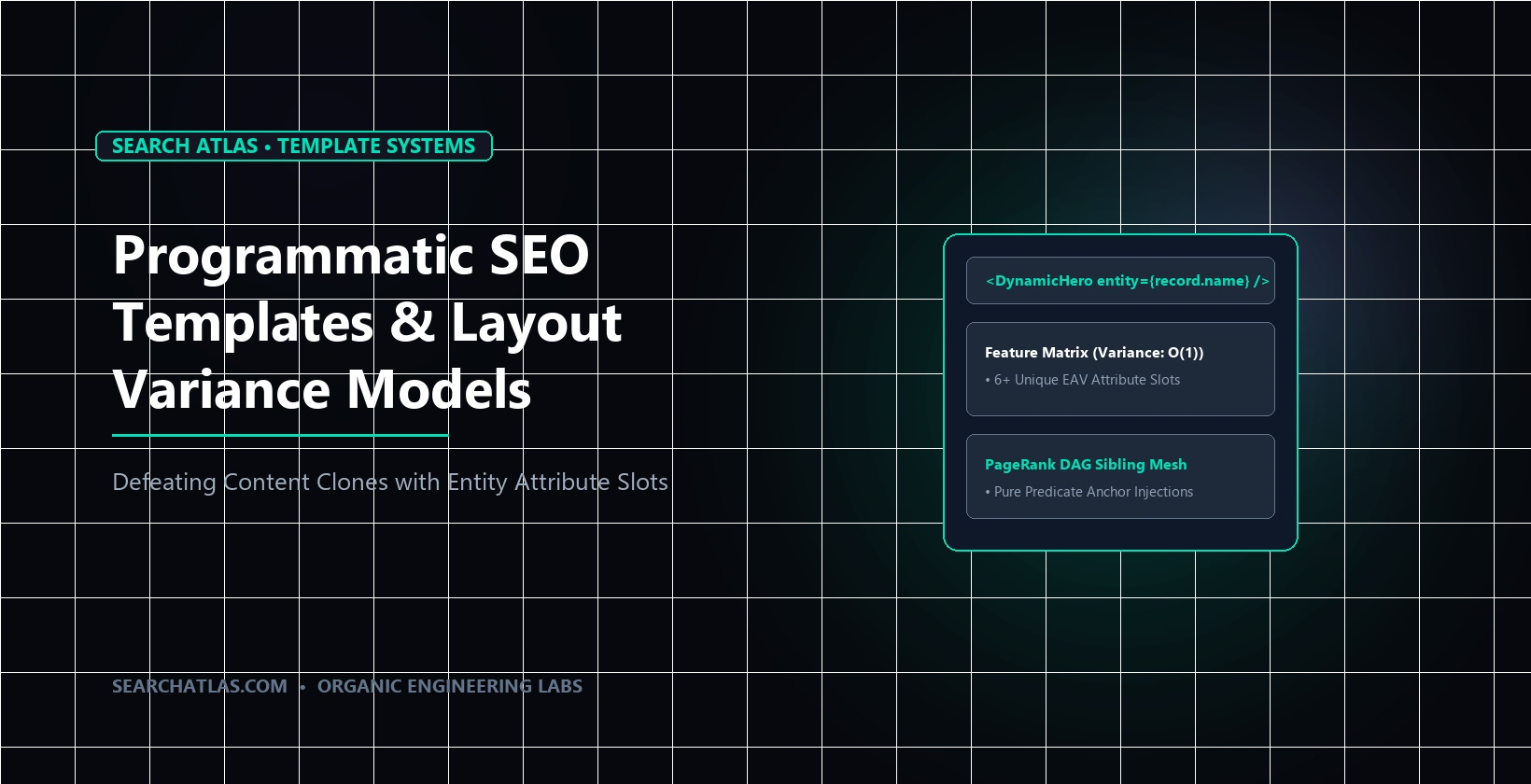
In programmatic templates, internal links should never be isolated in generic "Related Links" boxes at the bottom of the page. Instead, they must be woven into contextual attribute comparison blocks and editorial data summaries.
Remediation of Topological Pathologies
| Pathology | Algorithmic Consequence | Programmatic Solution |
|---|---|---|
| Dangling Nodes | PageRank sinks that discard incoming equity. | Automated validation requiring every generated page to include upward breadcrumbs and contextual sibling bridges. |
| Absorbing Cycles | Spiders loop indefinitely between two interdependent programmatic variants. | Enforce unidirectional link hierarchies between distinct sub-clusters; verify acyclic traversal. |
| Mega-Menu Link Dilution | Menus with 150+ links dilute individual link transfer to negligible levels. | Keep global navigation concise; delegate catalog discovery to faceted search pages and structured HTML sitemaps. |
Practical Implementation: Deterministic Graph Rules
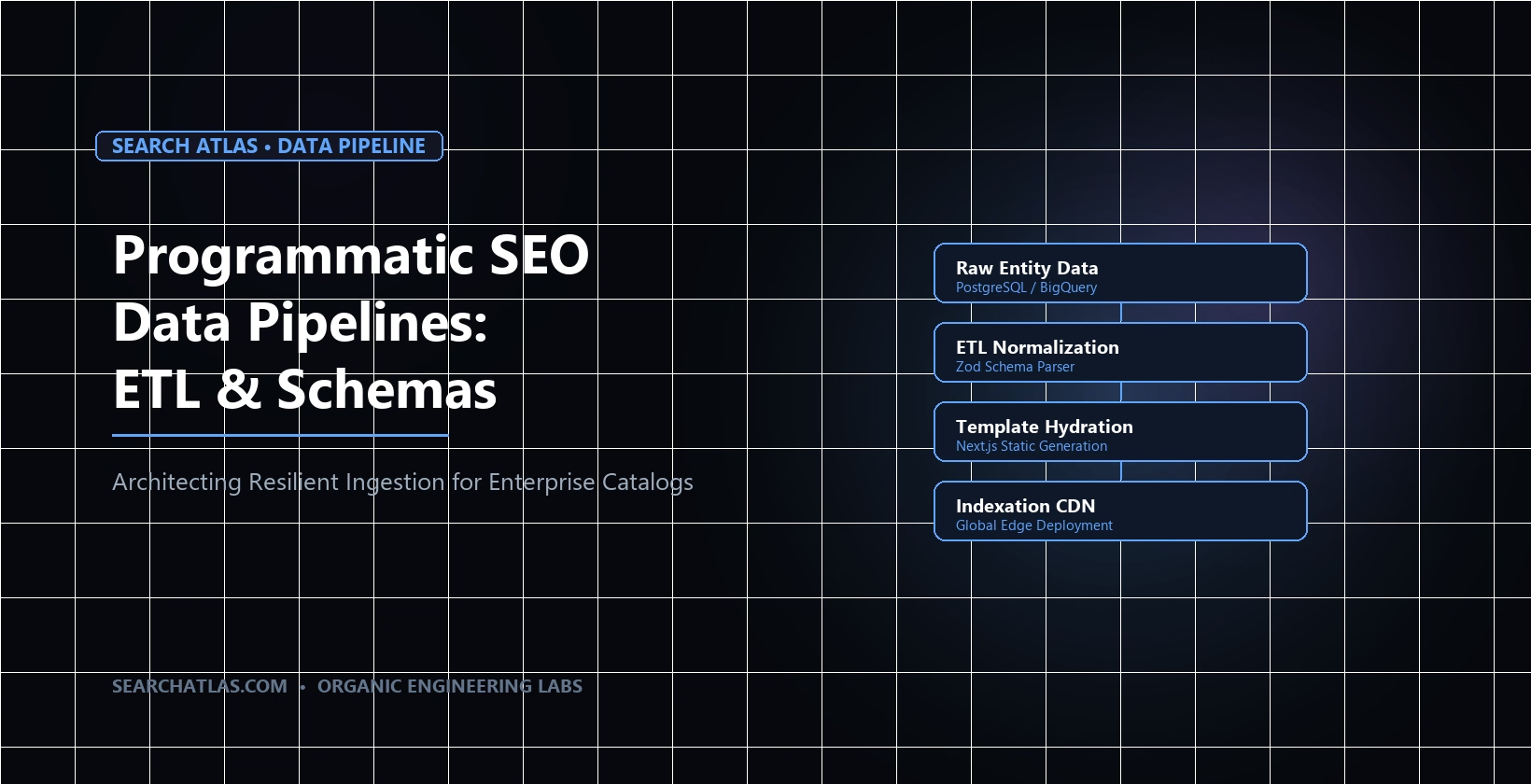
To scale internal linking cleanly across a programmatic directory, define deterministic linking rules in your build pipeline:
- Parent-Pillar Bridge: Every programmatic page must link back to the overarching Programmatic SEO Hub and its specific category hub.
- K-Nearest Neighbors (KNN) Sibling Links: Using vector embeddings, calculate the 3 nearest conceptual neighbors for each entity and insert contextual links in the main text.
- Cross-Silo Guardrails: Do not link randomly between unrelated programmatic silos (e.g. medical location pages linking directly to software API parameters) to prevent semantic centroid dilution.
By treating internal links as an engineered PageRank DAG, enterprise websites achieve high crawl efficiency, balanced link equity distribution, and resilient organic rankings across their entire programmatic footprint.